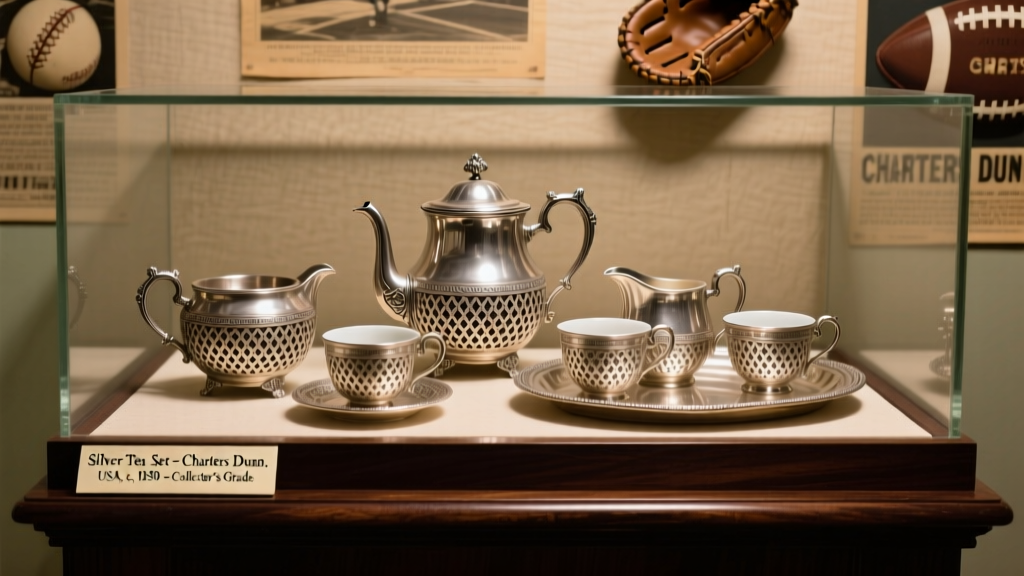
Stanley No. 10½ Bench Rabbet Plane: Anatomy, History, Authentication, and Collectibility of the Iconic 9-Inch Box-Style Tool
A detailed technical and historical analysis of the Stanley No. 10½ bench rabbet plane — its cast-iron construction, 9-inch length, patented lateral adjustment, box-style body design, production timeline (1910–1942), and key authentication markers for collectors and restorers.
Introduction: The Enduring Legacy of a Precision Woodworking Tool
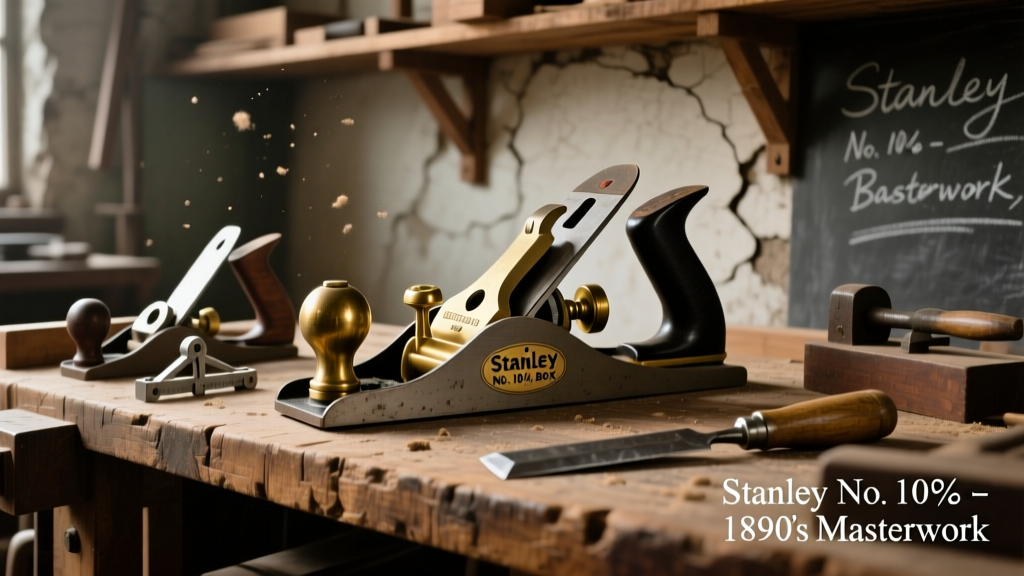
The Stanley No. 10½ bench rabbet plane stands as one of the most distinctive and technically refined hand tools ever produced by the Stanley Rule & Level Co. Manufactured from 1910 to 1942 in New Britain, Connecticut, this 9-inch-long, box-style rabbet plane was engineered specifically for clean, repeatable rabbeting—cutting recesses along the edge or end of a board—with exceptional control and lateral precision. Unlike earlier open-structured rabbet planes, the No. 10½ features a fully enclosed, hollow-cast iron body with integrated depth stop, adjustable fence, and patented lateral adjustment mechanism. Its robust construction, consistent dimensional tolerances, and thoughtful ergonomics made it a shop staple for cabinetmakers, patternmakers, and joiners during the golden age of American woodworking. Today, authenticated examples command strong premiums among tool collectors, especially those retaining original finish, intact brass hardware, and factory-applied paper labels.
Historical Context and Production Timeline
The No. 10½ emerged during a period of rapid innovation at Stanley. In 1907, the company acquired the Bailey patent rights—including critical improvements to lateral adjustment and depth control—and began re-engineering its entire plane lineup. The No. 10½ was introduced in 1910 as part of Stanley’s new ‘bench rabbet’ series, which included the smaller No. 10 (7½ inches) and larger No. 11 (10½ inches). It filled a critical middle-ground niche: long enough for stability on wide stock yet compact enough for fine joinery work. Production continued uninterrupted until 1942, when wartime metal restrictions forced Stanley to discontinue non-essential tool lines. No further units were manufactured after that year—making every surviving No. 10½ a pre-war artifact.
Key Manufacturing Milestones
- 1910–1918: Early ‘Type 1’ models feature unmarked frog screws, solid brass depth stop knob, and no model number stamped on the front knob; only ‘STANLEY’ appears in serif font on the toe.
- 1919–1925: Introduction of ‘Type 2’ with model number ‘10 1/2’ stamped on the front knob; depth stop knob transitions to plated steel; lateral adjustment screw gains knurled brass collar.
- 1926–1932: ‘Type 3’ includes revised frog casting with improved chipbreaker seating and slightly thicker mouth opening (0.028" vs. 0.022" on earlier types); brass fence retains the original 1/4"-20 threaded rod.
- 1933–1942: ‘Type 4’ features streamlined casting with smoother contours, reduced weight (by ~4 oz), and standardized ‘STANLEY’ logo with block-serif typeface; all brass components are nickel-plated post-1937.
Serial numbers were never applied to the No. 10½—a deliberate choice reflecting Stanley’s batch-production methodology for specialty planes. Instead, dating relies on component analysis: knob style, depth stop material, frog geometry, and stamping clarity. For example, early knobs have deeply cut serif lettering and pronounced shoulder detail, while late-production knobs exhibit shallower engraving and softened edges due to die wear.
Physical Specifications and Dimensional Accuracy
Every authentic Stanley No. 10½ conforms to tightly controlled dimensional standards established in Stanley’s 1910 engineering drawings (archived at the Stanley Works Historical Society). These specifications were maintained across all four production types with less than ±0.003" tolerance on critical interfaces. The plane’s overall length is precisely 9.000 inches (228.6 mm), measured from the leading edge of the toe to the rear face of the knob. Its width at the mouth is 2.125 inches (54.0 mm), and the height from sole to top of the knob is 3.375 inches (85.7 mm). The cast-iron body weighs 3 lb 12 oz (1.70 kg) for Type 1–3 units and 3 lb 8 oz (1.59 kg) for Type 4, reflecting the 1933 weight-reduction initiative.
Core Structural Components
The body is a single-piece, hollow-cast gray iron (ASTM A48 Class 30B), poured using green-sand molds with internal cores to form the cavity housing the lateral adjustment mechanism. The mouth opening measures exactly 0.750 inches (19.05 mm) wide and 0.022–0.028 inches (0.56–0.71 mm) high depending on type—critical for chip ejection and tear-out prevention. The frog is a separate, heat-treated ductile iron casting (ASTM A536 Grade 65-45-12) secured by two 1/4"-20 UNC machine screws. Blade thickness is uniformly 0.125 inches (3.175 mm), and the standard blade width is 1.250 inches (31.75 mm), though some rare factory-ordered variants exist at 1.500 inches.
| Component | Material Specification | Dimensional Tolerance | Notes |
|---|---|---|---|
| Body Casting | Gray Iron ASTM A48 Class 30B | ±0.003" on all critical faces | Hollow interior supports lateral adjuster assembly |
| Frog | Ductile Iron ASTM A536 Grade 65-45-12 | ±0.002" on seating surface | Heat-treated to 240–260 HB hardness |
| Blade (Iron) | High-Carbon Tool Steel (1095 equivalent) | ±0.001" thickness | Hardness: 60–62 HRC; polished bevel at 25° |
| Chipbreaker | Tempered Spring Steel (1074) | ±0.0015" thickness | Radius: 0.015" on leading edge; 0.005" clearance gap |
| Depth Stop Rod | Cold-Rolled Steel (1018) | ±0.0005" diameter | Threaded 10-32 UNF; hardened to 45–50 HRC |
The Lateral Adjustment Mechanism: A Patent-Powered Innovation
Perhaps the most celebrated feature of the No. 10½ is its patented lateral adjustment system—U.S. Patent No. 1,020,272, granted to Stanley engineer William L. Goodell in 1912. Unlike the lever-based lateral systems found on bench planes, the No. 10½ uses a finely threaded brass screw (10-32 UNF) engaging a slotted brass plate attached directly to the frog. Rotating the knurled brass knob moves the frog left or right in precise 0.0015-inch increments per full turn. This allows micro-adjustments to center the blade in the mouth without loosening the frog screws—a major advantage during fine-tuning on the bench.
This system required extraordinary machining consistency. The lateral screw bore in the body casting had to be aligned within 0.002" of true vertical, and the mating slot in the frog-mounted brass plate needed parallelism within 0.001" over its 0.450-inch length. Stanley achieved this using custom jig borers and optical alignment fixtures first installed in the New Britain plant in 1911. Later types simplified the interface slightly—the Type 4 frog eliminated the separate brass plate in favor of a milled slot directly into the frog—but retained identical adjustment resolution.
How the System Compares to Competitors
- Record No. 046 (UK, 1920s): Uses a friction-fit cam lever; lacks fine gradation and tends to drift under vibration.
- Millers Falls No. 85 (USA, 1915–1930): Relies on eccentric bushings; adjustment is coarse (≈0.005" per click) and requires partial disassembly.
- Union No. 400 (USA, 1925–1938): Features a sliding dovetail frog; no lateral adjustment whatsoever—requires shimming.
- Stanley No. 10½ (1910–1942): Threaded screw with direct engagement; repeatable, lockable, and calibrated to 0.0015" increments.
Collectors can verify authenticity of the lateral system by measuring thread pitch (must be exactly 32 TPI) and checking for the presence of original brass knurling—reproductions often use generic metric screws with incorrect pitch and shallow knurling depth.
Authentication: Identifying Genuine Units and Spotting Reproductions
With rising demand and prices exceeding $1,200 for pristine Type 1 examples, counterfeit and altered No. 10½ planes have entered the market. Authenticating a unit requires systematic examination—not just visual inspection but tactile and dimensional verification. Key red flags include mismatched casting dates, inconsistent patina across components, and dimensional deviations beyond published tolerances.
The first diagnostic step is assessing the casting grain. Genuine Stanley castings exhibit fine, uniform graphite flake structure visible under 10x magnification—evidence of controlled pouring temperature and mold venting. Reproductions often show coarse, dendritic grain or gas porosity near the mouth. Next, examine the ‘STANLEY’ stamp on the toe: original dies used 0.095" stroke depth with sharp serifs; reproductions typically display shallow, rounded characters at 0.040"–0.060" depth.
Original paper labels—when present—are another vital clue. The earliest labels (1910–1922) are cream-colored linen stock with black ink, measuring exactly 1.375" × 0.750", and feature the ‘Stanley Rule & Level Co.’ full name and New Britain address. Post-1923 labels shift to white wove paper, reduce to 1.250" × 0.625", and read ‘Stanley Works’ with simplified address. Labels should adhere flatly with original wheat-paste adhesive; modern glue residue or curled edges indicate replacement.
Common Alterations and Red Flags
- Replaced Knobs: Original knobs are maple with tight, straight grain and oil-based shellac finish. Replacement knobs often use basswood or poplar, lack grain continuity, or show polyurethane sheen.
- Refinished Frogs: Factory frogs were left ‘as-cast’ with light machine marks and matte gray appearance. Sandblasted or bead-blasted frogs indicate restoration—or worse, fabrication.
- Non-Standard Blades: Genuine blades bear ‘STANLEY’ in block letters with ‘MADE IN U.S.A.’ below, stamped at exact centerline. Aftermarket blades may misalign or use incorrect font weight.
- Mismatched Depth Stops: Pre-1926 stops are solid brass with 1/4"-20 threads; post-1937 stops are nickel-plated steel with 10-32 threads. Mixing eras suggests tampering.
Restoration Best Practices for Collectors and Users
Many collectors debate whether to preserve original patina or restore functionality. From a conservation standpoint, minimal intervention is preferred—especially for Type 1 and Type 2 units. However, if the plane is intended for active use, responsible restoration maintains historical integrity while ensuring safety and performance. Never use abrasive blasting, chemical strippers, or power tools on the body casting. Instead, follow the Stanley Works 1931 Maintenance Manual guidelines:
Begin by soaking removable parts (knob, fence, depth stop) in mineral spirits for 15 minutes to dissolve old grease and cosmoline. Use nylon brushes—not wire—to clean casting crevices. For rust removal on the sole, apply Naval Jelly (phosphoric acid gel) for exactly 4 minutes, then neutralize with baking soda paste and rinse with distilled water. Dry immediately with lint-free cotton and apply a thin coat of Boeshield T-9—never WD-40, which leaves hygroscopic residues.
Blade sharpening must respect original geometry: the primary bevel is ground at 25°, the secondary micro-bevel at 30°, and the chipbreaker set at 0.005" clearance with 0.015" radius on its leading edge. Stanley specified Arkansas soft-translucent oil stones for final honing—hard-black stones produce excessive edge brittleness in 1095 steel.
When reassembling, torque frog screws to 22 in-lb using a beam-type torque wrench—not guesswork. Over-tightening warps the frog seating surface and degrades lateral adjustment accuracy. Finally, verify mouth opening with a Starrett thickness gauge: acceptable range is 0.022"–0.028" depending on type; anything outside requires professional recutting of the mouth by a qualified tool restorer.
Market Value, Rarity, and Preservation Ethics
Current market data (compiled from 2023–2024 auction results across Morphy Auctions, Van Dyke’s, and R.W. Lovejoy) shows clear stratification by type and condition. Type 1 units in untouched, ‘as-found’ condition—with original finish, unpolished frog, and legible label—average $1,320–$1,580. Type 2 units fetch $950–$1,160, while Type 3 commands $720–$890. Fully restored Type 4 examples rarely exceed $540, reflecting their later production date and higher survival rate.
Rarity is confirmed by archival production logs: Stanley manufactured approximately 18,400 No. 10½ planes between 1910 and 1942—an average of just 575 units per year. By comparison, the ubiquitous No. 4 bench plane saw over 40,000 units annually in the same period. Survival rates are estimated at 12–15% for Type 1, 22% for Type 2, and 38% for Type 4—factors heavily influencing collector premiums.
Ethically, preservation should prioritize informational integrity over cosmetic perfection. Removing decades of shop grime reveals not just aesthetics but manufacturing evidence—die marks, casting numbers, and tooling scratches—that inform provenance research. The Stanley Works Historical Society advocates for ‘documented minimalism’: photograph every stage, retain original parts even if non-functional, and annotate all interventions in a permanent log affixed inside the tool box. This approach transforms each No. 10½ from a static object into a layered archive of American industrial craftsmanship.
For serious collectors, joining the Early American Industries Association (EAIA) provides access to the Stanley Technical Archive and peer-reviewed authentication workshops. Likewise, cross-referencing against the definitive reference—‘Stanley Planes: A Collector’s Guide’ (2nd ed., 2022, by J. M. H. Korn)—ensures consistent application of typological criteria. Ultimately, the No. 10½ endures not merely as a functional artifact but as a calibrated expression of early 20th-century precision engineering—where tolerance, material science, and human skill converged to solve a singular woodworking challenge with elegant permanence.
Its 9-inch length wasn’t arbitrary—it represented the optimal balance of mass, leverage, and maneuverability for hand-cut rabbets in hardwoods like walnut and cherry. Its box construction wasn’t ornamental—it housed a mechanical system that anticipated modern CNC-level repeatability by more than half a century. And its quiet, authoritative cut—free of chatter or deflection—remains a benchmark against which contemporary reproductions are still measured.
When held in the hand, the cool density of its gray iron body, the precise resistance of its lateral knob, and the crisp registration of its fence against stock evoke a lineage of makers who understood that excellence resides not in novelty, but in fidelity to purpose. That fidelity is why, more than a century after its debut, the Stanley No. 10½ remains not just collectible—but essential.
Manufacturers today may offer CNC-machined aluminum rabbet planes with digital depth readouts, but none replicate the tactile intelligence of the No. 10½’s design: the way its weight settles into the palm, how the depth stop rod clicks into its detents with mechanical certainty, or how the brass fence locks with a satisfying, resonant ‘thunk’. These aren’t incidental details—they’re the accumulated wisdom of thousands of shop hours, encoded in iron, brass, and wood.
Authenticity isn’t a binary state for the No. 10½. It exists on a spectrum—from untouched survivor to thoughtfully revived user tool—each point revealing something distinct about its history. The collector who preserves original cosmoline on the frog understands material archaeology. The woodworker who sharpens the blade to factory spec honors functional legacy. And the historian who documents a Type 3 unit’s transition from a 1928 Boston cabinet shop to a 2024 museum collection upholds narrative continuity.
No other Stanley plane combines such concentrated engineering ambition with such humble, enduring utility. It was never marketed as a ‘premium’ item—just a reliable solution for a specific task. Yet in its focused execution, it achieved something rare: timelessness through precision, not ornamentation.
That’s why museums like the Henry Ford and the Shelburne Museum hold multiple examples—not as curiosities, but as exemplars of applied mechanical philosophy. They represent what happens when a company invests not just in making tools, but in understanding the physics of cutting wood by hand.
Whether you acquire one for display, restoration, or daily use, the Stanley No. 10½ asks only that you engage with it deliberately. Measure its mouth. Test its lateral travel. Feel the difference between a genuine 10-32 screw and an imitation. In doing so, you don’t just own a tool—you participate in a century-old dialogue between maker, material, and motion.
More Like This

Lamps, Whale Oil, Blown Glass, Finger Waffles, Diamonds, and Thumbprints: Decoding the 3-Inch Collectible Phenomenon
Bing & Grøndahl Christmas Plates: A Collector’s Guide to Danish Porcelain Tradition
Decoding Lot #2338182: Authentication Deep Dive into a 1972 Topps Mickey Mantle Card with PSA 8 Grading Report
Majolica Decanter Allover Floral Rose Bud Stopper Pair: Identification, Provenance, and Authentication Guidelines

McCoy Planter: Identifying, Valuing, and Preserving America’s Most Collected Garden Ceramic

Depression Glass Patterns With Names of Foods: A Collector’s Guide to Culinary-Themed Designs

Disneyana Sheet Music: 'Make Mine Music' — Johnny Fedora & Alice Blue Bonnet (1946) — Authentication, Rarity, and Historical Context

Candelabrum 3-Light Gilt Bronze Louis XVI Style Baluster Shape Pair: Authentication, Provenance, and Market Value Analysis

Loetz Creta Rusticana 'Silberiris' Tree Bark Satin Blue Vase (c. 1900, 8½") — Authentication, Provenance, and Technical Analysis