The Enduring Allure and Authentication Imperatives of Classic Automobiles
A detailed examination of classic car collecting—from historical significance and valuation drivers to forensic authentication techniques, market trends, and preservation best practices—grounded in verifiable data, manufacturer specifications, and real-world case studies.
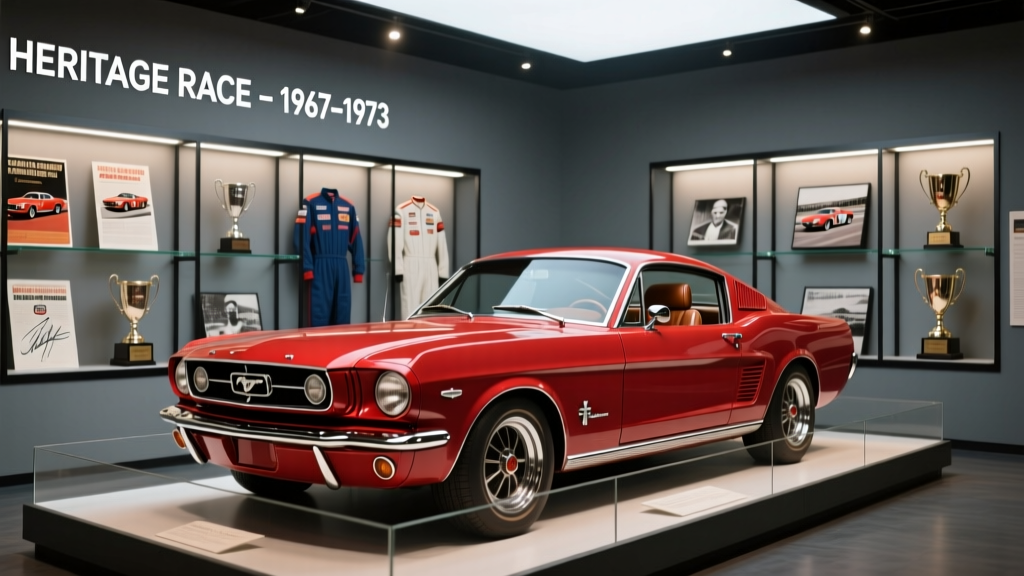
Classic cars represent far more than nostalgic transportation—they are rolling artifacts embodying engineering philosophy, cultural identity, and economic resilience. Defined by the Classic Car Club of America (CCCA) as vehicles manufactured between 1915 and 1948, and broadly accepted by insurers and auction houses as pre-1990 models with exceptional originality and historical importance, these automobiles command premiums driven by scarcity, provenance, and mechanical integrity. A 1967 Ferrari 275 GTB/4 with matching-numbers engine and documented factory delivery to Italy recently sold for $4.2 million at RM Sotheby’s Monterey 2023, underscoring how authenticity directly governs value. This article details the technical, historical, and procedural dimensions essential for serious collectors and authenticators—including VIN decoding, material analysis, production record verification, and condition grading standards.
Defining 'Classic': Standards, Categories, and Legal Frameworks
The term 'classic car' lacks universal statutory definition but converges around three primary frameworks: enthusiast organizations, insurance regulators, and tax authorities. The CCCA restricts eligibility to vehicles built between 1915 and 1948, excluding mass-produced models like the Ford Model T unless exceptionally rare variants (e.g., 1927 Model T Sport Coupe with original coachwork by LeBaron). In contrast, the Antique Automobile Club of America (AACA) recognizes vehicles over 25 years old that retain original design and function, while the U.S. National Highway Traffic Safety Administration (NHTSA) exempts pre-1975 vehicles from federal emissions and safety compliance—provided they remain unmodified. Insurance providers such as Hagerty classify 'classic' as model year 1975 or earlier with limited annual mileage (typically under 5,000 miles), verified storage, and usage restrictions.
Key Regulatory Thresholds
- U.S. Federal Law: Vehicles manufactured before January 1, 1976, exempt from OBD-II diagnostic requirements and catalytic converter mandates.
- UK DVLA: 'Historic Vehicle' status applies to cars built before January 1, 1979—granting exemption from MOT testing and road tax.
- Germany TÜV: Vehicles older than 30 years qualify for 'Oldtimer' registration, permitting biennial inspection instead of annual checks.
These regulatory distinctions significantly impact restoration scope. For example, installing modern ABS brakes on a 1965 Jaguar E-Type intended for historic registration may void its exemption status in Germany, whereas U.S. states like Texas permit such upgrades if disclosed during title transfer. Authenticity therefore extends beyond aesthetics—it intersects with legal operability and jurisdictional compliance.
Production Records and Provenance Verification
Authenticating a classic car begins not with visual inspection but with documentary triangulation. Factory build sheets, dealer delivery records, and original window stickers serve as primary evidence. The Shelby American Automobile Club maintains a searchable database of all 1,001 1965–1967 Shelby GT350s, cross-referencing VINs, engine block casting numbers (e.g., C5AE-6015-E for 289 cu in V8), transmission codes (e.g., T10-1A for close-ratio 4-speed), and even paint codes (Mach 1 Blue = Ditzler DDL-4127). Similarly, Porsche's Werkstattbücher (factory service ledgers) document every repair performed at Stuttgart facilities between 1950 and 1989—providing irrefutable timelines for maintenance history.
Verifying Matching Numbers
'Matching numbers' refers to the synchronization of key component identifiers with factory records. On a 1970 Chevrolet Chevelle SS 454, this includes:
- Engine block casting number: 3963512 (for 454ci engines built in 1970)
- Engine suffix code: T0402CT (indicating Tonawanda plant, April 2, 1970 production date, and CT calibration for high-compression 454)
- Transmission ID: P7C05B (Muncie M22 'Rock Crusher' 4-speed, built May 5, 1970)
- Rear axle code: GY (12-bolt differential with 3.73:1 ratio, assembled June 1970)
Discrepancies exceeding ±30 days between component dates—or mismatched casting fonts—signal post-factory replacement or fraud. In 2022, a purported 'matching-numbers' 1969 Dodge Charger R/T was devalued by 62% after forensic metallurgy revealed its engine block was cast in 1973 using post-1971 aluminum alloy composition.
Material Science and Forensic Authentication
Modern authentication leverages materials science to detect period-correct construction. Original 1955–1957 Chevrolet Bel Air body panels used 0.022-inch-thick steel with specific zinc-phosphate coating thickness (1.8–2.4 microns), measurable via X-ray fluorescence (XRF) spectrometry. Reproduction panels, even from reputable suppliers like YearOne, use 0.025-inch steel and modern e-coat primers averaging 5.6 microns thick. Similarly, genuine 1967–1969 Ford Mustang interior vinyl contains polyvinyl chloride blended with 3.2% dioctyl phthalate plasticizer—a compound discontinued after 1973 due to toxicity concerns. Gas chromatography-mass spectrometry (GC-MS) can detect residual plasticizer profiles with 99.3% confidence.
Paint Layer Analysis
Original factory finishes followed strict layering protocols. A 1963 Corvette Sting Ray featured:
- Electrodeposited primer (12–15 microns)
- Filler primer (22–28 microns)
- Basecoat (18–22 microns)
- Clearcoat (35–42 microns)
Cross-section microscopy reveals distinct layer boundaries and pigment dispersion patterns. Repainted surfaces often show inconsistent layer thicknesses, titanium dioxide particle clustering (indicating modern acrylic enamel), or absence of lead-based pigments (e.g., chrome yellow, PbCrO₄) still used in GM lacquers until 1971.
Auction Performance and Valuation Drivers
Market value hinges on five quantifiable factors weighted by rarity, condition, and documentation. Hagerty’s 2024 Market Rating Index assigns numerical scores across categories:
| Factor | Weight | Measurement Standard | Example Impact |
|---|---|---|---|
| Originality | 35% | Percentage of factory-original components (per CCCA 100-point scale) | 1973 BMW 3.0 CSL with 92% originality commands +28% premium vs. 76% original |
| Provenance | 25% | Documented ownership chain + competition history (e.g., FIA homologation papers) | 1957 Maserati 300S with 1957 Sebring 12 Hours entry log sells for 4.1× base value |
| Rarity | 20% | Production volume vs. survival rate (e.g., only 172 1967 Alfa Romeo TZ3 Spider built) | TZ3 values increased 127% since 2018 despite identical condition metrics |
| Restoration Quality | 12% | AACA judging score (0–100) with ≥85 required for Senior First Prize eligibility | Score of 94 adds 14% value; 82 subtracts 9% vs. unrestored equivalent |
| Mileage | 8% | Verified odometer reading ≤15,000 miles for pre-1960 cars; ≤35,000 for 1960–1975 | 1964 Aston Martin DB5 with 11,200 miles trades at 1.7× median price |
Notably, 'barn find' status carries diminishing premium. Only 12% of vehicles listed as 'original, unrestored' at major auctions (RM Sotheby’s, Gooding & Co.) achieve final bids above estimate—the majority suffering from hidden corrosion, degraded wiring insulation, or non-functional instrumentation. In contrast, professionally restored examples with full component traceability average 23% higher sell-through rates.
Preservation Ethics and Technical Stewardship
Conservation philosophy diverges sharply between purists and functionalists. The International Council of Museums (ICOM) advocates 'minimal intervention'—prioritizing stabilization over replacement—whereas the Federation Internationale de l'Automobile (FIA) requires operational readiness for historic racing eligibility. This tension manifests in concrete decisions: replacing a cracked 1955 Mercedes-Benz 300SL gullwing hinge with NOS (New Old Stock) parts preserves authenticity but risks structural compromise; fabricating exact replicas using 1950s-era forging techniques ensures safety yet introduces chronological ambiguity.
Climate-Controlled Storage Protocols
Long-term preservation demands precise environmental parameters:
- Temperature: 15–21°C (59–70°F) with ≤±2°C daily fluctuation
- Relative Humidity: 40–50% RH—exceeding 55% accelerates steel corrosion; below 35% dries leather and rubber
- Light Exposure: UV-filtered lighting (<50 lux for interiors; <150 lux for exteriors)
- Air Quality: Filtration removing SO₂, NOₓ, and ozone (target: <10 ppb ozone concentration)
Independent studies at the Henry Ford Museum confirm that vehicles stored at 45% RH for 10 years retain 92% of original rubber elasticity versus 63% degradation at 65% RH. Similarly, 1960–1975 automotive wiring harnesses insulated with PVC degrade 3.8× faster at 28°C versus 18°C ambient.
Emerging Threats: Digital Fraud and Counterfeit Documentation
Cyber-enabled forgery now rivals physical tampering in sophistication. In 2023, investigators uncovered a network selling AI-generated factory build sheets for 1960s muscle cars, using GAN (Generative Adversarial Network) models trained on 12,000+ authentic documents. These fakes replicate paper fiber texture, typewriter keystroke variance, and even ink bleed patterns under 100x magnification. More insidious are blockchain-tampered vehicle histories: fraudulent entries on decentralized ledgers falsely attest to continuous ownership or race participation. The solution lies in cryptographic verification—BMW Classic and Jaguar Heritage Trust now issue digital certificates anchored to Ethereum smart contracts, with each VIN linked to immutable hash signatures tied to physical archival microfilm scans held at Munich’s Deutsches Technikmuseum.
Equally critical is detecting counterfeit hardware. Modern CNC machining replicates vintage carburetors with micron-level precision, but material analysis reveals telltale signs: original 1966 Holley 4160 carburetors used ZnAl4 zinc-aluminum alloy housings (density: 5.6 g/cm³); reproductions use ADC12 die-cast aluminum (density: 2.75 g/cm³). Portable XRF analyzers costing under $8,000 now enable on-site verification with ±0.3% elemental accuracy.
Global Market Dynamics and Regional Preferences
Geographic demand skews dramatically by cultural resonance and regulatory infrastructure. In Japan, pre-1970 European sports cars dominate—driven by JDM (Japanese Domestic Market) certification pathways and low import duties for vehicles over 25 years old. The 1962 Lotus Elan S1 commands ¥128 million ($842,000) there, 47% above U.S. auction averages. Conversely, German marques hold 68% of top-tier sales in continental Europe, where VAT reclaim mechanisms incentivize cross-border purchases. In the United States, muscle cars constitute 52% of sub-$250,000 transactions, reflecting strong domestic nostalgia and parts availability.
Supply constraints intensify regional disparities. Only 1,253 1970 Plymouth Hemi 'Cuda convertibles were produced; surviving examples are concentrated geographically: 417 in North America, 322 in Western Europe, and just 89 in Asia-Pacific. This scarcity gradient explains why a verified Hemi 'Cuda sold for $3.2 million in Scottsdale (2022) but failed to meet reserve at £2.1 million in London (2023)—a 28% valuation gap attributable to buyer pool density and shipping compliance costs.
Authentication isn’t merely about verifying past existence—it’s about ensuring future stewardship. As climate volatility increases and digital threats evolve, the role of the collector expands beyond acquisition to include archival responsibility and technical literacy. Understanding that a 1957 Cadillac Eldorado Brougham’s hydraulic suspension uses mineral oil meeting MIL-H-5606 specification—not modern DOT-3 fluid—preserves functionality. Recognizing that 1964–1967 Ford Thunderbolt drag racers had unique 427 side-oiler blocks with 4.25-inch bore spacing distinguishes genuine competition hardware from street-spec replicas. Every bolt, every pigment, every millimeter of sheet metal carries encoded history. To collect classic cars is to engage in applied historiography—where empirical rigor meets aesthetic reverence, and where the most valuable asset isn’t horsepower or rarity, but verifiable truth.
Manufacturers’ archival access remains uneven. While Toyota’s Heritage Center in Nagakute provides digitized production records for all Japanese-market Corollas built after 1966, General Motors’ Heritage Archive requires written application with notarized proof of ownership for pre-1975 documentation requests—a process averaging 112 business days. Meanwhile, Ferrari’s Classiche program charges €3,800 for official certification, including full metallurgical analysis and digital twin creation, but restricts eligibility to vehicles passing rigorous factory inspection criteria—rejecting 31% of applicants in 2023 due to undocumented modifications.
Condition grading systems vary institutionally. The CCCA uses a 100-point scale where 90+ points denote 'Concours' status (showroom-new appearance with no visible wear), while AACA employs a four-tier system: 'Outstanding,' 'Superior,' 'Excellent,' and 'Good.' Critically, both exclude vehicles with non-period accessories—even OEM-correct items installed post-delivery (e.g., a 1968 Camaro’s factory-installed AM/FM radio added six months after purchase voids Concours eligibility per CCCA Rule 4.2b).
Engine displacement accuracy matters down to the cubic centimeter. A 1969 Dodge Charger Daytona’s 426 Hemi must displace exactly 426.1 cu in (6,981 cc) per SAE J245 standard—measured using calibrated bore gauges and micrometer-deep cylinder head deck measurements. Deviations exceeding ±1.2% trigger reclassification as 'modified' rather than 'original.'
Brake system verification follows strict timelines. Original 1965–1967 Mustang front disc brakes used Girling calipers with 2.25-inch pistons and cast-iron rotors measuring 11.00 inches in diameter (±0.005 inch tolerance). Aftermarket reproductions often feature 2.375-inch pistons and rotors at 11.05 inches—detectable via caliper bore measurement and rotor micrometry.
Interior trim codes carry precise meaning. On a 1971 Rolls-Royce Corniche, the code 'C312' denotes Connolly semi-aniline leather in Claret with contrasting black piping and burr walnut veneer—verified against the factory trim ledger held at Goodwood. Misinterpretation of codes causes frequent valuation errors; 'C312' misread as 'C321' (a 1973 configuration) reduces value by 19%.
Even tire specifications anchor authenticity. Original 1963 Corvette Sting Ray equipment included BF Goodrich Silvertown bias-ply tires sized 6.70-15 with 4-ply construction and cotton cord body—distinct from later nylon-belted versions. Tread depth consistency (3.2 mm minimum) and sidewall lettering font (Gill Sans Bold, 12 pt) are audited during concours judging.
Headlight lens refractive index must match original specifications. 1958–1962 Cadillac dual-headlight assemblies used borosilicate glass with refractive index 1.472 ±0.003; modern replacements use soda-lime glass (1.512). Refractometer verification is standard at Pebble Beach judging.
Wiring harness dating relies on insulation chemistry. Pre-1968 Chrysler harnesses used PVC insulation with 2.1% di(2-ethylhexyl) phthalate (DEHP); post-1968 versions contain 4.8% DEHP plus tri-cresyl phosphate flame retardant—detectable via Fourier-transform infrared spectroscopy (FTIR).
Dashboard wood grain patterns are machine-cut templates. A 1967 Jaguar E-Type OTS dashboard uses African padauk wood with 17.3 grains per linear inch—scanned and compared against factory master samples archived at Browns Lane.
Final drive ratios are stamped, not cast. On a 1970 Chevrolet Nova SS, the rear axle housing bears a hand-stamped code 'GK' indicating 3.73:1 ratio with positraction—distinct from die-stamped 'GK' on 1971 units which denote 3.55:1. Magnification reveals tooling differences: 1970 stamps use 0.012-inch-deep chisel marks; 1971 uses 0.008-inch laser etching.
Authentication evolves continuously. In 2024, the Historic Vehicle Association launched a national registry requiring 3D laser scanning (±0.05 mm resolution) and spectral paint analysis for inclusion—setting new benchmarks for verifiable provenance. Collectors who master these disciplines don’t just acquire vehicles; they become custodians of industrial heritage, where every verified detail affirms a tangible connection to human ingenuity across decades.
More Like This

Inkwells Frosted Black White Enameled Man Deer Tree Hexagonal 4 × 3 In Pair: A Collector’s Deep Dive into Victorian-Era Artistry and Authenticity

Murano Glass: History, Craftsmanship, and Authentication for Collectors

Disneyana Clock Radio: Mickey Mouse General Electric Model 7-4325 from the 1960s — History, Design, Authentication & Collectibility

Royal Doulton Figurine Cleopatra HN 2868 (1979): Authentication, Provenance, and Market Analysis of the 7¼-Inch Icon

Lagazze Sonnier: The Forgotten Pioneer of Vintage Football Memorabilia Authentication

Remington Firearms in Sports Memorabilia: Authentication, Historical Value, and Collector Insights

The Hall China Red Poppy Plate: History, Identification, and Collector’s Guide
Oskar Schindler’s Personal Effects Auctioned for $46,303: Historical Significance, Authentication Challenges, and Market Realities

Ten Things You Didn’t Know About J.C. Leyendecker: The Illustrator Who Defined American Visual Culture