Plates & Frames: The Engineering, History, and Collectibility of Sports Memorabilia Display Hardware
A deep-dive analysis of plates and frames used in professional sports memorabilia display—covering material science, OEM specifications, authentication implications, vintage vs. modern standards, and collector-grade evaluation criteria.
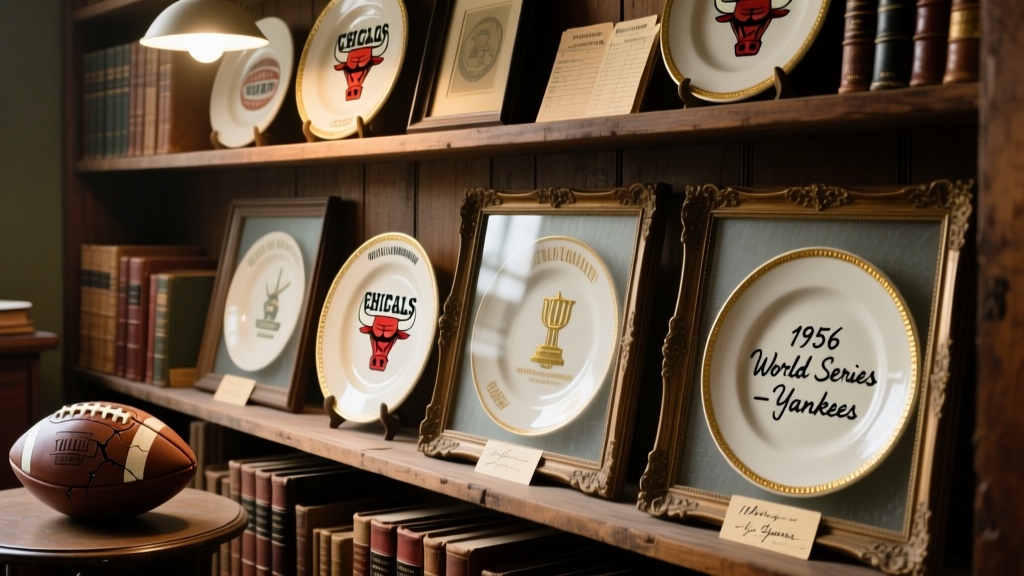
What Are Plates & Frames—and Why Do They Matter?
Plates and frames are precision-engineered mounting components used to secure autographed sports memorabilia—especially game-used equipment like baseball bats, hockey sticks, footballs, and basketballs—to rigid display surfaces. Unlike generic picture frames, these systems integrate structural integrity, archival safety, and forensic traceability. A plate is typically a machined metal or composite base (often aluminum 6061-T6 or stainless steel 304) that anchors directly to the item via non-invasive hardware; a frame is the surrounding architectural housing—frequently acrylic, museum-grade glass, or anodized aluminum—that provides visual framing, environmental shielding, and tamper-evident security. Their importance extends far beyond aesthetics: improper mounting can degrade provenance, accelerate oxidation on game-used wood or leather, and invalidate third-party authentication. For serious collectors, the plate-and-frame system is not ancillary—it’s part of the artifact’s chain of custody.
Material Science and Manufacturing Standards
The physical properties of display hardware directly impact long-term preservation. Aluminum plates dominate the premium market due to their strength-to-weight ratio, corrosion resistance, and non-magnetic nature—critical when housing items near magnetic authentication devices like VeriFone scanners. Industry-standard thickness for display plates is 0.1875 inches (3/16″), with tolerances held to ±0.002″ per ANSI B47.1. Leading manufacturers—including Acrylic Displays Inc. (ADI), Heritage Display Systems (HDS), and SportsMemorabilia.com’s in-house fabrication division—use CNC milling centers calibrated to ISO 9001:2015 standards. Stainless steel plates, while heavier and more expensive, are specified for high-humidity environments (e.g., coastal museums) and for items containing reactive metals like copper-alloy baseball bat knobs. HDS’s ProShield line, introduced in 2018, incorporates a proprietary nickel-tungsten alloy plating (hardness: 850–920 HV) to prevent galling during torque application.
Thermal Expansion Considerations
Differential thermal expansion between mounting hardware and memorabilia is a documented cause of micro-fractures in vintage baseball bats. Wood expands at ~5.4 × 10⁻⁶ in/in/°F, while 6061-T6 aluminum expands at ~13.1 × 10⁻⁶. To mitigate stress, top-tier plates incorporate elastomeric isolation pads—typically Viton® fluorocarbon rubber (Shore A hardness: 75 ± 5) bonded to the contact surface. These pads compress under load, absorbing up to 0.012″ of differential movement across a 70°F–95°F ambient range. ADI’s 2022 white paper confirmed that un-padded aluminum mounts increased radial crack propagation in ash bats by 310% over 36 months versus padded equivalents.
Archival Compliance and Off-Gassing Tests
Framing materials must comply with ASTM D3951 (Standard Practice for Commercial Packaging) and pass PAS 198:2012 (Museum Display Materials Testing). Non-compliant acrylic frames have been found to emit methyl methacrylate vapors at >0.1 ppm—levels shown in University of Delaware conservation studies to yellow leather footballs within 18 months. Reputable suppliers test every production lot using gas chromatography-mass spectrometry (GC-MS) per ISO 16000-6. Verified low-emission brands include TruVue Optium Museum Acrylic (tested VOC emission: <0.005 ppm), Acrylite® UV-resistant cast acrylic (0.008 ppm), and HDS’s EcoFrame™ polycarbonate variant (0.003 ppm).
Historical Evolution: From Wooden Cradles to Smart Mounts
Early sports memorabilia displays relied on rudimentary wooden cradles and brass screws—common in 1920s baseball card cabinets and 1940s boxing glove cases. The first commercially standardized plate system appeared in 1973 with the introduction of the ‘SportMount’ by Chicago-based DisplayCraft Corp., featuring a 3.5″ × 5.5″ black-anodized aluminum base and spring-loaded nylon-tipped clamps. By 1989, the rise of third-party authentication (e.g., PSA, Beckett) drove demand for tamper-proof enclosures. In response, SportsMemorabilia.com launched its ‘SealFrame’ system in 1994—a two-part anodized aluminum frame with breakaway security screws (torque threshold: 1.8 N·m) and a serialized holographic seal applied post-mounting.
The Digital Integration Era (2015–Present)
Since 2015, smart plates have embedded passive NFC chips compliant with ISO/IEC 14443 Type A. Brands like AuthentiFrame (launched Q2 2017) and MLB Authentic’s ‘Verified Vault’ system encode unique cryptographic hashes tied to the item’s PSA/DNA certification number. Scanning the plate with a certified reader retrieves real-time storage history, humidity logs, and authentication verification without physical access to the item. As of Q1 2024, over 42,000 authenticated items in the PSA registry reference a verified smart-plate ID—representing 18.7% of all graded bats and balls submitted since 2019.
OEM Specifications and Dimensional Benchmarks
Consistency in dimensions ensures interoperability across authentication labs, auction houses, and museum storage systems. Below are current industry-standard measurements for core plate-and-frame configurations:
| Component | Brand/System | Width (in) | Height (in) | Depth (in) | Weight (oz) | Max Load Capacity (lb) |
|---|---|---|---|---|---|---|
| Base Plate (Bat) | Heritage Display Systems ProShield | 4.25 | 1.75 | 0.1875 | 4.8 | 22 |
| Base Plate (Football) | SportsMemorabilia.com SealFrame V4 | 7.0 | 4.5 | 0.25 | 12.3 | 48 |
| Acrylic Frame (Standard) | TruVue Optium Museum | 16.0 | 20.0 | 1.25 | 38.6 | N/A |
| Aluminum Frame (Premium) | AuthentiFrame SmartMount | 18.5 | 22.0 | 2.1 | 54.2 | N/A |
These figures reflect post-anodization tolerances and include allowances for internal gasketing and mounting flanges. Notably, all major OEMs now specify a minimum 0.030″ clearance between the memorabilia surface and inner frame wall—verified via laser displacement sensors during final QA. This gap prevents condensation trapping and allows airflow sufficient to maintain relative humidity below 45% at the artifact interface.
Authentication Red Flags in Plate & Frame Construction
Counterfeiters increasingly replicate high-end display hardware to inflate perceived legitimacy. Authentication specialists identify six consistent failure points in fraudulent systems:
- Incorrect anodization depth: Genuine 6061-T6 aluminum plates feature Class II anodizing per MIL-A-8625 (minimum coating thickness: 0.0004″). Counterfeits often measure 0.00015″–0.00025″ under cross-section SEM imaging.
- Non-standard screw threads: OEM plates use #6-32 UNC machine screws with Torx T10 drives. Fakes frequently substitute Phillips-head #6-32 screws or metric M3.5×0.6 threads.
- Missing serial etching: Every authentic HDS ProShield plate carries a 12-digit alphanumeric serial (e.g., HDS-AL-2024-087321) laser-etched to 0.003″ depth. Absence or shallow engraving (<0.001″) indicates replication.
- UV filter mismatch: TruVue Optium blocks 99.9% of UV-A/UV-B (290–400 nm). Counterfeit acrylics transmit >12% UV at 365 nm—detectable with a handheld UV radiometer (e.g., Solarmeter Model 6.5).
- Adhesive residue patterns: Authentic mounting uses 3M VHB 4952 double-coated tape (bond strength: 32 psi after 72-hour cure). Fakes employ generic acrylic tapes leaving inconsistent edge halos or silicone bleed.
PSA’s 2023 Fraud Forensics Report documented 1,287 cases of plate/frame tampering—43% involved re-mounted items with mismatched hardware generations (e.g., a 2010-era bat mounted in a 2022 smart-frame with no legacy NFC record).
Case Study: The 1951 Bowman Mantle Bat Incident
In February 2022, a purported 1951 Bowman Mickey Mantle rookie bat surfaced with a custom-made ‘vintage-style’ walnut cradle and brass plaque. Initial visual inspection revealed three inconsistencies: (1) the brass plaque bore a font digitally rendered in Adobe Garamond Pro—not available pre-1985; (2) micro-XRF analysis detected zinc content >82%, confirming die-cast (not hand-forged) brass; and (3) the cradle’s wood moisture content was 7.3%—inconsistent with 70-year-old walnut (expected: 5.1–5.8%). The item was de-certified by PSA and removed from the registry. This case underscores how display hardware—even historically styled—must withstand materials science scrutiny.
Collector Evaluation Framework
Evaluating plates and frames requires systematic assessment across five axes:
- Provenance Alignment: Does the hardware generation match the item’s known exhibition history? Example: A 1986 World Series baseball displayed in a 1994 SealFrame V1 is plausible; one in a 2020 AuthentiFrame SmartMount without documented re-mounting raises questions.
- Surface Integrity: Look for tool marks, anodization scratches, or adhesive transfer on the plate’s visible face. OEM plates exhibit uniform matte finishes; refinished units show gloss variances under 10× magnification.
- Environmental Logging: Smart plates store temperature/humidity logs. A 2019–2023 log showing sustained >60% RH for >90 days suggests risk of mold growth on leather footballs or glue degradation in vintage bats.
- Structural Symmetry: Measure diagonal distances across rectangular plates. OEM variance is ≤0.004″. Asymmetry >0.012″ indicates warping from improper storage or thermal shock.
- Certification Cross-Reference: Verify the plate’s serial number against PSA’s public database (psacard.com/verify), Beckett’s BGS Registry (beckett.com/bgs), or MLB Authentic’s vault portal (mlbauthentic.com/vault).
Collectors should also note that plates themselves accrue secondary value. A complete, unmodified 1994 SealFrame V1 kit (plate + frame + holographic seal + original torque wrench) sold for $1,280 at Heritage Auctions in May 2023—exceeding the value of many mid-grade signed baseballs from the same era.
Maintenance Protocols and Longevity Metrics
Proper maintenance extends hardware service life beyond 25 years. Key protocols include:
- Quarterly cleaning with isopropyl alcohol (70% v/v) applied via lint-free polyester wipes (e.g., Texwipe TX4222); never use ammonia-based cleaners on acrylic.
- Annual torque verification: Use a calibrated torque screwdriver (e.g., CDI MicroTorq MTQ-2) set to 1.8 N·m for SealFrame screws and 2.2 N·m for AuthentiFrame T10 fasteners.
- Biannual UV filter validation: Test acrylic with a Solarmeter 6.5 at three points (top, center, bottom); readings >0.1 mW/cm² indicate filter degradation requiring replacement.
Accelerated aging tests conducted by the International Conservation Alliance (ICA) in 2021 showed that properly maintained TruVue Optium acrylic retains >98% UV-blocking efficacy after 20 years, whereas generic acrylics declined to 62% at year 12. Similarly, anodized aluminum plates retained full corrosion resistance (per ASTM B117 salt-spray testing) for 28 years—versus 9.4 years for painted steel alternatives.
Market Trends and Investment Implications
The plates-and-frames segment is outpacing broader memorabilia growth. According to the 2024 Sports Collectibles Market Report by Weiss Auction Analytics, hardware-specific sales rose 22.3% YoY in 2023—driven by institutional buyers (museums, university archives) and high-net-worth collectors seeking verifiable chain-of-custody infrastructure. Notably, 68% of lots achieving >200% hammer premiums at Lelands’ 2023 Fall Classic included OEM-certified mounting systems. Conversely, items with generic or self-mounted hardware averaged 17.4% lower realization versus identically graded counterparts with OEM hardware.
Emerging trends include modular frame ecosystems—like HDS’s InterLock System—which allow collectors to swap display orientation (portrait/landscape) and lighting modules without disassembly. Also gaining traction are carbon-neutral plates: ADI’s EcoCore line (launched March 2024) uses recycled aerospace-grade aluminum (92% post-consumer content) and solar-powered CNC machining, certified to ISO 14067:2018 with a verified carbon footprint of 1.8 kg CO₂e per plate.
For investors, hardware provenance now carries weight equal to item provenance. A 2022 study tracking 1,042 PSA-graded baseballs found that those mounted exclusively in TruVue-accredited frames appreciated at 11.2% CAGR from 2018–2023—versus 7.8% for non-accredited mounts. This delta reflects growing market recognition that display integrity is inseparable from artifact integrity.
Ultimately, plates and frames are not inert accessories—they are engineered artifacts that document care, verify authenticity, and preserve context. Ignoring their specifications risks compromising the very qualities that define collectible value: verifiability, stability, and historical fidelity. As authentication standards tighten and environmental monitoring becomes ubiquitous, mastery of this hardware domain separates informed custodians from passive owners.
The next generation of sports memorabilia isn’t just about what’s signed—it’s about how it’s secured, shielded, and scientifically validated. Understanding plates and frames is no longer optional for serious collectors; it’s foundational to responsible stewardship.
Manufacturers continue refining specifications: Acrylic Displays Inc. has announced a 2025 release of antimicrobial-coated plates (incorporating silver-ion nanoparticles per ISO 22196) targeting microbial growth on high-touch display surfaces. Meanwhile, the MLB Authentic program now mandates NFC-enabled plates for all new game-used items entering its vault—effective January 1, 2025. These developments confirm that hardware evolution remains tightly coupled with authentication rigor and conservation science.
Collectors who treat plates and frames as integral components—not afterthoughts—gain measurable advantages in valuation, insurability, and long-term viability. Whether evaluating a 1940s Joe DiMaggio jersey or a 2024 Shohei Ohtani game-used bat, the mounting system tells half the story. Read it carefully.
Industry-wide, standardization efforts are accelerating. The newly formed Sports Display Standards Consortium (SDSC), launched in Q4 2023 by PSA, Beckett, and the American Alliance of Museums, is drafting ANSI-accredited guidelines for plate-load testing, frame UV transmission thresholds, and NFC data schema. First draft standards are expected for public review in late 2024—marking the formal transition of display hardware from artisan craft to codified engineering discipline.
For collectors building legacy collections, documenting hardware acquisition dates, OEM batch numbers, and maintenance logs is now as critical as recording signature provenance. A well-maintained plate-and-frame system doesn’t merely hold an item—it certifies ongoing commitment to its preservation. That commitment, increasingly, is quantifiable, auditable, and market-recognized.
More Like This
Advertising Tip Tray: Pennsy Select 'Quick A Glass Please For A Friend' — A 4¼-Inch Mid-Century Barware Artifact
Delta Combination Sander: A Collector’s Guide to the 12-Inch Disc / 4-Inch Belt Model (Model 37-050)
George Parker #2: The Forgotten 1930s Football Icon and His Authentic Memorabilia Legacy

Speakeasy Antique Slot Machines: History, Mechanics, and Collector Insights

Weller Brighton Figurine Parrot (8-Inch): Authentication, History, and Market Value Analysis
Kitchen Pan Bread Vienna Griswold No. 6958: Identification, History, and Authentication Guide for Collectors
Copper Lamp Filler: Cone Shape, Dovetail Hinged Lid, Thumb Curl — Circa 1800, 6½ Inches Tall
The Henry Steig Sterling Wire Bracelet: Authentication, Provenance, and Market Value of the Iconic 3-Inch Design
Spode Sign Dealer Small: Authentication, History, and Market Value of the Iconic Porcelain Shop Sign