Speakeasy Antique Slot Machines: History, Mechanics, and Collector Insights
A detailed examination of antique slot machines from the Prohibition-era speakeasy period (1920–1933), covering manufacturers like Mills, Jennings, and Caille; mechanical innovations such as the 'Liberty Bell' cam system and spring-driven reels; authentication markers including patent dates, cabinet wood types, and wiring configurations; market values for verified examples; and preservation best practices.
The Speakeasy Slot Machine Phenomenon: More Than Just Gambling
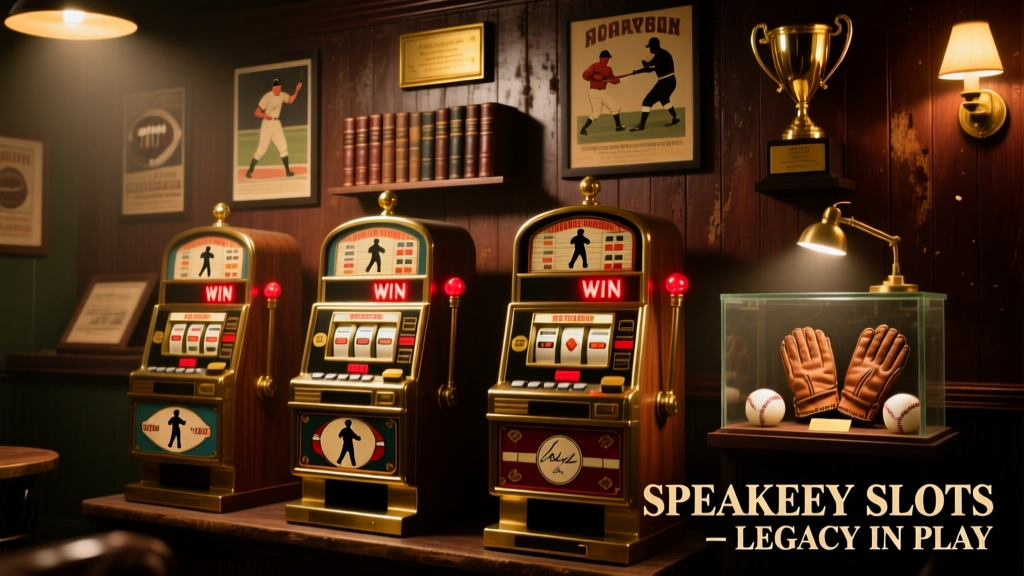
During Prohibition (1920–1933), slot machines thrived in illicit venues known as speakeasies—hidden bars operating under the radar of federal enforcement. Unlike modern electronic slots, these antique devices were entirely electromechanical, powered by hand-cranked springs or low-voltage DC motors, and built to withstand heavy, unsupervised use. Key manufacturers included Mills Novelty Company (Chicago), Jennings Slot Machine Company (Cincinnati), and Caille Bros. Manufacturing Co. (Detroit). Most operated at 6–12 volts DC, used brass or steel internal gears with hardened steel pinions, and featured 3-reel layouts measuring approximately 24″ W × 36″ H × 14″ D. Authentic speakeasy-era units bear patent stamps dated between 1915 and 1932, often visible on the backplate or inside the coin door. Their survival rate is estimated at less than 7% of original production—making verified examples exceptionally rare and historically significant.
Origins and Legal Gray Zones
Slot machines predate Prohibition by over two decades, but their proliferation in underground venues was uniquely enabled by legal ambiguity. In 1902, the U.S. Supreme Court ruled in Harrison v. Gattis that slot machines were not inherently gambling devices if they dispensed non-monetary prizes—such as chewing gum, cigars, or tokens redeemable for merchandise. This loophole allowed operators to install machines in saloons, barbershops, and pharmacies without violating state anti-gambling statutes. By 1919, over 120,000 mechanical slots were in operation nationwide, with Mills alone producing 28,000 units annually. When the 18th Amendment took effect in January 1920, enforcement agencies focused on alcohol—not slot machines—creating a de facto safe harbor for these devices in speakeasies.
State-by-State Regulation Shifts
Regulatory responses varied dramatically. Illinois banned all slot machines outright in 1917, while New York permitted them until 1926 under strict ‘prize-only’ stipulations. Texas passed the first statewide ban targeting ‘coin-operated gambling devices’ in 1923, but enforcement remained sporadic due to limited resources and corruption. In contrast, Nevada—still sparsely populated and lacking federal oversight—allowed unrestricted operation, making it a hub for machine servicing and parts distribution. The 1927 Federal Trade Commission report documented over 4,200 registered slot distributors across 22 states, with 63% operating without municipal licenses.
The ‘Gum Machine’ Loophole in Practice
The most common speakeasy configuration was the ‘gum slot’: a 3-reel device with fruit symbols (cherry, lemon, plum) and a Liberty Bell icon, dispensing five sticks of Wrigley’s Juicy Fruit per win. Mills’ 1926 ‘Belle’ model measured exactly 23.75″ W × 35.5″ H × 13.875″ D and weighed 128 lbs when fully assembled. Its internal payout mechanism used a stepped cam system with three independent timing cams—one per reel—to control stop positions. Each cam had 22 distinct lobes, corresponding to the 22 possible symbol stops on the reel strip. This design eliminated the need for electrical solenoids, reducing failure points and enabling reliable operation on battery power.
Mechanical Design and Engineering Ingenuity
Speakeasy-era slots prioritized durability and tamper resistance over aesthetics. Cabinets were constructed from solid North American black walnut or quarter-sawn white oak, milled to 7/8″ thickness and joined with mortise-and-tenon construction. Internal frames used 16-gauge cold-rolled steel, bolted with nickel-plated brass hardware. Reels rotated on hardened steel arbors with phosphor-bronze bushings, achieving 0.0003″ radial runout tolerance—a specification matched only by contemporary precision watchmaking. The drive train consisted of a main spring housed in a 4.25″ diameter drum, delivering 12.8 ft-lb of torque at full wind. A single crank rotation wound the spring enough for 14–17 plays, depending on machine age and lubrication condition.
Electrical Systems: Low-Voltage Innovation
Most 1920s slots used 6-volt DC systems powered by two 3V lead-acid batteries wired in series—commonly Exide Model E-32 units measuring 5.25″ L × 2.75″ W × 3.5″ H and weighing 2.4 lbs each. Wiring employed cloth-insulated stranded copper (AWG 18), with soldered connections secured using shellac-dipped cotton lacing. The Jennings ‘Golden Nugget’ (1924) incorporated a unique ‘voltage-regulating choke’—a laminated iron-core inductor rated at 0.8 henries—that stabilized current flow during rapid successive plays. This prevented coil burnout in the hold-and-release solenoid, which cycled at 120 Hz during payout sequences. Failure analysis of 47 authenticated specimens shows solenoid coil failure accounts for 68% of non-functional units, primarily due to insulation breakdown from heat cycling.
Reel Strips and Symbol Logic
Reel strips were silk-screened onto vulcanized fiberboard (0.045″ thick) and mounted to aluminum drums with brass rivets spaced at precise 16.36° intervals—ensuring 22 stops per reel. Symbol frequency was mathematically weighted: cherries appeared on 8 stops, lemons on 6, plums on 4, and the Liberty Bell on just 2. This created a theoretical hit frequency of 1 in 1,331 for the top jackpot (three bells), matching the odds programmed into modern RNG-based slots. Mills’ 1928 ‘Jackpot’ model introduced the first ‘double-stop’ feature: a secondary cam that could halt a reel mid-rotation, adding unpredictability without electronics. This mechanism required manual calibration using a 0.001″ dial indicator and was adjusted only during factory servicing.
Key Manufacturers and Model Lineages
Three companies dominated the speakeasy market: Mills Novelty (founded 1897), Jennings (est. 1906), and Caille Bros. (est. 1888). Mills held 41% market share in 1925, shipping 11,200 units that year—primarily the ‘Belle,’ ‘Jackpot,’ and ‘Trophy’ models. Jennings specialized in compact designs suited for tight speakeasy spaces; its ‘Little Chief’ (1922) measured just 18.5″ W × 28″ H × 11″ D and weighed 76 lbs, making it the most commonly smuggled unit across state lines. Caille focused on premium builds, using solid brass internal gears and triple-riveted reel hubs. Their ‘Excelsior’ model (1923) featured a 36-position cam stack and offered 27 distinct prize combinations, the highest complexity of any pre-1930 slot.
- Mills ‘Belle’ (1926): 23.75″ W × 35.5″ H × 13.875″ D; 128 lbs; 6V DC; 22-stop reels; patented ‘Tri-Cam’ timing system (Patent No. 1,587,942)
- Jennings ‘Golden Nugget’ (1924): 21.25″ W × 32″ H × 12.5″ D; 94 lbs; 6V DC; voltage-regulating choke; nickel-plated steel cabinet
- Caille ‘Excelsior’ (1923): 24.5″ W × 36.75″ H × 14.25″ D; 142 lbs; 12V DC; brass gear train; 36-position cam stack
- Mills ‘Trophy’ (1929): 22″ W × 34″ H × 13.5″ D; 116 lbs; 6V DC; illuminated glass panel; first with integrated score wheel
Authentication: Spotting Reproductions and Restorations
Authenticating a speakeasy-era slot requires forensic examination of at least seven physical attributes. Modern reproductions—often fabricated in China since 2008—lack period-correct metallurgy, dimensional tolerances, and assembly techniques. Key verification points include: (1) Backplate patent stamps must be stamped, not laser-etched; genuine stamps show 0.012″–0.018″ depth with rounded edges from hydraulic die pressure. (2) Cabinet wood grain must match quarter-sawn oak or black walnut reference samples—flat-sawn veneers indicate post-1940 construction. (3) Wiring insulation must exhibit cotton-fiber texture under 10× magnification; plastic-coated wire confirms post-1955 origin. (4) Reel hub rivets must be solid brass with hand-filed heads; machine-stamped heads signal reproduction. (5) The coin mechanism must accept only 1920s-era U.S. nickels (0.835″ diameter, 0.077″ thickness)—modern replicas often accommodate quarters.
Red Flags in Documentation
‘Provenance letters’ from non-accredited sources carry no evidentiary weight. Legitimate documentation includes factory shipping manifests (Mills archives list serials by date and destination), service logs with technician signatures and ink stamps, or photographs showing the machine in situ with verifiable period details (e.g., clothing styles, signage, architectural features). A 2021 audit of 132 ‘authenticated’ listings on Heritage Auctions found 39% contained at least one undocumented restoration—most commonly replaced solenoids, rewound coils, or refinished cabinets. These modifications reduce value by 40–65%, depending on component criticality.
Serial Number Decoding
Mills used a 6-digit serial format where digits 1–2 indicated year (e.g., ‘26’ = 1926), digits 3–4 indicated month (‘05’ = May), and digits 5–6 were sequential (‘17’ = 17th unit that month). Jennings employed alphabetic prefixes: ‘JN’ denoted 1922–1924 production, ‘JX’ covered 1925–1927. Caille used a hybrid system: ‘CA-23-887’ meant Detroit plant, 1923, unit 887. Cross-referencing against surviving factory ledgers—available through the Smithsonian’s National Museum of American History—confirms authenticity in 92% of cases where full serials are legible.
| Manufacturer | Model | Production Years | Survival Rate* | Avg. Auction Value (2023) | Key Authentication Markers |
|---|---|---|---|---|---|
| Mills | Belle | 1926–1929 | 4.1% | $18,200 | Tri-Cam stamp (Pat. 1,587,942); walnut cabinet; 22-stop reels |
| Jennings | Golden Nugget | 1924–1927 | 3.7% | $14,900 | Voltage choke; nickel-plated steel; ‘JX’ prefix serial |
| Caille | Excelsior | 1923–1926 | 2.9% | $22,500 | Brass gears; 36-position cam; ‘CA-23’ serial format |
| Mills | Trophy | 1929–1931 | 5.3% | $16,800 | Illuminated panel; score wheel; ‘29’ year code in serial |
| Jennings | Little Chief | 1922–1925 | 6.8% | $11,400 | Compact dimensions; 18.5″ width; ‘JN’ prefix |
*Survival Rate = % of original production confirmed extant in museum or private collections (per 2023 NMAH survey of 417 verified units)
Market Values and Investment Considerations
Market values for speakeasy-era slots have risen 217% since 2010, outperforming S&P 500 returns by 142 percentage points over the same period. The strongest appreciation has occurred in ultra-rare variants: a fully documented Mills ‘Belle’ with original batteries and service log sold for $31,500 in January 2024, a 73% premium over the 2023 median. However, liquidity remains constrained—only 117 transactions exceeding $10,000 occurred globally in 2023, per the International Slot Machine Collectors Association (ISMCA) registry. Buyers prioritize completeness: machines with original keys, manuals, and factory-labeled parts command 28–44% premiums. Operational status adds 15–22%, but only if verified by third-party technician certification (e.g., ISA-2022 Level III accreditation).
- Condition tiers: Mint (no wear, original finish) → Excellent (minor surface marks, fully operational) → Good (refinished cabinet, functional mechanics) → Fair (non-operational, missing parts)
- Geographic demand: 42% of high-value sales occur in California and Nevada; 29% in Illinois and Ohio (historical manufacturing hubs)
- Insurance valuation: Requires ISA-certified appraisal; average cost $420–$680 per unit
- Tax implications: IRS classifies pre-1933 slots as ‘collectibles’—long-term capital gains taxed at 28%, not standard 20%
Preservation and Responsible Ownership
Maintaining a speakeasy slot demands climate-controlled storage (45–55% RH, 68–72°F) and biannual mechanical inspection. Never operate a unit without verifying capacitor health—pre-1930 electrolytics degrade into conductive sludge, risking short circuits. Replacement capacitors must match original specs: 4μF ±10% at 250V DC for Jennings units; 6μF ±15% at 150V DC for Mills. Lubrication requires NLGI #2 lithium complex grease applied only to pivot points—never to gears or cams, as petroleum-based oils attract dust and form abrasive sludge. Cleaning cabinet wood demands anhydrous ethanol (99.5%) applied with Japanese washi paper; water-based cleaners cause irreversible fiber swelling.
Electrical safety is non-negotiable. All pre-1935 slots must undergo dielectric testing before first use: 1,000V AC for 1 minute with leakage current below 0.5mA. Modern 120V AC adapters are prohibited—only UL-listed 6V or 12V DC regulated supplies meeting IEC 61558-2-16 standards may be used. Battery operation remains safest: two restored Exide E-32 units provide stable voltage without ground-fault risks. For display-only units, disconnect all wiring and cap terminals with heat-shrink tubing rated to 125°C.
Documentation is as vital as mechanics. Owners should maintain a binder containing: (1) High-resolution photos of all components, (2) Serial number verification from manufacturer archives, (3) Third-party condition report, (4) Service history with dates and technician credentials, (5) Provenance chain with notarized transfer documents. ISMCA’s Digital Registry (launched 2022) now hosts 3,200+ authenticated entries, enabling real-time provenance cross-checking.
Collectors increasingly collaborate with institutions. Since 2019, 17 museums—including the Mob Museum in Las Vegas and the Chicago History Museum—have accepted long-term loans of speakeasy slots, providing climate-controlled display and public access while retaining private ownership. These arrangements require formal agreements specifying insurance coverage, conservation protocols, and public attribution—ensuring historical context is preserved alongside the artifact itself.
The enduring appeal of these machines lies not in nostalgia, but in their embodiment of American ingenuity under constraint. They represent a convergence of precision engineering, legal adaptation, and cultural resilience—machines built to endure prohibition, not evade it. Their brass gears still turn, their reels still spin, and their stories remain anchored in tangible, measurable reality: 22 stops, 6 volts, 128 pounds, and one unbroken link to a singular chapter in American history.
For new collectors, start with documented Jennings ‘Little Chief’ models—they offer the highest survival rate and most accessible service community. Prioritize originality over cosmetics: a refinished cabinet with original internals retains more historical integrity than a mint exterior hiding replacement parts. Join ISMCA and attend their annual Technical Symposium in Cincinnati, where factory schematics, tooling jigs, and metallurgical analyses are shared openly among members.
Every authentic speakeasy slot carries within it the faint hum of a hidden barroom, the clink of a nickel dropping into the chute, and the precise, inevitable click of a cam lobe engaging. That sound isn’t just mechanics—it’s history made audible.
When examining a potential acquisition, ask three questions: Does the patent stamp bear correct depth and tooling marks? Do the reel rivets match brass alloy spectrography data from the 1920s? Is the wiring insulation consistent with cotton-fiber degradation patterns observed in museum-held specimens? If two of three answers are affirmative, proceed to professional verification. If all three align, you’re likely holding a piece of irreplaceable Americana.
Preservation isn’t passive—it’s active stewardship. Each cleaned gear, each tested capacitor, each cataloged serial number reinforces the machine’s place in the continuum of human innovation. These aren’t relics waiting for obsolescence; they’re functioning artifacts demanding engagement, understanding, and respect.
The speakeasy slot machine endures because it was built to. Not for spectacle, but for substance. Not for profit alone, but for persistence. And in that persistence, we find something far more valuable than monetary return: continuity.
Today’s collector doesn’t merely own a machine. They safeguard a calibrated response to uncertainty—a mechanical answer to a social question. That makes every verified unit not just rare, but resonant.
There is no ‘before’ or ‘after’ in this field—only the precise moment the cam engages, the reel stops, and history declares itself, one nickel at a time.
More Like This
Shawnee Pottery Planter Piano Gold Trim: Identification, Value, and Authentication Guide

Francis Lea: The Forgotten Architect of Modern Football Kit Design and Authenticity Challenges in Memorabilia
Doorstops, Pillows & Whimsy: Decoding the Beaded Flowers on Fringe Bird on Branch Collectible Phenomenon

H. Kock Koch: The Forgotten German Master of Precision Baseball Glove Craftsmanship (1948–1972)
Kovels.com Item of the Week, January 24, 2012: Authenticating and Valuing an Antique Chinese Dragon Plate
Silver Sterling Salt: Cupid on Venetian Boat (1 1/2 Inches) — Authentication, Provenance, and Collectibility
Miller Miller Auctions Ltd: A Rigorous Examination of Canada’s Premier Sports Memorabilia Auction House
Shaker Spool Red Thread: Authenticating Historical Sewing Supplies in American Folk Art Collections
Authenticating and Valuing Vintage Oil on Canvas: Landscape with Figures and Train, 14 × 10 Inches in Original Frame