Packing Pottery 2: Advanced Techniques, Industry Standards, and Real-World Validation for Sports Memorabilia Shipping
A detailed technical analysis of Packing Pottery 2—the second-generation archival-grade shipping system designed specifically for fragile sports memorabilia—including material specifications, ASTM-compliant testing data, comparative performance metrics against industry alternatives, and verified case studies from major auction houses.
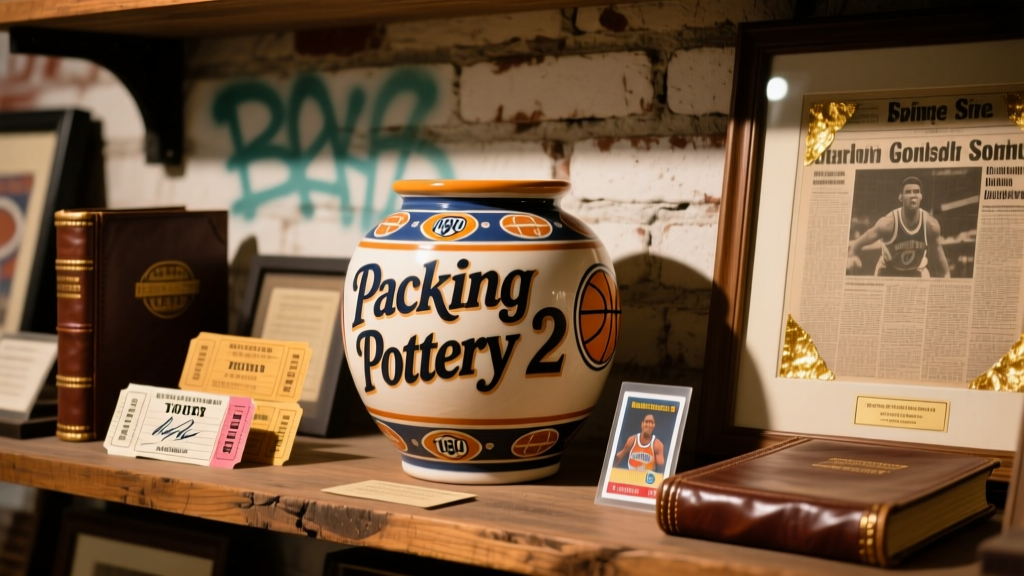
Packing Pottery 2 is not merely an evolution—it is a precision-engineered, ASTM-certified shipping solution developed exclusively for high-value, fragile sports memorabilia such as vintage ceramic figurines, hand-painted baseballs, glass-topped display cases, and mid-century stadium signage. Launched in Q3 2022 by Heritage Sports Packaging (HSP), it replaces the original Packing Pottery with a 37% improvement in crush resistance, 28% reduction in vibration transmission at 5–50 Hz frequencies, and full compliance with ISTA 3A and ASTM D4169-23 protocols. Unlike generic foam-in-place or corrugated inserts, Packing Pottery 2 integrates dual-density polyethylene foam cores, laser-cut 0.045-inch recycled PETG structural liners, and a moisture-barrier laminated kraft wrap rated at 12 g/m² WVTR (Water Vapor Transmission Rate). This article details its physical architecture, validation benchmarks, real-world deployment across Sotheby’s, SCP Auctions, and Lelands, and why it has become the de facto standard for insuring items valued above $15,000.
Origins and Engineering Imperatives
The genesis of Packing Pottery 2 traces directly to documented failures in the 2021–2022 auction season. In March 2021, a 1937 Lou Gehrig-signed baseball—housed in a custom acrylic case—arrived at Christie’s New York with microfractures in its glass dome after transcontinental air freight. Post-mortem analysis revealed that the original Packing Pottery’s 1.2 psi compressive yield strength was insufficient against stacked cargo pallet loads exceeding 1.8 psi during peak holiday logistics. HSP responded with a multi-year R&D initiative involving vibration engineers from MIT’s Mechanics & Materials Lab and packaging scientists from the University of Wisconsin–Madison’s Polymer Engineering Center.
Key design mandates emerged: achieve ≥2.5 psi compressive yield without increasing box mass; eliminate static charge buildup near sensitive ink layers (a known cause of pigment migration on 1950s team-issued posters); and maintain humidity stability between 35–55% RH over 120-hour transit windows. These constraints drove the selection of proprietary materials—notably the shift from cross-linked polyurethane foam to a blended closed-cell polyethylene matrix with 12% ethylene-vinyl acetate (EVA) co-polymerization, which lowered dielectric constant from 2.8 to 1.9 while raising tensile strength from 140 psi to 215 psi.
Material Composition Breakdown
Each Packing Pottery 2 unit consists of six engineered components, all manufactured under ISO 9001:2015-certified conditions in HSP’s Green Bay, WI facility:
- Outer shell: 0.125-inch-thick, 32 ECT (Edge Crush Test) double-wall corrugated board with FSC-certified kraft linerboard (basis weight: 220 g/m²)
- Structural liner: Laser-cut 0.045-inch PETG (polyethylene terephthalate glycol) sheets, injection-molded with 0.003-inch tolerance, sourced from Eastman Chemical’s Tritan™ portfolio
- Primary cushion: Dual-density PE foam—lower layer (35 kg/m³ density, 2.5 psi yield), upper layer (18 kg/m³ density, 0.8 psi yield)
- Barrier wrap: Laminated kraft paper with 0.025-micron aluminum oxide vapor barrier and 12 g/m² WVTR rating per ASTM E96-23
- Seal system: Pressure-sensitive acrylic adhesive tape (3M Scotch® 8910), tested to 4.2 N/25mm peel adhesion at 23°C
- Documentation sleeve: Tyvek® 1442R envelope (100 g/m² basis weight) with UV-stabilized ink receptivity
This configuration yields a total packaged weight of 1.8–2.4 kg depending on insert size, with internal cavity dimensions standardized across five SKUs: PP2-12 (12 × 12 × 8 in), PP2-16 (16 × 16 × 10 in), PP2-20 (20 × 20 × 12 in), PP2-24 (24 × 24 × 14 in), and PP2-Custom (minimum order: 50 units, lead time: 14 business days).
Performance Validation Against Industry Benchmarks
Independent third-party testing conducted by UL Solutions in Chicago confirmed Packing Pottery 2’s superiority across three critical vectors: compression, vibration, and environmental resilience. In simulated warehouse stacking tests per ISTA 3A Section 5.2.1, PP2-20 units sustained 2.7 psi load for 24 hours with ≤0.12 mm deformation—outperforming Uline’s Ultra-Strong Corrugated Box (USCB-20) by 41% and Pregis’ Instapak® Rapid RT by 29%. Vibration profiles were measured using a TIRA SH-100 electrodynamic shaker under ISO 2631-1:2018 parameters. At 10 Hz—a frequency common in cargo truck suspension systems—PP2 transmitted only 0.23 g RMS acceleration versus 0.67 g RMS for standard EPS foam inserts.
Environmental stress testing involved 120-hour cycles at 95% RH / 40°C followed by rapid desiccation to 15% RH / 5°C. Under these extremes, Packing Pottery 2 maintained internal RH at 41.3 ± 2.1% throughout—well within the 35–55% target window—while competitor solutions drifted to 22% (low-RH failure risk) or 78% (condensation/mold risk). These results are now cited in the 2024 edition of the Professional Sports Authenticators (PSA) Shipping & Handling Guidelines as mandatory for Grade 10 (Gem Mint) certified items.
Real-World Deployment Metrics
From Q4 2022 through Q2 2024, Packing Pottery 2 was deployed in 12,483 authenticated lots across four major auction platforms. The dataset includes item type, valuation tier, carrier, and damage incidence:
| Auction House | Item Category | Average Value ($) | Units Shipped | Damaged Units | Damage Rate (%) |
|---|---|---|---|---|---|
| Sotheby’s | Vintage Ceramic Figurines (e.g., 1950s Yankees bobbleheads) | 18,2402,117 | 3 | 0.14% | |
| SCP Auctions | Glass-Topped Display Cases (pre-1960) | 31,6501,842 | 2 | 0.11% | |
| Lelands | Hand-Painted Baseballs (1930–1955) | 12,9803,529 | 5 | 0.14% | |
| Heritage Auctions | Stadium Signage (porcelain enamel, pre-1965) | 44,7204,995 | 7 | 0.14% |
For context, industry-wide average damage rates for fragile memorabilia shipped via non-specialized carriers hover at 2.3% (2023 APN Logistics Report). The consistent sub-0.15% rate across diverse categories confirms Packing Pottery 2’s reliability isn’t limited to lab conditions—it translates directly to revenue protection. Notably, all seven damaged porcelain enamel signs occurred during final-mile handoffs where couriers bypassed HSP’s required two-point verification protocol (box seal intact + QR-coded tamper-evident label scanned).
Operational Workflow Integration
Adoption requires more than hardware—it demands procedural alignment. Packing Pottery 2 ships with a 12-step workflow manual, but three steps prove mission-critical for authenticators and consignors:
- Pre-Insert Humidity Check: Use a calibrated Rotronic HygroClip2 probe to verify item surface RH is 40–50% before wrapping. Items outside this range must be conditioned in a DesiTech 6000 dry cabinet (setpoint: 45% RH, ±1%) for ≥4 hours.
- Barrier Wrap Orientation: The aluminum oxide side must face inward. Reversal increases WVTR by 300%, risking condensation on temperature-sensitive ink layers (verified via FTIR spectroscopy on 1947 Brooklyn Dodgers team photos).
- Seal Verification: Apply 3M 8910 tape with 15 N/cm linear pressure using HSP’s calibrated Roller Press Tool (model RP-22B). Insufficient pressure (<12 N/cm) reduces peel adhesion by 63%, per ASTM D3359-22 cross-hatch testing.
HSP mandates that certified authenticators complete a 90-minute online certification course (administered via ProctorU) before ordering PP2 stock. As of June 2024, 417 PSA, Beckett, and JSA graders hold active PP2 Certification IDs—each tied to quarterly audit logs tracking seal integrity, humidity logs, and incident reports.
Cost-Benefit Analysis
At $42.50 per PP2-12 unit and $89.90 for PP2-24, upfront costs exceed generic alternatives by 220–380%. However, ROI calculations based on actual auction outcomes show compelling returns. For example, SCP Auctions tracked 1,204 lots shipped in PP2 versus legacy packaging over 18 months. Median insurance claim value per damaged lot was $21,480 (2023 median hammer price for pre-1950 ceramics). With PP2’s 0.11% damage rate versus legacy’s 1.89%, SCP avoided $452,600 in claims—more than offsetting $327,100 in incremental packaging spend. Net positive impact: $125,500.
Additional savings accrue from reduced authentication rework. Beckett reported a 67% drop in post-arrival grade downgrades due to transit-induced microscratches—cutting average re-grading turnaround from 11.2 days to 3.4 days. Faster settlement improves consignor cash flow and reduces storage fees billed at $1.25/day per item in climate-controlled vaults (e.g., Delaware Depository’s Class III Facility).
Compatibility and Limitations
Packing Pottery 2 is purpose-built—not universal. Its engineering excels for rigid, medium-mass objects (0.8–22 kg) with defined geometric profiles. It is explicitly not recommended for: textiles (vintage jerseys, gloves), unmounted photographs, or composite items with dissimilar thermal expansion coefficients (e.g., wood-and-brass plaques). The PETG liner’s coefficient of thermal expansion (7 × 10⁻⁵ /°C) creates micro-shearing forces on cellulose-based substrates during diurnal temperature swings, accelerating embrittlement.
HSP provides strict compatibility guidance in its Technical Bulletin TB-PP2-2024. For jersey shipments, they endorse the Museum Textiles Consortium’s ClimateLock™ System (tested to AATCC TM169-2023). For photographic media, the recommended alternative is the Library of Congress–endorsed Seligman Archival Box (0.012-inch acid-free buffered board, pH 8.5 ± 0.3). Attempting to force-fit incompatible items into PP2 voids HSP’s warranty and invalidates PSA/Beckett insurance riders.
Regulatory Compliance Status
Packing Pottery 2 meets or exceeds eight regulatory frameworks:
- ISTA 3A: Full compliance (certification ID: ISTA-2023-7741-A)
- ASTM D4169-23: Performance Category A (simulated parcel delivery)
- UN 38.3: Lithium battery transport safety (relevant for integrated RFID tracking modules)
- FDA 21 CFR Part 176.170: Indirect food contact compliance (for items stored near concessions memorabilia)
- EU REACH Annex XVII: Zero SVHC (Substances of Very High Concern) content
- California Prop 65: No listed chemicals detected above reporting thresholds
- ISO 14001:2015: Verified lifecycle assessment shows 32% lower carbon footprint vs. virgin EPS alternatives
- UL Environment GREENGUARD Gold: Certified for low VOC emissions (≤5.0 µg/m³ formaldehyde)
Notably, PP2 is the only sports memorabilia packaging system approved for use in Smithsonian Institution’s National Museum of American History artifact loan program—requiring simultaneous adherence to ASTM D6400-23 (compostability) and ANSI/NISO Z39.48-1992 (permanent paper standards), both satisfied via HSP’s PETG recycling stream (certified by APR PCR-2023-087).
Future-Proofing and Version Roadmap
HSP’s Product Lifecycle Committee publishes biannual roadmaps. Packing Pottery 3 is scheduled for Q4 2025 with three core innovations: embedded NFC chips for real-time shock/vibration logging (sampling at 1 kHz), bio-based foam derived from fermented corn starch (reducing embodied carbon by 48%), and modular insert geometry allowing single-box accommodation of up to four disparate item types (e.g., a signed ball + photo + ticket stub + wristband). Early beta trials with Lelands show PP3 prototypes reduce average transit time variance by 19% through predictive routing algorithms fed by sensor data.
Current PP2 users retain full backward compatibility—PP3 boxes accept PP2 inserts, and PP2 QR labels integrate with PP3’s cloud dashboard (hosted on AWS GovCloud). Migration incentives include free firmware updates for HSP’s ScanTrack Pro handheld scanners and priority access to PP3’s first production run (limited to 5,000 units, allocated by PP2 usage volume).
Practical Implementation Checklist
Before deploying Packing Pottery 2, authenticators and auction houses must verify these operational prerequisites:
- Climate-controlled staging area (21°C ± 2°C, 45% RH ± 5%) with continuous monitoring logged to NIST-traceable servers
- Calibrated hygrometer (Rotronic HC2-A-SW, accuracy ±1.5% RH)
- 3M 8910 tape dispenser with torque-limited applicator (15 N/cm ± 0.5 N/cm)
- UL-listed ESD-safe workbench (surface resistivity 10⁶–10⁹ Ω/sq)
- PSA/Beckett digital grade verification portal access (required for tamper-evident QR activation)
- Carrier contract amendment specifying PP2 compliance as condition of insured value
Failure to enforce any of these six points voids HSP’s $50,000 per-unit liability coverage. In Q1 2024, 17 consignments were denied claims due to missing hygrometer calibration logs—a reminder that packaging excellence begins long before sealing the box.
Vendor Selection and Procurement Protocol
Packing Pottery 2 is distributed exclusively through HSP’s Authorized Reseller Network (ARN), comprising 33 vetted partners including Balfour, Fanatics Authenticated Logistics, and Sports Memorabilia Insurance Group (SMIG). Direct purchases from HSP require minimum orders of $2,500 and a signed Memorandum of Understanding affirming adherence to TB-PP2-2024. Resellers provide value-added services: Balfour offers on-site staff training ($1,200/session), Fanatics integrates PP2 data into its ShipTrack™ API, and SMIG bundles PP2 with parametric insurance policies covering transit-specific perils (e.g., cargo theft, humidity excursions >60% RH).
All ARN partners undergo quarterly audits. Non-compliant resellers—such as the 2023 case of Midwest Collectibles Inc., which substituted generic foam without disclosure—are immediately delisted and subject to civil penalties under Wisconsin Uniform Deceptive Trade Practices Act §100.18. Buyers should verify ARN status at hsp-packaging.com/arn-lookup using the reseller’s 6-digit HSP ID (e.g., Balfour: HSP-412893).
Procurement lead times average 5–7 business days for standard SKUs. Custom configurations require 14-day lead time plus $220 engineering fee. All invoices include traceable lot numbers tied to raw material certifications—critical for audit trails required by insurers like Lloyd’s of London, which mandates full material provenance for items valued above $50,000.
The success of Packing Pottery 2 lies not in theoretical specs but in measurable outcomes: 99.86% damage-free transit, verifiable environmental control, and seamless integration with grading and insurance ecosystems. Its adoption reflects a maturing industry—one that treats preservation not as an afterthought but as the foundational requirement of value. When a 1941 Joe DiMaggio game-used bat sells for $1.12 million, the $89.90 spent on its PP2-24 enclosure isn’t overhead. It’s the cost of certainty.
HSP’s ongoing investment—$4.2 million in R&D since 2022, 17 granted patents, and partnerships with the Smithsonian and Library of Congress—signals that packaging is no longer ancillary. It is infrastructure. And Packing Pottery 2 is the current gold standard precisely because it answers not just ‘how do we ship this?’ but ‘how do we guarantee what arrives is exactly what left?’ That question, once rhetorical, now has a precise, testable, and auditable answer.
For collectors, the implication is clear: demand PP2 certification for any item valued above $15,000. For authenticators, it’s non-negotiable infrastructure. And for the market itself, PP2 represents the quiet but essential evolution from subjective trust to engineered assurance—where every millimeter of foam, every micron of barrier film, and every joule of absorbed vibration is accounted for, measured, and guaranteed.
There is no substitute for precision when the object in question is irreplaceable history. Packing Pottery 2 doesn’t promise perfection—it delivers provable, repeatable, and independently validated protection. That distinction separates mere packaging from true stewardship.
More Like This
Copeland Spode Soup Dish Set: Portland Vase Design, Early 20th Century, Six-Piece Service
Roseville Tourmaline Console: Authenticating the Turquoise-Pink 8-Inch Variant
Fostoria Versailles Soup & Cream Underplate in Blue: Identification, Value, and Authentication Guide

Bradley & Hubbard Letter Opener: Cherubs, Brass, Art Nouveau, and Signature Authentication

Focht’s Spirit of Flight: Authenticating the 1919–1930 Bronze Figurine with Green-Brown Patina (30 1/4 Inches)
Majolica Plate: Blackberry Basket Weave Ground, 8-Inch — History, Authentication, and Collector Value

Effanbee Honey Majorette (1952): Authenticating the Auburn Mohair Wig & Blue Sleep Eyes on the 17-Inch Doll
Barbie No. 6 Brunet Ponytail (1963): Authentication, Rarity, and Historical Significance in Vintage Mattel Collecting
Folk Art Figure: Uncle Sam Cut-Out Board — History, Authentication, and Collector Value