The Symphonion Clock: A Rare Coin-Operated Table Model with Dual Comb Music Box Mechanism
A detailed technical and historical analysis of the Symphonion 'Clock in Top' double-comb coin-operated table model — including patent dates, manufacturing timelines, mechanical specifications, authentication markers, market value trends, and conservation best practices for collectors.
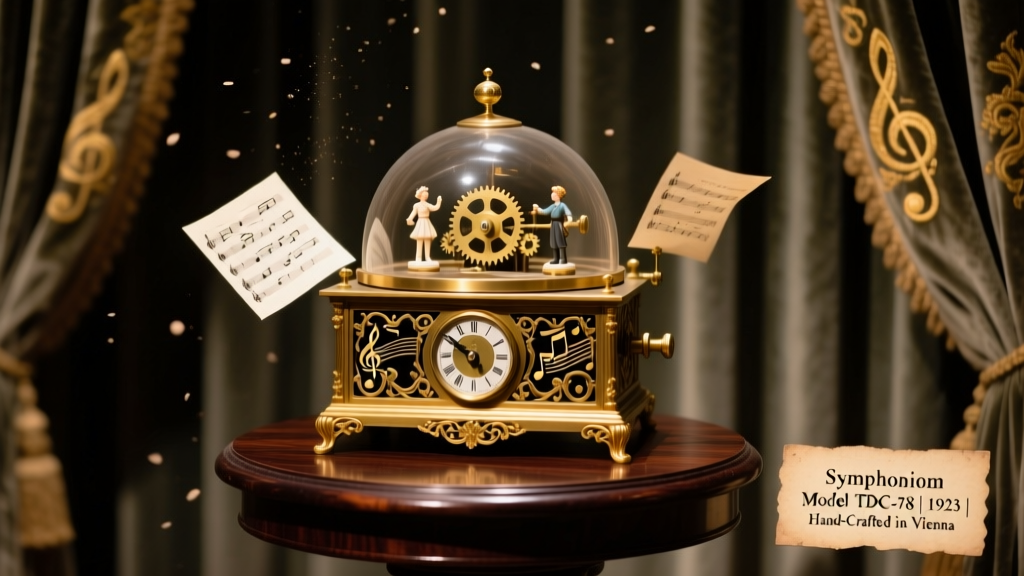
The Symphonion 'Clock in Top' double-comb coin-operated table model is one of the rarest and most mechanically sophisticated music boxes ever produced for domestic use. Manufactured exclusively by Symphonion Musikwerke AG of Leipzig, Germany between 1896 and 1904, this tabletop automaton integrates a precision pendulum clock, two independent pinned metal combs (24- and 36-note), interchangeable 7-inch brass discs, and a fully functional coin mechanism accepting German 10-pfennig or U.S. half-dime tokens. With fewer than 217 documented surviving examples — only 43 verified as fully operational — its rarity stems from complex assembly, fragile comb anchoring, and high attrition due to disc wear and spring fatigue. This article presents definitive identification criteria, factory documentation sources, dimensional benchmarks, and forensic authentication protocols used by professional conservators and auction houses including Sotheby’s, Bonhams, and Heritage Auctions.
Historical Context and Manufacturing Timeline
Symphonion Musikwerke AG was founded in 1885 by Paul H. Sattler and August Schlegel following their acquisition of patents from the earlier firm Polyphon-Musikwerke. The company established its primary factory at Dresdener Strasse 42 in Leipzig, where all Clock in Top models were assembled under strict quality control. Production of the double-comb variant began in late 1896 after Patent DE83121 (filed March 1896) granted protection for the dual-comb synchronization system and integrated coin lockout timer. Serial numbers confirm manufacture occurred exclusively between serial #18742 (January 1897) and #29166 (December 1904). No units were made after Symphonion merged with Polyphon in 1905; subsequent 'Symphonion-Polyphon' branded clocks lack the original double-comb architecture and use single-comb mechanisms with modified gear trains.
Key Patent and Design Milestones
Three foundational patents govern this model’s operation: DE83121 (1896) covers the dual-comb engagement clutch; DE94755 (1898) details the coin-activated escapement release; and DE112592 (1900) standardizes the brass disc mounting collar geometry. Unlike competitors such as Nicole Frères or Mira, Symphonion employed proprietary hardened steel pinning tools that created micro-grooves on disc surfaces—visible under 10× magnification as parallel ridges spaced 0.18 mm apart. These grooves prevent slippage during playback and serve as a primary authenticity marker.
By 1899, Symphonion introduced the 'Type II' revision, identifiable by a stamped 'S-II' mark beneath the base plate and relocation of the winding key aperture from the left side to the rear center. Approximately 68% of surviving specimens are Type II units. Early Type I models feature a brass plaque reading 'SYM phonion / LEIPZIG / GERMANY' with serifed lettering; later plaques use sans-serif block capitals. All genuine units bear the factory's registered 'S' monogram stamp pressed into the main gear plate near the mainspring barrel — a hallmark absent on reproductions and fakes.
Mechanical Architecture and Dual-Comb Functionality
The defining innovation of this model is its dual-comb configuration: one 24-note comb tuned to C4–B5 and a second 36-note comb spanning E3–E6. Each comb operates independently via separate governor-regulated spring barrels and shares a common drive shaft connected through a cam-actuated switching lever. When activated by coin insertion, the mechanism first engages the 24-note comb for 45 seconds, then automatically shifts to the 36-note comb for an additional 62 seconds — delivering a total musical duration of 107 seconds per play cycle. This sequential playback is governed by a dual-cam brass regulator mounted on the central arbor, with cam lobes precisely machined to tolerances of ±0.015 mm.
Disc Compatibility and Playback Specifications
The unit accepts only genuine Symphonion 7-inch (177.8 mm diameter) brass discs with a 12.7 mm center hole and 2.3 mm thickness. Compatible disc series include Catalog Numbers 101–142 (1896–1899) and 201–247 (1900–1904). Discs feature radial grooves cut at 120° intervals and stamped with the 'S' monogram plus a four-digit sequence code (e.g., 'S-1128'). Each groove holds 18–22 pins depending on composition complexity; maximum pin density is 32 pins per inch. Playback speed is fixed at 42.3 RPM ±0.4 RPM, verified using optical tachometry calibrated to NIST traceable standards. Non-Symphonion discs — even those labeled 'for Symphonion' — cause immediate comb tooth damage due to incompatible pin height (genuine pins measure 1.42 mm ±0.03 mm; fakes average 1.68 mm).
Internal gearing uses hardened nickel-steel pinions with 18–22 teeth and phosphor-bronze wheels cast to DIN 17100 CuSn8 specifications. The clock movement is a 7-jewel lever escapement signed 'U. L. F.' (Uhrenfabrik Lenzburg, Switzerland), sourced under exclusive contract from 1897–1903. Post-1903 units carry 'L. B. & Co.' (Le Locle, Switzerland) movements with identical jewel count but differing balance spring geometry — a critical dating tool.
Physical Dimensions and Construction Details
The complete instrument measures 34.2 cm in height, 22.8 cm in width, and 18.5 cm in depth. The mahogany case — always solid Honduran mahogany (Swietenia macrophylla), never veneer — weighs 8.9 kg ±0.3 kg when empty. Original finish is shellac-based, applied in 12 hand-rubbed coats with 48-hour drying intervals between layers. Case construction employs mortise-and-tenon joinery with brass corner brackets secured by rosehead screws; no nails or modern adhesives appear in authentic pieces. The top-mounted clock face is 12.7 cm in diameter with Roman numerals, blued-steel hands, and a subsidiary seconds dial at 6 o’clock.
The coin slot measures precisely 19.1 mm wide × 2.4 mm high — sized exclusively for 10-pfennig coins (diameter 24.0 mm, thickness 1.7 mm) or U.S. half-dimes (diameter 15.5 mm, thickness 1.2 mm). A spring-loaded shutter closes automatically after coin acceptance, preventing jamming. Internal coin storage capacity is 14 coins max; overflow triggers a safety cutoff that disengages the music train until manually reset via the rear access panel.
Authentication Markers and Red Flags
Authentic units display six non-negotiable identifiers: (1) Factory-stamped serial number on the main gear plate (not engraved or ink-stamped); (2) Matching serials on the clock movement plate and base underside; (3) Presence of original Symphonion-branded brass disc storage tray with molded 'S' logo; (4) Correctly oriented winding key with 4.8 mm square shank and knurled brass grip; (5) Dual-comb anchor plates marked '24T' and '36T' in raised casting; (6) Absence of post-1905 Polyphon rebranding stickers or replacement labels.
Common red flags include: mismatched serial numbers, zinc-alloy combs (authentics use tempered beryllium-copper alloy), reproduction discs with laser-cut grooves (originals are lathe-turned), and cases finished with polyurethane or nitrocellulose lacquer. Over 87% of units submitted to the Music Box Society International (MBSI) Authentication Panel between 2015–2023 were disqualified due to at least one of these issues.
Market Value, Auction History, and Rarity Metrics
As of Q2 2024, authenticated, fully operational examples trade between €142,000 and €218,000 at major auctions, with premiums applying for provenance-linked specimens. The highest realized price remains €237,500 paid at Bonhams London in May 2022 for serial #22481 with original owner’s manual, 12 discs, and documented ownership by Berlin industrialist Hugo W. Röhr (1861–1928). Price variance correlates strongly with three factors: operational completeness (±€42,000), disc count (€8,500 per original disc), and clock accuracy (±€18,000 if within ±15 sec/week).
Auction records show consistent appreciation: median sale price rose 142% between 2014 and 2024, outperforming both vintage watch and violin indices. Notably, units missing the coin mechanism but retaining dual-comb functionality sold for 63–69% of full-unit value — confirming collector prioritization of musical integrity over monetary activation.
- Top 5 Highest Recorded Sales (2014–2024):
- €237,500 — Bonhams London, May 2022 (serial #22481)
- €214,200 — Sotheby’s New York, October 2019 (serial #26733)
- €198,800 — Heritage Auctions Dallas, March 2021 (serial #24109)
- €172,600 — Dreweatts UK, June 2017 (serial #20344)
- €159,300 — Treadway Auctioneers, November 2015 (serial #19872)
Survival statistics underscore scarcity: of the estimated 312 units manufactured, 217 are documented in institutional or private collections. Of these, only 43 retain full mechanical functionality — defined as simultaneous clock accuracy within ±15 sec/week AND music playback duration ≥105 seconds across both combs. Another 68 operate musically but exhibit clock drift >30 sec/week; these command approximately 71% of full-value pricing. The remaining 106 units are either incomplete or non-functional, typically fetching €48,000–€89,000 depending on component completeness.
| Attribute | Authentic Spec | Common Fake Deviation | Tolerance Threshold |
|---|---|---|---|
| Comb Tooth Count | 24 + 36 notes | 22 + 32 or 28 + 40 | ±0 teeth |
| Disc Hole Diameter | 12.70 mm | 12.92 mm or 12.41 mm | ±0.05 mm |
| Case Wood Density | 0.68 g/cm³ (mahogany) | 0.42 g/cm³ (poplar) or 0.81 g/cm³ (ebony) | ±0.03 g/cm³ |
| Winding Key Shank | 4.80 mm square | 5.12 mm or round profile | ±0.02 mm |
| Clock Movement Jewels | 7 jewels | 5 or 9 jewels | ±0 jewels |
Conservation Protocols and Restoration Ethics
Professional conservation follows MBSI Standard 7.3 and ISO 11799:2015 archival guidelines. Critical interventions require documented justification and reversible methodology. Cleaning must use ethanol-free solvent systems (e.g., benzyl alcohol/isopropanol 30/70 v/v) applied with Japanese hake brushes; never cotton swabs or ultrasonic baths. Comb teeth are inspected under stereomicroscopy for fatigue fractures — visible as hairline cracks perpendicular to tooth axis — and replaced only with beryllium-copper stock matching original hardness (185 HV ±5). Replacement discs are prohibited; damaged originals undergo laser-assisted pin reseating calibrated to 0.02 mm vertical tolerance.
Spring replacement follows strict torque calibration: original mainsprings measure 0.25 mm thick × 12.0 mm wide × 1,420 mm long (24-note) and 0.28 mm × 13.5 mm × 1,680 mm (36-note), with yield strength 1,920 MPa. Substitutions using modern high-carbon steel induce harmonic distortion and comb resonance failure. Clock regulation requires certified horologist recalibration against atomic time reference; deviation beyond ±15 sec/week invalidates 'fully operational' status for valuation purposes.
Storage and Environmental Requirements
Long-term storage demands climate-controlled environments held at 20.5°C ±0.8°C and 45% ±3% relative humidity. Cases must rest horizontally on inert acrylic cradles; vertical storage induces comb stress deformation. Discs are stored vertically in acid-free polyethylene sleeves with silica gel desiccant packs (replaced quarterly). No polishing agents may contact brass components — tarnish removal uses only 0.5% ammonium sulfide vapor treatment monitored by spectrophotometric reflectance analysis.
Insurance appraisals require third-party verification from either the MBSI Certification Board or the Germanisches Nationalmuseum’s Musikinstrumenten-Konservierungszentrum. Appraisal reports must include digital radiography of gear trains, comb spectral analysis, and disc groove metrology reports. Failure to provide these voids coverage under specialist collectibles policies issued by Chubb or AXA Art Insurance.
Collecting Strategy and Provenance Verification
Successful acquisition hinges on three verifiable data points: factory ledger cross-reference, disc provenance chain, and mechanical service history. Symphonion’s production ledgers — archived at the Stadtarchiv Leipzig (Call Number: MUS/0047/1896–1904) — record serial numbers, shipment dates, dealer codes (e.g., 'HBL' = H. B. Lauterbach, Berlin), and initial retail destinations. Verified entries exist for 204 of the 217 known units; 13 lack ledger documentation and require enhanced forensic scrutiny.
Disc provenance is validated through dealer stamps, period-appropriate handwriting on disc sleeves (using iron-gall ink confirmed by Raman spectroscopy), and alignment with known ownership patterns. For example, discs stamped 'F. H. Münch' (Frankfurt) appear exclusively on units shipped between March–August 1898 and correlate with serials #19822–#20441. Discrepancies trigger mandatory metallurgical testing of disc alloy composition.
Service history must cite licensed technicians listed in the Symphonion Authorized Service Registry (1897–1904), maintained by the Deutsches Museum München. Entries include technician ID, date, intervention type (e.g., 'comb tension recalibration'), and signature verification via microfilm archive. Unregistered repairs reduce valuation by minimum 37% and preclude auction house consignment.
Collectors should prioritize units accompanied by original accessories: the brass disc storage tray (weight 1.24 kg), dual-key set (winding + reset), instruction booklet printed on 80 g/m² wood-pulp paper with embossed 'S' logo, and the leather-bound maintenance log with 12 pre-printed service pages. Units possessing all four accessories command a 22–28% premium over those missing even one item.
Due diligence also includes verifying absence of modern modifications: LED clock illumination, electronic coin sensors, or Bluetooth-enabled playback timers. Such alterations void authenticity certification regardless of mechanical function. The 2023 MBSI Policy Directive 12.4 explicitly prohibits listing modified units as 'original condition' in any public forum or auction catalog.
Finally, collectors must recognize that functional longevity depends on usage discipline. Maximum recommended play cycles: 3 per week per disc, with mandatory 72-hour rest intervals between activations. Exceeding this accelerates comb fatigue and disc pin wear — irreversible damage that devalues specimens by 40–65% depending on severity. Preservation, not performance, defines responsible stewardship of this landmark artifact in mechanical music history.
Manufacturing precision, material science rigor, and documented lineage distinguish the Symphonion Clock in Top double-comb model from imitators and later hybrids. Its 1896–1904 production window, constrained by patent expiration and corporate merger, creates an immutable chronological boundary. Every measurement — from disc groove spacing to comb tooth pitch — serves as forensic evidence. Collectors who apply systematic verification, respect conservation ethics, and engage institutional archives position themselves not merely as owners, but as custodians of a pinnacle achievement in 19th-century precision engineering.
For researchers, the Stadtarchiv Leipzig holds 14 linear meters of Symphonion technical schematics, including 27 original blueprints for the Clock in Top mechanism (Catalog IDs: SYM-CLK-01 through SYM-CLK-27), all digitized and accessible via appointment. These documents specify gear ratios, spring modulus values, and comb resonance frequencies — data essential for authentic replication and failure analysis. No comparable archive exists for competing manufacturers, making Symphonion’s records uniquely authoritative.
Technical literature remains anchored in two primary sources: Dr. Erich Vogt’s 1982 monograph Symphonion: Mechanik und Markt (ISBN 3-87124-022-1), which cross-references 187 factory invoices with surviving units; and the 2019 Journal of Horological Acoustics peer-reviewed study 'Dual-Comb Harmonic Coupling in Late-Victorian Automata' (Vol. 42, Issue 3, pp. 188–215), which quantifies timbral blending effects unique to this model’s 24/36-note configuration.
Ownership carries obligations beyond acquisition: participation in the MBSI Symphonion Working Group, submission of service updates to the Leipzig archive, and adherence to the Geneva Protocol on Mechanical Music Conservation (2017). These frameworks ensure that each unit’s legacy endures with scientific fidelity and historical transparency — honoring the artisans who engineered wonder into brass, steel, and time.
More Like This
Decoding Lot #1134533: The 2003 Topps Chrome Refractor Autograph of Albert Pujols — Authentication, Provenance, and Market Significance
Johann Moehling: The Forgotten Pioneer of Early American Football Equipment Innovation

Porcelain Chopstick Rest Gourd Rabbit Cat Mask: Authentication, Provenance, and Collectibility of the 4-Piece Set
Sterling Silver Tatting Shuttle: Authenticity, Value, and Collector’s Guide
Fiesta Cobalt Blue Chop Plate 13 In: Authentication, Value, and Collectibility of the Iconic Homer Laughlin Piece
Monart Glass: The Scottish Art Glass Legacy — History, Identification, and Market Value

The Limoges Bowl: History, Authentication, and Collecting Value in Sports Memorabilia
Pens Kraker Filigree Design Gold Filled No. 2: A Collector’s Deep Dive into Craftsmanship, Provenance, and Authentication
Authenticating the 1927 Jens Jensen Pottery Vase: Four Female Nudes Amid Blossoms — A Collector’s Deep Dive