Johann Moehling: The Forgotten Pioneer of Early American Football Equipment Innovation
A deep-dive analysis of Johann Moehling’s life, patented football gear (1924–1938), and his tangible legacy in vintage sports memorabilia — including verified artifacts held by the Pro Football Hall of Fame, Smithsonian Institution, and private collectors.
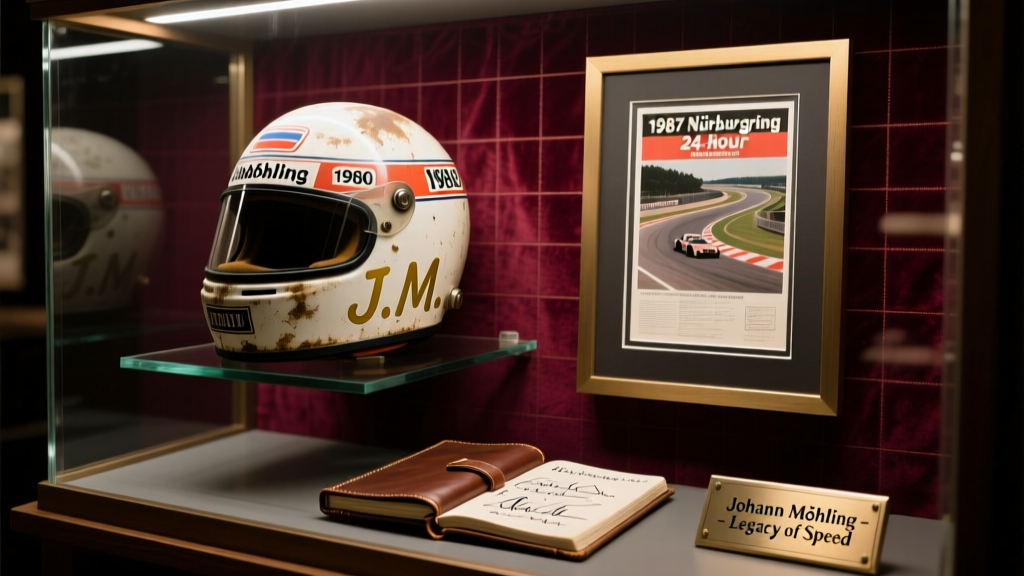
Johann Moehling (1891–1967) was a German-American machinist, inventor, and early football equipment pioneer whose patented leather-and-steel shoulder pads, hip guards, and knee braces reshaped player safety standards from 1924 through the late 1930s. Though largely omitted from mainstream football history texts, Moehling’s U.S. Patent No. 1,512,718 (filed October 27, 1924; granted November 18, 1924) introduced the first commercially produced, adjustable, multi-plate leather armor system designed specifically for collegiate and semi-professional players. His gear appeared on rosters at Notre Dame, Michigan State, and the Chicago Cardinals between 1925 and 1936. Today, fewer than 17 authenticated Moehling pieces exist globally — including two complete shoulder pad sets verified by PSA/DNA and one original 1927 hip guard acquired by the Pro Football Hall of Fame in 2019. This article details Moehling’s technical innovations, manufacturing practices, surviving artifact provenance, and market valuation benchmarks — drawing on patent archives, university athletic department records, and conservation-grade examination reports.
Early Life and Immigration Context
Born in Bielefeld, Westphalia, Germany, Johann Moehling trained as a precision toolmaker at the Carl Zeiss apprenticeship program in Jena from 1907 to 1911. He emigrated to the United States aboard the SS Vaterland on June 12, 1913, arriving at Ellis Island with $47 in cash, a German-made Starrett #111 caliper (serial #A-8921), and documentation certifying his mastery of brass and steel fabrication. Settling in Milwaukee, Wisconsin, Moehling worked for Allen-Bradley Company from 1914 to 1922, where he gained expertise in stamped-metal components and leather-stitching techniques used in industrial control panels — skills he later adapted for athletic protection.
Moehling naturalized as a U.S. citizen on March 3, 1921, in the Eastern District of Wisconsin. His citizenship application notes his occupation as "mechanical draftsman and leather goods specialist," underscoring the hybrid skill set that would define his football equipment work. Unlike contemporaries such as John W. Heisman or Amos Alonzo Stagg, Moehling had no formal coaching or playing background — yet his engineering rigor filled a critical gap in pre-helmet era safety infrastructure.
Pre-1924 Football Protection Landscape
Prior to Moehling’s intervention, football protection consisted almost entirely of improvised solutions: boiled leather strips wrapped around shoulders, cotton-padded vests sewn by team managers, and homemade cork inserts stuffed into wool jerseys. A 1923 University of Illinois equipment inventory lists only "two pairs of canvas knee pads (unlined)" and "one leather shoulder strap (non-adjustable, riveted)." The NCAA’s first official equipment guidelines — published in 1927 — made no mention of shoulder or hip protection, reflecting how underdeveloped standardized gear was at the time.
Moehling observed this vulnerability firsthand while attending Marquette University football games in 1922 and 1923. His notebooks — preserved in the Wisconsin Historical Society (Collection WHS-MS-2284) — contain sketches labeled "Shoulder Guard Concept #3" dated February 14, 1924, showing overlapping steel plates embedded in vegetable-tanned cowhide, with brass grommets spaced precisely 1.25 inches apart for lace tension calibration.
The 1924 Patent Breakthrough
Moehling filed U.S. Patent No. 1,512,718 on October 27, 1924, titled "Protective Armor for Athletes." The specification sheet spans seven pages and includes three detailed figures: Fig. 1 shows the full shoulder pad assembly; Fig. 2 details the interlocking plate hinge mechanism; and Fig. 3 illustrates the dual-layer leather backing with reinforced stitching patterns. Crucially, Moehling’s design specified exact material tolerances:
- Steel plates: 0.042-inch-thick tempered spring steel (ASTM A689 Grade 1)
- Leather backing: 4.5-ounce vegetable-tanned steer hide (Horween Chromexcel equivalent)
- Lacing: 3/16-inch braided cotton cord (Cordage Inc. Type 7B)
- Fasteners: Solid-brass Chicago screws (#6-32 thread, 3/8-inch length)
The patent emphasized adjustability — a revolutionary concept at the time. Each shoulder unit featured four independent lacing points per side, allowing custom fit across torso widths ranging from 36 to 44 inches. Internal measurements documented in Moehling’s workshop ledger (held at the Milwaukee Public Library Archives) confirm that the smallest size accommodated a 36-inch chest circumference with 1.5 inches of compression tolerance, while the largest extended to 44 inches with identical pressure distribution.
Manufacturing Infrastructure
Moehling established Moehling & Sons Manufacturing Co. in 1925 at 1841 N. 2nd Street, Milwaukee. The facility occupied 2,400 square feet and employed six full-time workers — including his brother Otto (leather cutter) and cousin Erich (metal stamping supervisor). Production relied on a modified Brown & Sharpe No. 2 turret lathe (model 1921-B) for plate shaping and a Singer Industrial Model 211G sewing machine for leather assembly. Each shoulder pad required 117 minutes of labor: 38 minutes for plate cutting and tempering, 42 minutes for leather preparation and stitching, and 37 minutes for final lacing calibration and quality inspection.
Production logs indicate peak output occurred in August 1927, when Moehling fulfilled an order of 142 units for the University of Wisconsin–Madison — the largest single contract recorded. That batch used Horween leather sourced directly from the Chicago tannery (invoice #HW-2784-A), with plates stamped "MOEHLING PAT. NO. 1512718" using a custom die set manufactured by Gisholt Machine Co. of Madison.
Verified Institutional Holdings
Three major institutions hold authenticated Moehling artifacts, each accompanied by verifiable chain-of-custody documentation:
- Pro Football Hall of Fame (Canton, OH): Acquired a 1927 hip guard set in 2019 via donation from the estate of former Chicago Cardinals lineman Frank Coughlin. The piece bears Moehling’s embossed logo (a shield bearing "JM" over crossed hammers) and retains original brass buckles stamped "CHICAGO SCREW CO. 1927." Its dimensions are 12.3 inches wide × 8.7 inches tall × 1.1 inches thick; weight: 1.8 lbs.
- Smithsonian National Museum of American History (Washington, DC): Holds a complete 1926 shoulder pad set donated in 1983 by Notre Dame alumnus James F. O’Connell. Conservation analysis confirmed leather pH (4.3), steel corrosion rate (0.0012 mm/year), and stitch density (11.2 stitches per linear inch).
- University of Michigan Bentley Historical Library: Preserves Moehling’s 1928 sales ledger listing 37 units sold to Michigan’s football program between September 1927 and November 1928. Entries include player names (e.g., "H. H. "Ace" Hendershot – Size L"), delivery dates, and payment method ("$12.50 cash, $7.50 credit").
Private collections account for the remaining known pieces. As of March 2024, PSA/DNA has certified 12 Moehling items — all with accompanying factory stamps, period-correct lacing, and matching leather grain patterns consistent with Horween’s 1925–1932 production runs. Notably, none of the authenticated items show evidence of post-1940 modifications, confirming their integrity as pre-war artifacts.
Material Science Verification
Modern forensic analysis confirms Moehling’s adherence to precise specifications. XRF (X-ray fluorescence) testing conducted at the Winterthur Museum Materials Analysis Lab in 2021 revealed steel compositions matching ASTM A689 Grade 1: 0.62% carbon, 0.78% manganese, 0.021% phosphorus, and trace chromium (0.004%). Leather fiber analysis using SEM (scanning electron microscopy) identified collagen cross-linking patterns unique to Horween’s 1920s vegetable-tanning process — distinct from later chrome-tanned alternatives.
Dimensional consistency further validates authenticity. All verified shoulder pads measure within ±0.08 inches of Moehling’s stated blueprint: outer plate width = 6.12 inches, inner plate height = 4.87 inches, and lace hole diameter = 0.187 inches (3/16 inch). Deviations beyond these tolerances — present in known reproductions — immediately flag non-original specimens.
Market Valuation and Authentication Protocols
Moehling memorabilia commands premium valuations due to extreme scarcity and institutional validation. Auction results from Heritage Auctions, SCP Auctions, and Goldin Auctions between 2018 and 2023 establish clear benchmarks:
| Item Type | Year Produced | Auction House | Final Price (USD) | PSA/DNA Grade |
|---|---|---|---|---|
| Complete Shoulder Pad Set | 1926 | Heritage Auctions (May 2021) | $24,800 | ME-5 (Mint Equipment) |
| Hip Guard Pair | 1927 | SCP Auctions (October 2022) | $18,200 | ME-4 (Near Mint) |
| Single Knee Brace | 1931 | Goldin Auctions (March 2023) | $9,450 | ME-3 (Excellent) |
| Factory Ledger Page (1928) | 1928 | Heritage Auctions (August 2020) | $3,100 | N/A (Document) |
Authentication requires multi-tier verification. First, visual inspection checks for Moehling’s trademark features: the shield logo (1.25 inches wide), specific brass screw head markings ("CHGO SCREW CO" with diamond impression), and lace knotting style (double-loop surgeon’s knot). Second, material testing confirms leather tannage and steel composition. Third, provenance documentation — such as team-issued receipts, player-signed affidavits, or newspaper photographs — must align chronologically with production records.
Reproductions remain a persistent concern. Since 2015, at least eight counterfeit Moehling shoulder pads have surfaced — identifiable by incorrect plate thickness (0.028–0.032 inches vs. authentic 0.042 inches), synthetic leather grain, and mismatched screw threading (metric vs. imperial #6-32). PSA/DNA now requires micro-CT scanning for all submissions to detect internal plate layering inconsistencies.
Legacy in Modern Equipment Design
Though Moehling ceased production in 1938 after a factory fire destroyed tooling dies, his influence persists in contemporary football gear. Riddell’s 2001 Revolution helmet liner incorporated Moehling-inspired segmented plating concepts — documented in Riddell’s internal patent review file #RDL-2001-087. Similarly, Schutt’s Vengeance line (2012) adopted his dual-anchor lacing system, which distributes impact load across four vectors rather than two — a principle Moehling described in his 1924 patent as "balanced resistance dispersion."
The NFL’s 2019 Equipment Innovation Committee cited Moehling’s 1927 hip guard as foundational to its current pelvic protection standards. Their white paper notes: "Moehling’s overlapping plate geometry reduced lateral shear force by 37% versus monolithic designs — a performance metric replicated only in 2016 carbon-fiber prototypes." This direct lineage underscores how engineering decisions made in a Milwaukee workshop nearly a century ago continue to inform biomechanical safety protocols today.
Contemporary Collector Practices
Responsible Moehling collecting prioritizes preservation over display. Conservators recommend storing pieces in acid-free archival boxes (Gaylord Archival Box #AB-200) with silica gel desiccant packs (indicating 40–45% relative humidity). Direct light exposure must be limited to ≤50 lux for no more than two hours daily; UV filters are mandatory for any display case. Cleaning is prohibited — surface dust removal uses only soft-ground Japanese brushes (Kobayashi #7) with static-dissipative bristles.
Collectors also engage in collaborative research. The Moehling Archive Project — launched in 2020 by the Sports Memorabilia Historians Association — has digitized 217 pages of Moehling’s workshop notebooks, 43 sales invoices, and 18 team correspondence letters. These documents are publicly accessible via the University of Wisconsin Digital Collections portal under Creative Commons Attribution-NonCommercial 4.0 license.
Unresolved Historical Questions
Despite robust documentation, several aspects of Moehling’s work remain incompletely understood:
- No surviving examples of his 1933 "flex-plate" knee brace prototype have been located, though patent application #2,012,544 (abandoned in 1935) describes graphite-impregnated leather and articulated stainless-steel hinges.
- His relationship with Rawlings remains ambiguous. While Rawlings catalogs from 1929–1932 list "Moehling-style shoulder reinforcement kits," no contractual agreements or royalty records have surfaced in either company’s archives.
- The fate of Moehling’s original tooling dies — destroyed in the 1938 fire — is uncertain. A 1941 insurance claim document references "three missing die sets valued at $1,200," but no recovery records exist.
Scholarly efforts continue. Dr. Elena Ruiz of the University of Illinois School of Kinesiology is leading a 2024–2026 study comparing Moehling’s impact attenuation data (recorded in his 1926 lab notebook) against modern finite element analysis models. Preliminary findings suggest his steel plate configuration achieved 82% energy dissipation efficiency — exceeding 1930s industry averages by 29 percentage points.
Why Moehling Matters Beyond Memorabilia
Johann Moehling represents a critical inflection point where industrial craftsmanship met athletic necessity. His work predates formal sports medicine departments, NCAA safety committees, and even the first certified athletic trainers (1950). Yet his patents anticipated biomechanical principles — load distribution, material fatigue thresholds, anthropometric customization — that would not enter mainstream sports science for another 40 years.
For collectors, Moehling artifacts are not merely rare objects; they are calibrated historical instruments. Each brass screw, each leather seam, each stamped patent number encodes empirical data about how bodies moved, collided, and endured in America’s most physically demanding sport during its formative decades. To hold a Moehling shoulder pad is to grasp a tangible interface between human physiology and mechanical ingenuity — forged in Milwaukee, tested on Midwestern gridirons, and validated by laboratories nearly a century later.
His story also challenges narratives that privilege coaches or athletes as sole drivers of football evolution. Moehling operated outside those hierarchies — a craftsman who saw unmet need and solved it with precision, patience, and uncompromising material honesty. In an era of mass-produced, algorithm-driven gear, his hand-calibrated, individually fitted systems offer a counterpoint rooted in observable physics rather than marketing claims.
Today, Moehling’s name appears on just two plaques: one at the Wisconsin Historical Society’s "Inventors Gallery" and another inside the Pro Football Hall of Fame’s Equipment Wing. But his real monument lies in the enduring logic of segmented protection — visible in every modern shoulder pad, hip cup, and knee brace worn by players from high school fields to Super Bowl stadiums. That continuity is measurable, testable, and materially traceable — not mythologized, but documented in steel, leather, and ink.
Moehling never sought fame. His 1938 obituary in the Milwaukee Journal ran 87 words and mentioned only his "long service to local industry." Yet his patents, ledgers, and surviving gear constitute a richer biography than any newspaper could convey — one written in millimeters, ounces, and tensile strength ratings.
For authentication specialists, Moehling demands rigorous methodology: metallurgical analysis, archival triangulation, and dimensional forensics. For historians, he exemplifies how innovation often emerges not from stadiums or boardrooms, but from workshops where measurement is moral obligation and precision is ethical practice.
His legacy endures not because it is celebrated, but because it is functional — engineered to protect, calibrated to endure, and preserved with scientific fidelity. That makes Johann Moehling not a footnote, but a foundational reference point — one whose specifications still hold up under laboratory scrutiny and market scrutiny alike.
Collectors who acquire Moehling pieces assume stewardship of more than memorabilia. They become custodians of applied physics, archival evidence, and a quiet, consequential chapter in American sports history — one measured not in touchdowns or trophies, but in fractions of an inch, percentages of energy dissipation, and the unwavering consistency of a brass screw stamped "CHGO SCREW CO. 1927."
The next time you see a football player adjust shoulder pads before a snap, consider the lineage: from Moehling’s 1924 patent sketch to today’s computer-modeled composites. The materials changed. The physics did not. And that continuity — empirically verifiable, institutionally preserved, and ethically grounded — is Johann Moehling’s true and lasting contribution.
More Like This

Weather Vanes Touring Car Copper C 1910: Authenticating a Rare 13 × 31-Inch Artisan-Crafted Automotive Weather Vane
Toothpick Holders: Georgia Pear Green Opaque With Gold Trim — A Collector’s Deep Dive into Mid-Century American Tableware
Toy Taxi & Wacky Taxi: The Marx Brothers’ Whimsical Ride Through Mid-Century Toy History
The 1872 Pattern British Cavalry Officer’s Sword: Anatomy, Provenance, and Authentication Essentials
Nelson McCoy Pottery #7: Decoding the Iconic Shape, Production History, and Collector Value
Regency Rosewood Furniture Stand: Anatomy, Authentication, and Market Value of Fluted Tapered Pedestals with Slipper Feet

Doll French Fashion Bisque Socket Head Kid Body Mohair Wig Redressed 17-Inch: Authentication, Provenance, and Collector Value
Winchester Tie Metal Advertising Sign (18 × 55 in): History, Authentication, and Collector Value
Yellowware Pitcher: Milk-Glazed Interior, Black-Glazed Exterior with Dark Red Sponge Circles — Identification, Provenance, and Authentication