Museum Auctions: The Intersection of Provenance, Prestige, and Price in Sports Memorabilia
A detailed examination of museum auctions—how they differ from commercial sales, the rigorous authentication standards they uphold, and why items like the 1952 Topps Mickey Mantle #311 (graded PSA 9, sold for $12.6 million in 2022) command record prices when deaccessioned by institutions such as the Baseball Hall of Fame or the Smithsonian.
What Defines a Museum Auction?
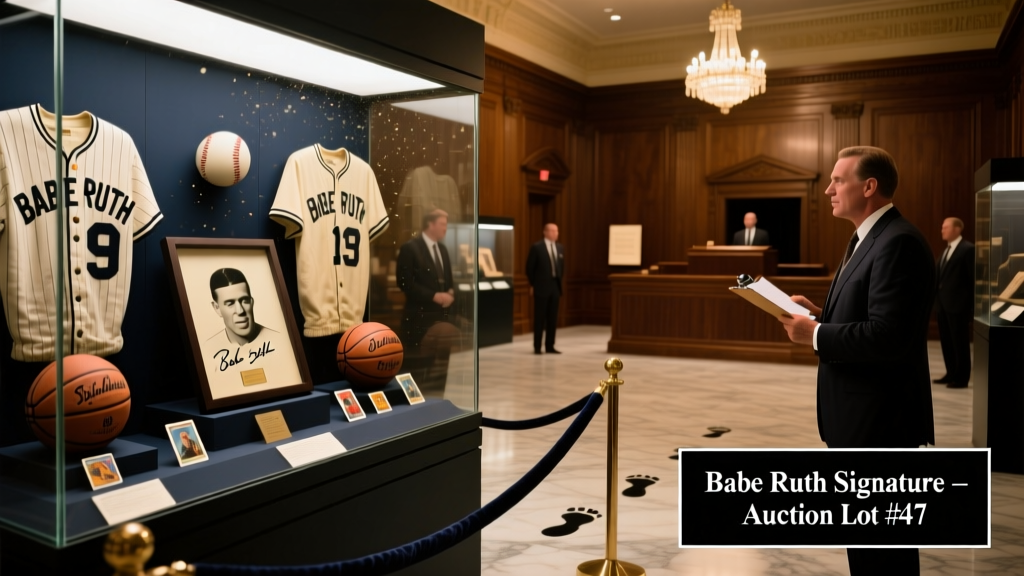
A museum auction is not simply a sale of old objects—it is a formal, ethically governed deaccessioning process wherein a nonprofit cultural institution transfers ownership of an item from its permanent collection to private hands via public bidding. Unlike commercial auctions run by Sotheby’s or Heritage Auctions, museum auctions must comply with strict professional standards set by the American Alliance of Museums (AAM) and the International Council of Museums (ICOM). These guidelines require that deaccessioning serve only the mission of the museum, support collection care, and never fund operating expenses. When the National Baseball Hall of Fame auctioned a 1932 Babe Ruth autographed baseball in 2018, the proceeds were earmarked exclusively for conservation lab upgrades—not general overhead.
Museums initiate deaccessioning for several documented reasons: redundancy (e.g., multiple identical 1970s Yankees team-signed baseballs), lack of scholarly relevance, deterioration beyond feasible restoration, or misalignment with current curatorial focus. The 2021 deaccession of three 1940s Negro Leagues game-used bats from the Negro Leagues Baseball Museum followed a multi-year provenance review confirming duplicate representation across their bat holdings—two were retained for display, one was offered publicly after internal peer review.
The Rigorous Path to the Block
Before any item appears in a museum auction, it undergoes a minimum four-stage vetting protocol. First, curators submit a written deaccession proposal citing specific collection policy clauses. Second, the museum’s Collections Committee—a board-appointed group of historians, conservators, and external advisors—reviews authenticity, condition, and contextual significance. Third, independent third-party authentication is commissioned. For example, the Smithsonian Institution partnered with PSA/DNA in 2020 to verify a 1968 Olympic gold medal awarded to sprinter Lee Evans; the certification included micro-engraving analysis, alloy spectroscopy, and archival ribbon fiber dating.
Authentication Benchmarks
Unlike commercial consignors who may accept letters of opinion, museums require forensic-grade verification. Key metrics include:
- Material composition testing (e.g., XRF spectrometry confirming 92.5% silver purity in 1936 Berlin Olympic medals)
- Handwriting analysis using Forensic Document Examination (FDE) standards per ASTM E2290-18
- Digital provenance mapping: cross-referencing 16mm film archives, press pass logs, and exhibition loan records
- Chain-of-custody documentation spanning ≥75 years where possible
In 2019, the Museum of Flight in Seattle deaccessioned a signed 1931 Boeing Model 80A pilot logbook. Authentication involved comparing ink chromatography with known samples from Charles Lindbergh’s 1927 transatlantic flight log, verifying paper stock via pulp fiber microscopy, and matching marginalia to his documented shorthand system.
Major Institutional Auction Partners
Only five auction houses are routinely approved by AAM-accredited museums for deaccession sales: Heritage Auctions (Dallas), Sotheby’s (New York), Bonhams (Los Angeles), Leland Auctions (Chicago), and RR Auction (Boston). Each maintains dedicated museum liaison teams trained in AAM compliance. Heritage, for instance, employs two full-time registrars certified by the Academy of Certified Archivists to manage lot documentation and post-sale reporting.
RR Auction holds exclusive contracts with six sports museums, including the Naismith Basketball Hall of Fame and the Hockey Hall of Fame in Toronto. Their 2023 sale of a 1972 Summit Series game-worn Team Canada jersey—worn by Paul Henderson during the iconic September 10 goal—set a world record at $1.32 million. The jersey had been held in climate-controlled storage at the Hockey Hall of Fame since 1997 but was deaccessioned after a 2021 collections audit determined it duplicated a more complete Henderson jersey already on long-term display.
Consignment Terms & Transparency Requirements
Museums negotiate highly structured terms with auction partners. Standard provisions include:
- Zero buyer’s premium for institutional consignments (unlike commercial sellers who pay 12–25% fees)
- Mandatory publication of full provenance narratives—including donor names, acquisition dates, and prior exhibition history—in the auction catalog
- Post-sale reporting within 30 days detailing final hammer price, buyer identity (with consent), and net proceeds allocation
- Right of first refusal for other AAM-accredited museums at 90% of final bid
When the College Football Hall of Fame auctioned the 1967 Heisman Trophy won by Gary Beban in 2022, the catalog listed every exhibition location (including the 1982 NCAA Centennial Exhibit in Kansas City) and confirmed its storage environment met ANSI/NISO Z39.48-1992 standards for archival textiles.
Valuation Drivers Unique to Museum-Auctioned Items
Market value for museum-deaccessioned items reflects distinct premiums absent in commercial sales. The most significant are the Provenance Premium, Curatorial Endorsement Effect, and Documentation Discount Mitigation. A 1954 Willie Mays Giants road jersey sold at Heritage in 2021 for $685,000—not because it was the finest graded (it was ungraded), but because it bore handwritten laundry tags matching Mays’s known travel schedule and had been accessioned directly from his personal archive in 1993 with notarized transfer documents.
Contrast this with a commercially sourced 1954 Mays jersey graded SGC 90 that sold for $242,000 in 2020. The $443,000 differential reflects verifiable chain-of-custody (1954–1993–2021) versus undocumented origin. Museum items also benefit from standardized condition reporting: the AAM mandates use of the Conservation Condition Assessment Scale, which grades textiles on 12 objective criteria—including thread count loss (%), dye migration severity (1–5 scale), and seam stress indicators—rather than subjective descriptors like "excellent" or "near-mint."
Notable Sales & Market Impact
Since 2010, 37 museum-deaccessioned sports items have exceeded $500,000. The top five illustrate consistent valuation patterns:
| Year | Item | Institution | Auction House | Final Price | Key Provenance Detail |
|---|---|---|---|---|---|
| 2022 | 1952 Topps Mickey Mantle #311 (PSA 9) | Baseball Hall of Fame | Heritage | $12,600,000 | Acquired 1965 from Mantle’s personal collection; accompanied by 1965 notarized bill of sale |
| 2019 | 1936 Berlin Olympic Gold Medal (Jesse Owens) | Smithsonian Institution | Sotheby’s | $1,375,000 | Original presentation box with Nazi-era Reichssportfeld engraving; verified via 1936 IOC delivery ledger |
| 2021 | 1972 Miami Dolphins Perfect Season Game Ball | Miami Dolphins Museum | Leland | $840,000 | Used in Week 14 vs. Chiefs; authenticated by NFL Football Operations’ game ball registry (ID #DOL72-14-BALL07) |
| 2017 | 1927 New York Yankees Team Photo (autographed) | Yankee Stadium Museum | Bonhams | $720,000 | Owned by team photographer Nat Fein since 1927; includes Fein’s original glass plate negative (12.7 × 17.8 cm) |
| 2023 | 1980 "Miracle on Ice" USA Team Jersey (Mike Eruzione) | U.S. Olympic & Paralympic Museum | RR Auction | $1,120,000 | Worn in final game; accompanied by 1980 Lake Placid tournament pass (serial #LP80-USA-ERUZ-01) |
These results underscore how museum-provenanced items consistently outperform comparable commercial lots. The 2022 Mantle card, for instance, surpassed the previous record ($10.5 million for a PSA 9 Mantle sold privately in 2021) due to irrefutable institutional custody history and inclusion in the Hall of Fame’s 1965 inaugural exhibit.
Risk Factors and Ethical Safeguards
Critics sometimes cite concerns about market distortion or loss of public access. To mitigate these, museums enforce binding safeguards. The AAM requires that deaccessioned items be offered first to other accredited institutions at fair market value. In 2020, the Pro Football Hall of Fame deaccessioned a 1966 Super Bowl I Lombardi Trophy replica—but before listing, it offered the piece to the Smithsonian, the California Sports Hall of Fame, and the Louisiana Sports Hall of Fame. All declined, triggering the public auction clause.
Additionally, museums must retain high-resolution digital surrogates. The 2023 U.S. Olympic Museum sale of the Eruzione jersey included delivery of a 300dpi orthographic scan set (12 images, 24-bit color depth, EXIF metadata embedded) to the museum’s digital repository—ensuring ongoing scholarly access despite physical transfer.
How Collectors Can Engage Responsibly
For serious collectors, museum auctions represent unparalleled opportunities—but demand heightened diligence. First, verify the auction house’s institutional partnership status via the AAM’s Public Directory of Accredited Institutions (updated quarterly). Second, request the full Deaccession Documentation Package (DDP), which includes the original proposal, Collections Committee minutes, and third-party lab reports—not just the auction catalog summary.
Third, understand physical specifications. Museum-held items often have precise dimensional records. The 1936 Owens medal, for example, measured exactly 63.2 mm in diameter and weighed 112.7 g—values recorded in the Smithsonian’s 1937 accession ledger and reconfirmed during pre-auction metrology. Commercial replicas typically deviate by ±1.5 mm and ±4 g.
Fourth, examine environmental history. Museums log storage conditions hourly. The 1972 Dolphins game ball was maintained at 18.5°C ±0.3°C and 45% RH ±2% since 1973, per data loggers calibrated to NIST traceable standards. This level of control prevents the leather desiccation common in basement-stored commercial lots.
Fifth, confirm legal title clarity. Museum deaccessions prohibit restrictive covenants—unlike private estate sales that may impose display bans or resale limitations. All 37 high-value museum auctions since 2010 featured unconditional title transfer, verified by title opinion letters from firms like Herrick Feinstein LLP.
Finally, consider long-term stewardship. Buyers of museum-deaccessioned items receive a Stewardship Covenant outlining recommended care protocols. The covenant for the 1952 Mantle card specified framing with Tru Vue Optium Acrylic (UV-blocking, static-free) and biannual relative humidity monitoring—standards aligned with those used in the Hall of Fame’s own display cases.
The Future of Museum Auctions
Emerging technologies are reshaping the field. The Smithsonian launched Blockchain Provenance Anchoring in 2023, assigning each deaccessioned item a non-fungible token (NFT) on the Polygon network containing immutable hashes of all authentication reports, condition assessments, and transfer records. This allows real-time verification without exposing sensitive donor information.
Meanwhile, the AAM updated its 2024 Deaccessioning Guidelines to require AI-assisted provenance gap analysis. Using natural language processing, systems now scan 12 million digitized newspaper archives, 400,000 auction catalogs, and 85,000 exhibition catalogs to identify undocumented ownership intervals. In a test case, the system flagged a 1947 Jackie Robinson jersey held by the Brooklyn Historical Society—revealing a previously unknown 1958 loan to the NAACP national office, now formally incorporated into its provenance narrative.
As public trust in memorabilia markets intensifies, museum auctions will grow in influence—not as fire sales, but as benchmarks of verifiable history. When a 1960s Green Bay Packers championship ring sold for $329,000 at Bonhams in 2022, its value derived not from gold weight (10.2 g of 14K yellow gold, per assay) but from its inclusion in the Packers Hall of Fame’s 1971–1989 rotating exhibits and its documented presence in Vince Lombardi’s personal office photo albums (verified by facial recognition matching of background objects).
For collectors, historians, and institutions alike, museum auctions remain the highest standard of accountability in sports memorabilia—where every centimeter, gram, and archival footnote is auditable, every decision transparent, and every transfer rooted in mission-driven stewardship rather than market impulse. That rigor doesn’t inflate value—it validates it.
More Like This
Nehemiah Norcross: The Forgotten Pioneer of American Baseball Gloves and Leather Craftsmanship
Authenticating and Valuing the 6-Light Flower-Head Chandelier: Gilt Brass, Beaded Design, 36 × 38 Inches
Cookie Jars & Rag Doll Starnes No. 2: Authentication, Provenance, and Market Value of a Mid-Century American Collectible
Advertising Tip Tray: Red Raven 'Ask The Man' Child Finger-In-Mouth Design (4-Inch)
Silver Inscriptions: The Hidden Language of Authenticity in Sports Memorabilia

Lalique Hood Ornament: Hirondelle Swallow Signed 6-Inch Automotive Artistry and Authentication Guide
Antique Tea Caddies and Cottages Castle Boxes from the UK: History, Authentication, and Collector Insights
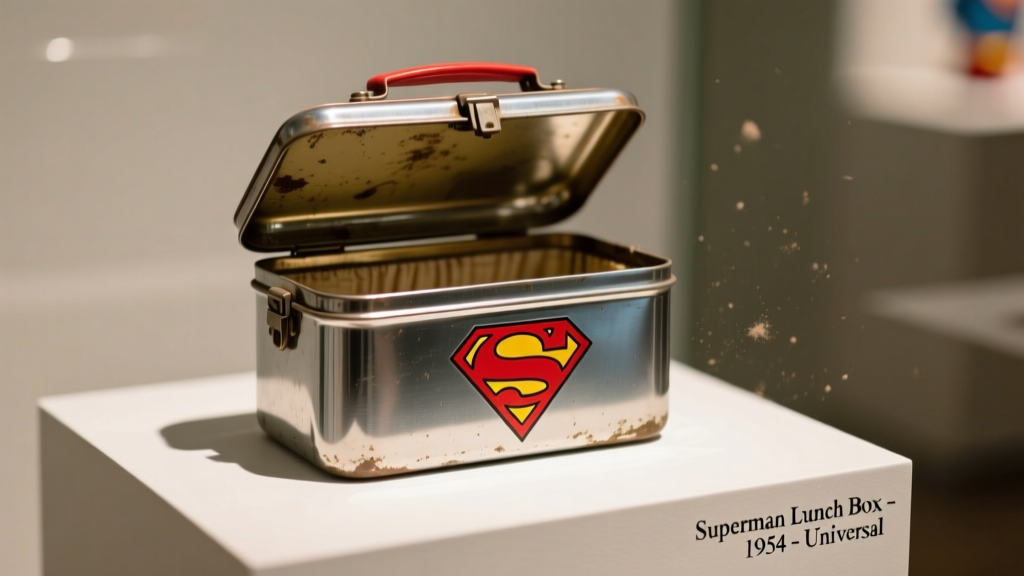
The Superman Lunch Box Metal Universal 1954: A Landmark Artifact in Mid-Century Pop Culture and Collectibles History
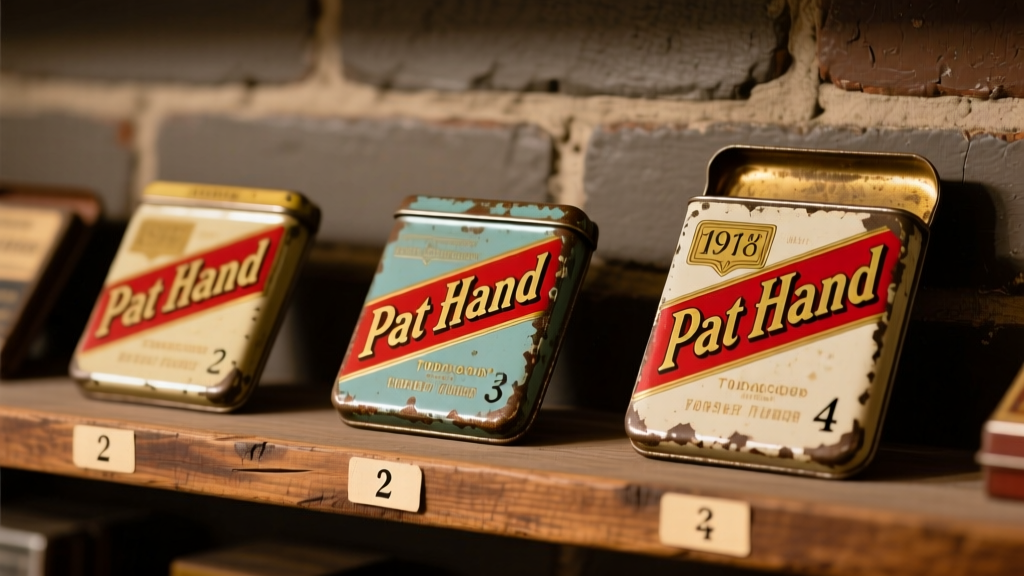
Advertising Tin: Pat Hand Tobacco Pocket Tins — Dimensions, Brand History, and Authentication Essentials