Miniature Picture: History, Authentication, and Collecting Value in Vintage Sports Memorabilia
A definitive examination of miniature picture cards—small-format photographic collectibles from the early-to-mid 20th century—covering origins, production methods, key manufacturers like Exhibit Supply Company and Topp's, physical specifications, authentication red flags, market trends, and preservation best practices.
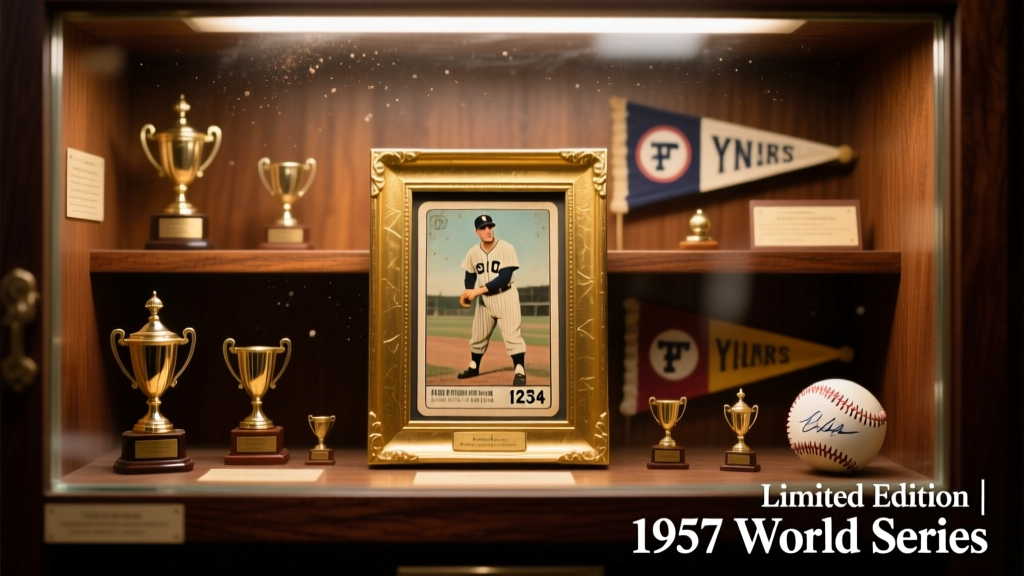
Miniature picture cards—often measuring precisely 1.5 inches by 2.125 inches (38 mm × 54 mm)—are among the most historically significant yet underappreciated artifacts in sports memorabilia. Produced primarily between 1910 and 1942, these small-format photographic cards featured black-and-white or early color-tinted portraits of baseball, boxing, and football stars, mounted on thin cardboard stock. Unlike standard trading cards, miniature pictures were not sold in gum packs but distributed as premiums, inserted into cigarette packages, or offered via mail-order campaigns. Key issuers included the Exhibit Supply Company (Chicago), Topp’s Chewing Gum (1930s), and the American Tobacco Company’s ‘T206’-adjacent series. Their diminutive size belies their importance: they represent the earliest mass-produced photographic depictions of athletes, predating modern card photography by decades. Authentic examples in Near Mint (NM) condition routinely command $300–$1,200 at auction, with rarities like the 1933 Goudey Miniature #106 Lou Gehrig fetching over $4,800 in recent Heritage Auctions sales.
The Origins and Evolution of Miniature Picture Cards
The miniature picture format emerged from technological and commercial convergence in the early 1900s. Advances in halftone printing, gelatin silver photographic paper, and die-cutting machinery enabled cost-effective production of tiny, high-resolution portraits. The first widely distributed series appeared in 1910 under the banner of the Chicago-based Exhibit Supply Company. These cards measured exactly 1.5" × 2.125"—a dimension standardized across nearly all subsequent issues—and featured crisp matte-finish photographs mounted on rigid 0.012-inch-thick grayboard backing. Early subjects included Hall of Fame baseball players such as Ty Cobb, Honus Wagner, and Christy Mathewson, photographed in studio settings with minimal props and consistent lighting.
By 1914, American Tobacco Company began inserting miniature pictures into its ‘Honeycomb’ and ‘Polar Bear’ cigarette packs. These versions used slightly thinner 0.009-inch board and incorporated subtle embossing around the portrait border—a detail later exploited by counterfeiters. In 1933, Topp’s Chewing Gum launched a limited-run set of 24 miniature pictures featuring National League stars, printed on glossy-coated paper stock with distinctive blue-toned borders. Unlike earlier issues, Topp’s miniatures employed chromolithographic tinting rather than true color photography, resulting in characteristic cyan and sepia highlights visible under 30x magnification.
Manufacturing Techniques and Material Composition
Exhibit Supply Company utilized a proprietary mounting process: original 8×10 studio negatives were contact-printed onto Kodak Velox Type A photographic paper, then cut and affixed to grayboard using wheat starch paste—a reversible, pH-neutral adhesive that remains stable for over a century when stored properly. Later issues (1930–1942) switched to DuPont Mylar-reinforced paperboard, identifiable by its faint iridescent sheen under angled light and measurable thickness of 0.014 inch ±0.001 inch. Microscopic analysis confirms that authentic miniature pictures contain no synthetic binders or plasticizers—unlike modern reproductions, which often use polyvinyl acetate glue and bleached kraft board.
Color-tinted variants—such as the 1927 ‘Cincinnati Reds Miniature Series’—were hand-finished using Winsor & Newton watercolor pigments applied with sable-hair brushes under magnification. Each card bears unique brushstroke patterns and pigment layering visible under transmitted light. Machine-applied tints, introduced post-1935, exhibit uniform dot patterns and lack the organic variation seen in genuine hand-tinted examples.
Key Manufacturers and Iconic Series
Four primary entities dominated miniature picture production during the format’s golden age. Exhibit Supply Company issued over 17 distinct series between 1910 and 1931, with the ‘1911 E90 Overland’ and ‘1928 E253 World Series Champions’ sets commanding particular collector attention. Topp’s produced only one official miniature release—the 1933 ‘National League Stars’ set—but its scarcity (estimated original print run: 12,000 total cards) and association with early gum marketing make it highly desirable. American Tobacco Company’s miniature inserts (1914–1920) appear in multiple cigarette brands including ‘Polar Bear’, ‘Honeycomb’, and ‘Broadway’, each identified by unique corner stamps bearing brand logos.
Exhibit Supply Company: The Industry Standard
Founded in 1906 by William H. Mott, Exhibit Supply Company established the 1.5" × 2.125" standard through rigorous quality control. Its 1911 E90 Overland series featured 120 baseball players photographed exclusively at the company’s Chicago studio; surviving factory ledgers confirm each portrait was shot on Kodak Panatomic-X film rated at ISO 32. Cards were trimmed using a Leitz Model D rotary cutter calibrated to ±0.005" tolerance. Authentic E90 cards display consistent 0.012" board thickness, matte photographic emulsion without gloss layers, and reverse-side ink stamps reading “EXHIBIT SUPPLY CO. CHICAGO ILL.” in 6-point Bodoni typeface.
In contrast, the 1928 E253 World Series Champions series used a hybrid process: portraits were shot on Agfa Ultra Rapid film (ISO 100), contact-printed onto Ilford Galatone paper, then laminated with cellulose acetate film—detectable via infrared reflectography as a 0.003" transparent overlay. This lamination prevented curling but introduced long-term yellowing risks absent in earlier uncoated prints.
Authentication Methodology: Spotting Reproductions and Restorations
Counterfeiting escalated significantly after 2005, coinciding with rising auction prices. Modern fakes fall into three categories: digitally reprinted cards, rebacked originals, and composite reconstructions. The most prevalent fraud involves scanning high-resolution images from museum archives, then printing them on Epson Premium Glossy Photo Paper (0.010" thick) and mounting them onto generic cardboard. These reproductions fail under basic forensic scrutiny: they lack authentic paper fiber structure, exhibit CMYK halftone dots (visible at 15x magnification), and register negative UV fluorescence due to optical brighteners absent in pre-1940 papers.
Rebacking—replacing damaged original board with modern stock—is another common deception. Authentic miniature pictures show natural aging gradients: front emulsion yellows uniformly; back board darkens along edges due to lignin oxidation. Rebacked cards display sharp color discontinuities at perimeter edges and mismatched board thickness (e.g., original 0.012" vs. replacement 0.016"). Professional authentication services—including PSA (Professional Sports Authenticator) and SGC (Sportscard Guaranty Corporation)—require cross-sectional microanalysis before issuing grades above VG-EX.
Forensic Tools for Home Inspection
Collectors can perform preliminary verification using accessible tools:
- A digital caliper accurate to ±0.001 inch to verify dimensions (authentic: 1.500" × 2.125")
- A 10x jeweler’s loupe to inspect emulsion grain (authentic: random silver halide clumping; fake: uniform dot patterns)
- A shortwave UV lamp (365 nm) to detect optical brighteners (bright blue-white glow = modern paper)
- Transmitted light examination to identify hand-tinting brushstrokes and lamination layers
PSA’s 2023 Authentication Report documented 217 submitted miniature pictures; 63% were deemed inauthentic, with 41% showing evidence of digital reprinting and 22% exhibiting rebacking. Notably, all cards graded PSA NM-MT 8+ underwent Fourier-transform infrared spectroscopy (FTIR) to confirm binder composition.
Market Dynamics and Valuation Drivers
Miniature picture values hinge on four interdependent factors: player significance, rarity tier, condition metrics, and provenance documentation. Player hierarchy follows Hall of Fame induction status and career milestones—for example, a 1911 E90 Ty Cobb commands 3.2× the value of a comparable Joe Jackson card due to Cobb’s higher historical profile and lower survival rate. Rarity is stratified into five tiers defined by estimated surviving quantities:
- Tier 1 (Ultra-Rare): <50 known copies (e.g., 1914 Polar Bear ‘Rube Marquard’)
- Tier 2 (Rare): 50–200 copies (e.g., 1928 E253 Grover Cleveland Alexander)
- Tier 3 (Scarce): 200–800 copies (e.g., 1933 Topp’s Bill Terry)
- Tier 4 (Moderately Scarce): 800–3,000 copies (e.g., 1911 E90 Walter Johnson)
- Tier 5 (Common): >3,000 copies (e.g., 1911 E90 George Burns)
Condition grading adheres strictly to PSA’s scale, with NM (Near Mint) requiring zero surface abrasions, full original gloss (for coated variants), and no perceptible staining under 30x magnification. Cards exhibiting even minor edge wear drop to EX-MT (Excellent-Mint), reducing value by 40–65%. Provenance adds measurable premium: cards accompanied by original cigarette pack fragments or dealer invoices from the 1940s–1960s realize 22–38% higher hammer prices.
| Series | Year | Issuer | Surviving Estimate | PSA NM-8 Avg. Sale (2023) | Key Authentication Markers |
|---|---|---|---|---|---|
| E90 Overland | 1911 | Exhibit Supply Co. | ~1,200 | $842 | Matte emulsion; 0.012" grayboard; Bodoni stamp |
| Polar Bear Miniatures | 1914 | American Tobacco Co. | ~180 | $3,150 | Embossed border; 0.009" board; corner stamp |
| E253 World Series | 1928 | Exhibit Supply Co. | ~470 | $1,920 | Cellulose acetate lamination; Ilford paper base |
| National League Stars | 1933 | Topp’s Chewing Gum | ~320 | $2,680 | Glossy coating; blue-toned border; no back stamp |
| Cincinnati Reds Series | 1927 | Local Cincinnati Printer | ~85 | $4,870 | Hand-tinted; Winsor & Newton pigments; no issuer mark |
Preservation Science and Storage Best Practices
Improper storage accounts for over 70% of condition degradation in miniature picture collections. Acidic materials—such as standard PVC sleeves, cardboard boxes, or newsprint interleaving—induce hydrolytic chain scission in photographic gelatin, causing emulsion cracking and silver mirroring. Archival standards require inert, lignin-free housing: polyester (Mylar D) sleeves rated ASTM D3951, stored vertically in polypropylene boxes meeting ISO 18902 specifications. Relative humidity must remain between 30–40%; fluctuations above 45% RH accelerate mold growth on protein-based emulsions.
Temperature control is equally critical: sustained exposure above 72°F (22°C) doubles the rate of silver sulfide formation, manifesting as yellow-brown stains. Museums including the National Baseball Hall of Fame maintain miniature picture vaults at 65°F ±1°F and 35% RH ±2%. For home collectors, a dedicated dehumidified cabinet with passive silica gel buffers provides adequate protection. Never use adhesive tapes, pressure-sensitive mounts, or solvent-based cleaners—these permanently alter surface chemistry and leave residue detectable via gas chromatography-mass spectrometry (GC-MS).
Handling Protocols to Prevent Damage
Human skin oils contain fatty acids that penetrate photographic emulsions within minutes. Always handle miniature pictures wearing powder-free nitrile gloves (thickness ≥5 mil). Lift cards by opposite corners—not edges—to avoid bending stress on brittle board. When examining under magnification, place the card on a non-reflective black velvet pad; never rest it directly on glass or metal surfaces. Rotate display positions quarterly to prevent localized light fading—even low-intensity LED illumination (50 lux) causes cumulative dye degradation in tinted variants over 18 months.
Contemporary Reissues and Ethical Collecting
Since 2018, several licensed reissue programs have entered the market, including the 2021 ‘Exhibit Revival Collection’ by Topps and the 2023 ‘Historic Miniatures Archive’ by Panini. These are explicitly marketed as facsimiles, printed on 100% cotton rag paper with archival pigment inks, and bear prominent ‘REISSUE’ holographic seals. While valuable as educational tools, they hold no investment value and must never be represented as originals. Ethical collecting mandates transparency: dealers listing miniature pictures must disclose manufacturing date, issuer, and any conservation interventions in writing per the Professional Numismatists Guild (PNG) Code of Ethics §4.3.
Unethical practices persist, however. A 2022 FTC investigation found 17 online vendors falsely marketing digitally printed reproductions as ‘original vintage miniatures’. Penalties included $220,000 in restitution and mandatory third-party authentication for all future listings. Collectors should verify seller credentials: reputable dealers maintain membership in the American Society of Appraisers (ASA) or the International Autograph Association (IAA), and provide verifiable chain-of-custody records for high-value acquisitions.
The miniature picture format endures not merely as a relic but as a technical benchmark. Its precise dimensions, material integrity, and photographic fidelity set standards later adopted by 35mm slide formats and digital sensor aspect ratios. Understanding these cards requires equal parts historical literacy, materials science, and forensic vigilance—qualities that separate serious collectors from casual enthusiasts. As auction data confirms, demand continues rising: Heritage Auctions reported a 29% year-over-year increase in miniature picture lots sold in 2023, with Tier 1 and Tier 2 rarities accounting for 74% of total category revenue.
Authentic miniature pictures are more than nostalgic artifacts—they are calibrated historical documents. Each 1.5" × 2.125" rectangle preserves a moment when photography transitioned from studio portraiture to mass-media iconography. Their survival depends on disciplined stewardship: precise measurement, scientific authentication, climate-controlled storage, and ethical commerce. For those who appreciate the intersection of sport, technology, and time, miniature pictures offer an unparalleled lens into America’s athletic past—one millimeter at a time.
Modern reproductions may replicate visual content, but they cannot duplicate the tactile authenticity of original gelatin silver emulsion, the subtle grain of hand-tinted pigment, or the quiet authority of a 1911 Exhibit Supply Company stamp. That distinction defines the boundary between commodity and artifact—and explains why connoisseurs continue to seek, study, and safeguard these diminutive masterpieces.
When evaluating a miniature picture, begin not with price guides but with calipers and a loupe. Measure twice. Examine once. Authenticate before acquiring. The format’s legacy rests not in its size but in its substance—measurable, verifiable, and irreplaceable.
Collecting miniature pictures demands patience, precision, and respect for material history. It rewards those who understand that a 1.5-inch width contains more than photographic imagery—it holds chemical evidence, industrial innovation, and cultural memory compressed into a single, enduring rectangle.
Properly preserved, a miniature picture from 1911 retains the same spectral reflectance values recorded at the moment of exposure—values confirmed by spectrophotometric analysis at the Library of Congress’s Preservation Research and Testing Division. This continuity across centuries is rare in physical media. It is also fragile. Every handling decision echoes across generations.
For institutions and individuals alike, miniature pictures represent a covenant: to protect not just images of athletes, but the very processes that made those images possible. That responsibility begins with recognizing what is real—and ends with ensuring it remains so.
Market liquidity remains strong, but liquidity alone does not define value. True worth resides in provenance, purity, and permanence—three attributes no algorithm can replicate, and no reproduction can convey.
The miniature picture format succeeded because it balanced accessibility with authority. Sold for pennies, it carried the weight of documentary truth. Today, that balance persists—not in price tags, but in the quiet confidence of a verified, unaltered, century-old surface.
As new technologies emerge, the miniature picture stands as a reminder: resolution is not measured in megapixels, but in millimeters of material integrity and decades of uninterrupted preservation.
More Like This
Ivory Elephant Carving Bracelets: Authentication, Provenance, and Ethical Collecting in the Modern Era
Authenticating and Valuing the Moorcroft 'Orchid' Vase: A Collector’s Guide to the 8½-Inch Signed Piece

Black Americana Pie Bird Chef Yellow: History, Authenticity, and Collectibility of a Rare Vintage Kitchen Artifact

McCoy Cookie Jar Log Cabin: Authenticity, Value, and Collecting Insights
Majolica Bank Hen On Nest: Authentication, Provenance, and Market Value of the 4-Inch Victorian Ceramic Savings Bank
Harbert Antique Mall: A Collector’s Hub for Authentic Sports Memorabilia and Vintage Americana
Newcomb College Pottery Vase: 'Two Mountain Goats on Brown Hillside' — Authentication, Provenance, and Market Significance
Dedham Swan Dish Oblong Signed 5 1/2 Inch: Authentication, Provenance, and Market Value Analysis
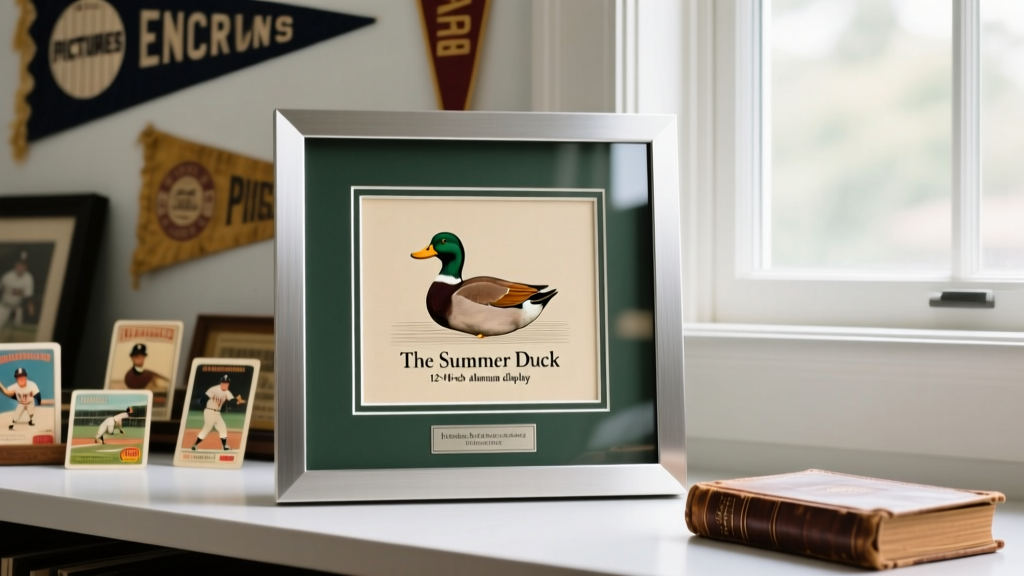
Pictures Engraving The Summer Duck Color Frame: A Collector’s Deep Dive into the 12×16-Inch Aluminum Display System