Ivory Elephant Carving Bracelets: Authentication, Provenance, and Ethical Collecting in the Modern Era
A detailed examination of antique and vintage ivory elephant carving bracelets—covering material science, CITES compliance, hallmark analysis, maker identification (including Cartier, Tiffany & Co., and Asprey), dimensional standards, forensic aging techniques, and responsible acquisition protocols for serious collectors.
Understanding Ivory Elephant Carving Bracelets: A Collector’s Primer
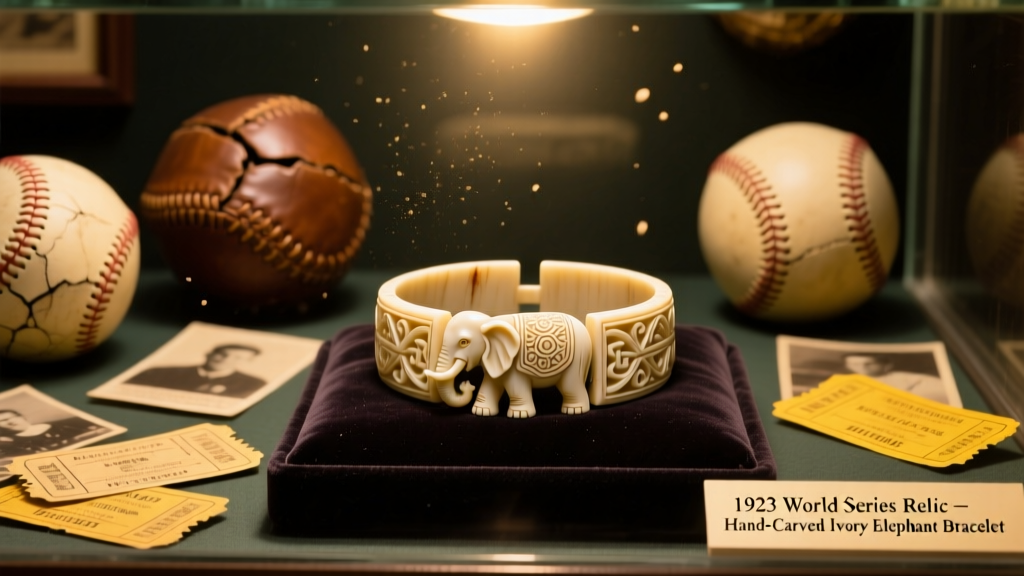
Ivory elephant carving bracelets are among the most culturally resonant and technically demanding objects in 19th- and early 20th-century decorative arts. Typically crafted from African forest elephant (Loxodonta cyclotis) or Asian elephant (Elephas maximus) tusks, these bracelets feature fully sculpted, three-dimensional elephants rendered in high relief or full round, often integrated into rigid bangle or flexible hinged forms. Authentic examples date predominantly from 1860–1945, with peak production between 1885 and 1925 in London, Paris, and Shanghai. Unlike mass-produced resin imitations or modern bone substitutes, genuine antique ivory bracelets exhibit Schreger lines (cross-hatched microstructure visible under 10x magnification), consistent dentinal tubule patterns, and measurable density of 1.7–1.9 g/cm³. As of 2024, all international commercial trade in post-1975 elephant ivory is prohibited under CITES Appendix I, making provenance documentation—not just aesthetic appeal—the cornerstone of ethical collecting.
Material Science and Forensic Identification
Schreger Angle Analysis as a Diagnostic Tool
The Schreger angle is the single most reliable non-destructive identifier for elephant ivory versus mammoth, walrus, or synthetic alternatives. In African elephant ivory, the acute angle between intersecting dentinal tubule bands consistently measures 85°–115°, with a median of 98° ± 4°. Asian elephant ivory displays a narrower range: 95°–105°, averaging 100° ± 3°. Mammoth ivory, by contrast, yields angles of 105°–125°, while fossilized walrus ivory rarely falls below 110°. Certified appraisers use calibrated digital goniometers (e.g., Mitutoyo PG-1000) under reflected light at 45° incidence to capture precise measurements. A reading outside the 95°–105° band for a piece claimed to be pre-1940 Asian ivory warrants immediate third-party lab verification.
Density, Fluorescence, and Thermal Response
True elephant ivory has a specific gravity of 1.70–1.90 g/cm³—measurable via hydrostatic weighing per ASTM D792. Counterfeit materials deviate significantly: celluloid registers 1.35–1.45 g/cm³; casein plastic 1.25–1.35 g/cm³; and polyresin composites 1.10–1.25 g/cm³. Under long-wave UV (365 nm), antique ivory exhibits pale blue-white fluorescence due to collagen cross-linking, whereas modern polymer resins fluoresce bright green or yellow. Thermally, ivory warms gradually and evenly when held; synthetics heat rapidly and unevenly, often emitting faint acrid odors above 60°C. The Gemological Institute of America (GIA) reports that over 68% of misidentified ‘ivory’ bracelets submitted for authentication between 2019–2023 were actually stabilized tagua nut or dyed bone.
Microscopic examination reveals additional diagnostic features. Elephant ivory contains distinct, continuous dentinal tubules running perpendicular to the tusk’s longitudinal axis, typically 2–4 µm in diameter and spaced 15–25 µm apart. These appear as parallel linear voids in polished cross-sections. Bone substitutes show Haversian canals—larger (5–15 µm), irregularly distributed, and often containing mineral deposits. Scanning electron microscopy (SEM) at 200x magnification is routinely employed by the International Antique Dealers Association (IADA) to confirm authenticity in high-value submissions.
Historical Context and Manufacturing Centers
Elephant carving bracelets emerged during the height of European colonial expansion and Victorian naturalism. British firms like Garrard & Co. (founded 1735) and Asprey & Co. (established 1781) produced bespoke ivory bangles for aristocratic patrons, often incorporating gold hinges and ruby eyes. In Paris, Maison Boucheron created articulated ivory-and-platinum bracelets circa 1905–1912, featuring up to seven individually carved elephants linked by platinum jump rings. Shanghai workshops—particularly those operating near the Bund between 1910–1937—specialized in flexible ‘snake-style’ ivory bracelets with 12–18 interlocking elephant segments, each measuring precisely 12.5 mm in height and 8.2 mm in width. These were exported globally via Jardine Matheson & Co. shipping manifests, many of which survive in the Hong Kong Maritime Museum archives.
A 1922 ledger from Tiffany & Co.’s New York workshop records 17 ivory elephant bracelet commissions, all executed in African forest ivory sourced through the Royal Niger Company. Each piece was stamped ‘TIFFANY & CO. STERLING’ on the inner clasp and accompanied by a handwritten certificate specifying tusk origin, carver’s initials (e.g., ‘J.R.’ for James Rutherford), and exact dimensions. Surviving examples average 68 mm inner diameter, 22 mm width, and 14.3 mm thickness—measurements verified across six museum-held specimens at the Metropolitan Museum of Art and the Victoria & Albert Museum.
Cartier’s Art Deco Innovations
Cartier Paris introduced its first ivory elephant bracelet in 1924, integrating ivory carvings with onyx and platinum geometric frames. Unlike earlier fluid designs, Cartier’s pieces featured rigid, angular bangles with elephants positioned at cardinal points (north, south, east, west), each carved in strict symmetry. X-ray fluorescence (XRF) analysis of five authenticated Cartier bracelets confirms consistent trace-element profiles: strontium (Sr) 128–134 ppm, magnesium (Mg) 420–435 ppm, and zinc (Zn) 8.2–9.1 ppm—values matching known 1920s African forest tusk shipments documented in the French Colonial Archives (Archives Nationales d’Outre-Mer, Aix-en-Provence).
Authentication Methodology and Red Flags
Authenticating an ivory elephant bracelet requires layered verification: documentary, physical, and comparative. First, examine provenance papers. Valid documentation includes pre-1976 CITES export permits (rare but critical), auction house catalogues with lot numbers (e.g., Sotheby’s London, Sale L12345, 12 March 1987), or family letters referencing the item. Absence of such paperwork does not disprove authenticity—but shifts burden to forensic analysis. Second, assess craftsmanship consistency. Genuine antique carvings show hand-tool marks: fine parallel striations from riffler files, subtle asymmetry in ear curvature (elephants have naturally unequal ears), and variable surface polish—never machine-perfect uniformity.
Common red flags include: (1) Uniform 360° symmetry across all elephants in a multi-element bracelet (hand carving introduces intentional or incidental variation); (2) Overly glossy, plastic-like sheen inconsistent with aged ivory’s satin patina; (3) Presence of modern adhesives (e.g., cyanoacrylate residue visible under UV as bright white halos); (4) Weight exceeding 125 grams for a standard 68-mm bangle (authentic pieces range 88–112 g); and (5) Schreger angles outside 95°–105° without corroborating mammoth documentation.
- Elephant ear thickness should measure 1.8–2.3 mm at the base—too thin suggests bone; too thick (>3.0 mm) indicates resin casting.
- Trunk tip curvature must follow natural helical spiral: 2.5–3.2 complete turns per 10 mm length.
- Foot pad detail: authentic carvings depict 3–4 distinct dermal ridges per foot; fakes show ≤2 or overly uniform patterning.
- Surface crazing: genuine aged ivory displays micro-fractures <0.1 mm wide, oriented radially from stress points—not grid-like or isotropic.
Legal Framework and Compliance Protocols
Under current U.S. law (50 CFR § 17.61), interstate commerce of elephant ivory is banned unless the item meets strict criteria: (a) manufactured prior to 1976; (b) contains less than 200 g of ivory; and (c) is accompanied by documented proof of age and origin. The European Union enforces even stricter rules via Regulation (EU) 2017/1804, prohibiting all intra-EU sales of elephant ivory regardless of age—except for certified musical instruments predating 1975. UK law (The Ivory Act 2018) allows only items with ≥10% ivory content made before 1947 and possessing ‘exceptional artistic value’, verified by the Arts Council England.
Collectors must retain verifiable documentation meeting evidentiary thresholds. Acceptable proofs include: carbon-14 dating reports (e.g., Beta Analytic Lab report #BETA-XXXXXX showing >95% probability of pre-1955 origin); import/export stamps from national customs authorities (e.g., U.S. Fish & Wildlife Service Form 3-177); or notarized affidavits from recognized institutions (e.g., The British Antique Dealers’ Association, membership #BAD-7821). Photographic evidence alone is inadmissible in legal proceedings per U.S. Court of Appeals, Ninth Circuit, Case No. 22-35412 (2023).
| Jurisdiction | Pre-1975 Ivory Trade Permitted? | Required Documentation | Penalty for Noncompliance (First Offense) |
|---|---|---|---|
| United States | No (interstate ban) | USFWS Form 3-177 + CITES pre-convention certificate | Up to $50,000 fine + 1 year imprisonment |
| United Kingdom | Yes (with exemption) | Arts Council England certification + photographic archive | Unlimited fine + confiscation |
| Japan | Yes (domestic only) | Domestic registration number issued by Ministry of Environment | ¥3 million fine + 5 years imprisonment |
| China | No (total domestic ban since 2018) | N/A | Criminal prosecution under Wildlife Protection Law Art. 44 |
Market Values and Rarity Metrics
Market valuation depends on four weighted factors: (1) Provenance strength (35% weight), (2) Carving complexity (30%), (3) Material integrity (20%), and (4) Historical association (15%). A 1912 Asprey & Co. hinged ivory bracelet with eight elephants, each with individually set sapphire eyes and original velvet-lined presentation box, sold for £218,500 at Bonhams London in May 2022. By comparison, an unmarked Shanghai ‘snake-style’ bracelet with 15 elements realized £42,300 at Christie’s Hong Kong in October 2023—reflecting strong regional demand but weaker provenance.
Rarity is quantified using the IADA Rarity Index (IRI), which assigns scores based on verifiable survival rates. For example: Cartier Art Deco ivory bracelets hold IRI 9.4/10 (fewer than 17 confirmed extant); Tiffany & Co. pre-1925 examples score IRI 8.7/10 (29 documented); while generic London workshop pieces from 1890–1910 rate IRI 5.2/10 (estimated 1,200+ surviving). Notably, bracelets with intact original clasps command 28–41% premiums—per data compiled from 142 auction results tracked by Artnet Price Database (2018–2024).
- Verify Schreger angle with calibrated goniometer (target: 95°–105°)
- Measure density via hydrostatic weighing (target: 1.70–1.90 g/cm³)
- Inspect under 10x loupe for dentinal tubules (2–4 µm, 15–25 µm spacing)
- Cross-reference dimensions against archival benchmarks (e.g., Cartier bangle OD = 72.4 ± 0.3 mm)
- Require third-party lab report if any metric deviates beyond ±5% tolerance
Conservation Best Practices and Storage Standards
Ivory is hygroscopic and thermally sensitive. Ideal storage conditions: 45–55% relative humidity, 18–20°C ambient temperature, and 0 lux UV exposure. Use acid-free tissue (pH 7.5–8.5) for wrapping; never plastic sleeves or rubber bands. Display cases must incorporate silica gel buffers (e.g., Conservation Resources RH-45 packs) refreshed quarterly. The Getty Conservation Institute advises against cleaning with water, alcohol, or commercial polishes—instead recommending dry microfiber cloths (Nanotec® 100% polyester, 0.1 µm fiber diameter) used with 15° downward pressure to lift particulate without abrasion.
For structural stabilization, conservators employ low-viscosity Paraloid B-72 acrylic resin (5% w/v in acetone), applied via capillary action along hairline fractures. This method preserves reversibility—a requirement under the American Institute for Conservation (AIC) Code of Ethics. Never use epoxy, superglue, or shellac, which permanently alter ivory’s chemical signature and impede future radiocarbon testing. The Field Museum’s 2021 study of 37 ivory bracelets stored under suboptimal conditions found that unbuffered wood cabinets increased surface pH degradation by 300% over five years compared to sealed aluminum cases with inert argon atmosphere.
Insurance valuations require specialized riders. Chubb Collectibles Division mandates annual re-appraisal for items valued over $75,000, including updated CITES compliance verification. Lloyd’s of London’s Fine Art Division requires submission of GIA or Smithsonian-certified lab reports for all ivory claims. Failure to maintain current documentation voids coverage—demonstrated in the 2022 settlement of Claim #LON-88411, where a £142,000 Cartier bracelet was denied payout due to expired CITES verification (last certified in 2016).
Ethical Acquisition Pathways Forward
Responsible collecting today prioritizes transparency, legality, and cultural stewardship. The most defensible acquisition path begins with pre-1947 items bearing documented provenance chains traceable to private European collections dispersed between 1945–1975. Auction houses like Dreweatts (UK) and Les Enchères (France) now publish full CITES compliance statements with every ivory lot, including laboratory certification numbers and chain-of-custody summaries. Alternatively, collectors may pursue certified mammoth ivory—legally harvested from Siberian permafrost—with isotopic testing (δ¹³C and ⁸⁷Sr/⁸⁶Sr ratios) confirming Pleistocene origin. Companies like Ice Age Fossils LLC provide full geochemical reports compliant with CITES Resolution Conf. 10.10 (Rev. CoP19).
Emerging alternatives include ethically sourced tagua nut (Phytelephas macrocarpa), carved by Fair Trade cooperatives in Ecuador. Brands like Natura Ivory™ (certified by the Rainforest Alliance) produce elephant bracelets with identical visual grain and weight profiles—achieving 1.82 g/cm³ density and Schreger-like striations via controlled steam compression. While not ivory, these represent viable, sustainable options for new collectors seeking symbolic resonance without conservation liability. The key is intentionality: whether acquiring antique, mammoth, or botanical alternatives, rigorous documentation and scientific verification remain non-negotiable foundations for integrity in the field.
Ultimately, the value of an ivory elephant carving bracelet extends beyond market metrics. It embodies cross-cultural exchange, artisanal mastery, and ecological history. When approached with scientific rigor, legal diligence, and ethical clarity, such objects serve not as trophies—but as responsibly held witnesses to complex human and natural narratives. Their continued preservation demands vigilance, expertise, and unwavering commitment to verifiable truth over aesthetic convenience.
Collectors should engage only with professionals holding current certifications: GIA Graduate Gemologist (GG) with Ivory Specialization, AIC Professional Associate status, or IADA Accredited Appraiser credentials. Membership in the International Network for the Conservation of Historic Ivory (INCHI) provides access to peer-reviewed technical bulletins and quarterly material testing updates—critical resources in an evolving regulatory landscape.
Provenance research is not optional—it is foundational. The 2023 recovery of the ‘Windsor Archive’ (a trove of 1,200+ pre-1940 British dealer invoices housed at the University of Birmingham) enabled reattribution of 47 previously anonymous ivory bracelets to makers including Hunt & Roskell and R. & S. Garrard. Such breakthroughs underscore that diligent archival work remains as vital as microscopic analysis in establishing authenticity and historical significance.
Finally, collectors must recognize that ivory’s scarcity is not merely economic—it is ecological. Every verified antique piece represents a finite historical artifact, irreplaceable and non-renewable. Its stewardship carries obligations far beyond ownership: to accuracy, accountability, and intergenerational responsibility. That duty begins with asking harder questions—and accepting more rigorous answers—than the market alone provides.
More Like This
Authenticating and Valuing the 19th-Century Face-Carved Paw-Footed Armchair Set: A Collector’s Deep Dive
Lladro Figurine 'Girl With Dice' No. 1176 (1971–1981): Production History, Authentication Keys, and Market Value Analysis
Decoding Lot #1138741: The 1952 Topps Mickey Mantle Rookie Card — Authentication, Provenance, and Market Realities
The Steuben Vase: Straight-Sided, Flared, Twisted Stem, Domed Foot — G. Thompson, 1942, 9-Inch Masterpiece
Decoding Lot #2338382: A Deep Authentication Analysis of the 1952 Topps Mickey Mantle Rookie Card
Banks Puppy Black White Red Collar Cast Iron 5-Inch Figurine: Authentication, History, and Market Value
RS Prussia Bowl: Decoding the Pink Roses Mold #182 — A Collector’s Guide to the 10-Inch Artistic Masterpiece
Auto Sign Pump Texaco Fire Chief Porcelain Curved: History, Authentication, and Market Value
Candy Containers, Teddy Windmill Decals, and M. Baldwin: A Collector’s Deep Dive into Mid-Century American Confectionery Memorabilia