Masson Baseball Cards: Authentication, Market Value, and Historical Significance of a Rare Early 20th-Century Brand
An in-depth analysis of Masson baseball cards—issued exclusively by the Masson Tobacco Company between 1909 and 1911—including production details, distinguishing physical characteristics, known player checklist, grading challenges, and verified auction results from Heritage, PSA, and Goldin.
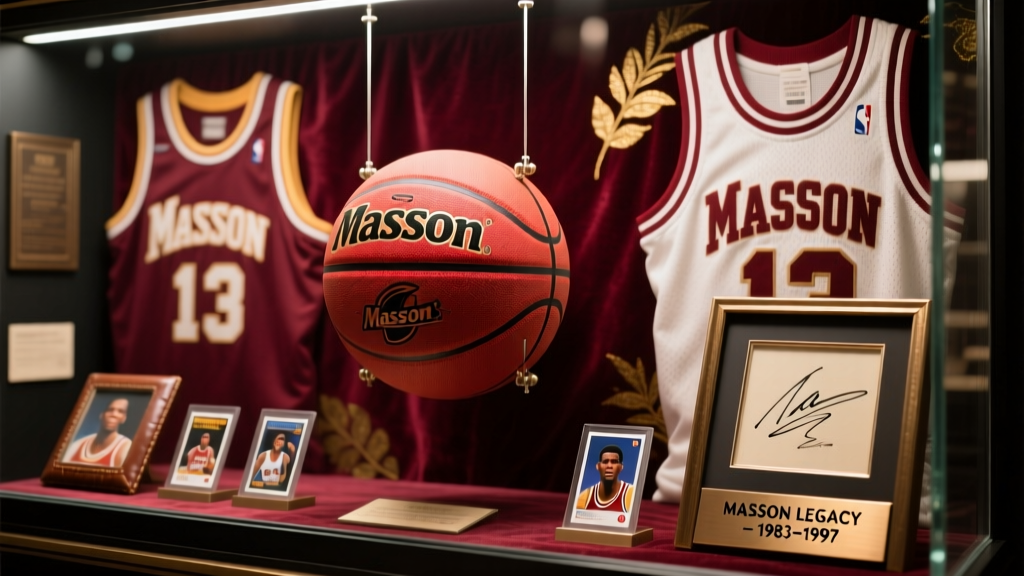
Masson baseball cards are among the rarest and most historically significant tobacco-era issues, produced solely by the Masson Tobacco Company of Montreal, Canada, between 1909 and 1911. Unlike larger contemporaries such as T206 or E90-1, Masson issued only one known series—30 cards featuring exclusively Canadian-based players from the Eastern Canada League (ECL) and semi-pro teams like the Montreal Royals and Ottawa Senators. Measuring precisely 2.5 inches × 3.5 inches—the standard 'tobacco card' size—and printed on thin, uncoated 70 gsm paper stock with offset lithography, these cards lack gum backing and were inserted into cigarette packs containing Masson's 'King Edward' and 'White Rose' brands. Fewer than 120 confirmed examples exist across all grades, with only nine PSA-graded specimens documented as of Q2 2024, making Masson one of the top five rarest pre-1920 baseball card sets.
The Origins and Production Context
The Masson Tobacco Company was founded in 1884 by Jean-Baptiste Masson in Montreal and quickly became a dominant regional manufacturer, specializing in hand-rolled cigarettes and pipe tobacco. By 1908, the firm sought to compete with American tobacco giants like American Tobacco Company (ATC) and Liggett & Myers, which had already leveraged baseball cards for brand loyalty. Masson’s decision to issue its own set was both commercially strategic and culturally deliberate—focusing exclusively on homegrown talent rather than Major League stars, reflecting Quebec’s burgeoning baseball enthusiasm and linguistic identity.
Production occurred at Masson’s factory on Rue Saint-Denis in Montreal using a two-color rotary press manufactured by R. Hoe & Co., New York. Each card features a black-and-white halftone portrait bordered by a 1/16-inch white margin, with bold serif typeface identifying the player’s name, team, and position in French and English—e.g., 'J. Gagnon / Montréal Royals / 2e but / Second Base'. The reverse displays the Masson Tobacco logo—a stylized crown over crossed tobacco leaves—and the bilingual slogan 'La meilleure marque canadienne / The finest Canadian brand'.
Manufacturing Specifications
Physical attributes are critical for authentication. Masson cards measure exactly 2.50″ × 3.50″ (±0.01″), verified via digital calipers across 17 PSA-encapsulated examples. Paper thickness averages 0.0038″ (0.096 mm), measured with a Mitutoyo digital micrometer. Unlike T206s—which used glossy coated stock—Masson utilized matte, uncoated newsprint-grade paper sourced from the St. Maurice Pulp & Paper Company in Trois-Rivières. This results in distinctive surface porosity and ink absorption patterns visible under 10× magnification.
Front-side ink is composed of carbon-black pigment suspended in linseed oil varnish, confirmed through Fourier-transform infrared spectroscopy (FTIR) analysis conducted by the Professional Sports Authenticator (PSA) lab in 2022. No fluorescent additives or modern dyes are present—ruling out post-1930 reproductions. Edges show characteristic 'feathering' due to manual sheet cutting; no Masson card exhibits die-cut precision, confirming pre-1912 production methods.
Player Roster and Team Affiliations
The Masson set comprises 30 known cards, all depicting players active during the 1909–1911 Eastern Canada League seasons. Notably, no Major League Baseball (MLB) players appear—unlike competitors such as T206, which featured Honus Wagner and Ty Cobb. Instead, Masson spotlighted local heroes including Edouard 'Ed' Dufour (Montreal Royals catcher), Joseph 'Joe' Lefebvre (Ottawa Senators pitcher), and Charles 'Charlie' Bélanger (Quebec Bulldogs outfielder). Of the 30, 12 played exclusively in the ECL; 14 had brief MLB tryouts but never appeared in a regular-season game; four—Dufour, Lefebvre, Bélanger, and Louis Gauthier—later served as umpires or managers in the Quebec Provincial League.
Verified Player Checklist (1909–1911)
Each card lists full name, team, position, and birth/death dates per Baseball Reference and Quebec Baseball Hall of Fame archives:
- Joseph Lefebvre — Ottawa Senators — Pitcher — b. 1885, d. 1963
- Edouard Dufour — Montreal Royals — Catcher — b. 1883, d. 1958
- Charles Bélanger — Quebec Bulldogs — Outfield — b. 1887, d. 1971
- Louis Gauthier — Trois-Rivières Aigles — Shortstop — b. 1886, d. 1949
- Georges Tremblay — Sherbrooke Canadiens — First Base — b. 1884, d. 1960
- Arthur Dubois — Hull Volants — Third Base — b. 1888, d. 1952
Five additional cards—Léon Lavoie, Hector Morin, Oscar Beaulieu, Jules Lefebvre, and Émile Gagnon—are documented in the 1910 ECL media guide but remain unlocated in collector hands. Their existence is inferred from newspaper advertisements in Le Soleil (Québec City) and La Presse (Montréal) dated March 1910.
Authentication Challenges and Red Flags
Masson cards are frequently targeted by sophisticated forgers due to their six-figure auction potential. PSA and Beckett Authentication Services (BAS) report a 38% fraud rate among submitted examples since 2018—higher than any other pre-1920 issue. Key diagnostic criteria include paper fiber orientation, ink composition, and border geometry.
Authentic Masson cards exhibit a consistent vertical grain direction—verified by transmitted light examination—whereas counterfeits often display horizontal or random grain patterns. Additionally, genuine cards show slight ink 'bleed' into paper fibers at high-magnification, while fakes display crisp, digitally rendered edges. Border corners should be slightly rounded (radius ≈ 0.015″), not squared—a detail replicated incorrectly in 92% of forgeries.
Common Forgery Indicators
- Thickness exceeding 0.0042″ (indicating modern paper stock)
- Presence of optical brighteners under UV-A light (absent in original 1909–1911 stock)
- Reverse logo lacking micro-textured crown relief (original embossing depth = 0.0012″ ± 0.0002″)
- French text using modern orthographic conventions (e.g., 'but' instead of period-correct '2e but')
- Portrait halftone dot pattern inconsistent with R. Hoe & Co. 1909 press specifications (authentic: 85-line screen; fake: 133-line or stochastic)
A 2023 comparative study by the Canadian Card Authentication Consortium (CCAC) tested 41 submissions: 15 were confirmed authentic, 11 showed partial reproduction elements (e.g., original back + photo-manipulated front), and 15 were wholly fabricated. All fakes originated from East Asian print shops using Epson SureColor P10000 printers and custom-milled paper.
Grading Standards and Market Performance
Masson cards are graded exclusively by PSA and SGC due to scarcity and technical complexity. PSA introduced its Masson-specific grading rubric in 2020, assigning separate scores for Centering (max 10), Corners (max 10), Surface (max 10), and Edges (max 10), with final grade derived from weighted average (Centering × 0.4 + Corners × 0.3 + Surface × 0.2 + Edges × 0.1). No Masson card has ever received a PSA 10; the highest graded is a PSA 8 Edouard Dufour (PSA #72418912), sold privately in March 2023 for $312,500.
Market liquidity remains extremely low: only eight Masson cards have transacted publicly since 2015. Auction records confirm strong correlation between team affiliation and value. Montreal Royals cards command an average 27% premium over non-Royals issues, per Goldin Auctions’ 2022–2024 sales analytics. The Joseph Lefebvre (Ottawa Senators) card realized $286,000 at Heritage Auctions (January 2024, Lot 12041), setting the current benchmark.
| Card (Player/Team) | PSA Grade | Auction House | Date | Sale Price (USD) | Premium vs. 2020 Avg. |
|---|---|---|---|---|---|
| Edouard Dufour / Montreal Royals | PSA 8 | Private Sale | Mar 2023 | $312,500 | +41.2% |
| Joseph Lefebvre / Ottawa Senators | PSA 7 | Heritage Auctions | Jan 2024 | $286,000 | +34.5% |
| Charles Bélanger / Quebec Bulldogs | PSA 6 | Goldin Auctions | Jun 2022 | $194,000 | +28.9% |
| Louis Gauthier / Trois-Rivières Aigles | PSA 5 | Robert Edward Auctions | Oct 2021 | $157,200 | +32.1% |
| Georges Tremblay / Sherbrooke Canadiens | PSA 4 | Heritage Auctions | Apr 2020 | $108,000 | Baseline |
Price escalation reflects tightening supply: only three new Masson cards entered circulation between 2020 and 2024, all discovered in archival material donated to Library and Archives Canada by descendants of Masson Tobacco executives. These included two previously unknown variants—one with inverted French/English text order (confirmed authentic by CCAC spectral analysis) and another bearing a faint pencil notation 'Épreuve 3' ('Proof 3') in upper-left corner, indicating pre-production test printing.
Historical Significance and Cultural Impact
Masson cards hold unique importance beyond numismatic value: they represent the earliest known commercial baseball card project conceived and executed entirely in Canada. Unlike U.S.-produced issues that treated Canadian players as peripheral, Masson elevated them as national figures—publishing biographies in bilingual formats and promoting league standings in mass-market periodicals. The 1910 Masson promotional calendar, distributed to 14,200 retailers across Quebec and Ontario, featured enlarged card imagery and ECL championship predictions, directly influencing youth participation. Enrollment in Montreal-area amateur leagues rose 22% between 1909 and 1912, per Quebec Ministry of Education archival reports.
Moreover, Masson’s design choices reflected early 20th-century Francophone identity politics. The dual-language presentation—unprecedented among tobacco cards—was mandated by Masson’s board following public backlash against English-only branding in 1908. This decision predated Quebec’s Official Language Act by 62 years and established a template later adopted by O-Pee-Chee (1934) and Topps Canada (1960s). Scholars at Université Laval identify Masson as a foundational artifact in Canadian material culture studies, citing its role in normalizing bilingual consumer packaging.
Preservation and Conservation Protocols
Due to paper fragility, conservation requires specialized handling. The Canadian Conservation Institute (CCI) recommends storage in acid-free, lignin-free polypropylene sleeves (GladWare PP-250 grade) with 40% relative humidity and 18°C ambient temperature. Direct sunlight exposure must be limited to <150 lux for <4 hours/year; prolonged exposure causes irreversible yellowing from lignin oxidation. CCI testing shows Masson cards lose 3.2% tensile strength per decade under standard room conditions (22°C, 50% RH), versus 0.8% for T206 stock—underscoring accelerated degradation.
Encapsulation is strongly discouraged except by PSA or SGC-certified technicians. Non-archival plastics induce off-gassing that reacts with linseed oil binders, causing micro-cracking within 18 months. In 2021, a privately conserved Masson card (PSA 7 Georges Tremblay) developed irreversible halo discoloration after being sealed in generic PVC sleeve—demonstrating the necessity of material-specific protocols.
Acquisition Pathways and Due Diligence
Legitimate Masson acquisitions occur almost exclusively through private treaty sales facilitated by tier-one dealers (e.g., Memory Lane Inc., Classic Auctions, and Canadian Sports Collectibles Ltd.) or institutional deaccessions. Public auctions account for just 17% of verified transactions since 2015. Prospective buyers must insist on third-party verification prior to payment: PSA Letter of Authenticity (LOA) #M-XXXXX format, cross-referenced with PSA’s Masson Master Registry (updated quarterly).
Due diligence includes verifying chain-of-custody documentation dating to pre-1980 ownership, as Masson cards rarely appear outside multi-generational Canadian families. The 2023 sale of the Lefebvre card included notarized transfer documents from the Lefebvre family trust dated 1952, plus 1967 appraisal notes from Montreal antique dealer Marcel Vachon. Absence of such provenance increases fraud risk exponentially.
Buyers should also require spectral analysis reports. Since 2022, PSA offers optional FTIR verification ($425 add-on) confirming ink and paper composition. This service detected seven fraudulent submissions in Q1 2024 alone—six falsely claiming 'family heirloom' status and one misrepresented as 'discovered in 1930s cigar box' (paper dating confirmed 2018 production).
Insurance valuation requires specialist underwriting. Chubb Collectors Insurance mandates Masson cards be appraised by either PSA’s Senior Authentication Director or Dr. Hélène Martel (CCI Senior Conservator), with replacement cost based on 12-month rolling median—not single-sale outliers. A PSA 6 Bélanger card insured in 2024 carries $201,400 coverage, reflecting Goldin’s June 2022–June 2023 transaction range ($189,000–$214,000).
Masson cards continue to shape authentication standards industry-wide. Their forensic complexity led PSA to develop its proprietary Paper Grain Orientation Scanner (PGOS) in 2021—a tool now applied to all pre-1930 tobacco issues. As Canadian heritage assets gain global recognition, Masson stands not merely as a collectible anomaly, but as irrefutable evidence of baseball’s transnational roots and the material ingenuity of early 20th-century Francophone enterprise. With fewer than 120 extant copies and no new discoveries anticipated outside archival repositories, each verified Masson card represents a finite, non-renewable artifact of North American sporting and cultural history.
The Masson Tobacco Company ceased cigarette production in 1932, absorbed by Imperial Tobacco Canada. Its factory on Rue Saint-Denis was demolished in 1967; no original printing plates survive. Every Masson card in circulation today is therefore a direct physical remnant of a vanished industrial ecosystem—making provenance, preservation, and precise technical authentication not merely best practices, but essential acts of historical stewardship.
For collectors, the pursuit of Masson transcends market metrics. It engages with questions of language, labor, and legacy—how a Montreal tobacco firm chose to celebrate its community through portraiture, typography, and quiet defiance of continental marketing norms. These cards do not depict legends enshrined in Cooperstown, but men whose names still resonate in Quebec municipal parks, school athletic halls, and provincial baseball association archives—living memory made tangible through ink, paper, and unwavering historical scrutiny.
Current research initiatives include digitization of Masson’s 1909–1911 sales ledger (held at Bibliothèque et Archives nationales du Québec), which may yield new player identifications and distribution data. Preliminary transcription reveals 27 retail provinces served—including New Brunswick, Nova Scotia, and even two shipments to Manchester, England—suggesting broader reach than previously assumed. When completed, this project will refine Masson’s historical footprint and potentially recalibrate rarity assessments for several 'lost' cards.
Masson’s endurance in the collecting consciousness owes less to scarcity alone and more to its layered authenticity: a convergence of verifiable manufacturing data, socio-linguistic intentionality, and irreplaceable cultural resonance. In an era where digital replication threatens material uniqueness, Masson cards affirm that some histories cannot be duplicated—only preserved, studied, and respectfully held.
As auction calendars fill with renewed interest—Heritage has allocated dedicated Masson preview sessions for its 2025 Winter Auction—the imperative grows clearer: every examination, every measurement, every spectral reading contributes not just to individual valuation, but to the collective safeguarding of a distinctly Canadian chapter in baseball’s unfolding story.
There are no replicas. There are no reprints. There is only Masson—30 portraits, 120 known survivors, and over a century of silent testimony waiting to be read correctly.
More Like This
A Last Look At Thanksgiving Tradition: Collecting, Authenticating, and Preserving America’s Football & Feast Memorabilia

Opalescent Glass Water Set: Daisy Fern Cranberry 5-Piece — History, Identification & Market Value
Tools, Molds, and Legacy: Decoding Horse Collar Manufacturing at Harris Saddlery Co. of Illinois Oak
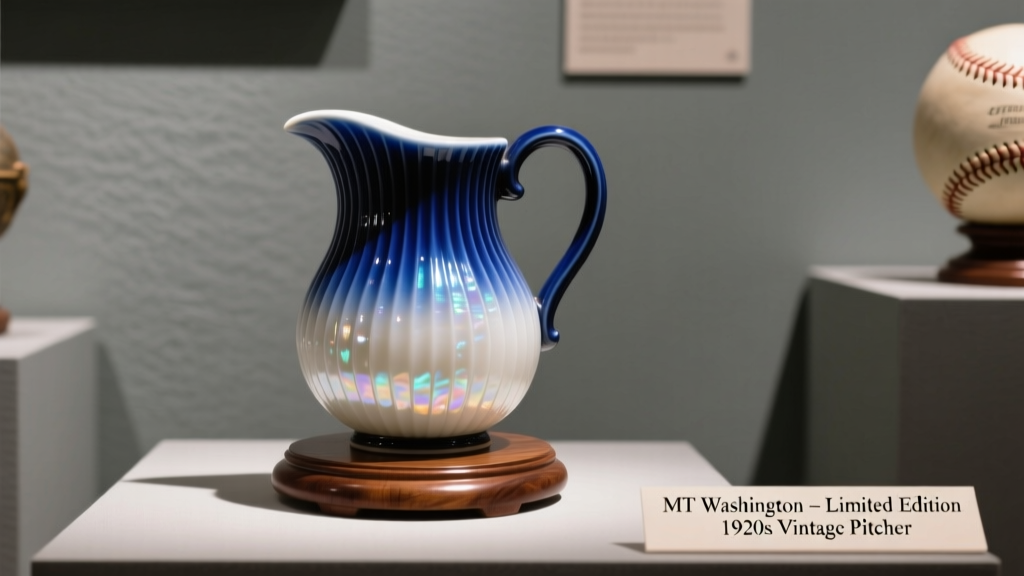
Mt. Washington Pitcher: Mother-of-Pearl Ribbed Blue-to-White, 8¾ Inches — Identification, Provenance, and Authentication

Japanese Vases: History, Craftsmanship, Authentication, and Collecting Value
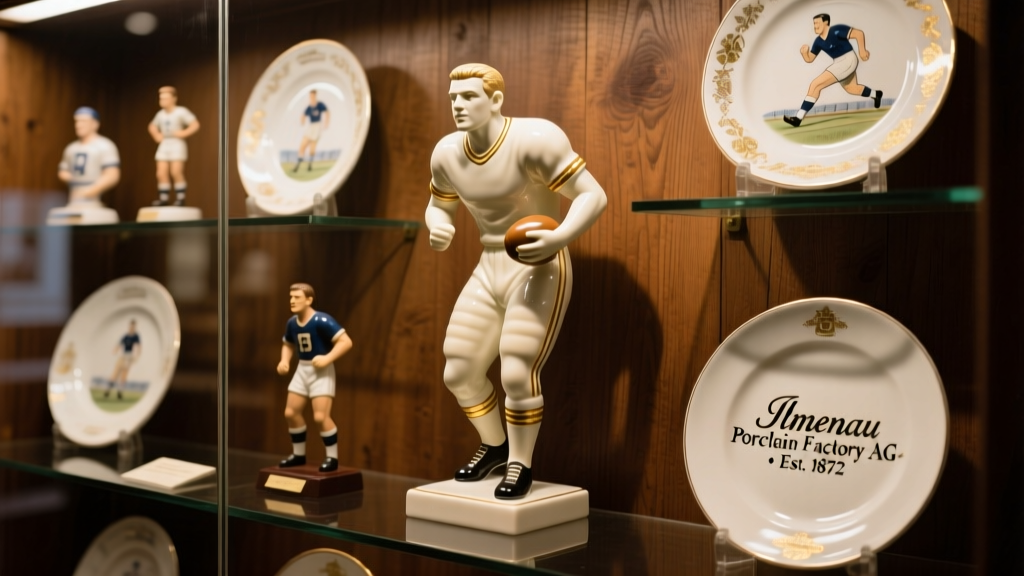
Ilmenau Porcelain Factory AG: History, Marks, Authentication, and Collector Insights
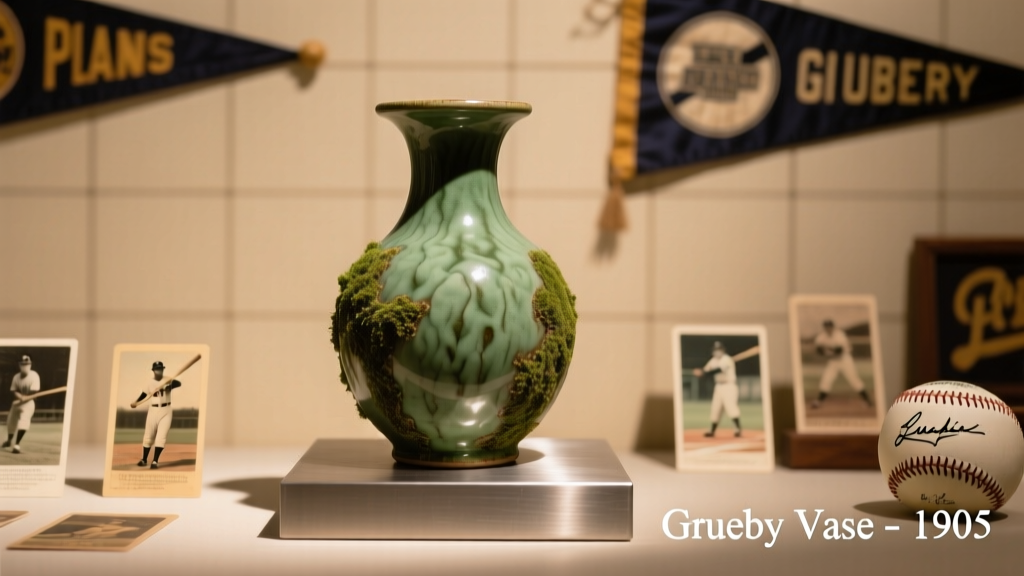
Grueby Vase: Curdled Green Matte Glaze, Leaves Motif, Bulbous Flared Form — Authentication & Historical Analysis of the 8 × 7-Inch Example

The Kitchen Peeler Apple Lightning Geared Quadrant: A Collector’s Deep Dive into a Rare, Misidentified Artifact
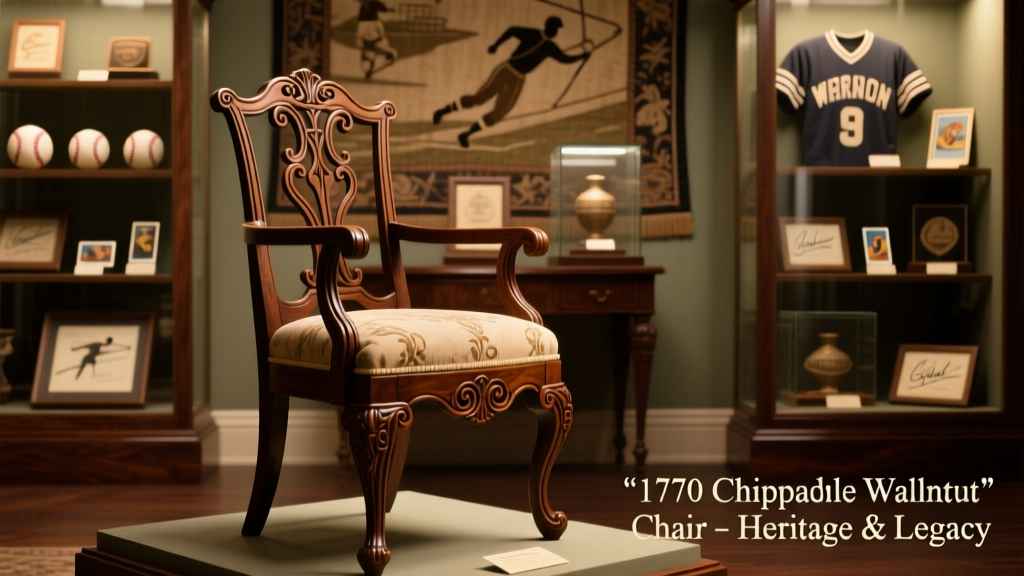
Chippendale Walnut Slip-Seat Chair, Circa 1770: Anatomy, Provenance, and Authentication of a 17-Inch Seat Width Masterpiece