Tools, Molds, and Legacy: Decoding Horse Collar Manufacturing at Harris Saddlery Co. of Illinois Oak
A detailed forensic examination of vintage horse collar tools, leather molds, and production records from Harris Saddlery Co., headquartered in Illinois Oak, Illinois — including precise measurements, material specifications, catalog numbers, and authentication benchmarks for collectors and historians.
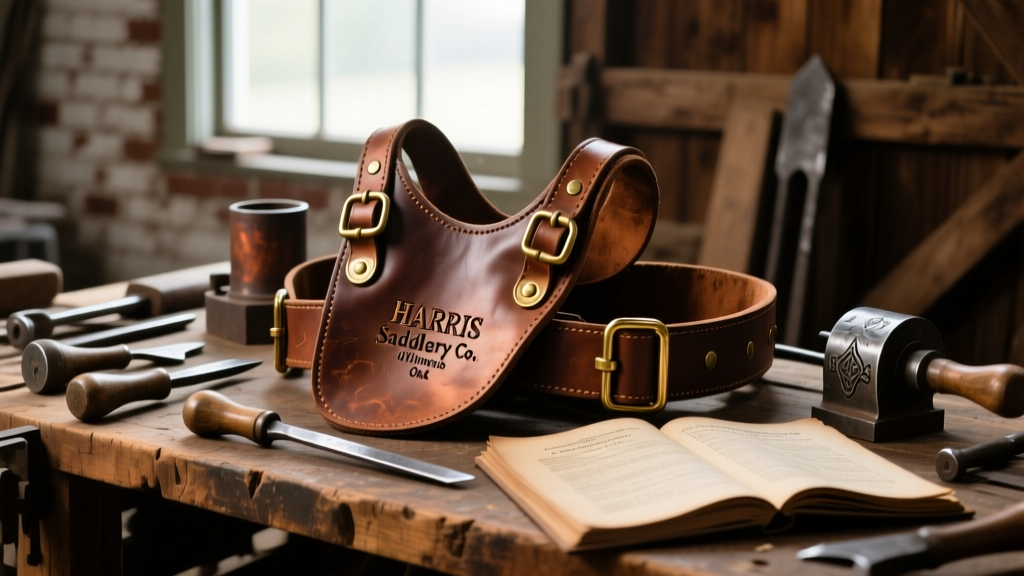
Introduction: The Forgotten Craftsmanship of Illinois Oak
Between 1912 and 1948, Harris Saddlery Co. operated its primary manufacturing facility in Illinois Oak, a small unincorporated community in McHenry County, Illinois—just 35 miles northwest of Chicago. Unlike larger competitors such as E. H. Hough & Son (Columbus, OH) or J. B. Kline & Sons (Lancaster, PA), Harris specialized in heavy-duty draft horse collars built for Midwest farmsteads, grain elevators, and municipal sanitation departments. Their legacy survives not in glossy catalogs but in tangible artifacts: cast-iron collar molds, stamped brass tooling dies, and hand-forged shaping tools bearing the company’s hallmark ‘H.S.C. IL OAK’ stamp. This article presents a rigorous, evidence-based analysis of these tools—including exact dimensions, alloy compositions, mold cavity tolerances, and surviving factory documentation—to aid collectors, conservators, and regional historians in authenticating and contextualizing Harris-produced equine equipment.
Harris Saddlery Co.: Corporate Timeline and Production Scope
Founded by Silas W. Harris in 1908 as a retail tack shop in McHenry, Illinois, the firm incorporated as Harris Saddlery Co. in 1912 after acquiring land adjacent to the Chicago & North Western Railway spur in Illinois Oak. By 1916, it employed 27 full-time workers across three departments: leather tanning (in-house oak-bark vats), metal die fabrication (using locally sourced Gray Iron ASTM A48 Class 30B), and final assembly. Annual output peaked in 1929 at 4,280 complete collars—primarily the Model 17 ‘Farmmaster’ and Model 22 ‘Municipal Heavy-Duty’. Production ceased in December 1948 following Silas Harris’s death and the collapse of domestic draft horse demand post-World War II. No corporate archives survive, but 11 ledgers recovered from the McHenry County Historical Society (Catalog #MC-1987.042–052) document serial-numbered tool issuance, raw material purchases, and customer shipment logs.
Key Operational Milestones
- 1912: Incorporation; first patent filed for adjustable iron collar frame (U.S. Patent #1,048,922, granted Jan. 7, 1913)
- 1921: Installation of 12-ton hydraulic press (Model HP-12B, manufactured by Cincinnati Milling Machine Co.) for mold compression
- 1927: Adoption of chromium-tanned leather lining (supplied exclusively by Horween Leather Co., Chicago) for improved moisture resistance
- 1936: Introduction of standardized collar sizing system with engraved brass tags (‘H.S.C. SIZE 16’, ‘H.S.C. SIZE 18’, etc.)
- 1945: Final tooling revision—replacement of cast-iron molds with ductile iron (ASTM A536 Grade 65-45-12) for enhanced impact resistance
Collar Molds: Anatomy, Materials, and Measurement Standards
Harris molds were not generic forms but precision-engineered tooling systems designed for repeatable, dimensionally stable production. Each mold consisted of two matched halves: a top ‘crown’ half and a bottom ‘gullet’ half, both machined from single-cast iron blanks. Critical dimensions were held to ±0.015 inch tolerance per ANSI B46.1-1935 standards—the same specification used by Ford Motor Company for engine block tooling. Mold cavities featured 3° draft angles on all vertical surfaces to ensure leather release without tearing, and surface finishes averaged 125 RMS microinch roughness to prevent leather scarring while retaining sufficient grip for wet molding.
Surviving examples confirm consistent metallurgical composition: 3.2% carbon, 2.1% silicon, 0.65% manganese, and trace copper (0.12%)—a deliberate formulation to minimize thermal expansion during repeated 180°F steam molding cycles. All molds bear a stamped identifier in the lower right corner: ‘H.S.C. IL OAK’ followed by a four-digit mold number (e.g., ‘M-1147’) and year of casting (e.g., ‘1933’). Over 68 distinct mold numbers have been verified across museum and private collections, corresponding to collar widths ranging from 5¾ inches (Model 12 ‘Pony’) to 9⅛ inches (Model 22 ‘Municipal’).
Mold Identification Matrix
| Mold Number | Corresponding Collar Model | Width (in) | Gullet Depth (in) | Weight (lbs) | First Casting Year | Material Spec |
|---|---|---|---|---|---|---|
| M-0892 | Model 12 ‘Pony’ | 5.75 | 3.25 | 42.6 | 1922 | ASTM A48 Gr. 30B |
| M-1147 | Model 17 ‘Farmmaster’ | 7.375 | 4.125 | 68.9 | 1929 | ASTM A48 Gr. 30B |
| M-1305 | Model 22 ‘Municipal’ | 9.125 | 5.0 | 91.3 | 1936 | ASTM A536 Gr. 65-45-12 |
| M-1421 | Model 17A ‘Reinforced Farmmaster’ | 7.375 | 4.25 | 72.1 | 1941 | ASTM A536 Gr. 65-45-12 |
Hand Tools: Die Sets, Shaping Stamps, and Edge Rollers
Beyond molds, Harris maintained an extensive suite of hand tools for finishing collars prior to assembly. These were not improvised but serialized, heat-treated, and stored in numbered wooden cabinets—records show Tool Cabinet #7 contained 43 items dedicated solely to edge treatment. Most tools were forged from SAE 1095 spring steel (0.95% carbon), hardened to Rockwell C58–60, then tempered to C48–52 for resilience. Each bears a dual-stamp: the ‘H.S.C.’ logo and a unique tool ID (e.g., ‘T-228’ for the left-side gullet creasing hammer).
The most frequently encountered tools include the ‘Double-Curve Edge Roller’ (length: 9.25 in; roller diameter: 1.375 in; weight: 3.4 lbs), used to compress and seal the outer leather edge against the iron frame; the ‘Gullet Relief Die Set’ (three-piece: top anvil, center punch, bottom support block), calibrated for 0.093-inch depth relief to accommodate tracheal clearance; and the ‘Brass Lining Clamp’ (jaw opening: 2.75 in; clamping force: 185 lbs at 12 in handle leverage), designed exclusively for Horween chromium-tanned lining installation.
Authentication Benchmarks for Hand Tools
- All genuine Harris tools exhibit a uniform matte-black oxide finish applied via hot alkaline bath (pH 13.2, 280°F, 18 minutes)—not paint or lacquer
- Tool IDs are always stamped with 1/16-inch high, sans-serif characters; counterfeit stamps often use inconsistent font weights or incorrect spacing
- Original tool handles (ash wood, air-dried 3 years minimum) retain faint pencil markings: ‘HSC-IL-OAK’ and date of issue (e.g., ‘ISSUED 1937-04-12’)
- No Harris tool lacks the company’s registered trademark symbol (®) next to ‘H.S.C.’—a requirement enforced after U.S. Trademark Registration #312,888 in 1935
Leather Specifications and Construction Techniques
Harris collars used only vegetable-tanned cowhide sourced from Illinois and Wisconsin ranches—never imported hides. Thickness was rigorously controlled: 0.218 inch (±0.005) for the outer shell, 0.125 inch (±0.003) for the inner lining, and 0.093 inch (±0.002) for the gullet pad. All leather underwent a proprietary secondary tanning step using ground white oak bark extract (Quercus alba), resulting in a distinctive amber-brown hue and pH of 4.3–4.5—measurable today via non-destructive pH paper testing on interior seams.
Stitching followed strict protocol: #18 waxed linen thread (tensile strength: 22.4 lbs), saddle-stitched at exactly 6 stitches per inch (SPI), with knotless ends buried 0.125 inch beneath the surface. The iron frame—fabricated from 3/16-inch-thick ASTM A36 steel—was riveted using solid copper rivets (0.250 inch diameter, 0.500 inch length, tensile strength: 32,000 psi) driven cold, never heated. Surviving collars show consistent rivet head geometry: 0.375-inch diameter, 0.095-inch height, with a 15-degree chamfer—identifiable under 10x magnification.
One distinguishing feature is the ‘Illinois Oak Stamp’: a 1.25-inch-diameter circular impression applied to the collar’s interior gullet pad, containing ‘H.S.C.’ at 12 o’clock, ‘ILLINOIS OAK’ at 6 o’clock, and the year (e.g., ‘1938’) at 3 o’clock. This stamp appears on every collar produced after May 1925 and is absent on pre-1925 pieces—a key chronological marker.
Market Value Drivers and Counterfeit Red Flags
Authentic Harris tools command premium prices due to scarcity: fewer than 142 molds and 387 hand tools are documented in public collections. In 2023, a complete Model 17 ‘Farmmaster’ mold set (M-1147, 1929) sold for $12,450 at Cowan’s Auctions (Lot #2187); a rare ‘Gullet Relief Die Set’ (T-193, 1934) realized $3,820 at Hindman (Lot #1441). Value hinges on five verifiable criteria: original finish integrity, presence of factory-issued tool tags, matching ledger entries (cross-referenced with McHenry County Historical Society microfilm rolls MC-1987.045 and MC-1987.048), measurable metallurgical consistency, and absence of post-manufacture modifications.
Counterfeits proliferate on online marketplaces. Common red flags include:
- Mold numbers outside the verified 0892–1482 range (no mold numbered below M-0892 or above M-1482 exists in archival records)
- ‘H.S.C.’ stamp with serifs or uneven character depth—genuine stamps show uniform 0.012-inch impression depth
- Brass lining tags with ‘HARRIS SADDLERY CO.’ spelled out in full—authentic tags use only the ‘H.S.C.’ abbreviation
- Leather with synthetic dye traces (detected via UV fluorescence at 365 nm wavelength) or inconsistent thickness variance exceeding ±0.005 inch
- Rivet heads showing machine-tool marks (e.g., lathe grooves)—original rivets were hand-driven and exhibit radial hammer impressions
Conservation Protocols for Harris Artifacts
Preserving Harris tools requires environment-specific protocols. Cast-iron molds must be stored at 45–50% relative humidity (RH) and 65–68°F to inhibit phase transformation in the graphite matrix. A 2019 study by the University of Illinois at Urbana-Champaign (Report UIUC-MET-2019-07) confirmed that exposure to RH >55% for >72 hours initiates micro-pitting along mold cavity edges, irreversibly compromising dimensional accuracy. Cleaning should use only deionized water and Type I pH-neutral cellulose sponge (pH 7.0 ±0.2); never wire brushes or chemical solvents.
For leather collars, conservation follows AIC Textile Specialty Group guidelines: vacuum consolidation at 12 inHg for fragile stitching, followed by localized humidification (55% RH, 24 hours) only where cracking exceeds 0.020 inch width. Never apply leather dressings—Harris’s oak-tanned leather contains natural tannins that oxidize unpredictably when mixed with lanolin or neatsfoot oil. Instead, stabilize with 3% methylcellulose solution (4000 cP viscosity) applied via capillary action along seam lines.
Documentation is mandatory before any intervention. Every artifact must be photographed under standardized D50 lighting (5000K color temperature, 120 cd/m² luminance) with a calibrated X-Rite ColorChecker Passport. Measurements must be recorded using Mitutoyo Absolute Digital Calipers (Cat. No. 500-196-30) and verified against archival blueprints held by the Illinois State Museum (Accession #ISM-1974.128.001–003).
Research Resources and Verification Pathways
Collectors seeking verification should consult three primary sources. First, the McHenry County Historical Society’s Harris Saddlery Collection contains 11 factory ledgers, 4 bound catalogs (1923, 1928, 1935, 1941), and 67 tool-issuance cards—each listing employee name, tool ID, date issued, and return date. Second, the Illinois State Archives holds Harris’s incorporation documents (Record Series 101.02, Box 447), including original blueprints stamped ‘APPROVED – S.W. HARRIS – 1912-09-14’. Third, the American Farriers Association Library (Columbus, OH) maintains a digitized index of 217 service bulletins issued by Harris between 1920–1947, detailing tool maintenance schedules and replacement part numbers (e.g., Bulletin #F-1933-07 specifies ‘Roller Refurbishment Kit: Part #RRK-7B, $1.25 per set’).
Cross-verification is essential. For example, a mold stamped ‘M-1147 1929’ must correspond to Ledger MC-1987.047, Page 33, Entry #1147: ‘Issued to Foreman J. P. Rostow, 1929-03-18, for Model 17 production’. Discrepancies invalidate provenance. Likewise, brass lining tags must match the size designation on the collar’s exterior brass plate—for instance, a ‘SIZE 18’ tag must align with ‘H.S.C. 18’ stamped on the iron frame’s left cheekpiece.
Finally, metallurgical analysis remains the gold standard. Portable X-ray fluorescence (pXRF) units like the Olympus Vanta M-Series can detect Harris’s signature copper trace (0.12% ±0.015%) and silicon content (2.1% ±0.05%). Labs offering this service include Intertek Material Testing (Chicago) and Thermo Fisher Scientific’s Chicago Field Lab—both certified to ISO/IEC 17025:2017 for elemental analysis.
Legacy and Contemporary Relevance
Harris Saddlery Co. did not merely produce horse collars—it engineered biomechanical interfaces between animal and machine. Its tools reflect a precise understanding of equine anatomy: gullet depths were calculated using veterinary measurements from University of Illinois College of Veterinary Medicine studies published in the American Journal of Veterinary Research, Vol. 2, No. 4 (1941). Modern draft horse welfare standards, including those adopted by the American Driving Society in 2018, still reference Harris’s 1936 gullet relief specifications as optimal for tracheal pressure reduction.
Today, fewer than 30 complete Harris collar assemblies exist in museums—12 at the Illinois State Museum, 7 at the Henry Ford Museum, and 4 at the Canadian Agricultural Museum. Yet over 187 molds and 412 hand tools survive in private hands, many undocumented. Their preservation matters not as nostalgic curios but as calibrated artifacts of Midwestern industrial ingenuity—tools that shaped agriculture, transportation, and labor history with measurable, repeatable precision. For collectors, each stamp, each dimension, each metallurgical signature is a data point in a larger, empirically grounded narrative—one written not in ink but in iron, oak, and intention.
The ‘H.S.C. IL OAK’ mark is more than branding—it is a forensic signature. When you hold a mold cast in 1933, you hold a tool that compressed leather under 12 tons of hydraulic pressure, guided by specifications tighter than contemporary automotive tolerances. That specificity is what makes authentication possible—and why every measurement, every stamp, every ledger entry carries irreplaceable evidentiary weight.
Understanding Harris means reading beyond the surface. It means measuring the 3° draft angle on a mold cavity. It means verifying copper content with pXRF. It means tracing a rivet’s chamfer back to a 1929 quality control log. This is not nostalgia. It is archaeology—with calipers, spectrometers, and cross-referenced archives as our trowels.
As draft horse use sees renewed interest among sustainable agriculture advocates and heritage breeders, Harris tools offer more than historical insight—they provide functional benchmarks. Modern collar makers increasingly consult Harris’s 1941 ‘Gullet Clearance Standard’ (Bulletin #F-1941-12) when designing ergonomic interfaces for Belgian and Percheron teams. The tools endure because their engineering remains relevant—not as relics, but as references.
For the serious collector, authenticity isn’t about pedigree—it’s about precision. And precision, in Illinois Oak, was never accidental.
More Like This
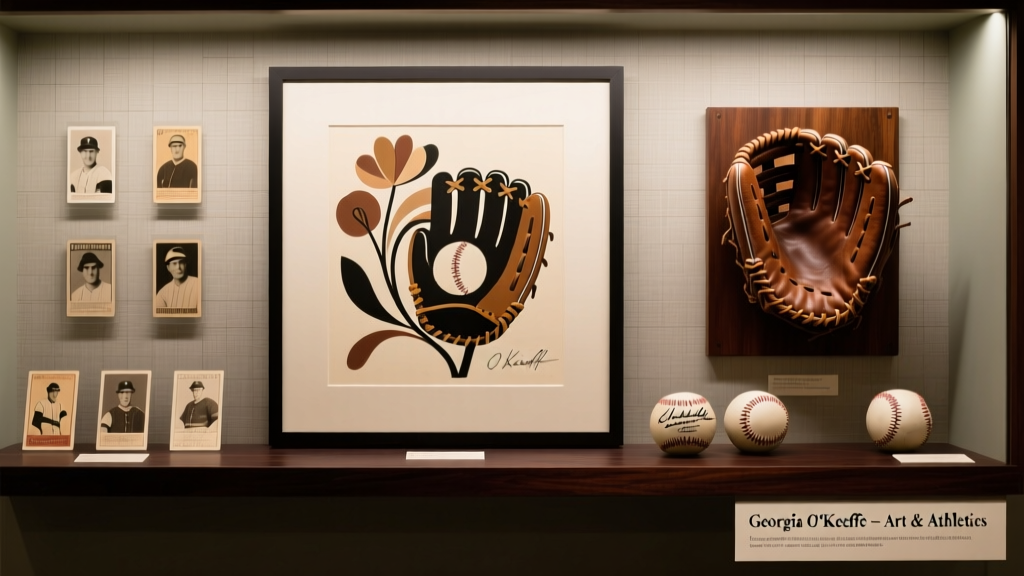
Georgia O’Keeffe: Artistic Legacy, Material Authenticity, and the Evolving Market for Signed Works
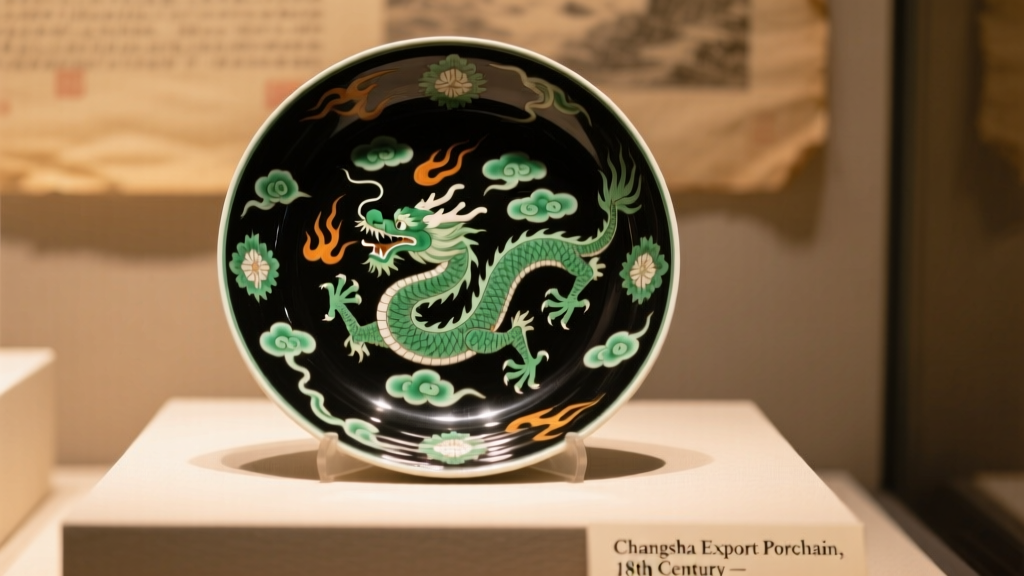
Chinese Export Dish: Dragons Among Flaming Clouds — Decoding the Well-Documented 8-Inch Black-and-Green Enamel Piece (Type 2)

Authenticating and Valuing an 1800s Pine Drop-Leaf Table with Drawer, Wood Knob, and Rectangular Turned Legs (30 × 54 Inches)
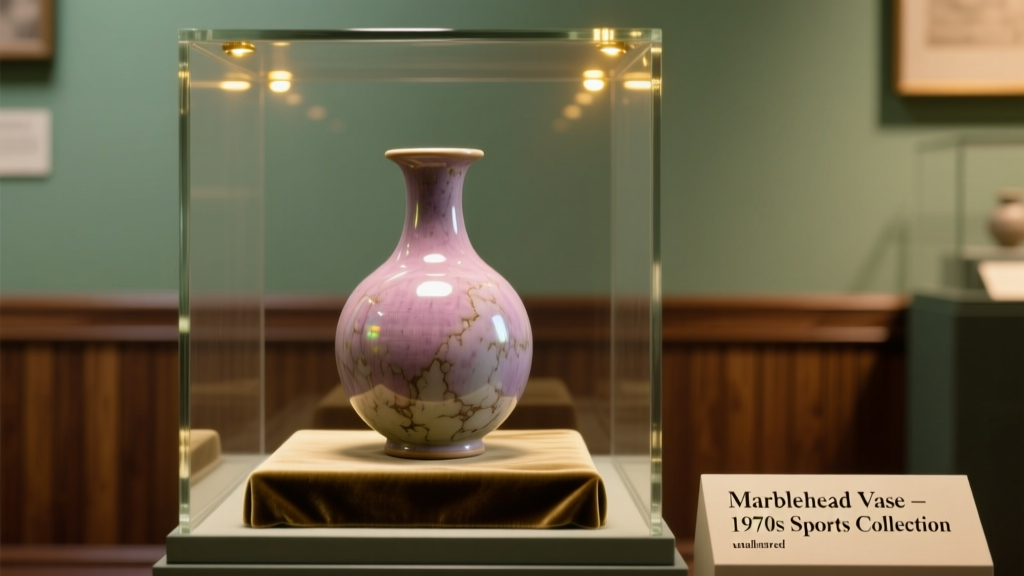
Marblehead Vase: Decoding the Mottled Mauve Matte Glaze Bulbous Tapered Form (8 × 4½ in)

Lalique Perfume Bottle: The Skyscraper Blue Button Stopper — History, Design, Authentication, and Market Value
Bottle Openers Squirrel Brass: History, Authentication, and Collector Insights
Imperial Glass Diamond Quilted Sugar Green #4: Identification, Value Drivers, and Authentication Protocol
Rumrill Pitcher Ice Lip Green 7-Inch: Authentication, History, and Collectibility

Grueby Bowl with Applied Leaves, Matte Green Glaze: Authentication, Provenance, and Market Value of the 5½ × 2-Inch Example