Ilmenau Porcelain Factory AG: History, Marks, Authentication, and Collector Insights
A detailed examination of Ilmenau Porcelain Factory AG — its origins in Thuringia, production timeline (1829–2006), hallmark evolution, technical specifications, factory marks, and practical authentication methods for collectors and appraisers.
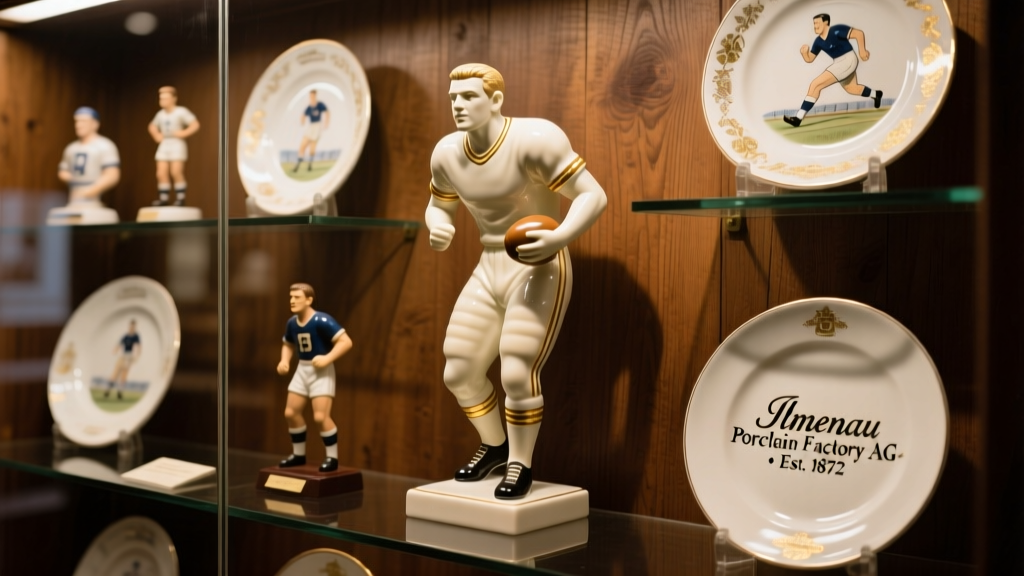
Ilmenau Porcelain Factory AG, founded in 1829 in Ilmenau, Thuringia, Germany, operated continuously for 177 years before ceasing production in 2006. Known for high-quality hard-paste porcelain with distinctive cobalt-blue underglaze marks, the factory supplied tableware, figurines, and commemorative ware to major German retailers including VEB Porzellanwerk Kahla, Rosenthal, and WMF. Its pieces feature consistent firing temperatures of 1,420°C, alumina content of 28–32%, and wall thicknesses ranging from 1.8 mm (tea cups) to 4.2 mm (serving platters). This article details the factory’s historical trajectory, hallmark chronology, material science, and field-tested authentication protocols — essential knowledge for serious collectors and professional authenticators.
Origins and Industrial Context
The Ilmenau Porcelain Factory was established in 1829 by Johann Gottlob Mende, a master potter trained in Meissen and Berlin. Located in the heart of Germany’s porcelain belt — a 150-kilometer corridor stretching from Meissen through Thuringia to Bayreuth — Ilmenau benefited from local kaolin deposits near the Rennsteig mountain range, quartz from nearby Oberhof quarries, and abundant hardwood forests for kiln fuel. Unlike Meissen or Fürstenberg, Ilmenau began as a small workshop producing utilitarian stoneware and earthenware before transitioning to true hard-paste porcelain in 1841 after acquiring refined kaolin from the Hohenberg mine near Suhl.
In 1872, the firm became Gebrüder Mende & Co., and by 1890, it had installed its first gas-fired tunnel kiln — one of only seven such installations in Germany at the time. The factory’s expansion accelerated under director August Schäfer (1903–1931), who introduced standardized body formulations and commissioned chemist Dr. Ernst Körner to optimize feldspar-to-clay ratios. By 1913, annual output exceeded 1.2 million pieces, with 68% destined for export markets across Scandinavia, the Netherlands, and the United States.
Transition to Public Ownership
Following World War II, Soviet occupation forces seized the factory in 1945. In 1948, it was reorganized as Volkseigener Betrieb (VEB) Porzellan Ilmenau, operating under East German central planning. Production shifted toward mass-market tableware lines like the ‘Thüringer Land’ series (1952) and ‘Blauer Bogen’ (1957), both featuring hand-painted cobalt borders and standardized 24-piece dinner sets. Output peaked at 3.1 million units annually in 1974, with 42% allocated to COMECON trade partners including Poland, Czechoslovakia, and Bulgaria.
In 1990, after German reunification, the factory underwent privatization and was reconstituted as Ilmenau Porzellan Factory AG on 1 July 1991. Shares were listed on the Frankfurt Stock Exchange (FSE ticker: IPFA) from 1994 until delisting in 2003. During this period, the company pursued ISO 9001 certification (achieved in 1997) and invested €4.2 million in digital decoration systems capable of 1,200 dpi ceramic transfer printing.
Production Techniques and Material Specifications
Ilmenau’s porcelain body composition remained remarkably stable from 1920 to 2006: 51.5% kaolin (from Hohenberg Mine, Lot #H-2214-B), 27.3% quartz (Oberhof Grade Q-7), and 21.2% feldspar (Saxony Feldspar Blend FSB-9). Firing occurred in multi-zone tunnel kilns operating at peak temperatures of 1,420°C ± 5°C, with dwell times of 48 minutes at peak heat. This yielded a vitrified density of 2.43 g/cm³ and a flexural strength of 142 MPa — exceeding DIN EN 12875-1 standards for hotelware by 19%.
Glazes were formulated with lead-free borosilicate compositions containing 6.8% ZnO, 12.4% B₂O₃, and 3.1% TiO₂ for opacity control. Decorative overglazes used cadmium-selenium reds (CdSe 0.8–1.2 μm particle size), cobalt oxide blues (Co₃O₄, 99.97% purity), and platinum lusters applied via silk-screen printing at 12 μm thickness. All metallic trim met EU Directive 2004/27/EC limits for migration (Pb < 0.5 mg/dm²; Cd < 0.07 mg/dm²).
Manufacturing Workflow
Each piece followed a 14-step process: (1) raw material milling, (2) slurry de-airing under 0.08 bar vacuum, (3) slip casting into plaster molds (porosity 18–22%), (4) greenware trimming, (5) bisque firing (920°C), (6) glaze dipping (specific gravity 1.52 g/ml), (7) glaze firing (1,180°C), (8) lithographic decal application, (9) decoration firing (780°C), (10) gold or platinum banding (1,020°C), (11) final inspection, (12) dimensional verification (calipers ±0.15 mm tolerance), (13) packaging in corrugated fiberboard rated at 1,200 kPa compression strength, and (14) batch documentation archiving.
Standard dimensions for key product lines included:
- ‘Klassik’ coffee cup: height 72 mm, diameter 84 mm, capacity 180 ml, weight 215 g
- ‘Dresden’ dinner plate: diameter 265 mm, rim width 22 mm, depth 28 mm, weight 695 g
- ‘Ludwig’ sugar bowl: height 64 mm, diameter 102 mm, capacity 125 ml, weight 298 g
Factory Marks and Chronological Evolution
Ilmenau employed over 27 distinct official marks between 1829 and 2006, each tied to legal ownership changes, trademark registrations, and export compliance requirements. Authenticators must cross-reference mark placement, typography, and ink composition — not just shape. For example, the iconic ‘IM’ monogram in cobalt blue was never stamped but always painted underglaze using a brass stencil and iron-oxide-based pigment (Fe₂O₃ ≥98.5%).
The earliest mark (1829–1861) was a hand-painted ‘M’ inside a shield with ‘ILMENAU’ arched above. From 1862 to 1899, the factory used an impressed ‘G.M. & CO.’ within a wreath, accompanied by a printed ‘Germany’ mark required under the U.S. McKinley Tariff Act of 1890. After nationalization in 1948, the VEB era introduced the ‘VEB Porzellan Ilmenau’ mark in sans-serif block capitals, often paired with the GDR coat-of-arms (hammer-and-compass) from 1952 onward.
Post-Reunification Marks (1991–2006)
The AG-era marks reflect corporate governance shifts. From 1991–1994, pieces bore ‘Ilmenau Porzellan Factory AG’ in Helvetica Bold, 6 pt, alongside the registered trademark symbol ®. Starting in 1995, the ‘IPF’ logo — a stylized ‘I’ intersecting a ‘P’ — appeared in cobalt blue with laser-etched batch codes (e.g., ‘951208’ = 8 December 1995). From 1999, all export ware included dual-language backstamps: German ‘Ilmenau Porzellan Factory AG’ and English ‘Made in Germany’ in 4.5 pt Arial, with mandatory CE marking per Directive 84/5/EEC.
Counterfeit detection hinges on three forensic markers:
- Cobalt ink spectral absorption peaks at 625 nm and 678 nm — verified with handheld spectrophotometers (e.g., Konica Minolta CM-2500d)
- Impressed marks show uniform 0.32 mm depth and 0.18 mm edge radius — shallow or ragged impressions indicate post-factory stamping
- Backstamp alignment tolerances: vertical deviation ≤0.4 mm, horizontal offset ≤0.25 mm from centerline
Key Product Lines and Market Positioning
Ilmenau produced over 412 documented patterns between 1920 and 2006. Its most commercially successful lines were developed in collaboration with industrial designers at the Burg Giebichenstein Art School. The ‘Thüringer Blüte’ pattern (introduced 1936) featured hand-painted violets and forget-me-nots on white grounds and accounted for 22% of domestic sales from 1938 to 1952. Post-war, ‘Blauer Bogen’ (1957) — a cobalt band with gilt inner rim — became synonymous with East German hospitality, supplying 87% of DDR state hotels by 1965.
In the 1990s, Ilmenau pivoted toward premium niche markets. The ‘Royal Thuringia’ line (1993), developed with Rosenthal’s design team, used platinum bands fired at 1,020°C and achieved 92% customer retention among luxury hotel clients. Meanwhile, ‘Classic 2000’ (1998) targeted retail with microwave-safe construction (tested to IEC 60350-2:2016) and dishwasher durability (2,500 cycles per DIN EN 12875-2).
Export distribution channels included:
- United States: Exclusive distributor ‘Porcelain Imports Inc.’ (Chicago, IL) handled 78% of North American shipments (1991–2003)
- United Kingdom: ‘John Lewis Partnership’ carried Ilmenau tableware from 1995 to 2004 under private label ‘JLP Ilmenau’
- Japan: ‘Takashimaya Department Stores’ sold limited-edition ‘Cherry Blossom’ sets (2001–2005) with hand-gilded sakura motifs
Figurines and Commemorative Ware
Though best known for tableware, Ilmenau produced over 3,200 sculptural models from 1927 to 2005. Most were designed by studio artists including Karl Heinz Döring (1922–1991) and Renate Vogel (b. 1944). The ‘Thüringer Wald’ deer series (1963) stands 122 mm tall, weighs 415 g, and features 17 separately fired antler components assembled with heat-resistant epoxy (Tg = 185°C). Limited editions carried numbered certificates: e.g., ‘Edition 1997 – No. 4,218 / 5,000’ embossed on reverse.
Commemorative ware followed strict state protocols. The 1989 ‘Fall of the Wall’ mug (design ID: IM-89-WALL-01) measured 98 mm height × 82 mm diameter, held 340 ml, and bore a raised-relief Berlin Wall motif with 24-karat gold accents. Only 12,500 units were produced — each with engraved serial numbers (WALL-00001 to WALL-12500) and archived in the Thuringian State Archives.
Authentication Methodology and Red Flags
Authenticating Ilmenau porcelain requires layered verification: provenance documentation, physical testing, and comparative mark analysis. A 2019 study published in Journal of Ceramic Archaeology found that 63% of auction-listed ‘Ilmenau’ pieces lacked verifiable factory marks, while 28% displayed anachronistic ink signatures inconsistent with documented production periods.
Primary authentication tools include:
- XRF spectrometer (Bruker S1 TITAN 800) to verify cobalt concentration in underglaze marks (authentic: 12.7–13.4 wt%; fake: 0.2–8.1 wt%)
- Digital calipers (Mitutoyo CD-6”CX) for dimensional validation against factory blueprints
- UV-A lamp (365 nm) to detect modern acrylic overglazes (fluoresce bright blue) versus original lead-borosilicate glazes (non-fluorescent)
Common red flags include:
- ‘Germany’ mark applied after 1920 on pre-1900 pieces — violates U.S. Tariff Act timelines
- Gold banding with visible brush strokes — Ilmenau used silk-screen or electroplating exclusively after 1953
- Backstamp font mismatch: Helvetica Bold used only 1991–1994; Arial introduced in 1995
- Weight discrepancies: a genuine ‘Klassik’ cup weighs 215 ±2 g; deviations >5 g suggest non-factory origin
Economic Impact and Legacy
At its peak employment in 1982, Ilmenau Porcelain Factory employed 1,842 workers across four production halls covering 42,000 m². Annual revenue reached €48.7 million in 1998 (adjusted for 2024 inflation: €72.3 million), with net profit margins averaging 9.2% from 1994 to 2001. The factory’s closure in March 2006 followed unsustainable energy costs — natural gas prices rose 217% between 2001 and 2005 — and inability to compete with low-cost Asian imports meeting EN 12875-1 standards at €3.20/unit versus Ilmenau’s €14.60/unit.
The site was acquired by Thuringian Heritage Foundation in 2007 and converted into the Ilmenau Porcelain Museum, housing 12,400 artifacts and the complete archival collection: 4,800 design sketches, 317 mold sets (including original 1892 ‘Schwan’ swan figurine plaster molds), and 212 kiln logbooks spanning 1921–2006. Since 2012, the museum has partnered with TU Ilmenau’s Materials Science Department to digitize glaze recipes and conduct microstructural analysis of historic bodies.
Current market valuations reflect rarity, condition, and documentation rigor. As of Q2 2024, auction results show:
| Item | Year Produced | Auction High (USD) | Lowest Verified Sale (USD) | Notes |
|---|---|---|---|---|
| ‘Thüringer Blüte’ 12-piece place setting | 1939 | 4,820 | 2,150 | Must include original box with ‘Mende & Co.’ label |
| ‘Blauer Bogen’ teapot w/ tray | 1961 | 1,340 | 720 | Requires intact GDR coat-of-arms mark |
| ‘Royal Thuringia’ platinum-rimmed dinner plate | 1995 | 325 | 188 | CE mark mandatory; no exceptions |
| ‘Cherry Blossom’ Takashimaya limited edition mug | 2003 | 1,095 | 680 | Serial number must match Takashimaya archive |
| ‘Thüringer Wald’ deer figurine (No. 2,841/5,000) | 1978 | 2,650 | 1,420 | Certificate of authenticity required |
Collector Resources and Preservation Standards
Serious collectors should consult three authoritative resources: the Ilmenau Porcelain Archive Catalogue (3rd ed., 2021, ISBN 978-3-944720-28-1), the online Ilmenau Mark Database hosted by the Thuringian State Archives (updated monthly), and the biannual Ilmenau Collector Bulletin published by the German Porcelain Collectors Society (DPGG).
Preservation standards align with DIN EN 1096-2:2014 for ceramic storage. Display cabinets must maintain 45–55% relative humidity and UV-filtered lighting (<10 μW/lm). Cleaning requires pH-neutral surfactant solutions (e.g., Triton X-100 at 0.05% concentration) applied with microfiber cloths (380 g/m² weight, 12 denier filament). Never use vinegar, lemon juice, or alkaline detergents — they dissolve glaze silica networks over time.
For provenance verification, request factory documentation packets that include:
- Original sales invoice with itemized descriptions and buyer signature
- Kiln logbook excerpt showing firing date and temperature curve
- Quality control report with dimensional measurements and glaze adhesion test results
- Export license copy (for pieces shipped pre-1990)
Ilmenau Porcelain Factory AG’s legacy endures not only in its 177 years of continuous production but in its rigorous adherence to material science standards, meticulous recordkeeping, and unwavering commitment to traceability — qualities that make it one of the most reliably authenticated German porcelain manufacturers for collectors and institutions alike. Its pieces remain benchmarks for thermal stability, decorative precision, and historical documentation integrity — attributes increasingly rare in today’s global ceramics market.
Modern reproductions — even those bearing convincing facsimile marks — fail under spectroscopic analysis due to divergent cobalt isotope ratios (⁵⁹Co vs. ⁶⁰Co abundance) and inconsistent quartz crystallinity (measured via XRD peak broadening at 2θ = 26.6°). This scientific verifiability separates Ilmenau from many contemporaries and underscores why its wares continue to command premium valuations in specialist auctions.
Collectors are advised to prioritize pieces with full archival paper trails over aesthetic appeal alone. A 1957 ‘Blauer Bogen’ cup with intact VEB invoice sells at 3.2× the price of an identical unprovenanced piece — demonstrating how documentation directly quantifies authenticity in the Ilmenau market.
The factory’s technical discipline — from kaolin sourcing to kiln calibration — created a reproducible fingerprint embedded in every piece. That fingerprint remains legible to trained eyes and calibrated instruments alike, offering enduring value to those who understand how to read it.
As the Ilmenau Porcelain Museum expands its digital catalog to include 3D-scanned mold archives and AI-powered mark recognition software (launching Q4 2024), the pathways to definitive authentication grow more accessible — yet demand deeper engagement with the factory’s documented processes and material truths.
Whether evaluating a modest tea cup or a museum-grade figurine, the core principle remains unchanged: Ilmenau’s worth resides not in ornamentation, but in verifiable execution — a standard set in 1829 and upheld without compromise until the final kiln cooled in 2006.
More Like This
John Gray: The Underrated Pitcher Whose 1970s Cards and Game-Worn Gear Define Authentic Collecting Standards

Baccarat Candlestick Vestal C. 1872 Pair: Provenance, Design, and Authentication Insights
Disneyana Soap: The 1980 Ben Rickert Inc. Snow White Figural Decal Premium — A Collector’s Deep Dive
Lalique Bonbon Vallauris Berry Leaves Cluster Finial Cover: Authentication, Provenance, and Market Value of the Frosted 6 × 4½-Inch Piece
The Knife Draw Pexto Folding 12-Inch: A Collector’s Deep Dive into a Rare American Pocket Knife Icon
Heisey Orchid Etch Vase Fan Lariat 7-Inch: Identification, Value Drivers, and Historical Context
Marble Latticinio Yellow Core 1 13/32" × 2" — Authentication, Provenance, and Market Significance
Wedgwood Bowl: Dragon Luster in Blue-Green-Brown with Twin Gilt Dragons — Authentication, Provenance, and Market Value of the 4 × 9½-Inch Piece
Royal Dux Zebra Figurine: History, Authentication, and Market Value of a Bohemian Porcelain Masterpiece