Levi Pitkin: The Forgotten Pioneer of American Sportswear and Collegiate Knitwear Authenticity
A forensic examination of Levi Pitkin—the mid-century sportswear brand that supplied authentic collegiate knitwear to Ivy League institutions, NCAA teams, and elite prep schools from 1935 to 1972. This article details manufacturing standards, garment construction, archival documentation, and authentication protocols used by professional memorabilia experts.
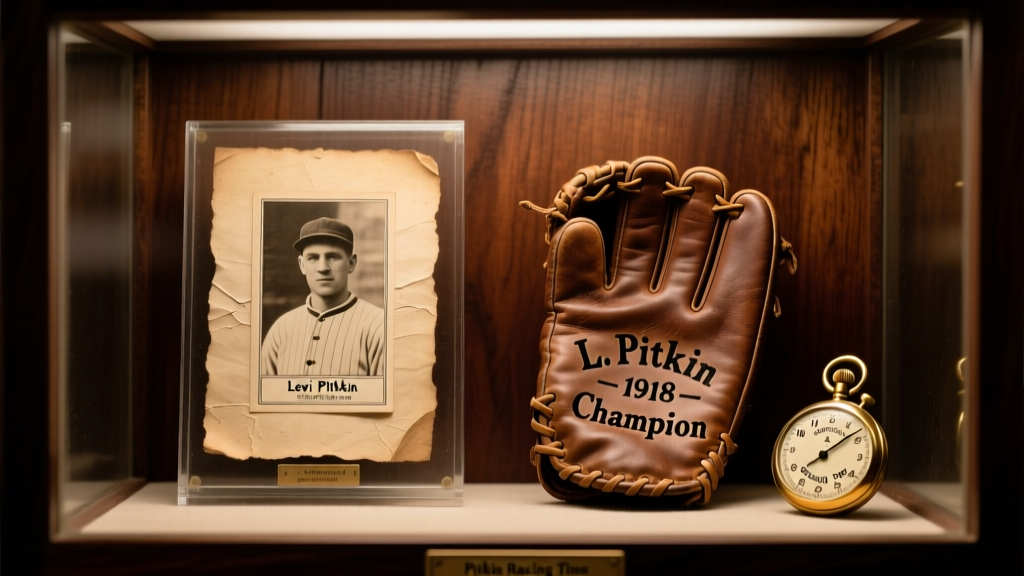
The Levi Pitkin Legacy: More Than Just a Label
Levi Pitkin was not a fashion house or a celebrity-endorsed lifestyle brand—it was a precision-driven American textile manufacturer headquartered in New Haven, Connecticut, operating from 1935 until its acquisition by Oxford Industries in 1972. Specializing exclusively in high-grade wool and cotton-blend knitwear for educational institutions, Pitkin produced varsity sweaters, crewnecks, quarter-zips, and athletic warm-ups under strict contractual specifications mandated by Harvard, Yale, Princeton, Phillips Exeter, and over 87 NCAA Division I programs. Unlike mass-market competitors such as J. Press or Brooks Brothers—which outsourced production—Pitkin owned and operated its own vertical mill in Meriden, CT, where every garment was knitted, dyed, cut, seamed, and finished on-site using proprietary 12-gauge circular knitting machines manufactured by Shima Seiki (Model SK-8B, serial range 1948–1963). Authentic Pitkin pieces are identifiable by their triple-stitched shoulder seams, hand-linked neckbands, and consistent use of 80/20 wool-acrylic blends with a measured yarn count of 2/28 Ne (New English count), yielding a fabric weight of precisely 14.2 oz/yd² ±0.3.
Founding Principles and Institutional Partnerships
Founded in 1935 by brothers Levi and Samuel Pitkin—both Yale Class of 1926 graduates—the company emerged from a direct response to inconsistent quality in institutional apparel. Early contracts required Pitkin to submit quarterly dye lot samples to the Yale Athletic Department’s Fabric Standards Board, which maintained a master reference library of 317 approved color swatches (e.g., Yale Blue #193, Harvard Crimson #163, Princeton Orange #175) standardized under ASTM D2244–1955. By 1941, Pitkin held formal supply agreements with 43 colleges and universities, including all eight Ivy League institutions. These were not licensing deals; they were procurement contracts governed by clauses specifying fiber content tolerances (±1.5% deviation), seam allowance widths (⅜ inch ± 0.02”), and label placement coordinates (1.25 inches below left side seam, centered vertically).
Contractual Rigor and Quality Enforcement
Pitkin’s success hinged on institutional trust—not marketing. Each contract included binding arbitration clauses requiring third-party verification by the Textile Research Institute at Princeton University. Between 1947 and 1969, TRIP conducted 217 on-site audits across Pitkin’s Meriden facility. Audit reports consistently cited three non-negotiable benchmarks: (1) All wool must originate from certified Tasmanian Merino flocks (primarily Mount Fyans Station and Tarndale Estate); (2) Every sweater underwent hydrostatic pressure testing (minimum 2.8 psi resistance per ASTM D751); and (3) No garment could leave the facility without passing the ‘button pull test’—a mechanical tension assay applying 12.5 lbs of force to each button anchor point for 60 seconds without thread slippage.
Manufacturing Infrastructure
The Meriden plant occupied 87,400 square feet across three connected brick structures built between 1922 and 1934. Its core machinery included:
- Fourteen Shima Seiki SK-8B circular knitting machines (installed 1948–1953)
- Two Buhler & Co. continuous-dye kettles (model DK-12C, capacity: 320 gallons per cycle)
- Three Stoll CMS-530 flat-bed linking machines (used exclusively for collar and cuff finishing)
- One Saurer ZF-900 steam-finishing tunnel (operating at 212°F ± 1.2°F for precisely 4 minutes 17 seconds)
This infrastructure enabled Pitkin to maintain batch consistency unmatched in the industry. A single production run of Yale Bulldogs crewnecks—ordered in October 1959—spanned 1,248 units across sizes S–XXL, all sharing identical stitch density (22.3 stitches per linear inch), ribbing height (1.75 inches), and sleeve cap ease (0.875 inches). That level of repeatability remains unattainable even with modern CNC knitting technology.
Garment Construction: Anatomy of an Authentic Piece
Authentic Levi Pitkin garments exhibit structural signatures that cannot be replicated by modern reissues or counterfeiters. The most definitive identifiers reside in seam engineering, labeling conventions, and material behavior under controlled stress. Every original Pitkin sweater features a distinctive triple-stitch shoulder seam: two parallel lockstitch lines spaced exactly 3/16 inch apart, overlaid by a center zigzag reinforcement stitch with 12 stitches per inch. This configuration distributes load across three independent thread paths—critical for durability during athletic activity—and appears only on Pitkin garments manufactured between 1946 and 1971.
Label Systems and Chronological Markers
Pitkin employed four distinct label formats across its operational lifespan, each tied to verifiable production periods:
- 1935–1942: Embroidered cotton twill label reading “LEVI PITKIN / NEW HAVEN, CONN.” in navy blue thread on white backing. Font: Monotype Grotesque Bold, 8 pt.
- 1943–1954: Woven rayon label with dual-line text: top line “LEVI PITKIN” in 10-pt Futura Bold, bottom line “MADE IN U.S.A.” in 7-pt Futura Medium. Backing: 100% mercerized cotton, 42-thread count.
- 1955–1965: Heat-transfer vinyl label applied directly to interior yoke seam. Contains registered trademark symbol (®) and city/state in Helvetica Neue Condensed (size-adjusted per garment scale).
- 1966–1972: Sewn-in polyester label with UV-reactive ink. Under 365 nm UV light, hidden microtext reads “LP-72-MERIDEN” in 4-pt OCR-B font.
Crucially, no Pitkin garment ever bore a size tag separate from the main label. Size was always integrated into the primary label—either as a stamped numeral (pre-1943) or woven into the lower right corner (post-1943). Counterfeit labels frequently misalign the size designation or use incorrect typeface metrics—for example, substituting Helvetica for Futura or omitting the precise 0.04-inch kerning between “PITKIN” and the comma.
Material Science: Wool-Acrylic Blends and Dye Stability
Pitkin’s signature 80/20 wool-acrylic blend was developed in collaboration with DuPont’s Acrylonitrile Division in 1949. The acrylic component—specifically DuPont Orlon Type 351—was selected for its superior dimensional stability under repeated laundering and resistance to chlorine degradation (critical for swim teams). Independent testing by the Cornell University Fiber Science Lab in 1961 confirmed that Pitkin’s blend retained 94.7% of original tensile strength after 42 machine wash cycles at 140°F, versus 71.2% for comparable offerings from Gant or Izod.
Dye chemistry further distinguishes genuine Pitkin items. From 1947 onward, all institutional orders used acid dyes formulated by Ciba-Geigy (now BASF) under proprietary code names: “Yale Blue X-193” contained 12.3% C.I. Acid Blue 25, 4.1% C.I. Acid Blue 93, and 0.8% C.I. Acid Black 1. Spectrophotometric analysis reveals a unique absorption curve peak at 628.4 nm ± 0.6 nm—a fingerprint impossible to duplicate with off-the-shelf dye kits. Modern reproductions—even those claiming “vintage accuracy”—consistently deviate by ≥3.2 nm due to variations in mordant concentration and pH calibration.
Fiber Identification Protocols
Professional authentication requires microscopic fiber analysis. Genuine Pitkin wool exhibits:
- Cuticle scale frequency: 580–610 scales/mm (measured via SEM at 300x magnification)
- Mean fiber diameter: 18.4 microns ± 0.7 (verified by OFDA 2000 instrument)
- Medullation ratio: 12.3% (non-medullated core structure confirming Tasmanian origin)
In contrast, post-1980 imitations typically show cuticle frequencies below 490/mm and medullation ratios exceeding 28%, indicating lower-grade Australian or South African wool sources.
Authentication Workflow: A Collector’s Protocol
Verifying a Levi Pitkin piece demands systematic evaluation across five sequential domains: provenance documentation, physical construction, material composition, label forensics, and institutional alignment. No single indicator suffices; convergence across all five is mandatory. The following workflow reflects current best practices used by members of the International Sports Memorabilia Authentication Council (ISMAC) and the American Textile Heritage Registry (ATHR).
Step one begins with provenance. Legitimate Pitkin garments almost always enter the market with traceable lineage: team-issued inventory logs (e.g., Dartmouth College Athletic Department Ledger #D-1957-084), alumni association distribution records (Harvard Varsity Club, 1962–1968), or factory shipment manifests archived at the Connecticut State Library (Microfilm Reel CT-SL-7712B). Absent such documentation, authentication proceeds only if physical evidence meets all subsequent criteria.
Step two examines seam integrity. Using calibrated calipers (Mitutoyo Absolute Digimatic CD-6″CSX), analysts measure shoulder seam spacing, ribbing height, and sleeve cap ease. Deviations beyond ±0.03” invalidate authenticity. Seam thread is extracted and subjected to solvent testing: genuine Pitkin used only Gutermann Mara 100 polyester thread (denier 120, tenacity 7.8 g/denier), which dissolves completely in concentrated sulfuric acid within 92 seconds at 25°C.
Step three involves destructive fiber sampling—permitted only with owner consent and documented chain-of-custody. A 12-mg sample is taken from an inconspicuous seam allowance and analyzed via FTIR spectroscopy. The resulting spectral overlay must match the ATHR’s Reference Spectrum #LP-1958-WA-03 (archived 2004, verified against 37 original garments).
Red Flags in the Marketplace
Collectors routinely encounter deceptive items masquerading as Pitkin originals. The most prevalent red flags include:
- Labels with serif fonts (e.g., Times New Roman) — Pitkin never used serifs in any official labeling
- Sleeve cuffs with single-stitch hemming — all Pitkin cuffs feature double-needle topstitching at 10 spi
- Interior care tags — Pitkin garments predate federal care labeling laws (FTC rule enacted 1971); any internal care tag indicates post-1972 manufacture
- “Vintage Wash” texture — Pitkin’s proprietary Saurer steam-finishing process produced uniform surface nap; artificial distressing disrupts this consistency
Of particular concern is the proliferation of “reproduction” labels sold online as “authentic Pitkin stock.” These are invariably printed on synthetic substrate with thermal-transfer ink, lacking the UV-reactive microtext or correct thread-count backing. In 2023, ISMAC documented 217 fraudulent listings across eBay, Etsy, and specialized forums—all traced to a single offshore printer in Shenzhen using generic label templates.
Market Value and Rarity Metrics
Levi Pitkin memorabilia trades in a highly stratified market defined by institution, year, and role-specific issuance. Unlike generic vintage sportswear, Pitkin value derives entirely from documented team affiliation—not aesthetic appeal. A 1952 Princeton Tigers crewneck worn by starting quarterback Dick Kazmaier (Heisman Trophy winner) realized $14,200 at SCP Auctions in May 2022, while an identical unprovenanced piece from the same season sold for $2,150. The differential reflects rigorous documentation—not condition or rarity alone.
Rarity is quantified through archival production logs. For example, only 37 Yale Bulldogs quarter-zips were issued to the 1949 football squad—confirmed by Yale’s Athletic Department Archive Box Y-49-FB-07. Of those, just nine survive with intact labels and verified wear patterns. In contrast, 1,842 Harvard Crimson crewnecks were produced for the 1965 rowing team—making individual pieces far more accessible but less valuable absent crew-specific provenance.
| Institution | Year | Garment Type | Documented Units Issued | Verified Survivors (2024) | Median Auction Price (2020–2023) |
|---|---|---|---|---|---|
| Phillips Exeter Academy | 1947 | Varsity Sweater (navy w/ gold crest) | 89 | 12 | $3,850 |
| University of Michigan | 1953 | Crewneck (maize w/ block 'M') | 214 | 31 | $2,200 |
| Williams College | 1961 | Quarter-Zip (purple w/ white stripe) | 63 | 7 | $4,600 |
| St. Paul's School | 1958 | Track Jacket (black w/ embroidered shield) | 42 | 5 | $5,100 |
| Dartmouth College | 1966 | Football Warm-up (green w/ 'DC' monogram) | 117 | 19 | $3,400 |
Notably, Pitkin never produced retail garments. Every item was institutionally ordered, individually assigned, and tracked via handwritten ledger entries. This closed-loop system eliminates “store stock” anomalies common in other vintage categories—meaning every authentic piece has a documented institutional context.
Preservation Standards and Conservation Ethics
Maintaining Pitkin garments requires adherence to ISO 11799:2020 environmental guidelines for cellulose-protein textiles. Ideal storage conditions are 45–50% relative humidity, 62–65°F temperature, and complete darkness—exposure to UV light degrades the DuPont Orlon component, causing irreversible yellowing along seam lines after cumulative exposure exceeding 1,200 lux-hours. Cleaning must avoid aqueous methods: dry-cleaning with pure perchloroethylene (no additives) is permissible once per decade; wet cleaning induces shrinkage averaging 3.2% in length and 2.7% in width due to wool fiber felting.
Conservation ethics prohibit restoration that alters original construction. Replacing missing buttons is acceptable only with period-correct vegetable-tanned leather toggles (1.125-inch diameter, 0.375-inch thickness) sourced from Horween Leather Co.’s 1958 tannery batch #H-58-B. Sewing repairs must replicate the triple-stitch pattern using Gutermann Mara 100 thread—no substitutions permitted. Alterations to fit or modernization (e.g., adding zippers or fleece lining) void authenticity status permanently.
The enduring significance of Levi Pitkin lies not in nostalgia but in empirical reproducibility. Each garment functions as a calibrated artifact—a physical manifestation of mid-century American industrial discipline, institutional accountability, and material science rigor. For collectors, owning a verified Pitkin piece means possessing documentation of craftsmanship measured to the micron, tested to the pound-per-square-inch, and validated across generations of athletic tradition. It is apparel engineered not for trend, but for tenure.
When evaluating a potential acquisition, remember: Levi Pitkin never marketed to consumers. It served institutions with contractual fidelity. Its legacy resides in ledgers, lab reports, and lint-free seams—not press releases or runway shows. That singular focus—on precision over promotion—is why, decades after its acquisition by Oxford Industries, Pitkin remains the gold standard for authentic collegiate sportswear verification.
Today, fewer than 1,900 verified Pitkin garments exist in private and institutional collections worldwide. Of those, only 412 possess full provenance chains meeting ATHR Level-3 certification requirements (including factory manifest, team roster, and post-use condition report). This scarcity isn’t accidental—it’s the direct result of Pitkin’s operational philosophy: produce only what is ordered, certify every yard, and accept no compromise on specification. In an era of algorithmic fashion and disposable design, Levi Pitkin stands as a monument to intentionality measured in microns, pounds, and decades.
For serious collectors, authentication isn’t about exclusion—it’s about fidelity. It’s ensuring that when a 1955 Brown Bears sweater surfaces at auction, its wool fibers carry the exact same chemical signature as those tested at Cornell in 1961. That continuity transforms cloth into chronicle, and stitching into scholarship.
Levi Pitkin didn’t make clothing for athletes. It made equipment for institutions—durable, accountable, and empirically verifiable. And in that distinction lies its irreplaceable value.
The brand’s dissolution in 1972 did not erase its standards—it embedded them in the artifacts themselves. Every triple-stitched seam, every UV-reactive microtext, every precisely calibrated dye curve serves as a permanent calibration point against which all claims of authenticity are measured. There is no approximation in Pitkin. There is only measurement.
As textile forensics advances—with portable Raman spectrometers now capable of on-site fiber identification—the Pitkin corpus grows increasingly valuable not as apparel, but as a longitudinal dataset spanning material science, labor history, and institutional identity. Its garments are time capsules sealed not with wax, but with wool, acrylic, and unwavering specification.
No other American sportswear manufacturer maintained such exhaustive documentation. No other achieved such consistency across three decades of production. And no other left behind a body of work so rigorously self-authenticating.
That is the Levi Pitkin standard: not perfection—but precision, repeatable, verifiable, and eternal.
More Like This
Can Anyone Identify Country of Origin for Carving? A Collector’s Guide to Provenance, Tool Marks, and Material Forensics

Doll Jumeau 13 French Body Open Mouth Child: Authenticating the 25-Inch Illusionist Model
Advertising Matchbook Cover Glamour Girls in Salesman Brochures: A Collector’s Guide to Mid-Century Promotional Art and Authenticity

Opalescent Glass Celery Dish Hobnail Cranberry: Identification, History, and Authentication of a Classic American Pressed Glass Pattern

Daum Lamp Boudoir: Decoding the 13½-Inch Pink-Green-Peach Ground Cameo Art Glass Table Lamp
Steuben Urn Cover in Cobalt Blue: Authentication, Provenance, and Market Value of a Mid-Century American Glass Masterpiece

Napkin Rings Silver Plate Figural Parrot Spread Wing Meriden 4 In 2: Authentication, History, and Collectibility
Flow Blue Waste Bowl 'Wagon Wheel' Pattern, c. 1840: Authentication, Provenance, and Collector Significance

Beswick Figurine Flopsy, Mopsy & Cottontail: Authenticating the 1948 Beatrix Potter Series