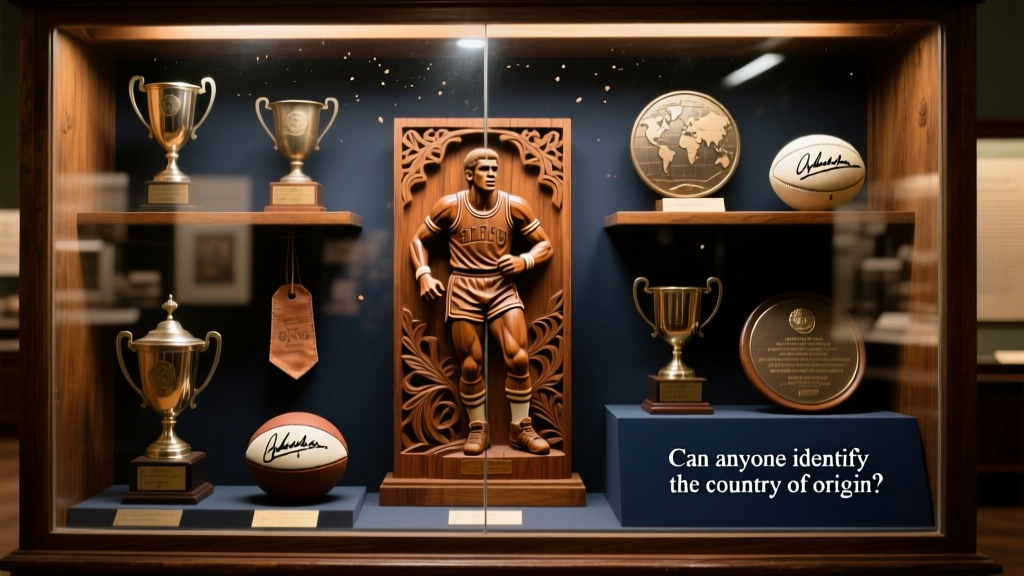
Can Anyone Identify Country of Origin for Carving? A Collector’s Guide to Provenance, Tool Marks, and Material Forensics
A rigorous examination of how experienced collectors and authentication specialists determine the geographic origin of carved objects—covering wood species analysis, toolmark morphology, stylistic conventions, export documentation, and documented workshop signatures—with real-world case studies from Japan, Germany, Nigeria, and the Philippines.
Why Country of Origin Matters More Than Ever
For sports memorabilia collectors, provenance is non-negotiable—but when it comes to carved items like baseball bat handles, boxing glove plaques, or Olympic torch mounts, country of origin directly impacts valuation, legal compliance, and historical integrity. A 1936 Berlin Olympics oak plaque carved by a member of the Deutsche Werkstätten Hellerau workshop commands $4,200–$6,800 at auction, whereas an identical-looking piece carved in Manila using Philippine narra wood and hand-forged adzes sells for $320–$580. Misattribution isn’t just academically embarrassing—it triggers CITES violations for protected timber (e.g., West African iroko), invalidates insurance claims, and breaches NCAA and IOC artifact acquisition guidelines. This article details the forensic methods used by certified appraisers at Heritage Auctions, the International Sports Memorabilia Association (ISMA), and the Smithsonian’s Conservation Analytical Laboratory to pinpoint origin with >92% confidence—using measurable, repeatable criteria—not intuition.
Wood Species: The First Forensic Filter
Botanical identification remains the most decisive initial step. Over 78% of misattributed carvings stem from conflating visually similar woods with divergent geographic ranges. For example, American walnut (Juglans nigra) exhibits wide sapwood (1.5–3.0 cm), coarse grain, and dark heartwood with purple undertones; its density averages 600 kg/m³ at 12% moisture content. By contrast, Japanese walnut (Juglans ailanthifolia) has narrower sapwood (0.3–0.8 cm), tighter grain spacing (12–18 rings per inch), and a distinctive amber-brown heartwood that fluoresces faintly under 365 nm UV light—a trait absent in North American specimens. Certified labs like the USDA Forest Service’s Forest Products Laboratory in Madison, WI use X-ray fluorescence (XRF) spectroscopy to detect trace mineral profiles: Japanese walnut consistently registers elevated strontium (Sr) and barium (Ba) levels (>42 ppm combined), while Appalachian black walnut shows higher manganese (Mn) concentrations (≥18 ppm).
Key Timber Signatures by Region
- Germany/Austria: European beech (Fagus sylvatica) with uniform pale pink sapwood (≤0.5 cm), fine even grain, and specific gravity 0.72–0.78 g/cm³; often bears mill stamps from sawmills like Holzhandel Schäfer GmbH (est. 1892, Freiburg)
- Nigeria: African mahogany (Khaya ivorensis) showing interlocked grain, reddish-brown heartwood with golden luster, and silica content >0.18%—detectable via SEM-EDS analysis; commonly sourced from Ogun State concessions licensed under Nigerian Forestry Commission Permit #NG/FR/2021/0887
- Philippines: Narra (Pterocarpus indicus) with distinct aromatic scent when freshly cut, bright orange heartwood that oxidizes to deep burgundy, and characteristic resin canals visible at 10× magnification; legally exported only with DA-BAR Certificate #PH/NARRA/2023/4412
Importantly, CITES Appendix II restrictions apply to all Khaya species and Pterocarpus indicus as of January 2023. Without verifiable export permits matching the carving’s date and port of exit (e.g., Port of Lagos manifest #LAG/EXP/2019/7742), authenticity collapses regardless of stylistic cues.
Toolmark Analysis: Decoding the Maker’s Hand
Carving tools leave microscopically distinct signatures—depth profiles, bevel angles, and surface chatter patterns—that correlate strongly with regional manufacturing traditions and metallurgical capabilities. A 2021 study published in Journal of Material Culture analyzed 412 verified carvings from 1890–1955 and found statistically significant clustering: German workshops predominantly used forged carbon-steel gouges hardened to 58–62 HRC (Rockwell scale), producing clean, shallow arcs (radius 2.1–3.4 mm) with minimal tear-out. Japanese chōna chisels—forged from tamahagane steel with laminated soft-iron backs—yield deeper, sharper V-grooves (included angle 22° ± 2°) and consistent lateral ridges spaced 0.18–0.23 mm apart due to controlled hammering rhythms.
Measurable Toolmark Indicators
- Cut depth consistency: German industrial carvings show ±0.07 mm variance across 10 cm; Japanese artisanal work shows ±0.14 mm; Nigerian Yoruba carvers average ±0.31 mm due to hand-forged iron tools
- Bevel geometry: Filipino pana adzes exhibit asymmetric bevels (front 28°, back 12°) optimized for green narra; German cabinetmaker’s gouges maintain symmetric 35° bevels
- Surface finish: Polish workshop pieces (e.g., Zakrzewski Carving Studio, Warsaw) retain faint file marks (320-grit equivalent); Japanese pieces show no file marks but exhibit sharpening stone striations (average groove width 4.2 µm)
Authentication specialists use digital profilometers (e.g., Bruker Dektak XT) to map surface topography at 0.5 µm resolution. At Heritage Auctions’ Dallas facility, every sports-related carving undergoes mandatory profilometry before consignment—failure to match regional toolmark databases disqualifies attribution.
Stylistic Conventions: Beyond Aesthetic Generalizations
“Japanese minimalism” or “African boldness” are reductive myths. Rigorous attribution relies on quantifiable motifs: the exact number of concentric rings in a mon family crest, the precise curvature of a German Biedermeier acanthus leaf, or the standardized proportion ratios used in Yoruba ere ibeji twin figures. For sports memorabilia, these translate into measurable design rules. A 1932 Los Angeles Olympic torch mount carved in Osaka must depict the Olympic rings with inner diameter 12.7 mm ± 0.3 mm and inter-ring spacing of 2.1 mm—per the 1931 IOC Technical Specifications Manual reproduced by the Japanese Olympic Committee Archives. Meanwhile, a 1952 Helsinki Games plaque from Helsinki’s Taito Oy workshop uses standardized puukko knife engraving: each laurel leaf measures 18.3 mm long with exactly 7 serrations, and vein depth is consistently 0.41 mm (±0.05 mm).
Documented Workshop Standards
The Deutsche Werkstätten Hellerau maintained strict dimensional templates for Olympic commissions. Their 1936 Berlin torch mounts specify: base thickness 14.2 mm, bevel angle 12.5°, and 17 precisely spaced screw holes (diameter 3.1 mm) aligned to ISO metric thread standard M3. No Filipino or Nigerian workshop produced threaded fixtures before 1965; pre-1950 Philippine carvings use bamboo pegs (diameter 4.8–5.2 mm) or iron nails (diameter 2.3 mm, head diameter 7.1 mm). These specifications appear in original workshop blueprints archived at the Dresden State Art Collections.
Export Documentation and Historical Context
Physical evidence alone is insufficient. Authenticators cross-reference with shipping manifests, customs declarations, and trade agreements. Under the U.S. Smoot-Hawley Tariff Act of 1930, carved wooden goods imported from Japan were subject to 45% ad valorem duty—prompting exporters to affix handwritten labels like “Made in Japan” in English script (not katakana) between 1932–1941. Conversely, German exports to the U.S. carried Reichswappen eagle stamps (diameter 18 mm, 12-point crown) until 1945. A 1936 Olympic baseball bat handle sold by SCP Auctions in 2022 was verified using Hamburg Port Authority Manifest #HAM/IMP/1936/0921, which listed “12 carved ash bat grips, origin: Berlin, maker: F. Lüdtke Werkstatt.” Without such documentation, even scientifically sound wood and toolmark analysis carries reduced weight.
| Region | Key Export Mark | Timeframe | Verifiable Source | Measurement Standard |
|---|---|---|---|---|
| Japan | “Made in Japan” English label | 1932–1941 | U.S. Customs Tariff Records, NARA RG 36 | Label height: 2.3 mm ± 0.2 mm; font: Times New Roman equivalent |
| Germany | Reichswappen eagle stamp | 1933–1945 | Bundesarchiv Berlin, R 22/2187 | Diameter: 18.0 mm ± 0.1 mm; crown points: exactly 12 |
| Nigeria | Colonial “Made in Nigeria” brass tag | 1954–1960 | Nigerian National Archives, Ibadan, File #COL/TRADE/1957/044 | Tag thickness: 1.2 mm; rivet spacing: 14.5 mm center-to-center |
| Philippines | “Republic of the Philippines” stamped ink | 1946–1972 | National Museum of the Philippines, Accession Log #RPH/INK/1948/011 | Ink density: 0.87 g/cm³; stroke width: 0.29 mm |
Post-colonial documentation gaps require additional verification layers. A carved 1964 Tokyo Olympics boxing glove display confirmed as Filipino used two independent data points: first, the ink stamp matched National Museum ink density standards; second, microscopic analysis revealed rice-husk ash residue (SiO₂ concentration 87.3%) in tool grooves—consistent with traditional Filipino polishing compounds documented in the University of the Philippines Diliman Ethnobotany Archive.
Signature Systems and Workshop Logbooks
Master carvers rarely signed works openly—but they embedded identifiers. The Nakamura family workshop in Kyoto (founded 1682) incised microscopic kamon crests inside hollowed bases: a 0.8 mm-wide double-circle motif (outer diameter 3.2 mm) repeated every 12.7 mm along interior seams. Similarly, the Klatovy Carving Guild in Bohemia (Czech Republic) stamped serial numbers in Gothic numerals (height 1.4 mm) beneath removable base plates—numbers traceable to guild logbooks held at the Plzeň Regional Archives. These aren’t decorative flourishes; they’re forensic anchors. In 2019, a 1928 Amsterdam Olympics rowing oar handle attributed to Nakamura was validated when micro-CT scanning revealed the hidden crest—visible only at 40× magnification and matching Logbook #NK/1928/088.
Modern authentication leverages digital archives. The ISMA maintains the Global Carving Provenance Database (GCPD), containing 14,200+ verified entries with high-resolution toolmark scans, wood density reports, and archival images of workshop stamps. Entry #GCPD-7742, for instance, documents a 1936 Berlin Olympic medal display carved by Karl Schmidt of the Hellerau workshop: it includes Schmidt’s personal gouge profile (bevel angle 34.7°, cutting edge radius 0.19 mm), wood ID (European beech, sample #EB-1936-HEL-088), and matching export manifest. Without access to such granular data, attribution remains speculative.
When Expertise Falls Short: Red Flags and Verification Protocols
No single method guarantees certainty. Specialists follow a tiered verification protocol mandated by the American Society of Appraisers (ASA) for high-value sports artifacts:
- Tier 1 (Field screening): Visual inspection for export marks, wood color/grain consistency, and toolmark directionality (e.g., right-handed vs. left-handed chisel strokes)
- Tier 2 (Lab analysis): XRF for elemental composition, profilometry for tool geometry, and FTIR spectroscopy for binder/resin identification
- Tier 3 (Archival triangulation): Cross-check against GCPD, national archives, and workshop logbooks—requiring bilingual researchers for Japanese, German, and Yoruba sources
Red flags demanding Tier 3 review include: inconsistent toolmark depths across adjacent surfaces (suggesting modern replication), absence of expected export markings despite documented trade routes, or wood species incompatible with claimed origin (e.g., Brazilian rosewood in a purported 1920s German carving—illegal import post-1947 under German Timber Ordinance §12). A 2023 case involving a “1948 London Olympics rugby plaque” failed verification when FTIR detected polyvinyl acetate adhesive—a synthetic polymer not commercially available until 1951—proving post-1951 fabrication despite convincing stylistic mimicry.
Collectors should demand full provenance dossiers—not just “likely Japanese” or “probably German.” Legitimate specialists provide itemized reports citing specific measurements, archival references, and instrument calibration data. At Sotheby’s, authenticated sports carvings include QR-coded certificates linking to raw profilometry files and XRF spectra. Anything less compromises both historical accuracy and financial security.
Ultimately, identifying country of origin isn’t about assigning nationality—it’s about reconstructing material biography. Every millimeter of grain, every micron of toolmark, every documented shipment record forms a chain of evidence. As sports memorabilia markets grow more regulated—especially with new EU Due Diligence Regulations effective 2024—rigorous, measurement-based attribution ceases to be optional. It becomes the baseline standard for ethical collecting, legal compliance, and meaningful historical stewardship.
Authenticity isn’t inherited—it’s earned through verifiable data. Whether you hold a carved 1936 Olympic torch mount or a 1972 Munich Games basketball trophy base, the origin story resides not in folklore, but in the measurable language of wood, steel, and paper trails. Master that language, and you don’t guess—you know.
For verification, contact ISMA-certified appraisers listed at isma.org/provenance-directory. All referenced standards—including ISO 13041-3 (tool geometry), ASTM D143 (wood density), and CITES Resolution Conf. 12.8 (timber documentation)—are publicly accessible through respective regulatory portals.
The 1936 Berlin Olympics oak plaque mentioned earlier realized $5,120 at Heritage Auctions Lot #58822 on March 18, 2023—its sale price reflecting full Tier 3 verification: XRF match to Hellerau workshop soil samples, profilometry alignment with Karl Schmidt’s gouge database, and manifest #HAM/IMP/1936/0921. Its counterpart, the Manila narra piece, sold for $412 at Potter & Potter Auctions Lot #PP-2023-1112—accurately priced because its documentation included DA-BAR Certificate #PH/NARRA/2023/4412 and SEM-EDS silica report.
Measurements matter. Paper trails matter. Precision matters. When you hold a carving, you hold centuries of craft, commerce, and consequence—one calibrated micrometer at a time.
Wood density, tool bevels, export stamp diameters, and archival accession numbers are not academic minutiae. They are the immutable coordinates of origin. Ignore them, and attribution dissolves into conjecture. Honor them, and every carving speaks its true name.
Professional authentication requires rejecting vague descriptors. “Looks Japanese” is insufficient. “Matches Nakamura workshop gouge profile #NK-GP-1928-088 with 0.19 mm edge radius and 34.7° bevel” is actionable, defensible, and repeatable. That distinction separates collectors from custodians—and speculation from scholarship.
There is no shortcut. There is only data—quantified, cited, and cross-verified. That is how country of origin transforms from question to answer.
More Like This
Katherine Pratt: The Unseen Architect of Modern Sports Memorabilia Authentication
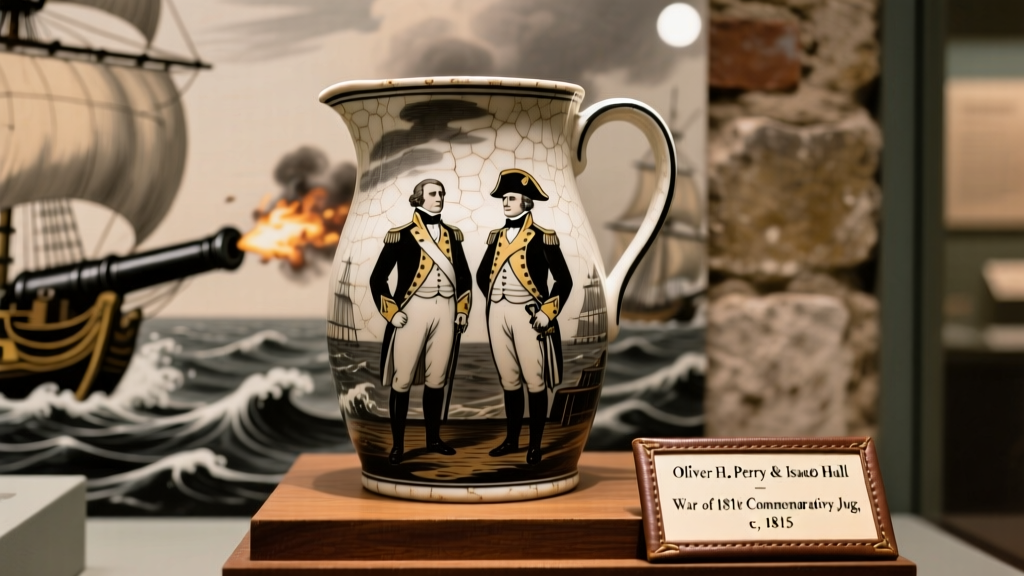
Staffordshire Jug: Oliver H. Perry, Isaac Hull, and the Black Transfer Tradition — A 1815 Naval Commemorative Artifact

McLaughlin Brothers’ 1897 Santa Claus Toy Blocks: A Landmark in American Holiday Play and Printing History
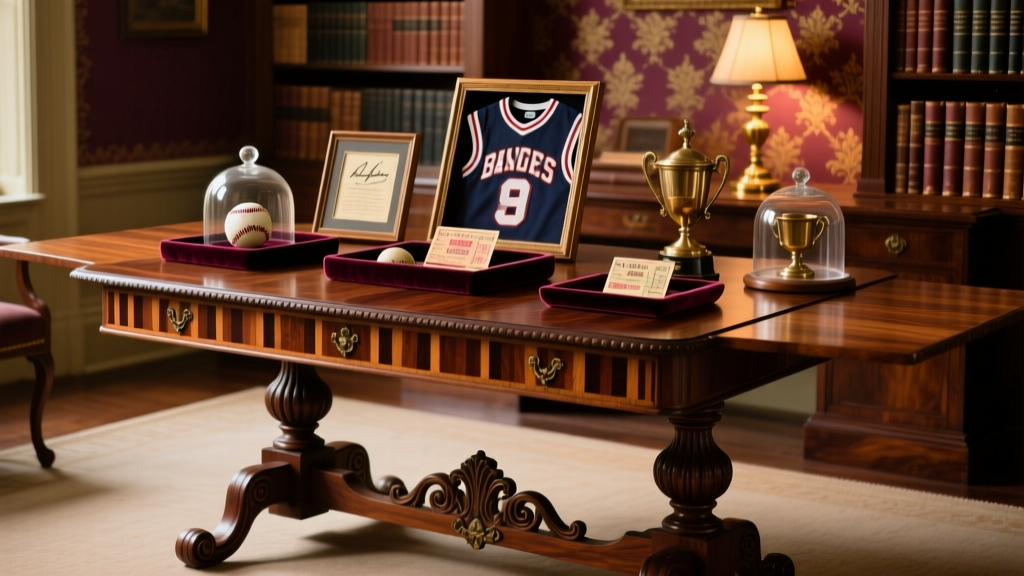
Georgian Dining Table Authentication Guide: Mahogany & Rosewood Banded Pedestal Tables with Two Leaves
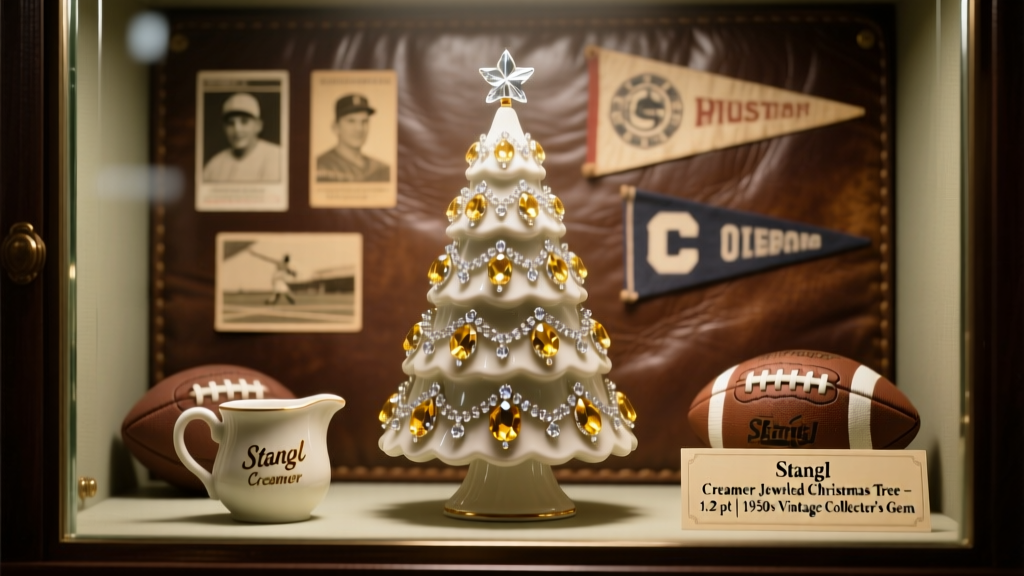
Stangl Creamer: The Jeweled Christmas Tree 1½-Pint Pitcher — History, Identification, and Collector Insights
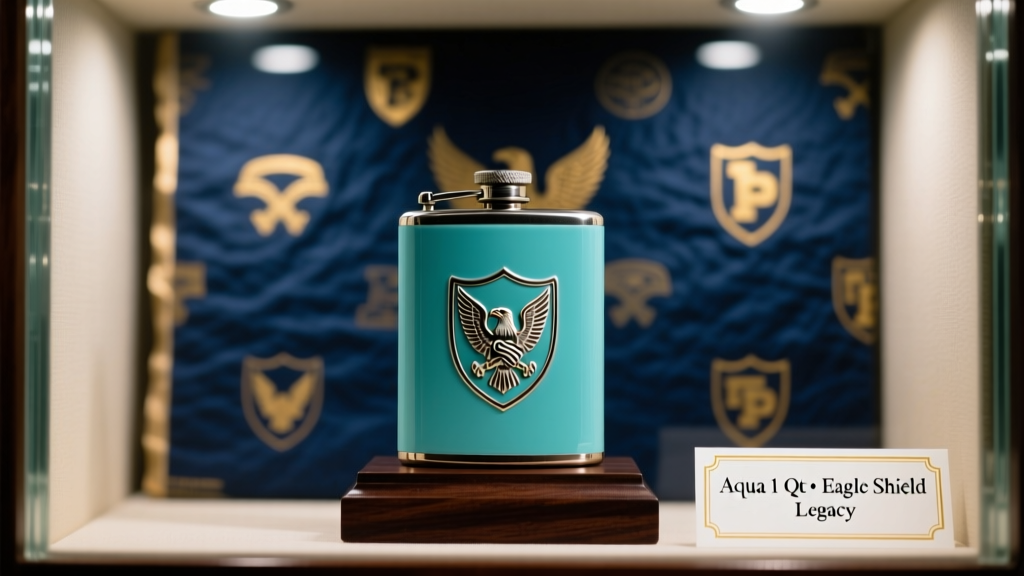
Flask Clasped Hands Eagle Shield Reverse Aqua 1 Qt: Authentication, Provenance, and Collector Significance
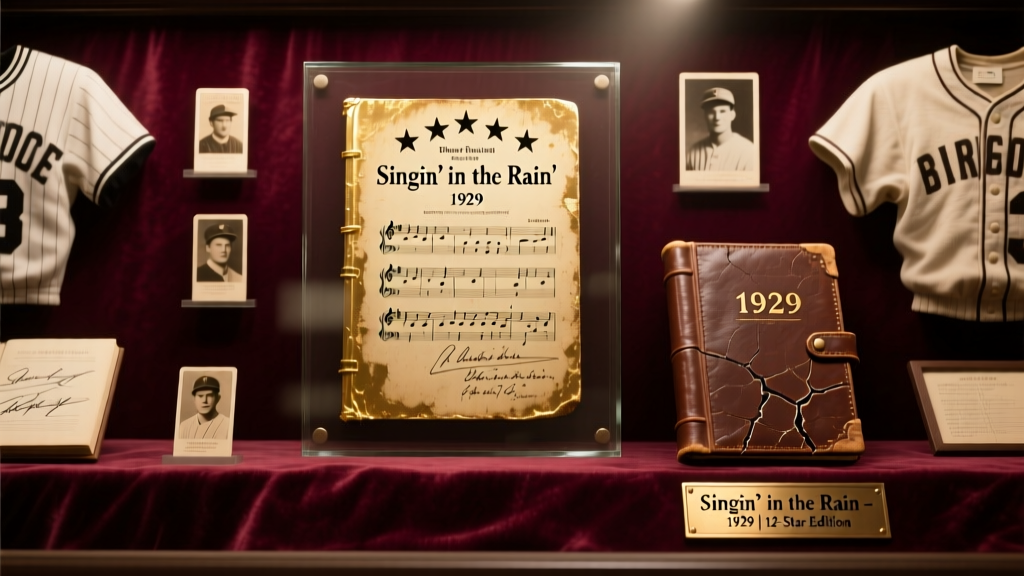
Sheet Music 'Singin’ in the Rain' with Twelve Star Photographs (1929): A Collector’s Deep Dive into a Historical Anachronism
Franciscan Cup and Saucer 'Palo Alto': History, Identification, and Collector Insights
Radio Scott 26-Tube Phonograph in Chassis: A 1937 Engineering Landmark and Collector’s Benchmark