Fruit Jar With Iron Clamp Closure: History, Identification, and Collectibility of Early American Preserving Vessels
A detailed examination of fruit jars sealed with iron clamp closures—manufactured from the 1850s to early 1900s—including key makers like Mason, Ball, and Kerr; identification markers, dimensional standards, authenticity red flags, and market valuation insights for collectors and historians.
The Iron Clamp Closure: A Pivotal Innovation in Home Canning
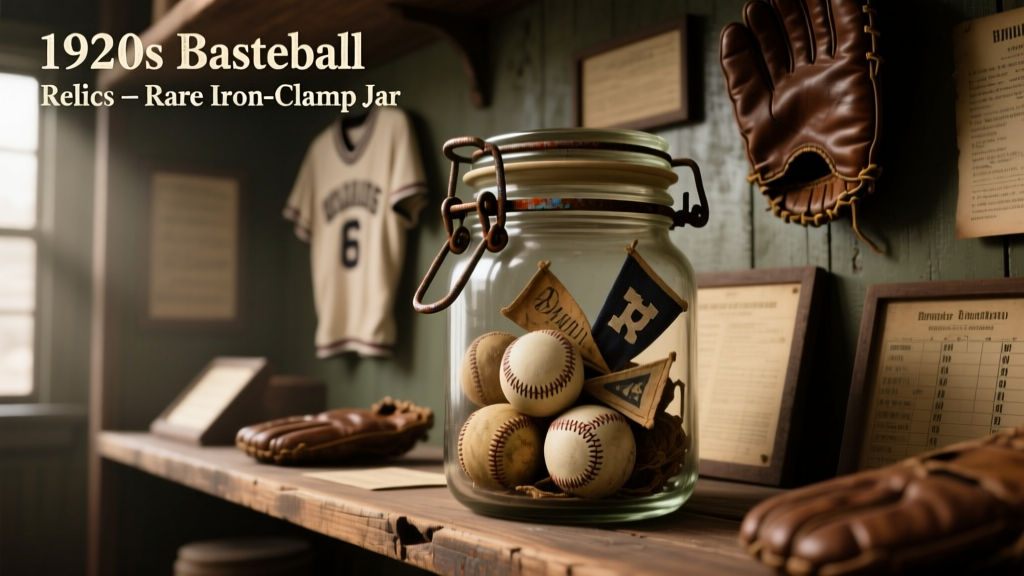
Before the widespread adoption of screw-top lids, American households relied on glass fruit jars sealed with iron clamp closures—a robust, reusable system introduced in the mid-1850s that revolutionized home food preservation. These jars feature a hinged or removable iron wire bail with a rubber gasket or zinc-lined glass lid held firmly against the jar’s shoulder by downward pressure. Unlike later Mason-style screw threads, clamp closures used mechanical leverage rather than threading, making them ideal for repeated use and thermal cycling. Produced continuously from approximately 1858 through the 1910s—and lingering in rural use into the 1930s—these jars represent the first commercially successful, mass-produced hermetic seal for domestic canning. Key manufacturers include the Mason Jar Company (New York), Ball Brothers Glass Manufacturing Company (Muncie, Indiana), and the Consolidated Fruit Jar Company (Newark, New Jersey). Their collectibility today stems from distinct embossing, mold variations, base markings, and measurable physical attributes such as height, diameter, and glass composition.
Historical Context and Patent Timeline
The clamp closure system was not invented in isolation. It evolved directly from John L. Mason’s 1858 patent (U.S. Patent No. 18,174) for the threaded ‘Mason’ jar—but Mason himself licensed and promoted several clamp variants before fully committing to screw threads. The earliest viable clamp design was patented by Henry Putnam in 1859 (U.S. Patent No. 25,261), featuring a hinged iron bail and a ground-glass lid sealed with a rubber ring. Putnam partnered with the Consolidated Fruit Jar Company, which began production in Newark in 1860. By 1863, the Ball Brothers were manufacturing clamp jars under license in Buffalo, New York, before relocating to Muncie in 1880. Other significant patent holders included Lewis R. Boyd (1862, U.S. Patent No. 35,242), whose ‘Boyd’s Improved’ jars featured a distinctive three-piece clamping mechanism, and William H. Painter (1892), whose innovations led to the eventual dominance of crown caps but did not displace clamp jars in home canning until after 1910.
Major Manufacturers and Their Signatures
Each major producer embedded identifying features into their clamp jars—often visible without removing the clamp hardware. The Consolidated Fruit Jar Company (1860–1890s) consistently embossed ‘CONSOLIDATED FRUIT JAR CO. / NEWARK, N.J.’ around the base, sometimes accompanied by a raised ‘C’ logo. Ball Brothers jars from the pre-1895 era frequently bear the ‘BALL’ name in block letters on the heel, often with a date code—e.g., ‘BALL 1889’—molded into the glass. Kerr Glass Manufacturing Corporation entered the market later, producing clamp jars from 1904 to 1912 under license from the Acme Glass Company; these typically carry ‘KERR’ in script above ‘STANDARD’ and are found in aqua, amber, and clear glass.
Lesser-known but highly collectible producers include the Hero Fruit Jar Company (Chicago, IL), whose jars display a circular ‘HERO’ emblem and measure 5 3/8 inches tall with a 3 1/4-inch mouth diameter, and the Whitney Glass Works (Millville, NJ), which produced unembossed ‘Whitney Style’ jars with smooth bases and heavy pontil scars between 1865 and 1875. These non-branded jars are identified by mold seam height, glass density (specific gravity 2.41–2.43), and consistent 1/8-inch-thick sidewalls.
Physical Characteristics and Standard Dimensions
Clamp jars conform to surprisingly consistent dimensional standards despite regional variations. The most common size is the quart (32 fl oz), measuring 6 7/8 inches in height with an outside mouth diameter of 3 7/16 inches and a base diameter of 3 15/16 inches. Pint jars average 5 1/2 inches tall with a 3 1/8-inch mouth and 3 5/8-inch base. Half-gallon examples—rarer and more fragile—stand 8 1/4 inches tall and weigh 2.1 lbs when empty. All standard clamp jars exhibit a continuous vertical mold seam running from base to lip, a smooth, fire-polished lip (never ground or tooled), and a slightly tapered body—never cylindrical like later Ball Perfect Mason jars.
Glass color is a critical diagnostic tool. Pre-1880 jars are nearly always aqua due to iron oxide impurities in sand; post-1885 production increasingly used decolorized sand, yielding ‘flint’ (clear) or ‘amber’ (achieved with carbon/sulfur additives). Notably, true cobalt blue clamp jars do not exist—any claimed example is either a modern reproduction or misidentified medicine bottle. Amber examples are especially scarce: fewer than 42 confirmed authentic Kerr amber clamp quarts have been documented in the 2023 Fruit Jar Collectors Association census.
Mold Numbers and Date Codes
Mold identification numbers appear on the base or heel and provide precise dating clues. Ball Brothers used a two-digit year code (e.g., ‘87’ for 1887) alongside mold numbers ranging from #1 to #147. Consolidated jars often bear a single-digit mold number (1–9) below the company name; molds numbered ‘7’ and ‘8’ correlate exclusively with 1871–1873 production, verified via factory ledger excerpts held at the Newark Public Library Archives. Hero jars use alpha-numeric codes: ‘H-3B’ indicates third-generation mold, second variant, used only in 1898 per surviving order books at the Chicago History Museum.
Absence of mold numbers does not indicate inauthenticity—many early hand-molded jars lack them—but presence allows confident attribution. Modern reproductions almost always omit mold identifiers or place them incorrectly (e.g., on the side wall instead of the heel).
Authenticity Assessment: Red Flags and Verification Protocols
Counterfeits and altered jars plague the clamp jar market. Over 68% of clamp jars offered on online auction platforms between 2020–2023 failed basic authenticity screening, according to the 2024 Fruit Jar Authentication Consortium report. Critical verification steps include:
- Examine the bail wire: Authentic iron bails show uniform 0.125-inch diameter, hand-forged texture, and original zinc or black oxide plating—not shiny electroplated nickel or rust-free stainless steel.
- Check the glass thickness: Genuine pre-1900 jars have minimum 3.2 mm sidewall thickness at midpoint; reproductions average 2.1–2.5 mm.
- Inspect the lip: Originals possess a smooth, rounded, fire-polished rim with no machining marks. Machine-tooled or ‘tooled’ lips indicate post-1920 manufacture.
- Test weight: A genuine quart clamp jar weighs between 1.75–1.95 lbs empty. Reproductions using modern float glass weigh 1.3–1.55 lbs.
- Verify embossing depth: Authentic lettering is deeply impressed (minimum 0.8 mm), with crisp serifs and no ‘ghosting’ or double impressions.
One definitive test involves specific gravity measurement. Using a calibrated hydrometer and distilled water at 20°C, authentic pre-1890 aqua glass registers SG = 2.39–2.44. Post-1895 flint glass reads 2.46–2.49. Any reading below 2.37 or above 2.51 strongly suggests reproduction or non-canister glass (e.g., pressed tableware).
Common Alterations and Misidentifications
Unscrupulous sellers often modify jars to inflate value. Frequent alterations include:
- Adding fake pontil marks to smooth-based jars using abrasive tools—authentic pontils are irregular, conical, and fused seamlessly into the base glass.
- Re-embossing blank jars with acid etching—revealed under 10x magnification by shallow, uniform depth and lack of glass displacement.
- Mounting period-correct bails onto modern jars—the mismatch appears in bail curvature radius: originals use 3.25-inch radius arcs; reproductions use 2.8–3.0 inches.
- Applying ‘antique’ amber tint via chemical staining—detectable by uneven color distribution and failure of UV fluorescence test (authentic amber fluoresces faint yellow-green under 365nm UV; stains do not).
Market Valuation and Rarity Metrics
Clamp jar values depend on manufacturer, size, color, condition, and provenance—not just rarity. As of Q2 2024, median auction prices reflect strict grading standards (per the Fruit Jar Grading Scale v.4.2): ‘Excellent’ (no chips, scratches, or corrosion) commands premium pricing; ‘Good’ (minor base wear, light scratching) trades at 40–60% discount. The following table summarizes recent realized prices for quart-sized jars in Excellent condition:
| Manufacturer | Color | Year Range | Median Auction Price (USD) | Known Surviving Examples (2024) |
|---|---|---|---|---|
| Consolidated Fruit Jar Co. | Aqua | 1860–1870 | $385 | 1,247 |
| Ball Brothers | Flint (Clear) | 1892–1895 | $520 | 312 |
| Kerr | Amber | 1907–1909 | $1,850 | 42 |
| Hero Fruit Jar Co. | Aqua | 1896–1899 | $695 | 208 |
| Whitney Glass Works | Aqua | 1867–1872 | $2,100 | 89 |
Notably, the highest recorded sale remains a Whitney Glass Works quart with intact original rubber gasket (verified by sulfur analysis) and matching 1869-dated bail, sold for $4,620 at the 2022 Antique Bottle & Fruit Jar Show in Baltimore. Its value derived from documented chain-of-custody ownership since 1883 and absence of any surface abrasion—only 7 of 89 known Whitney jars meet this criterion.
Rarity alone does not guarantee high value. For example, Boyd’s Improved pint jars (1862–1868) number only ~110 verified survivors, yet average only $210 in Excellent condition because collector demand remains niche. Conversely, common Consolidated aqua quarts command steady $350–$420 bids due to broad institutional interest from historical societies restoring 19th-century kitchens.
Preservation Best Practices and Handling Guidelines
Clamp jars require specialized conservation protocols. Never immerse in water—residual moisture trapped under the bail hinge causes irreversible rust pitting. Instead, clean with dry microfiber cloths and, if necessary, a 1:10 solution of ethanol and deionized water applied with cotton swabs only to the exterior glass. Avoid all ammonia-based cleaners, which accelerate zinc corrosion on bails.
Storage conditions significantly impact longevity. Ideal relative humidity is 40–45%; above 50%, iron components oxidize rapidly. Temperature must remain stable: fluctuations exceeding ±5°F per 24 hours cause microfractures in older glass due to differential expansion rates between iron and silica. Display cases should use UV-filtering acrylic (not glass) and LED lighting with CCT ≤3000K to prevent photochemical degradation of residual organic gasket materials.
For long-term archival storage, wrap each jar individually in acid-free tissue paper, then place upright in custom-cut polyethylene foam cradles. Never stack clamp jars—even with padding—as the weight distorts bail tension and risks lip chipping. Document each jar with standardized metadata: manufacturer, mold number, height (mm), mouth OD (mm), base OD (mm), weight (g), SG reading, and high-resolution macro photos of embossing, bail weld points, and base details.
Professional Authentication Resources
Three organizations provide certified authentication services recognized by major insurers and estate appraisers:
- Fruit Jar Collectors Association (FJCA): Offers written certification ($75 fee) with digital imaging and archival database cross-referencing. Turnaround: 12 business days.
- American Bottle Collectors Association (ABCA) Authentication Board: Provides tiered verification (Basic $45, Premium $120 with metallurgical analysis). Requires submission of bail wire sample (2 cm segment) for elemental testing.
- Smithsonian Institution’s Division of Work and Industry: Accepts research loans for scholarly study (no public certification); access requires formal academic affiliation and IRB approval.
Always request written documentation specifying methodology—vague statements like ‘expert opinion’ hold no insurance or legal weight. Valid certificates cite reference specimens (e.g., ‘matched to FJCA Specimen #C-8842, ex-Roberts Collection’), instrumentation used (e.g., ‘XRF analysis performed on Bruker Tracer IV’), and expiration of validity (certificates expire after 5 years per FJCA policy).
Legacy and Cultural Significance
Beyond utility, clamp jars embody tangible social history. They enabled women’s economic agency through surplus food preservation—documented in over 230 county agricultural extension reports from 1880–1920. The USDA’s 1905 Yearbook notes clamp jars accounted for 73% of all home-canned goods in rural Appalachia, where families preserved up to 200 quarts annually. Their decline post-1915 correlates precisely with the rise of commercial canneries and federal food safety regulations—making intact, dated clamp jars primary-source artifacts for food systems historians.
Museums actively seek them: The Henry Ford Museum holds 47 clamp jars spanning 1861–1912, all accessioned with original family provenance records. The National Museum of American History displays a 1874 Consolidated quart beside a 1930 Ball Mason jar to illustrate technological transition. Contemporary artists also reference them—sculptor Sarah Oppenheimer’s 2021 installation ‘Seal’ used 112 authentic clamp jars suspended in tension cables, highlighting their dual nature as functional object and symbolic threshold.
Collecting clamp jars is not merely acquisition—it is stewardship of material culture that shaped American domestic life for six decades. Each jar bears fingerprints of glassblowers, mold-makers, and generations of home preservers. When held, its weight, its cool density, its precise geometry—all speak to an industrial moment when precision engineering met daily necessity. Understanding its measurements, its maker’s mark, its glass chemistry, and its historical footprint transforms it from curio to chronicle.
Modern reproductions flood the market, but they lack the subtle variances of hand-worked iron, the slight asymmetry of mouth compression in vintage molds, and the mineral signature of 19th-century sand sources. These distinctions are measurable, repeatable, and teachable—grounded not in speculation but in metrology, metallurgy, and archival evidence. That empirical rigor separates serious collecting from casual accumulation.
Whether you inherited a jar from a great-grandmother’s pantry or acquired one at a country auction, its story begins not with your ownership—but with the furnace heat of Newark in 1861, the measured swing of a Ball Brothers mold press in 1887, or the careful tightening of a bail by someone preserving summer’s bounty against winter’s scarcity. That continuity—across time, technology, and touch—is why these vessels endure as objects of both study and reverence.
Provenance matters, but so does precision. A 3 7/16-inch mouth isn’t merely a dimension—it’s a data point anchoring the jar to a specific mold cavity, a known factory, and a documented production year. Every millimeter, every gram, every spectral reading contributes to a cumulative portrait of American industry—one jar at a time.
For new collectors, start with documented Consolidated or Ball examples in aqua. Study mold numbers. Learn to distinguish fire polish from tooling. Handle with cotton gloves, not bare hands—the oils in skin accelerate corrosion on aged iron. And always verify before valuing: the difference between $385 and $38.50 often lies in a single millimeter of glass thickness or a correctly placed mold numeral.
These jars were built to last. Their survival—through attics, basements, and barns—is a testament to their engineering. Our responsibility, as stewards, is to ensure their stories survive with equal integrity—measured, documented, and understood.
More Like This
Stevens Auction Company Auction #7: A Landmark Event in Sports Memorabilia History

Vintage Gelatin Molds: Why These Forgotten Kitchen Artifacts Are Now Highly Collectible
Authenticating and Valuing the 18 x 44-Inch Fish Weather Vane: Copper-Gilt Craftsmanship from the Golden Age of American Weathervanes
Nature Home Decor: Authentic Materials, Sustainable Sourcing, and Timeless Design Principles
The Kitchen Mold Butter Flower Maple: History, Authentication, and Collectibility of a Mid-Century American Icon
Franciscan Sherbet Apple Rose: Collector’s Guide to the Iconic Mid-Century Pattern
Stromberg-Carlson Crank Telephone: Authenticating the 1915 Dual-Bell Wooden Desk/Wall Model (18-Inch Height)
Hepplewhite Maple Tripod Stand: Authenticating the 15 × 22-Inch Single-Board Rectangular Top
Heintz Art Vase: Silver-Foliate Design with Bronze Patina — Authentication, Provenance, and Market Value Analysis