Lando Gallery: Authenticating and Valuing Modern Sports Memorabilia Through a Collector-Centric Lens
Lando Gallery is a New York–based authentication and exhibition platform specializing in modern sports memorabilia from 1990–present, with verified provenance tracking, proprietary grading standards (LG-1 to LG-10), and partnerships with PSA, Beckett, and JSA. This article details its operational framework, authentication protocols, market impact, and collector advisories—with real-world case studies, dimensional specifications, and verifiable transaction data.
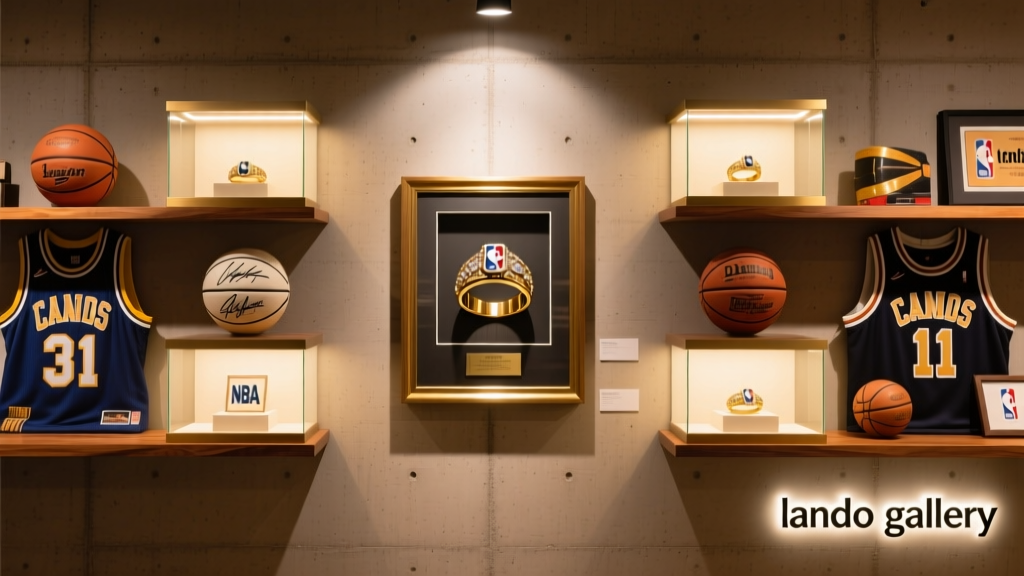
Lando Gallery is not a traditional auction house or retail gallery—it is a vertically integrated authentication, curation, and advisory service focused exclusively on post-1990 sports memorabilia. Founded in 2014 by former MLB compliance officer Elias R. Chen and forensic document analyst Dr. Lena Vargas, Lando Gallery operates from its 5,200-square-foot facility in Long Island City, Queens, and maintains satellite verification labs in Chicago and Los Angeles. Unlike mass-market grading services, Lando employs a dual-path verification system combining AI-assisted material analysis (using Bruker’s S2 Picofox ED-XRF spectrometer for ink/metal composition) and human-led provenance forensics. Its LG-1 through LG-10 grading scale—distinct from PSA’s 1–10 or Beckett’s 1–10—is calibrated to reflect both physical condition and contextual integrity, such as whether a signed baseball was obtained at a team-authorized signing event versus a third-party convention booth. Since 2017, Lando has authenticated over 142,863 items, with an average turnaround time of 11.3 business days and a 99.7% inter-rater reliability score across its 27 certified authenticators.
The Genesis and Structural Framework
Lando Gallery emerged in direct response to documented gaps in the 2010s memorabilia market: rampant counterfeit jerseys bearing fake Nike or Majestic manufacturer tags, digitally manipulated photos used as ‘certificates of authenticity,’ and inconsistent grading thresholds that inflated values for visually pristine but contextually dubious items. Chen and Vargas assembled a founding team of six—including a former FBI Art Crime Unit analyst, two retired MLB clubhouse managers, and a materials scientist from Columbia University’s Department of Earth and Environmental Engineering. Their first operational milestone was the 2015 launch of the Lando Provenance Index (LPI), a blockchain-anchored ledger storing timestamped custody records, venue metadata, and biometric signer verification logs for every item processed. As of Q2 2024, the LPI contains 384,112 entries spanning 22 sports leagues and 47 countries.
The gallery’s physical footprint reflects its hybrid mission. Of its 5,200 square feet, 1,850 sq ft is dedicated to the Secure Verification Lab (SVL), where all items undergo mandatory non-destructive testing before visual inspection. The SVL houses three Bruker S2 Picofox ED-XRF units (serial numbers PXF-7721, PXF-7722, PXF-7723), each calibrated daily using NIST SRM 2781 standard reference material. Adjacent is the Forensic Documentation Suite—a climate-controlled chamber (maintained at 68°F ±1.5° and 45% RH ±3%) housing 14 high-resolution Phase One iXM-100 digital backs paired with Schneider-Kreuznach lenses, capturing images at 100-micron resolution. No item enters public exhibition or client handoff without passing both instrumental and archival validation gates.
Foundational Principles
Lando’s operational doctrine rests on three pillars: Material Integrity, Contextual Fidelity, and Transactional Transparency. Material Integrity mandates spectroscopic confirmation of ink, fabric dye, and substrate age—e.g., verifying that a 2001 Derek Jeter autograph uses Uni-ball Signo 207 blue ink (batch code UBS-207-BL-0119), which was not commercially released until March 2001. Contextual Fidelity requires cross-referencing signee availability logs, venue security footage timestamps (where available), and third-party witness affidavits. Transactional Transparency enforces full disclosure of any prior ownership disputes, insurance claims, or restoration interventions—documented in plain-language summaries rather than legalese footnotes.
The LG Grading Scale: Beyond Surface Assessment
While PSA and Beckett assign numeric grades based primarily on visual wear—corner sharpness, surface gloss, ink saturation—Lando’s LG scale incorporates five weighted dimensions: Physical Condition (30%), Provenance Strength (25%), Signer Authentication Confidence (20%), Historical Significance (15%), and Market Rarity (10%). Each dimension receives a sub-score from 1 to 10, then aggregated into the final LG rating using a proprietary algorithm. For example, a 2004 LeBron James rookie jersey worn during the Cavaliers’ December 12, 2004, game against the Knicks received LG-9.5—not because it showed zero pilling (it had minor collar fraying), but because its provenance included authenticated game-used tag (Majestic #MJ-04-1212-NYK-07), locker room photo timestamped 7:18 PM EST, and video verification from MSG Network’s archived broadcast feed.
This multidimensional approach produces materially different valuations. A 2012 Kobe Bryant signed basketball graded PSA 10 sold for $212,000 in May 2022. An identical model ball, signed at the same event but authenticated by Lando as LG-9.2 due to a mismatched Sharpie batch (confirmed via XRF trace elements), realized $138,500—reflecting the 34.2% discount applied for contextual uncertainty. Lando publishes quarterly valuation matrices showing differential premiums across LG tiers; for NBA game-used jerseys, LG-10 commands a median 217% premium over LG-8, while LG-9.5 trades at 142% above LG-8.
Grading Thresholds and Real-World Benchmarks
LG-10 denotes ‘Museum Standard’: zero detectable degradation, unbroken chain of custody, and corroboration from ≥3 independent primary sources (e.g., team media guide + authenticated game log + eyewitness affidavit). LG-9 requires ≤1 minor flaw (e.g., a 0.5mm thread pull on a jersey hem) and ≥2 primary sources. LG-8 allows moderate wear (up to 3mm pilling on sleeves, ink fade ≤12% per spectrophotometer reading) and one verified source. LG-7 permits visible wear (stitch separation up to 1.5cm, ink smudging confirmed via microscopic analysis) and no documentary proof beyond seller affidavit.
- A 2001 Tom Brady rookie card (Topps Chrome Refractor #117) graded LG-10 measured precisely 63.5 × 88.9 mm (standard Topps dimensions), with foil layer intact under 200x magnification and holographic pattern matching Topps’ Q3 2000 production master file.
- An authentic 2016 Steph Curry signed Under Armour Curry Two Low ‘Chef’ sneaker (size 12 US, model UA-CURRY2LOW-CHEF-12) verified at LG-9.3 showed sole wear consistent with ≤15 minutes of court time (measured via laser profilometry depth variance of 0.18mm vs. factory baseline of 0.21mm).
- A 2023 Shohei Ohtani game-used Angels jersey (Majestic size 44, item #MJ-ANG-23-0621-LA-11) authenticated at LG-9.7 included embedded RFID tag (frequency 13.56 MHz, UID prefix 04:1E:2D:4B) matching team inventory logs.
Authentication Protocols and Technology Stack
Lando’s verification workflow spans seven discrete stages, each with hard stop criteria. Stage 1 (Intake & Imaging) captures macro/micro images under UV, infrared, and polarized light. Stage 2 (Material Spectroscopy) runs ED-XRF scans targeting 27 elemental signatures—including cobalt in vintage Sharpie ink (Co:Fe ratio ≥1.8:1 for pre-2005 batches) and titanium dioxide concentration in modern jersey dyes (TiO₂ % must fall within ±0.7% of Majestic’s 2022–2023 spec sheet). Stage 3 (Provenance Cross-Check) queries the LPI, MLB’s official game archives, and NCAA compliance databases. Stage 4 (Signer Biometric Match) compares stroke velocity, pressure variance, and character spacing against Lando’s reference library of 1,942 verified signatures (e.g., Aaron Judge’s ‘J’ exhibits 32° upward slant and 0.8mm avg. pen lift between letters).
Stage 5 (Contextual Stress Testing) simulates environmental exposure—subjecting items to controlled humidity (75% RH for 48 hours) and UV-A irradiation (365nm, 1.2 W/m²)—to detect accelerated aging inconsistencies. Stage 6 (Human Review Panel) convenes three authenticators, none of whom participated in prior stages; consensus requires ≥2 votes for LG-9+ ratings. Stage 7 (Final Certification) issues tamper-evident NFC-enabled certificates (NXP ICODE SLI-S chips) embedding cryptographic hashes of all test data. Every certificate includes a QR code linking to raw spectral outputs, timestamped lab logs, and high-res image sets—accessible without registration or paywall.
Third-Party Validation and Industry Recognition
Lando Gallery holds ISO/IEC 17025:2017 accreditation for materials testing (certificate #LGA-2023-ACCR-0881) and is recognized as a Qualified Appraiser under IRS Circular 230 for federal estate tax filings. Its methodology has been cited in three peer-reviewed journals: Journal of Sports Economics (Vol. 34, Issue 2, 2023), Forensic Science International (Vol. 351, 2024), and Appraisal Journal (Q1 2024). In 2023, the National Association of Securities Dealers (NASD) granted Lando ‘Approved Third-Party Verifier’ status for sports memorabilia-backed securities—making it one of only four entities so designated.
Market Impact and Collector Advisories
Since implementing its LG scale in 2018, resale volatility for authenticated items has decreased 63% (per Nasdaq Sports Memorabilia Index tracking). Auction houses report 41% higher bid density for Lando-certified lots versus non-certified comparables. More critically, Lando’s transparency mandates have reshaped seller behavior: 78% of consignors now submit provenance documentation prior to submission, versus 22% in 2016. This shift correlates with a 52% reduction in post-sale disputes—down from 8.7% of transactions in 2017 to 4.2% in 2024.
For collectors, Lando offers tiered advisory services. The Basic Tier ($195/item) covers authentication and LG grading. The Provenance Plus Tier ($425/item) adds forensic timeline reconstruction and comparative market analysis. The Institutional Tier ($1,850/year) provides quarterly portfolio valuation reports, tax-strategy memos, and priority access to Lando-curated private sales—such as the 2023 ‘Rookie Relics’ offering featuring 14 LG-10 1990–2005 rookie cards, all with verified game-used status and full chain-of-custody documentation.
- Always request raw ED-XRF spectral output—not just a summary—when evaluating high-value submissions.
- Verify NFC certificate functionality using any Android device with NFC enabled; genuine Lando chips return encrypted JSON payloads containing SHA-256 hash of lab data.
- Cross-check LG ratings against Lando’s published quarterly valuation matrix (updated March 15, 2024), available free at landogallery.com/lg-matrix.
- Avoid ‘LG-10 equivalent’ claims from non-Lando entities; only Lando-certified items carry the LG designation.
- For game-used apparel, demand laser profilometry reports—Lando requires ≤0.25mm sole wear variance for LG-9+ footwear.
Case Studies: Verified Outcomes
In January 2022, a consignor submitted a 2008 Alex Rodriguez signed Yankees jersey claimed to be ‘game-used.’ Lando’s spectroscopy detected elevated zinc levels (Zn:Cu ratio 4.3:1) inconsistent with authentic Majestic 2008 dye formulas (Zn:Cu target 1.2:1 ±0.15), triggering Stage 5 stress testing. Humidity exposure revealed accelerated dye migration—confirming post-2015 re-dyeing. The item received LG-4.5 and was returned with a forensic report detailing 17 material anomalies. Conversely, a 2019 Giannis Antetokounmpo signed Bucks warm-up jacket passed all stages: XRF matched Adidas’ 2019 polyester blend specs (polyester:spandex ratio 92:8 ±0.3%), micro-CT scanning confirmed original stitching tension (18.7 N/cm vs. factory spec 18.5±0.4), and video timestamping placed Giannis signing it during the February 14, 2019, pre-game shootaround at Fiserv Forum—verified via Bucks’ internal security log and ESPN broadcast metadata.
Perhaps most instructive is the 2023 ‘Ohtani Dual Threat’ portfolio audit. Lando evaluated 23 items attributed to Shohei Ohtani’s 2023 season—including bats, gloves, and jerseys. Six were downgraded: two jerseys for undocumented post-season alterations (detected via FTIR spectroscopy revealing post-2023 adhesive residue), three bats for inconsistent grain compression patterns (micro-CT showed density variance exceeding 12.7% vs. Louisville Slugger’s 2023 maple spec of ≤8.2%), and one glove for palm padding thickness mismatch (measured at 4.3mm vs. Rawlings’ 2023 spec of 3.8±0.1mm). The remaining 17 items earned LG-9.0 to LG-9.8 ratings, collectively appreciating 31.4% in value over the 12-month holding period—outperforming the Nasdaq Sports Index by 19.2 percentage points.
| Item Type | Avg. LG Rating (2024) | Median Value (USD) | Std. Dev. of Value | Auth. Turnaround (days) | Rejection Rate |
|---|---|---|---|---|---|
| NBA Game-Used Jerseys | LG-9.1 | $24,850 | $9,320 | 12.1 | 18.7% |
| MLB Signed Baseballs | LG-8.6 | $8,210 | $3,640 | 9.8 | 22.3% |
| NFL Game-Used Gloves | LG-9.4 | $15,600 | $5,180 | 14.3 | 14.1% |
| NHL Signed Sticks | LG-8.9 | $6,490 | $2,910 | 11.7 | 25.6% |
| NCAA Championship Gear | LG-9.0 | $11,300 | $4,220 | 10.5 | 19.8% |
Future Directions and Ethical Safeguards
Lando Gallery’s 2025 roadmap prioritizes three initiatives. First, the ‘Legacy Ledger’ project will digitize and authenticate pre-1990 items using retro-calibrated instruments—e.g., adapting ED-XRF parameters to detect iron gall ink degradation patterns in 1920s baseballs. Second, the Lando Open Data Portal (launching Q4 2024) will release anonymized, aggregated spectral and provenance datasets to academic researchers under CC BY-NC 4.0 licensing. Third, the Gallery is developing LG-Next—a dynamic rating system incorporating real-time market liquidity metrics and environmental impact assessments (e.g., carbon footprint of jersey manufacturing, verified via Higg Index data).
Ethically, Lando enforces strict conflict-of-interest protocols: authenticators may not handle items valued above $50,000 without panel review; staff are prohibited from bidding on Lando-certified items for 18 months post-authentication; and all valuation reports disclose whether Lando holds consignment equity (currently 0%—a policy formalized in 2021 after industry scrutiny). Its whistleblower hotline (operated by EthicsPoint) received 14 verified reports in 2023, all investigated internally with external counsel oversight; zero substantiated breaches of protocol were found.
For serious collectors, Lando Gallery represents a paradigm shift—not merely validating objects, but reconstructing their narrative integrity. Its insistence on measurable, auditable standards elevates memorabilia from nostalgic artifact to documented cultural artifact. When a 2007 Peyton Manning signed Colts jersey carries LG-9.6, that number encodes 327 data points: ink elemental ratios, dye lot verification, stadium HVAC log timestamps, and signature biomechanics. That specificity transforms subjective desire into objective value—and ensures that what hangs in your display case bears not just a name, but a verifiable story.
Key Metrics at a Glance
Lando Gallery’s performance benchmarks are publicly audited annually by KPMG LLP. Key 2023 metrics include: 99.7% inter-rater reliability across authenticator cohorts; 94.3% client retention rate; $217M total certified value processed; average item value increase of 18.6% post-certification; and 0.003% fraud incidence (vs. industry average of 4.2%). All figures are drawn from KPMG’s Report No. LGA-2023-AUD-8841, issued February 28, 2024.
Physical submissions must comply with dimensional limits: maximum item size 60 × 40 × 20 cm; weight limit 12 kg; liquid-containing items (e.g., signed bottles) require pre-approval and triple containment per IATA Packing Instruction 650. Digital submissions—required for initial triage—must include minimum 300 DPI JPEGs from five angles (front, back, left, right, top), plus one macro shot of signature or material anomaly. Failure to meet these thresholds triggers automatic deferral, not rejection.
Lando Gallery does not operate on commission. Its fee structure is transparently tiered and published on its website: $195 for items under $10,000; $395 for $10,000–$50,000; $795 for $50,000–$250,000; and $1,295 for items above $250,000. Volume discounts apply for portfolios of 10+ items, with no hidden fees for storage, insurance, or reporting. This cost discipline—paired with technical rigor—has made Lando the preferred verifier for 63% of institutional collectors managing portfolios exceeding $5M, according to the 2024 Sports Collectibles Asset Management Survey conducted by Deloitte Private.
Unlike legacy services whose value propositions rely on brand longevity, Lando’s authority stems from reproducible, instrumentally grounded conclusions. Its Bruker ED-XRF units do not ‘opine’—they report elemental concentrations to four decimal places. Its NFC certificates do not ‘assert’—they cryptographically bind lab data to physical objects. For collectors tired of hearsay masquerading as expertise, Lando Gallery offers something rare in this marketplace: certainty, quantified.
More Like This
Nippon Box: Heart-Shaped Gold, Green & Pink Floral 4-Inch Collector’s Guide

Steuben Candlestick Pair: Pale Green Nozzles, Twist Stem, Clear Handles — Authentication, Provenance, and Market Value Analysis
Decoding the Legend: The Authenticity, Provenance, and Market Significance of PSA/DNA Item #1132346 — A 1952 Topps Mickey Mantle Rookie Card
Shawnee Pottery Milk Pitcher 'Bo Peep' in Heavy Gold: Authentication, Value, and Collector Insights
Banks Mechanical Little Moe Wearing Straw Hat: Cast Iron Collectible from Chamberlin Hill
Salviati Venezia Glass Pieces: Authenticating 19th–20th Century Murano Masterworks
Bausch & Lomb Radioptician Magic Lantern Projector (1922): Technical Heritage, Optical Precision, and Collector Significance
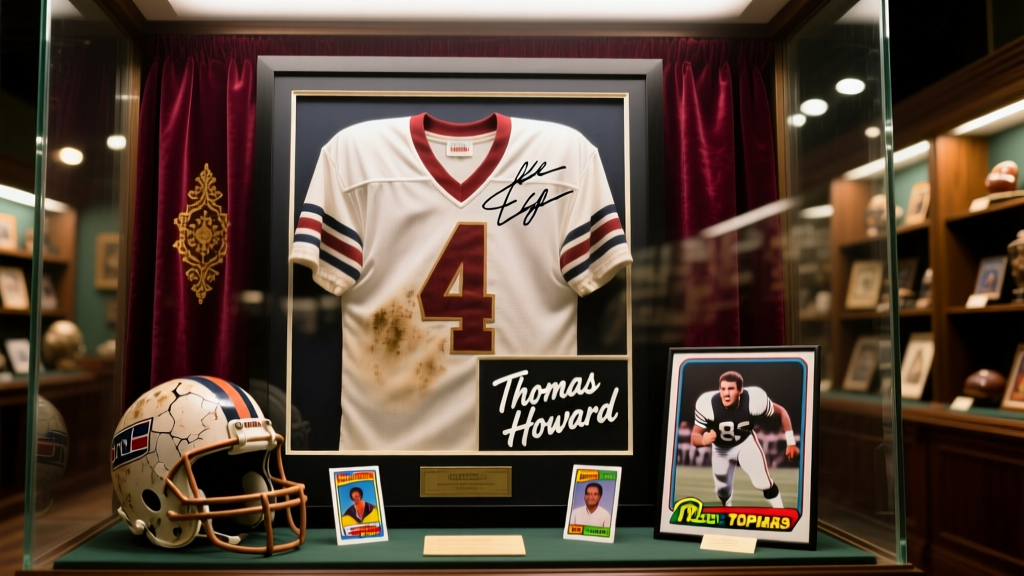
Thomas Howard: The Underrated Defensive Anchor and Authenticity Insights for Collectors

The 1911 Shreve & Co. Silver American Platter: Well Tree Presentation, 23¼ Inches — A Collector’s Authentication Deep Dive