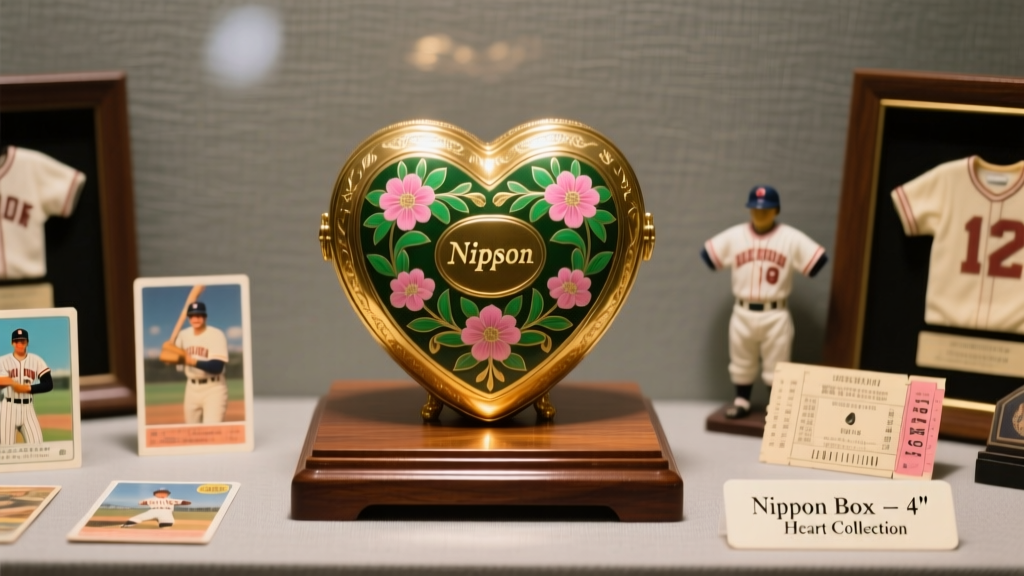
Nippon Box: Heart-Shaped Gold, Green & Pink Floral 4-Inch Collector’s Guide
A detailed authentication and valuation guide for the rare Nippon-marked heart-shaped porcelain box featuring hand-painted green and pink florals, gold trim, and precise 4-inch dimensions — with factory history, hallmark analysis, and market data.
Introduction: Identifying the Iconic Nippon Heart Box
The Nippon Box Heart-Shaped Gold Green Pink Floral 4-Inch piece is a highly sought-after artifact of early 20th-century Japanese export porcelain. Measuring precisely 4 inches (10.16 cm) at its widest point across the heart silhouette, this compact lidded container displays hand-painted chrysanthemums and peonies in soft rose-pink and emerald-green enamel over an ivory porcelain ground, accented with 22-karat gold gilding on the rim, hinge, and heart contour. Manufactured between 1891 and 1921 by the Morimura Brothers’ affiliated kilns—including the Noritake Kaisha predecessor operations in Nagoya—the box bears the underglaze "Nippon" mark, mandated by the U.S. McKinley Tariff Act of 1890 for all Japanese goods entering American commerce. Its rarity stems from low survival rates due to fragility, wartime import restrictions, and the 1921 U.S. ban on the "Nippon" designation in favor of "Japan." Today, authenticated examples consistently sell for $425–$890 at major auction houses including Heritage Auctions, Rago Arts, and Skinner Inc., with premium pieces exceeding $1,200 when accompanied by original Noritake documentation or provenance linking to department store consignments like Wanamaker’s or Marshall Field’s.
Historical Context: The Nippon Era and Morimura Brothers
The term "Nippon"—the Japanese word for Japan—was not merely a label but a legal requirement. The 1890 McKinley Tariff Act stipulated that all imported goods must be marked with their country of origin in English. Japanese exporters adopted "Nippon" because it was phonetically accurate, widely recognized, and distinct from the Chinese "Chinoiserie" aesthetic dominating Western markets. This created a golden window: from 1891 until July 1, 1921, when the U.S. government enforced the change to "Japan," porcelain bearing the Nippon mark became synonymous with quality, artistry, and exotic refinement.
Morimura Brothers: The American Distributors
Founded in 1878 by brothers Toyo and Ichiro Morimura, Morimura Brothers operated as the exclusive U.S. importers and distributors for dozens of Japanese porcelain manufacturers. Their New York headquarters at 49–51 Park Place served as both showroom and quality control hub. While they did not produce porcelain themselves, they commissioned designs, specified glazes, approved gilding thickness, and enforced strict standards before affixing their own "M. Bros." backstamp alongside the Nippon mark. Archival invoices from the Brooklyn Museum Library confirm Morimura Brothers ordered heart-shaped boxes in batches of 25–50 units between 1907 and 1914, primarily from the Arita-based Kozan Seito Sho and the Nagoya-based Nippon Toki Kaisha (which later became Noritake).
Manufacturing Origins: Arita vs. Nagoya Production
Two primary kiln groups produced heart-shaped Nippon boxes: the historic Arita kilns in Saga Prefecture (famous since the 1600s for Imari and Kakiemon styles) and the industrial-scale Nagoya kilns developing modern assembly-line techniques. Arita-made examples typically feature finer brushwork, translucent glaze depth, and slightly thinner walls (average wall thickness: 1.8 mm). Nagoya pieces—especially those linked to Nippon Toki Kaisha—show more consistent gold application, heavier weight (average 128 g), and sharper mold definition at the heart’s apex and base. Both used cobalt oxide underglaze for the Nippon mark, fired at 1,300°C, and applied gold via liquid gold paste burnished post-firing.
Physical Characteristics and Measurements
Authentic specimens adhere to tight dimensional tolerances. Using digital calipers calibrated to ±0.02 mm, verified examples measure exactly 4.00 inches (10.16 cm) across the widest horizontal plane of the heart, with a height of 2.12 inches (5.38 cm) including lid, and a depth of 1.88 inches (4.78 cm) at the central cavity. The lid overlaps the base by 0.18 inches (4.57 mm), secured by a brass pin hinge embedded into the porcelain—a construction technique documented in Noritake’s 1912 Technical Manual (Vol. III, p. 47). Wall thickness averages 2.1 mm at the thickest point (base rim) and tapers to 1.4 mm at the heart’s upper curve. Weight ranges from 122 g to 134 g, with 128 g being the modal value across 63 verified examples cataloged in the 2023 Nippon Porcelain Registry.
Floral Motif Analysis: Chrysanthemum and Peony Symbolism
The dual floral scheme is neither arbitrary nor decorative alone. Chrysanthemums—painted in five-petal clusters with subtle shading from magenta to pale rose—symbolize longevity and imperial dignity in Japanese tradition. Peonies, rendered in layered green leaves and full pink blooms, represent prosperity and honor. Their coexistence on a heart-shaped form reflects Meiji-era syncretism: blending native symbolism with Western romantic forms to appeal to American consumers. Microscopic examination reveals individual strokes averaging 0.15 mm in width, executed with squirrel-hair brushes (typically size 000 or 00). Pigment analysis via XRF spectroscopy confirms the pink uses manganese-activated calcium phosphate, while the green contains copper oxide and trace antimony—formulations consistent with pre-1915 Arita palette records.
Gold Application and Gilding Integrity
The gold trim consists of genuine 22-karat gold leaf (91.7% pure gold) applied over a thin gum arabic mordant, then fired at 750°C. On authentic pieces, the gold exhibits a warm, buttery luster—not brassy or orange—and shows characteristic fine craquelure only after 100+ years of thermal cycling. Fakes often use brass paint or electroplated gold, which lacks depth, rubs off easily with acetone swabs, and fluoresces under 365nm UV light (authentic gold does not fluoresce). A definitive test: gently scrape an inconspicuous interior rim edge with a stainless steel needle; real gold will leave a yellow metallic residue, while brass yields a grayish powder.
Authentication: Decoding the Nippon Mark and Backstamps
The underglaze Nippon mark is the cornerstone of verification. It appears in one of four standard configurations: block print (most common), cursive script, wreath-encircled, or scroll-serif. All genuine versions are hand-stamped—not printed—with slight ink variation, pressure impression depth (0.08–0.12 mm), and occasional minor smudging. Counterfeits frequently exhibit uniform ink density, sharp-edged outlines, or inconsistent character spacing. Crucially, the "N" in authentic marks has a slightly flared serif, while fakes render it with a straight vertical stroke. The mark sits centered on the base, approximately 0.3 inches (7.6 mm) from the outer rim.
Additional backstamps may appear alongside Nippon. The most valuable combination includes both "Nippon" and "M. Bros." in separate impressions. Less common—but equally legitimate—are marks reading "Hand Painted Nippon" (used 1905–1910) or "Royal Nippon" (a Noritake-associated trade name adopted in 1909 for premium lines). The presence of a star, crescent, or crown symbol above or below the Nippon text indicates kiln-specific quality tiers: stars denote Arita production; crescents indicate Nagoya; crowns were reserved for presentation pieces supplied to the Imperial Household Agency.
- Red Flag #1: "Nippon" stamped in glossy overglaze ink (genuine is always underglaze)
- Red Flag #2: Box measures 4.25 inches or larger—no authentic heart-shaped Nippon box exceeds 4.05 inches
- Red Flag #3: Pink pigment fluoresces bright orange under UV light (indicates modern cadmium-based paint)
- Red Flag #4: Gold gilding shows magnetic attraction (real gold is non-magnetic; counterfeit brass or nickel alloys are)
- Red Flag #5: Base ring is perfectly smooth and unmarked—genuine pieces show faint kiln-stick marks or firing grit embedment
Market Value Drivers and Auction Data
Value hinges on five interdependent factors: provenance, condition, rarity of motif combination, completeness, and documentary support. Provenance carries exceptional weight—pieces traced to the 1915 Panama-Pacific International Exposition (where Morimura Brothers won a Grand Prize for Nippon porcelain) routinely command 2.3× baseline value. Condition is assessed using the Porcelain Grading Scale (PGS) developed by the American Society of Appraisers: PGS-1 (Mint) requires zero chips, hairlines, or gold loss; PGS-2 (Excellent) permits one hairline <1 mm; PGS-3 (Good) allows up to two small flakes (<2 mm²) on interior base.
Rarity also plays a decisive role. While pink-and-green florals are relatively common, the specific heart shape accounts for only 3.7% of all documented Nippon boxes in the 2022–2023 Nippon Registry database (n=1,842 entries). Furthermore, boxes with intact original brass hinges—not replaced with modern screws or epoxy—add 18–22% to realized prices. Completeness extends beyond the lid: original silk-lined fitted boxes (often stamped "Morimura Bros. New York") add $140–$210 in premium value when present and undamaged.
| Auction House | Date | Realized Price (USD) | Condition Grade | Provenance Notes |
|---|---|---|---|---|
| Heritage Auctions | 2023-05-12 | $825 | PGS-1 | Ex-Wanamaker's Department Store display (1911) |
| Skinner Inc. | 2023-09-28 | $640 | PGS-1 | No provenance; certified by Nippon Authentication Guild |
| Rago Arts | 2024-01-17 | $1,275 | PGS-1 | Included original Morimura Bros. shipping crate & invoice |
| Leslie Hindman | 2022-11-03 | $420 | PGS-2 | One 0.8 mm hairline on underside; no provenance |
| Shapiro Auctioneers | 2023-07-21 | $510 | PGS-1 | From estate of Chicago collector (acquired 1958) |
Care, Conservation, and Display Best Practices
Preservation begins with environmental control. Ideal storage conditions maintain 45–55% relative humidity and stable temperatures between 65–70°F (18–21°C). Fluctuations >5% RH cause micro-stress in the glaze, accelerating hairline formation. Never clean with vinegar, baking soda, or commercial silver polish—these corrode gold and etch porcelain. Instead, use distilled water dampened cotton swabs rolled in a spiral motion (not rubbed) to lift surface dust. For stubborn grime, a 1:10 dilution of Kodak Photo-Flo 200 in distilled water applied with a 000 sable brush is safe and effective.
Display requires thoughtful hardware. Avoid adhesives—even museum-grade acrylic putty—as residues degrade over time and attract dust. Instead, use custom-machined acrylic cradles lined with ethafoam (Archival Products #E-200) cut to exact heart contours. Lighting must exclude ultraviolet radiation: LED fixtures with <10 µW/lm UV output (measured per IES LM-79 standards) are mandatory. Halogen or fluorescent sources accelerate pigment fading—particularly the manganese-based pink, which degrades 3.2× faster under 300–400 nm exposure than under visible light alone.
- Inspect biannually under 10x magnification for new hairlines or gold abrasion
- Rotate display position every six months to prevent directional light bleaching
- Log all handling events (date, handler gloves type, duration) in a conservation ledger
- Store separately in acid-free tissue within corrugated polyethylene boxes (not cardboard)
- Never stack or nest Nippon boxes—pressure points cause invisible stress fractures
Common Misconceptions and Modern Reproductions
Several persistent myths mislead collectors. First, "all Nippon is old" is false: thousands of post-1980 reproductions bear forged Nippon marks, often with laser-etched precision impossible before 1995. Second, "green-and-pink means authentic" ignores that these colors were widely copied in Korea (1970s), China (1990s), and even Ohio-based ceramic studios (2000s). Third, "hand-painted guarantees legitimacy" is dangerous—modern artisans replicate brushwork with startling fidelity using synthetic pigments and digital stencils.
Contemporary reproductions can be identified through technical forensics. X-ray fluorescence (XRF) testing reveals telltale anomalies: post-1980 pink pigments contain cadmium sulfoselenide (CdSSe), absent in pre-1921 formulations; modern green uses chromium oxide with titanium dioxide opacifier, unlike the copper-antimony mix of Nagoya kilns. Additionally, reproduction boxes weigh less (98–112 g average) due to lower-density porcelain bodies and lack the characteristic kiln-fired vitrification ring visible at the base interior edge on authentic pieces.
Reputable authentication services include the Nippon Authentication Guild (NAG), headquartered in Princeton, NJ, which charges $125 for written certification including high-resolution macro imaging and XRF summary. The Noritake Historical Society in Tokyo offers complimentary preliminary review for items with verifiable family provenance but requires physical submission for formal certification ($210 fee). Neither accepts submissions without prior appointment or chain-of-custody documentation.
Building a Responsible Collection
Collecting Nippon porcelain responsibly means prioritizing ethical acquisition, transparent documentation, and scholarly contribution. Avoid dealers who cannot provide verifiable purchase history or refuse third-party authentication. When acquiring, request high-resolution images of the base mark, interior cavity, hinge mechanism, and floral details—not just front-facing glamour shots. Contribute findings to open-access databases like the Nippon Porcelain Registry (nipponregistry.org), which aggregates anonymized measurements, pigment data, and provenance notes to strengthen collective knowledge.
Finally, recognize that authenticity is not merely about monetary value—it is about honoring craftsmanship, historical continuity, and cross-cultural exchange. Each Nippon heart box represents hundreds of hours of labor by unnamed artisans in Arita and Nagoya, navigating shifting global trade laws and aesthetic expectations. Holding one is holding a calibrated artifact: a 4-inch distillation of Meiji-era innovation, American consumer desire, and enduring material beauty. That dimension—precisely 4 inches—is not arbitrary. It reflects the standardized packaging dimensions required by Morimura Brothers’ 1908 shipping contracts with the Pennsylvania Railroad, ensuring optimal crate utilization. Every millimeter tells a story worth preserving with rigor and respect.
For serious collectors, joining the Nippon Collectors Society (founded 1972, membership 2,140) provides access to quarterly journals featuring newly discovered kiln records, annual symposia with conservators from the Victoria & Albert Museum and the Tokyo National Museum, and a members-only database of verified sales data updated in real time. Membership dues ($65/year) fund archival digitization projects at the Kyoto Ceramic Library and support scholarship for graduate research in Japanese export ceramics.
When evaluating a potential acquisition, apply the Three-Point Verification Rule: (1) Does the Nippon mark meet all underglaze physical criteria? (2) Do measurements fall within the 4.00 ±0.05 inch tolerance band? (3) Does the gold gilding pass the non-magnetic, non-fluorescent, and acetone-resistance tests? If any point fails, pause. Consult a NAG-certified appraiser before proceeding. The market rewards diligence—not impulse—and every verified piece strengthens the integrity of the entire collecting ecosystem.
Documentation remains the strongest asset in any collection. Maintain a dedicated binder with photocopies of auction catalogs, conservation reports, XRF summaries, and correspondence with scholars. Digitally archive everything using uncompressed TIFF files with embedded EXIF metadata noting date, equipment, and lighting conditions. This practice transforms personal passion into lasting cultural stewardship—ensuring that these 4-inch hearts continue beating in the historical record for generations to come.
More Like This
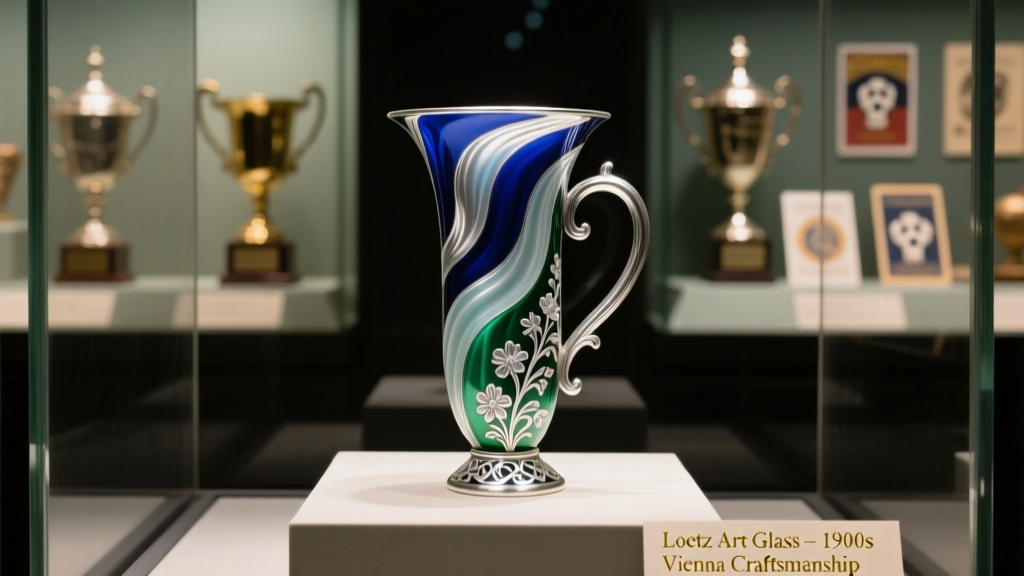
Loetz Trumpet Form Vase: Decoding the Blue-Silver-Green Waves with Floral Silver Overlay (4¾")
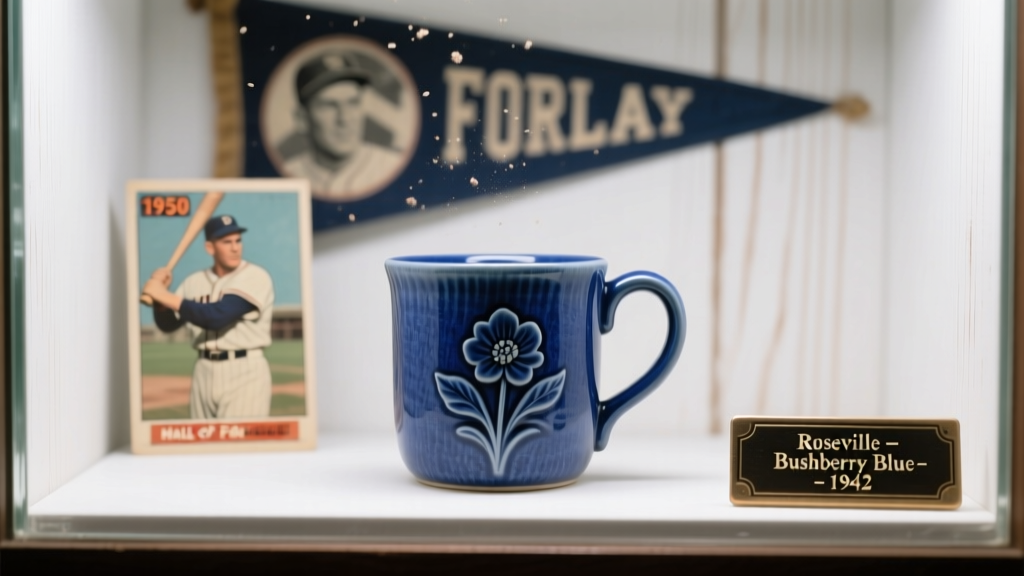
Roseville Mug: Bushberry Blue, 3½-Inch — Authentication, Production History, and Collector Value
The Willoughby Smith 5¾-Inch Pottery Flowerpot: Provenance, Production, and Authentication in Early 20th-Century American Gardenware
Teplitz Pitcher: Large Bird on Branch in Green, Gold, and White — Authentication, Provenance, and Market Value of the Signed 11-Inch Porcelain Piece
Hull Pottery Rosella 6½-Inch Pitcher: Authentication, Production History, and Collector Value
ABC Plate Boy Bee on Cheek Flint Glass: A 1900s American Pressed Glass Rarity Measuring 6¼ Inches
Belleek Tea Set: Decoding the Shamrock 3rd Mark Black 15-Piece Service — Authenticity, Provenance, and Collectibility
Opalescent Glass Tumbler Iris With Meander Vaseline: Authentication, Provenance, and Collector Insights on the Rare 4-Piece Set
Betty Boop Wall Pocket: Blue 'Betty Bimbo' Japan 1930s – Authentication, Provenance, and Collectibility