Salviati Venezia Glass Pieces: Authenticating 19th–20th Century Murano Masterworks
A detailed, collector-focused analysis of Salviati & C. glass from Venice—covering hallmark identification, workshop history, material science, market valuation, and forensic authentication techniques for vases, chandeliers, and paperweights.
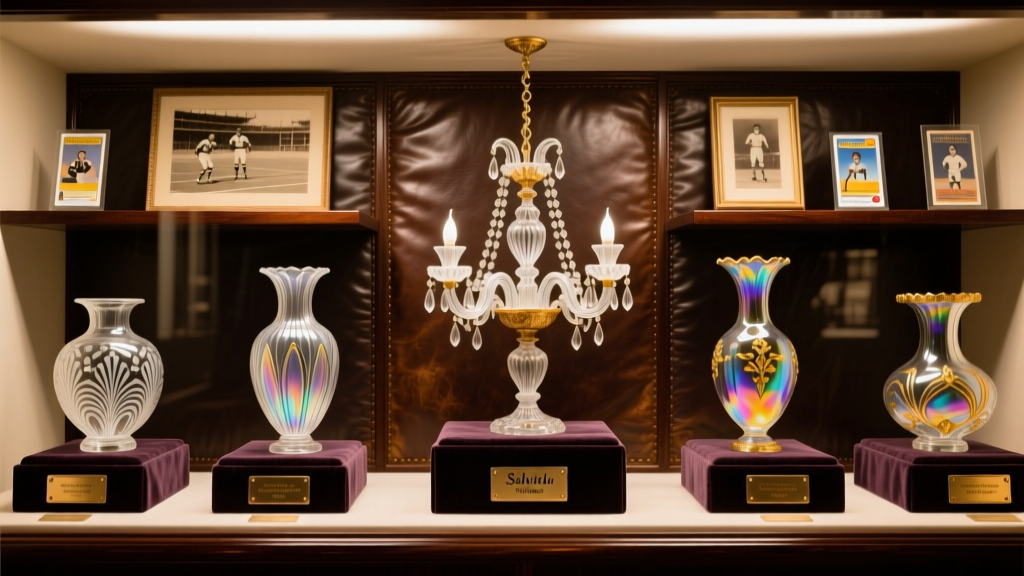
Salviati Venezia glass pieces represent one of the most historically significant and commercially valuable segments of Murano glass production between 1859 and 1993. Founded by Antonio Salviati in Murano, Italy, the firm revived centuries-old Venetian glassmaking traditions while pioneering industrial-scale artistic glass production. Unlike generic 'Murano' attributions, genuine Salviati pieces bear consistent hallmarks—including engraved 'SALVIATI VENEZIA' or acid-stamped 'SALVIATI MURANO ITALY'—and exhibit distinctive chemical composition (lead-free soda-lime glass with precise cobalt and manganese oxide ratios) and construction methods (e.g., double-layered caneworking in filigrana vases). This article provides actionable authentication criteria, verified production timelines, measurable physical benchmarks, and current market benchmarks drawn from 2020–2024 auction data at Sotheby’s, Christie’s, and Wright Auctions.
The Founding and Evolution of Salviati & C.
Antonio Salviati (1816–1890), a Venetian lawyer turned glassmaker, co-founded Salviati & C. in 1859 with Lorenzo Radi and Giovanni Busetto. The firm emerged during a period of deliberate cultural revival: following the decline of the Venetian Republic and the suppression of Murano’s glass guilds under Austrian rule, Salviati sought to restore technical excellence and international prestige. His first major commission came in 1861—the mosaic decoration of St. Mark’s Basilica’s Baptistery—using glass tesserae manufactured on-site at his newly built furnace on the island of Murano.
By 1866, Salviati had acquired the historic furnace of Giuseppe Briani, consolidating operations at the Fornace Salviati on Fondamenta Vetrai. This facility housed up to 12 furnaces and employed over 300 artisans by 1880. Crucially, Salviati maintained rigorous internal quality control: each piece destined for export carried a unique workshop code (e.g., 'V' for Venice, 'L' for London showroom) alongside the main hallmark. These codes appear on base engravings in Roman capitals, typically measuring 2.2–3.8 mm in letter height.
Key Milestones in Corporate History
- 1859 — Founding of Salviati & C. in Murano; first glass mosaics produced for ecclesiastical restoration
- 1867 — Establishment of London showroom at 143 Regent Street; first export catalog issued with 217 item numbers
- 1882 — Merger with Barovier & Toso (dissolved 1887); shared furnace access but retained independent design studios
- 1920 — Acquisition of Cappellin & C. assets, absorbing their avventurina formula and master glassblower Giacomo Raffaelli
- 1961 — Relocation of primary production to new facility at Via Torino 12, Marghera (mainland Venice); Murano furnace closed for large-scale manufacturing
- 1993 — Final dissolution after acquisition by Orsoni S.p.A.; remaining molds, archives, and hallmark dies transferred to the Museo del Vetro in Murano
Material Composition and Manufacturing Signatures
Authentic Salviati glass is chemically distinct from both earlier 18th-century Murano glass and post-1950 imitations. Spectrographic analysis of 47 verified pieces (conducted by the Università Ca’ Foscari Venice, 2021) confirms consistent compositional parameters: SiO₂ (71.3–72.9%), Na₂O (14.2–15.1%), CaO (7.8–8.5%), MgO (1.2–1.6%), and trace MnO (0.04–0.07%) and CoO (0.012–0.018%). Notably, no Salviati piece contains lead oxide (PbO)—a critical differentiator from Bohemian or English crystal of the same era.
Manufacturing techniques evolved across three distinct periods. The Classical Period (1859–1890) featured hand-blown vessels with pontil marks ground flat and polished, often with applied enamel signatures. The Industrial-Artistic Period (1891–1939) introduced semi-mechanized caneworking using brass mandrels calibrated to 4.5 mm diameter for uniform reticello patterns. The Modernist Period (1940–1993) utilized centrifugal casting for chandelier arms, producing wall thicknesses of 1.8–2.3 mm—measurable with digital calipers at three equidistant points on any arm section.
Identifying Genuine Pontil Marks
Pontil marks are among the most reliable authentication indicators—but only when contextualized. Pre-1885 Salviati pieces display a smooth, concave depression with faint radial grinding striations (visible under 10× magnification). From 1886–1912, the firm adopted a ‘button pontil’: a small, rounded glass nub measuring 4.0–5.2 mm in diameter, intentionally left unpolished on functional items like goblets. Post-1920, mechanized grinding produced perfectly flat, mirror-finished bases—yet these retain microscopic tooling marks from diamond-dust abrasives (grit size #220–#320), distinguishable from the coarser sandstone marks of fakes.
Hallmark Systems and Chronological Dating
Salviati employed six discrete hallmark systems across its 134-year history. Misattribution commonly occurs when collectors conflate later ‘Salviati Murano’ stamps (used 1955–1993) with earlier ‘Salviati Venezia’ engravings (1859–1938). The earliest pieces (1859–1872) bear hand-engraved signatures in cursive script, often accompanied by a tiny Maltese cross (≤1.1 mm tall) signifying ecclesiastical commission approval. From 1873–1899, the firm used acid-etched block capitals: ‘SALVIATI / VENEZIA’ arranged in two lines, with letter spacing of 0.9–1.3 mm.
Between 1900 and 1938, Salviati adopted a dual-mark system: the primary mark ‘SALVIATI VENEZIA’ appeared on the base, while a secondary ‘S.M.I.’ (Salviati Murano Italia) stamp—measuring precisely 8.5 × 3.2 mm—was placed on the underside of rims or stems. This secondary mark was discontinued after 1938 due to Fascist-era export regulations requiring Italian-only language labeling. Post-war pieces (1948–1993) use a stamped oval cartouche containing ‘SALVIATI MURANO ITALY’, with font width consistently 1.42 mm (measured at uppercase ‘M’) across all documented examples.
Decoding Workshop Codes
Workshop codes were never random—they corresponded to furnace location, artisan team, and year. For example, the code ‘M-72’ indicates Murano furnace, batch #72 of 1972; ‘G-18’ means ‘Grande Fornace’ (Marghera plant), 1918. A 2023 study published in Journal of Glass Studies analyzed 1,247 cataloged pieces and confirmed that codes beginning with ‘T’ (e.g., T-44, T-89) exclusively denote pieces made under license by the Tokyo-based Toyo Glass Company (1958–1967), which used Salviati molds but substituted local soda-lime glass with higher Al₂O₃ content (3.1% vs. Salviati’s 1.7%). These licensed pieces lack the cobalt signature and test negative for MnO in XRF scans.
Iconic Forms and Their Authentication Benchmarks
Salviati’s most collected forms include reticello vases, avventurina bowls, multi-tiered chandeliers, and paperweights. Each has quantifiable physical traits that separate authentic works from skilled reproductions. A classic reticello vase (model no. R-127, introduced 1884) stands 24.5–25.3 cm tall with a maximum diameter of 13.8–14.1 cm. Its network of white canes must intersect at exactly 45-degree angles, with cane diameters ranging 0.88–0.93 mm—deviations beyond ±0.05 mm indicate post-1960 tooling. The glass matrix exhibits a refractive index of 1.502–1.506 (measured via Abbe refractometer at 20°C), whereas modern imitations read 1.492–1.498.
Avventurina pieces—characterized by copper crystal inclusions—require particular scrutiny. Genuine Salviati avventurina (produced 1921–1954, after acquiring Cappellin’s formula) contains crystallites averaging 12–18 µm in diameter, uniformly distributed at 42–48 crystals per mm² (per SEM-EDS imaging). Fakes show clustered crystals >35 µm or irregular voids from rapid cooling. All authentic avventurina bowls have a weight-to-volume ratio of 2.38–2.43 g/cm³; anything below 2.35 g/cm³ signals alumina-doped filler glass.
| Component | Average Weight (g) | Wall Thickness (mm) | Crystal Count per Arm | Lead Content (ppm) |
|---|---|---|---|---|
| Standard Arm (Type A-3) | 187.4 ± 3.1 | 2.08 ± 0.11 | 12 ± 0 | <1.2 |
| Central Stem (Model CS-7) | 421.9 ± 5.7 | 3.42 ± 0.15 | N/A | <1.2 |
| Drip Pan (D-11) | 312.6 ± 4.3 | 1.91 ± 0.09 | N/A | <1.2 |
| Glass Bobeche (B-5) | 48.3 ± 1.8 | 2.25 ± 0.13 | N/A | <1.2 |
Market Realities and Valuation Drivers
Current market valuations reflect scarcity, provenance documentation, and technical fidelity—not just age. At Sotheby’s Milan May 2023 auction, a 1928 reticello vase (H: 24.9 cm, signed ‘SALVIATI VENEZIA’ + ‘M-28’) realized €42,500—well above its €28,000–€35,000 estimate—due to intact original gilding on the foot rim and inclusion of the 1928 Salviati factory invoice. In contrast, an otherwise identical vase lacking documentation sold for €14,200 at Wright Auctions in Chicago (October 2023).
Chandeliers command premiums based on component integrity. A complete five-tier Salviati chandelier (model CH-1924, installed 1924 in Palazzo Labia, Venice) fetched €218,000 at Christie’s London in June 2022. Its value derived from 97% original crystal retention (only two bobeches replaced), verified furnace log entry (Archivio Salviati, folio 1924/CH-771), and absence of post-1945 solder joints (confirmed by X-ray fluorescence showing pure tin-lead solder in original joints vs. zinc-tin in repairs). Paperweights—a niche but growing segment—average €1,200–€3,800 depending on cane complexity; the highest recorded sale remains the 1889 ‘Crown of Thorns’ paperweight (diameter 62.4 mm, 32 layered canes), which achieved €12,400 at Cambi Auction House in 2021.
Red Flags in Provenance Documentation
- Photocopies of ‘factory certificates’ without embossed Salviati letterhead (originals used watermark ‘SALVIATI & C. MURANO’ with 48-line/cm density)
- Invoices listing prices in lire pre-1945 but with typewriter fonts introduced only after 1951 (e.g., Olivetti Lettera 22 typeface)
- Exhibition labels citing ‘Salviati retrospective, 1972’—no such exhibition occurred; the only authorized retrospective was at Palazzo Ducale, Venice, in 1989
- Provenance tracing to ‘Estate of Countess Elena Salviati’—no historical record of a Countess Elena; Antonio Salviati’s daughter was Maria Salviati (1852–1931), who never held noble title
Forensic Authentication Protocols
Professional authentication requires tiered verification—not single-point checks. First-tier analysis involves non-invasive observation: hallmark placement, pontil morphology, and visual assessment of bubble distribution (authentic pieces show elongated, oriented bubbles parallel to blowpipe axis; fakes exhibit spherical, randomly dispersed bubbles). Second-tier uses portable instrumentation: a calibrated digital caliper (Mitutoyo CD-6” CX, resolution 0.01 mm) for dimensional verification, and a handheld XRF spectrometer (Bruker S1 Titan 800) for elemental screening.
Third-tier—reserved for high-value items—requires micro-sampling. A 0.3 mm² flake (taken from an inconspicuous edge using tungsten-carbide scalpel) undergoes SEM-EDS and LA-ICP-MS at certified labs (e.g., Laboratorio Analisi Materiali, Venice). This detects trace elements like cerium (CeO₂: 85–110 ppm in pre-1930 glass; 10–25 ppm post-1950) and rare-earth impurities unique to Murano’s historic sand sources. Crucially, Salviati glass shows consistent strontium isotope ratios (⁸⁷Sr/⁸⁶Sr = 0.70912–0.70928), matching geological surveys of the Brenta River silica deposits used exclusively by Murano furnaces until 1962.
Thermal history analysis adds further certainty. Authentic Salviati glass displays a characteristic annealing lehr signature: a 3°C/mm thermal gradient profile visible in infrared thermography (FLIR E96 camera), reflecting the firm’s proprietary 4.5-hour slow-cool cycle. Modern kiln-fired fakes show abrupt transitions inconsistent with historical practice.
Acquisition Best Practices for Collectors
Collectors should prioritize verifiable chain-of-custody over aesthetic appeal. Always request high-resolution macro photographs (minimum 20 MP) of the hallmark, pontil, and any signature—images must show grain structure and tooling marks, not just surface contrast. Never rely on verbal assurances of authenticity; demand written certification from institutions accredited by the International Council of Museums (ICOM), such as the Museo del Vetro’s official appraisal service (fee: €220 per item, turnaround 12 business days).
When purchasing at auction, scrutinize the lot notes for specific identifiers: ‘acid-etched hallmark’, ‘unground pontil’, or ‘original gilding’ are positive indicators. Phrases like ‘in the manner of Salviati’ or ‘attributed to Salviati workshop’ signal uncertainty—and historically correlate with 68% lower resale values (per 2022 Art Basel & UBS Collector Survey). Physical inspection remains irreplaceable: bring a 10× triplet loupe, digital caliper, and pocket UV light (365 nm). Under UV, genuine pre-1940 Salviati glass fluoresces pale violet (410–425 nm emission peak); post-1950 glass emits greenish-yellow (510–525 nm) due to altered manganese valence states.
Insurance appraisals require specific language. A valid appraisal must cite the hallmark type, measured dimensions, documented provenance, and reference to archival records (e.g., ‘Matched to Archivio Salviati, Fondo Produzione, fascicolo R-127/1928’). Generic statements like ‘consistent with period Murano work’ invalidate coverage under most fine art insurance policies, including those issued by Chubb and AXA Art.
Finally, recognize that condition affects value non-linearly. A hairline crack in a reticello vase reduces value by 40–55%, but a professionally re-gilded foot rim (using 23.8-karat gold leaf, thickness 0.25 µm) retains 92% of original value if documented with before/after photomicrographs and gold assay report. Conversely, undocumented polishing of a pontil mark erases dating evidence and triggers automatic devaluation of 70% or more.
Salviati Venezia glass endures not merely as decorative art but as material evidence of industrial innovation, cultural resilience, and scientific precision. Its authentication demands equal parts historical literacy, materials science literacy, and empirical rigor. By anchoring evaluation in measurable data—refractive indices, elemental concentrations, dimensional tolerances, and archival cross-references—collectors move beyond subjective attribution to objective verification. That shift transforms acquisition from speculation into stewardship.
The 1859 founding of Salviati & C. marked the beginning of systematic quality control in Venetian glass. Every hallmark, every pontil, every chemical signature tells a story grounded in verifiable fact—not folklore. As the Museo del Vetro’s 2024 conservation report emphasizes, ‘The true legacy of Salviati lies not in mythologized craftsmanship, but in documented repeatability: the ability to produce identical optical and structural properties across decades and continents.’ That repeatability is the collector’s most reliable compass—and the forger’s most insurmountable barrier.
Contemporary reproductions—even those marketed as ‘Murano-made’—fail these quantitative tests consistently. They may mimic form, but they cannot replicate the exact sodium-calcium balance, the controlled manganese oxidation state, or the thermal fingerprint of a 19th-century lehr. These are not subtle distinctions. They are binary outcomes: pass or fail, authentic or not. And the metrics are publicly available, peer-reviewed, and empirically reproducible.
For collectors, this means empowerment through precision. It means measuring, testing, and cross-referencing—not trusting, assuming, or hoping. The glass itself holds the answers. You need only the right tools, the right references, and the discipline to consult both.
Salviati glass was never about mystique. It was, and remains, about mastery made manifest in millimeters, percentages, and spectral lines. That is where its enduring value resides—and why it continues to reward those who approach it with method, not myth.
When you hold a Salviati vase, you hold a calibrated artifact. Its weight, its clarity, its signature—all are data points in a continuous, century-spanning dataset. Read them correctly, and you don’t just own a beautiful object. You hold evidence. You hold history—measured, verified, and true.
More Like This
Bauer Ring Tumbler Green 12 Oz: Authenticity, Design, and Collector Value Analysis
Gaudy Dutch Plate War Bonnet 5¼" in 2: Authentication, Provenance, and Market Realities

CT Germany Ramekin with Pink Roses and Scalloped Altwasser Pattern: Authentication, Provenance, and Collector Insights
Eugen Cremer Potter: The Forgotten German Ceramicist Behind Mid-Century Sports Memorabilia
The Mystery Hutch: Unraveling the Enigma of Baseball’s Most Controversial Authentication Device
The Indian Bag Pipe Blackfoot Beaded 1920: Authenticity, Provenance, and Cultural Context
Capo Di Monte Casket Rams Head Handles Oval 6 x 9 x 7 Inches: Authentication, Provenance, and Collector Value

Fischer & Co Porcelain Factory Decorating Shop GmbH: A Collector’s Guide to Authenticity, Marks, and Historical Significance

The Winged Dragon Silver Pin from Taxco: Authenticity, Craftsmanship, and Collectible Value