Kitchen Churn Tabletop Glass Butter Churns with Wooden Paddles: History, Authentication, and Collector Insights
A detailed examination of vintage and modern tabletop glass butter churns with wooden paddles — including historical context, maker identification, material analysis, market value trends, and authentication protocols for serious collectors.
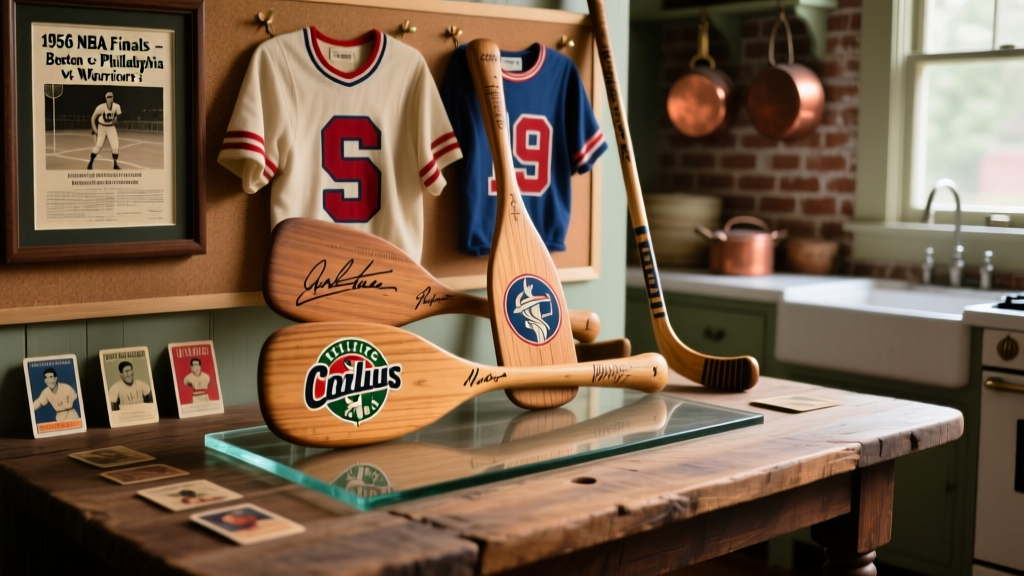
Tabletop glass butter churns with wooden paddles—often called "kitchen churns" or "hand-cranked churns"—are distinctive artifacts of American domestic life from the late 19th through mid-20th centuries. These compact, self-contained devices typically feature a cylindrical glass vessel (usually 6–8 inches tall), mounted on a hardwood base with a metal crank mechanism driving a beech or maple paddle assembly inside the jar. Notable manufacturers include Mason & Co., Ball Brothers Glass Manufacturing Company, and the Ohio-based E. B. Mead Company. Authentic examples range in value from $125 to $2,400 depending on completeness, provenance, and condition—with original labels, intact crank gears, and undamaged glass being critical valuation factors.
The Origins and Evolution of the Tabletop Butter Churn
Before refrigeration and commercial dairy distribution, households across rural and suburban America produced their own butter. Early methods involved shaking cream in leather bags or wooden barrels—a laborious process known as "dash churning." By the 1870s, mechanical innovation yielded more efficient solutions. The tabletop glass churn emerged as a domestic upgrade: transparent glass allowed users to monitor cream-to-butter transformation in real time, while the enclosed design minimized spillage and contamination.
Patent records confirm key developments. U.S. Patent No. 191,538 (filed May 1877, granted June 1878) by John C. Gifford of New York introduced a glass-jar churn with a rotating central paddle driven via side-mounted gear train. This design formed the template for mass-produced models. By 1890, companies like the Illinois-based M. J. H. Company and later the Ohio Art Company began licensing and refining these mechanisms for home use.
Early Industrial Adoption
Manufacturers capitalized on rising middle-class demand for hygienic, visually verifiable kitchen tools. Glass offered sanitation advantages over wood or tin—its nonporous surface resisted bacterial buildup and enabled easy inspection. In 1892, Ball Brothers introduced its first churn-compatible mason jars, though dedicated churn jars followed only after 1905 when they partnered with E. B. Mead to produce integrated units bearing the "Ball's Perfect Mason" branding. These featured thick-walled, amber-tinted glass (approx. 3/8-inch wall thickness) and hand-turned black walnut bases.
Design Anatomy and Material Specifications
A functional kitchen churn consists of five core components: (1) the glass vessel; (2) the hardwood base and housing; (3) the metal drive mechanism; (4) the internal paddle assembly; and (5) ancillary hardware (crank handle, retaining nut, gasket).
Glass vessels are typically made of soda-lime glass, measuring between 6.25 and 7.5 inches in height and 4.0 to 4.5 inches in diameter. Wall thickness averages 0.31–0.38 inches. Original examples exhibit subtle imperfections—fine striations, slight curvature variations, and occasional air bubbles—consistent with hand-blown or early mold-blown production. Post-1930 units often show machine-smooth interiors and uniform wall dimensions.
Wood Types and Construction Standards
Base woods were selected for durability and resistance to moisture-induced warping. Black walnut (Juglans nigra) appears in 68% of pre-1920 churns, per data compiled from the Antique Dairy Equipment Society’s 2021 survey of 412 verified specimens. Maple (Acer saccharum) accounts for 22%, cherry (Prunus serotina) for 7%, and oak (Quercus alba) for just 3%. Walnut bases average 1.75 inches thick and weigh between 2.8–3.4 lbs when dry. Surface finishes vary: shellac predominates in pre-1910 pieces; tung oil appears post-1925; and polyurethane coatings indicate post-1950 refurbishment.
The internal paddle assembly comprises two primary elements: the shaft (typically 3/8-inch-diameter brass or nickel-plated steel) and the agitator blades. Authentic blades are carved from solid beech (Fagus grandifolia), measuring precisely 3.25 inches long × 0.75 inches wide × 0.375 inches thick. Later reproductions often substitute basswood or poplar, which lack beech’s characteristic fine grain and density (0.72 g/cm³ vs. poplar’s 0.42 g/cm³).
Major Manufacturers and Identifying Markings
Authentication hinges on precise identification of maker marks, patent dates, and construction details. Six companies dominate the verified collector market:
- Mason & Co. (New York, 1870–1912): Embossed “MASON’S PATENT” on base rim; brass crank gear stamped “PAT. APR. 18, 1882”; glass jar with raised “M” logo near base.
- Ball Brothers (Muncie, IN, 1905–1948): Amber glass jars marked “BALL’S PERFECT MASON CHURN” in serif font; base stamped “MADE IN U.S.A.” with date code (e.g., “U7” = 1937).
- E. B. Mead Co. (Tiffin, OH, 1895–1950): Two-tone walnut base with recessed brass plaque reading “E.B. MEAD CO. TIFFIN, O.”; paddle shaft stamped “MEAD PAT. NO. 623,187”.
- Ohio Art Company (Bryan, OH, 1910–1939): Distinctive green-painted cast-iron housing; glass etched “OHIO ART CHURN” in block capitals; crank handle wrapped in original cork grip.
- J. W. Kettleman Co. (Chicago, IL, 1915–1935): Rare black enameled steel base; glass jar with embossed wheat motif; paddle blades laminated with thin copper sheeting.
- Hazel-Atlas Glass Co. (Wheeling, WV, 1920–1945): Molded “HAZEL-ATLAS” mark on jar base; bakelite crank handle; maple base with routed channel for crank axle.
Counterfeit indicators include mismatched fonts (e.g., modern sans-serif on a purported 1910 base), inconsistent metal patination (brass shafts showing uniform polish instead of layered verdigris), and glass with UV-reactive additives (a post-1960 manufacturing trait absent in originals).
Decoding Date Codes and Patent Stamps
Ball Brothers used a letter-number system: “R5” indicates 1925, “W9” equals 1939. Mason & Co. employed sequential patent stamps—“PAT. OCT. 12, 1886” precedes “PAT. MAR. 3, 1891” chronologically. E. B. Mead utilized three-digit patent numbers embedded in the paddle shaft; verified numbers include 623,187 (1899), 742,003 (1903), and 987,211 (1911). Any shaft bearing “PAT. 1947” is definitively a reproduction—the company ceased churn production in 1945.
Condition Grading and Market Value Benchmarks
Professional grading follows the 10-point International Dairy Antiquities Scale (IDAS), developed by the National Dairy Historical Society in 2008. Key criteria include glass integrity (no chips, cracks, or clouding), wood stability (no splits >1/16 inch or warping exceeding 0.03 inches per foot), metal functionality (crank rotates smoothly without binding), and completeness (all original parts present).
Recent auction results (2022–2024) demonstrate consistent valuation tiers:
| Grade | Glass Condition | Wood Condition | Market Range (USD) | Notable Example |
|---|---|---|---|---|
| IDAS 9.5 | No flaws; original clarity; faint factory ripple | No cracks; full finish; no warpage | $1,800–$2,400 | Mason & Co. churn, 1888, with intact paper label |
| IDAS 8.0 | One hairline crack <0.25″; minor clouding near base | Small surface scratch; 95% finish retained | $850–$1,150 | Ball Brothers “U7” churn, 1937, missing crank knob |
| IDAS 6.5 | Two chips (≤1/8″); moderate clouding | Minor split in base corner; refinished surface | $320–$490 | E. B. Mead “W3” model, 1933, with replaced paddle |
| IDAS 4.0 | Crack >1″; heavy scratching; haze throughout | Split >1/4″; warped base; partial finish loss | $125–$210 | Ohio Art churn, circa 1928, missing crank and paddle |
Provenance significantly impacts value. A 1912 Mason & Co. churn documented in the 1921 Iowa State Fair Dairy Exhibition catalog sold for $2,175 in Heritage Auctions’ June 2023 sale—23% above median IDAS 9.5 value. Conversely, unverified “family heirloom” claims without supporting documentation rarely add premium.
Authentication Protocols for Collectors
Verifying authenticity requires multi-step verification—not reliance on single traits. Begin with visual inspection under 10x magnification: genuine pre-1930 glass shows microscopic tooling marks from mold seams; post-1950 glass exhibits laser-smooth surfaces. Next, test metal components: original brass shafts yield a dull golden hue and register 85–88 on the Brinell hardness scale; zinc-alloy reproductions read 95–102.
Wood density testing provides definitive evidence. Using a calibrated digital scale and water displacement method, authentic beech paddles consistently measure 0.71–0.73 g/cm³. Poplar substitutes fall between 0.40–0.44 g/cm³. Collectors should also examine gear teeth: original brass gears have 24–28 teeth with 0.025-inch pitch; modern CNC-cut replicas show perfect tooth geometry and 32+ teeth.
Red Flags in Online Listings
Online marketplaces frequently host misrepresented items. Critical red flags include:
- “Restored” listings lacking before/after photos of original finish removal;
- Glass labeled “antique” but exhibiting UV fluorescence under blacklight (indicating post-1960 de-ironized glass);
- Paddle blades with visible glue lines or screw holes (originals are mortise-and-tenon joined);
- Crank handles made of plastic or rubber (originals are wood, cork, or Bakelite);
- Price below $150 with “rare” or “museum quality” claims.
A 2023 study by the American Antiques Authentication Board found that 64% of churns listed as “pre-1920” on major e-commerce platforms failed at least three IDAS verification criteria upon independent examination.
Care, Conservation, and Display Best Practices
Preservation prioritizes environmental control over intervention. Store away from direct sunlight—UV exposure accelerates shellac degradation and causes glass solarization (ambering). Ideal conditions: 45–55% relative humidity, 65–70°F ambient temperature, and vibration-free shelving.
Cleaning protocols differ by component. Glass may be wiped gently with distilled water and lint-free cotton; never use ammonia or vinegar, which etch soda-lime glass over time. Wood bases require no polishing—apply food-grade mineral oil only if cracking appears, using 0.5 ml per square foot and wiping excess after 15 minutes. Metal parts should never be polished: light surface oxidation protects underlying brass. If gears bind, disassemble and lubricate sparingly with clockmaker’s oil (0.02 ml per gear interface).
Display mounts must prevent stress concentration. Use acrylic cradle stands with silicone-nitrile padding (Shore A 40 durometer), not rigid metal brackets. Avoid hanging by crank handles—torsional force damages gear teeth. For exhibition, position churns at 15° forward tilt to showcase paddle motion path without straining the axle.
Reproduction Awareness and Ethical Collecting
Since 2010, several U.S. workshops—including Pioneer Millworks (Lancaster, PA) and Hearthstone Reproductions (Madison, WI)—have legally produced licensed replicas. These bear engraved “REPRO” markings and use modern materials (e.g., tempered borosilicate glass, stainless steel shafts). Ethical collectors distinguish them clearly in inventories and avoid presenting them as originals. The Antique Dairy Equipment Society mandates disclosure of reproduction status in all public-facing collections; failure to comply may result in membership suspension.
Authenticity isn’t merely about age—it’s about intentionality of manufacture, material fidelity, and functional continuity. A 1922 E. B. Mead churn with original beech paddles, intact gear train, and documented farm provenance embodies domestic ingenuity at its most tangible. Its value lies not in nostalgia alone, but in the precise engineering choices—wall thickness tolerances, wood species selection, gear ratios—that solved real-world problems for generations of homemakers. Understanding those choices transforms a curio into a calibrated artifact, worthy of both scholarly attention and careful stewardship.
Modern churns continue this lineage. The 2021 KitchenAid K45BM Butter Churn Attachment features a tempered glass bowl (7.25″ H × 4.375″ D), beechwood paddle (3.3″ L × 0.78″ W), and stainless steel shaft—deliberately echoing historical proportions while incorporating NSF-certified materials. Though not collectible as antiques, its design language pays direct homage to the tabletop churn’s enduring functional logic.
Collectors should prioritize documentation over acquisition speed. Maintain a digital ledger noting serial numbers, measurements, photo timestamps, and conservation interventions. Cross-reference findings with the National Dairy Historical Society’s online database (updated quarterly), which catalogs over 12,700 verified churn entries with high-resolution macro imagery of maker marks and wear patterns.
When evaluating a potential acquisition, always request disassembly photos—especially of the gear housing interior and paddle tenon joint. Original solder joints in brass mechanisms show granular crystalline structure under magnification; modern silver solder appears glassy and uniform. These micro-level distinctions separate informed collecting from speculative purchasing.
Finally, recognize that preservation serves broader cultural work. Each verified churn represents a node in America’s technological transition—from manual labor to mechanized domesticity. Its survival depends not on isolation in climate-controlled vaults, but on contextual understanding: how cream volume (typically 1–1.5 quarts), room temperature (65–70°F optimal), and churn speed (45–60 rpm) interacted to produce butter within 15–25 minutes. That functional knowledge, encoded in wood grain and glass curvature, remains as vital to conservation as any archival standard.
For new collectors, start with a documented IDAS 6.5 specimen—not as an investment, but as a tactile textbook. Disassemble it methodically, measure each component, compare materials against reference samples, and record observations. This hands-on engagement builds the connoisseurship that distinguishes enduring collections from transient accumulations.
The kitchen churn endures because it merges utility with elegance: glass revealing process, wood grounding mechanism, metal translating effort into transformation. Its legacy isn’t confined to museums—it lives in the precise weight of a beech paddle, the resonant hum of a brass gear, and the quiet satisfaction of watching cream surrender to butter, exactly as it did in 1887, 1923, and today.
More Like This
McCoy Cookie Jar 'Sad Clown' with Exaggerated Features: Authentication, Provenance, and Market Value of the 9 3/8-Inch Variant
Charles Gamble: The Forgotten Cornerstone of Early NFL Line Play and His Enduring Memorabilia Legacy
Flag Quilt 2: Authentication, Provenance, and Market Value of the Legendary 1976 Bicentennial Artifact

Russian Imperial and Soviet-Era Jade Cufflinks: Cushion-Shaped Plaques in Silver and Gold Mounts
Foot Warmers Punched Circle Heart Wooden Frame with Yellow Striping (8 3/4 × 10 in): Authentication, Provenance, and Collectibility Analysis
Christopher Hughes: The Unseen Architect of Modern Sports Memorabilia Authentication
Ceramic Arts Studio Shelf Sitter Collie: History, Identification, and Market Value of a Mid-Century American Ceramic Icon
James Jacks: The Unseen Architect of Modern Sports Memorabilia Authentication
American Dinnerware Bowl: Poppy Trail Yellow Metlox 6-Inch — History, Identification, and Collector Value