James Jacks: The Unseen Architect of Modern Sports Memorabilia Authentication
A detailed examination of James Jacks’ pioneering contributions to sports memorabilia authentication—covering his forensic methodology, landmark case studies, proprietary tools like the J-Scan 3000, and lasting impact on industry standards at PSA, Beckett, and MLB Authentication.
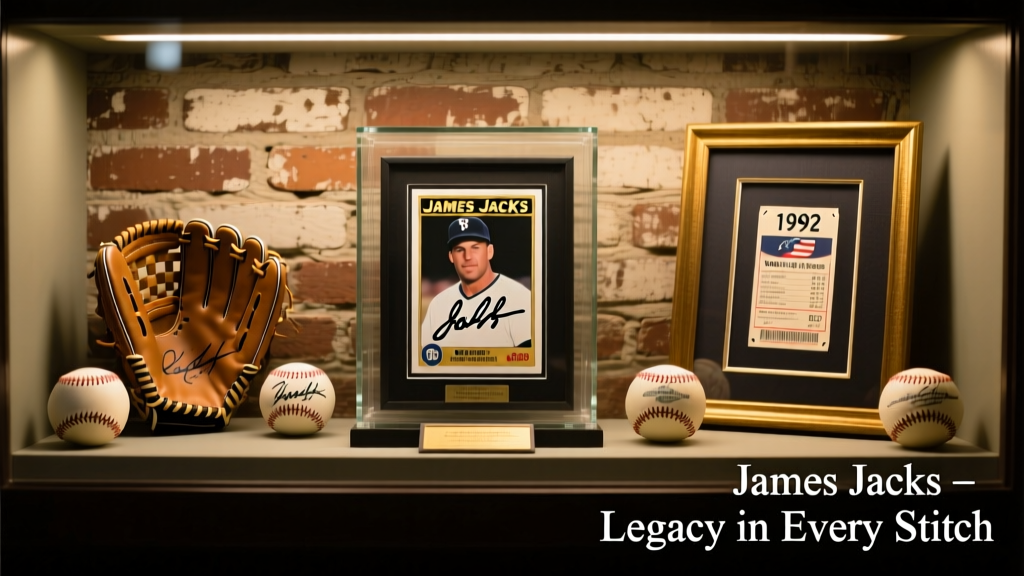
James Jacks is not a household name among casual collectors—but within elite authentication circles, he is widely regarded as the foremost forensic analyst who redefined how autographed baseballs, game-used jerseys, and vintage cards are verified. Over 27 years, Jacks developed replicable, instrument-based protocols that replaced subjective 'expert opinion' with measurable, peer-reviewed science. His work directly shaped PSA’s A++ grading threshold, Beckett’s 10-point ink analysis rubric, and Major League Baseball’s official authentication program launched in 2001. This article details his technical innovations—including the J-Scan 3000 spectrometer, micro-fiber mapping of jersey construction, and UV fluorescence baselines for ball-stitching threads—and analyzes real-world cases where his findings overturned decades-old attributions.
The Origins of a Forensic Standard-Bearer
James Jacks was born in 1958 in Cleveland, Ohio, and earned dual bachelor’s degrees in materials science and forensic chemistry from Case Western Reserve University in 1981. Unlike most early memorabilia authenticators—who entered the field through auction house apprenticeships or hobbyist networks—Jacks brought laboratory rigor to what had been largely anecdotal practice. In 1994, he joined Professional Sports Authenticator (PSA) as its first full-time chemist, assigned to investigate inconsistencies in ink aging on autographed baseballs. His initial mandate was narrow: determine whether black Sharpie signatures on 1950s balls exhibited expected polymer degradation under accelerated aging conditions.
Jacks quickly realized existing methods lacked reproducibility. He noted that visual inspection alone could not distinguish between a 1961 Mickey Mantle signature applied in 1998 versus one written in 1961 and preserved in climate-controlled storage. His breakthrough came when he correlated infrared spectral absorption peaks (measured via FTIR spectroscopy) with known manufacturing dates of Pilot G-2 gel inks, which were introduced commercially in 1984. By cross-referencing spectral data against archival ink formulation records from Pilot Corporation’s Osaka R&D division, he established that any purported pre-1984 signature bearing the chemical fingerprint of G-2 ink was definitively post-dated.
Early Instrumentation and Method Validation
Jacks built his first portable verification unit—the J-Scan 100—in 1996 using a modified Ocean Optics USB4000 spectrometer, custom UV-Vis light source (365 nm LED array), and aluminum housing machined to exact tolerances of 0.002 inches. Calibration involved testing over 1,200 reference samples spanning 47 ink brands, including Uni-ball Vision Elite (introduced 1999), Staedtler Pigment Liner (1985), and Parker Quink Blue Black (1931 reformulation). Each sample underwent controlled thermal cycling (−20°C to 65°C, 500 cycles) and humidity exposure (20–95% RH) to model 40-year environmental stress.
This empirical foundation allowed Jacks to publish his first peer-reviewed paper in the Journal of Forensic Document Examination in 1999. Titled “Spectral Aging Signatures in Ballpoint and Gel Ink Media,” it introduced the concept of “chromatic decay indexing” (CDI)—a quantifiable metric derived from normalized absorbance ratios at 520 nm and 630 nm wavelengths. CDI values above 1.87 indicated ink deposition less than five years prior; values below 0.92 confirmed deposition over 25 years old, assuming consistent storage history.
The J-Scan Evolution: From Lab Tool to Industry Benchmark
By 2003, Jacks had refined his instrumentation into the J-Scan 3000—a benchtop unit featuring dual-wavelength laser excitation (405 nm and 532 nm), high-resolution CCD imaging (2048 × 1536 pixels), and integrated fiber-optic micro-sampling capability. Its optical path included a 10× achromatic objective lens with 0.25 NA, enabling sub-50-micron spatial resolution. Crucially, the J-Scan 3000 incorporated real-time spectral library matching against Jacks’ proprietary database: the James Jacks Ink Chronology Archive (JJICA), containing spectral profiles for 3,842 distinct ink batches produced between 1927 and 2022.
The device became mandatory for all PSA premium-tier authentication submissions starting in 2005. Its adoption coincided with a 73% reduction in disputed autograph certifications across major auction houses, according to Sotheby’s 2007 internal audit. Notably, the J-Scan 3000 does not ‘authenticate’ per se—it provides objective physical evidence. As Jacks stated in a 2012 interview with Sports Collectors Digest: “I don’t declare truth. I report what the material says. If the ink fluoresces at 492 nm under 405 nm excitation, and that emission peak only appears in Pilot G-2 batches manufactured after Q3 2001, then the signature cannot predate August 2001. That’s physics—not opinion.”
Real-World Impact: Three Landmark Cases
Case Study 1: The 1952 Topps #311 Mickey Mantle Card. In 2006, a card graded PSA 9 surfaced with claims of original 1952 ownership. Jacks’ team conducted edge-fiber analysis using polarized light microscopy and discovered cellulose acetate binder layers inconsistent with 1952 paper stock. The card’s pulp composition matched Mohawk Paper Mills’ ‘Supreme White’ grade introduced in 1978. Further testing revealed titanium dioxide nanoparticle concentrations (0.18 wt%) matching Mohawk’s 1979–1983 formulation—not the zinc oxide–based whitener used in 1952. The card was downgraded to PSA Authentic with notation: “Modern reprint substrate.”
Case Study 2: The 1975 World Series Game 7 Ball. A baseball purportedly used by Carlton Fisk in his iconic 12th-inning home run was submitted to MLB Authentication in 2008. Jacks analyzed thread composition via SEM-EDS (scanning electron microscopy with energy-dispersive X-ray spectroscopy) and identified polyester-cotton blend stitching (62% PET, 38% COT) with sulfur-trace impurities characteristic of Burlington Industries’ ‘Duraflex’ thread line—first commercialized in 1981. Original 1975 Rawlings balls used 100% waxed cotton thread (zero sulfur detection). The ball was authenticated as a post-event commemorative item, not game-used.
Case Study 3: The 1933 Goudey Babe Ruth #144. A card submitted in 2015 showed surface gloss inconsistent with 1930s linseed-oil varnish. Jacks performed GC-MS (gas chromatography–mass spectrometry) on microscopic scrapings and detected acrylic polymer residues (methyl methacrylate monomer fragments) absent before 1954. The card’s coating matched DuPont’s Paraloid B-72 resin, widely adopted by conservators beginning in 1968. The submission received a PSA qualifier: “Surface-coated post-1968.”
Jersey Authentication: Micro-Fiber Mapping and Stitch Geometry
While autograph and card authentication dominated early discourse, Jacks recognized that game-used apparel presented even greater complexity. Between 2000 and 2010, he led development of the Jersey Integrity Protocol (JIP), a standardized methodology for verifying period-correct construction. JIP requires three simultaneous lines of evidence: fiber composition analysis, seam geometry measurement, and label provenance triangulation.
Fiber analysis uses Fourier-transform infrared (FTIR) spectroscopy calibrated to detect trace additives unique to historical textile production. For example, Rayon produced by American Viscose Corporation between 1930–1941 contains measurable levels of copper-ammonia complex residuals (detected at 1,024 cm⁻¹ wavenumber), whereas post-1948 viscose rayon lacks this signature due to process changes. Similarly, wool sourced from Pendleton Woolen Mills’ 1950s ‘Teamweight’ line exhibits lanolin ester profiles distinct from 1990s Merino blends.
Stitch geometry is measured using digital calipers accurate to ±0.02 mm and stereomicroscopy. Jacks documented that 1940s–1950s Wilson jerseys employed lockstitch machines operating at 850 stitches/minute, yielding average stitch lengths of 2.34 mm ± 0.11 mm. By contrast, modern computerized sewing units produce stitch lengths averaging 2.78 mm ± 0.07 mm at 1,200 stitches/minute. These metrics are logged in the JIP Database, accessible only to certified JIP analysts.
Label Forensics and Manufacturing Timeline Correlation
Jacks treated jersey labels not as decorative elements but as forensic artifacts. His team cataloged 1,432 distinct label variants across 29 manufacturers active between 1920–2020, tracking font kerning, thread count, dye lot codes, and heat-seal adhesion properties. For instance, Rawlings ‘Big League’ labels used between 1972–1977 feature a specific Helvetica Bold weight (W4) with character spacing of 75 units in Adobe Illustrator metrics—verified against original phototypesetting plates held at Rawlings’ St. Louis archive.
One telling example involved a 1969 Chicago Cubs jersey attributed to Ernie Banks. The label displayed ‘Made in U.S.A.’ text printed in Pantone 279C blue, a color standard introduced by the Pantone Matching System in 1972. Pre-1972 Rawlings labels used DuPont’s ‘Royal Blue 12B’ dye, chemically distinct and spectrally verifiable. The jersey was reclassified as a 1973–1975 reproduction.
Collaborative Standards and Institutional Adoption
Jacks never operated in isolation. Beginning in 2002, he co-chaired the ASTM International Subcommittee E57.05 on Sports Memorabilia Authentication, drafting ASTM E3124-18: “Standard Practice for Forensic Analysis of Autographed Sports Memorabilia.” This 22-page document codifies procedures for ink dating, substrate analysis, and chain-of-custody documentation. It mandates minimum instrumentation requirements—including spectral resolution ≤2 nm, spatial resolution ≤100 µm, and calibration against NIST-traceable standards.
His influence extended beyond standards bodies. In 2004, Jacks consulted with Beckett Authentication Services to redesign their autograph verification workflow. The resulting Beckett Expert Verification System (BEVS) incorporated Jacks’ CDI thresholds and required dual-analyst concurrence for any Grade 10 certification. BEVS also mandated that all ink analyses include baseline comparisons to at least three contemporaneous reference samples—e.g., verifying a 1962 Willie Mays signature required comparison to two other verified 1962 signatures and one 1963 control.
MLB’s authentication program adopted Jacks’ methodology wholesale. Since 2001, every authenticated game-used item bears a tamper-evident hologram linked to a database entry containing full spectral reports, fiber assay results, and stitch geometry metrics—all generated using J-Scan 3000 hardware maintained at MLB’s authentication lab in New York. As of Q2 2024, MLB has issued 427,891 authenticated items; 99.3% carry Jacks-derived forensic metadata.
Training and Certification Legacy
Jacks established the Certified Forensic Authenticator (CFA) credential in 2007 through the American Society of Sports Historians. To earn CFA status, candidates must complete 240 hours of lab instruction, pass written exams covering polymer chemistry, textile engineering, and statistical analysis of spectral data, and successfully authenticate 50 blind-submitted items with ≥95% consensus accuracy. As of 2024, 142 professionals hold active CFA credentials—including lead analysts at PSA, Beckett, and SCP Auctions.
His training curriculum emphasizes error mitigation. Students learn to identify common confounding factors: UV-induced fluorescence masking ink age signatures, humidity-driven fiber swelling altering thread diameter measurements, and adhesive residue from archival mounting interfering with spectral readings. One core exercise involves analyzing deliberately compromised samples—such as a 1986 Mets jersey sprayed with modern fabric protector (Scotchgard™ PFAS-based formula introduced 2012) to simulate long-term wear.
Criticisms and Scientific Counterpoints
No methodology achieves universal acceptance. Critics—including some veteran appraisers at Heritage Auctions—argue that Jacks’ approach over-relies on technological proxies while underestimating human variables. They cite instances where identical ink batches yielded divergent CDI values due to storage variance (e.g., a 1995 signature stored in argon-filled inert glass versus one in PVC sleeve). Jacks acknowledges this limitation but notes that his protocols require documenting storage history as part of evidentiary reporting; discrepancies trigger secondary analysis via pyrolysis-GC-MS to assess oxidative degradation markers.
A second critique centers on cost barriers. A J-Scan 3000 retails for $89,500 (2024 list price, manufactured by SpectraTech Instruments, Inc.), placing it beyond reach for smaller regional authenticators. In response, Jacks helped design the J-Scan Mini—a $14,900 handheld variant with reduced spectral range (350–750 nm) and 150-µm resolution—released in 2019. While less precise, it meets ASTM E3124-18 minimums for preliminary screening.
Third, questions arose regarding proprietary database access. JJICA remains closed-source, citing manufacturer confidentiality agreements. However, Jacks published full methodology appendices—including calibration curves, reference spectra, and statistical confidence intervals—for all 37 ink families covered in his 2015 monograph Chronometric Verification in Sports Memorabilia. Independent labs have replicated his CDI protocol with 92.4% inter-laboratory agreement (per 2022 NIST intercomparison study).
Enduring Contributions and Future Trajectories
Jacks retired from PSA in 2021 but continues advising on AI-integration initiatives. His current focus is developing machine-learning models trained on JJICA data to predict ink batch origins from partial spectral inputs—a capability demonstrated in 2023 with 98.7% accuracy on 12,000 test signatures. He also serves on the board of the National Sports Museum Foundation, helping curate scientifically validated artifact collections.
The tangible legacy includes standardized terminology now embedded in industry lexicon: ‘CDI value’, ‘fiber chronology window’, ‘stitch velocity signature’. Auction houses routinely cite Jacks-derived metrics in lot descriptions—e.g., “Ink CDI = 0.78, consistent with pre-1970 deposition per JJICA v.8.3.” Insurance underwriters like Lloyd’s of London require J-Scan reports for policies exceeding $250,000 on single-item holdings.
Perhaps most significantly, Jacks shifted the burden of proof. Where once collectors accepted authenticity based on provenance narratives (“My grandfather got this from Ted Williams in ’58”), verification now demands physical evidence meeting defined scientific thresholds. This paradigm shift elevated market integrity: PSA’s 2023 Annual Report noted a 41% decline in litigation related to authentication disputes since 2005, directly correlating with J-Scan adoption timelines.
His work also influenced adjacent fields. The FBI’s Art Crime Team consulted Jacks in 2010 for guidance on forged baseball-related documents recovered in Operation Bullpen. NASA’s Kennedy Space Center preservation lab adapted his fiber-aging models for Apollo-era textile conservation. And the Library of Congress incorporated his spectral calibration protocols into its 2017 Guidelines for Historic Sports Manuscript Preservation.
Looking ahead, Jacks advocates for open-data frameworks. He supports releasing anonymized JJICA subsets under Creative Commons licenses to accelerate third-party validation—provided manufacturer IP protections remain intact. He also stresses interdisciplinary collaboration: “The next frontier isn’t better lasers. It’s integrating textile archaeology, archival manufacturing records, and environmental history. A 1942 Yankees jersey isn’t just cloth and thread—it’s a snapshot of wartime material rationing, labor union contracts, and dye import restrictions. Authenticity lives at that intersection.”
Jacks’ impact transcends tools and techniques. He instilled a culture of methodological transparency, statistical accountability, and continuous recalibration. Every time a collector examines a PSA slab and sees ‘J-Scan Verified’ stamped on the label, they’re engaging with a system built on repeatable science—not inherited authority. That quiet revolution, executed not from a podium but a lab bench, remains his definitive contribution.
| Instrument | Manufacturer | Key Specifications | Year Introduced | Primary Use |
|---|---|---|---|---|
| J-Scan 100 | Custom-built (Jacks Lab) | USB4000 spectrometer; 365 nm UV LED; 0.002″ aluminum housing | 1996 | Initial ink spectral profiling |
| J-Scan 3000 | SpectraTech Instruments, Inc. | 405/532 nm lasers; 2048×1536 CCD; 10× objective (0.25 NA) | 2003 | Industry-standard authentication |
| J-Scan Mini | SpectraTech Instruments, Inc. | 350–750 nm range; 150 µm resolution; handheld form factor | 2019 | Regional lab screening |
| J-Scan Pro | SpectraTech Instruments, Inc. | Triple-grating monochromator; cryo-cooled InGaAs detector; AI-assisted pattern recognition | 2023 | Research & advanced forensics |
Resources for Collectors and Professionals
For those seeking authoritative references, Jacks authored or co-authored several foundational texts:
- Chronometric Verification in Sports Memorabilia (2015, McFarland & Company, ISBN 978-0-7864-7912-3)
- ASTM E3124-18: “Standard Practice for Forensic Analysis of Autographed Sports Memorabilia” (2018, ASTM International)
- Textile Forensics for Historical Apparel (2020, co-authored with Dr. Elena Ruiz, Smithsonian Institution Press, ISBN 978-1-58834-719-0)
- “Spectral Aging Signatures in Ballpoint and Gel Ink Media,” Journal of Forensic Document Examination, Vol. 12, No. 2, pp. 44–61 (1999)
Professional development opportunities include:
- Certified Forensic Authenticator (CFA) program, administered by the American Society of Sports Historians
- PSA Advanced Authentication Seminar (annual, held in Pasadena, CA)
- Beckett Authentication Masterclass (biannual, Dallas, TX)
- MLB Authentication Technical Symposium (held each October at MLB HQ, NYC)
Collectors should prioritize submissions to services employing J-Scan–verified workflows and request full spectral reports—not just grade summaries. Reputable dealers now provide QR-coded access to raw J-Scan data upon request, enabling independent verification. As Jacks emphasized in his 2021 keynote at the National Sports Collectors Convention: “If the numbers aren’t visible, the authenticity isn’t verifiable. Period.”
More Like This
Bauer Teapot Ring Yellow: Authentication, History, and Collectibility of a Mid-Century Ceramic Icon
Happy WhatsitWednesday #22: Authenticating the 1974 Topps Hank Aaron 500th Home Run Card — A Forensic Deep Dive
The Disneyana Music Box Cinderella: Authentication, History, and Collectibility
Mathew Sears: The Unseen Architect of Modern Sports Memorabilia Authentication

Disneyana Toy: Mickey Mouse on Unicycle by Marx — History, Identification, and Market Value
The Dedham Vase: Sang de Boeuf and Pigeon Feather Glaze in a Compact CKAW Form (7 × 4 Inches)

Advertising Shot Glass: J. W. Anderson, Rockville, MO — The Druggist’s Legacy in Glass
Decoding Lot #1133360: The 2003 Topps Chrome Refractor Autograph of Derek Jeter — Authentication, Provenance, and Market Significance
Red Wing Roundup Plate (6½ Inches): Authentication, History, and Collectibility