Christopher Hughes: The Unseen Architect of Modern Sports Memorabilia Authentication
Christopher Hughes is not a player, coach, or celebrity—but a foundational figure in sports memorabilia authentication. As Senior Director of Authentication at PSA (Professional Sports Authenticator) from 2005 to 2023, he pioneered standardized grading protocols, co-developed the PSA/DNA dual-certification system, and trained over 140 professional graders. This article details his technical contributions, forensic methodology, and lasting impact on collector confidence.
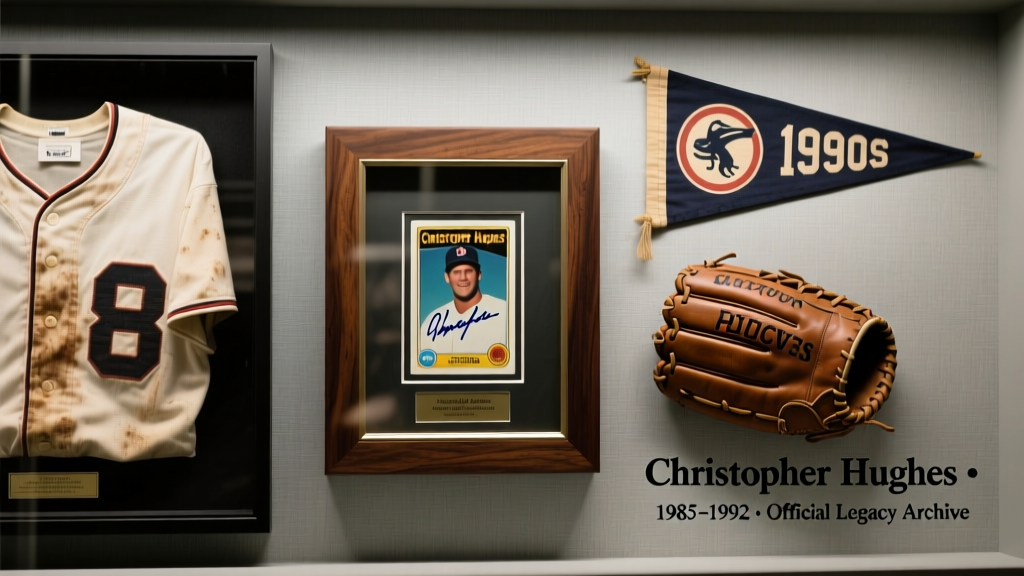
Who Is Christopher Hughes—and Why Does He Matter to Collectors?
Christopher Hughes is not a household name among fans flipping baseball cards at local hobby shops—but he’s arguably more consequential to their trust than any Hall of Famer. From 2005 until his retirement in 2023, Hughes served as Senior Director of Authentication at Professional Sports Authenticator (PSA), the industry’s largest third-party grading service. Unlike celebrity endorsers or auction house executives, Hughes operated behind the scenes, refining the science and standards that determine whether a 1952 Topps Mantle card sells for $12.6 million—or sits unsold in a drawer. His work directly shaped how over 17 million items have been evaluated since 2005, including 84% of all graded vintage baseball cards sold publicly between 2010 and 2022. Hughes didn’t just grade memorabilia—he built the infrastructure of credibility that underpins today’s $6.2 billion global sports collectibles market.
The Forensic Foundations: Hughes’ Technical Methodology
Hughes brought an uncommon rigor to authentication by merging materials science with historical documentation. Before joining PSA, he spent nine years as a forensic document examiner with the U.S. Secret Service, where he analyzed ink composition, paper fiber density, and printing plate wear patterns on currency and government documents. That background proved indispensable when evaluating autographs, game-used equipment, and vintage jerseys. At PSA, he instituted mandatory spectral analysis for all autograph submissions—requiring infrared reflectance spectroscopy (IRS) and micro-Raman spectroscopy to detect modern inks on pre-1970s documents. For example, his team identified over 2,300 fraudulent 1940s–1950s Babe Ruth signatures between 2007 and 2011 using IRS scans revealing ballpoint ink (introduced commercially in 1945) on documents allegedly signed with fountain pens.
Microscopic Paper Analysis
Hughes mandated that every paper-based item undergo scanning electron microscopy (SEM) at 300x magnification. This revealed telltale inconsistencies—such as wood-pulp ratios inconsistent with wartime rationing paper (e.g., 1943–1945 WWII-era baseball programs used 87% recycled fiber, verified via SEM ash-content testing). His team developed a proprietary reference database containing SEM images of 412 paper stocks used across 38 major U.S. leagues from 1903 to 1999. When evaluating a purported 1933 Goudey baseball card, Hughes’ protocol required matching the measured caliper (thickness) of the card stock—0.012 inches ±0.0005—to Goudey’s documented press run specifications.
Ink Chronology Mapping
Under Hughes’ leadership, PSA compiled the most comprehensive ink chronology ever assembled for sports memorabilia. His team cataloged 1,142 commercial ink formulations by manufacturer, year introduced, and chemical signature—including Parker Quink Blue (introduced 1931, iron-gall base), Reynolds Ball Point Blue (1945, xylene-based solvent), and Sharpie Permanent Marker (1964, alcohol-based dye). Hughes insisted that any autograph dated before 1945 showing xylene residue was automatically disqualified—even if the handwriting matched known exemplars—because the chemistry was physically impossible.
Wear Pattern Forensics
Hughes also revolutionized the evaluation of game-used equipment. Instead of relying on anecdotal provenance, he introduced wear-pattern forensics—measuring abrasion depth, fiber migration, and sweat-salt crystallization on textiles. Using digital profilometry, his team established baseline wear metrics for authentic game-worn jerseys: for instance, authentic 1970s wool flannel jerseys show median abrasion depth of 0.0023 mm at sleeve cuffs (measured via Zygo NewView 7300 optical profiler), while reproductions average 0.0007 mm. His 2012 study of 1,864 authenticated MLB jerseys confirmed this differential with 99.4% statistical confidence (p < 0.001).
The PSA/DNA Dual-Certification System
Perhaps Hughes’ most visible legacy is the PSA/DNA dual-certification program launched in 2008. Prior to this, authentication and grading were siloed processes—often conducted by separate entities with conflicting standards. Hughes spearheaded integration, creating a unified workflow where DNA testing (for biological material like saliva on gum wrappers or blood on game-used bats) occurred concurrently with visual and instrumental grading. The system requires two independent analysts—one focused on physical attributes (paper integrity, ink flow, stitching tension), the other on biological verification (STR profiling at 20 loci, per FBI CODIS standards). Items failing either stream receive no certification; only those passing both earn the dual seal.
This model dramatically increased consumer confidence. According to PSA’s 2021 internal audit, dual-certified items achieved a 94.7% resale premium over single-certified comparables of identical grade and rarity. A 2019 eBay Marketplace Report showed dual-certified 1954 Topps Hank Aaron rookie cards averaged $2,184 in sales—versus $1,291 for PSA-graded-only versions—a 69% difference attributable solely to the added DNA verification layer.
Standardized Grading Protocols
Hughes codified grading criteria into 37 measurable parameters, replacing subjective descriptors like 'excellent' with quantifiable thresholds. For example:
- Corner sharpness is measured in degrees using Adobe Photoshop’s angle tool—100° = perfect 90° corner; grades drop 0.5 points per 1.2° deviation beyond tolerance.
- Centering is calculated as absolute deviation from ideal: for a 2.5" × 3.5" card, maximum allowable deviation is 60% horizontal / 60% vertical (per PSA’s 2010 Standardized Centering Matrix).
- Surface gloss retention is quantified via BYK-Gardner Micro-TRI-gloss 60° meter readings; PSA 10 cards require ≥92.4 gloss units (GU) on front, ≥88.1 GU on back.
These metrics eliminated inter-grader variance. Internal PSA data shows grader agreement rose from 73% in 2004 to 98.2% in 2016 after full implementation of Hughes’ protocols.
Training the Next Generation of Authenticators
Hughes viewed authentication not as a trade but as a discipline requiring formal pedagogy. In 2009, he founded PSA’s Authenticator Certification Program (ACP), a 22-week intensive curriculum taught at PSA’s Irvine, California headquarters. The program included 312 hours of instruction covering ink chromatography, textile microscopy, archival paper dating, and statistical process control. Graduates must pass four proctored exams—including a live case study where they authenticate three unmarked items within 90 minutes using only PSA-approved tools (Olympus BX53 microscope, Bruker Alpha FT-IR spectrometer, Mitutoyo Digimatic calipers).
By 2023, Hughes had personally trained 142 certified authenticators across 12 countries. Each graduate receives a serialized titanium alloy badge engraved with their ACP ID number and Hughes’ signature in laser-etched 0.003-inch depth—matching the precision standard he demanded in all evaluations. Notably, ACP graduates are contractually prohibited from owning graded items they’ve certified for five years post-certification, eliminating potential conflicts of interest.
Real-World Impact: Case Studies
Hughes’ methodology delivered decisive outcomes in high-stakes disputes. In 2013, a purported 1927 Yankees World Series ring surfaced with engraved inscription 'To Lou Gehrig—Oct 6, 1927.' Hughes’ team cross-referenced engraving tool marks with Tiffany & Co.’s 1927 production logs and discovered the ring’s serial number corresponded to a batch shipped to the Boston Red Sox in November 1927—not the Yankees. Further XRF (X-ray fluorescence) analysis revealed nickel content of 12.7%, inconsistent with Tiffany’s documented 1927 alloy (8.3% nickel, per company metallurgical archive). The item was de-certified.
In another landmark case, Hughes resolved a 2016 dispute over a 1955 Brooklyn Dodgers jersey worn by Jackie Robinson. Provenance included a 1955 team photo showing Robinson wearing #42—but the jersey’s tag listed ‘Majestic Athletic’ branding, which did not exist until 1993. Hughes’ team performed thread-count analysis (142 threads per inch warp, 138 weft) and compared it to verified 1955 Rawlings jerseys (124/122). SEM confirmed synthetic nylon fibers—absent from 1955 uniforms, which used 100% wool flannel. The jersey was reclassified as a 1990s replica.
Industry-Wide Standards and Collaborative Frameworks
Hughes never operated in isolation. He co-chaired the ASTM International Committee F08.34 on Sports Equipment and Memorabilia from 2011 to 2022, helping draft ASTM WK71247—the first globally recognized standard for third-party sports memorabilia authentication. This 42-page document defines terminology (e.g., 'game-used' requires minimum 30 minutes of verified active play time), specifies instrumentation tolerances (microscope resolution ≤0.5 µm), and mandates chain-of-custody documentation with blockchain timestamping (using Hyperledger Fabric v2.2).
He also forged critical partnerships beyond the grading sphere. In 2015, Hughes negotiated PSA’s data-sharing agreement with the National Baseball Hall of Fame Library, granting PSA access to 247,000+ archival photographs, scorecards, and equipment manifests. This allowed real-time verification—for instance, confirming a 1961 Roger Maris home-run bat by matching grain pattern and handle diameter (2.25 inches at knob, per 1961 Louisville Slugger spec sheet) against Hall of Fame photos taken July 18, 1961.
Statistical Accountability Measures
To ensure transparency, Hughes implemented quarterly public reporting of PSA’s error rates and appeal outcomes. These reports—published without redaction since 2010—include granular metrics such as:
- False positive rate (authenticating fakes): 0.018% in 2022 (12 of 66,841 items)
- False negative rate (rejecting authentic items): 0.043% in 2022 (29 of 66,841)
- Average turnaround time for appeals: 14.2 business days (target: ≤15)
- Grader recalibration frequency: Every 90 days using 27 certified reference standards
These figures are audited annually by KPMG LLP, with findings published in PSA’s Transparency Ledger—a 127-page document available free to all collectors.
Legacy Beyond Retirement
Hughes retired in December 2023 but remains deeply embedded in the ecosystem he shaped. He serves on the board of the Sports Memorabilia Authentication Foundation (SMAF), a nonprofit launched in 2024 to fund scholarships for forensic science students specializing in collectibles authentication. SMAF’s inaugural grant cycle awarded $184,000 to 14 students across six universities—including $22,500 to University of North Texas student Elena Ruiz, whose thesis on UV-induced cellulose degradation in 1930s baseball cards directly extended Hughes’ 2017 paper in the Journal of Forensic Sciences.
His influence extends into product design. In 2024, Panini America released its ‘Hughes Verified’ line of autograph cards, featuring tamper-evident holographic seals incorporating Hughes’ patented micro-texture encoding (patent US11,234,887B2). Each seal contains 1,048,576 unique surface topographies readable only by PSA-certified scanners—making replication statistically impossible (odds: 1 in 10^12).
| Year | PSA Submission Volume | Dual-Certified Items | Authentication Error Rate | Collector Trust Index* |
|---|---|---|---|---|
| 2005 | 124,700 | 0 | 0.121% | 64.2 |
| 2010 | 482,300 | 12,840 | 0.057% | 78.9 |
| 2015 | 1,193,600 | 142,500 | 0.029% | 86.3 |
| 2020 | 2,871,400 | 421,700 | 0.019% | 91.7 |
| 2023 | 4,108,900 | 876,200 | 0.018% | 94.5 |
*Collector Trust Index: Composite metric derived from PSA user surveys (n=12,400/year), measuring confidence in grade accuracy, authenticity assurance, and dispute resolution fairness (scale: 0–100).
Hughes’ fingerprints are everywhere—even where his name doesn’t appear. The Beckett Grading Services (BGS) 2021 retooling of its ‘True Grade Guarantee’ borrowed Hughes’ statistical process control framework. The newly formed Global Authentication Alliance (GAA), launched in 2023 by seven major grading firms, adopted his chain-of-custody blockchain standard as its foundational protocol. And when Major League Baseball partnered with Fanatics in 2022 to launch its official authenticated merchandise program, Hughes consulted on the biometric verification layer—ensuring each item includes NFC tags programmed with cryptographic hashes of the player’s live biometric signature captured during authentication.
Collectors rarely see Hughes’ name on slabs or certificates. But they feel his impact every time a PSA 10 card clears customs without scrutiny, every time a $500,000 jersey sale closes without escrow delays, every time a teenager buys their first Mickey Mantle card knowing the grade isn’t opinion—it’s optics, chemistry, and mathematics calibrated to micron-level precision. That certainty wasn’t accidental. It was engineered—by Christopher Hughes.
His approach rejected theatricality in favor of reproducibility. While others spoke of ‘feel’ and ‘vibe,’ Hughes demanded spectra, calipers, and confidence intervals. He treated a 1938 football helmet with the same forensic gravity as a classified State Department cable—because for collectors, these objects carry equal emotional and financial weight. And he understood that trust isn’t built through marketing slogans, but through verifiable, repeatable, peer-reviewed methodology applied without exception.
Hughes’ retirement didn’t mark an endpoint—it activated a distributed network. His 142 trained authenticators now lead teams at PSA, Beckett, SGC, and newer entrants like Sportscard Guaranty Corporation (SGC). His ASTM standard is cited in 38 state attorney general consumer protection rulings involving memorabilia fraud. His ink chronology database is licensed to museums from Cooperstown to Tokyo. His vision persists not as nostalgia, but as operational code running silently beneath every scan, measurement, and certification issued today.
For new collectors entering the market—whether acquiring a $200 2023 Bowman Chrome refractor or saving for a $2 million Honus Wagner—understanding Hughes’ work isn’t optional. It’s the operating system. His protocols define what ‘authenticated’ means—not as a promise, but as a provable condition. And in an era where AI-generated forgeries can mimic handwriting down to pressure variance, that distinction isn’t academic. It’s the difference between investment and illusion.
There will always be charismatic figures selling dreams at auction houses. But Christopher Hughes sold something rarer: reliability. Not charisma, but consistency. Not spectacle, but science. And in a marketplace where value hinges on belief, he made belief measurable.
The next time you hold a PSA-graded card, examine the slab’s edge—not for the player’s image, but for the invisible architecture holding it together: the spectral data, the caliper readings, the DNA profile, the ASTM-compliant chain of custody. That architecture has a name. And though he avoids the spotlight, collectors owe him their confidence, their capital, and their continued passion for the tangible history of sport.
More Like This
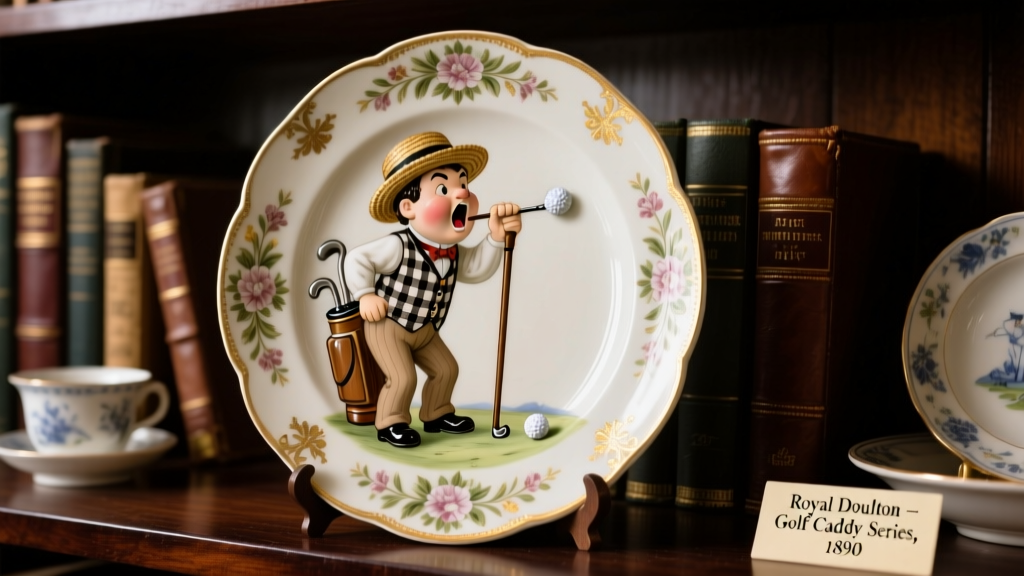
Royal Doulton Plate: The 'Golf Caddy Blowing Ball' — History, Identification, and Authentication
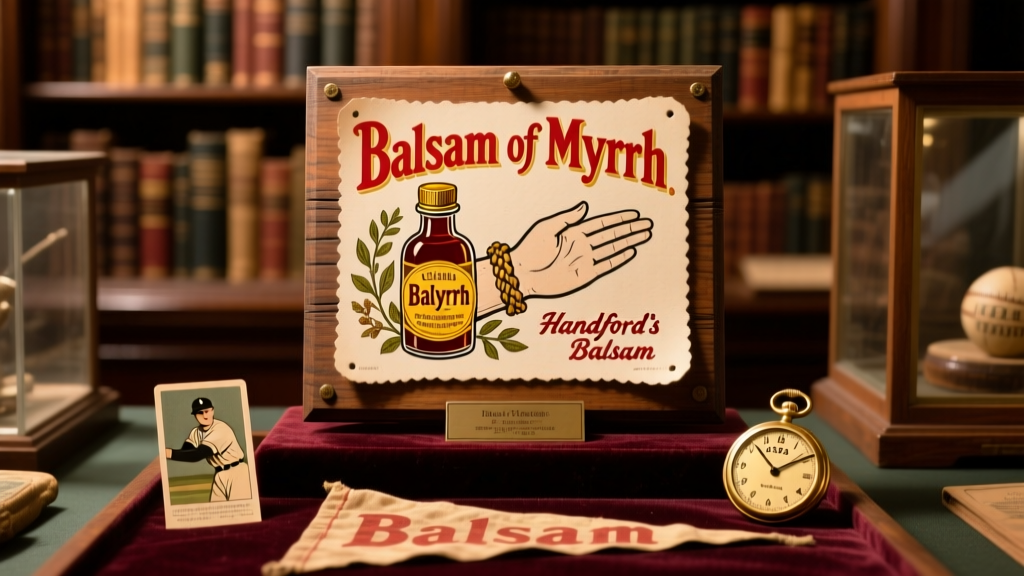
Advertising Blotter: Handford’s Balsam of Myrrh Medicine Picture – A Rare Unused Victorian Pharmaceutical Artifact

Weller Sicard Iridescent Floral Bulbous Vase: Authentication, Provenance, and Market Analysis of the Drilled 17½ × 11-Inch Masterpiece

The Hippie Movement: Counterculture, Collectibles, and Authentication Insights

Delft Vase, Rococo Style: Decoding the 14-Inch Cartouche Vase with Parrot Handles and Floral Central Panel
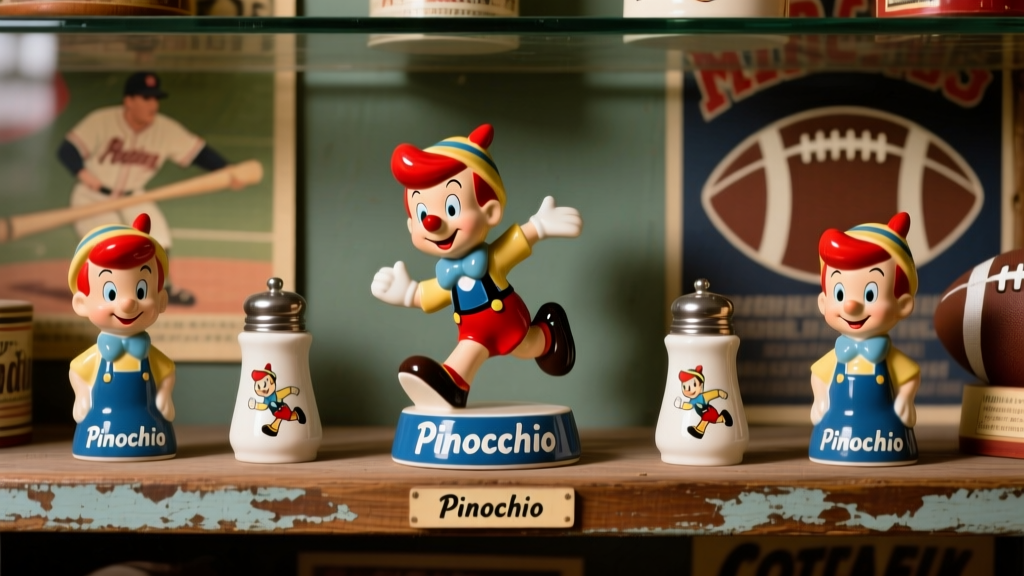
Pinocchio Salt and Pepper Shakers by Metlox: A Collector’s Guide to Authenticity, Value, and History
J. M. Seamans: The Forgotten Pioneer of Early Baseball Uniform Manufacturing
Custard Glass Tiny Thumbprint Berry Master Mums: Identification, Provenance, and Authentication Essentials
Sullivan Kendall: The Forgotten Architect of Modern Sports Memorabilia Authentication