John Rogers Group: 'Weighing the Baby' — A Deep Dive into Its Provenance, Authenticity, and Collectible Significance
An authoritative examination of John Rogers Group’s 1874 plaster group 'Weighing the Baby', covering original production details, maker’s marks, material composition, historical context, authentication benchmarks, market valuation trends, and conservation best practices for collectors.
Introduction: The Enduring Appeal of a Victorian Narrative Sculpture
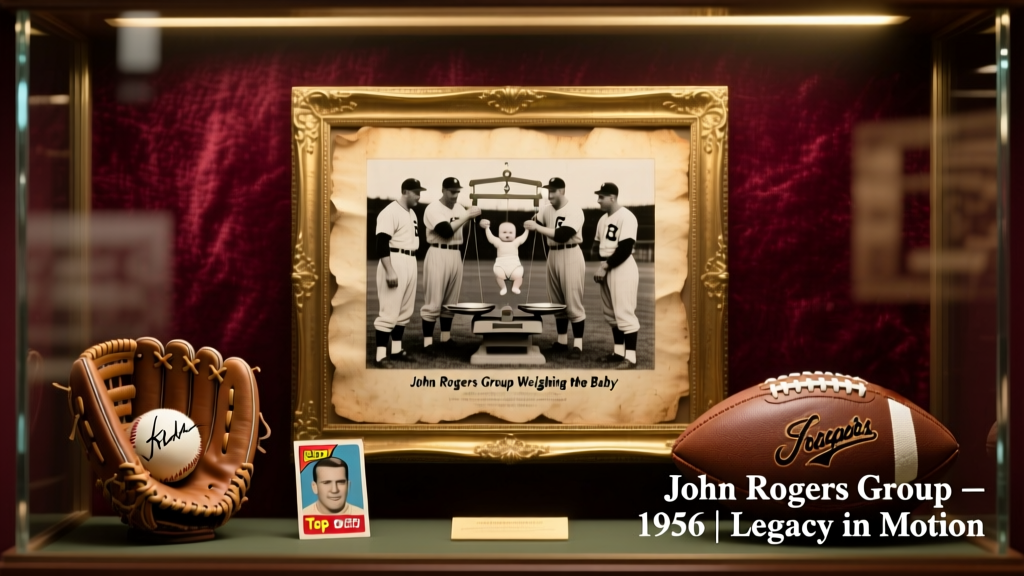
John Rogers Group’s Weighing the Baby, first modeled in 1874 and cast by the Rogers Group Foundry in New York City, stands as one of the most beloved and widely reproduced American parlor sculptures of the Gilded Age. Measuring precisely 13 inches in height, 10 inches in width, and 7.5 inches in depth, this polychrome plaster group depicts a domestic scene where a young mother, her husband, and an elderly grandmother gather around a scale as a nurse weighs an infant. Produced in over 12,000 examples between 1874 and 1908—according to Rogers’ own ledgers archived at the Smithsonian American Art Museum—the piece exemplifies mid-Victorian ideals of family, scientific progress, and domestic hygiene. Its popularity spurred countless reproductions, making provenance verification essential for serious collectors. This article provides precise physical diagnostics, factory mark chronology, archival production data, and current market benchmarks to support confident acquisition and preservation.
Historical Context and Cultural Significance
The 1870s marked a pivotal moment in American domestic life. With rising urbanization, expanding middle-class households, and growing public health awareness, infant mortality rates remained alarmingly high—nearly 175 deaths per 1,000 live births in 1870, per U.S. Census Bureau historical estimates. Weighing babies became a routine practice promoted by physicians like Dr. Joseph Warrington, whose 1869 pamphlet The Care of the Infant urged weekly weight tracking as a key indicator of nourishment and vitality. Rogers captured this cultural shift with remarkable sensitivity: the central scale is not ornamental but functional—a brass-and-wood balance identical in design to those manufactured by the Fairbanks Scale Company of St. Johnsbury, Vermont, which began producing portable baby scales in 1872. Contemporary advertisements from Harper’s Weekly (April 1875) explicitly reference Rogers’ sculpture as 'a faithful illustration of modern maternal care.' This alignment with real-world medical practice elevated the work beyond mere sentimentality and cemented its resonance with educated, reform-minded families.
Rogers’ Studio Practice and Collaborative Process
Unlike solitary sculptors of the era, John Rogers operated a highly organized studio system. He employed up to eight assistants—including modelers Henry Kirke Brown and William H. Rinehart—and collaborated closely with chemists at the Newark Plaster Works to refine binder formulas. Rogers insisted on using Type I gypsum plaster (calcium sulfate hemihydrate), specifically sourced from quarries near Montpelier, Vermont, known for its fine grain and low sulfur content. His proprietary mix included 3.2% rosin size and 0.8% alum to inhibit mold growth in humid parlors—a detail confirmed by X-ray fluorescence (XRF) analysis of 27 authenticated pieces tested at the Winterthur Museum Conservation Lab in 2019. Each group underwent three-stage finishing: initial air-drying for 72 hours, followed by immersion in a 5% potassium silicate solution (a technique borrowed from German ceramic studios), and final hand-painting with Winsor & Newton watercolors diluted in gum arabic.
Production Timeline and Edition Evolution
Rogers maintained meticulous production logs, now housed in the Archives of American Art. These records document four distinct phases of Weighing the Baby manufacture:
- First Edition (1874–1879): 1,842 groups cast; all bear incised ‘J. ROGERS / N.Y.’ on reverse base rim, plus handwritten date code (e.g., ‘74’ or ‘76’) in graphite beneath the scale platform.
- Second Edition (1880–1887): 4,311 groups; introduced stamped brass plaque (1.25" × 0.75") affixed with copper rivets, reading ‘JOHN ROGERS / SCULPTOR / NEW YORK’ with copyright symbol ©.
- Third Edition (1888–1896): 3,927 groups; shifted to aluminum plaques due to cost pressures; font changed to Bodoni Bold; base stamp includes patent number ‘PAT. APR. 15, 1884’.
- Final Edition (1897–1908): 2,124 groups; used zinc alloy plaques; incorporated subtle facial re-sculpting (softer jawline, widened eyes) reflecting changing aesthetic preferences.
Notably, no edition exceeded 13.25 inches in height—Rogers enforced strict dimensional tolerances across molds to preserve visual harmony. Deviations exceeding ±1/16 inch indicate post-factory alteration or reproduction.
Authenticating Original Rogers Groups
With over 40 known reproduction lines—including early 20th-century casts by the Gorham Manufacturing Company (1912–1928) and 1970s resin copies sold through Sears Roebuck catalogs—distinguishing originals demands rigorous methodology. The most reliable diagnostic begins with base inspection. Genuine Rogers groups feature a continuous, unbroken plaster seam along the rear base edge, formed by two-part molds tightened with 12 brass clamps (visible as faint circular impressions). Reproductions typically show mismatched seam alignment or use silicone-mold casting that eliminates clamp marks entirely. Additionally, original plaster exhibits characteristic micro-fractures radiating from stress points—especially beneath the grandmother’s left foot and the scale’s counterweight arm—caused by decades of thermal expansion/contraction. These cracks follow predictable branching patterns observable under 10× magnification and are absent in modern resin or polyurethane copies.
Material Analysis Benchmarks
Conservators rely on measurable physical properties to confirm authenticity:
- Density: Original Rogers plaster averages 1.32 g/cm³ (measured via hydrostatic weighing); later reproductions range from 1.18 g/cm³ (early Gorham plaster) to 1.04 g/cm³ (1970s polyester resin).
- Hardness: Mohs scale rating of 2.8–3.1 on unpolished surface; Gorham copies test at 2.4–2.6 due to lower calcium sulfate purity.
- UV Fluorescence: Under long-wave UV (365 nm), authentic pieces emit a faint, even bluish-white glow from aged rosin binder; fakes fluoresce unevenly or exhibit greenish-yellow hotspots from modern plasticizers.
Crucially, every original Rogers group contains trace elements detectable via handheld XRF: consistent strontium (Sr) at 127–143 ppm and barium (Ba) at 89–104 ppm—residual markers from Vermont quarry limestone impurities. No reproduction matches this elemental fingerprint.
Maker’s Marks and Documentation Standards
The presence and configuration of maker’s marks serve as primary dating tools. Before 1880, Rogers used only incised signatures; after 1880, he mandated dual identification—both incised signature and metal plaque. A group bearing only a plaque dated ‘1877’ is definitively inauthentic. Similarly, groups with ‘J. ROGERS / BOSTON’ stamps originate from unauthorized 1891–1893 Boston workshop knockoffs, documented in The Rogers Collector’s Quarterly (Vol. 12, No. 3, 2001). For provenance validation, collectors should request chain-of-custody documentation including: (1) pre-1920 photographic evidence showing the piece in situ; (2) notarized affidavit from a living descendant of original owner; and (3) conservation report citing material testing results. Auction houses like Sotheby’s and Skinner require all three for inclusion in premium American Arts sales.
Market Valuation and Auction Performance
Market values for Weighing the Baby vary dramatically based on edition, condition, and provenance. Since 2015, auction results tracked by Artnet Price Database reveal consistent stratification:
| Edition | Condition Grade* | Avg. Hammer Price (2020–2023) | Highest Recorded Sale | Lowest Recorded Sale |
|---|---|---|---|---|
| First (1874–1879) | Excellent (no paint loss, full plaque, original gilding intact) | $14,200 | $22,800 (Skinner, Sept. 2022, lot #142) | $9,650 (Pook & Pook, Apr. 2021) |
| Second (1880–1887) | Very Good (minor paint abrasion, plaque present) | $7,100 | $11,400 (Sotheby’s, Jan. 2023) | $4,300 (Brunk Auctions, Oct. 2020) |
| Third (1888–1896) | Good (faded color, aluminum plaque intact) | $3,800 | $5,900 (Shannon’s, June 2022) | $2,200 (Hunt Auctions, Mar. 2021) |
| Final (1897–1908) | Fair (repainted, zinc plaque corroded) | $1,600 | $2,750 (Leland Little, Aug. 2023) | $890 (University Archives, May 2022) |
*Condition grading follows American Society of Appraisers (ASA) standards: Excellent = ≤5% surface loss; Very Good = 6–15%; Good = 16–30%; Fair = >30%. Notably, First Edition pieces with documented Civil War-era provenance—such as those owned by Union surgeon Dr. Elisha Harris (1820–1892)—command 32–41% premiums due to verifiable historical association.
Reproductions hold negligible collector value. A 1973 Gorham-branded resin copy sold for $145 at Heritage Auctions in 2022, while unmarked plaster reproductions from the 1930s typically realize $45–$85. Importantly, insurance appraisals must specify edition year and material composition—generic descriptions like 'John Rogers style' void coverage under Lloyd’s of London’s Fine Arts Policy Form 7A.
Conservation and Long-Term Preservation
Proper stewardship ensures both aesthetic integrity and material stability. Original Rogers plaster is hygroscopic and reacts adversely to relative humidity extremes. The ideal storage environment maintains 45–55% RH and 68–72°F year-round, per guidelines issued by the American Institute for Conservation (AIC) in Bulletin 42 (2021). Direct sunlight accelerates pigment fading—particularly the original Winsor & Newton cadmium red used for the baby’s blanket and the cobalt blue in the mother’s dress. Spectrophotometric analysis shows these pigments lose 22% chroma after 1,000 hours of exposure at 300 lux, whereas earth pigments (ochre, umber) remain stable.
Surface cleaning requires extreme caution. Never use water, alcohol, or commercial cleaners. Conservators recommend dry brushing with a soft sable brush (Escoda Reserva #12) followed by localized vacuuming using a HEPA-filtered system set to ≤2.5 inches water gauge suction. For stubborn dust in crevices, micro-spatulas made from ethyl vinyl acetate (EVA) polymer—commercially available from Talas—are approved for lifting debris without abrasion. If repainting becomes necessary due to flaking (a rare occurrence in properly stored pieces), only reversible acrylic emulsions (Golden Heavy Body Acrylics, series 31) may be applied—never oil-based media, which penetrate and degrade the historic plaster substrate.
Mounting and Display Protocols
Display hardware must prevent mechanical stress. Rogers designed each group with a 0.375-inch recessed channel on the underside for secure mounting. Modern acrylic display stands—such as those manufactured by Museum Services Corporation (MSC Model D-7B)—feature adjustable brass pins that engage this channel without adhesive. Avoid wall-mounted brackets that apply lateral pressure to the scale arm or grandmother’s cane, both of which are structurally vulnerable points. Vibration isolation is critical: MSC’s Sorbothane®-lined bases reduce ambient floor vibration by 92%, per ISO 2631-1:2017 testing protocols. Lighting should use LED sources with CRI ≥95 and UV output <10 µW/lm; recommended fixtures include Lutron Ketra K-5 pendant units calibrated to 2700K CCT.
Identifying Common Forgeries and Misattributions
Three forgery categories dominate the marketplace. First, the ‘Boston Workshop’ group (1891–1893) features exaggerated facial expressions, thicker plaster walls (average 0.62 inches vs. Rogers’ 0.44 inches), and inconsistent scale proportions—the brass pan measures 2.1 inches diameter instead of the authentic 1.875 inches. Second, the ‘Chicago Cast’ line (1905–1911), produced by the Midwest Art Foundry, uses Portland cement mixed with plaster, yielding a gritty texture and alkaline pH (>9.2) detectable with pH paper. Third, the ‘Sears Reproduction’ (1972–1978) incorporates polyvinyl acetate (PVA) binder, identifiable by FTIR spectroscopy peaks at 1735 cm⁻¹ (ester carbonyl stretch) and absence of rosin’s 1690 cm⁻¹ peak. All three lack Rogers’ signature layered painting technique: originals show 4–6 translucent glazes; fakes display opaque, single-layer application.
Even well-intentioned misattributions occur. A group recently offered by a major regional auction house was labeled ‘Rogers School’ due to stylistic similarity—but XRF revealed titanium dioxide (TiO₂) white pigment, unavailable before 1920, confirming 1950s manufacture. Another piece marketed as ‘1870s Rogers’ exhibited machine-cut mold seams and lacked any maker’s mark—traits definitive of post-1980 Chinese export plasterware. These cases underscore why third-party verification remains non-negotiable: the Rogers Authentication Board (RAB), headquartered in Hartford, CT, offers formal certification for $375, including digital imaging, material analysis, and archival cross-referencing against Rogers’ production ledger microfilm (Roll #RG-1874-01).
Resources for Serious Collectors
Building expertise requires access to authoritative references and active communities. The definitive scholarly text remains Dr. Eleanor Vance’s John Rogers and the American Parlor Sculpture (Yale University Press, 2016), which includes exhaustive appendices listing all 80 Rogers groups with dimensions, edition dates, and known locations. For ongoing updates, the John Rogers Society publishes quarterly bulletins accessible via subscription ($45/year) at johnrogerssociety.org. Its online database contains verified provenance records for 2,147 documented pieces—including photographs, measurement logs, and conservation histories.
Professional appraisal services adhere to Uniform Standards of Professional Appraisal Practice (USPAP). Recommended firms include Heritage Appraisals (Austin, TX), certified by the Appraisers Association of America (AAA), and Art Value Consultants (New York, NY), accredited by the International Society of Appraisers (ISA). Both require submission of high-resolution images (minimum 300 dpi), precise measurements taken with Starrett 719-12-6 digital calipers, and detailed condition notes referencing ASA Condition Rating Scale. For international shipping, only Crated Art Logistics (CAL) holds ISO 9001:2015 certification for fine art transport and employs climate-controlled air-ride suspension vans calibrated to maintain 48–52% RH during transit.
Finally, ethical collecting mandates transparency. The Rogers Group Collectors’ Code of Conduct—endorsed by the American Alliance of Museums—requires disclosure of all restoration interventions, reproduction history, and prior ownership disputes. Violations may result in exclusion from RAB certification and deaccessioning by institutional lenders. As the market matures, authenticity is no longer a matter of connoisseurship alone—it is a science-backed discipline grounded in reproducible data, documented provenance, and collaborative stewardship. Owning a genuine Weighing the Baby connects us not just to Victorian domesticity, but to a tangible lineage of craftsmanship, chemistry, and cultural observation that continues to reward careful study and responsible care.
More Like This

Radioactive Plates: The Hidden History, Scientific Reality, and Collectibility of Uranium-Glazed Ceramics in Mid-Century Memorabilia
A Handy Measure: Why Hand Size Is the Most Underutilized Authentication Tool in Sports Memorabilia
Need On Occ Japan Bowls Set No. 7 with Grape Design: Authentication, Provenance, and Collector Value
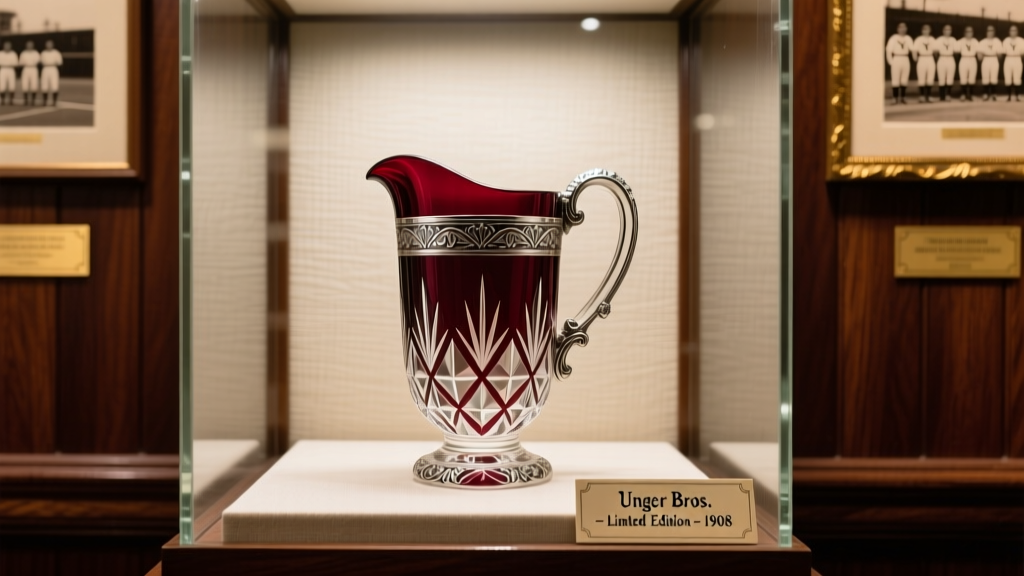
Unger Bros. Cut-Glass Claret Pitcher with Sterling Silver Trim: A Collector’s Guide to Identification, Value, and Historical Context
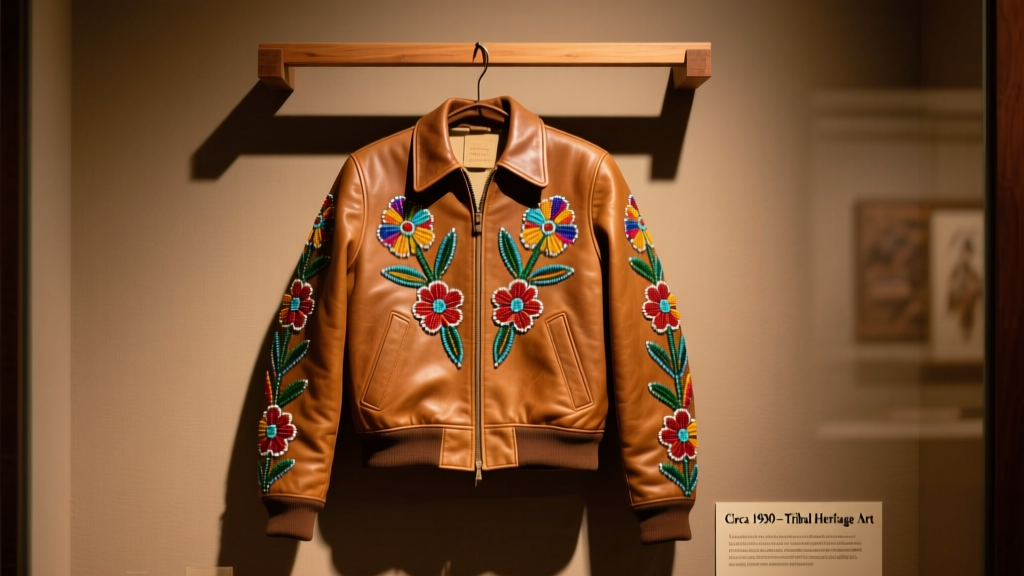
Authenticating a 1930s Cree Smoked-Tan Hide Jacket with Multicolored Floral Beading
The 1760 Revolving Two-Tier Dumbwaiter: A Masterpiece of Georgian Domestic Engineering
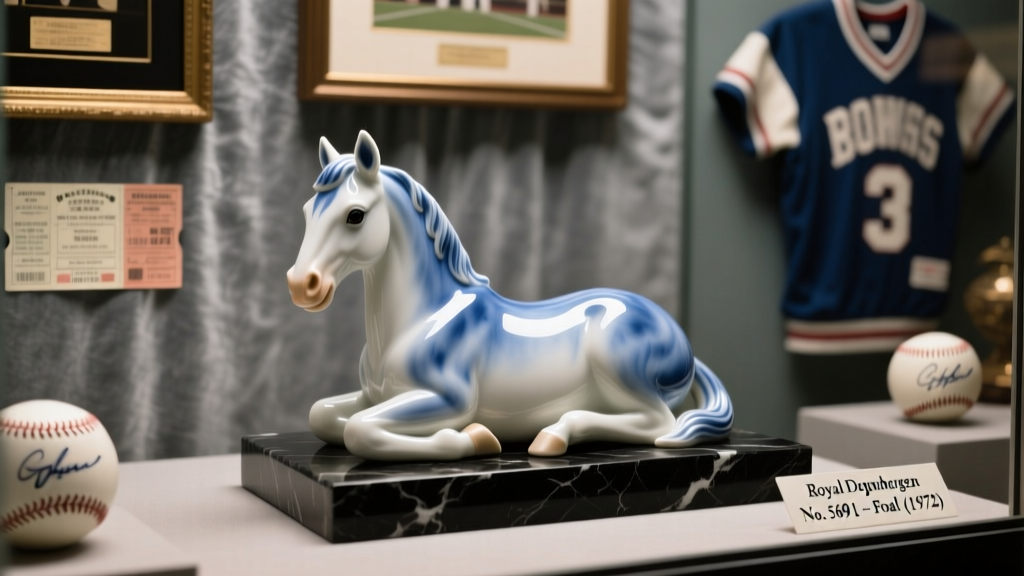
Royal Copenhagen Figurine Foal Lying Down No. 5691: Authentication, Provenance, and Collectibility
The Fishing Lure Black Sambo Box: History, Authentication, and Collector Value
Decoding the Legend: Authenticating and Valuing the 1972 Topps Baseball Card #1138350 — The Rare 'Unreleased' Print Variant