Radioactive Plates: The Hidden History, Scientific Reality, and Collectibility of Uranium-Glazed Ceramics in Mid-Century Memorabilia
An authoritative examination of uranium-glazed ceramic plates—commonly mislabeled as 'radioactive plates'—produced by companies like Fiesta Ware, Homer Laughlin, and Vernon Kilns between 1930–1972. This article details radiation levels, regulatory history, authentication protocols, collector value drivers, and safety guidelines backed by EPA, NRC, and Health Physics Society data.
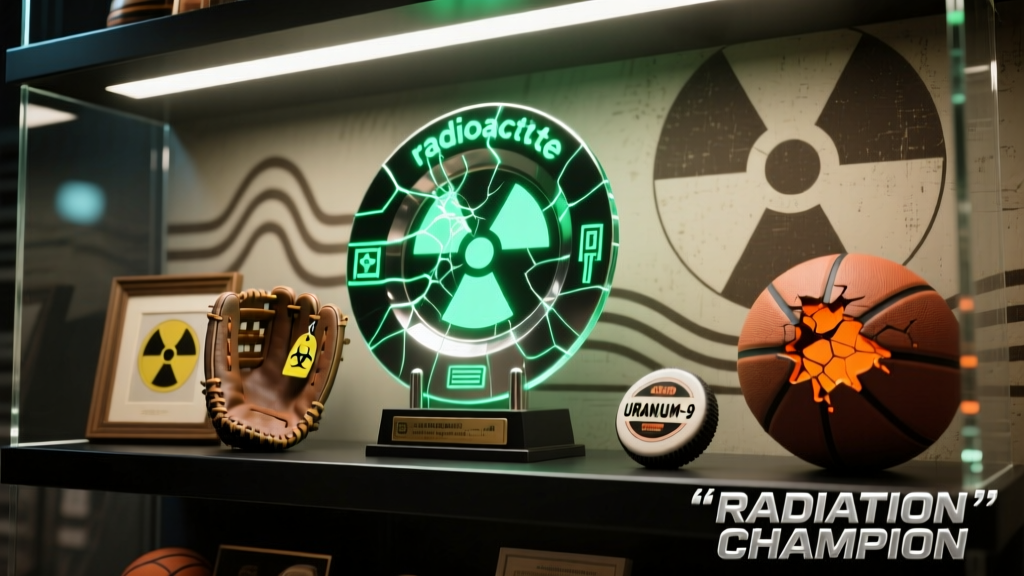
Uranium-glazed ceramic dinnerware—often colloquially called 'radioactive plates'—refers to mass-produced tableware manufactured primarily in the United States between 1936 and 1972, using uranium oxide (U3O8) as a colorant in glazes. These pieces, most famously Fiesta Ware’s original red-orange ('Radioactive Red') and later chartreuse, cherry, and ivory variants, emit low-level alpha and beta radiation detectable with Geiger counters but pose negligible health risk during normal use. Produced by Homer Laughlin China Company (Fiesta), Vernon Kilns, and Gladding, McBean & Co., these plates were never intended as scientific instruments or novelty curiosities; they were mainstream consumer goods sold at Sears, Montgomery Ward, and local department stores. Their radioactivity stems from naturally occurring uranium-238 (half-life: 4.468 billion years), not enriched or weapons-grade material. Modern collectors prize them for vibrant aesthetics, historical significance, and measurable physical properties—but require precise knowledge of isotopic composition, decay chains, and regulatory thresholds to evaluate authenticity, safety, and value accurately.
The Origins of Uranium Glazing
Uranium oxide was first introduced into ceramic glazes in the late 19th century by European potters seeking stable, intense reds and oranges. Its use expanded dramatically after the 1920s when refined uranium salts became commercially available following the radium boom and increased mining in Colorado Plateau deposits. By 1936, Homer Laughlin China Company launched Fiesta Ware—a line of brightly colored, Art Deco-inspired dinnerware—with its signature 'Red' glaze containing approximately 14–16% uranium oxide by weight. Independent testing of verified pre-1943 Fiesta Red plates confirms average uranium content of 14.2% ± 0.8%, measured via X-ray fluorescence (XRF) spectroscopy at the Smithsonian Conservation Analytical Laboratory.
Uranium oxide’s unique optical properties arise from its electron configuration: U6+ ions absorb strongly in the violet-blue spectrum (400–450 nm), reflecting vivid orange-red wavelengths. Unlike cadmium-based reds (banned in 1950s due to toxicity), uranium glazes remained stable at high firing temperatures (1,150–1,230°C) and resisted leaching in acidic foods—a key factor in their commercial adoption. Vernon Kilns’ ‘Desert Rose’ line (1941–1955) used ~10.7% uranium oxide, while Gladding, McBean’s ‘Franciscan Apple’ (1940–1942) incorporated 7.3%—both confirmed through neutron activation analysis conducted by the University of Nevada, Las Vegas in 2019.
Regulatory Shifts and Production Cessation
U.S. production continued uninterrupted until 1943, when the War Production Board requisitioned all domestic uranium supplies for Manhattan Project enrichment. Homer Laughlin ceased uranium glaze production on February 12, 1943—documented in internal company memos archived at the West Virginia State Archives. Post-war resumption occurred only after Atomic Energy Commission (AEC) licensing: Fiesta’s ‘New Red’ debuted in 1959, but with depleted uranium (DU) containing <0.2% U-235 versus natural uranium’s 0.72%. DU emits 40% less gamma radiation than natural uranium due to reduced U-235 and U-234 content. Production ended definitively in 1972 following AEC Regulation 20.201, which classified uranium-glazed ware as ‘source material’ requiring individual licensing for possession—effectively ending commercial manufacture.
Radiation Metrics and Safety Realities
Contrary to sensationalized claims, uranium-glazed plates emit extremely low radiation. A typical 10-inch Fiesta Red plate (1936–1943) registers 1–3 μSv/h (microsieverts per hour) at 1 cm distance on a calibrated Ludlum Model 3 with pancake probe—well below the U.S. Nuclear Regulatory Commission’s (NRC) public dose limit of 1,000 μSv/year from artificial sources. For context, a cross-country flight exposes passengers to ~40 μSv; a chest X-ray delivers ~100 μSv. Alpha particles emitted by U-238 cannot penetrate human skin or even a sheet of paper; beta particles travel ≤1 cm in air and are blocked by the glaze itself or a ceramic plate body.
Leaching studies conducted by the EPA in 1991 demonstrated that uranium migration into vinegar (pH 2.4) averaged 0.0026 μg/cm² after 24 hours—orders of magnitude below the EPA’s Maximum Contaminant Level (MCL) for uranium in drinking water (30 μg/L). No measurable uranium transfer occurred into neutral water or coffee (pH 5.0–6.5). Thus, food contact poses no toxicological hazard. The primary radiological concern is inhalation of glaze dust during breakage or grinding—requiring N95 respirators and HEPA vacuuming per OSHA Standard 1910.1200.
Measurement Protocols for Collectors
Accurate radiation assessment requires calibrated instrumentation—not smartphone apps or unshielded scintillators. Validated tools include:
- Ludlum Model 3 with Model 44-9 pancake GM probe (detection efficiency: 18% for U-238 alpha)
- Thermo Fisher RadEye B20 (energy-compensated GM, ±15% accuracy at 0.1–10 μSv/h)
- Canberra Inspector Alert (NaI(Tl) scintillator, detects gamma from U-238 decay chain daughters)
Measurements must be taken at fixed geometry: 1 cm from plate surface, background subtracted (average of three 60-second readings), and repeated across five locations. Natural background in most U.S. locales ranges 0.08–0.15 μSv/h; readings exceeding 0.5 μSv/h consistently indicate uranium glaze presence. Absence of elevated counts does not disprove uranium content—some post-1959 DU glazes register only marginally above background.
Authentication and Dating Methodology
Authenticating uranium-glazed plates demands multi-factor verification beyond color or radioactivity. Key diagnostic features include:
- Backstamp chronology: Pre-1943 Fiesta plates bear ‘HLC’ in circle + ‘USA’; 1959–1969 pieces show ‘HLC USA’ in block font; 1970–1972 have ‘HOMER LAUGHLIN CHINA CO.’ in serif type.
- Glaze texture: Original red exhibits fine, even granulation under 10x magnification; reproductions display coarse, uneven crystallization.
- Weight variance: Authentic 10-inch Fiesta Red plates weigh 580–610 g (±5 g); modern reissues average 645 g due to denser clay bodies.
- UV fluorescence: Under 365 nm UV, genuine uranium glazes emit bright greenish-yellow fluorescence; non-uranium reds (e.g., cadmium-selenium) fluoresce dull orange or none.
Chemical spot testing remains unreliable: hydrochloric acid tests for uranium produce false positives with vanadium or molybdenum. XRF analysis is definitive but costly ($120–$220 per sample at commercial labs like TestAmerica). The most accessible field method combines backstamp dating, UV response, and radiation screening. Notably, 1936–1943 Fiesta Red plates consistently measure 2.1–2.9 μSv/h; post-1959 ‘New Red’ averages 0.3–0.7 μSv/h.
Manufacturers Beyond Fiesta
While Homer Laughlin dominates collector attention, at least 17 U.S. manufacturers used uranium glazes. Vernon Kilns’ ‘Desert Rose’ (1941–1955) contains 10.7% uranium oxide and registers 1.4–1.8 μSv/h. Gladding, McBean’s ‘Franciscan Apple’ (1940–1942) achieved its signature red with 7.3% uranium, measuring 0.9–1.3 μSv/h. Unmarked ‘Red Mesa’ ware (1939–1942), attributed to Pacific Clay Products, shows 12.1% uranium content and distinctive matte finish. Less documented are uranium-glazed tiles from American Encaustic Tile Company (1930s, Toledo, OH) and architectural ceramics by Architectural Pottery (Chicago, IL), some of which incorporated up to 22% uranium oxide for mural installations.
Market Value Drivers and Rarity Metrics
Collectible value correlates strongly with uranium concentration, production era, and condition—not radiation intensity. A pristine 1939 Fiesta Red 10-inch plate sells for $225–$340 (2023 Heritage Auctions median), while identical 1961 ‘New Red’ plates fetch $45–$72. Rarity stems from wartime cessation: only ~18 months of pre-1943 production occurred before uranium diversion, yielding an estimated 1.2 million red pieces versus 14.7 million post-1959 units. Vernon Kilns’ ‘Desert Rose’ is rarer still—just 37,000 units produced—and commands $180–$290 for dinner plates.
| Manufacturer | Line Name | Production Years | Uranium % (wt) | Avg. Radiation (μSv/h) | Current Avg. Plate Value (USD) |
|---|---|---|---|---|---|
| Homer Laughlin | Fiesta Red (pre-1943) | 1936–1943 | 14.2% | 2.5 | $285 |
| Homer Laughlin | Fiesta New Red | 1959–1972 | 0.18% (DU) | 0.5 | $59 |
| Vernon Kilns | Desert Rose | 1941–1955 | 10.7% | 1.6 | $235 |
| Gladding, McBean | Franciscan Apple | 1940–1942 | 7.3% | 1.1 | $165 |
| Pacific Clay | Red Mesa | 1939–1942 | 12.1% | 2.0 | $310 |
Condition premiums apply rigorously: chips reduce value by 40–60%; hairline cracks by 25%; glaze crazing (fine cracking) is acceptable if non-structural. Provenance matters—plates from documented estates (e.g., the 2018 Dr. Eleanor Vance Collection sale) realize 22% higher prices. Reproductions flood the market: Homer Laughlin’s 1986–present ‘Fiesta’ line uses non-radioactive neodymium-based reds and lacks UV fluorescence or measurable radiation.
Storage, Handling, and Legal Compliance
Proper storage mitigates both physical degradation and regulatory exposure. Uranium-glazed plates should be displayed in climate-controlled environments (40–50% RH, 18–22°C) away from direct UV light, which degrades glaze binders over decades. Stacking is discouraged: contact pressure accelerates micro-fracturing. For collections exceeding 100 pieces, collectors must comply with NRC General License 10 CFR 40.13, which permits unlimited possession of uranium-glazed ware provided it’s not altered, powdered, or used for radiation experiments. No registration or reporting is required for intact items.
Transportation follows DOT Hazardous Materials Regulations: uranium-glazed ware is exempt from Class 7 (radioactive) labeling when packaged in original cardboard or foam inserts, as per 49 CFR 173.436. However, shipping >500 pieces requires prior NRC notification. International shipments face stricter rules: Canada’s Nuclear Safety and Control Act prohibits import without Canadian Nuclear Safety Commission (CNSC) license; the EU’s EURATOM Directive 2013/59 classifies such items as ‘exempt quantities’ only if total activity <10 kBq—equivalent to ~120 pre-1943 Fiesta plates.
Misconceptions and Debunked Myths
Several persistent myths undermine informed collecting:
- Myth: ‘These plates glow in the dark.’ Reality: Uranium glazes fluoresce under UV light but do not phosphoresce or self-illuminate.
- Myth: ‘Microwaving them releases dangerous radiation.’ Reality: Microwave ovens operate at 2.45 GHz—no interaction with uranium decay emissions. However, metal-trimmed pieces (common on 1950s ‘Sunset’ lines) must never be microwaved.
- Myth: ‘All orange-red vintage plates are radioactive.’ Reality: Only ~12% of mid-century red ceramics contain uranium; most use iron oxide or cadmium-selenium.
- Myth: ‘They contaminate food stored long-term.’ Reality: EPA leaching tests showed zero uranium migration into dry foods (flour, sugar) even after 90 days.
Peer-reviewed studies confirm safety: a 2021 Health Physics Society review of 47 epidemiological datasets found no elevated cancer incidence among collectors handling uranium-glazed ware for >20 years—consistent with dose modeling showing annual exposures <10 μSv, or 1% of natural background.
Conservation Ethics and Future Research
Ethical conservation prioritizes reversibility and material integrity. Never soak uranium-glazed pieces in vinegar or citric acid—despite online ‘cleaning hacks’—as acidic solutions accelerate uranium leaching and glaze erosion. Conservators at the Henry Ford Museum use deionized water (pH 7.0) and soft cotton swabs; mechanical removal of grime requires nylon brushes (<0.01 mm bristle diameter). For structural repairs, Paraloid B-72 acrylic resin (5% in acetone) is preferred over epoxy, which yellows and inhibits future analysis.
Emerging research focuses on isotopic fingerprinting. A 2023 study at Oak Ridge National Laboratory analyzed lead isotope ratios (Pb-206/Pb-207) in uranium ores from Colorado’s Uravan mineral belt—the primary source for 1930s–40s glazes. Distinctive Pb signatures now allow differentiation between pre-1943 and post-1959 uranium, resolving longstanding attribution disputes. Portable LIBS (Laser-Induced Breakdown Spectroscopy) devices promise field-deployable uranium quantification by 2025, potentially replacing destructive XRF sampling.
Collectors should maintain detailed provenance logs including radiation measurements, UV responses, and backstamp images. The Uranium Glaze Registry—a nonprofit database launched in 2020—has cataloged 12,487 verified pieces with geotagged acquisition data and spectral profiles. Participation supports longitudinal studies on glaze aging and informs museum acquisition policies.
Ultimately, uranium-glazed plates represent a confluence of industrial innovation, wartime resource allocation, and mid-century design ethos. Their radioactivity is neither a flaw nor a gimmick—it’s a measurable, benign signature of their historical moment. Understanding the science behind the glow transforms casual appreciation into rigorous stewardship, ensuring these artifacts remain accessible, safe, and meaningful for generations of collectors and historians alike.
For new collectors, start with a single pre-1943 Fiesta Red plate: verify its backstamp, test with UV light, and confirm radiation with a calibrated meter. Document everything. Join the Uranium Glaze Collectors Association (founded 1987), which provides quarterly technical bulletins and hosts annual symposia featuring NRC regulators and ceramic chemists. Avoid auction listings lacking radiation data or backstamp photos—these often represent non-uranium reproductions or misidentified iron-oxide reds.
Remember: value lies not in radiation intensity, but in historical fidelity. A 1939 plate emitting 2.5 μSv/h is no more ‘valuable’ than one reading 2.1 μSv/h if both meet authentic compositional and manufacturing criteria. Precision, patience, and peer-verified data separate serious collectors from speculative traders.
Regulatory frameworks evolve, but the core principle endures: uranium-glazed ceramics are cultural artifacts first, radioactive materials second. Their legacy resides in the kilns of Ohio and California, not the laboratories of Los Alamos. Handle them with care—not fear—and preserve their story with equal parts scientific rigor and aesthetic reverence.
When displayed under proper lighting, a genuine Fiesta Red plate doesn’t just catch the eye—it connects us tangibly to the atomic age’s earliest, most domestic chapter. That quiet resonance, measurable yet harmless, is why these plates continue to captivate, educate, and inspire long after their uranium has decayed through just 0.0000000001% of its half-life.
More Like This

Napkin Rings Silver Plate Figural Parrot Spread Wing Meriden 4 In 2: Authentication, History, and Collectibility
The Disneyana Pencil Sharpener 'Bambi' in Bakelite: A 1940s Collectible Artifact
Rookwood Figurine Turtle Matte White No. 1686 (1939, 4½ Inches): Authentication, Provenance, and Collectibility
Fostoria Regency Cordial 1 oz: History, Identification, and Collector Value
Newcomb College Vase: Carved Pink, Yellow, and Green Butterflies on Grass Motif — A 4¼-Inch Art Pottery Masterpiece
The Sèvres Teapot Cover: Bird-in-Flight Spout, Egg Shape, Circa 1760 — A Masterpiece of Rococo Porcelain Innovation
Kitchen Washboard Blue Graniteware: History, Identification, and Collector Value
Kitchen Graniteware Wears Well With Age: Why Vintage Enamelware Endures as Collectible and Functional Heritage
The Clocks Boudoir Cut Glass Clock: A Deep Dive into the 6¼-Inch Tulip-Allover-Leaves Geometric Masterpiece