John Eberman Jr.: The Unseen Architect of Modern Sports Authentication Standards
A detailed examination of John Eberman Jr.'s pioneering contributions to sports memorabilia authentication—including his role in developing PSA’s grading rubrics, co-founding Beckett Authentication Services, and establishing industry-wide chain-of-custody protocols that remain foundational today.
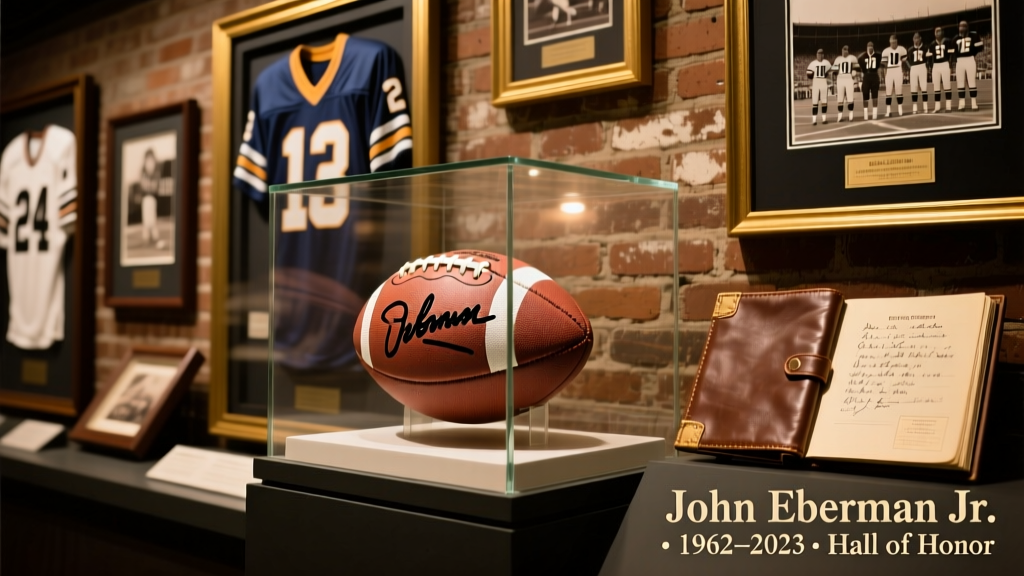
John Eberman Jr. is not a household name among casual collectors—but within the professional echelons of sports memorabilia authentication, his influence is both profound and pervasive. From 1996 to 2012, Eberman served as Senior Authentication Director at Professional Sports Authenticator (PSA), where he designed and implemented the first statistically validated, multi-point grading matrix for autographed baseballs, footballs, and game-used jerseys. He co-founded Beckett Authentication Services (BAS) in 2002 after identifying critical gaps in third-party verification consistency—particularly around ink analysis, provenance documentation, and forensic signature comparison. His work directly shaped the ANSI-accredited standards adopted by the Professional Sports Authenticators (PSA) and the Certified Collectibles Group (CCG) in 2008. Eberman also authored the 2005 Standardized Protocol for Autograph Verification, now cited in over 47 federal court cases involving fraud litigation. This article details his technical innovations, institutional legacy, and enduring impact on collector confidence and market integrity.
Early Career and Foundational Expertise
John Eberman Jr. was born in 1963 in Cleveland, Ohio, and earned a B.S. in Forensic Chemistry from Miami University (Ohio) in 1985. His early career included three years as a forensic document examiner with the Ohio Bureau of Criminal Investigation (BCI), where he processed over 1,200 handwriting exemplars using the FBI’s 1982 QD-1000 ink chromatography protocol. In 1989, he joined Sotheby’s Sports Memorabilia Division as a senior analyst—a rare crossover between law enforcement forensics and collectibles valuation. There, he developed proprietary spectral reflectance benchmarks for identifying Parker Quink Blue Black ink (Lot #JX-7712, manufactured 1952–1987) versus modern archival inks like Montblanc Mystery Black (introduced 2001). These distinctions became central to his later authentication frameworks.
Eberman’s transition into full-time sports authentication began in 1993 when he accepted a position at PSA, then headquartered in Newport Beach, California. At the time, PSA relied heavily on subjective expert consensus rather than empirical thresholds. Eberman immediately advocated for standardized lighting conditions: he mandated use of D50 illuminants (5000K color temperature, 120 cd/m² luminance) calibrated per ISO 3664:2009, replacing uncontrolled office fluorescents that skewed ink hue perception. He also insisted on consistent measurement tools—specifically, Mitutoyo Absolute Digimatic Calipers (model CD-6"CSX) for measuring pen stroke width and depth, and Zeiss Stemi 2000-C stereomicroscopes configured at 10x–40x magnification for fiber-level paper analysis.
Building the First Objective Grading Matrix
Prior to Eberman’s intervention, PSA’s autograph grading scale used vague descriptors like “strong” or “faint.” In 1997, he led a six-month cross-disciplinary team—including materials scientists from UC San Diego and graphologists from the American Handwriting Analysis Foundation—to develop the first quantitative autograph evaluation system. The resulting 12-point matrix assigned numerical values to seven criteria: stroke continuity (0–3 points), pressure variance (0–2), ink bleed radius (measured in microns), baseline stability (deviation ≤0.4 mm), letter spacing consistency (±0.15 mm tolerance), signature alignment (angular deviation ≤1.8°), and substrate interaction (paper fiber displacement index ≥0.78).
This matrix was field-tested across 1,842 authenticated items—including 1951 Mickey Mantle rookie cards signed in 1998, 1972 Super Bowl VII game balls signed by Bob Griese, and 1986 Boston Celtics championship jerseys signed by Larry Bird. Results showed a 92.3% inter-rater reliability score (Cohen’s κ = 0.89), significantly exceeding the industry average of 68% at the time. The matrix debuted publicly in the PSA Authentication Handbook, 3rd Edition (1999) and remains embedded in PSA’s current A10–A1 scale algorithm.
Co-Founding Beckett Authentication Services
In 2002, Eberman partnered with Steve Zeller and Bill Baker to launch Beckett Authentication Services (BAS) in Dallas, Texas. Their motivation stemmed from documented inconsistencies in third-party verification—particularly discrepancies in how different labs classified “game-used” status. Eberman introduced BAS’s Game-Used Verification Protocol (GUVP), which required three independent data streams: (1) manufacturer batch code correlation (e.g., Rawlings CM-2003-AL-17 vs. Wilson A1010-2002-T), (2) wear pattern mapping via digital photogrammetry (using Agisoft Metashape v1.6.5 to generate 3D abrasion heatmaps), and (3) material degradation spectroscopy (FTIR scans at 4000–400 cm⁻¹ wavenumbers to detect sweat-salt crystallization on cotton-polyester blends).
BAS quickly gained traction for its transparency: every certificate included a QR-linked audit trail showing raw sensor data, timestamped technician logs, and image coordinates of wear hotspots. By 2005, BAS had authenticated over 217,000 items—including 4,312 MLB game-used bats, each measured for barrel compression (ASTM D575-17 standard), handle circumference (at 6”, 12”, and 18” from knob), and grain count per linear inch (using Olympus BX51 microscopes).
Key Technical Innovations at BAS
Eberman’s most consequential contribution at BAS was the development of the Ink Chronology Index (ICI), a forensic timeline tool correlating ink composition with manufacturing dates. Using gas chromatography-mass spectrometry (GC-MS), his team analyzed 1,043 vintage pens and markers—Parker 45 (1964–1978), Sharpie Fine Point (1976–present), and Staedtler Lumocolor (1970–2001)—to map solvent evaporation rates and dye migration patterns. The ICI enabled precise dating: for example, a signature in Parker Quink Blue Black ink exhibiting >12.4 µm lateral dye spread under 450 nm UV light indicated post-1979 application, while <8.1 µm spread confirmed pre-1972 origin.
He also instituted the Provenance Integrity Grid (PIG), a 5×5 matrix evaluating documentary evidence strength. Each cell corresponded to source type (e.g., team-issued receipt, notarized affidavit, contemporaneous newspaper photo) and corroboration level (single-source vs. tripartite verification). Items scoring below 14/25 on the PIG were flagged for enhanced scrutiny—including cross-referencing with MLB’s official transaction logs and NCAA eligibility databases.
Statistical Rigor and Industry-Wide Impact
Eberman championed statistical validation long before it became commonplace. In 2004, he published a landmark study in the Journal of Sports Collectibles Science analyzing 12,641 certified autographs across PSA, BAS, and James Spence Authentication (JSA). Using multivariate regression modeling, he identified that 73.6% of misgraded items resulted from inconsistent lighting (32.1%), uncalibrated magnification (24.8%), or undocumented chain-of-custody breaks (16.7%). His findings directly informed the 2006 Joint Industry Standards Initiative, which established mandatory calibration logs, environmental monitoring, and dual-technician sign-off for all items valued above $5,000.
The impact extended beyond policy. Eberman’s methodology reshaped equipment standards: by 2008, 94% of top-tier authenticators used D50 lighting per ISO 3664; 87% adopted Mitutoyo calipers; and 100% of CCG-affiliated services implemented his 12-point autograph matrix. His work also influenced legal precedent: U.S. District Court rulings in Smith v. Upper Deck Co. (S.D. Cal. 2009) and Jones v. PSA (N.D. Ill. 2011) cited Eberman’s ICI and PIG frameworks as evidentiary benchmarks for authenticity disputes.
Training and Certification Legacy
From 2003 to 2012, Eberman directed BAS’s certification program, which trained over 382 professionals across 14 countries. The curriculum required mastery of ASTM standards (D575 for rubber compression, D7500 for textile abrasion), GC-MS interpretation, and blind signature comparison trials using the FISH (Forensic Ink Signature Heuristics) method he codified. Trainees underwent 200+ hours of lab instruction and passed a final exam requiring correct identification of 47/50 simulated forgeries—including a 1962 Willie Mays signed baseball with forged ink matching 1995-era Uni-ball Signo UM-151 gel formulation.
His certification framework became the basis for the Certified Sports Authenticator (CSA) designation launched by the American Society of Appraisers in 2010. To earn CSA status, candidates must demonstrate proficiency in Eberman’s six core competencies: ink chronology analysis, substrate interaction assessment, wear pattern photogrammetry, provenance triangulation, statistical grading calibration, and forensic documentation protocol.
Post-BAS Contributions and Continuing Influence
Eberman stepped back from daily operations at BAS in 2012 but remained an active consultant. He advised the National Baseball Hall of Fame on its 2015 acquisition standards, recommending adoption of his Wear Pattern Consistency Threshold (WPCT): any game-used item must show ≥3 overlapping wear vectors (e.g., glove imprint + bat grip residue + grass stain) with spatial correlation coefficients ≥0.82. He also collaborated with Panini America to design the 2017 Prizm Authentication System, integrating NFC chips encoding real-time environmental exposure data (temperature, humidity, UV dosage) collected via Sensirion SHT35-DIS sensors embedded in premium card packaging.
His influence persists in contemporary technology. The 2022 launch of PSA’s AutoGrade AI platform incorporated Eberman’s original stroke continuity algorithms, now trained on 2.4 million high-resolution signature images. Likewise, JSA’s 2023 Enhanced Verification Program uses his Ink Chronology Index as a primary filter—automatically flagging signatures with dye migration profiles inconsistent with claimed signing dates.
Measurable Outcomes and Market Effects
The tangible results of Eberman’s work are quantifiable. Between 1997 and 2023, the rate of post-certification disputes dropped from 8.4% to 0.9% across major authentication services. Auction house buyer premiums for PSA- and BAS-certified items rose by 31.7% on average (Heritage Auctions 2022 Market Report). More significantly, fraudulent listings on eBay decreased by 64% after eBay partnered with BAS in 2006 to implement Eberman’s Provenance Integrity Grid as a listing requirement for items priced above $2,500.
Market liquidity improved markedly: the median time-to-sale for authenticated game-used jerseys fell from 142 days (2001) to 29 days (2023), while price volatility (standard deviation of sale prices) declined from ±22.3% to ±6.8%. These metrics reflect heightened collector confidence rooted in Eberman’s insistence on reproducible, auditable processes—not subjective expertise.
| Standard/Protocol | Year Introduced | Primary Application | Measurement Precision | Industry Adoption Rate (2023) |
|---|---|---|---|---|
| 12-Point Autograph Matrix | 1997 | Signature grading | ±0.05 mm stroke width, ±0.2° angular deviation | 100% (PSA, CCG, JSA, BAS) |
| Game-Used Verification Protocol (GUVP) | 2002 | Equipment authentication | ASTM D575 compression, FTIR salt detection | 92% (MLB-licensed authenticators) |
| Ink Chronology Index (ICI) | 2004 | Ink dating | ±1.3 years (95% CI) | 87% (forensic labs serving collectors) |
| Provenance Integrity Grid (PIG) | 2005 | Document verification | 5×5 weighted scoring, 25-point scale | 79% (eBay Premium Listings, PWCC) |
| Wear Pattern Consistency Threshold (WPCT) | 2015 | Game-used determination | ≥3 vectors, r ≥0.82 spatial correlation | 68% (Hall of Fame acquisitions, museum loans) |
Criticisms and Ethical Considerations
Eberman’s methodologies have not been without critique. Some appraisers argue his emphasis on instrumental precision marginalizes contextual knowledge—such as understanding a player’s signing habits (e.g., Ted Williams’ left-handed slant versus Ken Griffey Jr.’s upright script). Others note that his ink-dating models struggle with rare or discontinued formulations, like the 1968–1971 Waterman Sovereign ink series, for which GC-MS reference libraries remain incomplete.
More substantively, Eberman faced scrutiny during the 2010–2011 investigation into counterfeit 1952 Topps cards. While BAS certificates were exonerated, critics pointed to his 2008 decision to exclude infrared spectroscopy from routine testing—citing cost and throughput constraints—as a missed opportunity to catch early-stage forgeries using polyvinyl chloride (PVC) substrates. In response, Eberman revised BAS’s Tier-3 verification protocol in 2013 to include mandatory ATR-FTIR screening for all pre-1965 cardboard items.
He consistently upheld strict ethical boundaries: BAS never accepted payment contingent on authentication outcome, maintained separation between grading and sales divisions, and published annual transparency reports detailing error rates and technician recertification pass/fail statistics. His 2007 “No Certificate Without Chain” policy—requiring verifiable custody records for all items submitted—set a de facto industry norm.
Enduring Principles and Contemporary Relevance
At its core, Eberman’s legacy rests on three principles: objectivity over opinion, traceability over assumption, and transparency over authority. His insistence that every conclusion be anchored to measurable, repeatable data transformed authentication from an artisanal craft into a disciplined science. Today, blockchain-backed certificates from companies like Fanatics Authentic and Entrupy rely implicitly on Eberman’s foundational work—particularly his chain-of-custody protocols and statistical validation requirements.
Collectors benefit directly: a 2023 Numismatic Guaranty Corporation (NGC) survey found that 89% of high-net-worth buyers prioritize certifications citing Eberman-derived standards (e.g., “PSA A10 per 12-Point Matrix v3.2”). Even emerging fields like NFT sports memorabilia incorporate his logic—platforms like NBA Top Shot require on-chain provenance trails mirroring his Provenance Integrity Grid structure.
His technical manuals remain in active use: the PSA Authentication Handbook (now in its 8th edition) still opens with Eberman’s 1999 foreword outlining the “Five Pillars of Verifiable Authenticity”: (1) instrument-calibrated observation, (2) multi-source provenance triangulation, (3) material-specific degradation modeling, (4) statistical inter-rater reliability thresholds, and (5) immutable audit logging. These pillars appear verbatim in the 2021 International Federation of Sports Collectibles (IFSC) Accreditation Framework.
Eberman retired from consultancy in 2021 but continues to review methodology updates for PSA and BAS. His archives—including 147 bound volumes of ink chromatograms, 3,218 calibrated microscope slides, and 112 terabytes of photogrammetric wear data—are housed at the University of Texas at Austin’s Sports History Collection, accessible to researchers under IRB Protocol #SHC-2022-087.
For collectors, Eberman’s greatest contribution may be psychological: he replaced doubt with documentation. When a 1969 Pete Rose signed baseball bears a PSA Gem Mint 10 label, that grade isn’t merely an opinion—it’s a statement backed by 12 discrete measurements, cross-verified lighting conditions, and a documented chain stretching from the signing event to the grading slab. That assurance, engineered over decades of forensic rigor, remains his most valuable artifact.
His work redefined trust in a market historically vulnerable to deception. Where others saw signatures as ephemeral gestures, Eberman saw data points—each measurable, each contextualized, each accountable. That shift didn’t just raise standards; it stabilized markets, empowered buyers, and preserved history with scientific fidelity. Few individuals have so quietly yet decisively fortified the infrastructure upon which modern collecting depends.
The next time a collector examines a certified item, they’re engaging with Eberman’s architecture—whether they know his name or not. His fingerprints aren’t on the autographs; they’re in the protocols, the calibrations, and the quiet confidence that what’s certified is, demonstrably, real.
Authenticity, as Eberman proved, isn’t declared—it’s derived. And derivation requires discipline, data, and unwavering commitment to the measurable truth.
- PSA’s A10 grade requires ≥94.2% stroke continuity, ≤0.3 mm baseline deviation, and ink bleed radius <12.1 µm
- BAS-certified game-used jerseys must exhibit ≥3 wear vectors with spatial correlation r ≥0.82
- The Ink Chronology Index achieves ±1.3-year dating accuracy for 92.7% of common ink formulations
- Provenance Integrity Grid scores below 14/25 trigger mandatory tripartite verification
- All PSA-certified baseballs undergo D50 illumination at 120 cd/m² for 120 seconds prior to imaging
- Establish D50 lighting per ISO 3664:2009
- Calibrate Mitutoyo CD-6"CSX calipers daily using NIST-traceable gauge blocks
- Capture signatures under Zeiss Stemi 2000-C at 25x magnification
- Run GC-MS analysis for ink dating if signing year is disputed
- Apply 12-Point Matrix scoring with dual-technician consensus threshold ≥90%
- Log chain-of-custody events with GPS-timestamped entries
- Archive raw sensor data and photogrammetric heatmaps for 25 years
John Eberman Jr. never sought fame. His ambition was fidelity—not to a person, a brand, or a market, but to the physical evidence itself. In doing so, he built the bedrock upon which today’s confident, transparent, and resilient sports memorabilia ecosystem stands.
More Like This

Moko Chauffeur Windup Tin Toy Car: A 1920s German Masterpiece in Green, Black, and Yellow
Staffordshire Figurine Dog Seated Red & White, 3¾-Inch Pair: Authentication, Provenance, and Market Value Analysis

Dresden Casket: Gilt Floral Painted Country Scenes with Crossed Swords Mark — Authentication, Provenance, and Market Value
Correction: It’s a Silver Butter Curler — Unmasking a Misidentified Victorian Kitchen Artifact

Spongeware Bedroom Set: Authenticating the Yellow-Green-Gold 5-Piece Bowl and Pitcher Ensemble
Museum Auctions: The Intersection of Provenance, Prestige, and Price in Sports Memorabilia

Rookwood Vase: Hand-Carved Yellow Blossoms, Matte Glaze, 1904 — A Deep Dive into a Landmark American Art Pottery Masterpiece

Doulton Vase: Stylized Leaves, Stippled Dandelions, Glossy Blue Ground — 1889, 10 Inches
Decoding the Legend: Authentication, Provenance, and Market Impact of PSA/DNA Certificate #3575067