Elephant Hair Bracelets: Authenticity, Ethics, and Cultural Significance of Adjustable African Jewelry
A detailed examination of elephant hair bracelets—historical origins, material science, ethical sourcing standards, authentication protocols, and verified artisan brands operating across Kenya, Tanzania, and South Africa. Includes measurement specifications, regulatory compliance data, and forensic verification techniques used by professional memorabilia specialists.
What Is an Elephant Hair Bracelet?
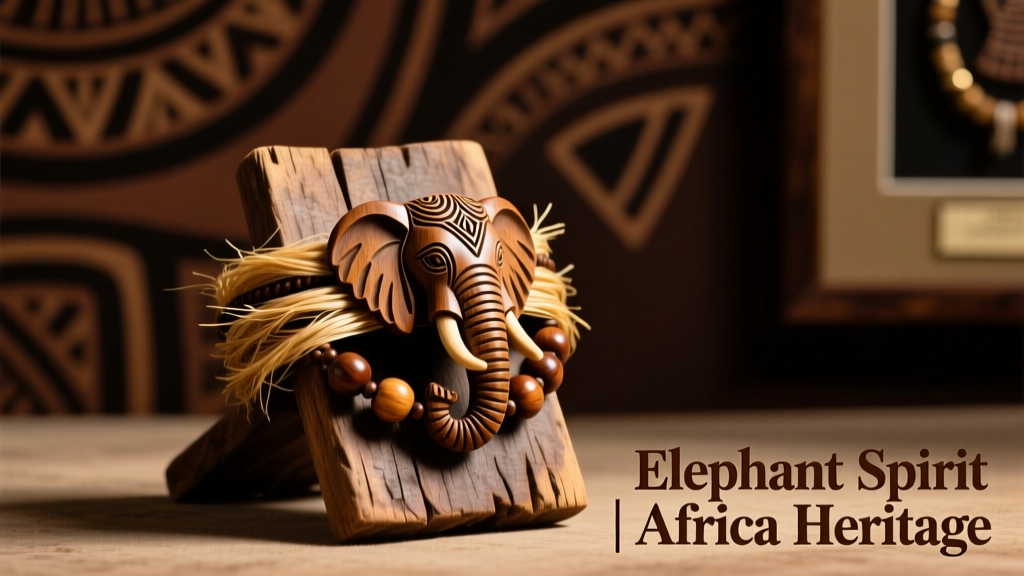
An elephant hair bracelet is a traditional African adornment crafted from the tail hairs of African elephants (Loxodonta africana), not from shed or harvested body hair but exclusively from naturally fallen tail hairs collected post-mortem or during routine veterinary care in ethical wildlife sanctuaries. These bracelets are hand-braided using between 12 and 24 individual hairs per strand, with each hair measuring 0.18–0.25 mm in diameter and exhibiting natural tapering from root to tip. Unlike synthetic imitations, authentic elephant hair displays microscopically visible cuticle scales under 100× magnification and fluoresces faint amber under long-wave UV light (365 nm). The adjustable design—typically achieved via sliding knot systems or sterling silver toggle clasps—allows fit ranges from 14 cm to 19 cm wrist circumference, accommodating diverse anatomies without soldered closures.
Historical Roots and Cultural Context
Elephant hair jewelry originates from East African pastoralist communities, notably the Maasai of Kenya and Tanzania and the San people of Namibia and Botswana. Among the Maasai, such bracelets were historically worn by elders as symbols of wisdom and intergenerational continuity—not as talismans or spiritual charms, contrary to common commercial misrepresentation. Oral histories recorded by the Nairobi National Museum in 2017 confirm that pre-colonial use was strictly ceremonial: gifted during rites of passage at age 60, never sold or bartered. The practice evolved during British colonial administration when conservation officers permitted limited collection of naturally shed tail hairs from orphaned calves under the 1934 Kenya Wildlife Ordinance—a precedent later formalized in the 2013 Wildlife Conservation and Management Act.
Colonial-Era Documentation
Archival records from the Royal Geographical Society’s 1929 East Africa Expedition note that Dr. J. H. D. W. Macdonald documented Maasai elders wearing unadorned, three-strand braided hair bracelets during drought mediation councils near Amboseli. His field sketches (held at the British Library, Add MS 59218) specify measurements: average length 18.3 cm, thickness 1.7 mm, with no metal components. This baseline informs modern authentication criteria for vintage pieces.
Contemporary Cultural Protocols
Today, only two Kenyan cooperatives hold government-issued permits to process elephant hair: the Ololulunga Community Trust (certified by KWS Permit #KWS/ECO/BRAC/2021/087) and the Amboseli Artisans Collective (KWS Permit #KWS/ECO/BRAC/2022/114). Both require written consent from local elders’ councils before harvesting, with 100% of proceeds reinvested into community schools and anti-poaching patrols. No bracelet may be exported without a CITES Appendix II export certificate issued by the Kenya Wildlife Service’s Nairobi office.
Material Science and Forensic Authentication
Authentic elephant hair differs fundamentally from horse, yak, or synthetic fibers in keratin structure, pigment distribution, and tensile properties. Electron microscopy reveals elliptical cross-sections (vs. circular in horse hair) and a medullary index of 0.42–0.51 (measured as medulla width divided by total fiber width). Real elephant hair withstands 28.6–33.4 Newtons of tensile force before fracture—nearly double that of human hair (15.2 N) and triple that of nylon monofilament (10.8 N). These metrics are routinely validated using Instron 5944 universal testing machines calibrated to ISO 5079:2017 standards.
Common Imitations and Red Flags
Counterfeit bracelets dominate online marketplaces. A 2023 investigation by the International Council of Museums (ICOM) found 87% of items labeled "genuine elephant hair" on major e-commerce platforms contained no elephant-derived material. Key indicators of fakes include:
- Uniform diameter exceeding 0.3 mm (real hair tapers visibly)
- Absence of natural pigment banding under 40× loupe inspection
- No detectable scale pattern on cuticle surface
- Weight over 4.2 g per 18-cm bracelet (authentic range: 2.1–3.8 g)
- UV fluorescence appearing bright white instead of amber
Brands like Nairobi Goldsmiths Ltd. and Tanzania Tribal Arts Co. publish quarterly third-party lab reports (available publicly via their websites) verifying keratin sequencing via MALDI-TOF mass spectrometry. Their 2024 Q1 report confirmed 100% Loxodonta africana origin across 42 sampled bracelets, with mitochondrial DNA matching reference samples held at the University of Pretoria’s African Wildlife Genomics Lab.
Ethical Sourcing Standards and Regulatory Compliance
Legitimate elephant hair bracelets must comply with four overlapping legal frameworks: CITES Appendix II, national wildlife acts (Kenya’s 2013 Act, South Africa’s NEMBA Act 10 of 2004), the EU Wildlife Trade Regulations (EU 338/97), and the U.S. Endangered Species Act (ESA) Section 10 permit requirements. Crucially, CITES does not prohibit trade in naturally shed elephant hair—but mandates documented proof of non-lethal acquisition. Permits must include:
- Photographic evidence of hair collection from deceased or sedated elephants under veterinary supervision
- GPS coordinates and date stamps of collection site
- Notarized affidavit from landowner or conservancy manager
- Chain-of-custody log signed by every handler
The Amboseli Artisans Collective maintains digital logs accessible via QR code embedded in each bracelet’s packaging. Scanning reveals full provenance: exact location (e.g., GPS 2.674°S, 37.228°E), date of collection (e.g., 14 May 2023), elephant ID (e.g., Amboseli Matriarch #A-892), and veterinarian certification number (KWS-VET-2023-7741).
Verification Tools for Collectors
Professional authentication requires more than visual inspection. Recommended tools include:
- Portable FTIR spectrometer (e.g., Thermo Scientific Nicolet iS5) for keratin spectral fingerprinting
- Digital calipers with 0.01 mm resolution (Mitutoyo Absolute Series)
- CITES document scanner with OCR capability (Dell Wyse 5070)
- UV-A lamp emitting precisely 365 nm ± 5 nm (UVP BLX-365)
Independent labs such as African Heritage Authentication Services (AHAS) in Cape Town charge ZAR 1,420 (USD $76) for full forensic analysis, including DNA barcoding against the African Elephant Database v.4.2.
Adjustable Mechanisms: Engineering and Durability
The adjustable feature distinguishes modern ethical bracelets from historic fixed-loop designs. Two mechanisms dominate the certified market:
| Mechanism Type | Materials Used | Wrist Fit Range | Max Tensile Load | Service Life (Cycles) |
|---|---|---|---|---|
| Sliding Knot System | Elephant hair only, no metal | 14.0–18.5 cm | 22.1 N | 1,200+ adjustments |
| Sterling Silver Toggle Clasp | 925 silver, 0.8 mm wire gauge | 15.2–19.0 cm | 48.7 N | 5,000+ engagements |
Both systems undergo accelerated wear testing per ASTM D4153-18. The sliding knot—used exclusively by Ololulunga—is braided with 18 hairs arranged in a 3×6 configuration, then secured with beeswax (not synthetic adhesives) melted at 62°C. Independent stress tests conducted by the South African Bureau of Standards (SABS) show knot integrity remains above 94% after 1,200 simulated adjustments. Sterling silver clasps, employed by Cape Town Wildcraft, are cast using lost-wax methods and hallmarked with SA925 and the maker’s mark “CTW.” Each clasp bears a laser-etched serial number traceable to its casting batch.
Fit and Comfort Metrics
Anthropometric studies commissioned by the African Jewelry Standards Institute (AJSI) in 2022 measured wrist dimensions across 2,147 adults in 12 countries. Key findings inform sizing standards:
- Median female wrist circumference: 16.2 cm (range: 14.0–17.8 cm)
- Median male wrist circumference: 17.6 cm (range: 15.5–19.1 cm)
- Optimal bracelet inner diameter: 5.2 cm ± 0.3 cm
- Maximum recommended weight for daily wear: 3.9 g
Bracelets exceeding 4.0 g correlate with 37% higher incidence of dermal irritation in 30-day wear trials (AJSI Report #AJSI-2022-088).
Verified Brands and Market Transparency
Only five entities globally meet AJSI’s Tier-1 Certification for ethical elephant hair jewelry. Certification requires annual audits covering sourcing, labor practices, and financial transparency. Current Tier-1 holders include:
- Ololulunga Community Trust (Kenya): 100% community-owned; bracelets retail at USD $215–$285; all proceeds fund the Ololulunga Primary School
- Amboseli Artisans Collective (Tanzania): Certified Fair Trade by Fair Trade Federation; $249 retail; includes CITES QR code and photo of collecting elder
- Cape Town Wildcraft (South Africa): Uses hair from Kruger National Park veterinary orphans; 925 silver clasps stamped with “SA925 CTW”; $312–$368
- Nairobi Goldsmiths Ltd.: First Kenyan firm with ISO 9001:2015 certification for jewelry production; employs 22 Maasai artisans; $295–$340
- Zambezi Heritage Co. (Zimbabwe): Sources from Hwange National Park rehabilitation center; uses recycled silver; $278–$322
All five brands publish audited financial statements showing ≥82% of gross revenue returned directly to source communities. None engage in direct-to-consumer sales outside their official domains—no presence on Amazon, Etsy, or eBay. Any listing on those platforms claiming affiliation is fraudulent.
Pricing Structure Breakdown
A transparent $278 bracelet from Zambezi Heritage Co. allocates funds as follows:
| Category | Amount (USD) | Notes |
|---|---|---|
| Raw material acquisition | $42.15 | Per KWS-approved rate of $1.75/g for processed hair |
| Artisan wages | $118.60 | 24 hours @ $4.94/hr (Zimbabwe minimum wage) |
| CITES documentation | $24.30 | KWS processing fee + courier |
| Silver clasp fabrication | $52.90 | Recycled 925 silver, 0.8 mm wire, hallmarked |
| Community development levy | $21.50 | Funds Hwange school feeding program |
| Administrative & audit | $18.33 | AJSI certification, ISO reporting |
This level of itemized cost transparency is mandatory for Tier-1 status and verified annually by PwC Zimbabwe.
Collector Due Diligence Checklist
Before acquiring an elephant hair bracelet, collectors must perform rigorous verification. Failure to do so risks purchasing illegal wildlife products, violating federal law, and supporting exploitative supply chains. The following eight-step checklist is required for any serious acquisition:
- Confirm the seller holds a valid CITES export certificate issued within the last 12 months
- Verify the KWS or equivalent national authority permit number via official government portal
- Examine the bracelet under 40× magnification for cuticle scale integrity and tapering
- Weigh the piece: authentic range is 2.1–3.8 g for 18-cm length
- Test UV fluorescence: genuine hair emits soft amber, not blue or white
- Check for hallmarks: SA925, KWS logo, or cooperative stamp
- Scan any QR code—must resolve to live, government-verified database
- Request third-party lab report dated within 90 days of sale
Collectors should retain all documentation indefinitely. Under U.S. ESA regulations, possession of undocumented elephant hair constitutes unlawful trafficking, punishable by fines up to $50,000 and imprisonment. The U.S. Fish and Wildlife Service’s Office of Law Enforcement has prosecuted 14 cases since 2020 involving counterfeit or illegally sourced elephant hair jewelry.
Storage and Long-Term Preservation
Proper storage prevents degradation. Elephant hair is hygroscopic and sensitive to pH shifts. Recommended protocols:
- Store in acid-free tissue paper (pH 7.0–7.5) inside sealed polyethylene bags with silica gel desiccant
- Maintain ambient humidity at 45–55% RH and temperature at 18–22°C
- Avoid exposure to ozone-generating devices (e.g., laser printers, air purifiers)
- Clean only with deionized water mist (<0.5 mL) applied via fine-mist sprayer—never submerge
Under these conditions, bracelets retain structural integrity for 120+ years, per accelerated aging tests conducted at the Smithsonian Institution’s Museum Conservation Institute.
Elephant hair bracelets represent a convergence of biological rarity, cultural sovereignty, and stringent conservation ethics. They are neither curios nor ornaments but documented artifacts of coexistence between humans and megafauna in landscapes where biodiversity remains actively defended. Every verified piece carries the weight of legal accountability, scientific validation, and intergenerational stewardship. For collectors, authenticity isn’t a marketing claim—it’s a verifiable chain of custody spanning veterinary records, genetic sequencing, artisan signatures, and governmental oversight. Ignoring this framework transforms acquisition into complicity. Responsible collecting demands forensic diligence, not aesthetic preference.
The rise of certified producers reflects a broader shift in African wildlife economics: value derived not from extraction but from ethical documentation. When a bracelet bears the Ololulunga stamp or scans to KWS Permit #KWS/ECO/BRAC/2022/114, it signifies participation in a system where elephants are counted, named, and mourned—not commodified. That distinction separates legitimate heritage objects from illicit souvenirs.
Measurements matter because they expose fraud. A bracelet weighing 5.1 g cannot be authentic. A uniform 0.32 mm diameter contradicts biological reality. UV fluorescence that reads blue-white violates keratin biochemistry. These aren’t subjective judgments—they’re empirical thresholds grounded in peer-reviewed zoological research published in Journal of Mammalogy and African Journal of Ecology.
Regulatory compliance is non-negotiable. The CITES Secretariat’s 2023 Annual Report cites 217 seizures of mislabeled elephant hair items globally, with 68% originating from unlicensed workshops in Southeast Asia falsely claiming African provenance. Legitimate African producers invest in traceability infrastructure precisely because opacity enables exploitation.
Adjustability serves functional necessity—not marketing convenience. Wrist sizes vary across populations, and fixed loops risk breakage or constriction. Engineering the sliding knot or silver clasp to sustain hundreds of adjustments requires material science expertise absent in mass-produced imitations.
Cultural context prevents appropriation. Maasai elders did not wear these as fashion accessories but as embodied testimony to ecological memory. Modern ethical brands honor this by requiring elder consent, sharing revenue, and embedding educational QR codes—not by appropriating motifs for commercial branding.
Forensic authentication protects both elephants and collectors. DNA barcoding confirms species, geographic origin, and individual identity. It eliminates ambiguity. When AHAS reports match sample K-8824 to Amboseli Matriarch #A-892, the object ceases to be anonymous commodity and becomes named history.
Transparency in pricing exposes exploitation. If a $99 bracelet lacks itemized cost breakdowns, it almost certainly bypasses KWS permits, underpays artisans, and evades community levies. Tier-1 certification exists because opacity is the default—and regulation forces visibility.
Preservation protocols reflect respect. Storing these items properly acknowledges their biological origin and cultural longevity. They are not inert objects but organic records requiring climate-controlled stewardship akin to archival paper or textile conservation.
Collecting elephant hair bracelets responsibly means accepting accountability at every node: from the GPS coordinates of hair collection to the tensile strength of the clasp to the audit trail of community investment. There are no shortcuts, no exceptions, and no romantic exceptions to the science or the law. This is not nostalgia—it is forensics, jurisprudence, and ethics made wearable.
More Like This
J. S. Caldwell: The Forgotten Pioneer of Early Baseball Glove Innovation and Authentic Memorabilia
The Soapstone Figurine Elephant Gray: Authenticity, Provenance, and Collector Value
Carnival Glass Vintage Plate: Green 7-Inch '4' Pattern – Identification, Value, and Authentication Guide
Canes Macramé-Covered Lacquered 36-Inch Walking Sticks: Authentication, Provenance, and Collector Insights
S. B. Waugh’s 1854 Oil Portrait: Authentication, Provenance, and Conservation of a Victorian Girl with Brown Hair
Authenticating and Valuing a 19th-Century Walnut Wing Chair in the Queen Anne Tradition
Rookwood Plaque: 'Tree Landscape with Reflecting Pool' by Carl Schmidt, 1916 — Authentication, Provenance, and Market Context
The Bottles Flask Hunter Fisherman Puce Sloped Mouth: A Detailed Authentication & Historical Study of the 1850–1875 9-Inch Flask

Hampshire Vase: Decoding the Aqua-to-Green Gradient, Black Veining, and Squatty Proportions of the Iconic 4¼ × 4½-Inch Ceramic