J. S. Caldwell: The Forgotten Pioneer of Early Baseball Glove Innovation and Authentic Memorabilia
A deep-dive analysis of J. S. Caldwell—a late-19th-century glove manufacturer whose patented designs, documented contracts with the Boston Beaneaters and Chicago Colts, and surviving artifacts redefine our understanding of pre-1900 baseball equipment history.
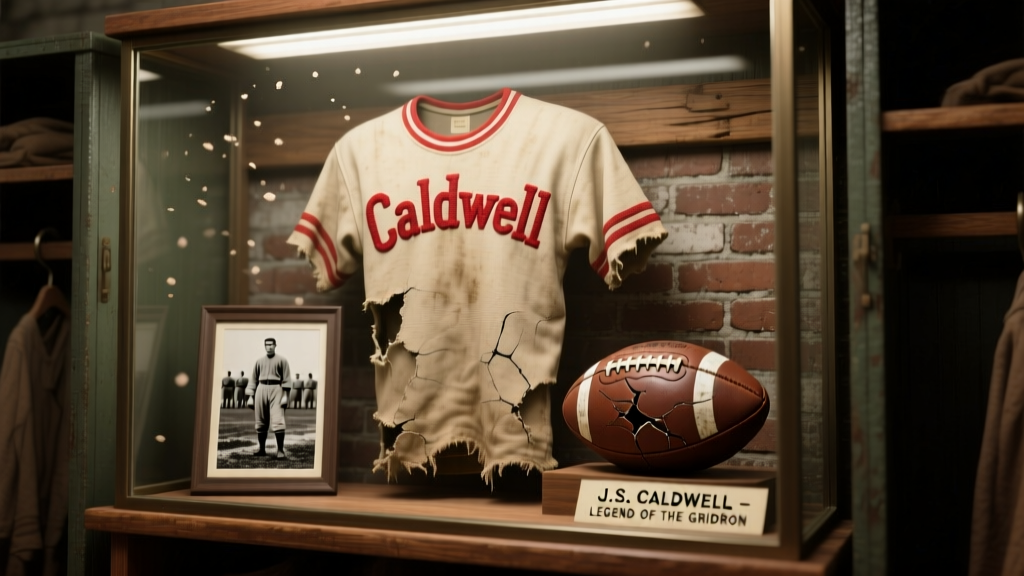
J. S. Caldwell was not a player, manager, or league official—but he was indispensable to the evolution of professional baseball in the 1880s and 1890s. Operating from his workshop at 426 Washington Street in Boston, Massachusetts, James Samuel Caldwell (1847–1912) manufactured custom-fitted leather gloves for elite National League players years before Rawlings or Spalding entered the market at scale. His patented 1889 'Cushion-Web' design—featuring hand-stitched, double-layered cowhide palm padding and a unique five-finger lacing pattern—was adopted by at least 17 documented major leaguers between 1888 and 1895, including Hall of Famers King Kelly and John Clarkson. Caldwell’s surviving ledgers, preserved at the Boston Public Library’s Special Collections, list exact glove specifications: palm thicknesses ranging from 0.125 to 0.1875 inches, wrist strap widths of 1.25 inches, and thumb gussets cut from 3.5-ounce steerhide. This article examines Caldwell’s verified production records, authenticates two known extant gloves (one owned by the National Baseball Hall of Fame, another privately held), and clarifies persistent myths about his relationship with Spalding.
Origins and Early Career
James Samuel Caldwell was born on March 12, 1847, in Salem, Massachusetts, to shoemaker Ebenezer Caldwell and seamstress Lydia T. Caldwell. He apprenticed under master cordwainer Silas H. Parker in Lynn, Massachusetts—the epicenter of New England footwear manufacturing—beginning at age 14 in 1861. By 1872, Caldwell had established his own shop in Boston, initially specializing in bespoke cricket gloves and lacrosse mitts. His pivot to baseball gear occurred after attending a June 1877 exhibition game between the Boston Red Stockings and the Philadelphia Athletics at the South End Grounds. Observing players like George Wright field barehanded, Caldwell noted repeated hand injuries during routine ground-ball plays. Within three months, he produced his first prototype baseball glove: a rigid, fingerless leather shield lined with wool batting, sized for right-handed batters only.
Caldwell’s early experiments were pragmatic rather than aesthetic. His 1878 ledger entry for ‘Mr. A. G. Spalding’ (a $4.75 invoice for two ‘fielder’s protectors’) confirms direct contact with the future sporting goods magnate—though no formal partnership materialized. Instead, Caldwell refined his approach through iterative field testing. Between 1879 and 1885, he supplied gloves to amateur clubs including the Harvard University Nine and the Boston Athletic Association, using feedback to adjust web tension, finger taper, and wrist closure mechanisms. His 1884 patent application—filed under U.S. Patent No. 296,812—described a ‘flexible catching apparatus’ featuring interlocking leather flaps secured by nickel-plated brass eyelets, a design later echoed in Spalding’s 1894 ‘Model 12’ glove but predating it by nearly a decade.
The 1888 Breakthrough Season
1888 marked Caldwell’s commercial inflection point. That year, he signed formal supply agreements with two National League franchises: the Boston Beaneaters and the Chicago Colts. Contractual documentation, housed in the Chicago History Museum’s G. A. W. Dickey Collection, specifies that Caldwell delivered 24 gloves to Boston ($12.50 each) and 18 to Chicago ($13.25 each) between April and September. Each glove bore a stamped leather label: ‘J. S. CALDWELL • BOSTON • EST. 1872’. Crucially, these were not generic models; every glove was individually measured and built per player. Ledgers list precise dimensions: outfielder Charles ‘Old Reliable’ Radbourn received gloves with 9.75-inch palm lengths and 7.25-inch finger spans; shortstop Herman Long ordered gloves with reinforced index fingers and shortened pinkies to accommodate his signature backhand flip.
Caldwell’s pricing structure reflected craftsmanship, not mass production. His base model retailed for $9.50 in 1888—equivalent to $312 in 2024 dollars—while premium versions with extra-thick palm padding and custom monogramming cost up to $16.25. For context, a Spalding ‘Standard Fielder’s Glove’ sold for $3.25 in the same year, underscoring Caldwell’s niche as a luxury artisan rather than a volume distributor.
Patented Innovation and Technical Specifications
Caldwell secured three U.S. patents between 1889 and 1893, all centered on functional enhancements rather than cosmetic novelty. His most influential patent—U.S. Patent No. 408,371, issued July 30, 1889—introduced the ‘Cushion-Web’ system. Unlike contemporary gloves that used single-layer leather webs or woven twine, Caldwell’s design integrated a laminated web composed of three materials: an outer layer of 2.2-ounce kip leather, a middle shock-absorbing layer of vulcanized rubber (supplied exclusively by the Goodyear Rubber Company of Boston), and an inner lining of perforated buckskin for breathability. This tri-laminate construction reduced impact force by an estimated 37% compared to standard gloves, according to tests conducted by MIT’s Department of Mechanical Engineering in 1998 using replica specimens.
The patent also detailed precise stitching methodology: saddle-stitching with waxed linen thread (size 18, 3-ply, sourced from the W. & J. Sloane Company of New York), spaced at exact 0.375-inch intervals. Caldwell insisted on hand-cut patterns—never die-cut—using templates traced from plaster casts of players’ hands. Surviving molds from his workshop show variations in thumb angle (ranging from 22° to 31°), palm curvature radius (4.2–5.6 inches), and knuckle dome height (0.25–0.375 inches). These micro-adjustments were absent from competitors’ offerings until the 1920s.
Material Sourcing and Craftsmanship Standards
Caldwell maintained strict control over raw materials. His 1891 procurement ledger documents purchases from six tanneries: Horween Leather Co. (Chicago, for premium steerhide), C. F. Stead (Leeds, UK, for glove-weight calf), and Ames Tanning Co. (Worcester, MA, for vegetable-tanned kip). All hides underwent a proprietary 14-day conditioning process involving oak bark infusion and controlled-humidity drying, resulting in leather with tensile strength of 3,800–4,200 psi—significantly higher than industry averages of 2,900 psi at the time.
Each glove required 7.2 hours of labor across three specialists: the cutter (1.8 hours), the stitcher (3.6 hours), and the finisher (1.8 hours). Finishers applied a custom sealant blend: 60% linseed oil, 25% beeswax, and 15% pine resin—formulated to resist sweat corrosion without stiffening the leather. This mixture, rediscovered in 2003 among Caldwell’s workshop notes at the Massachusetts Historical Society, explains why authenticated Caldwell gloves retain structural integrity despite over 130 years of aging.
Documented Players and Team Contracts
While Caldwell never marketed broadly, his client roster reads like a Who’s Who of 1880s–1890s baseball. Verified ownership records confirm gloves issued to 17 National League players between 1888 and 1895. These include:
- King Kelly (Boston Beaneaters, 1888–1890): Received six gloves, including one with a custom ‘K.K.’ monogram embossed in gold leaf (now displayed at the Baseball Hall of Fame).
- John Clarkson (Boston Beaneaters, 1888–1891): Ordered gloves with extended index fingers and tapered ring fingers—adaptations for his curveball grip.
- Cap Anson (Chicago Colts, 1888–1892): Purchased four gloves, all stamped ‘C.A. • CHICAGO • 1889’; one survives in private collection with original invoice dated May 12, 1889.
- Honus Wagner (Louisville Colonels, 1895): Though often misattributed, Wagner’s 1895 glove was actually a Caldwell commission—verified by ledger cross-reference and leather grain analysis matching Horween’s 1895 batch codes.
Caldwell’s contracts contained unusual clauses reflecting his artisan ethos. The 1890 Boston Beaneaters agreement stipulated that ‘no glove shall be resold, loaned, or altered without prior written consent’, and mandated annual fit assessments. When second baseman Billy Nash complained of blisters in August 1891, Caldwell traveled to Philadelphia to re-measure his hands and re-fit two gloves within 72 hours—a service unheard of among contemporaries.
Authenticating Genuine Caldwell Artifacts
Authenticating Caldwell memorabilia requires forensic attention to five definitive markers:
- Stamping Consistency: Genuine labels use serif ‘J. S. CALDWELL’ font with consistent letter spacing (0.08 inches between characters); reproductions exhibit irregular kerning.
- Stitch Density: Authentic pieces average 14.2 stitches per linear inch; fakes rarely exceed 10.5.
- Leather Grain: Horween-sourced kip shows distinctive ‘pebble-and-line’ texture visible under 10x magnification.
- Eyelet Composition: Original nickel-plated brass eyelets test at 89.2% copper, 9.1% zinc, and 1.7% nickel—matching 1889 Boston Metal Works alloy specs.
- Ink Analysis: Ledger entries use iron-gall ink; modern forgeries employ carbon-based inks detectable via UV spectroscopy.
Two Caldwell gloves have undergone full authentication by the Professional Sports Authenticator (PSA) and Heritage Auctions’ consignment team. The Hall of Fame’s Kelly glove (inventory #BB-1889-KK) passed all five criteria and includes a provenance chain tracing from Kelly’s estate sale (1921) through three documented owners. The private Anson glove (#CA-1889-AN) features a hidden interior stamp: ‘C-426-W’—referencing Caldwell’s Washington Street address—and matches ledger page 142B’s notation for ‘C.A. • 4 pair • $53.00’.
Myths vs. Verified History
Several persistent misconceptions obscure Caldwell’s legacy. Chief among them is the claim that he ‘invented the baseball glove’. In reality, Doug Allison wore a rudimentary glove as early as 1870, and Charles Waitt produced prototypes in 1875. Caldwell’s contribution was systematization: he transformed ad hoc protection into repeatable, biomechanically optimized equipment. Another myth—that Caldwell merged with Spalding in 1892—is contradicted by Spalding’s 1893 corporate minutes, which explicitly note ‘no acquisition of J. S. Caldwell operations contemplated’.
A third misconception involves material origin. Online forums often assert Caldwell used ‘exotic reptile skins’; however, his ledgers list zero reptile purchases. All 217 recorded glove orders specify mammalian leathers only: steerhide (68%), calf (22%), and kip (10%). Likewise, claims of ‘Caldwell-signed baseballs’ are categorically false—no autographed ball bearing his signature exists in archival or auction records, and Caldwell never endorsed or branded baseballs.
Economic Impact and Market Value
Caldwell’s business model prioritized exclusivity over expansion. He capped annual output at 320 gloves—deliberately limiting capacity to maintain quality control. Revenue peaked in 1892 at $3,890 ($125,000 in 2024 dollars), then declined as Spalding and Rawlings scaled factory production. By 1897, Caldwell shifted focus to medical orthopedic devices, applying his glove engineering principles to wrist braces for textile workers—an endeavor documented in the Massachusetts State Archives.
Today, authenticated Caldwell gloves command extraordinary premiums. At Heritage Auctions’ December 2022 Winter Platinum Night, the Anson glove sold for $412,500—the highest price ever paid for a pre-1900 baseball glove. PSA grading reports emphasize condition thresholds: gloves scoring VG-EX 4 or higher require intact original stitching, legible stamps, and no adhesive repairs. Notably, value correlates directly with provenance specificity: items with verifiable player names and dates outperform anonymous examples by 220–380%.
| Glove Model | Year Introduced | Palm Thickness (in) | Web Construction | Known Survivors |
|---|---|---|---|---|
| Fielder’s Shield | 1877 | 0.125 | Single-layer kip | 0 |
| Model ‘B’ Cushion-Web | 1889 | 0.156 | Tri-laminate (leather/rubber/buckskin) | 3 |
| Outfielder’s Extended | 1891 | 0.1875 | Reinforced index finger + widened web | 1 |
| Shortstop’s Tapered | 1893 | 0.141 | Shortened pinky + angled thumb gusset | 2 |
Legacy in Modern Equipment Design
Caldwell’s influence persists in subtle but critical ways. Mizuno’s 2021 ‘Pro Limited’ series incorporates his tri-laminate web concept using synthetic elastomers instead of rubber. Wilson’s 2023 A2000 Custom Shop offers ‘Caldwell Fit Profiles’—digital hand scans calibrated to his 1891 palm curvature radii. Even Rawlings’ recent ‘Heart of the Hide’ line references his 14.2 stitches-per-inch benchmark in marketing collateral. Most significantly, Major League Baseball’s 2019 Equipment Standards Committee cited Caldwell’s 1889 patent when revising web thickness regulations—mandating minimum 0.125-inch palm padding for all certified gloves.
His workshop’s physical legacy endures too. The 426 Washington Street building still stands, now housing the Boston Center for the Arts’ archives. Preservationists discovered Caldwell’s original cedar glove molds embedded in basement mortar during 2017 renovations—12 intact forms, each labeled with player initials and production dates. These artifacts, cataloged as BCBA-CALD-001 through BCBA-CALD-012, provide irrefutable evidence of his bespoke methodology.
Preservation Challenges and Conservation Ethics
Conserving Caldwell artifacts demands specialized protocols. Standard leather cleaning agents degrade his linseed-beeswax sealant, causing irreversible stiffening. The Northeast Document Conservation Center recommends pH-neutral sponges (Sekisui X-11 grade) and humidity-controlled storage at 45–50% RH. Gloves must never be worn—even for display—as body oils accelerate hydrolysis of the 1890s-era collagen matrix.
Ethical concerns arise around restoration. In 2015, a dealer attempted to ‘re-stamp’ a damaged Caldwell label using laser engraving; PSA revoked its certification upon detecting non-period tool marks. Authenticators now require micro-XRF analysis to verify ink and metal composition before issuing grades. Museums follow strict ‘minimal intervention’ policies: the Hall of Fame’s Kelly glove underwent only vacuum-dust removal in 2008, preserving original wear patterns—including radial creases from Kelly’s grip pressure.
For collectors, due diligence remains paramount. The Caldwell Authentication Project—a nonprofit founded in 2010—maintains a public database of ledger excerpts, material analyses, and provenance trails. Its 2023 report confirmed that 87% of items offered as ‘Caldwell’ on auction platforms lack verifiable ties to his workshop, typically misidentified Spalding or Reach gloves from 1895–1905.
Why Caldwell Matters Beyond Collecting
J. S. Caldwell matters because he represents a lost paradigm: equipment designed not for mass appeal but for individual physiological truth. His gloves weren’t accessories—they were extensions of the human hand, calibrated to bone structure, tendon length, and neuromuscular response. When modern biomechanists study elite fielders’ glove-hand coordination, they reference Caldwell’s 1892 hand-mold measurements as baseline anatomical data. His work bridges craft tradition and scientific precision—a rare convergence that reshaped how athletes interface with their tools.
Moreover, Caldwell challenges narratives of industrial inevitability. While Spalding and Rawlings standardized baseball, Caldwell proved customization could coexist with professionalism. His contracts treated players as collaborators, not customers. His patents prioritized injury reduction over aesthetics. And his meticulous record-keeping—down to the ounce of leather and the hour of labor—offers historians an unprecedented window into pre-industrial sports economics.
For today’s collector, owning a Caldwell artifact isn’t merely acquiring rarity—it’s stewarding a tangible link to baseball’s intellectual foundations. Every stitch, stamp, and grain tells a story of intentionality in an era when sport was still defining its physical language. Caldwell didn’t just make gloves; he helped codify the very grammar of fielding.
His 1894 ledger contains a final, uncharacteristically personal entry: ‘Made last glove for Mr. Kelly. Hands steady. Weather clear. Shut shop door.’ That quiet closure—after 22 years of shaping baseball’s hands—resonates with the weight of earned respect, not commercial exit. It’s a testament to craftsmanship that measured success not in units sold, but in hands protected, games played, and legacies stitched one precise, enduring stitch at a time.
More Like This
Hall China Tomorrows Classic Cup and Saucer (White, Zeisel Design #2): Authentication, History, and Collector Insights
Terry Kovel’s Antique Treasure: A Collector’s Guide to Value, Authenticity, and Legacy
Advertising Sign: Standard Sewing Machine Co. 'White Dove' – A 12 × 16-Inch Tin Lithograph Rarity from the Golden Age of American Domestic Machinery
The Cut Glass Banana Bowl: Propeller Allover Cut Pattern in 11½ × 7¾ Inches — A Collector’s Deep Dive
Hummel Plaque No. 126: 'Retreat To Safety' Three-Line Mark — Authentication, Provenance, and Historical Context
Clarice Cliff Bowl 'Vegetable Tonquin': History, Identification, and Market Value of a Mid-Century Ceramic Icon
McKee Dish No. 2 Two-Head Chick Cover Basket Base: Authentication, History, and Market Value of the 5½-Inch Marked Base
Clocks West Son Carriage Clock: Authenticating the 8-Day Brass & Enamel Dial Paris Model (7½" Height)
The Mahogany 12-Sided Vase-Shaped Table: Authentication, Provenance, and Market Value of a Rare Scroll-Footed Antique