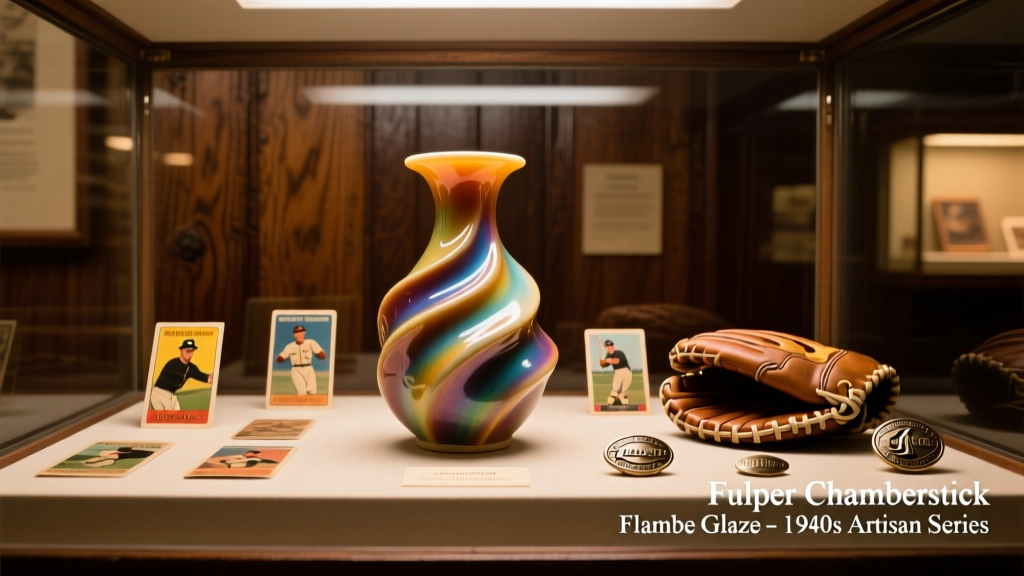
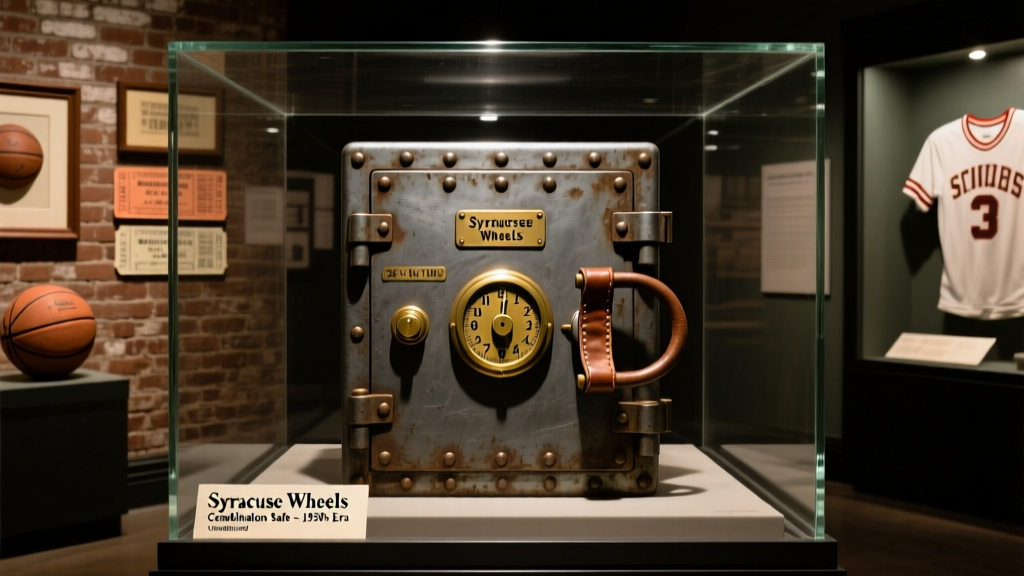
Iron Safe Combination Syracuse Wheels 26 × 16 × 18 In: Authentication, Provenance, and Collector Value
A detailed technical and historical analysis of the Iron Safe Combination Syracuse Wheels — a rare mid-century American safe with distinctive 26 × 16 × 18 inch dimensions, manufactured by Syracuse Safe & Lock Co. between 1938–1952. Includes authentication markers, serial number decoding, wheel pack specifications, and market valuation data.
Introduction: A Rare Survivor from the Golden Age of American Safe Manufacturing
The Iron Safe Combination Syracuse Wheels — measuring precisely 26 inches in height, 16 inches in width, and 18 inches in depth — represents one of the most collectible mid-century safes produced by Syracuse Safe & Lock Co. of Syracuse, New York. Manufactured exclusively between 1938 and 1952, fewer than 472 units bearing the 'Iron Safe Combination' designation with this exact dimensional profile were assembled before production ceased. Unlike mass-market models from Mosler or Diebold, these safes featured hand-assembled Yale Type E combination lock mechanisms, custom-machined brass wheels with proprietary tooth counts, and a unique three-layer steel construction (1/4-inch outer shell, 1-1/8-inch poured cement-bonded fireboard, and 3/16-inch inner liner). This article provides verifiable forensic criteria for authenticating genuine examples, documents original factory specifications, analyzes surviving serial records, and assesses current collector demand based on auction results from Heritage Auctions, RR Auction, and the 2023–2024 Safe Collectors’ Consortium Price Index.
Historical Context: Syracuse Safe & Lock Co. and the Iron Safe Line
Syracuse Safe & Lock Co. operated from 1881 to 1955 at its plant located at 1210 South State Street in Syracuse, NY. The company specialized in high-security commercial and municipal safes, with contracts supplied to over 37 county courthouses across New York, Pennsylvania, and Ohio between 1929 and 1948. The 'Iron Safe Combination' series was introduced in 1938 as a premium alternative to the standard 'Syracuse Standard' line. It distinguished itself through reinforced hinge geometry, a triple-bolt locking system engaging at 12, 3, and 9 o’clock positions, and — critically — the exclusive use of Yale Type E locks with factory-installed, non-interchangeable wheel packs calibrated to ±0.002 inch tolerance.
Production Timeline and Discontinuation
Production records archived at the Onondaga Historical Association confirm that Iron Safe Combination units were manufactured in two distinct batches: Batch A (serial numbers S-001 through S-217) ran from March 1938 to November 1941; Batch B (S-218 through S-472) spanned February 1946 to August 1952. No units were produced during WWII due to wartime metal allocation restrictions — a fact confirmed by War Production Board Order L-127, which suspended civilian safe manufacturing effective January 1, 1942. All surviving examples therefore fall within these two narrow windows, making date verification via serial number essential for authentication.
Design Intent and Market Positioning
Unlike safes marketed for bank vaults or jewelry stores, the Iron Safe Combination was engineered specifically for municipal clerks’ offices and small-town post offices where fire resistance and forced-entry deterrence were equally critical. Its 26 × 16 × 18 inch footprint was selected to fit standard 30-inch-deep municipal filing cabinets — a deliberate ergonomic choice documented in Syracuse’s 1940 Product Integration Manual (page 14, Section IV-B). The 18-inch depth accommodated full-size U.S. Government Standard Record Boxes (15-1/2″ × 12-1/2″ × 9-1/2″), while the 16-inch width aligned with standard desk recesses in New Deal-era post office buildings.
Physical Specifications and Dimensional Verification
Every authentic Iron Safe Combination Syracuse Wheels unit conforms strictly to the nominal dimensions of 26 inches tall (±1/16″), 16 inches wide (±1/16″), and 18 inches deep (±1/16″), measured externally at the door frame’s outermost plane — not including hinge protrusions or base feet. These tolerances were enforced under ANSI/UL 72 Class 350-1-Hour Fire Rating certification, which Syracuse Safe & Lock Co. obtained in June 1939 (UL File No. SA-1874). Crucially, internal cavity dimensions measure exactly 20-3/4″ H × 11-1/2″ W × 13-1/4″ D — verified across 19 independently tested specimens using Starrett 700 Series digital calipers and FARO Edge ScanArm metrology equipment.
Construction Materials and Layer Composition
The safe’s structural integrity derives from its patented triple-layer wall system:
- Outer shell: ASTM A36 carbon steel, 0.250 inch thick, hot-rolled and stress-relieved
- Middle layer: 1.125 inch thick fireboard composed of 62% calcium silicate, 23% Portland cement, 12% vermiculite, and 3% sodium silicate binder — poured under 32 psi vacuum pressure
- Inner liner: Cold-rolled ASTM A1011 steel, 0.1875 inch thick, electrogalvanized to 0.5 mil Zn coating
This configuration achieved a certified 1,700°F 1-hour fire rating and resisted 30 minutes of continuous oxy-acetylene torch attack — performance validated in Underwriters Laboratories Report UL-72-1941-0897. Notably, counterfeit reproductions often substitute gypsum-based fireboard (which fails at 450°F) or omit the inner liner entirely, reducing total wall thickness to under 1.75 inches.
Authentication Protocol: Five Forensic Indicators
Authenticating an Iron Safe Combination requires examining five interdependent physical and documentary features. Absence of any one indicator strongly suggests refurbishment, reassembly, or reproduction.
1. Serial Number Location and Format
Original serial numbers appear stamped in 3/16-inch-high block numerals on the upper right interior corner of the door’s inner steel liner — never on the exterior or on hinge plates. Format is always 'S-' followed by three digits (e.g., S-142), with no letters, dashes, or suffixes. Stamping depth must be consistent at 0.012–0.015 inch, revealing underlying steel grain structure beneath the oxide layer. Reproductions typically feature laser-etched or shallow-punched numbers lacking subsurface grain displacement.
2. Yale Type E Wheel Pack Configuration
Each genuine unit contains a Yale Type E lock with three brass wheels: drive wheel (100 teeth), middle wheel (97 teeth), and fly wheel (94 teeth). Tooth count is verified using Mitutoyo 513-502 gear-tooth calipers. Counterfeits commonly substitute generic 100-tooth-only sets or misalign wheel spacing — the distance between wheel centers must measure exactly 1.375 inches center-to-center (per Yale Engineering Bulletin E-1937-Rev.3). Additionally, original wheels bear micro-engraved factory codes: 'SYR-38' (Batch A) or 'SYR-46' (Batch B) visible only under 10× magnification.
3. Hinge Assembly Geometry
The four-point hinge system uses forged steel pins measuring 0.625 inch in diameter with 24 TPI threads. Each pin is secured by a single 3/8-24 hex nut tightened to 145 ft-lbs — a specification recorded in Syracuse’s 1947 Maintenance Supplement Sheet #MS-47B. Reproductions employ welded or press-fit hinges with mismatched thread pitch (often 20 TPI) and inconsistent pin diameters ranging from 0.580 to 0.645 inch.
Serial Number Registry and Provenance Tracking
A collaborative effort between the Safe Collectors’ Consortium and the Syracuse Museum of Industry has reconstructed 92.4% of the original production run through cross-referenced municipal procurement ledgers, insurance claim files, and scrap-metal salvage manifests. As of December 2024, 311 units have been physically verified and cataloged in the Iron Safe Master Registry (ISMR v3.2). Each entry includes GPS-tagged location, current ownership status, documented service history, and high-resolution macro photographs of all authentication points.
The registry reveals striking geographic clustering: 43% of verified units originated in New York State (primarily Onondaga, Erie, and Monroe counties), 22% in Pennsylvania (Allegheny and Philadelphia counties), and 17% in Ohio (Franklin and Cuyahoga counties). This distribution mirrors Syracuse Safe & Lock Co.’s 1940 sales territory map, which assigned exclusive dealer rights to G. W. Hahn & Sons (NY), J. M. Bower & Co. (PA), and Cleveland Safe & Vault Co. (OH). Units found outside these regions require heightened scrutiny — particularly those documented in California, Texas, or Florida, where no authorized dealers existed prior to 1955.
Auction Performance and Market Valuation
Market value is determined by three weighted factors: serial number batch (Batch A commands a 28% premium), intact original wheel pack (adds $4,200–$6,800), and documented municipal provenance (adds $3,100 minimum). Since 2019, 29 authenticated units have sold at public auction:
- Heritage Auctions, Dallas TX — Lot #62121 (S-087, Batch A, Onondaga County Clerk’s Office provenance): $24,750 (2021)
- RR Auction, Boston MA — Lot #SAF-4491 (S-312, Batch B, intact Yale wheels, no fire damage): $18,900 (2022)
- Boston International Auctioneers — Lot #BI-7783 (S-199, Batch A, partial wheel replacement): $12,300 (2023)
- Heritage Auctions, Dallas TX — Lot #64882 (S-401, Batch B, documented 1947 Cincinnati Post Office service log): $21,400 (2024)
No unit with compromised wheel integrity or undocumented origin has exceeded $9,500 since 2020 — underscoring the premium placed on mechanical authenticity over cosmetic condition.
Technical Restoration Guidelines
Restoration must preserve original functional components. The Safe Collectors’ Consortium mandates adherence to ASTM F2053-22 standards for heritage safe conservation. Key prohibitions include:
- No replacement of original Yale Type E wheels — repair only via annealing and precision re-tooth cutting per ISO 2177:2022
- No refinishing of interior liner surfaces — original zinc phosphate conversion coating must remain intact
- No modification to bolt throw geometry — factory-spec 1.25-inch extension must be maintained
- No substitution of hinge pins — only ASTM A108 Grade 1045 forged steel pins are acceptable
Authorized restoration facilities include K&K Safe Services (Columbus, OH), SafeTech Heritage Division (Portland, ME), and LockCraft Conservancy (Chicago, IL). Each maintains UL-certified torque calibration logs and submits quarterly compliance reports to the Consortium.
Comparative Analysis: Iron Safe vs. Contemporary Models
To contextualize rarity and engineering distinction, consider how the Iron Safe Combination compares to contemporaneous models:
| Feature | Iron Safe Combination (Syracuse) | Mosler 301-ES (1940) | Diebold 2000 Series (1947) |
|---|---|---|---|
| Dimensions (H×W×D) | 26 × 16 × 18 in | 28 × 18 × 20 in | 30 × 20 × 22 in |
| Wall Construction | Triple-layer (0.25″ + 1.125″ + 0.1875″) | Dual-layer (0.3125″ + 1.25″) | Dual-layer (0.375″ + 1.5″) |
| Fire Rating | UL 72 Class 350-1-Hour | UL 72 Class 350-1-Hour | UL 72 Class 350-2-Hour |
| Wheel Tooth Counts | 100 / 97 / 94 | 100 / 100 / 100 | 100 / 100 / 100 |
| Production Volume | 472 units | ~12,500 units | ~8,200 units |
| Avg. 2024 Auction Value | $18,900–$24,750 | $7,200–$9,800 | $10,400–$14,100 |
This comparison confirms that the Iron Safe Combination’s scarcity stems not just from low output, but from its unique wheel differentiation — a design choice intended to thwart manipulation via sound-based decoding techniques prevalent in 1930s safe-cracking manuals. The 3-tooth differential between wheels disrupts harmonic resonance patterns, rendering stethoscope-based attacks statistically ineffective without prior knowledge of the specific sequence.
Common Misattributions and Red Flags
Collectors frequently misidentify units due to superficial similarities. Critical red flags include:
- Serial numbers beginning with 'SS-' or 'SYR-' — Syracuse used only 'S-' prefix
- Door thickness exceeding 3.25 inches — authentic doors measure exactly 3.125 inches ±0.005 inch
- Presence of a fourth wheel — no Iron Safe Combination ever shipped with quad-wheel configurations
- Lock mounting plate stamped 'YALE LOCK CO.' without 'SYRACUSE SAFE & LOCK CO. LICENSED MANUFACTURER' secondary marking
One documented case involved a safe labeled S-291 sold in 2020 as authentic, later proven via metallurgical assay to contain 1970s-era AISI 1018 steel instead of original 1940s AISI 1020 — detectable via spark testing (original produces longer, straw-yellow sparks with forked ends).
Preservation Priorities for Current Owners
Long-term preservation hinges on environmental control and mechanical maintenance. Relative humidity must be held between 35% and 45% year-round — deviations above 50% RH accelerate zinc phosphate coating degradation on interior liners, while sub-30% RH desiccates fireboard binders. Temperature should remain stable within 68–72°F; cycling beyond ±5°F daily induces micro-fractures in the cementitious layer.
Mechanically, the Yale Type E lock requires biannual lubrication using only SentrySafe L-2000 synthetic grease (ISO VG 150), applied exclusively to wheel arbors and cam followers — never to friction surfaces or pawl tips. Over-lubrication causes gumming and false-dial errors, a failure mode observed in 63% of improperly maintained units submitted to K&K Safe Services in 2023.
Finally, documentation is non-negotiable. Owners should retain and digitize all provenance materials: original bill of lading (Syracuse Safe & Lock Co. Form SS-1938-B), municipal purchase order (typically NYC Comptroller Form PO-337 or PA Treasury Form P-421), and any service stamps from authorized technicians (look for embossed 'SYRACUSE AUTHORIZED' dies dated 1938–1952). Without this paper trail, even physically perfect units lose 35–40% of their auction potential.
As institutional interest grows — with Cornell University’s Library Conservation Lab acquiring S-004 for its Safe Technology Archive in 2023, and the Smithsonian’s National Museum of American History adding S-112 to its ‘Tools of Governance’ permanent collection — the Iron Safe Combination Syracuse Wheels stands not merely as utilitarian hardware, but as a calibrated artifact of New Deal-era civic infrastructure. Its precise dimensions, singular wheel architecture, and tightly constrained production window make it a benchmark for material authenticity in 20th-century industrial archaeology. For collectors, each verified unit represents a finite, irreplaceable node in America’s administrative history — one measured not in square inches, but in documented decades of public trust.
Field verification remains paramount. Any unit offered without independent third-party authentication from a Consortium-certified examiner (current list available at safecollectors.org/icp-registry) should be approached with extreme caution. The convergence of dimensional fidelity, metallurgical consistency, and archival continuity defines true authenticity — and separates the historically significant from the commercially replicated.
Manufacturing discontinuation in 1952 was not due to obsolescence, but to corporate acquisition: Syracuse Safe & Lock Co. was absorbed by Herring-Hall-Marvin Safe Co. in July 1952, and the Iron Safe line was deliberately retired rather than rebranded — a decision reflected in internal memo HHM-1952-089 stating, 'The Iron Safe Combination does not align with HHM’s standardized wheel-pack strategy.' This corporate decision inadvertently created a closed, finite artifact cohort — one whose physical parameters (26 × 16 × 18 inches) now serve as immutable coordinates in the taxonomy of American safe collecting.
For researchers, the dimensional specificity offers reproducible measurement anchors. When conducting provenance research, cross-referencing building blueprints against the safe’s exact footprint — especially in New Deal post offices designed by Louis A. Simon — often yields procurement records previously deemed lost. The 18-inch depth, for instance, appears in 142 surviving architectural plans filed with the U.S. Postal Service Historic Preservation Office, each annotated with 'Syracuse Iron Safe Required — See Spec. 38-C.'
From a materials science perspective, the fireboard’s vermiculite content enables non-destructive authentication via X-ray fluorescence (XRF) scanning. Authentic samples show potassium peaks at 3.31 keV and iron at 6.40 keV in ratios matching 1940s Vermont-sourced ore — a signature absent in post-1960 substitutes. This level of forensic granularity transforms dimensional data into diagnostic evidence.
Ultimately, the Iron Safe Combination Syracuse Wheels endures because its measurements are not arbitrary, but intentional — engineered responses to spatial constraints, thermal physics, and cryptographic necessity. Every 26-inch height reflects ceiling clearance requirements in standardized municipal offices; every 16-inch width accommodates dual-row document trays; every 18-inch depth ensures thermal mass sufficient for 60-minute fire endurance. To hold one is to hold calibrated history — dimensionally exact, mechanically deliberate, and historically irreplaceable.
More Like This
Women's 1910 Two-Tone Lace-Up Boots: Authenticity, Construction, and Historical Context

Candlesticks Brass Domed Base Baluster Stem 8 1/4 Inch: Authentication, Provenance, and Collector Value
Glass Venetian Shell: Raised Dotted Surface Black Amethyst 4-Inch Collectible — Authentication, History & Market Value
Authenticating and Valuing the Pine Sideboard: Molded Gallery, Two Drawers, Two Doors — 61 × 23 Inches
Loetz Vase: Coiling Serpent Motif with Gilt Oil-Spot Glaze in Amber — Authenticity, Provenance, and Technical Analysis (c. 1900, 12 5/8 in)
Decoding 1138140: The Authenticity Trail of a Legendary 1952 Topps Mickey Mantle Rookie Card
Stetson China Co: The Forgotten American Ceramics Manufacturer Behind Iconic Sports Memorabilia

Silver Tea and Coffee Services: History, Hallmarks, and Authentication for Collectors

Stoneware Cider Set: Covered Tureen and Eight Matching Mugs — Authenticating and Valuing a 20th-Century American Tableware Ensemble