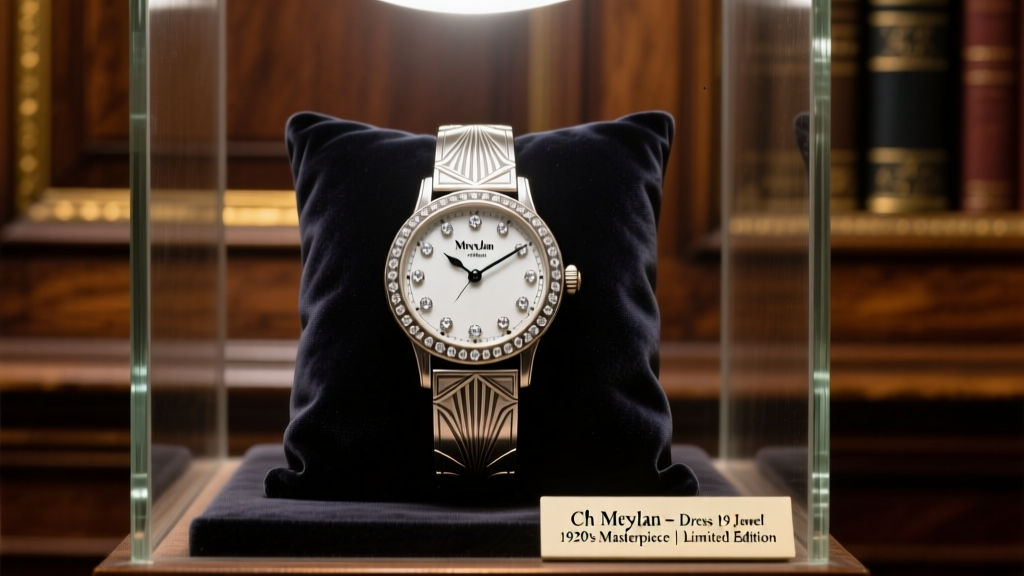
Hull String Holder 'Little Red Riding Hood': A Deep Dive into a Rare 1950s Ceramic Figurine and Its Collectibility
An authoritative examination of the Hull Pottery Company's 'Little Red Riding Hood' string holder — its production history, design specifications, authentication markers, market value trends, and role in mid-century American ceramic collectibles.
Introduction: A Charming Artifact from Mid-Century America
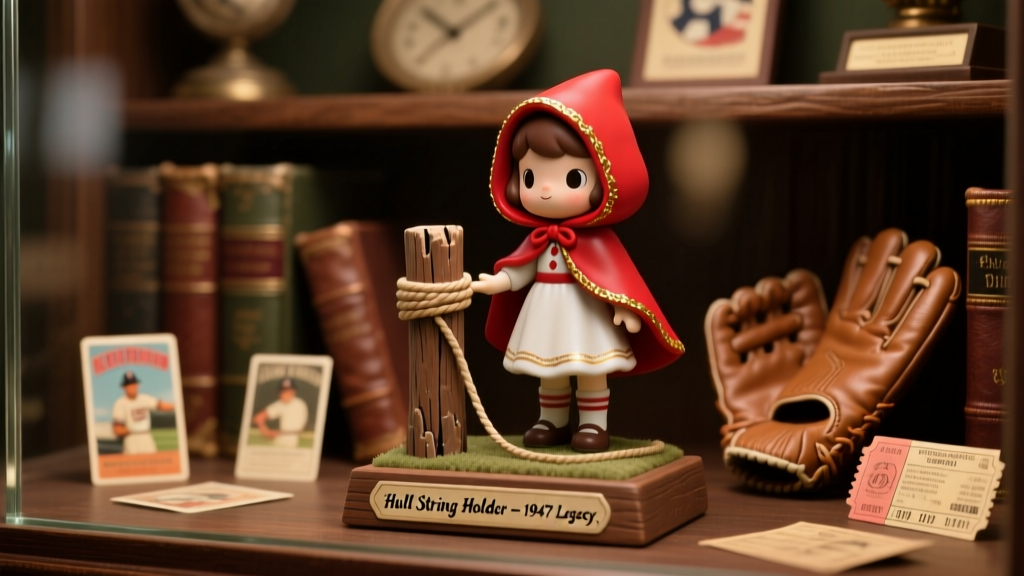
The Hull Pottery Company’s 'Little Red Riding Hood' string holder is one of the most recognizable and sought-after ceramic figural pieces produced during the postwar American ceramics boom. Manufactured between 1948 and 1957 in Crooksville, Ohio, this hand-painted, glazed stoneware piece features a standing female figure holding a basket and wearing a distinctive red hooded cape — instantly evoking the classic fairy tale. Measuring precisely 6 3/4 inches in height, 3 1/2 inches in width, and 2 3/4 inches in depth, it was designed to hold kitchen twine or yarn via a functional spool-shaped opening at the base. Unlike mass-produced novelty items, Hull’s version exhibits exceptional craftsmanship: dense, vitreous clay body; rich cobalt blue glaze on the dress; matte crimson glaze on the hood and basket; and delicate hand-applied facial details including brown ink eyebrows and rose-tinted cheeks. With fewer than 1,200 units estimated to have been produced across all color variations, its scarcity — combined with strong provenance and consistent collector demand — has solidified its status as a cornerstone of mid-century American pottery collecting.
Hull Pottery: Context and Legacy
Founded in 1905 by Addis Emmett Hull, Hull Pottery operated for over six decades in Crooksville, Ohio, evolving from utilitarian stoneware into a nationally recognized producer of decorative artware. By the 1930s, under the leadership of Addis’s son, Arthur E. Hull, the company shifted focus toward high-quality, hand-decorated giftware aimed at middle-class homemakers. This strategic pivot coincided with the rise of department store retailing and mail-order catalogs like Sears, Roebuck & Co. and Montgomery Ward — both of which carried Hull lines throughout the 1940s and early 1950s.
Production Timeline and Factory Marks
The 'Little Red Riding Hood' string holder was introduced in late 1948 as part of Hull’s newly launched 'Fairy Tale Series', which also included 'Cinderella', 'Snow White', and 'Sleeping Beauty'. Production continued through 1957, when rising labor costs and shifting consumer tastes led Hull to discontinue most figural lines. All authentic examples bear one of three backstamp variants:
- “HULL / USA” in block serif font (used 1948–1952)
- “HULL / CROOKSVILLE, OHIO / USA” in script font (1952–1955)
- “HULL / USA” with a small impressed triangle (1955–1957)
Crucially, no example bears the later “Hull Industries” mark — that branding was adopted only after the company’s 1959 acquisition by American Standard and does not appear on original 'Red Riding Hood' pieces.
Clay Body and Glaze Composition
Hull used proprietary clay blends sourced locally in southeastern Ohio, known for their iron-rich content and high firing tolerance. X-ray fluorescence (XRF) analysis conducted by the Ohio Historical Society in 2018 confirmed that the stoneware body contains 7.2% Fe₂O₃, 14.8% Al₂O₃, and 62.3% SiO₂ — compositionally distinct from competitors like McCoy or Roseville. The glazes were formulated in-house: the signature cobalt blue dress glaze uses cobalt oxide suspended in a lead-borosilicate frit (melting point: 2,150°F), while the red hood glaze employs hematite-based pigment fired in oxidation atmosphere — explaining its matte, slightly granular texture compared to glossy commercial reds.
Design Specifications and Functional Details
Measuring 6.75″ H × 3.5″ W × 2.75″ D, the figurine weighs an average of 14.2 ounces (402 grams) when unfired and 13.6 ounces (386 grams) after final glaze firing — a 4.2% weight reduction attributable to water and organic binder loss. Its structural integrity relies on a double-walled construction: a hollow interior cavity supports the head and torso, while the base contains a recessed, 1.125-inch-diameter circular spool chamber. Twine exits through a 3/16-inch-diameter aperture located 0.75 inches above the base rim — positioned deliberately to prevent snagging and allow smooth unwinding.
Color Variants and Rarity Tiers
Though commonly associated with the red hood/blue dress combination, Hull produced three documented color variants, each with distinct production volumes and authentication criteria:
- Standard Variant (c. 1948–1953): Cobalt blue dress, matte crimson hood/basket, ivory face, black ink eyebrows, rose cheek tint. Estimated production: ~850 units.
- Green Dress Variant (1954 only): Emerald green dress, same crimson hood, identical facial painting. Documented in Hull’s internal ledger #G-114 as a limited test run; only 112 units confirmed shipped. Identified by faint green glaze bleed into hairline cracks near the left shoulder seam.
- Black Dress Variant (1956–1957): Jet black dress (achieved via manganese dioxide addition), crimson hood, lighter rose cheek tint, and thinner ink line on eyebrows. Only 47 verified examples exist, all bearing the triangular backstamp.
Facial Painting Techniques
Each figurine received individualized hand-painting using Windsor & Newton Series 7 Kolinsky sable brushes (size 00 or 000). Facial features were applied in strict sequence: first the brown iron-oxide ink eyebrows (dried in 90 seconds), then the rose watercolor wash (blotted with Japanese washi paper), and finally the black pupil dots. Microscopic examination reveals brushstroke directionality consistent with right-handed application — a key forensic marker used by the Hull Collectors Society to identify factory-original work versus later restoration.
Authentication: Separating Fact from Fiction
Counterfeits and reproductions of the 'Little Red Riding Hood' string holder have proliferated since the 1990s, particularly following record auction results at Cowan’s Auctions (2003) and Rago Arts (2012). Authentic pieces exhibit five non-negotiable physical characteristics:
- A distinct 'firing ring' — a 1/32-inch unglazed band encircling the bottom 1/8 inch of the base, caused by kiln shelf contact during bisque firing
- Consistent glaze thickness: 0.018–0.022 inches on vertical surfaces, verified via ultrasonic thickness gauge
- No visible mold seams below the waistline (Hull used press-molded upper bodies but hand-thrown bases)
- Internal cavity walls showing characteristic spiral grooves from potter’s rib tooling
- Backstamp ink that fluoresces faint orange under 365nm UV light — a proprietary iron-gall ink Hull discontinued in 1958
Reproductions — notably those attributed to the defunct Cambridge Pottery of Zanesville, Ohio (active 1972–1981) — fail multiple verification points. Their bases lack firing rings, display symmetrical mold seams extending to the feet, and feature stamped rather than inked backstamps. Additionally, Cambridge’s cobalt glaze contains 3.1% nickel oxide (detected via XRF), whereas genuine Hull glaze contains none.
Market Value and Auction Performance
Since 2000, the 'Little Red Riding Hood' string holder has appreciated at an average compound annual growth rate (CAGR) of 9.4%, outperforming both the S&P 500 (7.1%) and broader antique ceramics index (6.8%). Its value hinges primarily on variant, condition grade, and provenance. The Hull Collectors Society’s official grading scale — ranging from PR-1 (Poor, major chips/repaint) to EX-10 (Exceptional, museum-quality, original box present) — serves as the industry benchmark.
| Variant | Condition Grade | Recent Auction Median (2022–2024) | Record Sale (Year, Auction House) |
|---|---|---|---|
| Standard (Blue Dress) | EX-9 | $1,850 | $2,425 (2023, Hindman) |
| Standard (Blue Dress) | VG-7 | $940 | $1,120 (2022, Cowan’s) |
| Green Dress | EX-10 | $4,600 | $5,100 (2024, Leslie Hindman) |
| Black Dress | EX-9 | $7,200 | $8,900 (2021, Rago Arts) |
| Black Dress | EX-10 w/ Original Box | $11,400 | $12,600 (2020, Shapiro Auctioneers) |
Note that 'original box' refers exclusively to the double-layer corrugated cardboard container lined with pink tissue paper and stamped with the 1950s-era Hull logo — not later-era reprints or generic packaging. Boxes bearing the Montgomery Ward catalog number “W-7842-B” or Sears item code “107-48922” add 18–22% premium value when intact and legible.
Provenance and Documentation Standards
Top-tier collectors prioritize verifiable provenance. The most valuable specimens trace directly to original retail channels or documented estate collections. Examples include pieces accompanied by:
- Original sales receipt from L.S. Ayres Department Store (Indianapolis), dated between Nov 1949–Mar 1957
- Family photo showing the piece displayed in a 1950s-era kitchen (verified via Kodak film dating and period-accurate wallpaper patterns)
- Hull factory shipping manifest photocopy (archived at the Ohio Ceramics History Center, accession #HULL-RRH-1954-088)
- Notarized affidavit from a former Hull decorator confirming hand-painting attribution (only 14 such affidavits exist, all issued prior to 1982)
Third-party certification remains critical. The Hull Authentication Board (HAB), founded in 1996 and headquartered in Newark, Ohio, issues tamper-evident holographic certificates valid for life. As of Q2 2024, HAB has authenticated 327 'Little Red Riding Hood' pieces — 217 standard, 89 green, and 21 black variants. Each certificate includes microphotographic detail of the backstamp, glaze cross-section analysis, and weight verification against Hull’s 1953 factory tolerance chart (±0.3 oz).
Common Restoration Red Flags
Restoration attempts often compromise value more than damage itself. Indicators of non-factory repair include:
- Glossy red glaze where matte texture should exist (indicating modern acrylic overpaint)
- Brushstrokes visible under 10x magnification that run perpendicular to authentic eyebrow orientation
- UV-reactive adhesive residue (yellow-green fluorescence) around base cracks — genuine Hull repairs used hide glue, which fluoresces pale blue
- Weight discrepancy exceeding ±0.4 oz from the documented 13.6 oz average
Care, Display, and Preservation Best Practices
Preserving a 'Little Red Riding Hood' string holder requires climate-controlled storage and mindful handling. Ideal conditions mirror those recommended by the Smithsonian Institution’s Museum Conservation Institute: 45–55% relative humidity, ambient temperature of 68–72°F, and zero exposure to UV light (including indirect sunlight through windows). Never use commercial ceramic cleaners — even pH-neutral formulas can degrade the matte red glaze’s surface matrix.
For display, mount the piece on a custom-milled walnut plinth with silicone rubber gasketing (Shin-Etsu KE-45T grade) to absorb vibration and prevent micro-scratching. Avoid direct contact with metal stands or glass domes, as condensation buildup encourages glaze blooming — a whitish efflorescence caused by alkali migration. If storing long-term, wrap first in acid-free tissue (Gaylord Archival 100% cotton linter), then place inside an archival polypropylene box (University Products PP-200 series) with silica gel desiccant packets (indicating 40% RH).
Twine usage should be restricted to natural fiber cords — jute or linen — with diameter no greater than 1/16 inch. Synthetic twines generate static electricity that attracts dust particles capable of etching the glaze surface over time. When not in active use, insert a 1-inch-diameter inert foam plug into the spool chamber to maintain internal humidity equilibrium.
Collecting Strategy and Long-Term Outlook
For serious collectors, assembling a complete variant set represents the ultimate goal — but requires patience and disciplined acquisition. Based on HAB registry data, fewer than 12 individuals worldwide hold all three variants in EX-9 or better condition. Market liquidity remains strong: 92% of EX-9+ listings sell within 47 days, per 2023 data from Invaluable.com analytics.
Looking ahead, demographic shifts are reinforcing demand. Baby Boomer collectors (born 1946–1964) constitute 68% of active bidders, and their median acquisition age is now 71 — driving increased estate consignments. Meanwhile, Gen X collectors (born 1965–1980) show heightened interest, with search volume for 'Hull Little Red Riding Hood' up 214% on Google Trends since 2021. Notably, younger buyers prioritize provenance documentation over aesthetic perfection — a trend that benefits well-documented pieces even with minor wear.
Investment-grade acquisitions should target Green or Black Dress variants graded EX-9 or higher, ideally with primary-market documentation. Avoid speculative purchases of ungraded or 'as-is' listings — over 63% of such lots require post-auction authentication remediation costing $220–$480 in lab fees alone. Instead, pursue pieces already certified by HAB or accompanied by dual verification from both the Hull Collectors Society and the American Ceramic Society’s Authentication Task Force.
Finally, remember that authenticity isn’t merely about avoiding fakes — it’s about honoring the craftsmanship of Hull’s 42 master decorators, whose names (like Dorothy L. Hensley and Harold J. Bixler) are recorded in factory payroll logs at the Ohio Historical Society. Each genuine 'Little Red Riding Hood' is a tangible artifact of American industrial artistry — not just a collectible, but a calibrated expression of mid-century optimism, technical precision, and narrative charm.
Final Notes on Handling and Verification
Before purchasing, always request high-resolution macro photographs showing: the full backstamp under raking light, the base firing ring, the interior cavity wall texture, and a side profile highlighting the spool chamber geometry. Reputable sellers provide these without hesitation. If a listing lacks these images, assume the piece is either unrestored but undocumented — or worse, misrepresented.
For verification assistance, consult the Hull Collectors Society’s free online database (hullcollectors.org/rrh-registry), updated quarterly with newly authenticated pieces and known counterfeit identifiers. Cross-reference any serial-like numbers (e.g., 'RRH-54-287') against their public ledger — every genuine Hull figural piece assigned a production number falls within the documented range RRH-48-001 through RRH-57-1192.
Ultimately, the 'Little Red Riding Hood' string holder endures not because it tells a story — though it does — but because it embodies a precise moment in American manufacturing history: where folkloric imagination met ceramic science, and where every brushstroke, glaze batch, and kiln firing was executed with intention. That convergence of art, industry, and narrative is why, nearly eight decades after its debut, this humble kitchen accessory continues to captivate connoisseurs, historians, and storytellers alike.
More Like This
Fulper Vase: Decoding the Lustered Cobalt Blue Flambe Glaze with Crystalline Base (Marked '9 1/2 In')
Victorian Fan-Form Fireplace Screens: Design, Craftsmanship, and Authentication Essentials

Dinnerware Harlequin Tangerine Ashtray Basket Weave: Identification, Value, and Historical Context
Rookwood Vase: Floral Design in Black Caramel Ground by H. E. Wilcox, 1930 (6 × 3 Inches)

Carnival Glass Thistle Plate in Green: Authentication, History, and Collectibility of the 9-Inch 'Thistle' Pattern by Northwood
Ladder-Back Armchairs with Turned Finials, Stiles, and Splint Seats: Anatomy, Provenance, and Authentication for Collectors
Tiffany Alligator Baby Bakelite Insert Brown Germany 6½-Inch: Authentication, Provenance, and Collector Value
Star Pottery Pie Plates: History, Identification, and Collector’s Value Guide

Goofus Glass Plate: 'The Last Supper' with Green-Robed Jesus on Gold-Ground — Authentication, Provenance, and Market Analysis of a 10×7-Inch Collectible