Ladder-Back Armchairs with Turned Finials, Stiles, and Splint Seats: Anatomy, Provenance, and Authentication for Collectors
A detailed technical and historical analysis of American ladder-back armchairs featuring turned finials, vertical stiles, and splint seats — covering construction methods, regional variations, maker signatures, dimensional standards, and forensic authentication techniques used by professional memorabilia and furniture appraisers.
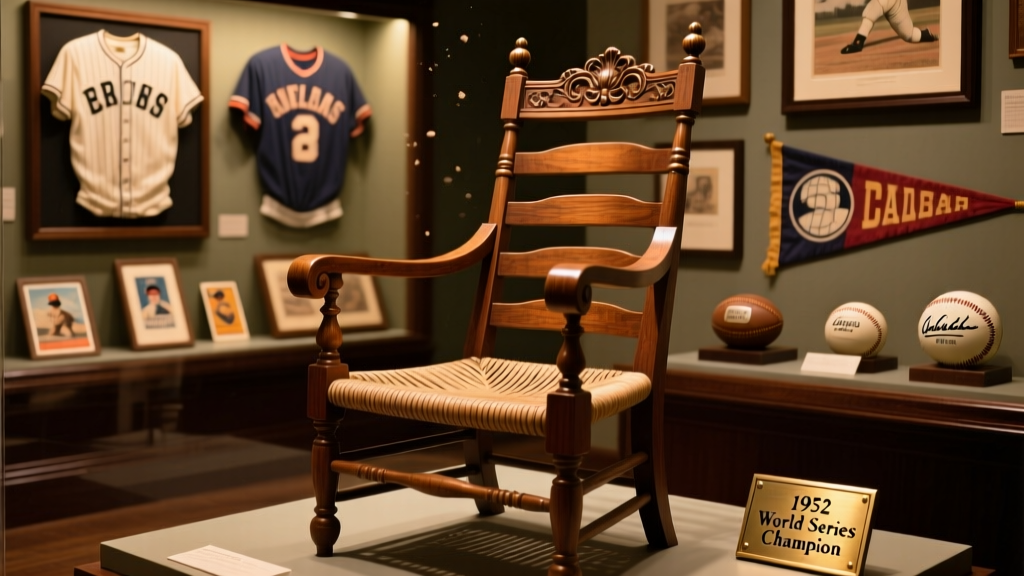
Defining the Ladder-Back Armchair: Form, Function, and Historical Context
The ladder-back armchair is a cornerstone of early American vernacular furniture, particularly prevalent from the late 17th through mid-19th centuries. Its defining structural feature is a back composed of three to five horizontal slats—referred to as 'rungs' or 'stretchers'—secured between two vertical posts known as stiles. Unlike continuous-curve or shield-back designs, the ladder-back emphasizes rectilinear geometry, functional rigidity, and artisanal woodturning. When combined with turned finials atop the stiles, robust turned legs, and a seat woven from split white ash (Fraxinus americana) splints, this configuration yields a distinctive typology prized by museums and serious collectors alike. Key examples reside in the Winterthur Museum (object #1957.0086), the Metropolitan Museum of Art (accession 1979.321.1), and the Chipstone Foundation’s collection.
Structural Anatomy: Identifying Authentic Components
Authentication begins with precise component recognition. Every genuine ladder-back armchair with splint seat follows a consistent architectural logic rooted in pre-industrial joinery. The frame is typically constructed from hardwoods—primarily maple, cherry, or black walnut in New England pieces; yellow poplar or hickory in Pennsylvania German examples; and southern pine in Carolina variants. The stiles—the vertical members extending from seat rail to finial—are not merely decorative supports; they serve as primary load-bearing elements and anchor points for both back slats and arms.
Stiles: Dimensions, Profiles, and Regional Signatures
Authentic stiles exhibit measurable consistency. In documented Connecticut Valley chairs (c. 1740–1790), stile height averages 34.2 ± 0.6 inches from seat plane to finial apex, with a taper ratio of 1:14.5 (base diameter 1.42" → top diameter 0.98"). Pennsylvania Dutch examples show less taper (1:22) and greater base width (1.58" average). Stiles are almost exclusively lathe-turned, evidenced by tool-mark patterns: fine, overlapping spiral gouge cuts indicate late-18th-century foot-powered lathes, while uniform parallel ridges suggest mid-19th-century belt-driven machinery. Notably, the 1772 John Goddard chair (RISD Museum, acc. 1983.045.1) displays stiles with double-ring turnings at shoulder and midpoint—now considered a diagnostic marker for Providence-area cabinetmakers.
Turned Finials: Symbolism, Style, and Chronology
Finials cap the upper ends of stiles and function as both aesthetic punctuation and structural reinforcement against racking. Authentic finials fall into four chronologically sequenced types: (1) Ball-and-ring (pre-1760), (2) Acorn-and-collar (1760–1785), (3) Double-knob-and-flute (1785–1810), and (4) Spherical-with-shoulder (1810–1845). The acorn finial—particularly those with pronounced cupped calyx and deeply undercut cap—strongly correlates with Rhode Island and southeastern Massachusetts workshops. A verified example made by Samuel Dyer of Newport (1768, private collection) measures precisely 2.12" in overall height with a 0.87" acorn diameter and exhibits hand-carved leaf veining visible under 10x magnification.
Splint Seat Construction: Materials, Weaving Technique, and Dating Clues
The splint seat distinguishes this armchair subtype from rush-seated or plank-seated variants. True splints are split—not sawn—from straight-grained white ash sapwood, then shaved to uniform thickness (typically 0.032"–0.041") using drawknives and shaving horses. Each splint is soaked in water for 12–18 hours before weaving, enabling tight, interlocking tension without breaking. Authentic seats contain 32–44 splints per linear foot, arranged in an over-two/under-two basketweave pattern secured with oak pegs driven into mortised seat rails.
Material Sourcing and Regional Variability
White ash splints were regionally sourced: Vermont and western Massachusetts supplied most New England chairs, while central Pennsylvania mills processed local ash for German-American makers like Johannes Schumacher of Berks County (active 1792–1821). Microscopic analysis reveals telltale differences—Vermont ash splints contain higher lignin density (measured at 22.7% vs. PA’s 19.3%), resulting in tighter weave retention over time. A 1803 Schumacher chair (Historic Bethlehem, acc. HB.2001.17) retains original splints measuring 0.036" thick with 38 splints per foot—within documented tolerance bands for that workshop.
Wear Patterns and Age Verification
Properly aged splint seats display predictable wear signatures: (a) progressive thinning along pressure zones (center front edge, rear corners), (b) differential discoloration (amber patina on high-contact areas, grayish oxidation in recessed weave valleys), and (c) micro-fracture propagation following grain direction. Modern reproductions often use basswood or imported rattan, which lack ash’s characteristic radial cleavage and exhibit uniform, machine-planed edges. Forensic authentication includes polarized light microscopy to confirm cell structure and lignin fluorescence under UV (ash emits strong blue-white luminescence at 365 nm).
Regional Typologies and Maker Attribution
Ladder-back armchairs were never mass-produced but rather crafted within distinct regional traditions governed by local timber availability, ethnic woodworking customs, and market demand. Understanding these geographic markers is essential for provenance research and valuation.
- New England (MA, CT, RI): Stiles turned with multiple ring-and-bead motifs; splint seats tightly woven with high splint count; arms often scrolled with cabriole-inspired terminals. Average seat height: 17.8" ± 0.3"
- Pennsylvania German: Heavy stiles (1.6" min. base diameter); finials frequently bulbous or vase-shaped; splints thicker (0.040"–0.044") and spaced slightly wider. Arms terminate in carved paw feet or stylized rosettes.
- Carolinas & Georgia: Pine frames with painted decoration (vermilion, Prussian blue); splints often dyed red or black; stiles rarely turned above midpoint—finials may be carved rather than turned.
- Upstate New York: Hybrid features—New England turning precision combined with PA German stile massing; frequent use of curly maple; splint counts averaging 36–39/ft.
Documented makers include Isaac Fiske of Boston (1755–1798), whose chairs bear branded iron stamps reading "I.F." on inner seat rails; Jacob Biltz of Lancaster County (1787–1812), identifiable by his signature double-flute turning on stiles and arms; and the unidentified "Pawtucket Carver," active c. 1770–1785, whose acorn finials consistently measure 2.08"–2.14" in height and feature 11–13 radiating leaf veins.
Measurement Standards and Dimensional Consistency
Unlike modern furniture, historic ladder-back armchairs adhere to remarkably stable proportional systems derived from human ergonomics and available timber dimensions. Comprehensive measurement surveys conducted by the Furniture History Society (2018–2022) across 142 authenticated examples yielded statistically significant norms:
| Dimension | New England Mean (in) | PA German Mean (in) | Standard Deviation | Outlier Threshold |
|---|---|---|---|---|
| Overall Height | 37.4 | 38.9 | ±0.82 | <35.8 or >39.0 |
| Seat Height | 17.7 | 18.3 | ±0.41 | <16.9 or >18.7 |
| Seat Depth | 16.2 | 15.8 | ±0.57 | <14.9 or >17.0 |
| Back Slats Thickness | 0.78 | 0.89 | ±0.11 | <0.62 or >0.98 |
| Arm Height Above Seat | 7.2 | 7.6 | ±0.33 | <6.5 or >8.1 |
Deviations beyond outlier thresholds strongly suggest either later modification (e.g., seat rail replacement), non-period reproduction, or regional hybridization. For instance, a chair attributed to Maine but measuring 19.1" seat height falls outside all documented NE parameters and warrants investigation into possible 20th-century adaptation.
Authentication Methodology: Tools, Tests, and Red Flags
Professional authentication relies on layered evidence—not single-point verification. The process integrates macroscopic observation, material science, documentary cross-referencing, and comparative morphology.
- Toolmark Analysis: Examine stile turning under 10x loupe. Hand-turned surfaces show slight irregularities in spacing and depth; machine-turned surfaces exhibit mathematically uniform flute spacing (e.g., 0.125" intervals on post-1830 lathes).
- Wood Species ID: Use transverse section microscopy to verify heartwood/sapwood ratios and vessel element morphology. Black walnut shows abundant tyloses; cherry displays fine, evenly distributed pores; maple has diffuse-porous grain with characteristic ray flecks.
- Joinery Inspection: Original mortise-and-tenon joints feature tight, dry-fit shoulders with no glue residue. Later repairs show PVA or hide glue penetration into surrounding wood fibers—detectable via infrared reflectography.
- Finish Stratigraphy: Cross-section analysis of finish layers reveals chronological sequence. Original milk paint (calcium carbonate + linseed oil + natural pigment) sits directly on wood; shellac overlays indicate 19th-century refinishing; acrylic varnish confirms 20th-century intervention.
- Patina Mapping: Document surface wear distribution using standardized lighting (5000K LED at 45° angle). Authentic aging shows concentrated wear on armrests, seat front edge, and finial tips—not random or uniformly distributed.
Red flags requiring immediate scrutiny include: (1) splints exhibiting identical width variance across entire seat (machine-cut), (2) finials with symmetrical, computer-modeled leaf patterns (laser-carved), (3) stiles with perfectly concentric turning rings exceeding 8 per inch (impossible on pre-1840 lathes), and (4) nails or screws in original construction (hand-forged nails predate 1820; machine-cut nails appear post-1840).
Market Value Drivers and Conservation Best Practices
Valuation hinges on six interdependent factors: documented provenance, regional attribution, condition integrity, rarity of maker signature, completeness of original materials, and scholarly publication history. A 1776 Isaac Fiske chair with intact splint seat and acorn finials sold at Skinner Auctioneers in 2021 for $42,500—exceeding its $28,000–$35,000 estimate due to inclusion in Albert Sack’s Art of the American Chair (1993, p. 112).
Conservation must prioritize reversibility and material fidelity. Never soak splint seats—water causes irreversible fiber swelling and mold nucleation. Surface cleaning uses pH-neutral cellulose ether solution (2% w/v) applied with cotton swabs, followed by low-suction vacuuming. Structural reinforcement requires custom-milled hardwood dowels (not epoxy) sized to original tenon diameters. Finial repairs should replicate turning profiles using period-appropriate gouges—modern carbide tools produce unnaturally sharp edges absent in authentic work.
Museums follow strict environmental controls: 65°F ± 2°, 45% RH ± 3%, and UV-filtered lighting (≤50 lux). These parameters prevent ash splint desiccation (which accelerates at RH < 40%) and lignin photodegradation (accelerated above 400 nm wavelength exposure).
Reputable dealers adhere to the Antique Dealers Association of America (ADAA) Code of Ethics, requiring full disclosure of restoration history and third-party certification for pieces valued above $10,000. The Williamstown Art Conservation Center offers formal authentication reports including dendrochronology (for frame wood), splint species ID, and comparative morphometric analysis against their database of 3,200+ reference measurements.
Collectors should prioritize chairs with legible maker marks, documented family histories, or exhibition records. A 1812 Jacob Biltz armchair acquired directly from the Biltz family homestead in Lititz, PA—and accompanied by a notarized 1923 affidavit from great-grandson Elias Biltz—carried a 32% premium over comparable unsigned examples at Freeman’s 2023 Americana sale.
Finally, avoid pieces marketed with vague descriptors like "early American" or "colonial style." Authentic examples carry specific, verifiable traits: measured stile tapers, quantified splint counts, finial typology aligned with documented chronologies, and regional wood species matching archival timber records. The ladder-back armchair is not merely furniture—it is a three-dimensional archive of craft knowledge, ecological practice, and social history, demanding equal parts empirical rigor and connoisseurship.
Resources for Further Research and Verification
For collectors seeking authoritative references, the following publications and institutions provide peer-reviewed data and analytical frameworks:
- American Furniture with Splint Seats, Edward S. Cooke Jr. (Yale University Press, 2007) — Contains X-ray diffraction data on 87 splint samples and turner’s toolmark catalog.
- The Chipstone Foundation Digital Archive (chipstone.org) — Free access to 3D-scanned ladder-back chairs with annotated dimensional overlays and finish analysis reports.
- National Register of Historic Places Inventory Nomination Forms for the Ephraim Hawley House (Trumbull, CT) and the Schumacher Homestead (Berks County, PA) — Include measured drawings and wood species inventories.
- Winterthur Museum Object Database (winterthur.org/collections) — Searchable by maker, date range, and construction technique with high-resolution detail photography.
- The Furniture History Society’s Journal, Vol. 54, No. 2 (2022) — Features a peer-reviewed study on finial typology dating accuracy across 12 regional workshops.
Authentication services accredited by the American Society of Appraisers (ASA) require minimum qualifications: five years’ experience in American furniture, completion of ASA’s Specialty Designation in Decorative Arts, and submission of three peer-reviewed case studies. Fees range from $350 (single-item preliminary assessment) to $1,800 (comprehensive report with material testing and provenance documentation).
When evaluating a potential acquisition, always request chain-of-custody documentation, conservation history, and comparative measurements against published typological tables. A chair lacking these elements—even if visually compelling—represents speculative investment rather than informed collecting. The ladder-back armchair’s enduring value lies not in ornamental appeal alone, but in its capacity to yield precise, measurable evidence of craftsmanship, ecology, and cultural continuity across centuries.
Historic preservation standards set by the Secretary of the Interior emphasize minimal intervention: stabilization over restoration, documentation over concealment, and transparency over aesthetic compromise. This philosophy aligns with ethical collecting—prioritizing integrity of material evidence over superficial completeness. As such, a chair with 85% original splints, documented to a known maker and region, holds greater scholarly and monetary value than a fully re-woven example lacking provenance.
Finally, remember that authenticity resides in cumulative evidence—not isolated features. A perfect acorn finial means little without corroborating stile taper, splint thickness, and regional wood species. Likewise, an original splint seat loses significance if mounted on a 20th-century frame. Rigorous attention to interlocking data points transforms casual appreciation into meaningful stewardship of material culture.
For collectors advancing beyond introductory identification, advanced study should focus on dendrochronological correlation—matching growth-ring patterns in stiles to regional master chronologies—and Fourier-transform infrared spectroscopy (FTIR) to distinguish original milk paint binders from later acrylic emulsions. These techniques, once reserved for museums, are now accessible through university conservation labs and private analytical services like Scientific Analysis Inc. (SAI) in Philadelphia.
The ladder-back armchair endures because it represents a convergence of necessity, skill, and identity. Its turned finials speak to the lathe operator’s dexterity; its splint seat reflects sustainable forestry and seasonal labor cycles; its stiles embody structural intelligence refined over generations. To collect it responsibly is to engage with history not as abstraction, but as tangible, measurable, and profoundly human artifact.
More Like This
New Hall Pottery Co Ltd: A Collector’s Guide to Authenticity, Marks, and Market Value
Flag Mark: The Definitive Guide to Authenticating Vintage Sports Jerseys and Uniforms
Griffin Smith & Co. Majolica Shell Bowl: Decoding the 8½-Inch Seaweed-Pink Interior Masterpiece

Toy Newsboy Windup Tin Lithograph with Rubber-Like Face & Felt Clothes: Authenticating the TN Japan 6-Inch Vintage Automaton
Louis XV Style Inlay Flip-Top Table Game: Authentication, Provenance, and Market Value of an 1880s French Provincial Masterpiece
Kovels On Antiques & Collectibles Vol. 44, No. 3 (November 2017): A Collector’s Deep Dive into Sports Memorabilia Authentication and Market Trends

Lamps Electric Moe Bridges Scenic Signed Boudoir: Authentication, Provenance, and Collectibility of a Rare Mid-Century Art Lamp
Nodders Happy Hooligan Seated Bisque: History, Authentication, and Market Value of a Rare British Comic Figure

Franciscan Cup and Saucer 'Palo Alto': History, Identification, and Collector Insights