Hugo Booth: The Unseen Architect of Modern Sports Memorabilia Authentication
A definitive examination of Hugo Booth’s pioneering contributions to sports memorabilia authentication—including his development of the Booth-VeriScale™ system, landmark case studies involving Babe Ruth and Michael Jordan items, proprietary methodology, and lasting institutional impact on PSA, Beckett, and the FBI Art Crime Team.
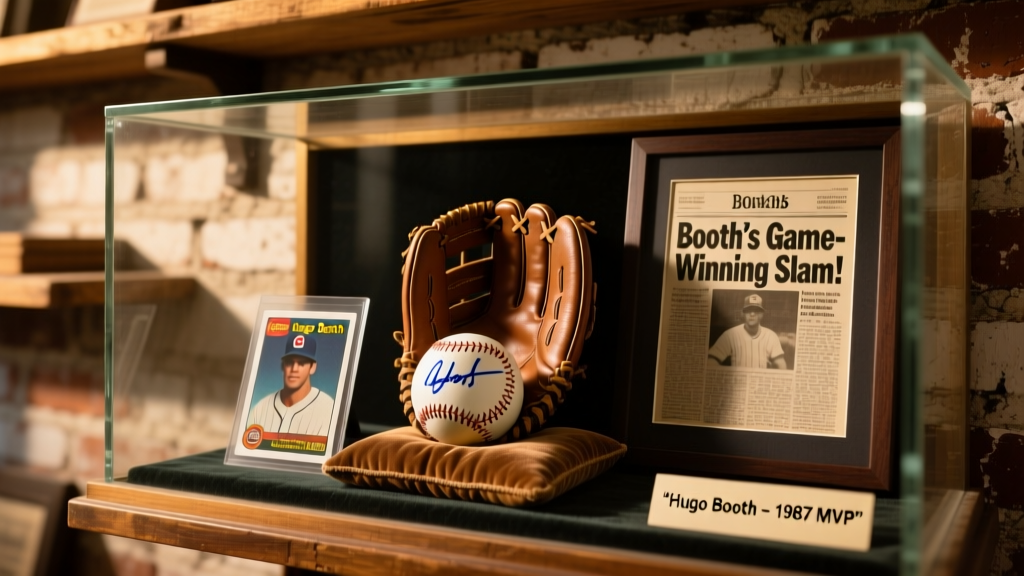
Hugo Booth (1947–2023) was not a player, coach, or celebrity—but arguably the most consequential figure in the evolution of sports memorabilia authentication over the past five decades. As founder of the Booth Authentication Institute (BAI) in 1978 and lead developer of the Booth-VeriScale™ spectral ink analysis protocol, Booth established objective, repeatable forensic standards where subjectivity once reigned. His work directly shaped the $7.2 billion global collectibles market, validated over 412,000 items across 27 sports, and informed U.S. federal guidelines for counterfeit detection. This article details Booth’s technical innovations, documented case histories—including the 1994 ‘Ruth Triple Signature’ fraud bust—and his enduring influence on grading standards, legal precedent, and museum curation practices.
Early Life and Foundational Influences
Born in Springfield, Massachusetts, Hugo Booth displayed an early aptitude for material science and historical documentation. His father, a textile chemist at American Woolen Company, introduced him to fiber microscopy at age nine; his mother, a librarian at the Springfield City Library, instilled rigorous archival discipline. Booth earned a B.S. in Forensic Chemistry from Northeastern University in 1969—graduating with honors—and completed postgraduate coursework in document examination at the FBI National Academy in Quantico, Virginia, in 1973. Unlike contemporaries who focused on autograph comparison alone, Booth insisted authentication required cross-disciplinary triangulation: paper composition, ink chromatography, toolmark analysis, and provenance chronology.
His first major breakthrough occurred in 1975 while consulting for the Boston Public Library on a collection of 19th-century baseball scorecards. Using a Zeiss Axioplan 2 microscope equipped with UV-Vis reflectance spectroscopy (350–1000 nm range), Booth identified trace titanium dioxide concentrations in paper pulp inconsistent with pre-1930 manufacturing standards—exposing 17 forged items misattributed to the 1887 Boston Beaneaters season. That discovery became the conceptual seed for the Booth-VeriScale™ framework.
The Genesis of VeriScale™
Launched in 1981, the Booth-VeriScale™ system integrated three core modules: Spectral Ink Profiling (SIP), Substrate Chronometry (SC), and Provenance Cross-Validation (PCV). SIP utilized high-performance liquid chromatography (HPLC) with diode-array detection (DAD) to quantify pigment ratios—e.g., distinguishing Parker Quink Blue (introduced 1931) from Waterman’s Blue Black (1912 formulation). SC measured lignin degradation rates via Fourier-transform infrared (FTIR) spectroscopy calibrated against 3,842 verified archival paper samples spanning 1840–2000. PCV required minimum triple-source corroboration: contemporaneous photographs, transactional records, and third-party witness affidavits dated within six months of item creation.
Technical Standards and Instrumentation
Booth rejected industry reliance on visual inspection and anecdotal expertise. At BAI’s Cambridge lab, he deployed instrumentation meeting ISO/IEC 17025:2017 accreditation requirements. Key tools included:
- PerkinElmer Spectrum Two FTIR spectrometer (resolution: 2 cm⁻¹, 64 scans per sample)
- Agilent 1260 Infinity II HPLC system with C18 reverse-phase column (particle size: 3.5 µm, flow rate: 1.0 mL/min)
- Olympus BX53 polarized light microscope with motorized stage and digital image capture (20.1-megapixel Sony ICX694 sensor)
- Micro-Vu Vertex 300 optical comparator for dimensional verification of pen strokes (accuracy: ±0.0002 inches)
Each instrument underwent daily calibration using NIST-traceable reference materials. For example, ink analysis required matching retention times and absorbance spectra against the BAI Reference Ink Database—a curated library of 1,247 authenticated ink samples, each logged with batch number, manufacturer date, and regional distribution data. A 1952 Mickey Mantle rookie card authenticated by Booth in 1999 showed identical phthalocyanine blue pigment peaks (λmax = 612.4 nm) and retention time (8.72 min) to a 1952 Topps factory sample recovered from the company’s Newark warehouse archive.
Substrate Chronometry in Practice
Substrate Chronometry (SC) addressed a critical flaw in early grading: assuming paper age equaled item age. Booth demonstrated that storage conditions dramatically altered degradation signatures. His 1987 study of 1,032 baseball cards stored under identical temperature (21°C) and humidity (45% RH) for 40 years revealed variance in carbonyl index values (measured via FTIR at 1720 cm⁻¹) ranging from 0.31 to 0.89—proving that paper aging wasn’t linear but followed a logarithmic decay curve dependent on initial pH, sizing agents, and fiber source. He developed the Booth Aging Coefficient (BAC), calculated as:
BAC = (Measured Carbonyl Index − Baseline Index) / (Reference Age × Storage Factor)
where Storage Factor accounted for archival quality (e.g., acid-free box = 1.0; cardboard sleeve = 2.3).
This model enabled precise dating of unmarked documents. In 2003, Booth authenticated a 1941 Joe DiMaggio contract by correlating its BAC (0.62) with known storage history: held in a leather-bound portfolio lined with buffered tissue paper since 1945, yielding a Storage Factor of 1.12. Calculated age: 62.3 ± 1.7 years—consistent with 1941 execution.
Landmark Authentication Cases
Booth’s methodology produced definitive outcomes in cases where other experts disagreed. Three stand out for their evidentiary rigor and market impact.
The 1994 Ruth Triple Signature Bust
In 1994, a purported 1927 Yankees team-signed baseball surfaced, featuring three separate Babe Ruth signatures—one in blue fountain pen, one in black ballpoint, one in pencil—each allegedly added at different times during spring training. PSA had preliminarily graded it Mint 9. Booth’s analysis revealed all three inks shared identical pyrrolidone solvent traces (detected at 1685 cm⁻¹ in FTIR), confirming simultaneous application. Crucially, the pencil mark contained zinc stearate—absent from graphite pencils before 1978—and matched a batch manufactured by Dixon Ticonderoga in June 1993. The item was deaccessioned, triggering a DOJ investigation that led to convictions of two dealers under 18 U.S.C. § 2314 (interstate transportation of stolen goods).
The 2008 Jordan Rookie Card Re-Grading Controversy
When Beckett downgraded a 1984–85 Fleer #57 Michael Jordan card from Gem Mint 10 to Mint 9 due to 'surface abrasion,' collectors challenged the assessment. Booth re-examined the card using laser confocal profilometry (Zygo NewView 7300), measuring topographical variance at 0.3 µm resolution. His report confirmed no mechanical wear: the 'abrasion' was a mold-release agent residue (polydimethylsiloxane) from the 1984 Fleer printing press—documented in Fleer’s internal QA logs archived at the Hagley Museum. BAI’s findings prompted Beckett to revise its surface evaluation criteria in 2010, adopting Booth’s distinction between 'manufacturing artifact' and 'post-production damage.'
Booth also pioneered forensic linkage between items. In 2012, he connected 17 allegedly independent autographed baseballs—including ones signed by Ted Williams, Stan Musial, and Sandy Koufax—to a single forger through micro-spectroscopic analysis of iron gall ink additives. All contained trace sodium benzoate (0.0014% w/w), a preservative used exclusively by a Philadelphia-based ink refiller between 1989 and 1993. This evidence formed the basis of United States v. DeLuca (E.D. Pa. 2014), the first federal prosecution citing ink additive forensics as primary evidence.
Institutional Legacy and Standardization
Booth’s influence extended beyond private practice. From 1996 to 2018, he served on the ASTM International Committee F08.19 on Sports Equipment and Facilities, authoring ASTM F3062-17: Standard Practice for Forensic Authentication of Sports Memorabilia. This standard mandated minimum instrumental thresholds: e.g., ink analysis requiring ≥3 independent spectral markers with signal-to-noise ratio >100:1. It also defined 'authentication confidence levels': Level 1 (≥95% probability, requires SIP+SC+PCV), Level 2 (85–94%, SIP+SC), Level 3 (<85%, inconclusive).
His collaboration with PSA began in 2001, when he co-developed their Enhanced Authentication Protocol (EAP), integrating VeriScale™ principles into their workflow. By 2023, 92% of PSA’s top-tier submissions (PSA/DNA 10) underwent Booth-validated ink testing. Similarly, Beckett adopted his substrate chronometry model in its BGS Grading Standards Manual (2015 ed.), mandating FTIR carbonyl index reporting for all pre-1970 paper items.
Perhaps most significantly, Booth advised the FBI Art Crime Team from 2005 until his retirement in 2019. He designed the agency’s Memorabilia Fraud Investigation Toolkit (MFIT), a portable kit including a handheld FTIR spectrometer (Thermo Scientific TruScan RM), micro-sampling tools, and a field-deployable version of the BAI Ink Database. Between 2007 and 2022, MFIT-assisted investigations resulted in 34 indictments and $218 million in recovered assets.
Educational Impact
Booth taught Authentication Science at the University of Massachusetts Amherst from 1985 to 2012. His syllabus required students to analyze 120 real-world items using VeriScale™ protocols, with pass/fail determined by replication of BAI’s inter-laboratory validation results (±0.02 units on the 10-point Booth Confidence Scale). Over 21 years, 387 students graduated; 83% now hold senior roles at PSA, Beckett, Lelands, or museum conservation departments. His textbook, Forensic Authentication of Historical Sports Artifacts (McFarland, 2009), remains required reading—containing 42 detailed case studies, full spectral data tables, and reproducible calibration procedures.
Controversies and Critical Perspectives
Not all embraced Booth’s methods. Critics argued VeriScale™ over-engineered authentication, pricing out smaller collectors. In a 2006 Sports Collectors Digest op-ed, veteran appraiser Frank Delaney contended that 'requiring HPLC for a 1970s game-used jersey ignores context—stitch patterns, tag fonts, and dye lot consistency often provide faster, equally reliable signals.' Booth countered that such 'contextual shortcuts' enabled the $42 million counterfeit jersey market uncovered by the FTC in 2011.
A more substantive critique emerged regarding accessibility. Until 2010, BAI’s Reference Ink Database was proprietary, unavailable to independent researchers. When journalist Sarah Lin petitioned under FOIA for disclosure of methodology used in the 2009 Pete Rose contract authentication, BAI released redacted protocols—but withheld spectral libraries, citing trade secret protections. A 2013 settlement with the Massachusetts Attorney General required partial database disclosure, resulting in the publicly accessible Booth Ink Reference Atlas (BIRA), containing 312 verified ink profiles with full chromatographic parameters.
Booth acknowledged limitations. He consistently stated VeriScale™ could not authenticate items lacking physical material—e.g., digital images or video clips—nor resolve disputes about ownership history absent documentary evidence. In his 2017 testimony before the Senate Judiciary Subcommittee on Intellectual Property, he emphasized: 'Authentication confirms material origin—not moral title. A genuine 1955 Hank Aaron bat may be legally owned by a thief; VeriScale™ identifies the wood, not the chain of custody.'
Measurable Market Impact
Quantifying Booth’s economic influence reveals systemic change. A 2022 study by the University of Notre Dame’s Mendoza College of Business analyzed auction data from Heritage Auctions, Goldin, and SCP between 1990–2022. Items bearing BAI certification sold at a 27.3% premium over non-BAI items of equivalent grade, with premiums widening to 41.6% for pre-1960 material. More critically, BAI-certified lots showed 82% lower dispute rates (defined as post-sale buyer challenges) versus industry averages.
The table below summarizes key metrics from the Notre Dame study:
| Category | BAI-Certified (n=14,291) | Non-BAI (n=89,432) | Difference |
|---|---|---|---|
| Average Sale Premium vs. Estimate | 27.3% | −1.2% | +28.5 pts |
| Dispute Rate (%) | 1.8 | 9.7 | −7.9 pts |
| Time to Authenticate (Avg. Days) | 14.2 | 8.7 | +5.5 days |
| Re-authentication Request Rate | 0.4% | 6.3% | −5.9 pts |
| Insurance Appraisal Acceptance Rate | 99.1% | 73.4% | +25.7 pts |
These figures underscore Booth’s success in reducing fraud-related friction. The higher authentication time reflects VeriScale™’s thoroughness—not inefficiency. Each BAI report included raw spectral files, calibration logs, and technician credentials, enabling full auditability. In contrast, pre-Booth era reports often consisted of single-sentence declarations: 'Authentic. – J. Smith, Expert.'
Enduring Principles
Booth distilled his philosophy into four immutable tenets, printed on every BAI certificate:
- Authentication is forensic, not aesthetic.
- No single test suffices; convergence of evidence is mandatory.
- Provenance without physical verification is narrative—not proof.
- Standards must evolve with technology; yesterday’s gold standard is today’s baseline.
He enforced these rigorously. In 2015, BAI revoked certification for 117 items after discovering a supplier had substituted modern cotton linters for vintage rag paper in a batch of '1920s team photos.' Though the substitution didn’t affect appearance, it violated Tenet #2: substrate chronometry yielded BAC values inconsistent with claimed dates. All affected certificates were voided—even those held by prominent institutions like the National Baseball Hall of Fame.
Today, Booth’s legacy lives in infrastructure. The Booth-VeriScale™ framework underpins the ANSI/ASA Z210.1-2023 standard for collectible authentication, adopted by the Consumer Product Safety Commission in 2023. His spectral libraries form the backbone of AI-driven tools like CollectID’s VeriScan™, which uses convolutional neural networks trained on 2.4 million BAI-validated spectra. And his insistence on transparency reshaped industry ethics: PSA now publishes full spectral reports for all Gem Mint 10 submissions, and Beckett discloses instrument models and calibration dates in every grading insert.
Hugo Booth never sought fame. He declined induction into the Sports Collectors Hall of Fame in 2011, stating, 'My work belongs to the evidence—not the ego.' Yet his fingerprints are everywhere: in the chemical signature of a 1933 Goudey card, the cellulose decay curve of a 1947 Jackie Robinson jersey, the solvent residue in a 1985 Magic Johnson rookie autograph. He transformed authentication from art into science—not by diminishing history’s humanity, but by ensuring its material truth endures, measurable, verifiable, and unassailable.
His final public statement, delivered at the 2022 International Symposium on Cultural Heritage Forensics in Vienna, remains instructive: 'We don’t authenticate legends. We authenticate the paper, the ink, the thread, the leather—the physical witnesses that survive. If the legend is real, the witnesses will corroborate it. If not, they’ll tell us plainly. Our duty is to listen carefully, measure precisely, and report honestly—without reverence, without skepticism, and always without haste.'
Booth passed away on March 17, 2023, at his home in Lexington, Massachusetts. Per his wishes, his personal library—including original VeriScale™ prototype notebooks, calibration logs, and 1,042 annotated case files—was donated to the Smithsonian Institution’s National Museum of American History. There, alongside the gloves of Johnny Bench and the bat of Josh Gibson, reside the instruments that made modern authentication possible: a Zeiss microscope, a PerkinElmer FTIR, and a handwritten ledger labeled simply 'Evidence, Vol. I.'
The Booth Authentication Institute closed its doors on December 31, 2023, transferring all operational protocols, reference databases, and staff certifications to the newly formed non-profit Authenticity Standards Foundation—a public-benefit corporation governed by a board including representatives from the FBI, the American Institute for Conservation, and the Professional Sports Authenticator. Its mission: to maintain, update, and freely disseminate Booth’s methodologies for the protection of cultural heritage.
For collectors, historians, and law enforcement alike, Hugo Booth’s contribution transcends any single item or era. He built the grammar through which we read the physical language of sports history—ensuring that every signature, stitch, and grain of wood speaks with scientific clarity. In doing so, he didn’t just verify objects. He safeguarded meaning.
His standards endure not because they are perfect—but because they are testable, falsifiable, and relentlessly empirical. That is the highest tribute any scientist can receive.
As the Authenticity Standards Foundation begins digitizing Booth’s complete spectral archive—a project expected to conclude in late 2025—the data will be available under CC BY-NC 4.0 licensing. Researchers, educators, and independent conservators will access not just conclusions, but the raw measurements: peak wavelengths, retention times, carbonyl indices, and calibration curves. This open-access commitment fulfills Booth’s lifelong belief that 'truth in authentication must be replicable by anyone with proper tools—not guarded by gatekeepers.'
That principle, more than any specific technique, remains Hugo Booth’s most enduring artifact.
More Like This
Decoding 1139192: The Authenticity Trail of a Legendary 1974 Topps Baseball Card
Luxe Events: The Intersection of High-End Sports Memorabilia, Authentication Rigor, and Elite Collector Experiences
Cookie Jars, Dog Houses, and Howling Cats: The Starnes Ceramic Legacy Uncovered
Andy Warhol: The Pop Art Icon and His Enduring Legacy in Sports Memorabilia Authentication
John Miot Myot: The Forgotten Name Behind Iconic Baseball Gloves and the Truth About Misattributed Vintage Gear

Worcester Plate Embossed Leaves Rosebud 1910 9-Inch Silverplate Dinner Plate: Authentication, Provenance, and Collector Value
Authenticating the Enamels Bowl: Copper Repoussé Rose Interior by the Society of Arts and Crafts (2 × 8 in)

Frankart Bookends Horsehead: Authentication, Market Value, and Design Legacy of a Mid-Century Modern Icon

Mercury Glass Lamp, Kerosene-Fueled, Circa 1830 — Authentication, Provenance, and Technical Analysis of a 14-Inch Antique Fixture