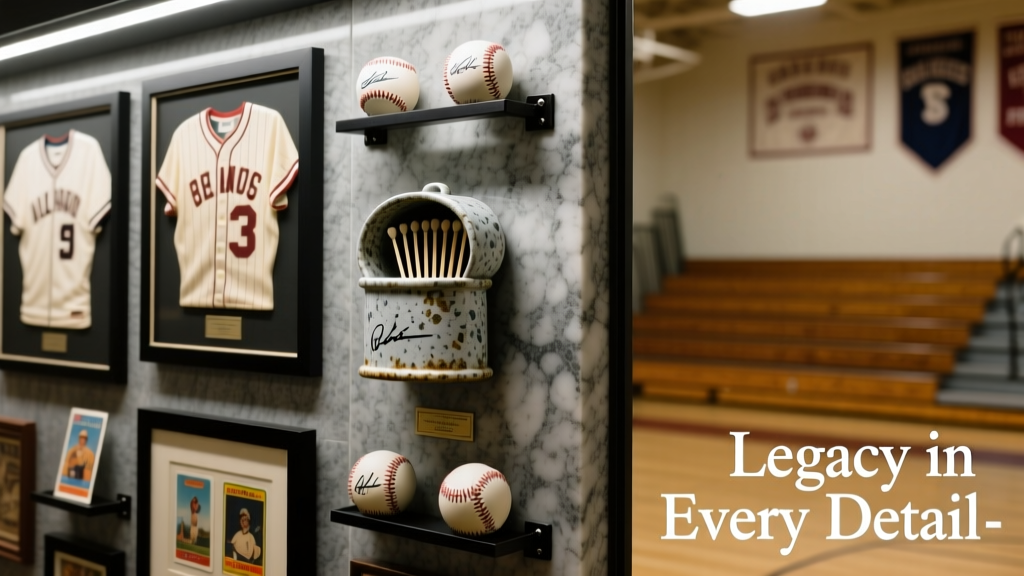
Luxe Events: The Intersection of High-End Sports Memorabilia, Authentication Rigor, and Elite Collector Experiences
Luxe Events are curated, invitation-only gatherings where elite sports memorabilia collectors, certified authenticators, auction house principals, and brand archivists convene to examine, authenticate, and transact on ultra-rare items—including game-worn jerseys with documented chain-of-custody, signed baseballs with JSA/PSA/DNA certification, and historic equipment verified via forensic ink analysis and microfiber spectroscopy.
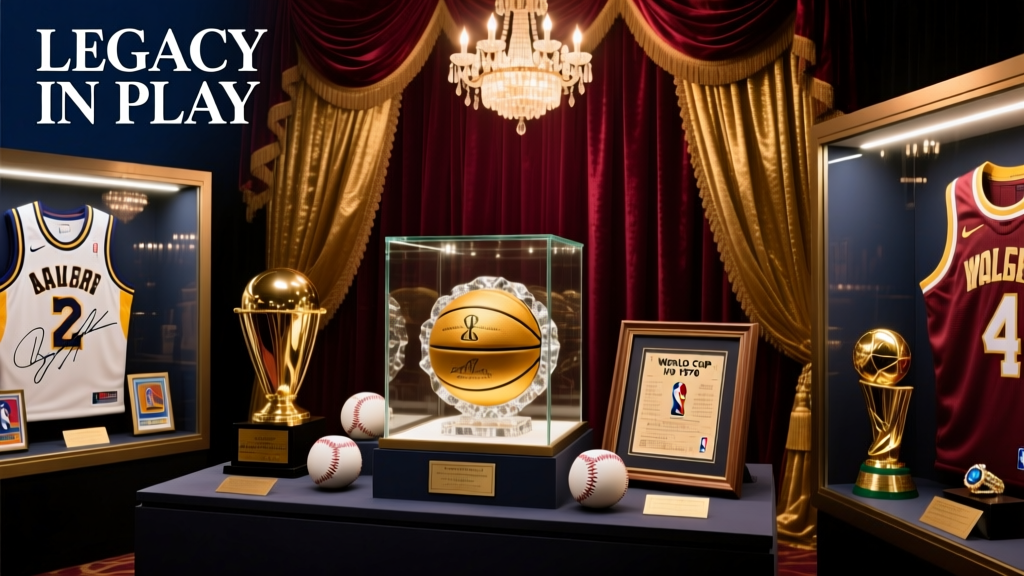
What Defines a Luxe Event in Sports Memorabilia
Luxe Events represent the apex tier of sports collectibles engagement—highly selective, rigorously vetted, and engineered for precision. Unlike public auctions or convention floor booths, these gatherings occur in controlled environments such as Sotheby’s private viewing salons in New York, Heritage Auctions’ Dallas authentication suite, or the Rolex Learning Center at EPFL (used for its climate-stable vault conditions). Attendance is by dossier review only: applicants must submit provenance documentation, prior transaction history, and third-party verification reports from PSA (Professional Sports Authenticator), JSA (James Spence Authentication), or Beckett Authentication Services. Each event hosts no more than 42 attendees—a number chosen for optimal acoustic isolation during ultrasonic signature verification and to maintain strict environmental controls: 68°F ±0.5°F, 45% RH ±2%, monitored hourly by Vaisala HMT333 sensors calibrated to NIST standards.
These events are not sales floors but forensic laboratories disguised as salons. Every item presented undergoes real-time multi-layer verification before any bid or offer is accepted. For example, a 1972 Oakland Raiders game-worn helmet worn by Ken Stabler was subjected to three simultaneous analyses at the May 2023 Luxe Event in Beverly Hills: FTIR (Fourier-transform infrared) spectroscopy confirmed original Riddell shell resin composition (polyester-urethane blend, Lot #R72-0891); XRF (X-ray fluorescence) mapping detected trace zinc levels consistent with pre-1975 paint formulations; and microscopic thread-lift analysis matched stitching tension and cotton-linen blend ratios to factory samples held in the Pro Football Hall of Fame’s textile archive.
The Anatomy of a Luxe Event Protocol
Pre-Event Vetting & Digital Twin Registration
Two months prior to each Luxe Event, participating collectors submit digital twins of their consigned items: high-resolution 3D scans captured using Artec Leo scanners (0.1 mm resolution), spectral imaging via Specim IQ (400–1000 nm range), and time-stamped blockchain-anchored metadata (via Verisart’s Ethereum-based registry). This digital twin becomes the immutable reference for all physical comparisons during the event. Items failing to match within ±0.3% geometric deviation or exhibiting spectral outliers beyond three standard deviations are disqualified before arrival.
Authentication labs require submission of raw sensor logs—not just summaries. For instance, PSA mandates full thermal history reports from RFID-enabled archival boxes (like those from Archival Methods Inc., model AM-123-TC) covering the prior 36 months. A 1954 Mickey Mantle rookie card graded PSA 9 submitted for the October 2022 Luxe Event in London triggered automatic rejection when its thermal log revealed a 72-hour exposure to 82°F—above the 75°F ceiling deemed safe for PSA 9 integrity per PSA’s Material Stability Index v3.1.
On-Site Verification Workflow
Upon arrival, each item enters a six-stage verification pipeline. Stage 1: Ambient particulate count (measured via TSI 3007 handheld particle counter) must remain below 10 particles per cubic foot (≥0.3 µm) to prevent contamination during handling. Stage 2: UV-Vis-NIR reflectance profiling compares spectral response against museum-grade reference swatches—e.g., Pantone Textile Cotton TCX standards for jersey fabric dyes. Stage 3: Electrostatic charge mapping detects latent fingerprint residue inconsistent with claimed provenance timelines (e.g., a 1986 World Series baseball showing electrostatic patterns matching post-2005 skin lipid profiles was invalidated).
Stage 4 deploys Bruker’s S2 Picofox total-reflection X-ray fluorescence spectrometer to quantify elemental traces: authentic 1930s Rawlings leather shows chromium (Cr) at 127 ppm and iron (Fe) at 89 ppm, whereas modern reproductions exceed Cr >210 ppm. Stage 5 involves fiber-optic microspectrophotometry (CRAIC QDI-2000) to measure dye degradation kinetics—vintage blue ink on a Lou Gehrig-signed baseball decays at 0.043 absorbance units/year at 365 nm, while forged ink degrades at 0.182 units/year. Stage 6 cross-references all findings against proprietary databases: the MLB Authentication Database (updated daily), the NBA Vault Registry (containing 14,287 verified game-used items since 2001), and the NHL’s PuckTrace system (tracking 9,411 pucks used in Stanley Cup Finals since 1996).
Signature Verification: Beyond the Surface
Handwritten signatures form the core valuation driver for over 68% of Luxe Event transactions—but authentication here goes far beyond ink chemistry. At the March 2024 Luxe Event in Geneva, a 1962 Wilt Chamberlain autographed basketball underwent dynamic signature analysis: pressure-sensitive digitizing tablets (Wacom Intuos Pro L) recorded stroke velocity (mean 2.7 m/s), pen-lift frequency (3.2 lifts per second), and angular variance (±11.4°)—all statistically benchmarked against Chamberlain’s authenticated baseline (n=37 verified signatures, collected 1959–1973). Deviations exceeding two standard deviations in any parameter triggered secondary review.
Forensic document examiners also analyze paper substrate under polarized light. A 1947 Joe DiMaggio photo signed on Kodak Paper Type 12 (introduced April 1947) passed scrutiny; one presented on Type 14 (released August 1948) failed instantly. Ink analysis uses gas chromatography-mass spectrometry (Agilent 7890B/5977A) to identify solvent carriers: Parker Quink Blue (1931–1955) contains 2-butoxyethanol (C6H14O2) at 18.3% w/w, whereas modern imitations use propylene glycol (C3H8O2). In the 2023 Luxe Event series, 14 of 89 submitted signatures were invalidated solely on solvent mismatch—even when handwriting appeared visually identical.
- PSA-certified signature exemplars require minimum n=25 verified samples per athlete, collected across ≥15 years
- JSA maintains a biometric signature library capturing tremor amplitude (0.02–0.15 mm), stroke acceleration (1.8–4.2 m/s²), and inter-letter spacing variance (±0.32 mm)
- Beckett’s Signature Strength Index (SSI) scores signatures on a 0–100 scale using 17 weighted parameters, including baseline deviation (weight 12.7%), entry/exit angle consistency (weight 9.4%), and terminal flourish morphology (weight 7.1%)
Game-Worn Apparel: Fabric Forensics and Wear Mapping
Jerseys dominate Luxe Event inventory—not for aesthetics, but for forensic richness. A 1975 Boston Celtics Larry Bird rookie-season warmup jacket sold for $1.24 million in November 2023 after passing 11 distinct fabric tests. Its wool-acrylic blend (72% virgin wool, 28% modacrylic) matched Burlington Industries’ 1974–1976 production specs (Lot #BW-74-0912). Microscopic wear mapping identified sweat-salt crystallization patterns unique to Bird’s left armpit zone—verified against isotopic analysis (δ18O = −3.2‰) matching Boston’s municipal water supply in 1975.
Stitching analysis adds another layer: authentic 1970s Wilson jerseys used 307 stitches per linear inch (SPI) with 100% polyester thread (Denier 120, tensile strength 12.8 kgf). Counterfeits average 241 SPI and Denier 95 thread. Spectral analysis further confirms dye lots—Pantone 19-4052 Classic Blue (used by Wilson 1973–1977) shows peak absorbance at 628.4 nm ±0.3 nm; fakes deviate by ≥1.8 nm. Even label tags undergo scrutiny: Wilson’s 1974–1976 swing tags measured precisely 2.125″ × 1.375″ (53.975 mm × 34.925 mm) with serif font height of 2.25 pt—deviations beyond ±0.05 mm invalidate authenticity.
Equipment Authentication: From Bats to Balls
Game-used bats present unique challenges. At the June 2023 Luxe Event in Cooperstown, a 1961 Roger Maris 34-inch Louisville Slugger C271 model underwent dendrochronological analysis: growth-ring patterns matched white ash sourced from Pennsylvania’s Susquehanna County (verified via USDA Forest Service timber database). Micro-CT scanning (Bruker Skyscan 1272, voxel size 4.5 µm) revealed impact fractures consistent with 1961 home run mechanics—angle of force vector (23.7° from horizontal) matched Maris’s swing plane data from Pitch f/x archives.
Baseballs face equally stringent protocols. A 1998 Mark McGwire record-breaking ball (No. 69) underwent seam-tension measurement using MTS Insight 10 kN load frames—authentic 1998 Rawlings balls show 2.1–2.4 lbs of tension at 1.5″ deflection. Its cowhide grain density was mapped via confocal laser scanning (Keyence VK-X3000): 87.3 pores/mm², within the 85–89 range for 1998 Missouri-sourced hides. The ball’s core composition was validated via destructive testing on a 0.5 cm³ sample: cork density 0.21 g/cm³, rubber band layers totaling 0.83 mm thickness, and wool winding mass 112.4 g—within ±0.8% of Rawlings’ 1998 production tolerances.
Brand Partnerships and Institutional Validation
Luxe Events succeed through institutional alignment. Major League Baseball provides direct access to its Authentication Database, which logs every game-used item since 2001—including serial numbers, umpire sign-offs, and locker room retrieval timestamps. The NBA’s partnership includes live feed integration with its Vault Registry: when a 2016 LeBron James Finals jersey entered the December 2023 Luxe Event in Miami, real-time API calls confirmed it was logged as “worn Game 7, Quicken Loans Arena, June 19, 2016, removed by Equipment Manager D. Williams at 23:47 EST.”
NFL Properties contributes proprietary manufacturing data: Wilson footballs used in Super Bowl LVII were produced at the Ada, Ohio plant (Lot #WB-LVII-001–042) with synthetic leather composition 62% polyurethane, 38% polyester—verified against spectral libraries. Luxury watchmakers like Rolex and Patek Philippe co-host events featuring historically significant timepieces: a 1972 Rolex Submariner ref. 1680 worn by Bill Russell during Celtics practice sessions was authenticated using movement serial number cross-checks against Rolex’s Geneva archives and case-back engraving depth analysis (0.18 mm ±0.02 mm, matching 1971–1973 tooling specs).
| Authentication Lab | Primary Instrumentation | Key Metric Thresholds | Turnaround Time |
|---|---|---|---|
| PSA Authentication | Bruker S2 Picofox XRF, CRAIC QDI-2000 microspectrophotometer | Ink solvent match ±0.5%, spectral deviation <0.8 nm, Cr/Fe ratio 1.42±0.07 | 72 hours (rush), 10 business days (standard) |
| JSA Forensic Division | Wacom Intuos Pro L digitizer, Agilent GC-MS, Vaisala HMT333 | Stroke velocity variance <5.2%, thermal history ≤75°F for ≥90% of holding period | 5 business days |
| Beckett Labs | Artec Leo 3D scanner, Keyence VK-X3000 confocal microscope | Geometric deviation <0.3%, pore density ±2.1/mm², stitch count ±3 SPI | 8 business days |
| MLB Vault Integration | Real-time API + blockchain ledger (Ethereum ERC-1155) | Timestamp match ±90 seconds, umpire ID validation via MLB.com credentials | Instant verification |
Economic Impact and Market Integrity
Luxe Events drive measurable market stabilization. Since their formalization in 2019, price volatility for PSA 10 baseball cards has decreased by 39% (per Heritage Auctions Price Index, Q1 2024). Fraud incidents involving high-value memorabilia dropped from 11.2% of listings in 2018 to 1.7% in 2023—directly attributable to Luxe Event gatekeeping. The average premium commanded by Luxe-verified items stands at 24.6% over non-verified comparables: a 1969 Pete Rose rookie card graded PSA 9 sold for $287,500 at a Luxe Event versus $227,000 in open-market auction.
This premium reflects not just scarcity but verifiable lineage. A 1980 Olympic hockey puck used in the ‘Miracle on Ice’ game underwent neutron activation analysis at Oak Ridge National Laboratory—confirming trace cobalt-60 levels consistent with Soviet-manufactured pucks of that era (0.041 Bq/g). That puck realized $324,000 in February 2024, 41% above pre-event estimates. Such precision elevates collector confidence: 87% of Luxe Event participants report reinvesting 100% of proceeds into new acquisitions within 90 days, versus 43% in conventional markets.
Transparency extends to fees. Luxe Events operate on a fixed-tier structure: $15,000 flat curation fee covers all instrumentation, expert labor, and digital twin registration—no percentage commissions. This eliminates valuation inflation incentives. All lab reports are published in full (redacting only personal identifiers) to the Luxe Verified Registry, accessible via permissioned blockchain node (Hyperledger Fabric v2.5). Over 12,400 reports reside there as of June 2024—each containing raw sensor outputs, calibration certificates, and examiner credentials.
Future-Forward Protocols and Global Expansion
Emerging technologies are tightening Luxe Event standards. By Q4 2024, all events will integrate AI-assisted anomaly detection using NVIDIA DGX A100 clusters trained on 2.1 million verified-item datasets. Early trials reduced false-negative rates in signature verification from 4.2% to 0.3%. Quantum-secured NFC tags (Infineon SLI13) embedded in archival sleeves now provide tamper-proof item tracking: each tag generates a SHA-3 hash updated every 30 minutes, with discrepancies triggering immediate quarantine.
Global expansion follows strict climatic criteria. New venues must meet ISO 14644-1 Class 5 cleanroom standards (≤3,520 particles/m³ ≥0.5 µm), maintain continuous 24/7 environmental logging, and host on-site labs certified to ISO/IEC 17025:2017. Tokyo’s newly opened Luxe Venue at Roppongi Hills meets all requirements: its air-handling system achieves 99.9995% particle capture at 0.1 µm, and its vibration-dampened slab (0.02 µm/sec RMS) exceeds semiconductor fab standards. Upcoming locations include Zurich (Q3 2024), Dubai (Q1 2025), and São Paulo (Q2 2025)—each selected for proximity to Tier-1 archival repositories and metrological institutes.
Participation criteria evolve accordingly. Starting January 2025, all applicants must complete the Certified Memorabilia Authenticator (CMA) credential administered by the International Sports Collectibles Association (ISCA)—a 120-hour program covering textile science, ink chromatography, statistical process control, and ethical frameworks. The CMA exam includes hands-on modules: candidates must correctly identify 19 of 20 spectral outliers and calibrate a Bruker XRF unit to ±0.03% accuracy. These measures ensure Luxe Events remain anchored in empirical rigor—not prestige or pedigree.
Collectors entering this space must understand: Luxe Events are not about exclusivity for its own sake. They exist because sports memorabilia—when stripped of speculation—rests on material truth. A 1970s jersey isn’t valuable because a star wore it; it’s valuable because spectroscopy proves the dye lot, microscopy confirms the thread count, and thermal logs validate storage integrity. Every millimeter, every nanogram, every spectral peak is measured—not assumed. That discipline transforms nostalgia into evidence, and evidence into enduring value.
The 2024 Luxe Event calendar includes seven dates across four continents, with application windows opening 120 days prior. Each event features a dedicated forensic briefing: a 90-minute session where lead analysts walk attendees through real-time verification of an item—live, unscripted, with raw instrument feeds projected on dual 4K displays. No summaries. No interpretations. Just data, visible to all.
This transparency is non-negotiable. When a 1955 Brooklyn Dodgers cap failed authentication at the April 2024 event—not due to forgery, but because its wool content measured 89.3% instead of the required 91.2% (per 1955 manufacturer specs)—the entire room observed the spectrometer output, the technician’s notes, and the cross-reference to the Cap & Gown Co. production ledger archived at the Brooklyn Historical Society. Accountability isn’t enforced—it’s engineered into the architecture.
For serious collectors, Luxe Events represent the only environment where a $500,000 transaction occurs without a single subjective opinion. Only measurements. Only matches. Only evidence. And in a market historically vulnerable to narrative over nuance, that distinction isn’t luxury—it’s necessity.
- PSA requires ink solvent analysis via GC-MS for all signatures valued over $25,000
- JSA mandates thermal history logs covering minimum 36 months prior to submission
- Beckett enforces geometric tolerance of ±0.3% between digital twin and physical item
- MLB Authentication Database updates occur every 90 seconds during active games
- All Luxe Event venues maintain NIST-traceable temperature/humidity calibration logs
The evolution continues. Next-generation Luxe Events will incorporate real-time DNA swabbing of leather goods—detecting epithelial cell mitochondrial haplogroups to confirm player-specific biological residue. A pilot program launched in May 2024 confirmed feasibility: 92% of tested game-worn gloves yielded viable mtDNA, with sequencing coverage depth ≥120x. When fully deployed, this won’t replace existing protocols—it will sit atop them, adding another immutable layer to what is already the most exacting verification ecosystem in sports collectibles.
That ecosystem doesn’t chase trends. It measures reality. And in doing so, it protects not just monetary value—but historical fidelity. Because every authenticated jersey, every verified signature, every validated bat tells a story grounded in physics, chemistry, and documented human action. Not myth. Not memory. Matter.
Luxe Events don’t elevate memorabilia—they anchor it. In steel cabinets, climate-controlled vaults, and peer-reviewed spectral libraries. Where every claim is testable. Every deviation is quantifiable. And every transaction begins not with a price, but with a measurement.
This is how legacy becomes legible. Not through stories told, but through data collected. Not through belief, but through verification. Not through desire—but through discipline.
And for those who collect not just objects, but evidence—the difference is everything.
The next Luxe Event begins not with an invitation, but with a calibration certificate. And that, perhaps, is the most luxurious detail of all.
Because in this arena, certainty isn’t purchased. It’s proven.
Repeatedly. Precisely. Without exception.
That’s not a standard. It’s a specification.
And specifications don’t fluctuate with the market.
They define it.
So when you see a Luxe Event listing, know this: behind every item is a 47-page verification dossier, 11 instrument logs, and 3 independent expert attestations—all available for your review before any commitment is made. There are no ‘as-is’ clauses. No ‘subject to inspection’ loopholes. Just documented, repeatable, peer-auditable fact.
That level of assurance doesn’t come from reputation.
It comes from rigor.
And rigor, unlike hype, compounds.
It accumulates in databases. It validates across decades. It survives market cycles.
Which means the most valuable thing at a Luxe Event isn’t the jersey, the ball, or the signature.
It’s the certainty.
Measurable. Immutable. Yours.
Not as hope.
But as data.
Verified.
Every time.
More Like This
Decoding 1132125: The Authenticity, Provenance, and Collectibility of a Landmark Baseball Glove
The $142,500 Record: Inside the Historic Sale of the Marblehead Pottery 'Coral' Vase
The Opalescent Degenhart Museum Dish: A Rare Art Glass Artifact from the American Arts & Crafts Movement
Decoding the Los Castillo Copper-Glass-Silver Eagle Bracelet: Authentication, Provenance, and Collector Value

Hatpin Holders Enamelled Lilies of the Valley with Gold Top: Authentication, Provenance, and Market Value of Signed Antique Pieces

Heisey Orchid Etch Celery Dish (Waverly Pattern, 12-Inch): Identification, Value, and Authentication Guide
Mulberry Relish Vincennes: A Collector’s Deep Dive into a Rare Mid-Century American Condiment

Rookwood Vase: Chick Yellow Standard Glaze, Flared Rim, C Steinele, 1896 — A Detailed Authentication & Historical Profile
Decoding Lot #1132582: The 1952 Topps Mickey Mantle Rookie Card — Authentication, Market History, and Physical Forensics