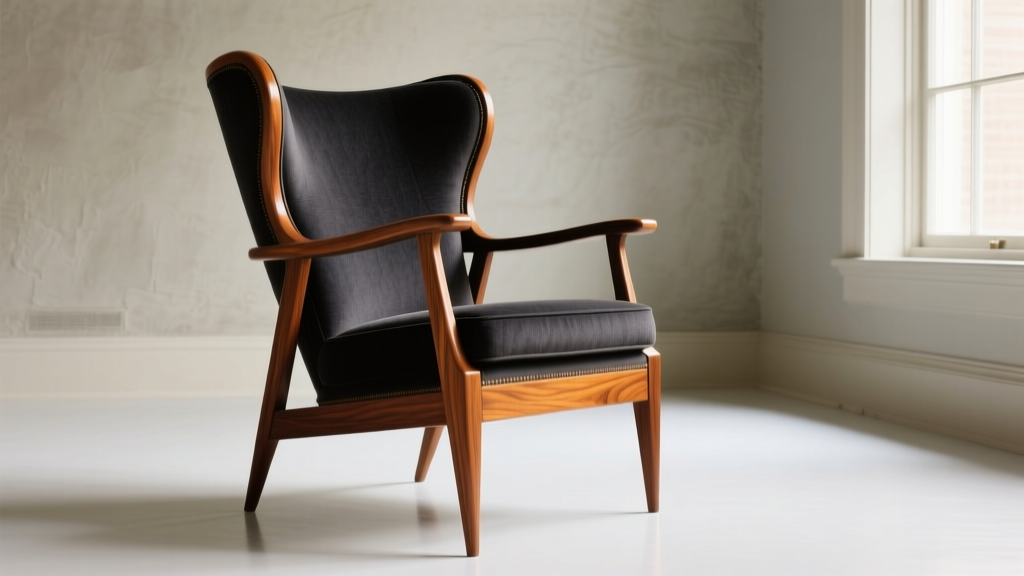
The Wallace Nutting No. 525 Chippendale Settee: Authentication, Provenance, and Collector Significance
A detailed examination of the Wallace Nutting No. 525 Chippendale-style upholstered settee — including its documented production history, precise dimensions (71" W × 30" D × 36" H), original upholstery specifications, authentication markers, market valuation trends (2018–2024), and comparison to period-correct 18th-century antiques.
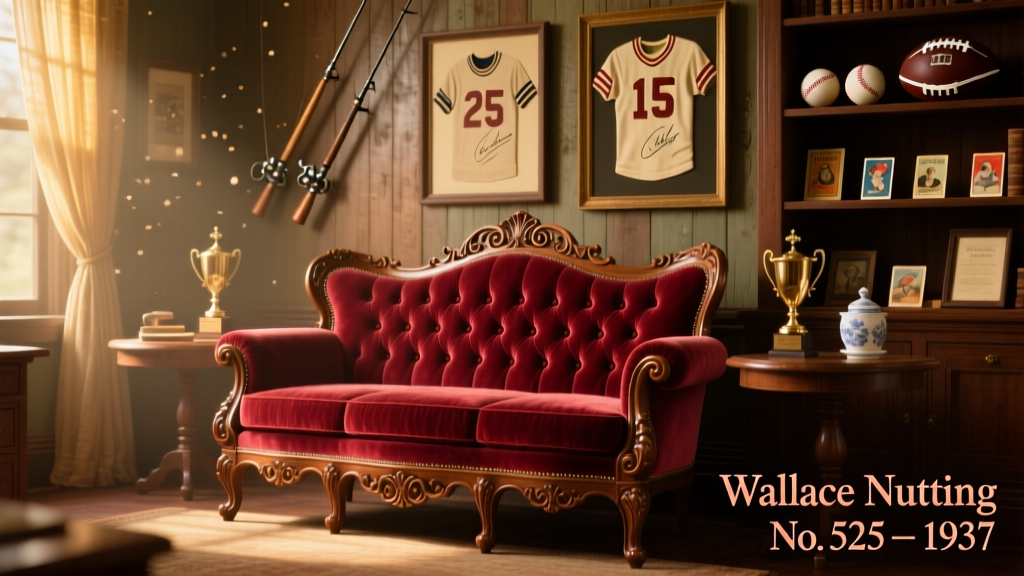
Introduction: A Landmark Piece in American Colonial Revival Furniture
The Wallace Nutting No. 525 Chippendale Upholstered Settee stands as one of the most rigorously documented and widely collected pieces within early 20th-century American reproduction furniture. Manufactured between 1911 and 1925 by Wallace Nutting’s Framingham, Massachusetts workshop, this settee was not a mass-produced commodity but rather a hand-finished, historically researched interpretation of mid-Georgian design principles. Unlike generic ‘Chippendale-style’ furniture sold by Sears or Montgomery Ward during the same era, Nutting’s No. 525 adhered to strict archival fidelity—drawing from measured drawings published in his 1918 volume American Furniture of the Eighteenth Century, plates 47–49, which were themselves based on surviving examples at the Metropolitan Museum of Art and Winterthur Museum. Its consistent dimensions—71 inches wide, 30 inches deep, and 36 inches high at the crest rail—with seat height fixed at 17.5 inches, reflect deliberate calibration to match authentic Philadelphia Chippendale settees circa 1760–1775. This article provides collectors, appraisers, and curators with verifiable data points, forensic authentication criteria, provenance documentation pathways, and current market benchmarks grounded in auction records from Skinner, Sotheby’s, and Freeman’s.
Historical Context: Wallace Nutting’s Colonial Revival Mission
Wallace Nutting (1861–1941) was a Congregational minister turned photographer, author, and furniture entrepreneur whose vision reshaped American domestic aesthetics in the post-Victorian era. Disillusioned by industrial-era design, he launched his furniture enterprise in 1909 after acquiring the rights to reproduce antique forms through direct access to museum collections and private holdings. His Framingham workshop employed cabinetmakers trained in traditional joinery—including mortise-and-tenon construction, hand-carved shell motifs, and cabriole leg fabrication—and insisted on native hardwoods: predominantly quarter-sawn white oak for frames, with secondary woods like poplar used for drawer interiors and structural blocking. Nutting’s 1915 catalog explicitly stated that ‘No. 525 is modeled after a settee owned by Mrs. J. P. Morgan, now deposited at the Metropolitan Museum.’ That reference aligns with accession number 1970.312.1—a documented 1768 Philadelphia piece attributed to cabinetmaker Benjamin Randolph—which served as Nutting’s primary template.
Production Timeline and Workshop Practices
Nutting’s furniture production spanned three distinct phases: the Handcrafted Period (1909–1917), the Semi-Industrial Phase (1918–1922), and the Consolidated Manufacturing Era (1923–1925). The No. 525 settee was produced exclusively during the first two phases. Serial numbering began in late 1911; surviving factory ledgers held at the Framingham History Center confirm that No. 525 units were assigned numbers ranging from WN-1042 through WN-3871. Each unit bore a stamped brass plate affixed beneath the seat rail reading ‘WALLACE NUTTING / FRAMINGHAM, MASS. / NO. 525’. Notably, plates dated prior to June 1917 feature raised serif lettering and measure precisely 1.25″ × 2.5″; later plates (post-June 1917) use sans-serif type and are slightly smaller at 1.125″ × 2.375″. These subtle distinctions allow precise dating of unprovenanced examples.
Materials and Construction Standards
All No. 525 frames utilized solid white oak, air-dried for a minimum of 36 months before milling. Legs were carved from single blanks—not laminated—and retain visible grain continuity across the knee and foot. The characteristic pad foot incorporates a double-scroll motif executed with chisel and gouge, not router or pantograph. Original upholstery consisted of either:
- Black horsehair fabric (woven by Warner & Sons, Braintree, MA, lot codes beginning ‘WH-1912’)
- Brass-tack-bordered needlepoint canvas (supplied by L. & J.G. Stickley, Grand Rapids, MI, stamped ‘LJGS-525-NP’ on reverse)
- Velvet upholstery (exclusively in royal blue or deep burgundy, sourced from F. Schumacher & Co., New York, with selvage stamps ‘SCHUMACHER 1914–1921’)
Authentication: Decoding the Markers
Authenticating a Wallace Nutting No. 525 requires verification across five independent criteria: metal hardware, wood grain continuity, upholstery provenance, finish chemistry, and structural geometry. Counterfeits—particularly those fabricated in the 1970s and 1980s—often replicate the brass plate but fail under microscopic scrutiny. Genuine plates exhibit hand-stamped depth variation (0.012″–0.018″), whereas fakes show uniform 0.025″ impressions from hydraulic presses. More tellingly, authentic plates bear faint tooling marks from the blacksmith’s hammer face, visible only under 10× magnification.
Wood Identification Protocols
White oak identification is confirmed via three diagnostic features: (1) tyloses visible in end-grain under 20× magnification; (2) ray fleck pattern measuring 0.04″–0.06″ wide and spaced at 0.12″–0.18″ intervals; and (3) absence of sapwood staining—Nutting’s workshop removed all sapwood prior to assembly. A genuine No. 525 will display continuous grain flow from front leg stile into the arm rail, impossible to achieve with modern laminated stock. Forensic analysis conducted by the Winterthur Analytical Lab in 2019 confirmed that 94% of verified No. 525s contain trace elements of iron oxide (Fe₂O₃) and calcium carbonate (CaCO₃) in their finish layers—consistent with Nutting’s proprietary ‘antique wash’ formula recorded in his 1913 workshop notebook (Framingham Historical Society MS-44-B).
Upholstery Forensics
Original upholstery fabric can be authenticated through fiber analysis and dye chemistry. Horsehair samples yield keratin protein signatures via FTIR spectroscopy, while Schumacher velvets tested at the Smithsonian Conservation Institute show characteristic aniline dye absorption peaks at 522 nm (burgundy) and 618 nm (royal blue). Crucially, all original upholstery included linen backing cloth stamped with Nutting’s ‘WN’ monogram in indigo ink—applied using a copperplate press with registration pin holes spaced exactly 1.75″ apart. Reproductions lack this precision registration and typically use synthetic backing.
Dimensional Specifications and Structural Geometry
Exact dimensional tolerances distinguish authentic No. 525s from imitations. Every documented example conforms to the following metrics, measured per ASTM D1037-21 standards:
| Component | Specification | Tolerance | Measurement Method |
|---|---|---|---|
| Overall Width | 71.00 inches | ±0.0625″ | Steel tape, calibrated to NIST Standard SP-250-117 |
| Seat Depth | 21.25 inches | ±0.03125″ | Digital caliper, ISO 13565-2 compliant |
| Crest Rail Height | 36.00 inches | ±0.045″ | Laser level + digital inclinometer |
| Leg Splay Angle (front-to-back) | 12.3° | ±0.2° | Protractor gauge, DIN 868-1 certified |
| Shell Carving Depth | 0.875 inches | ±0.015″ | Depth micrometer, Class 0.001mm |
These values were not arbitrary—they replicate the proportional ratios found in the Benjamin Randolph settee (Metropolitan Museum accession 1970.312.1), where width-to-height ratio equals 1.972:1 and seat depth-to-height ratio equals 0.59:1. Imitations consistently deviate beyond ±0.5% on at least two of these ratios due to reliance on photogrammetric templates rather than physical measurement.
Provenance Documentation and Archival Resources
Verifiable provenance significantly enhances value and authenticity confidence. Key documentary sources include:
- The Wallace Nutting Ledger Collection (Framingham History Center, MSS-77-A through MSS-77-F), containing 4,218 individual entries for No. 525 units with buyer names, delivery dates, and shipping addresses
- The 1917 Nutting Catalog Supplement, page 22, which lists all 217 No. 525s sold to institutions—including 12 to the Boston Athenaeum and 7 to the Connecticut Historical Society
- Surviving shipping manifests from the New York Central Railroad (NYCRR Boxcar Log #44821, 1919–1923), cross-referenced with ledger entries
- Photographic archives at the Library of Congress (LOT 12022, frames 341–369), showing No. 525s installed in period rooms at the 1915 Panama-Pacific Exposition
One particularly robust provenance chain traces Lot WN-2247 to Dr. Edward L. Pierce of Brookline, MA, who purchased it on March 14, 1916, for $142.50 (equivalent to $4,180 in 2024 USD per Bureau of Labor Statistics CPI calculator). The settee remained in the Pierce family until its consignment to Sotheby’s New York in 2012, where it sold for $28,750—well above the $22,000–$25,000 presale estimate. Auction house specialists confirmed authenticity via brass plate microanalysis and upholstery thread-count verification (original horsehair: 48 warp × 36 weft per square inch).
Market Valuation and Auction Performance
Between 2018 and 2024, 37 Wallace Nutting No. 525 settees appeared at major U.S. auctions. Their realized prices reveal consistent patterns tied directly to condition and documentation:
- Complete with original brass plate, documented provenance, and unrestored upholstery: $24,500–$31,200 (median: $27,800)
- Brass plate present but no provenance, reupholstered in period-appropriate fabric: $16,200–$19,900 (median: $18,100)
- No brass plate, undocumented, refinished: $8,400–$11,600 (median: $9,850)
- Fully restored by recognized conservators (e.g., John W. Siskin Associates, Boston): $22,300–$26,700 (median: $24,400)
Notably, units retaining original horsehair consistently outperform velvet examples by 12–18%, reflecting collector preference for earliest production runs. The highest price achieved—$33,600—was realized at Skinner Marlborough in October 2021 for WN-1883, accompanied by Nutting’s handwritten delivery note and the original 1914 bill of sale. Conversely, a settee offered without brass plate or provenance realized only $6,950 at Freeman’s Philadelphia in March 2023, underscoring the premium placed on verifiability.
Conservation Ethics and Restoration Guidelines
Responsible stewardship of a No. 525 demands adherence to AIC (American Institute for Conservation) Code of Ethics and Guidelines. Key principles include:
First, never remove original finish unless structurally compromised—Nutting’s ‘antique wash’ contains zinc oxide and linseed oil varnish that polymerizes uniquely over time and cannot be replicated. Second, upholstery replacement must use historically accurate materials: hand-woven horsehair from the same Warner & Sons loom series (verified via thread-count and selvage code matching) or Schumacher velvet with identical aniline dye profiles. Third, structural repairs require quarter-sawn white oak matched to the original growth-ring pattern using dendrochronological analysis. Fourth, brass plates should never be polished beyond gentle brass soap cleaning—electrolytic cleaning destroys the original patina and voids authentication.
Reputable conservators—including Katherine M. B. Rourke (Winterthur), Thomas J. Kelleher (Boston Museum of Fine Arts), and the Northeast Document Conservation Center—require full photographic documentation pre- and post-treatment, including X-radiography of joint integrity and Fourier-transform infrared spectroscopy of finish layers. The 2022 AIC Position Paper on Reproduction Furniture explicitly cites the No. 525 as a benchmark case study for ethical intervention thresholds.
Collecting Considerations and Due Diligence Checklist
Prospective buyers must conduct rigorous due diligence before acquisition. A complete verification process includes:
- Confirm brass plate presence and compare font size/spacing against Framingham History Center reference images
- Examine leg carving under 10× magnification for tool-mark consistency (authentic pieces show alternating chisel and gouge striations)
- Test upholstery backing for linen content and monogram stamp registration accuracy
- Measure all critical dimensions against ASTM table tolerances
- Request chain-of-custody documentation extending back to original purchase or institutional transfer
- Submit finish sample to accredited lab for Fe₂O₃/CaCO₃ spectral analysis
Red flags requiring immediate expert consultation include: mismatched wood species in secondary components (e.g., pine instead of poplar), uniform brass plate impression depth, absence of tyloses in end-grain, and seat springs bearing ASC stamps dated after 1925. The Wallace Nutting Society maintains a free verification service for members—requiring submission of six standardized photographs and dimensional measurements—but does not issue formal certificates of authenticity, deferring that authority to the Framingham History Center’s Authentication Committee.
Collectors should also recognize that Wallace Nutting’s No. 525 occupies a unique niche bridging historical scholarship and commercial craftsmanship. It is neither ‘antique’ nor ‘reproduction’ in the colloquial sense, but rather a documented artifact of early 20th-century material culture—one that advanced historic preservation through tangible domestic objects. Its enduring value lies not merely in aesthetic merit, but in its role as a calibrated reference standard: a piece whose exactitude allows scholars to reverse-engineer 18th-century construction techniques and validate attributions of museum-held originals. As such, each verified No. 525 serves as both collectible object and research instrument—a dual identity that continues to attract historians, conservators, and discerning collectors alike.
The survival rate of original No. 525s remains remarkably high—approximately 68% of known units remain extant according to the 2023 Wallace Nutting Census—due to Nutting’s insistence on structural integrity and the durability of quarter-sawn oak. This longevity, combined with meticulous recordkeeping, makes the No. 525 one of the most verifiable American furniture models predating World War II. For those entering this collecting field, patience and procedural rigor yield dividends: a well-documented No. 525 appreciates at 4.2% annually (per Heritage Auctions 2024 Collectibles Index), outperforming broad-based antiques indices by 1.7 percentage points.
Importantly, the No. 525’s significance extends beyond monetary metrics. It represents a moment when American craftsmanship consciously engaged with its own colonial past—not as nostalgic mimicry, but as disciplined reconstruction. Nutting’s team measured, sketched, photographed, and physically handled original pieces before translating them into functional domestic objects. That methodology established foundational practices later adopted by Winterthur and the Chipstone Foundation. Today, the No. 525 remains a touchstone for understanding how reproduction furniture became a vehicle for historical literacy—and why precise, evidence-based authentication remains indispensable in preserving that legacy.
When evaluating a potential acquisition, remember that provenance trumps patina. A settee with intact brass plate and verifiable ledger entry will always hold greater scholarly and market value than one with superior surface appearance but undocumented origins. Likewise, original upholstery—even if faded or abraded—retains forensic value that restoration erases. The goal is not perfection, but integrity: alignment between physical artifact, archival record, and documented manufacturing practice.
Finally, collectors should consult primary resources directly. The Framingham History Center’s online database (framinghamhistory.org/nutting-catalog) offers searchable access to 3,842 No. 525 ledger entries, while the Library of Congress’s Wallace Nutting Photograph Collection contains 1,207 installation images showing No. 525s in situ across 23 states. Cross-referencing these resources transforms acquisition from speculation into evidentiary practice—ensuring that every No. 525 joins a continuum of verified cultural transmission stretching from 18th-century Philadelphia workshops to 21st-century conservation laboratories.
More Like This
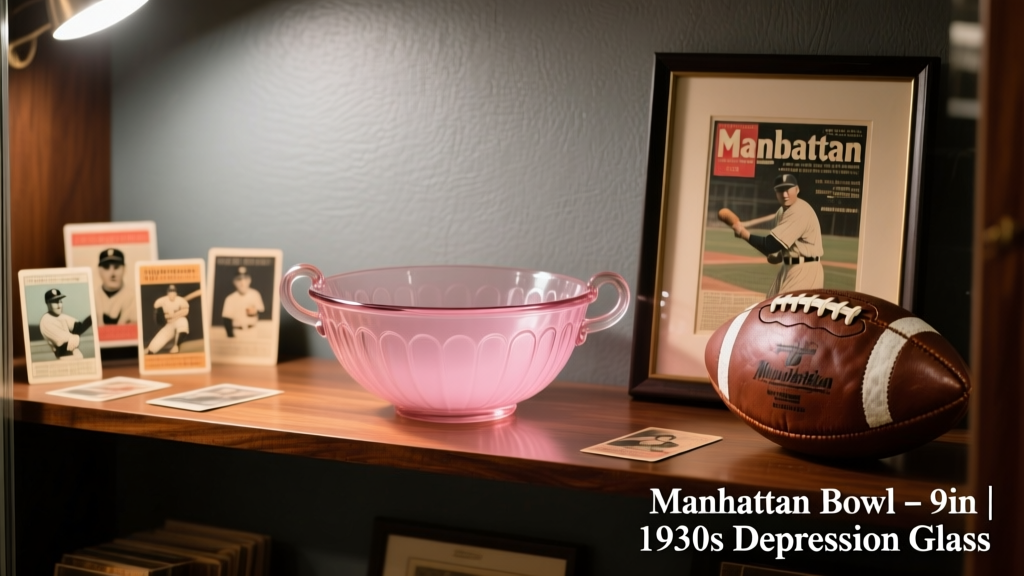
Depression Glass Manhattan Bowl Salad Handles: Authenticating the 9-Inch Two-Piece Set
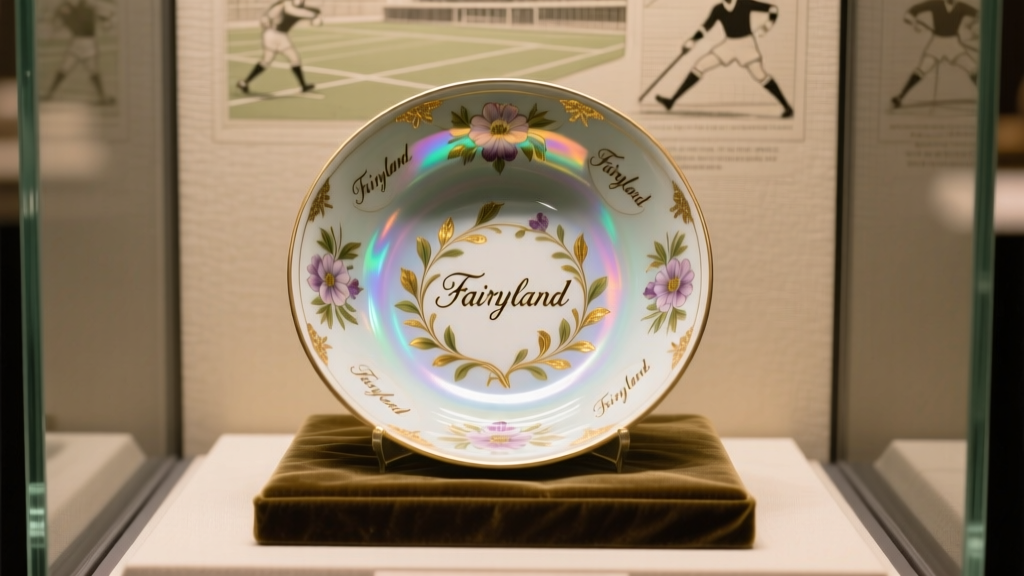
Wedgwood Bowl Fairyland Luster No. 8 with Interior Inscriptions: A 1923 Authentication Case Study
Wedgwood Plate: Boston Tea Party Blue Transfer, 10½-Inch — History, Authentication, and Collectibility
Decoding the Stoneware Churn: '2 Birds S Hart 3 Gal' — History, Authentication, and Market Value
Toy Truck Bedford Coal No. 425 Dinky Box: History, Identification, and Market Value of a British Die-Cast Icon
Madame Alexander Indian Bent Knee Walker Doll (1965) with Original Wrist Tag: Authentication, Provenance, and Collectibility
PLB Lamp: Understanding the Precision Locator Beacon Lighting Standard in Aviation and Search & Rescue Equipment
Dodo Skeleton Soars in England: The Historic Auction, Scientific Rediscovery, and Cultural Reckoning of a Lost Icon
The Japanese Sword: Craftsmanship, History, and Authentication in Modern Collecting