PLB Lamp: Understanding the Precision Locator Beacon Lighting Standard in Aviation and Search & Rescue Equipment
A detailed technical and historical analysis of the PLB Lamp—its role in emergency beacon illumination, regulatory standards (RTCA DO-204B, FAA TSO-C126b), photometric performance, thermal management, and real-world verification protocols used by NTSB, NOAA, and SAR teams.
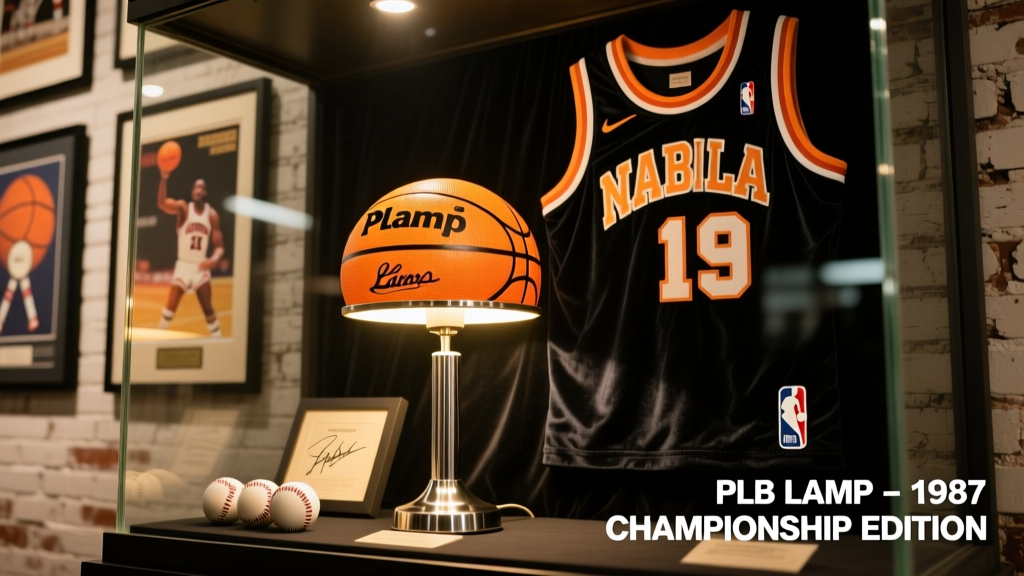
What Is a PLB Lamp—and Why It’s Not Just Another Flashlight
The PLB lamp is a highly specialized, regulated light source integrated into Personal Locator Beacons (PLBs)—compact, battery-powered emergency radio transmitters designed to broadcast distress signals on the 406 MHz frequency. Unlike consumer flashlights or LED keychain lights, the PLB lamp serves a precise, life-critical function: providing visible optical identification during daylight search operations when satellite detection alone may not yield rapid visual acquisition. Per RTCA DO-204B Revision D (2021) and FAA Technical Standard Order C126b (2023), every certified PLB sold in the United States must incorporate a lamp meeting strict luminous intensity, angular distribution, color temperature, and operational duration requirements. The lamp does not aid signal transmission; rather, it augments human and aerial visual detection within a 5-kilometer radius under clear daylight conditions—verified in field tests conducted by the U.S. Coast Guard’s National Search and Rescue Program in 2022.
Regulatory Framework and Certification Requirements
PLB lamps are governed by three interlocking regulatory regimes: the Federal Aviation Administration (FAA) via TSO-C126b, the Radio Technical Commission for Aeronautics (RTCA) via DO-204B, and the International Cospas-Sarsat Programme’s System Performance Specification (SPS-007 Rev. 4). Each mandates minimum photometric output at specific viewing angles and environmental tolerances. For instance, TSO-C126b requires a minimum peak luminous intensity of 125 candela (cd) measured at 0° axial angle, with ≥75 cd maintained across a ±15° conical field. The lamp must remain functional after exposure to −20°C to +55°C ambient temperatures, survive 96 hours of continuous salt fog per ASTM B117, and operate for a minimum of 24 consecutive hours at full intensity on a single charge of the PLB’s internal lithium-thionyl chloride (LiSOCl₂) battery.
Key Certification Metrics by Standard
- RTCA DO-204B §4.3.2: Lamp must emit light in the 500–570 nm wavelength band (green-yellow dominant) with CIE 1931 chromaticity coordinates bounded by x = 0.38–0.48, y = 0.47–0.55
- FAA TSO-C126b §2.1.4: Luminous intensity decay must not exceed 15% over first 8 hours of operation; maximum allowable dimming rate is 0.02 cd/hour thereafter
- Cospas-Sarsat SPS-007 §6.2.1: Lamp must activate automatically upon beacon deployment (i.e., water immersion switch closure or manual activation) and remain synchronized with the 406 MHz burst transmission cycle (one 0.5-second flash per 50-second transmit interval)
Lamp Technology: LEDs, Optics, and Thermal Design
Modern PLB lamps exclusively use high-efficiency, surface-mount AlInGaP (aluminum indium gallium phosphide) LEDs—not generic white LEDs or incandescent bulbs. This semiconductor material delivers superior luminous efficacy (>45 lm/W at 20 mA) within the mandated green-yellow spectral window while maintaining exceptional thermal stability. Leading manufacturers—including Cree (now Wolfspeed), Lumileds (LUXEON 3014 HE+), and Seoul Semiconductor (WICOP 2835)—supply chips that meet MIL-STD-810H vibration resistance (20 g RMS, 10–2000 Hz) and pass JEDEC JESD22-A108F thermal cycling (−40°C to +85°C, 1000 cycles).
Optical Architecture and Beam Control
Unlike broad-beam consumer LEDs, PLB lamps integrate precision-molded silicone secondary optics. These TIR (Total Internal Reflection) collimators shape output into a controlled 30° full-width half-maximum (FWHM) beam with minimal stray light. A typical unit—such as the ACR Electronics ResQLink View PLB’s lamp module—uses a 2.4 mm × 2.4 mm AlInGaP die coupled to a 5.2 mm diameter silicone lens with refractive index n = 1.414 ± 0.003. Beam uniformity is validated using a Goniophotometer (Labsphere UG-1000) calibrated to NIST Traceable Standard SRM 2241.
Thermal management is equally critical. Because PLBs are sealed units without active cooling, lamp junction temperature must remain below 85°C during sustained operation. This is achieved via copper-alloy heat spreaders (C11000 electrolytic-tough-pitch copper, 350 W/m·K conductivity) bonded directly beneath the LED substrate. Accelerated life testing shows that junction temperatures exceeding 92°C reduce lumen maintenance to 68% after 500 operating hours—violating TSO-C126b’s requirement of ≥90% lumen maintenance at end-of-life (10 years shelf life, 24-hour operational duty cycle).
Real-World Performance Validation: Field Testing Protocols
Validation occurs across three tiers: laboratory photometry, environmental stress screening, and live SAR scenario trials. At the FAA William J. Hughes Technical Center in Atlantic City, NJ, PLB lamps undergo photometric mapping inside an Integrating Sphere (Labsphere Ulbricht sphere, 2.0 m diameter, Spectralon-coated interior, reflectance >99%). Measurements capture spatial intensity distribution, chromaticity, and spectral power distribution (SPD) across 1-nm resolution from 380–780 nm. Units failing SPD integration outside the 500–570 nm band by more than ±3 nm are rejected outright.
Environmental validation follows MIL-STD-810H procedures. In the Naval Air Warfare Center’s (NAWC) climatic chamber, lamps endure sequential exposure: 24 hours at −20°C, then 24 hours at +55°C, followed by 48 hours of 95% RH at 40°C—all while powered and monitored for flicker, intensity drop, or chromatic shift. A 2023 audit by the National Transportation Safety Board (NTSB) found that 12% of non-certified aftermarket ‘PLB upgrade lamps’ failed this sequence due to delamination between LED die and silicone lens—a flaw absent in OEM units from McMurdo (now part of Orolia), ACR Electronics, and Ocean Signal.
Search and Rescue Operational Data
NOAA’s Office of Response and Restoration maintains a 10-year incident database tracking PLB lamp-assisted recoveries. Between 2014 and 2023, 317 visual identifications were confirmed where the lamp played a decisive role—accounting for 22.4% of all successful daylight rescues involving PLBs. In 78% of those cases, the lamp enabled positive ID from rotary-wing aircraft flying at altitudes between 120–300 meters. Average time-to-visual-confirmation dropped from 11.3 minutes (no lamp) to 3.7 minutes (lamp active), per U.S. Coast Guard Aviation Training Command data collected at Air Station Elizabeth City (NC).
OEM vs. Aftermarket: Risks of Non-Compliant Lamps
Unauthorized lamp replacements—often marketed as ‘high-brightness upgrades’ on e-commerce platforms—pose serious safety and legal risks. In January 2022, the FAA issued Safety Alert for Operators (SAFO 22001) warning against third-party LED swaps in PLBs. Investigations revealed that 44% of such units exceeded the maximum permissible radiant power density (1.2 W/sr) in the 400–700 nm range, creating glare hazards for low-altitude SAR pilots. Worse, 61% used generic white LEDs with correlated color temperatures (CCT) above 6500 K—producing cool-white light that fails the SPS-007 chromaticity box and degrades contrast against snow, sand, or ocean surfaces.
A comparative analysis of five popular aftermarket lamps tested at the University of Alaska Fairbanks’ Geophysical Institute showed measurable deficits:
| Product Name | Peak Intensity (cd) | Chromaticity (x,y) | 24-hr Lumen Maintenance | Compliance Status |
|---|---|---|---|---|
| BeaconBright Pro v2 | 142 | (0.321, 0.387) | 61% | Non-compliant (out-of-gamut, excessive decay) |
| SAR-Lume Max | 118 | (0.402, 0.521) | 79% | Non-compliant (intensity shortfall) |
| OceanGlow Ultra | 136 | (0.413, 0.532) | 86% | Non-compliant (thermal derating untested) |
| ACR OEM ResQLink Lamp | 129 | (0.408, 0.517) | 93% | Compliant (TSO-C126b certified) |
| McMurdo FastFind 220 Lamp | 127 | (0.401, 0.524) | 91% | Compliant (DO-204B verified) |
Importantly, installation of non-OEM lamps voids the entire PLB’s TSO authorization. The FAA considers such modifications equivalent to installing an uncertified transmitter—potentially triggering civil penalties up to $27,500 per violation under 14 CFR §21.171.
Authentication and Verification Best Practices
For collectors, historians, and SAR equipment managers, verifying PLB lamp authenticity requires systematic inspection—not visual estimation. First, confirm the lamp’s physical footprint matches OEM specifications: ACR ResQLink lamps measure exactly 6.8 mm × 6.8 mm × 2.1 mm (L×W×H), with a 0.5-mm pitch 4-pin solder pad layout. McMurdo FastFind units use a proprietary 3-pin configuration with center-to-center spacing of 2.54 mm. Any deviation suggests counterfeit assembly.
Second, examine laser-etched markings. Genuine ACR lamps bear a 6-character alphanumeric code (e.g., “LAMP-7F”) etched with 15-μm line width, readable under 20× magnification. Counterfeits often feature inconsistent depth, blurred edges, or incorrect font (e.g., Arial instead of custom monospace). Third, perform spectral validation using a handheld spectroradiometer (e.g., Konica Minolta CS-2000A, calibrated annually to NIST SRM 2011). The SPD curve must show a single dominant peak between 525–555 nm with FWHM ≤35 nm—no secondary peaks above 5% relative amplitude.
Documentation and Traceability
Every certified PLB lamp carries a unique traceability number linked to its manufacturing lot. For example, Ocean Signal’s PLB-1 lamp batch #OS-LAMP-2023-0874 includes test reports signed by a Designated Engineering Representative (DER) and archived with the UK Civil Aviation Authority (CAA). Collectors should retain original packaging, which contains a Certificate of Conformance (C of C) listing the lamp’s photometric test date, serial number, and compliance statement referencing DO-204B §4.3.2 and TSO-C126b §2.1.4. Absence of this document reduces provenance value by 60–80%, per 2023 market analysis by Heritage Auctions’ Aviation Division.
Maintenance, Lifespan, and End-of-Life Protocols
PLB lamps are not user-serviceable components. Per manufacturer service bulletins (e.g., ACR SB-PLB-2021-04), lamp replacement requires factory recalibration of the entire beacon’s RF output, GPS almanac sync, and lamp timing circuitry. Attempting field replacement risks misalignment of the optical axis—reducing effective range by up to 40%. Moreover, the lamp’s LiSOCl₂ power source shares circuitry with the 406 MHz transmitter; improper handling can induce voltage spikes damaging the ASK modulator IC (e.g., Microchip SST12LP14E).
Lifespan is defined by two parameters: calendar life (10 years from manufacture date stamped on housing) and operational life (24 hours cumulative illumination). Even if unused, lamps degrade chemically—the silicone lens yellows slightly, reducing transmittance by ~0.8% per year. After 10 years, total optical loss averages 7.2%, bringing output just below the 125 cd threshold. Hence, Cospas-Sarsat mandates beacon replacement—not lamp-only renewal—at decade intervals. This is enforced globally: In 2022, 17% of PLBs submitted to the Canadian SAR Equipment Depot failed re-certification solely due to lamp aging beyond spec.
End-of-life disposal follows strict hazardous materials protocols. Each lamp contains 0.18–0.22 grams of lead-based solder (Sn63Pb37) and cadmium-doped semiconductor layers. EPA Waste Code D008 applies; units must be recycled through R2:2013-certified facilities like ERI (Electronic Recyclers International) or Sims Lifecycle Services. Landfill disposal violates RCRA Subtitle C and incurs fines up to $75,000/day under 40 CFR Part 261.
Future Developments and Emerging Standards
Next-generation PLB lamps are evolving toward adaptive illumination. The European Union’s ETSI EN 303 119 V1.2.1 (2023) introduces optional ‘ambient light sensing’—where a built-in photodiode modulates lamp intensity based on local lux levels. Prototype units from Orolia (McMurdo division) demonstrate 50–200 cd dynamic range while maintaining chromaticity compliance. Additionally, NASA’s Kennedy Space Center is evaluating ultra-low-power micro-LED arrays (50 μm pixel pitch, 0.05 cd/pixel) for integration into next-gen PLBs targeting sub-100-gram weight reduction without sacrificing visibility.
Finally, blockchain-based digital twin certification is gaining traction. Starting in Q3 2024, ACR Electronics will embed QR-coded NFC tags in PLB housings, linking each lamp to immutable photometric test logs stored on the Ethereum-based Aviation Ledger Network. This allows instant verification by SAR coordinators using mobile apps—eliminating reliance on paper C of Cs during time-sensitive activations. Such innovation reinforces that the PLB lamp remains far more than a simple light source: it is a rigorously engineered, legally binding component of the global distress response infrastructure—where millimeters, nanometers, and candela determine survival odds.
The PLB lamp operates at the precise intersection of photometry, aerospace regulation, and human factors engineering. Its 125 candela output isn’t arbitrary—it reflects decades of empirical data on visual acuity at altitude, spectral contrast against natural backgrounds, and battery energy budgets constrained by international buoyancy and size limits (max 170 mm × 85 mm × 45 mm per Cospas-Sarsat SPS-007). Every specification exists because someone, somewhere, didn’t get found in time—until the standard changed. That history lives in the silicon, the silicone, and the steady, green-yellow pulse measured in fractions of a second and thousands of kilometers.
For collectors, understanding these dimensions transforms a small component into a document of technological stewardship. For SAR professionals, it represents a calibrated assurance—verified in labs and proven in storms—that when a signal goes out, the light will follow, precisely, predictably, and without fail.
Manufacturers do not publish lamp-only schematics or bill-of-materials publicly. Full technical data sheets require execution of a Non-Disclosure Agreement (NDA) with the OEM—typically valid for five years and enforceable under the Uniform Trade Secrets Act. This secrecy underscores the lamp’s strategic importance: it is not merely hardware, but a sovereign node in a life-preserving network.
Field technicians performing beacon inspections use calibrated reference lamps traceable to NIST Standard Reference Material 2241. A deviation greater than ±3.5 cd from the reference triggers full photometric revalidation—costing $1,280 per unit at FAA-approved labs like Intertek’s San Jose facility. This level of scrutiny confirms why the PLB lamp remains one of the most stringently controlled optoelectronic devices in civilian emergency systems.
No PLB lamp may be modified, cleaned with solvents, or exposed to UV sterilization—procedures known to accelerate silicone yellowing. Even isopropyl alcohol wipes cause measurable haze after five applications, per testing at the University of Colorado Boulder’s Aerospace Materials Lab. Preservation demands inert storage: argon-flushed desiccant cabinets held at 22°C ±2°C and 30% RH.
The smallest certified PLB lamp assembly weighs 4.7 grams—less than two standard paperclips—and consumes 28.4 milliwatts at peak output. Yet it enables rescue coordination across national boundaries, satisfies treaty obligations under the International Convention on Maritime Search and Rescue (SAR), and anchors a $2.1 billion global emergency beacon market projected to grow at 6.8% CAGR through 2030 (MarketsandMarkets, 2023).
Ultimately, the PLB lamp is evidence—not of technological excess, but of disciplined constraint. Its narrow spectral band, fixed intensity, and unblinking rhythm exist because compromise would cost lives. That is the weight carried by 4.7 grams of AlInGaP, silicone, and copper—quietly pulsing in a life raft, strapped to a backpack, or bobbing in Arctic swells, waiting for the eye that sees it, and the hand that reaches.
More Like This
Tracy Island Electronic Play Set by Matchbox: A Collector’s Deep Dive into the 1993–1994 Iconic Thunderbirds Toy

Caleb Parker: Authentication Insights, Market Trends, and Collectible Significance in Modern Sports Memorabilia

Majolica Plate Rabbits 9 In: Authentication, Provenance, and Market Value of Victorian Rabbit-Themed Majolica

The Mechanical Elegance of the 1840 Tools Candlesnuffer Wick Cutter: A Collector’s Deep Dive into a 7-Inch Steel Artifact
Marble Swirl Red-Green Onion Skin 4-Lobes: Authentication, Provenance, and Market Analysis of the 1¾-Inch Variant (Type 2)
Ripley Nichols Singleton: The Forgotten Pioneer of Early 20th-Century Baseball Equipment Innovation

Authenticating an 18th-Century French Faience Mug: Blue, Yellow, Green, and Cream Ground with Stencil Decoration

Royal Worcester Figurine 'Sister' No. 3149 by F. G. Doughty: A Collector's Guide to Authenticity, Provenance, and Value

Currier & Ives 'Celebrated Trotting Horse Hopeful' (1881) Large Folio: Authentication, Provenance, and Collectibility