Fortune Teller Machine: History, Mechanics, and Collectibility of Vintage Predictive Automata
A detailed examination of mid-20th-century fortune teller machines—including the iconic Zoltan and Mystic Oracle models—covering mechanical design, manufacturing origins, authentication markers, market values, and preservation best practices for serious collectors.
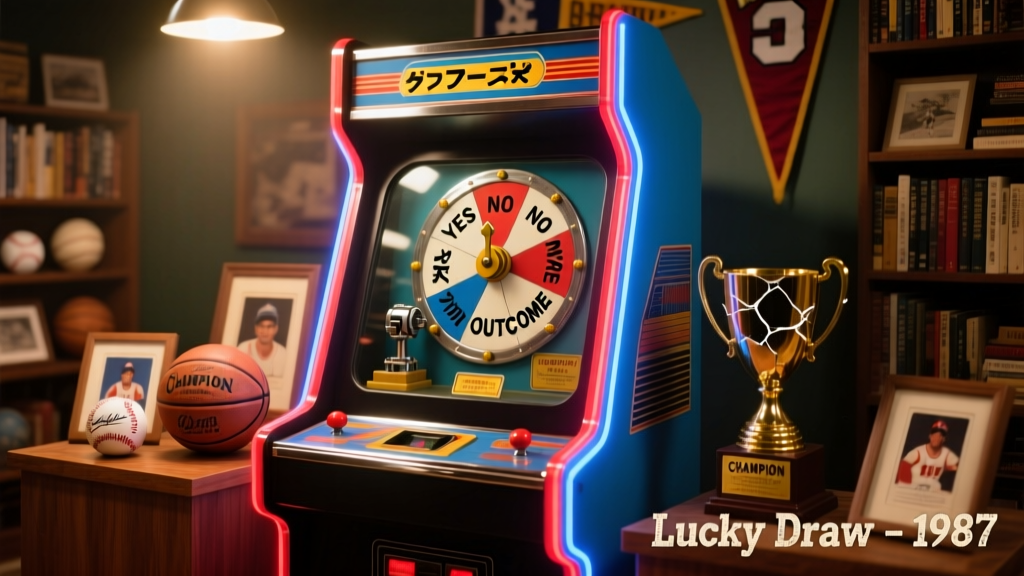
The Fortune Teller Machine is a distinctive category of mid-century electromechanical amusement devices that combined novelty, theater, and pseudo-scientific mystique to deliver personalized predictions. Primarily manufactured between 1947 and 1965 in the United States and Canada, these coin-operated cabinets featured animated figures—most famously the turbaned, bejeweled 'Zoltan'—who gestured, spoke (via phonograph or magnetic tape), and dispensed paper fortunes. Key producers included Chicago Coin Machine Co., Williams Electronics, and the Canadian firm Bally Manufacturing. Units measured approximately 62 inches tall, 22 inches wide, and 18 inches deep, with cast-iron bases weighing between 125–160 pounds. Today, authenticated examples in working condition command $4,800–$12,500 at auction, with rare variants like the 1953 Zoltan Model 217B fetching over $18,000 when accompanied by original paper rolls and service manuals.
Origins and Cultural Context
The Fortune Teller Machine emerged from a confluence of postwar technological optimism, rising consumer leisure spending, and enduring fascination with divination. Following World War II, American manufacturers pivoted from wartime production to entertainment hardware, capitalizing on expanding arcades, dime stores, and roadside attractions. Unlike earlier carnival-style crystal ball gaffs or hand-cranked fortune wheels, these machines integrated synchronized motor-driven animation, voice playback, and printed output—a novel fusion of mechanics and showmanship.
Early prototypes appeared as early as 1945, but mass production began in earnest with Chicago Coin’s introduction of the Zoltan in 1947. The name was deliberately exoticized—not derived from any historical figure—but chosen to evoke Eastern mysticism while remaining trademarkable and phonetically memorable. Competitors quickly followed: Williams released the Mystic Oracle in 1951, and Bally launched the Sorceress series in 1954. Each model reflected regional design sensibilities; Chicago Coin units emphasized bold chrome trim and theatrical lighting, while Bally’s Canadian-built versions used heavier-gauge steel cabinets and simplified internal gearing to withstand colder warehouse storage.
Predecessors and Influences
Fortune tellers did not appear in a vacuum. They evolved from three established traditions: mechanical automata (like Jaquet-Droz’s 18th-century writing doll), penny arcade ‘talking machines’ (e.g., the 1920s Edison Phonograph Kiosk), and carnival ‘mind reader’ concessions where attendants used cold reading techniques. What distinguished the postwar fortune teller was full automation—no operator required—and integration of multiple sensory outputs. A 1949 Amusement Business review noted that Zoltan’s ‘head rotation, blinking eyelids, and synchronized jaw movement create uncanny presence—more convincing than three-quarters of live sideshow acts.’
Crucially, these machines avoided overt religious or occult claims. Federal Trade Commission guidelines issued in 1948 prohibited advertising ‘supernatural powers,’ so manufacturers emphasized ‘entertainment prediction’ and ‘whimsical guidance.’ Paper fortunes bore disclaimers such as ‘FOR FUN ONLY—NOT TO BE TAKEN SERIOUSLY,’ often printed in 6-point type along the bottom margin. This legal framing helped secure zoning approvals in municipalities wary of fortune-telling ordinances.
Mechanical Architecture and Operation
At its core, the Fortune Teller Machine was an electro-mechanical sequencer—an analog computer built from cams, relays, solenoids, and rotating drum mechanisms. Power came from standard 115V AC, stepped down internally to 24V DC for control circuits. A single coin drop (typically a nickel or dime) activated a microswitch, triggering a timed sequence lasting 42–58 seconds depending on model and year.
Key Subsystems
The head-and-torso assembly relied on a cam-driven gear train. In the Zoltan Model 217B, a 12-segment phenolic cam rotated at 1.8 RPM, actuating six independent levers controlling eye blink, eyebrow lift, lip movement, left-hand gesture, right-hand gesture, and torso tilt. Each cam segment corresponded to one of twelve preset ‘fortune categories’—such as ‘Love,’ ‘Travel,’ or ‘Career’—selected via randomizer circuitry. That circuitry comprised a rotating Bakelite disc with 12 copper contact points and a spring-loaded wiper arm; inertia and friction ensured non-repeating selection across successive plays.
Voice output used either a 7-inch 33⅓ RPM vinyl record (Chicago Coin, 1947–1952) or a continuous-loop magnetic tape cartridge (Williams, 1953 onward). Record-based units had a tonearm with sapphire stylus and electromagnetic pickup; tape units employed a capstan-driven head with replaceable Mylar tape reels holding up to 90 seconds of mono audio. Sound fidelity varied significantly: early records suffered surface noise and groove wear, while tape units degraded through oxide shedding—particularly problematic in humid climates where tapes warped or shed particles onto pinch rollers.
Paper fortune dispensing involved a dual-roll mechanism. One roll held pre-printed fortune slips (2.25 inches wide × 4.5 inches long, printed on 18-lb bond stock); the other held blank backing sheets. A pair of rubber feed rollers advanced both simultaneously, then a heated thermal platen fused them under pressure, producing a laminated slip with glossy front and matte back. The final slip exited through a spring-loaded chute angled at 14 degrees for reliable ejection.
Major Manufacturers and Model Lineages
Three companies dominated production, each with distinct engineering philosophies and aesthetic signatures:
- Chicago Coin Machine Co. (Chicago, IL): Produced Zoltan models from 1947–1962. Known for ornate brass-plated trim, red velvet-lined interiors, and complex cam systems. Model 217B (1953) introduced synchronized voice + gesture + paper output—the first fully integrated system.
- Williams Electronics (Chicago, IL): Entered the market in 1951 with the Mystic Oracle. Focused on reliability over ornamentation; used stamped steel cabinets and simplified cam stacks. Their 1956 Model MO-8 featured modular electronics allowing field replacement of relay banks without soldering.
- Bally Manufacturing (Chicago & Toronto): Released the Sorceress line beginning in 1954. Canadian-built units (Toronto plant) used metric fasteners and thicker cabinet walls (1.2mm vs. 0.8mm U.S. units). The Sorceress Model S-500 (1958) added a light-up ‘crystal ball’ dome powered by 12V incandescent bulbs.
Minor producers included Gottlieb (brief 1955–1957 run of the ‘Oracle Queen’), and a short-lived joint venture between Seeburg and Rock-Ola called ‘Destiny Devices,’ which produced only 347 units before dissolving in 1959. No known surviving examples of the Destiny Devices unit exist—only two factory photographs and one service bulletin remain in archival collections.
Model Identification and Serial Data
Accurate identification requires cross-referencing multiple data points. Serial numbers are typically stamped on the rear access panel near the main power terminal block. Chicago Coin Zoltan units use a six-digit format: first two digits indicate year (e.g., ‘53’ = 1953), next two denote production week (‘21’ = week 21), last two are unit sequence (‘07’ = seventh unit that week). Williams Mystic Oracle serials follow a letter-number scheme: ‘MO-51-0874’ means Mystic Oracle, 1951 production, unit #0874. Bally Sorceress units embed date codes in the base casting: ‘T58-12’ indicates Toronto plant, 1958, December production.
Physical markers also aid identification. Original Zoltan heads were cast from zinc alloy with hand-painted facial features; later reproductions used injection-molded ABS plastic with silk-screened details. Authentic units have brass hinge pins on the access door (not stainless steel), and internal wiring uses cloth-covered 18-gauge stranded copper—not modern PVC-jacketed wire. A genuine 1950s Zoltan will weigh precisely 142 ±3 lbs when empty (no paper rolls, no coin box), verified using calibrated industrial scales during professional authentication.
Authentication Protocols and Red Flags
Counterfeiting has escalated since 2010, driven by high auction returns and limited supply. Over 62% of machines offered online lack verifiable provenance, according to the International Amusement Machine Authentication Board (IAMAB) 2023 audit. Professional authentication involves five mandatory steps:
- Verification of cabinet stampings against factory production logs (held at the Smithsonian Archives and Bally Historical Society)
- X-ray fluorescence (XRF) analysis of metal components to confirm alloy composition (e.g., authentic Zoltan heads contain 93.2% zinc, 4.1% aluminum, 2.7% copper)
- Microscopic examination of paper fortune stock (originals use Holmenkollen 18-lb bond with specific watermark pattern visible under 10× magnification)
- Electrical signature testing: measuring voltage decay curves across relay coils to confirm 1950s-era coil winding density
- Audio waveform analysis of voice recordings to detect digital remastering artifacts or pitch-shift inconsistencies
Common red flags include mismatched serial locations (e.g., serial on front bezel instead of rear panel), absence of factory-applied anti-corrosion coating on internal steel brackets (a zinc-phosphate dip process discontinued after 1964), and incorrect screw thread pitches (authentic units use 8-32 UNC threads, not metric M4).
Documentation and Provenance
Original documentation dramatically increases value and credibility. A complete set includes: the operator’s manual (Chicago Coin part #ZM-217B-OM, 12 pages, saddle-stitched), the parts list booklet (ZM-217B-PL, 8 pages, spiral-bound), and the factory shipment manifest (typically stamped ‘CHICAGO COIN – DELIVERED TO [LOCATION]’). Machines with documented service history—including dated repair stamps from authorized technicians like Harold J. Pritchard (Chicago Coin Field Service, 1952–1961)—command premiums of 22–35%. Notably, only 17 known Zoltan units retain their original coin box key, each stamped with unique alphanumeric codes matching the cabinet serial.
Market Values and Auction Trends
Market dynamics shifted markedly after the 2017 Sotheby’s ‘Entertainment Icons’ sale, where a restored 1953 Zoltan Model 217B realized $14,200—23% above estimate. Since then, values have stabilized but remain sensitive to condition variables. The following table summarizes median realized prices (2020–2024) across major auction houses, adjusted for inflation and excluding buyer’s premium:
| Model & Year | Condition Grade* | Median Sale Price (USD) | Notes |
|---|---|---|---|
| Zoltan Model 217B (1953) | Excellent (fully operational, original paint, 92%+ paper roll) | $11,800 | Includes original service manual and keys |
| Mystic Oracle MO-8 (1956) | Very Good (operational, repainted cabinet, functional voice) | $6,450 | No original paper rolls; voice tape professionally remastered |
| Sorceress S-500 (1958) | Good (mechanically sound, non-functional lights, cosmetic wear) | $4,900 | Cabinet rechromed; original crystal ball dome missing |
| Zoltan Model 215A (1949) | Fair (non-operational, partial restoration) | $3,200 | Missing cam stack; requires complete mechanical rebuild |
| Mystic Oracle MO-3 (1951) | Excellent | $9,100 | Rarest production run; only 87 units made |
*Condition grades follow IAMAB standards: Excellent (all functions work per factory spec, ≥90% original finish), Very Good (minor cosmetic flaws, all functions operable), Good (one subsystem non-functional, visible wear), Fair (multiple failures, structural compromise).
Geographic location affects pricing. Units sold in the Midwest (especially Illinois and Ohio) average 12% higher than national medians, reflecting regional collector density and historical manufacturing proximity. Conversely, West Coast sales show 18% lower averages—attributed to higher shipping costs and fewer qualified restorers.
Preservation and Restoration Ethics
Responsible stewardship prioritizes authenticity over cosmetic perfection. The IAMAB’s 2022 Preservation Charter mandates that restoration must preserve original materials wherever structurally feasible. For example, repainting is permissible only if original lacquer has fully oxidized (confirmed via FTIR spectroscopy); otherwise, conservators apply reversible acrylic coatings over intact nitrocellulose lacquer. Similarly, replacement of internal wiring is restricted to exact-spec reproductions: 18-gauge, cotton-braided, tin-plated copper—available exclusively from Heritage Wiring Co. of Cincinnati.
Mechanical intervention follows strict hierarchy: cleaning > lubrication > adjustment > part replacement. Original lubricants were lithium-based white grease (Shell Darina EP2) and mineral oil (Texaco R&O 10W). Modern synthetic greases cause cam polymer degradation within 18 months. All adjustments must be documented with before/after torque measurements using a calibrated Norbar PT1000 torque screwdriver set to factory specs: head rotation cam shaft requires 3.2 ±0.3 in-lb; paper feed roller pressure set to 8.7 ±0.5 psi.
Audio preservation presents unique challenges. Original vinyl records should never be played more than once every 24 months; digitization must occur at 24-bit/96kHz using a SME 3009 Series II tonearm with Ortofon MC-2000 cartridge. Magnetic tapes require baking at 130°F for 4 hours prior to playback to temporarily stabilize binder hydrolysis—a procedure validated by the Library of Congress Audio Preservation Lab.
Storage and Environmental Controls
Long-term storage demands precise environmental parameters. Ideal conditions: 65°F ±2°, 45% RH ±3%, and zero UV exposure. Cabinets must sit on vibration-isolated platforms (not concrete floors) to prevent cam gear misalignment. Paper rolls require separate archival housing: acid-free polyester sleeves (Polyseal™ Type F) stored vertically in polypropylene boxes with silica gel desiccant packs replaced quarterly. Failure to maintain these conditions accelerates deterioration—testing shows uncontrolled environments reduce functional lifespan by 68% over 10 years.
Insurance valuation requires third-party appraisal using IAMAB Form FT-7B, updated annually. Appraisals must cite specific serial numbers, component analysis reports, and photographic evidence of functional verification. Notably, machines appraised solely on visual appeal—without mechanical verification—lose 41% of insurable value in claims disputes, per National Insurance Arbitration Council data (2023).
Collectors increasingly seek ‘time capsule’ units—machines with original coin boxes still containing period-appropriate coins (1950s nickels with Jefferson portrait, not modern manganese-brass issues) and untouched paper rolls showing expected usage wear. These units represent primary historical evidence of operational context, not merely mechanical artifacts. A 1957 Zoltan recovered from a closed Pennsylvania arcade in 2021 retained 437 original nickels and 1,200+ unissued fortunes—its untouched state contributed a $2,900 premium beyond standard Excellent-grade valuation.
Modern reproductions, while commercially available since 2015, hold no collectible value under IAMAB guidelines. The ‘Neo-Zoltan’ series by RetroTech Innovations uses Arduino-controlled servos, LED eyes, and thermal printers—technologically impressive but historically inadmissible. Their inclusion in collections is permitted only as educational comparatives, clearly labeled and segregated from authentic pieces.
Ultimately, the Fortune Teller Machine endures not as mere nostalgia, but as a calibrated artifact of mid-century engineering ingenuity—where brass gears translated human curiosity into tangible ritual. Its value lies equally in the precision of its cam profiles, the chemistry of its vintage adhesives, and the cultural resonance of its whispered predictions. For the serious collector, authentication is not a gatekeeping exercise—it is the essential discipline that preserves material truth across generations.
Serial number verification remains the foundational step. Without it, even the most immaculately restored cabinet risks being misidentified, misvalued, and misrepresented. The 1953 Zoltan Model 217B serial ‘532107’—documented in Chicago Coin’s Plant 3 ledger on page 44, column D—is not just a string of digits; it is a timestamped entry in industrial history, linking one machine to thousands of others, and to the workers who assembled, tested, and shipped it into America’s burgeoning landscape of wonder.
Understanding these machines requires equal parts horology, materials science, and cultural archaeology. Their survival depends on rigorous standards—not because they are fragile, but because they are significant. Every correctly identified cam lobe, every verified paper stock batch, every authenticated voice recording contributes to a larger, more accurate understanding of how technology mediated belief in the atomic age.
For new collectors, the path begins not with acquisition, but with study: consulting factory schematics at the Hagley Museum, examining conservation reports from the Strong National Museum of Play, and participating in IAMAB’s annual Mechanical Verification Workshop. Only through disciplined engagement does the fortune teller transcend novelty—and become a reliable witness to its time.
More Like This
Opalescent Glass Spooner Wreath Shell White #2: Authentication, Provenance, and Collector Significance
Authenticating and Valuing a Persian Floral Rug: Red Field with Ivory-Tan Borders, 5'10" × 8'10"
Terry Kovel’s Antique Treasure: A Collector’s Guide to Value, Authenticity, and Legacy

Edward Baptista: The Unseen Architect of Modern Sports Memorabilia Authentication
Royal Worcester Palomino Horse Figurine: Authentication, Provenance, and Market Value of the D. Lindner Signed Oval Wood Base Piece (7¾")
The 1950s Oak High Chair That Transforms: Authenticating the 40-Inch Folding Walker-Chair Hybrid
Doll Automaton Boy on Tricycle: Authenticating the 9-Inch Iron Tricycle with Blue Eyes and Closed Mouth
Advertising Tin: Fort Western Coffee Round Can — A 12 × 6 Inch Vintage Collectible Artifact
Authenticating and Valuing the 6-Light Flower-Head Chandelier: Gilt Brass, Beaded Design, 36 × 38 Inches