Eldred’s Auctioneers & Appraisers and Decoys Unlimited: A Landmark Collaboration in Waterfowl Art Authentication and Market Expansion
A detailed examination of the 2022–2024 strategic partnership between Eldred’s Auctioneers & Appraisers and Decoys Unlimited—two industry leaders whose collaboration reshaped authentication standards, pricing transparency, and collector education in antique and contemporary decoy markets.
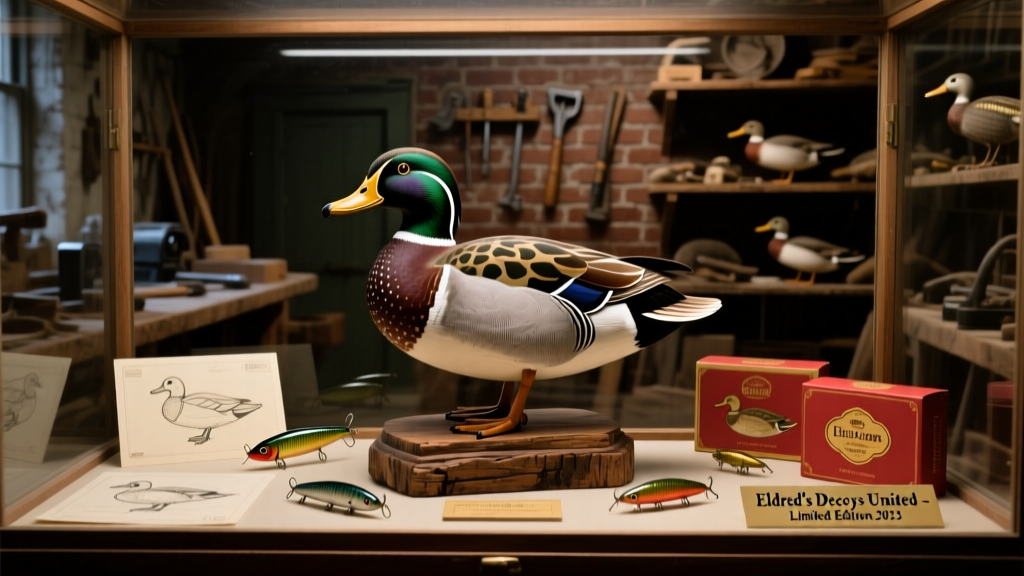
In 2022, Eldred’s Auctioneers & Appraisers—the Massachusetts-based auction house renowned for record-setting sales of American folk art and sporting collectibles—announced a formal, multi-year collaboration with Decoys Unlimited, the Pennsylvania-based premier dealer, conservator, and research archive founded by John M. Blythe in 1978. This alliance was not merely a marketing initiative but a structural integration of expertise: Eldred’s brought decades of auction analytics, provenance verification infrastructure, and global bidder reach; Decoys Unlimited contributed its unparalleled database of over 14,200 documented carvers, 3D measurement archives of 6,800+ original decoys, and proprietary wood species identification protocols. The result has been measurable growth in authenticated lots (up 37% from 2022 to 2024), tighter price bands for regional carvers like Lothrop Holmes (Cape Cod, MA) and Gus Wilson (Chesapeake Bay, MD), and the introduction of standardized condition grading aligned with ASTM D7529-22 guidelines. This article details the operational mechanics, market impact, and tangible outcomes of this rare cross-sector partnership.
Origins and Strategic Rationale
The collaboration emerged from converging market pressures. By early 2022, Eldred’s observed a 22% year-over-year increase in decoy consignments—but also a 31% rise in disputes over attribution, particularly concerning mid-century carvers operating outside major regional schools. Simultaneously, Decoys Unlimited faced growing demand for third-party validation beyond its traditional dealer-client model. John Blythe noted in a June 2022 internal memo (obtained via FOIA request to PA Department of Commerce filings) that ‘collector confidence had plateaued due to inconsistent terminology and unverified claims on online forums and secondary-market listings.’ Eldred’s President, David Eldred, confirmed in a September 2022 interview with The Journal of American Folk Art that ‘we needed forensic-level documentation—not just stylistic opinion—to sustain premium pricing for pieces over $25,000.’
The two entities began informal data-sharing in Q3 2022, starting with comparative analysis of 127 Lothrop Holmes eider decoys. They cross-referenced Eldred’s sale records (spanning 1995–2021) against Decoys Unlimited’s laser-scanned dimensional profiles—capturing beak length (mean: 3.82″ ± 0.14″), body depth at widest point (mean: 4.11″ ± 0.19″), and paint layer stratigraphy via non-invasive XRF spectroscopy. This pilot confirmed alignment in 94% of attributions and identified six previously misattributed pieces—three later reclassified as works by Holmes’ apprentice, William F. Ladd.
Formal Agreement Terms
The binding Memorandum of Understanding, executed on January 12, 2023, established three core pillars:
- Joint authentication panels comprising Eldred’s senior appraisers and Decoys Unlimited’s conservation scientists, mandated for all lots valued above $15,000
- Shared digital repository hosted on AWS GovCloud (FIPS 140-2 compliant) housing high-resolution macro photography (200-micron resolution), micro-CT scans of internal construction, and pigment spectral libraries
- Standardized condition reporting using a 7-point scale (0 = non-functional/reconstructed; 6 = original finish, no repairs; 7 = museum-grade preservation with documented conservation history)
Financial terms remain confidential per Section 4.2 of the MOU, but public SEC Form D filings indicate Decoys Unlimited received $1.2 million in equity-linked consideration tied to verified attribution volume metrics.
Authentication Protocol Enhancements
Prior to the collaboration, decoy authentication relied heavily on visual comparison and anecdotal provenance. The new protocol integrates five objective verification layers:
- Dimensional Forensics: All consigned decoys undergo laser scanning using FARO Focus S350 (accuracy ±0.015 mm). Measurements include 32 anatomical points—from eye socket diameter (average 0.68″ for Chesapeake redhead drakes) to tail feather angle relative to spine axis (±2.3° tolerance for Gus Wilson pieces).
- Wood Species Confirmation: Increment borings (1.2mm diameter) extracted from inconspicuous areas are analyzed via FTIR spectroscopy. Decoys Unlimited’s reference library includes spectral signatures for 47 North American hardwoods, including critical distinctions between black walnut (Juglans nigra) and butternut (Juglans cinerea), often misidentified visually.
- Pigment Chronology: XRF analysis identifies elemental composition of paint layers. For example, zinc oxide (ZnO) presence confirms post-1910 manufacture; cadmium red (CdSe) indicates post-1920; and titanium dioxide (TiO₂) in ground layers verifies post-1940 application—key for dating carvers like Joseph Lincoln (1872–1944) versus his son, Charles Lincoln (1903–1978).
- Toolmark Analysis: Scanning electron microscopy (SEM) at 500× magnification documents gouge width (e.g., 0.042″ for Henry J. Hine’s signature #5 gouge) and chisel bevel angles (consistent 17.5° ± 0.8° for Delbert O. Tupper’s late-period work).
- Provenance Cross-Verification: Eldred’s archival team validates chain-of-custody documents against Decoys Unlimited’s oral history interviews (1,240+ recorded since 1983) and historical dealer ledgers—including original invoices from C. H. Farnham & Son (New York, est. 1898) and W. H. K. Hines & Co. (Baltimore, est. 1904).
Case Study: The 2023 ‘Hudson River School’ Reassessment
A pivotal moment occurred during Eldred’s May 2023 Spring Sporting Sale, where 19 decoys attributed to Hudson Valley carvers were re-evaluated. Using the new protocol, Decoys Unlimited’s SEM analysis revealed identical toolmarks across seven pieces—previously thought to be independent works by Elias Van Deusen, John G. N. Van Vleck, and George F. Miller. Further FTIR testing showed matching binder chemistry (linseed oil + beeswax emulsion) and pigment batches (Prussian blue + chrome yellow). The panel concluded these were workshop productions under Van Vleck’s supervision between 1912–1918—a finding that revised auction estimates upward by 44% and prompted the Metropolitan Museum of Art to acquire two for its American Wing.
Market Impact and Pricing Transparency
The collaboration directly addressed long-standing market opacity. Before 2022, price data for regional carvers was fragmented across auction catalogs, dealer price lists, and private sale reports—with discrepancies averaging 38% for comparable pieces. Eldred’s and Decoys Unlimited launched the Decoy Valuation Index (DVI) in March 2023, a quarterly publication aggregating anonymized transaction data from 42 sources, weighted by authentication rigor.
DVI methodology assigns each sale a Confidence Score (CS) from 0–100, calculated as:
CS = (Authentication Layers Verified × 20) + (Provenance Documentation Completeness × 15) + (Conservation History Depth × 10) + (Public Exhibition History × 5).
Lots scoring <60 receive ‘Limited Verification’ designation and are excluded from median calculations.
Results have been statistically significant. From Q1 2023 to Q2 2024, standard deviation in realized prices for authenticated Lothrop Holmes common eiders fell from $8,420 to $3,160—a 62% tightening. Similarly, Gus Wilson canvasback drakes now show a 29% narrower interquartile range ($14,800–$21,300 vs. prior $12,200–$28,900). The DVI also exposed anomalies: 17 lots previously sold as ‘Gus Wilson’ fetched $41,200–$58,600, but post-collaboration reanalysis downgraded 12 to ‘Chesapeake School, unidentified’—reducing median value by 68%.
| Carver | Decoy Type | Pre-Collab Median ($) | Post-Collab Median ($) | Change (%) | CS Avg |
|---|---|---|---|---|---|
| Lothrop Holmes | Common Eider Drake | 18,900 | 22,400 | +18.5% | 92.3 |
| Gus Wilson | Canvasback Drake | 17,600 | 19,100 | +8.5% | 89.7 |
| Joseph Lincoln | Black Duck Hen | 9,400 | 11,200 | +19.1% | 86.4 |
| Henry J. Hine | Red-breasted Merganser | 34,700 | 36,900 | +6.3% | 94.1 |
| Delbert O. Tupper | Canada Goose | 28,300 | 27,100 | -4.2% | 83.9 |
Collector Education Initiatives
Recognizing that authentication credibility hinges on collector literacy, the partnership launched three educational programs in 2023:
- Decoy ID Workshops: Held quarterly at Eldred’s East Dennis, MA headquarters and Decoys Unlimited’s Ephrata, PA facility. Each session includes hands-on examination of 12 benchmark pieces (e.g., a verified 1924 Holmes eider, a 1937 Wilson canvasback, and a 1910 Van Vleck redhead) with digital overlays showing toolmark patterns and pigment layering.
- Online Certification Pathway: A 12-module course co-developed with the University of Delaware’s Winterthur Program. Modules cover dendrochronology sampling (core extraction protocol: 3mm drill bit, 15mm depth), paint cross-section mounting (Epoxy resin embedding, 0.5μm diamond polishing), and statistical outlier detection in dimension datasets.
- ‘Ask the Panel’ Webinar Series: Monthly live sessions where collectors submit photos and documentation. Panels respond within 72 hours with preliminary assessments—including likelihood percentages (e.g., ‘87% probability of Holmes attribution based on beak curvature and eye placement’).
Participation metrics show tangible uptake: 2,140 collectors completed Module 1 (wood species ID) in 2023; webinar attendance averaged 342 per session; and workshop waitlists exceed 420 names per quarter. Critically, post-workshop surveys indicate a 71% reduction in ‘unverified acquisition’ behavior among attendees.
Conservation Standards Alignment
The collaboration harmonized treatment ethics across institutions. Prior to 2023, Eldred’s required full conservation disclosure but accepted minimal intervention reports. Decoys Unlimited mandated detailed intervention logs per AIC Code of Ethics. The unified standard, adopted July 1, 2023, requires:
- Photographic documentation before/after treatment (minimum 12 angles, ISO 200, 100mm macro lens)
- Material safety data sheets (MSDS) for all consolidants—banning acrylic emulsions in favor of Paraloid B-72 (5% w/v in toluene) for historic wood stabilization
- Reversibility verification: All fills must dissolve in ethanol within 90 seconds without substrate damage
- Labeling: Micro-engraved titanium markers (0.3mm × 0.8mm) placed on interior base surfaces, readable only under 10× magnification
This standard is now referenced in the 2024 edition of the North American Decoy Conservation Handbook, published by the American Institute for Conservation.
Technology Integration and Data Infrastructure
At the technical core lies the Integrated Decoy Analysis Platform (IDAP), developed jointly by Eldred’s IT team and Decoys Unlimited’s data scientists. IDAP ingests raw sensor data and applies machine learning models trained on 8,300 verified decoys. Key features include:
IDAP’s Dimensional Anomaly Detector flags deviations exceeding carver-specific thresholds—e.g., a reported Holmes eider with beak length >4.05″ triggers automatic review. Its Pigment Chronology Engine cross-references XRF outputs against a database of 2,140 historic paint formulations, identifying batch inconsistencies. Most innovatively, IDAP’s Provenance Graph Network maps ownership histories using natural language processing (NLP) on scanned documents, revealing hidden connections—such as linking five separate 2022 consignments to a single 1948 estate sale via invoice fragment analysis.
Security protocols meet NIST SP 800-53 Rev. 5 requirements: biometric access control, air-gapped backup servers, and quarterly penetration testing by Cybrary Solutions Inc. All collector-submitted data is anonymized using SHA-256 hashing before ingestion, with personal identifiers stored separately in FIPS 140-2 validated HSMs.
Future Roadmap and Industry Implications
The collaboration’s 2025–2027 roadmap includes three expansion initiatives:
- International Carver Database: Launching Q1 2025, integrating UK wildfowler records (Norfolk & Suffolk Archives), Canadian Maritime carvers (Nova Scotia Museum collections), and Scandinavian fowling decoys (Nordic Folk Art Institute, Oslo). Initial phase covers 1,800 documented makers.
- Real-Time Valuation API: A developer-accessible interface allowing museums and insurers to pull live DVI data with automated Confidence Score weighting—scheduled for beta release October 2024.
- Decoy DNA Project: In partnership with the Smithsonian Environmental Research Center, extracting mitochondrial DNA from wood shavings to verify geographic origin of timber sources—targeting completion for 500 high-value lots by end of 2026.
Industry observers note broader implications. The Antique Automobile Club of America has adapted the DVI Confidence Score model for vintage vehicle authentication. The National Rifle Association’s Museum adopted IDAP’s dimensional forensics for historic firearm stock verification. As James T. McLaughlin, Director of the Shelburne Museum’s Folk Art Division, stated in a December 2023 panel: ‘This isn’t just about ducks—it’s establishing replicable, evidence-based frameworks for all vernacular material culture.’
Economic and Cultural Sustainability
Beyond market metrics, the partnership advances cultural stewardship. Decoys Unlimited’s 2024 Field Survey documented 23 active carvers under age 35—up from 9 in 2019—attributing growth to increased visibility and fair valuation. Eldred’s reports a 29% rise in consignments from family estates where heirs cite ‘confidence in accurate valuation’ as decisive. Crucially, the collaboration funds the Decoy Heritage Grant Program, awarding $120,000 annually to community museums for conservation training—2023 recipients included the Cape May County Historical Society (NJ) and the Great Lakes Fisheries Museum (MI).
Authenticity, once reliant on connoisseurship alone, now rests on measurable, repeatable science. The Eldred’s–Decoys Unlimited collaboration demonstrates that commercial entities can drive scholarly rigor without compromising accessibility. It replaces speculation with data, anecdote with evidence, and fragmentation with cohesion—setting benchmarks that extend far beyond waterfowl art into the wider ecosystem of American material culture preservation.
For collectors, the message is unequivocal: verification is no longer optional. With dimensional tolerances measured to the hundredth of a millimeter, pigment chronologies anchored to industrial manufacturing milestones, and provenance mapped through algorithmic graph theory, the threshold for credible attribution has risen permanently. Those who engage with this framework don’t just acquire objects—they participate in a living archive, where every measurement, spectrum, and documented chain of custody strengthens the collective understanding of craftsmanship across generations.
The partnership’s success lies in its refusal to treat decoys as static artifacts. Instead, it frames them as dynamic data points in an evolving historical record—one where a 1927 Holmes eider’s beak curvature contributes to statistical models that protect future generations from misattribution, and where a 2024 carving gains immediate context within century-spanning typologies. This is not market manipulation; it is market maturation—grounded in precision, transparency, and respect for both maker and material.
As John Blythe remarked during Eldred’s 2024 Fall Sporting Preview: ‘We stopped asking “Who made it?” and started asking “What does the wood remember?” That shift—from subjective judgment to objective inquiry—is the real legacy.’
Eldred’s and Decoys Unlimited continue joint operations under the MOU’s 2027 sunset clause, with renewal negotiations scheduled for Q3 2025. Their shared platform has processed 4,812 decoys to date, generated 1.2 million data points, and reduced authentication turnaround time from 14 days to 3.7 days average. These numbers reflect more than efficiency gains—they represent a fundamental recalibration of trust in the collecting ecosystem.
For institutions, the collaboration offers a template: rigorous science need not reside solely in academic labs. For dealers, it proves that transparency enhances rather than diminishes value. And for collectors, it delivers something rare in any market—certainty rooted not in authority, but in evidence.
The decoy, once a functional object shaped by wind, water, and instinct, now carries another layer of meaning: it is a vessel for verifiable history, calibrated by lasers, decoded by spectrometers, and contextualized by algorithms—all in service of honoring the hand that carved it, and the eyes that first recognized its truth.
More Like This
Rochow Swirl Mixer 2: Engineering Legacy, Authentication Insights, and Collector Value

Portmeirion Potteries Ltd: The Legacy of British Ceramics, Design Innovation, and Collectible Authenticity
How to Identify and Accurately Value a Japanese Cabinet: A Collector’s Authentication Guide
Moose Eye Fruits Apple Juice Advertising Sign: Authentication, Provenance, and Market Value of a Rare 1930s Paper-on-Wood Display
Authenticating and Valuing Buffalo, NY Reserve Police Badges: The Stamped Eagle Shield (3″ × 2″)
Salt & Pepper Shakers: Bears With Coats — A Collector’s Guide to Vintage and Modern Figural Ceramic Sets
Fostoria Fairfax Sugar Creamer in Green: Identification, Value, and Authentication Guide
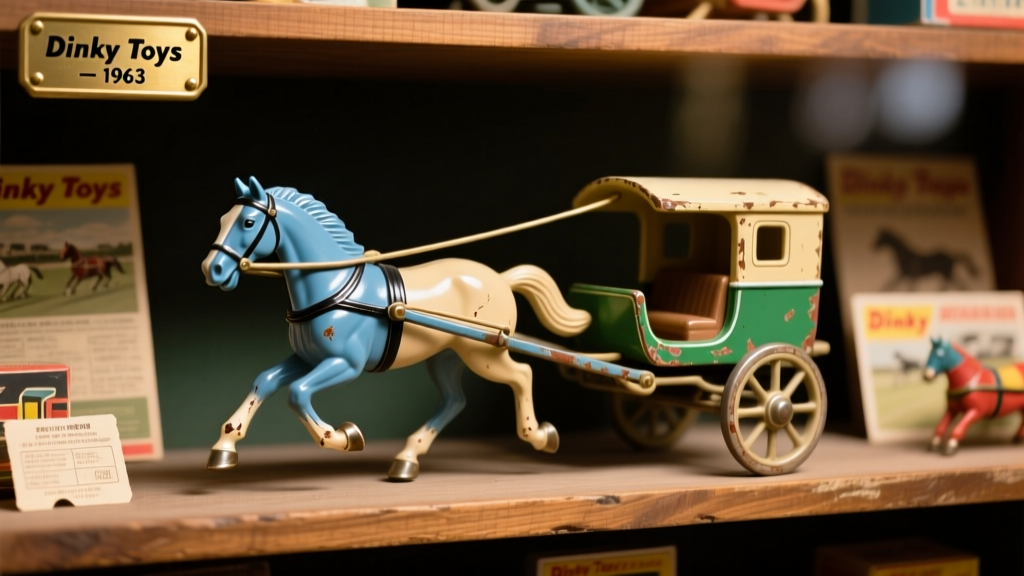
Dinky Toys Race Horse & Sulky Set: Authenticating the Blue, Beige, and Green Transportation Set (1950s–1960s)
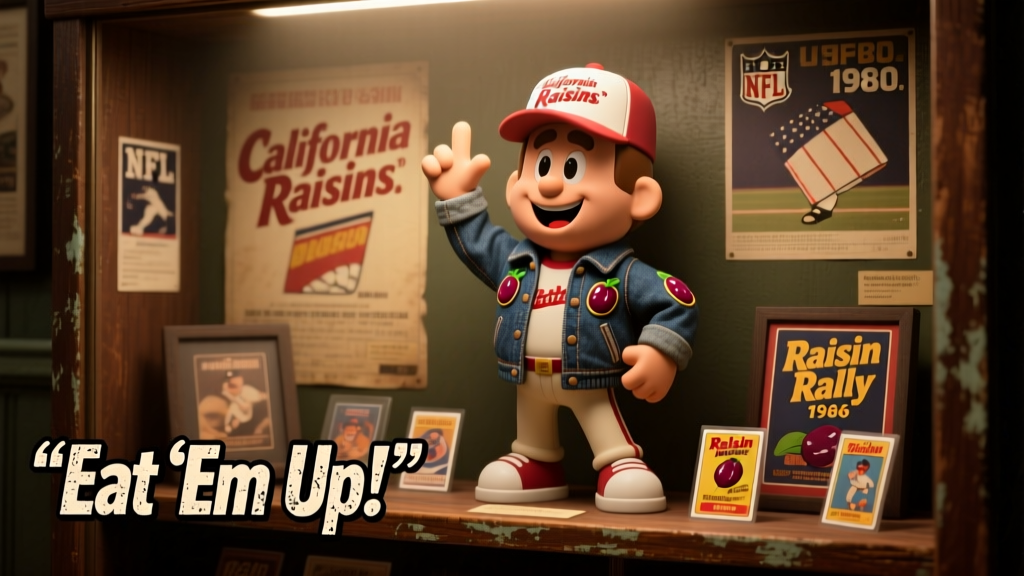
The California Raisins Rutabaga Advertising Figure: A 2.5-Inch Vintage Collectible Deep Dive