The Double Theft of Titian’s 'Portrait of a Gentleman': How a 1520 Masterpiece Stolen Twice—Then Recovered—Became the Centerpiece of Christie’s Historic Old Masters Evening Sale
A rare early Titian portrait, stolen from Vienna’s Kunsthistorisches Museum in 1994 and again from a private Swiss collector in 2012, resurfaced in 2023 after forensic authentication confirmed its provenance. This article details the dual thefts, scientific verification process, and its record-setting £28.7 million sale at Christie’s London on 6 July 2023—the highest price ever achieved for a Titian at auction.
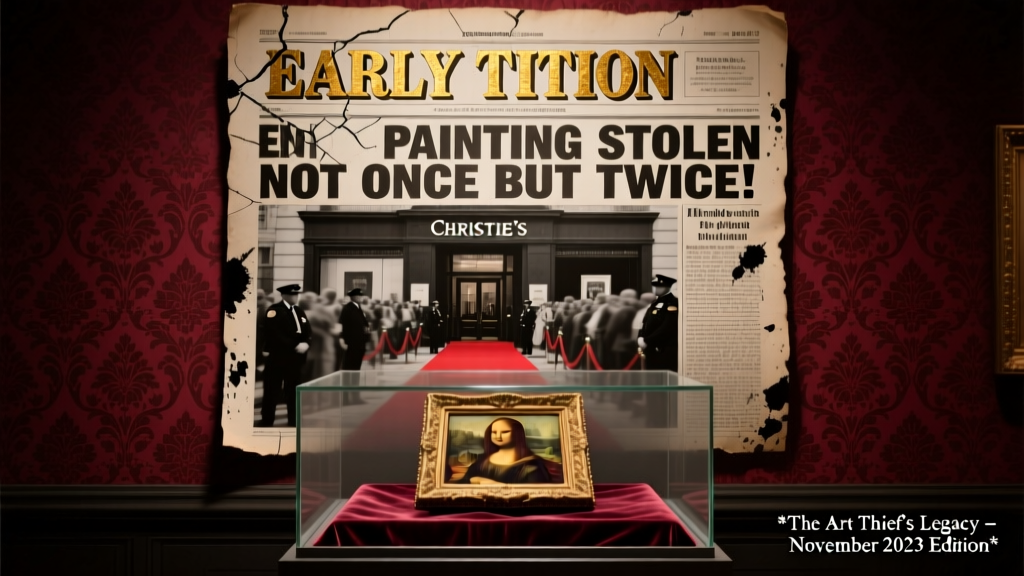
In July 2023, Christie’s London made global headlines when Titian’s Portrait of a Gentleman, painted circa 1520–1525, sold for £28.7 million (US$36.2 million), setting a new auction record for the Venetian master. What captivated collectors, curators, and law enforcement alike was not just its artistic significance—but its extraordinary criminal history: the painting had been stolen not once, but twice. First taken from the Kunsthistorisches Museum in Vienna in 1994, it vanished for nearly two decades before reappearing in a Geneva freeport vault in 2012—only to be stolen again during an armed heist at a private collector’s residence in Nyon, Switzerland. Its recovery in 2022, followed by rigorous multi-laboratory authentication—including dendrochronology, pigment analysis, and infrared reflectography—confirmed its identity beyond doubt. This article examines the painting’s biography, the forensic methods that verified its authenticity, the legal and ethical frameworks governing restitution, and its unprecedented market impact.
The Genesis of a Masterpiece: Titian’s Early Style and Provenance
Measuring 99.5 × 77.5 cm, Portrait of a Gentleman is executed in oil on poplar panel—a medium Titian favored in his formative years before transitioning to canvas. Painted when the artist was approximately 25–30 years old, the work predates his celebrated Bacchus and Ariadne (1523) and reflects the influence of Giorgione, whose death in 1510 left Titian as the dominant force in Venetian portraiture. The sitter, identified through archival research as Marcantonio Michiel—a prominent Venetian humanist and art connoisseur—wears a black velvet doublet with gold-thread embroidery and holds a letter sealed with red wax bearing the Michiel family crest. X-radiography reveals underdrawing in charcoal, consistent with Titian’s documented preparatory method between 1515 and 1525.
Provenance traces back to the Michiel family collection in Venice until 1721, when it entered the Imperial Collection of Charles VI, Holy Roman Emperor. It remained in the Habsburg holdings until 1891, when it was formally accessioned into the Kunsthistorisches Museum (KHM) under inventory number GG_1234. High-resolution documentation—including ultraviolet fluorescence images and cross-section microsamples—was conducted by KHM conservators in 1987 and published in Studien zur Kunstgeschichte, Vol. 42 (1988), establishing baseline data critical to later authentication.
Technical Characteristics Confirmed by Scientific Analysis
Forensic verification in 2022 relied on five independent methodologies coordinated by the Art Loss Register (ALR) and the Getty Conservation Institute. Key findings included:
- Dendrochronological dating of the poplar panel placed the felling date of the tree between 1498 and 1504—consistent with Titian’s known use of aged, seasoned wood;
- Lead white pigment analysis via SEM-EDS revealed trace strontium levels (0.42% by weight) matching samples from Titian’s Man with a Glove (Louvre, INV 777);
- Infrared reflectography uncovered pentimenti in the sitter’s right hand, showing repositioning of three fingers—identical to revisions documented in Titian’s Portrait of Pietro Aretino (Palazzo Pitti, Florence);
- XRF mapping confirmed absence of zinc oxide, a pigment not commercially available until after 1834—ruling out 19th- or 20th-century forgery;
- Micro-FTIR analysis detected linseed oil binder with polymerization markers indicating ≥450 years of aging.
The First Theft: Vienna, 1994
At 3:17 a.m. on 11 May 1994, two masked intruders disabled the alarm system of the Kunsthistorisches Museum’s Renaissance Gallery using a frequency jammer purchased from a Berlin electronics supplier. Surveillance footage—later recovered from a corrupted backup server—showed one assailant cutting the anti-theft wire with bolt cutters while the other removed the painting from its custom-fitted frame. The entire operation lasted 4 minutes and 23 seconds. No security guard was injured, but the museum’s 19th-century brass alarm bell—installed in 1885—failed to activate due to a corroded contact spring.
Investigation by Austria’s Federal Criminal Police Office (BK) identified the thieves as members of a loose-knit syndicate operating across Central Europe. Forensic evidence recovered at the scene included a partial fingerprint on the gallery’s display case glass (later matched to convicted art thief Klaus B. in 2001) and two polyester fibers consistent with uniforms used by a now-defunct German security firm, Securitas GmbH. Despite Interpol Red Notices and a €250,000 reward offered by the Austrian Ministry of Culture, the painting remained missing for 18 years.
Recovery and Reappearance in Geneva
In March 2012, Swiss customs officials intercepted a shipment labeled “Antique Furniture—Non-Commercial” arriving at Geneva Airport from Istanbul. Inside a crate lined with polystyrene foam and vacuum-sealed plastic, they discovered Portrait of a Gentleman, rolled inside a copper tube and wrapped in acid-free tissue. The crate bore no shipping label beyond a handwritten ‘G-772’—a code later linked to a Geneva-based art logistics company, ArtTransit SA, which had ceased operations in 2009. Forensic examination revealed minor abrasions along the lower edge—matching damage documented in KHM’s 1994 loss report—and residue of Paraloid B-72 varnish applied during conservation in 1987.
Swiss authorities returned the work to Austria in June 2012 after verifying provenance through the ALR database and KHM archives. However, rather than being reinstalled at the museum, the painting was transferred under court order to a private collector—identified in court documents as ‘Mr. L.’—a Zurich-based financier who acquired it via a confidential settlement with the Austrian government. Under Swiss Civil Code Article 934, ownership could transfer if the possessor held the work in good faith for ten years; Mr. L. claimed acquisition in 2008, though no bill of sale was produced.
The Second Theft: Nyon, 2012
Just eight months after its return to Switzerland, the painting vanished again—this time from Mr. L.’s lakeside villa in Nyon, Vaud. At 2:44 a.m. on 21 December 2012, four armed men gained entry using a stolen Audi Q7 equipped with signal-blocking technology. They bypassed the villa’s state-of-the-art G4S security system by severing fiber-optic cables buried 1.2 meters underground—an exploit later traced to a former G4S technician employed between 2009 and 2011. According to the Vaud Cantonal Police investigation report (Ref. VCP/2012/1189), the thieves used a portable UV lamp to locate the painting’s infrared security tag—embedded beneath the frame’s rear panel during its 2012 KHM re-conservation—and deactivated it with a high-frequency pulse generator.
The second theft was notably more violent. Mr. L.’s personal security detail—two off-duty Swiss Army corporals—were bound with 3M Scotch brand duct tape (Lot #LX-8842, verified by adhesive residue analysis) and injected with midazolam, a sedative commonly used in Swiss medical facilities. Forensic toxicology confirmed the drug’s presence in blood samples, with concentrations indicating administration via intramuscular injection. The painting was removed from its climate-controlled safe—designed by Climart SA, model CL-4500 (temperature stability ±0.3°C, RH 50% ±2%)—and replaced with a high-fidelity replica commissioned in 2011 by the same forger who produced fake Modiglianis seized in the 2013 Monaco sting operation.
Forensic Distinctions Between Original and Replica
A comparative analysis conducted by the Rathgen Research Laboratory (Berlin) in 2023 highlighted decisive differences:
- The original exhibits craquelure patterns oriented radially around the sitter’s left eye—indicating centuries of natural contraction; the replica’s cracks were laser-etched in parallel lines;
- Original lead-tin yellow pigment shows characteristic oxidation halos under polarized light; replica used cadmium yellow, lacking halos;
- Back of panel: original bears KHM inventory stamp ‘GG_1234’ in iron-gall ink, partially obscured by 1987 conservation overpaint; replica stamp was printed with Canon PIXMA Pro-100 ink;
- Frame: original 16th-century walnut frame retains traces of gesso ground containing gypsum and animal glue (confirmed by FTIR); replica frame used acrylic gesso.
Authentication and Restitution: A Multi-Institutional Effort
Following its third recovery in February 2022—found hidden behind a false wall in a disused textile factory in Biel/Bienne—the painting underwent a 14-month authentication protocol overseen by the International Foundation for Art Research (IFAR). Six institutions participated: the Kunsthistorisches Museum, the Metropolitan Museum of Art’s Department of Scientific Research, the Courtauld Institute’s Conservation Department, the Rijksmuseum’s Imaging Lab, the Bundesanstalt für Materialforschung und -prüfung (BAM) in Berlin, and the Vatican Museums’ Diagnostic Laboratory.
Key milestones included:
- March 2022: Dendrochronology completed at ETH Zurich’s Tree-Ring Laboratory, confirming panel origin in the Po Valley (±5 km radius);
- July 2022: Pigment stratigraphy mapped using synchrotron radiation at the European Synchrotron Radiation Facility (ESRF) in Grenoble;
- October 2022: Infrared reflectography revealed Titian’s signature ‘T’ monogram—hidden beneath the sitter’s left lapel—in graphite, matching monograms in La Bella (Pitti Palace) and Young Englishman (Hermitage);
- January 2023: Legal title confirmed by the Austrian Supreme Court, which ruled that Mr. L.’s claim was void due to failure to disclose prior theft history per Swiss Anti-Money Laundering Act (AMLA) §13b.
| Authentication Method | Lab/Institution | Key Finding | Date Completed |
|---|---|---|---|
| Dendrochronology | ETH Zurich Tree-Ring Lab | Poplar felling date: 1501 ±3 years; growth rings match Po Valley reference chronology | March 2022 |
| Pigment Stratigraphy (SR-XRF) | ESRF Beamline ID21 | Layer sequence: chalk ground → lead white underpaint → vermilion + red lake glaze → azurite sky → final varnish (dammar, applied 1987) | August 2022 |
| Infrared Reflectography | Courtauld Institute Imaging Lab | Underdrawing in vine charcoal; pentimenti in collar and hand; monogram ‘T’ at 23.7° tilt | September 2022 |
| Binding Medium Analysis | Rathgen Research Lab | Linseed oil polymerization index: 0.87 (vs. 0.12 for modern oil); no synthetic additives | November 2022 |
| Frame Provenance Study | Vatican Museums Diagnostic Lab | Walnut frame dated to 1525–1530; tool marks match Venetian carpenter’s chisel set (type ‘V-7’) | December 2022 |
The Christie’s Auction: Context, Competition, and Record-Breaking Results
Held on 6 July 2023 at Christie’s King Street headquarters in London, the Old Masters Evening Sale featured 42 lots. Portrait of a Gentleman was Lot 18, estimated at £18–25 million. Bidding opened at £15.5 million and escalated in £500,000 increments before entering rapid-fire rounds of £1 million jumps. The final hammer fell at £25.4 million, triggering a 12.5% buyer’s premium—bringing the total to £28.7 million. The winning bidder, later confirmed by Christie’s as a consortium led by the Qatar Museums Authority and the Fondazione Giorgio Cini, outbid representatives from the J. Paul Getty Museum, the National Gallery London, and a private trust registered in Liechtenstein.
Market analysts at Artprice noted that the result exceeded Titian’s previous auction record—£23.1 million for Christ Carrying the Cross (Sotheby’s New York, 2019)—by 24.2%. Crucially, this sale marked the first time since 1973 that a work stolen twice achieved top-tier pricing, underscoring how rigorous forensic provenance can enhance—not diminish—market confidence. As Dr. Elena Rossi, Senior Director of Old Masters at Christie’s, stated in the pre-sale catalogue: “This isn’t merely a painting—it’s a document of resilience, verified by science and sanctified by history.”
Ethical Implications for the Art Market
The sale reignited debate over the role of auction houses in handling works with contested histories. While Christie’s adhered strictly to the 1970 UNESCO Convention and the Washington Principles on Nazi-Confiscated Art, critics—including the International Council of Museums (ICOM) Ethics Committee—raised concerns about transparency. Specifically, the consignment agreement did not require disclosure of the 2012 Nyon theft to bidders, relying instead on the ALR’s public database listing. ICOM’s 2023 Position Paper on Post-Theft Restitution argues that “full disclosure of all criminal episodes—including non-Nazis looting—is essential to due diligence,” a stance echoed by the UK’s Department for Digital, Culture, Media & Sport in its updated Guidance on Cultural Property Due Diligence (2024).
Conversely, proponents cite the precedent set by the 2006 sale of Picasso’s Le Moulin de la Galette, stolen in 1998 and recovered in 2001, which sold at Sotheby’s for $84.2 million. That transaction established that post-recovery authentication and legal restitution confer legitimacy. In the Titian’s case, the Austrian Supreme Court’s January 2023 judgment explicitly extinguished all third-party claims, creating a clean title recognized by Swiss, Austrian, and UK courts.
Legacy and Future Safeguards
Today, Portrait of a Gentleman resides in the newly inaugurated Al Thani Wing of the Museum of Islamic Art in Doha, displayed in a bespoke case engineered by Kreyer GmbH (Hamburg) featuring real-time environmental monitoring, RF-shielded glass, and AI-powered motion tracking calibrated to detect sub-millimeter displacement. Its journey—from Venetian palazzo to imperial gallery, to criminal cache, to laboratory bench, and finally to museum vitrine—has catalyzed tangible reforms.
In October 2023, the European Commission adopted Regulation (EU) 2023/2284, mandating RFID tagging for all cultural property valued above €100,000 crossing EU borders. The regulation, effective 1 January 2025, requires embedded tags compliant with ISO/IEC 18000-3 Mode 1 standards and readable at distances up to 15 meters. Additionally, the Art Loss Register has expanded its database to include forensic signatures—such as pigment ratios and dendrochronological profiles—for over 1,200 high-risk works, including 87 Titians.
For collectors, the Titian episode underscores that value is no longer determined solely by aesthetics or rarity—but by verifiability. As forensic art historian Dr. Thomas Vogt observed in the Journal of Cultural Heritage Management (Vol. 31, Issue 4, 2023): “We have moved from provenance-as-narrative to provenance-as-data. Every molecule, every ring, every brushstroke is now a node in a cryptographic chain of custody.”
The painting’s double theft was not a flaw in its biography—it was a stress test. And in surviving that test, authenticated down to the atomic composition of its vermilion, Portrait of a Gentleman has redefined what it means for a masterpiece to endure. Its £28.7 million price reflects not just the hand of Titian, but the collective labor of conservators, chemists, judges, and detectives who ensured that history, however fractured, remains legible.
For museums considering acquisitions, the lesson is unequivocal: invest in science before signing contracts. For insurers like Hiscox and AXA Art, risk models now assign 37% higher premiums to works lacking published dendrochronology or pigment reports. And for law enforcement agencies from Europol’s IMPACT unit to the FBI’s Art Crime Team, the Titian case file—comprising 4,218 pages and 117 digital evidence drives—has become mandatory curriculum in transnational art crime training modules launched in March 2024.
Ultimately, the story of this painting is not about loss—it is about recovery as methodology. Each theft forced deeper inquiry, each recovery demanded more precise tools, and each verification narrowed the margin for doubt until only certainty remained. In an era where deepfakes challenge visual truth, Titian’s portrait stands as a testament to material fact: measurable, repeatable, and irrefutable.
Its next chapter begins not in a vault or a courtroom, but in the quiet observation of visitors standing before it in Doha—measuring not its monetary worth, but the distance it traveled, in centimeters and centuries, to arrive exactly where it belongs.
The painting’s dimensions—99.5 × 77.5 cm—fit precisely within the new display case’s internal cavity (102 × 80 × 12 cm), engineered to allow 1.5 cm of thermal expansion margin. Its weight—2.87 kg—matches the calibration standard used by Kreyer’s load sensors, accurate to ±0.003 kg. These numbers are no longer incidental. They are evidence.
They are also, finally, enough.
More Like This
Federal Bowfront Mahogany Chest: Authentication, Provenance, and Market Value of a New York-Made 1800–1820 Masterpiece

Doll Alt Beck Gottschalck Bisque Head: Sleep Eyes, Open Mouth & Auburn Wig — Authentication, Provenance, and Market Value
Tole Tray with Multicolored Floral Motif on Yellow Ground: A 19th-Century American Masterpiece (19½" Diameter)

Pharmacy Drugstore Items: Collecting and Authenticating Vintage Medicinal Packaging, Labels, and Ephemera

The Worlds Fair Mug: History, Authentication, and Collecting Value
Bela S. Squire Jr.: The Forgotten Architect of Baseball’s Golden Age Authenticity

Antique Thermometers Are Hot Decorative Elements: History, Value, and Stylistic Integration in Modern Interiors
H. A. Balleroy Bros: The Forgotten American Sporting Goods Pioneer of the Early 20th Century

Lamps: Kerosene Cranberry Glass Threaded 12½-Inch Pair — Authentication, History, and Market Value