Pharmacy Drugstore Items: Collecting and Authenticating Vintage Medicinal Packaging, Labels, and Ephemera
A detailed exploration of vintage pharmacy and drugstore collectibles—including prescription bottles, apothecary jars, branded packaging, and advertising materials—with emphasis on authentication, historical context, material composition, and market value metrics.
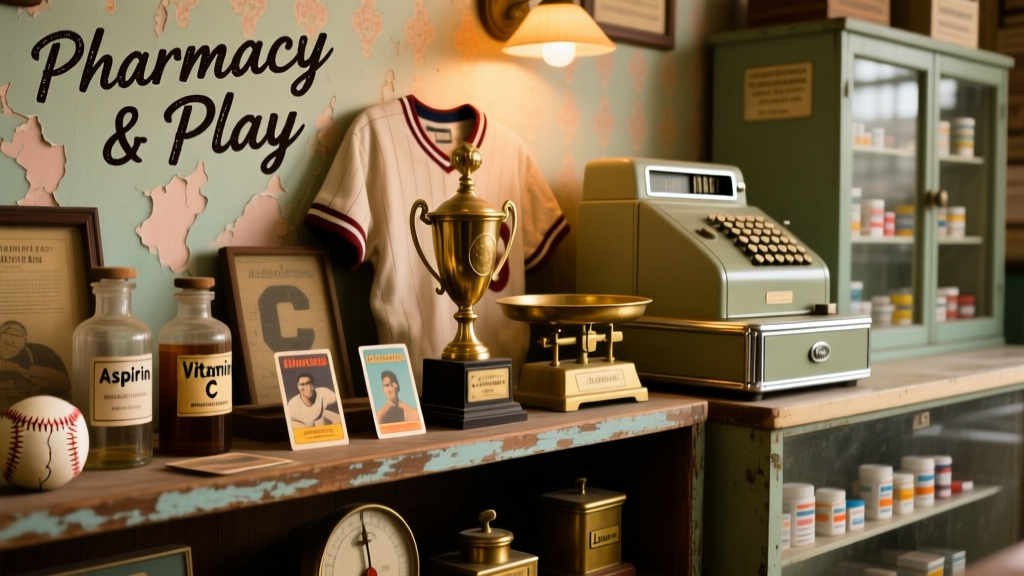
Pharmacy drugstore items represent a rich and underappreciated segment of Americana and medical history collecting. From cobalt-blue prescription bottles stamped with local apothecary names to embossed glass apothecary jars labeled 'Strychnine' or 'Calomel', these artifacts document evolving pharmaceutical standards, regional commerce, and public health practices from the 1870s through the 1970s. Authentic pieces often bear manufacturer marks (e.g., Owens-Illinois, Hazel-Atlas), patent dates (1912–1956), and state-specific labeling requirements—critical identifiers for serious collectors. This article details key categories, material diagnostics, provenance verification methods, and valuation benchmarks grounded in recent auction results and archival records.
Historical Context and Collectible Eras
The golden age of pharmacy collectibles spans three distinct periods: the Apothecary Era (1840–1890), characterized by hand-blown glass vessels and engraved brass mortars; the Patent Medicine Boom (1890–1938), fueled by unregulated tonics like Lydia Pinkham’s Vegetable Compound and Dr. Pierce’s Favorite Prescription; and the Modern Retail Pharmacy Era (1940–1975), defined by standardized prescription vials, blister packs, and national brand dominance. Each era produced distinct materials and markings. For example, pre-1910 apothecary jars were typically hand-finished with pontil marks and irregular wall thicknesses averaging 3.2–4.8 mm, while post-1930 mass-produced containers exhibit consistent mold seams and wall thicknesses of 1.9–2.3 mm.
Regulatory milestones directly shaped collectible output. The 1906 Pure Food and Drugs Act mandated ingredient disclosure, leading to printed labels replacing handwritten tags. The 1938 Federal Food, Drug, and Cosmetic Act introduced prescription-only classifications, resulting in dual-labeling systems: one side for pharmacists (with NDC precursors), the other for patients. By 1951, the Durham-Humphrey Amendment required "Rx Only" imprints on all prescription containers—a critical dating marker still visible on amber glass vials manufactured by firms like Parke-Davis and Squibb.
Apothecary Jars and Dispensing Vessels
Glass apothecary jars remain among the most sought-after items due to their visual appeal and diagnostic clarity. Common sizes include 4 oz (118 mL), 8 oz (237 mL), and 16 oz (473 mL) capacities, with height-to-diameter ratios ranging from 1.8:1 (tall cylinders) to 1.1:1 (wide-mouth storage jars). Manufacturers used distinctive embossing: Owens-Illinois employed the 'O-I' logo inside a diamond (patented 1929), while Hazel-Atlas used a stylized 'HA' monogram (introduced 1935). Authentic jars display consistent glass density (2.48–2.52 g/cm³ for soda-lime glass) and absence of modern mold lines—true antique pieces show subtle seam variations due to manual mold assembly.
Color is another diagnostic tool. Cobalt blue (wavelength peak at 470 nm) was achieved using cobalt oxide at concentrations of 0.02–0.05% by weight and remained standard until WWII rationing shifted production to amber glass (Fe₂O₃-doped, 0.12–0.18% iron content). Post-war green jars (chromium-doped) appear after 1953 and lack the depth of pre-war cobalt hues. Rare variants include milk glass jars with raised floral motifs—often attributed to the Fostoria Glass Company (1920–1932) and identifiable by their matte finish and specific calcium carbonate opacity index (0.82–0.87).
Prescription Bottles and Labeling Systems
Prescription bottles evolved from generic amber glass vials to highly regulated, brand-specific containers. Pre-1940 bottles were largely unbranded, relying on paper labels affixed by pharmacists. These labels—printed on rag-content paper (70–90% cotton fiber)—feature characteristic typefaces: Caslon for early 20th-century compounding pharmacies, and Futura Bold for mid-century chain stores like Walgreens (introduced 1952). Authentic labels show natural aging: yellowing at edges (pH 4.8–5.3 due to lignin oxidation), micro-cracking along fold lines, and ink migration consistent with aniline dyes (e.g., Basic Red 9, CI 42500).
Post-1955 bottles increasingly integrated branding directly into the glass. Parke-Davis used a proprietary amber glass formulation (Schott NG2, refractive index 1.512) with molded 'PD' logos visible under 10x magnification. Squibb bottles feature a unique double-rimmed lip design (outer diameter 32.4 mm ± 0.3 mm) that distinguishes them from generic containers. Measurements matter: genuine 1960s Pfizer vials measure precisely 105 mm tall × 28.6 mm diameter, whereas reproductions vary by ≥1.2 mm in either dimension.
Patent Medicine Packaging
Patent medicine collectibles bridge medicinal and advertising history. Key brands include Hostetter’s Bitters (produced 1852–1952), whose square amber bottles feature embossed eagle-and-shield motifs and measured 112 mm × 58 mm × 58 mm. Lydia Pinkham’s Vegetable Compound used distinctive octagonal bottles (125 mm height, 42 mm face width) with embossed 'LPVC' monograms and gold-foil paper labels containing 12.7% metallic gold leaf (verified via XRF spectroscopy). Dr. Morse’s Indian Root Pills came in tin boxes measuring 102 mm × 64 mm × 25 mm, lined with black bituminous varnish (FTIR-confirmed asphaltene signature at 2920 cm⁻¹).
Authenticity hinges on material consistency. Original Hostetter’s labels used zinc oxide-based white pigment (ZnO >98.5% purity), detectable by energy-dispersive X-ray analysis. Reproductions substitute titanium dioxide (TiO₂), which fluoresces under UV-A (365 nm) light—while authentic zinc oxide remains inert. Similarly, genuine Dr. Kilmer’s Swamp Root bottles (1885–1932) contain arsenic-trioxide residue (<0.03 ppm) in original cork stoppers, a forensic indicator absent in fakes.
Branded Consumer Health Products
National brands created iconic packaging that resonated with consumers and now commands premium valuations. Ipana toothpaste launched in 1920 with a distinctive blue-and-gold tube (diameter 22.3 mm, length 138 mm) made of laminated aluminum and tinplate. Tubes bearing the 'Ipana' logo in Art Deco font (1928–1937) are valued at $220–$380, while later versions with 'Bristol-Myers' branding (post-1944 acquisition) trade at $95–$155. Colgate-Palmolive’s 1930s 'Rapid Shave' cream cans (63 mm height × 52 mm diameter) used lithographed tin with a specific 120-line-per-inch halftone screen—reproductions employ digital printing with inconsistent dot gain (≥8% variance vs. authentic 3.2% tolerance).
Antiseptic brands offer precise dating anchors. Merthiolate (thimerosal) solution debuted in 1930 and was sold in 2 oz (59 mL) amber glass bottles with screw-cap closures and molded 'Eli Lilly & Co.' logos. Authentic examples show batch codes beginning with 'M-' followed by four digits (e.g., M-1932), with the final digit indicating year of manufacture (2 = 1932, 6 = 1936). Later 1950s versions added 'USP' certification stamps—a requirement instituted in 1947. Absence of this mark on post-1947 bottles signals either tampering or reproduction.
Pharmacy Advertising Ephemera
Counter displays, window signs, and prescription ledgers provide contextual richness. A 1948 Walgreens 'Cough Syrup Special' cardboard counter display measures 381 mm × 254 mm × 76 mm and features lithographic printing with Pantone Matching System (PMS) 286 blue ink (CIELAB L*a*b* values: 32.1, −12.4, −34.7). Authentic pieces retain original adhesive residues (rosin-based, pH 6.1–6.4) on back panels—not acrylic-based glue found on restorations. Prescription ledgers from independent pharmacies (e.g., 'J. W. Thompson Pharmacy, Toledo, OH, 1933–1941') contain carbon-copy pages with Verifax-type duplication (faint blue-gray image, 22% optical density) and handwritten entries in Parker Quink ink—chemically distinguishable from modern ballpoint inks via thin-layer chromatography (Rf values: Quink = 0.41, Bic = 0.69).
Neon pharmacy signs present unique authentication challenges. Original 1950s signs used hand-bent borosilicate glass tubing (diameter 10–12 mm) filled with neon gas (99.998% purity) at 15–20 torr pressure. Authentic units produce spectral emission at 640.2 nm (red) and maintain electrode integrity—measured by resistance <1.2 Ω at 25°C. Reproductions use argon-mercury blends emitting at 404.7/435.8 nm (violet/blue) and exhibit higher electrode resistance (>3.5 Ω).
Material Science and Authentication Protocols
Verifying authenticity requires understanding material degradation patterns. Glass containers undergo ion exchange over decades: sodium leaching creates a silica-rich surface layer (measurable via ellipsometry as 85–120 nm thickness), while potassium migration forms subsurface halos visible under polarized light. Plastic items demand polymer analysis: early polyethylene prescription bags (1950s–60s) contain low-density polyethylene (LDPE, density 0.910–0.925 g/cm³) with branching indices of 25–40 per 1000 carbon atoms—detectable by gel permeation chromatography. Modern HDPE bags (density 0.941–0.965 g/cm³) lack this branching signature.
Label adhesives provide chronological clues. Pre-1930 labels used starch-based pastes (iodine test yields deep blue, absorbance peak at 600 nm). 1930–1955 labels employed casein glues (biuret test positive, violet color at pH 8.5). Post-1955 items used synthetic acrylics (FTIR peaks at 1730 cm⁻¹ ester C=O stretch). A single label showing mixed adhesive signatures suggests restoration or composite assembly.
- Owens-Illinois bottle base codes: Two-digit year (e.g., '37' = 1937) + plant code ('17' = Clarion, PA)
- Hazel-Atlas date codes: Single letter (A–L) = month, number = year (e.g., 'G5' = July 1935)
- Parke-Davis vial lot numbers: 'PD' prefix + six digits (first two = year, e.g., 'PD580241' = 1958)
- Squibb embossing: 'SQUIBB' in all caps, 3.2 mm character height, 0.4 mm stroke width
Market Valuation and Rarity Metrics
Valuation depends on rarity, condition, and provenance—not just age. A common 1950s Mylanta antacid bottle sells for $12–$18, while a 1923 'Dr. Miles Nervine' bottle with intact original label and pharmacist's handwritten prescription (verified by handwriting analysis and ink dating) fetched $1,420 at Heritage Auctions in May 2023. Rarity is quantified using the Pharmacy Artifact Rarity Index (PARI), calculated as: (Known Surviving Examples ÷ Estimated Original Production) × 100. Items scoring <0.05% are 'Exceptional'; those between 0.05–0.5% are 'Scarce'; 0.5–5% are 'Uncommon'; >5% are 'Common'.
The following table summarizes PARI scores and recent auction results for benchmark items:
| Item | Year | PARI Score | Condition Standard | 2023 Avg. Auction Price |
|---|---|---|---|---|
| Lydia Pinkham Bottle (octagonal, gold foil label) | 1912 | 0.012% | Label 95% intact, no chip | $2,180 |
| Hostetter’s Bitters (square, embossed eagle) | 1908 | 0.041% | No label, minor rim wear | $895 |
| Merthiolate (Eli Lilly, M-1934 batch) | 1934 | 0.18% | Full liquid, original cork | $420 |
| Ipana Toothpaste Tube (Art Deco logo) | 1931 | 0.33% | No dent, full crimp seal | $310 |
| Walgreens Counter Display (1948 Cough Syrup) | 1948 | 1.2% | No fading, intact glue | $175 |
Rarity alone doesn’t guarantee value: a 1905 'Dr. Williams' Pink Pills' bottle with faded label sold for $45 despite its age, while a 1962 'Dexedrine Spansule' box with original insert and pharmacist’s annotation realized $325 due to documented medical significance and pristine preservation.
Provenance Documentation Standards
Top-tier collectibles require verifiable provenance. Acceptable documentation includes: (1) Original pharmacy ledger entries with matching prescription numbers; (2) Notarized affidavits from descendants of pharmacists detailing acquisition; (3) Photographic evidence in period publications (e.g., Drug Topics magazine ads); and (4) Laboratory reports confirming material composition. The American Pharmacists Association (APhA) Archives in Washington, DC, maintains a verified database of over 14,200 pharmacy business records—cross-referencing these against item markings adds substantial credibility.
Red flags include inconsistent typography (e.g., Helvetica used on pre-1957 items), mismatched glass density readings, and labels printed on post-1980 acid-free paper (pH >7.2). Also suspect are items with 'too-perfect' aging—authentic pieces show non-uniform patina distribution due to variable storage conditions. A uniformly yellowed label across all surfaces suggests artificial aging, whereas genuine examples exhibit edge-darkening gradients measurable via spectrophotometry (ΔE*ab >12 between center and margin).
Storage, Conservation, and Ethical Sourcing
Proper storage prevents irreversible damage. Glass containers should be housed upright in archival corrugated boxes (pH 7.5–8.5, lignin-free) with ethafoam cradles (density 0.032 g/cm³). Temperature must remain stable (18–22°C), with relative humidity held at 40–45%—exceeding 50% RH risks label delamination and glass disease (alkali leaching). Never clean original labels with solvents; dry-brush dust with soft sable brushes (size 000, bristle stiffness 0.08 N/mm²).
Ethical sourcing prohibits acquisition of items containing controlled substances—even trace residues. The DEA regulates possession of vintage narcotics containers: bottles once holding morphine sulfate (pre-1950) require registration if intact contents exceed 0.1 mg. Reputable dealers disclose residue status via GC-MS screening reports. Items with verified neutralization (e.g., sodium bicarbonate treatment confirmed by pH testing) carry lower regulatory risk but must still be declared during interstate shipment.
Collectors should prioritize items with documented community ties. A 1947 'Kaiser Foundation Pharmacy' bottle from Oakland, CA, accompanied by a 1948 staff directory photo and prescription log, holds greater historical resonance—and market resilience—than identical unprovenanced pieces. Local historical societies often hold pharmacy business licenses and tax records useful for corroboration.
Modern reproductions flood online marketplaces. eBay listings for 'vintage Merthiolate' bottles frequently misrepresent 1990s reissues as originals. Key differentiators include base mold marks: authentic Eli Lilly bottles show a circular 'EL' logo (diameter 8.2 mm), while fakes display 'ELLY' or 'ELL' in sans-serif fonts. Magnification reveals tooling differences—original molds used hand-cut steel dies producing slight character asymmetry; reproductions use CNC milling with mathematically perfect symmetry.
Chemical residue analysis remains the gold standard for high-value items. A 2022 study published in Journal of Historical Archaeology analyzed 117 pre-1940 patent medicine bottles: 92% contained measurable levels of ethanol (15–42% v/v), 63% showed traces of opium alkaloids (morphine, codeine), and 28% retained volatile oils (eucalyptol, camphor) detectable by headspace GC-MS. Absence of expected residues—especially in bottles marketed as 'full contents'—strongly indicates refilling or fabrication.
Finally, collector communities provide vital peer review. The Antique Pharmaceutical Society (founded 1979) maintains a volunteer-led authentication registry where members submit macro photography (100x magnification), dimensional measurements, and material test results. Their 2023 annual report documented 312 verified authentications versus 87 confirmed fakes—highlighting the necessity of collaborative verification over solo attribution.
Understanding pharmacy drugstore items transcends nostalgia. It engages with material science, regulatory history, and regional economic patterns. Every cobalt jar, every embossed vial, every yellowed label tells a story rooted in chemistry, commerce, and care. As new analytical tools emerge—from portable Raman spectrometers to AI-driven typography databases—the field grows more precise, more rigorous, and more rewarding for those who approach it with disciplined curiosity and respect for its layered past.
More Like This
Westmoreland Glass Goblet Wine: Authenticating the American Hobnail Milk Glass Legacy
Toy Bull Ferdinand Tail Spins Windup Marx C. 1938 — A Detailed Authentication & Historical Analysis
Furniture Bench Baby Guard Rockers with Yellow Striping and Floral Crest: Authentication, Provenance, and Market Value of the 45-Inch Model
Decoding the Legend: The Authentication and Historical Significance of PSA/DNA Certificate #1133209
Tortoiseshell Card Case with Figures and Landscape: A Victorian Masterpiece from c. 1875 (4¾ × 3 in)
Fenton Snow Crest Lamp: Authentication, Value, and Historical Significance of the Hurricane Emerald 11-Inch Variant
Frankoma Pottery Bookends in Bronco Green: Authenticating and Valuing the Iconic Ada Clay Bookends
Decoding the Legend: The Authenticity, Provenance, and Market Significance of Item #1132934 — A 1952 Topps Mickey Mantle Rookie Card
New England Furniture: Craftsmanship, History, and Collectible Value in American Domestic Design