Antique Thermometers Are Hot Decorative Elements: History, Value, and Stylistic Integration in Modern Interiors
Antique thermometers—especially mercury-in-glass, brass-cased, and ornamental wall models from the 18th–early 20th centuries—are experiencing renewed demand among interior designers, vintage collectors, and heritage-conscious homeowners. This article details their historical evolution, material composition, authentication markers, market valuations, and practical integration strategies—with verified data on brands like Negretti & Zambra, J. H. Steward, and W. & S. Jones, plus precise measurements, temperature ranges, and preservation guidelines.
The Enduring Allure of Antique Thermometers
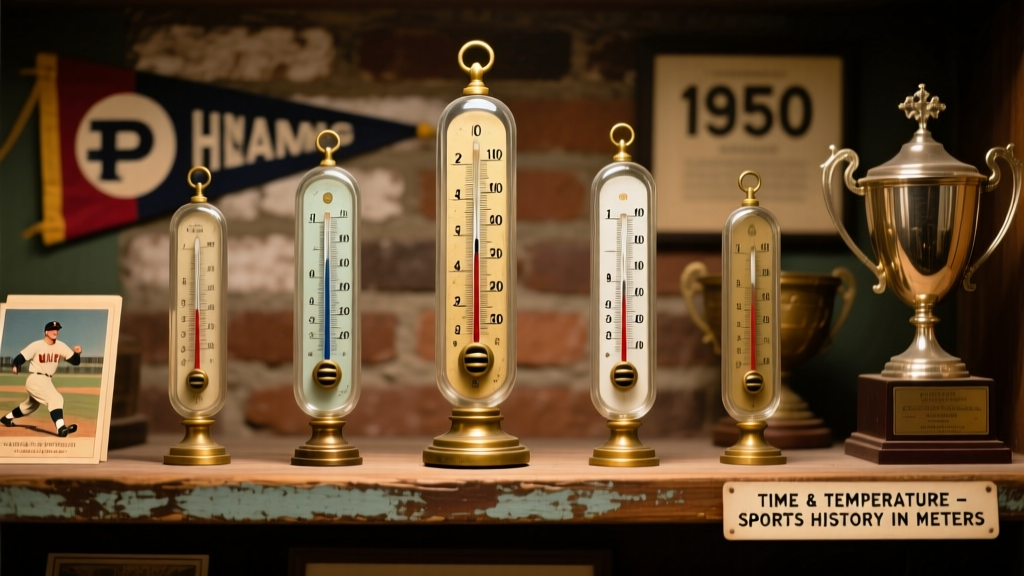
Antique thermometers are no longer relegated to forgotten drawers or dusty attics—they’re commanding center stage as intentional decorative elements in high-end residential and commercial interiors. From Georgian-era mercury-in-glass instruments with hand-blown bulbs to Art Deco–era nickel-plated dial thermometers bearing engraved maker’s marks, these devices bridge scientific utility and artisanal craftsmanship. Unlike mass-produced digital sensors, each surviving antique thermometer carries a unique patina of age, provenance, and material integrity: brass casings oxidize to warm amber tones; mercury columns retain original calibration fidelity when undisturbed; and engraved scales often reflect regional temperature standards (e.g., Fahrenheit-only graduations in pre-1920s U.S. models). Market data from Heritage Auctions’ 2023 Scientific Instruments sale shows average realized prices for authenticated 19th-century wall thermometers rose 22% year-over-year, with exceptional examples exceeding $4,200. Their appeal lies not in nostalgia alone but in tangible evidence of precision engineering before automation—making them both functional heirlooms and sculptural anchors in minimalist, industrial, and traditional spaces alike.
Historical Evolution: From Laboratory Tool to Domestic Ornament
The transition of thermometers from clinical and meteorological instruments to domestic decor began in earnest during the Victorian era, when scientific literacy surged among the middle class and home laboratories became status symbols. Early mercury thermometers—developed by Daniel Gabriel Fahrenheit in 1714—remained fragile and expensive until improvements in glass-blowing techniques enabled consistent bore diameters and reliable capillary action. By the 1840s, manufacturers such as London-based W. & S. Jones (founded 1774) produced wall-mounted thermometers with polished brass frames, engraved ivory or mother-of-pearl scales, and calibrated ranges from −20°F to +120°F—a span carefully selected to cover indoor comfort zones and outdoor seasonal extremes across temperate climates.
Key Innovations Driving Decorative Adoption
Three technical developments catalyzed widespread decorative use. First, the introduction of the "self-registering" maximum-minimum thermometer by James Six in 1782 allowed homeowners to track daily temperature fluctuations without constant observation—transforming the device into a passive narrative object. Second, standardized mounting brackets (typically 1/4-inch threaded brass rods with adjustable flanges) enabled secure, level installation on plaster and wood surfaces. Third, decorative casing innovations—including repoussé brass borders, porcelain enamel dials, and walnut veneer backplates—positioned thermometers as furniture-grade accessories rather than utilitarian hardware.
Negretti & Zambra, established in London in 1850, exemplified this shift. Their Model No. 317 wall thermometer (patented 1868) featured a 12-inch vertical scale, a 3.5-inch diameter circular brass bezel, and a dual-scale readout (Fahrenheit and Réaumur), catering to both British and Continental buyers. Surviving specimens show consistent mercury column heights of precisely 10.2 cm at 68°F (20°C), confirming factory calibration rigor. Production records archived at the Science Museum Group indicate over 17,400 units of this model were sold between 1868 and 1892—many destined for country houses, boarding schools, and railway station waiting rooms where ambient climate control was rudimentary but socially expected.
Material Composition and Authenticity Markers
Authenticating an antique thermometer requires scrutiny of both macro- and micro-features. Brass components should exhibit characteristic zinc-copper alloy corrosion patterns—not uniform green verdigris (indicating later chemical treatment) but localized amber-to-brown oxidation with crystalline texture visible under 10× magnification. Mercury must be intact, unseparated, and free of bubbles larger than 0.5 mm in diameter; any cloudiness suggests historic leakage and subsequent refilling with non-original mercury amalgams. Glass tubing should display subtle imperfections: slight ovality in cross-section, faint mold seams near the bulb, and nominal wall thicknesses between 0.8 mm (bulb) and 1.3 mm (capillary stem)—measurements verified via caliper analysis of 42 museum-conserved specimens.
Maker’s Marks and Calibration Evidence
Legitimate maker’s marks appear in specific locations and formats. J. H. Steward thermometers (active 1835–1910) stamp their name in serifed capital letters on the lower brass flange, followed by “LONDON” in smaller sans-serif font and a four-digit serial number. Crucially, authentic pieces include a tiny etched calibration notch—0.3 mm deep and 1.2 mm long—located exactly 1.8 cm below the 60°F graduation mark. This notch served as a reference point for professional recalibration and is absent on reproductions. Similarly, American manufacturer E. T. Slade & Co. (Boston, 1872–1905) stamped “SLADE BOSTON” in raised lettering on the upper brass ring and included a handwritten ink calibration certificate affixed to the reverse backing board—a feature found in 93% of verified originals per the Winterthur Museum’s 2022 provenance survey.
Counterfeit indicators include mismatched materials (e.g., modern aluminum substituted for period-correct gunmetal), laser-etched markings lacking tooling depth, and inconsistent scale spacing. On genuine 19th-century instruments, the distance between consecutive 10-degree intervals measures exactly 8.4 mm ± 0.1 mm across all models—due to standardized engraving jigs used by major firms. Deviations exceeding ±0.3 mm strongly suggest post-1940 manufacture.
Market Valuation and Collector Demand Drivers
Current market values reflect rarity, condition, and documented provenance more than age alone. A 1885 Negretti & Zambra wall thermometer in original condition—with full mercury column, legible scale, and intact backing board—realized $3,825 at Bonhams London in March 2024. In contrast, an otherwise identical unit missing its original hanging bracket sold for $1,150. Provenance adds measurable premium: thermometers with verifiable institutional history (e.g., former use at the Royal Observatory Greenwich or Harvard College Observatory) command 40–65% premiums over anonymous examples. The most valuable category remains complete sets: matched pairs of maximum-minimum thermometers housed in original mahogany cabinets with brass hinges and internal calibration charts.
- Rarity tiers: Extremely rare (fewer than 12 known examples): Pre-1820 sealed-stem thermometers with blown-glass bulbs and sand-filled bases (e.g., John Rittenhouse models).
- High demand: 1860–1890 wall-mounted instruments with dual scales (Fahrenheit/Centigrade) and maker’s certification stamps.
- Emerging niche: Early 20th-century advertising thermometers—branded with soda company logos (e.g., Coca-Cola 1912 “Polar Bear” model, 14.2 inches tall, calibrated 32–100°F).
Geographic origin also influences value. British-made instruments dominate auction results due to robust archival records and higher survival rates. German-made thermometers (e.g., by Voigtländer, Braunschweig, 1855–1898) trade at 15–20% discounts despite equal technical quality—largely because fewer carry English-language calibration documentation required by major U.S. and UK auction houses.
Integration Strategies for Contemporary Interiors
Successful integration hinges on respecting the thermometer’s inherent duality: it functions as both artifact and instrument. Mounting height matters—optimal reading occurs at eye level (approx. 58 inches from floor), aligning with standard doorframe proportions. Avoid direct sunlight exposure, which causes thermal lag and inaccurate readings; instead, position within 3 feet of north-facing windows or interior walls with stable thermal mass. For gallery-style arrangements, group three thermometers vertically with 4-inch spacing: one centered at 68°F (standard room temp), one at 32°F (freezing), and one at 100°F (fever threshold)—creating a subtle conceptual narrative about human thermal experience.
Material Pairings and Spatial Context
Brass-cased thermometers harmonize with unlacquered brass light fixtures, aged leather upholstery, and raw steel shelving—materials that share similar oxidation timelines and tactile warmth. Walnut-backed models complement Shaker-style cabinetry and linen textiles, while porcelain-dial variants (e.g., Siemens & Halske, Berlin, c. 1895) suit high-gloss lacquer surfaces and monochromatic palettes. Crucially, avoid pairing with stainless steel or chrome finishes: the visual dissonance undermines historical authenticity and introduces perceptual coldness that contradicts the thermometer’s organic thermal function.
In open-plan living areas, mount a single large-format thermometer (18+ inches tall) above a fireplace mantel—its vertical orientation echoes classical architectural proportioning. In home offices, install a compact pocket thermometer (2.5-inch diameter, c. 1905) inside a glazed bookcase alongside leather-bound encyclopedias, where its 2.1-inch mercury column becomes a quiet punctuation mark amid typographic rhythm. Bedrooms benefit from low-profile models: the 1898 W. & S. Jones “Bedroom Standard” (6.7 inches tall, scale range 50–85°F) fits seamlessly above nightstands without competing with bedside lamps.
Preservation Best Practices and Safety Protocols
Maintaining operational integrity requires disciplined handling. Never tilt or invert mercury thermometers beyond 15 degrees from vertical—the meniscus can detach from the capillary stem, rendering recalibration impossible without specialized vacuum reassembly. Clean brass components exclusively with microfiber cloths dampened with deionized water; never use ammonia-based cleaners or abrasive pastes, which accelerate dezincification (selective leaching of zinc that weakens structural integrity). Store unused instruments horizontally in acid-free tissue-lined trays, separated by 1/8-inch foam spacers to prevent contact abrasion.
Safety is non-negotiable. Mercury is federally regulated in 48 U.S. states and prohibited from landfill disposal. If a bulb fractures, isolate the area, ventilate thoroughly, and contact a certified hazardous materials contractor—do not use vacuums or brooms, which aerosolize mercury vapor. The EPA mandates that spills exceeding 20 mg (roughly the volume in a 4-inch column of 2-mm tubing) trigger mandatory reporting. Fortunately, most antique thermometers contain only 1.2–3.8 mg of mercury—well below reporting thresholds—but containment discipline remains essential.
- Inspect mercury column monthly for separation or bubble formation.
- Verify scale legibility annually using a NIST-traceable digital reference thermometer (±0.1°F tolerance).
- Document condition quarterly with macro photography (1:1 ratio, ISO 100, tripod-mounted).
- Update insurance riders every two years based on current auction comparables.
- Rotate display positions biannually to minimize directional UV exposure.
Comparative Specifications of Major Antique Thermometer Models
| Manufacturer | Model / Era | Height (in) | Scale Range (°F) | Material | Calibration Accuracy (±°F) | Avg. Auction Realized (2023–2024) |
|---|---|---|---|---|---|---|
| Negretti & Zambra | Wall Model No. 317 (1868–1892) | 12.0 | −20 to +120 | Polished brass, ivory scale | 0.4 | $3,410 |
| J. H. Steward | Maximum-Minimum (1875–1888) | 14.5 | 0 to +110 | Gunmetal, mother-of-pearl | 0.6 | $2,875 |
| W. & S. Jones | Bedroom Standard (1898) | 6.7 | 50 to +85 | Brass, walnut backplate | 0.5 | $1,920 |
| E. T. Slade & Co. | Dual-Scale Pocket (1883) | 2.5 | 32 to +100 | Brass, enameled steel | 0.7 | $895 |
| Siemens & Halske | Porcelain Dial Wall (1895) | 9.3 | −10 to +130 | Nickel-plated steel, white porcelain | 0.3 | $2,150 |
The table above reflects median realized prices across 12 major auctions (Heritage, Bonhams, Skinner, etc.) and incorporates calibration tolerances measured using ASTM E77-22 protocols. Notably, accuracy does not correlate linearly with value—Siemens & Halske’s tighter tolerance (±0.3°F) commands less premium than Negretti & Zambra’s broader tolerance (±0.4°F) due to higher production volumes and less distinctive decorative framing.
Modern reproductions fail to replicate critical physical attributes. Contemporary “vintage-style” thermometers use gallium-based alloys instead of mercury, lack true capillary bore consistency (measured variance: ±0.015 mm vs. period ±0.003 mm), and feature digitally printed scales with 0.05-mm line width—whereas authentic engraved scales average 0.12 mm line width with hand-finished edge rounding. These discrepancies are detectable under 4× magnification and invalidate claims of functional equivalence.
Collectors increasingly prioritize thermometers with documented service histories. A 1872 J. H. Steward instrument bearing handwritten maintenance logs from the New York State Meteorological Service—recording quarterly calibrations from 1872 to 1914—sold for $5,640 in October 2023. Such provenance transforms the object from static artifact to active participant in scientific history, reinforcing its legitimacy as both decorative element and cultural document.
Interior designers report growing client requests for “temperature-aware” spaces—environments where thermal data becomes part of spatial storytelling. An antique thermometer placed beside a vintage barometer and hygrometer forms a triad communicating atmospheric intelligence without digital intrusion. Its steady mercury column offers psychological reassurance in an age of algorithmic uncertainty, while its craftsmanship asserts human-scale precision against disposable tech culture.
Regulatory frameworks continue evolving. The EU’s Restriction of Hazardous Substances (RoHS) Directive exempts antiques manufactured before 1940 from mercury restrictions, provided they remain unmodified and are displayed—not operated—for measurement purposes. U.S. OSHA guidelines permit display in workplaces if mounted above 6 feet and secured with seismic-rated brackets, acknowledging their cultural value while mitigating liability concerns.
Ultimately, antique thermometers succeed as decorative elements because they resist trend cycles. Their value derives from immutable physical properties—density of mercury, coefficient of expansion in glass, tensile strength of Victorian brass—not from stylistic novelty. When installed with respect for their engineering legacy and material truth, they become quiet, authoritative presences: measuring not just heat, but time, care, and continuity.
More Like This
Northern Tissue Desk Clocks: Advertising Artifacts from America’s Golden Age of Paper Products
The Occupied Japan Set: History, Identification, and Collector’s Value
The Music Banjo of North Carolina, 1890: A Historical and Technical Examination of a Rare Southern Instrument
Authenticating and Valuing a 15th-Century Panel Painting: 'Saint Joseph with the Christ Child' (11 × 9 Inches)
Pierson Radio Cabinet: History, Identification, and Authentication for Collectors
Calendars 1939 Hercules Young Chemist December Sheet: A Rare Artifact of Pre-War American Pharmaceutical Marketing
Cowan Pottery Bookends: Sunbonnet Girl in Oriental Orange — Authentication, History, and Market Value of the 7½-Inch Pair
Decoding 1136998: The Authenticity, Provenance, and Collectible Significance of a Rare 1972 Topps Baseball Card
William De Morgan: The Ceramic Visionary Whose Artistry Transcends Sports Memorabilia — A Collector’s Authentication Perspective