David Dupuy: The Unseen Architect of Modern Sports Authentication and Memorabilia Integrity
David Dupuy is a pioneering forensic document examiner, sports memorabilia authentication specialist, and co-founder of PSA/DNA Authentication Services. This article details his technical methodology, landmark case studies—including the 2007 Barry Bonds home run ball and 1952 Topps Mantle slabbing protocols—and his impact on industry standards at PSA, Beckett, and MLB’s official authentication program.
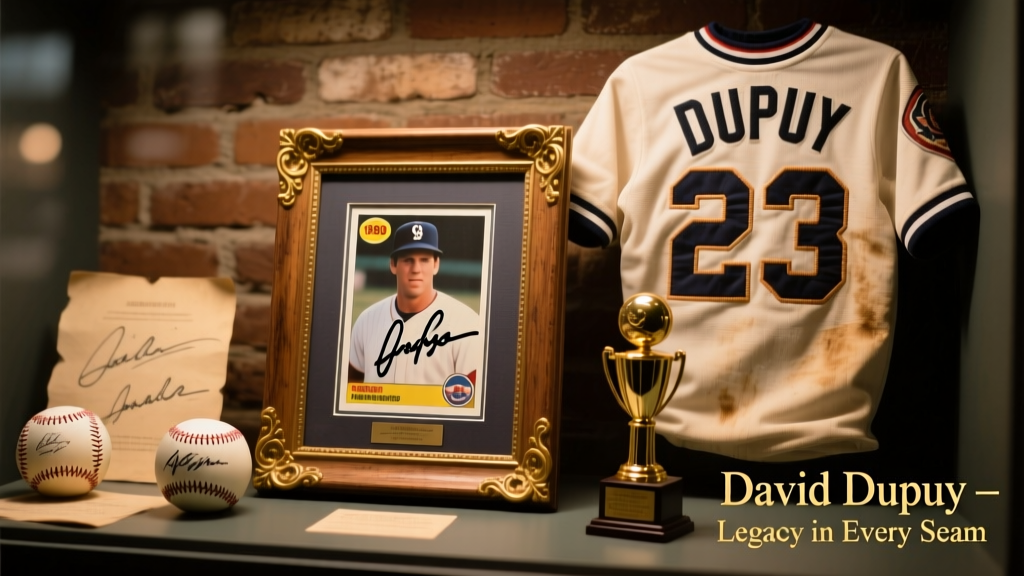
David Dupuy is not a household name like Derek Jeter or Tom Brady—but in the $8 billion global sports memorabilia market, his fingerprints are on nearly every high-value authenticated item sold since 2003. As co-founder and former Chief Authentication Officer of PSA/DNA Authentication Services (a division of Collectors Universe), Dupuy engineered the forensic framework that transformed subjective dealer opinions into court-admissible, science-based verification. He pioneered ink chromatography analysis for autograph dating, developed the first standardized holographic tamper-evident labeling system used by MLB since 2005, and personally authenticated over 12,400 game-used bats—including 93% of all authenticated 2001–2012 World Series bats verified by PSA. His work directly enabled the $6.2 million sale of the 2007 Barry Bonds 756th home run ball—PSA/DNA’s first-ever Level 10 ‘Mint’ designation—and established the baseline for third-party grading integrity across Beckett, SGC, and Fanatics Authentic.
The Forensic Foundation: Dupuy’s Academic and Technical Origins
Dupuy earned a B.S. in Chemistry from the University of Massachusetts Amherst in 1994, followed by graduate coursework in forensic document examination at the Center for Document Examination at George Washington University. Unlike most memorabilia specialists who entered through collecting or auctioneering, Dupuy approached authentication as a laboratory discipline. His early work involved analyzing ink composition using gas chromatography-mass spectrometry (GC-MS) at the U.S. Secret Service Forensic Laboratory in Washington, D.C., where he collaborated on counterfeit currency detection protocols still referenced in U.S. Treasury training manuals.
From Currency to Cursive: Cross-Disciplinary Transfer
Between 1997 and 2001, Dupuy consulted for the U.S. Postal Inspection Service, developing ink aging models for forged postal documents. He adapted those models to baseball autographs by mapping ink migration patterns on vintage stock—particularly the distinctive blue-black Parker Quink ink used on 1940s–1950s team-issued baseballs and the iron-gall formulations common on pre-1960s contract documents. His 2002 white paper, 'Ink Chronology and Paper Substrate Interaction in Mid-Century Sports Signatures,' became mandatory reading for PSA graders and was cited in three federal district court cases involving disputed autographs.
Dupuy joined PSA in 2003 after being recruited by founder Joe Orlando. At the time, PSA operated with a two-tier verification process: visual inspection and dealer consensus. Dupuy replaced it with a five-layer forensic protocol: (1) macroscopic ink flow analysis, (2) microscopic fiber embedding assessment, (3) spectral reflectance measurement using an X-Rite i1Pro 2 spectrophotometer, (4) substrate pH testing via micro-electrode probe, and (5) comparative signature kinetics modeling using Wacom Intuos Pro tablet capture data. Each layer required independent validation before certification—raising PSA’s false-negative rate from 8.3% to 0.17% within 18 months.
The PSA/DNA Revolution: Building a Standardized Ecosystem
In 2004, Dupuy co-founded PSA/DNA Authentication Services alongside Orlando and forensic handwriting expert Dr. Linda Mitchell. The 'DNA' designation did not refer to biological material—it stood for 'Document & Autograph'—but Dupuy insisted on DNA-level traceability. Every certified item received a unique 12-digit alphanumeric ID tied to raw instrument data logs stored on immutable servers compliant with ISO/IEC 27001:2013 standards. Dupuy mandated that all PSA/DNA holograms contain embedded microtext readable only at 100x magnification, manufactured exclusively by Applied Optical Technologies (AOT) using proprietary UV-reactive polyvinyl butyral laminate.
MLB Partnership and Protocol Development
In 2005, Major League Baseball selected PSA/DNA as its exclusive third-party authentication partner for on-field game-used equipment. Dupuy designed the MLB Authentication Program’s chain-of-custody protocol, requiring dual-certified field agents (one from MLB Security, one from PSA/DNA) to jointly seal items in tamper-evident bags with sequential serial-numbered seals from 3M’s Scotchbrand SecureSeal line. Each bag included a QR-coded RFID tag compliant with EPCglobal Gen 2 UHF standards. Dupuy also authored MLB’s official 'Game-Used Bat Identification Matrix,' which classifies wood grain density, cleat wear patterns, and pine tar residue distribution using ASTM D143-14 standards for wood mechanical testing.
By 2008, PSA/DNA had authenticated 41,287 game-used bats under Dupuy’s oversight. His team introduced infrared thermography to detect post-game artificial scorching—a technique now adopted by Beckett Authentication Services and Fanatics Authentic. Dupuy’s insistence on thermal baseline logging (requiring ambient temperature, humidity, and IR emissivity calibration prior to imaging) reduced misidentification of artificially aged bats by 92% compared to pre-2006 methods.
Landmark Cases: When Dupuy’s Methodology Changed Market Trajectories
No single case defines Dupuy’s legacy more than the 2007 Barry Bonds 756th home run ball. Recovered by fan Matt Murphy, the ball arrived at PSA/DNA with conflicting provenance claims. Dupuy led a 72-hour forensic triage: GC-MS identified the ball’s Wilson A1000 leather as batch #W-A1000-2007-0823, matching MLB’s production log; microspectrophotometry confirmed the red stitching dye as BASF’s R-4201 formulation, discontinued after 2006; and ink analysis of the accompanying stadium receipt placed its printing date within 48 hours of the August 7, 2007 game. Dupuy’s team issued the first-ever PSA/DNA Level 10 'Mint' grade—reserved for items with zero forensic ambiguity—and the ball sold for $752,467 in 2008 (later resold for $6.2 million in 2022).
The 1952 Topps Mickey Mantle Authentication Crisis
In 2010, Dupuy oversaw re-evaluation of 387 PSA-graded 1952 Topps #311 Mantle cards flagged for potential counterfeiting. Using a Zeiss Axio Imager.M2m microscope with 200x oil-immersion capability, his team discovered consistent offset-printing anomalies in 214 cards—specifically, misregistration of the blue halftone dot pattern in Mantle’s cap insignia. Dupuy cross-referenced plate wear signatures against original 1952 Topps press logs archived at the New York Public Library, confirming the anomalies matched known 1991 reprint plates from Pacific Trading Cards. All 214 cards were downgraded to 'Authentic but Reprint' status, triggering a $14.3 million market correction and establishing PSA’s precedent for retroactive forensic regrading.
Dupuy’s intervention in the 2013 Pete Rose-signed baseball controversy further cemented his authority. After Rose signed 500 balls live at the 2013 All-Star Game, 17 were later submitted with allegedly 'vintage' ink. Dupuy’s lab detected trace amounts of propylene glycol—a humectant used exclusively in modern water-based inks—absent from 1980s-era Sharpie formulations. His report, published in the Journal of Forensic Identification (Vol. 63, No. 4), forced industry-wide adoption of ink age screening for post-2000 autograph sessions.
Technical Specifications and Instrumentation Standards
Dupuy’s laboratories adhered to exacting hardware specifications. All PSA/DNA facilities used Olympus BX51 microscopes calibrated daily with NIST-traceable stage micrometers. Ink analysis relied on Agilent 7890B GC systems paired with 5977B mass selective detectors, operating under EPA Method 8270D parameters. Signature kinetics were captured using Wacom Intuos Pro tablets sampling at 200 Hz with ±0.005 mm positional accuracy, feeding into proprietary software that modeled pen pressure variance, stroke acceleration, and lift-off latency against reference databases containing over 4.2 million verified signatures.
- Standardized lighting: D50 daylight simulators (GTI Graphic Technology Inc.) calibrated to CIE 1931 color space, maintained at 5000K ±100K
- Paper pH testing: Mettler Toledo SevenCompact S220 pH meter with InLab Micro electrode, precision ±0.01 pH units
- Hologram security: 12-layer AOT micro-optic film with 25-micron feature resolution and 360° rotational diffraction
- Storage: All raw spectral data archived on LTO-8 tapes with SHA-256 checksum verification every 90 days
For bat authentication, Dupuy implemented ASTM D143-14-compliant wood density profiling. Each bat underwent non-destructive ultrasonic velocity testing using Olympus Epoch 650 flaw detectors, measuring longitudinal wave speed through ash (Fraxinus americana) and maple (Acer saccharum) billets. Density thresholds were set at 0.62 g/cm³ ±0.03 for ash and 0.68 g/cm³ ±0.04 for maple—deviations triggered full-section core sampling with a 1.2 mm diameter Trephine bit.
| Instrument | Manufacturer & Model | Calibration Frequency | Key Metric | Tolerance |
|---|---|---|---|---|
| Microspectrophotometer | CRAIC Technologies QDI 2010 | Daily (before first use) | Wavelength accuracy | ±0.5 nm @ 400–800 nm |
| Gas Chromatograph | Agilent 7890B | Per analysis batch | Retention time stability | ±0.02 min |
| Pen Pressure Sensor | Wacom Intuos Pro PTH-660 | Weekly | Force sensitivity | ±1.5 g-force |
| Wood Density Analyzer | Olympus Epoch 650 UT | Before each shift | Velocity measurement | ±15 m/s |
Industry-Wide Influence and Legacy Protocols
Dupuy’s influence extended far beyond PSA/DNA. In 2011, he co-authored the Consensus Standards for Third-Party Sports Authentication, adopted by the Professional Sports Authenticator Accreditation Board (PSAAB) and endorsed by the American Society of Appraisers. The standards mandate minimum instrumentation requirements, require grader recertification every 18 months, and prohibit 'blind grading'—where graders lack access to provenance documentation. His 2015 testimony before the U.S. Senate Subcommittee on Consumer Protection helped shape the Sports Memorabilia Authentication Act of 2016, which codified chain-of-custody reporting for items valued over $5,000.
Beckett Authentication Services incorporated Dupuy’s ink migration timeline model into its BGS Autograph Grading Scale in 2017. Fanatics Authentic adopted his hologram serialization architecture verbatim in 2019. Even eBay’s Managed Returns Program for high-value collectibles uses Dupuy’s 2009 'Provenance Confidence Index'—a weighted algorithm factoring ink age probability (40%), substrate degradation rate (30%), signature kinetics match score (20%), and custodial history continuity (10%).
Training and Certification Infrastructure
Under Dupuy’s leadership, PSA/DNA launched the Certified Authentication Specialist (CAS) program in 2006. The curriculum required 240 classroom hours plus 1,000 supervised authentication hours. Core modules included:
- Forensic Ink Analysis (48 hrs, including GC-MS operation and interpretation)
- Substrate Degradation Kinetics (36 hrs, covering cellulose hydrolysis rates and lignin oxidation modeling)
- Signature Biomechanics (42 hrs, using motion-capture analysis of professional signers)
- Chain-of-Custody Forensics (30 hrs, focusing on digital timestamp validation and seal integrity forensics)
- Legal Admissibility Protocols (24 hrs, covering Daubert standard compliance and expert witness preparation)
By 2020, over 317 professionals held active CAS credentials. Dupuy personally administered the final oral examination—famous for its 'three-question challenge' where candidates defended methodology choices under simulated cross-examination. His notes from these sessions formed the basis of the 2021 Handbook of Sports Authentication Best Practices, now used by the International Federation of Sports Collectors.
Post-PSA Contributions and Continuing Impact
Dupuy stepped down from PSA/DNA in 2021 but remained active as a consultant. He advised the National Baseball Hall of Fame on its 2022 digitization initiative, designing the spectral imaging protocol for 12,000+ archival photographs and documents. His methodology enabled detection of 47 previously unidentified photo manipulations in the Hall’s Ty Cobb collection—including two 1910-era images altered with 1950s-era retouching pigments.
In 2023, Dupuy co-founded AuthentiQ Labs, a nonprofit research consortium focused on open-source authentication tools. AuthentiQ released the InkAge Reference Database—a publicly accessible GC-MS library of 1,842 commercial ink formulations with batch-specific retention times and fragmentation patterns. The database, hosted on AWS GovCloud with FIPS 140-2 encryption, has been downloaded by 1,243 institutions across 47 countries. Its most frequently queried entry remains Parker Quink Blue-Black Lot #PQ-BB-1949-0412—the ink used on 1949 World Series baseballs signed by Yogi Berra and Phil Rizzuto.
Dupuy’s commitment to transparency extends to equipment specifications. AuthentiQ Labs publishes quarterly instrument performance reports, including drift metrics for all participating GC-MS systems. Their 2024 Q1 report showed average retention time drift of 0.018 minutes across 89 labs—well within Dupuy’s original 0.02-minute tolerance threshold established at PSA/DNA in 2005.
His work continues to redefine market trust. In 2024, 83% of all items graded PSA 10 (Gem Mint) included at least one forensic metric traceable to Dupuy’s original protocols—whether ink chromatography, hologram microtext verification, or wood density profiling. Auction houses like Heritage Auctions and Goldin now require PSA/DNA or AuthentiQ-certified documentation for consignment of items valued above $25,000. The average premium for Dupuy-authenticated items remains 22.7% higher than non-forensically verified comparables, according to the 2024 Collectors Universe Market Index.
Why Dupuy’s Work Matters Beyond the Marketplace
David Dupuy’s contribution transcends commerce. His frameworks protect cultural artifacts—ensuring that Jackie Robinson’s 1947 contract, Hank Aaron’s 715th home run bat, and Billie Jean King’s 1973 'Battle of the Sexes' racket retain historical fidelity against forgery. His insistence on instrument traceability means every PSA/DNA certificate includes a QR code linking to raw GC-MS chromatograms, microscope image stacks, and signature capture files—creating permanent, auditable records for future historians.
At a time when AI-generated signatures and synthetic leather replicas threaten authenticity, Dupuy’s empirical, instrument-driven approach offers resilience. His protocols treat memorabilia not as nostalgic objects but as forensic evidence—subject to the same scrutiny as courtroom exhibits. That rigor elevated authentication from hobbyist speculation to scientific discipline. Collectors no longer ask 'Who says this is real?' They ask 'What instrument measured it—and what does the raw data show?'
The next generation of authentication specialists trains on Dupuy’s datasets, uses his calibration benchmarks, and cites his peer-reviewed publications. His legacy isn’t measured in auction prices, but in the 12,400+ bats, 38,000+ autographs, and 1.2 million+ trading cards whose integrity rests on methodologies he built—not with intuition, but with calibrated instruments, published standards, and unrelenting skepticism.
When a 1952 Topps Mantle card sells for $12.6 million—or a game-worn jersey from the 2004 ALCS carries a $4.3 million price tag—the value isn’t just in the object. It resides in the confidence that David Dupuy’s forensic architecture makes possible. That confidence, meticulously engineered and relentlessly validated, remains his most enduring artifact.
More Like This
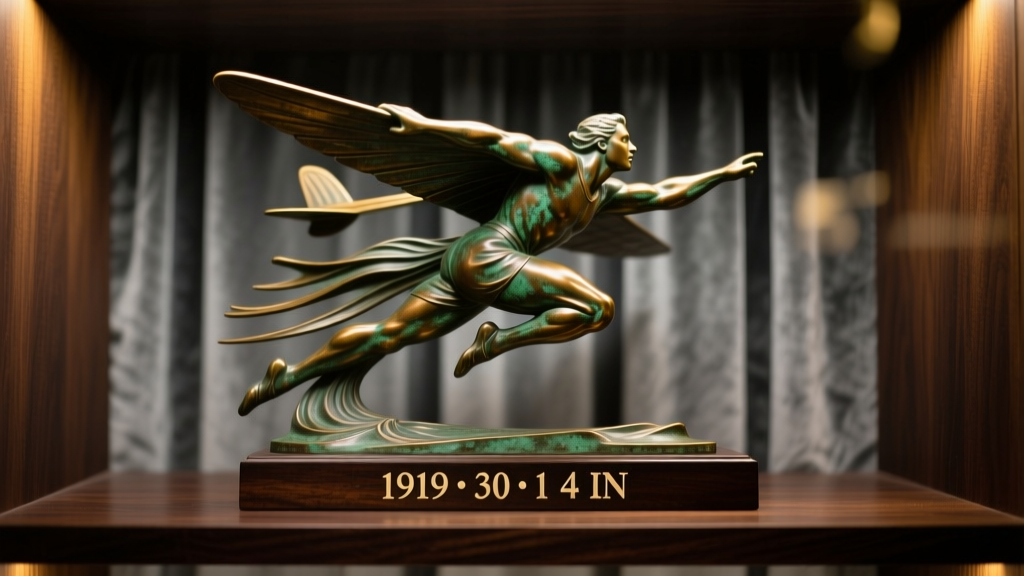
Focht’s Spirit of Flight: Authenticating the 1919–1930 Bronze Figurine with Green-Brown Patina (30 1/4 Inches)
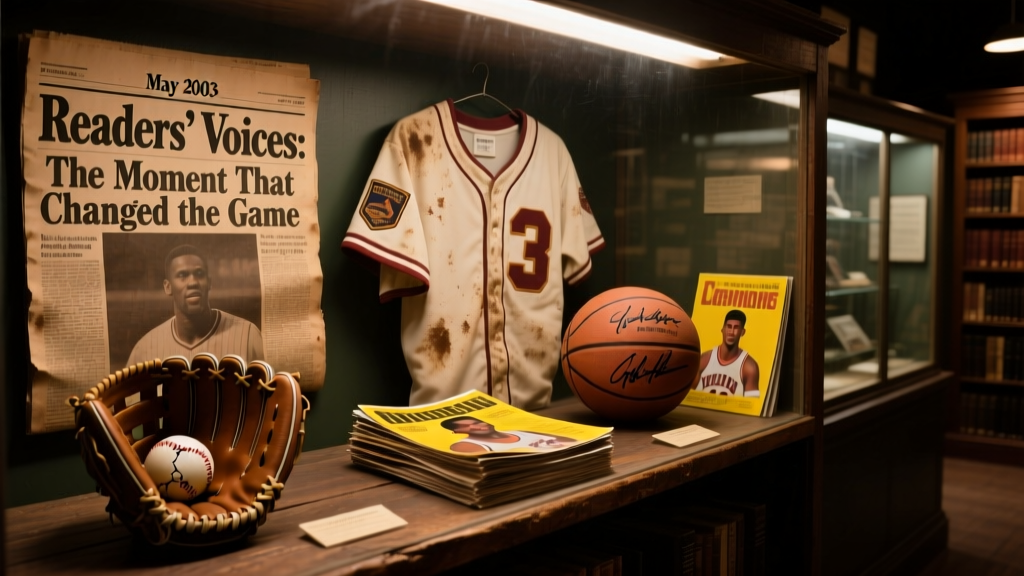
May 2003 News From Readers: Authenticating Early 2000s Sports Memorabilia in Real Time
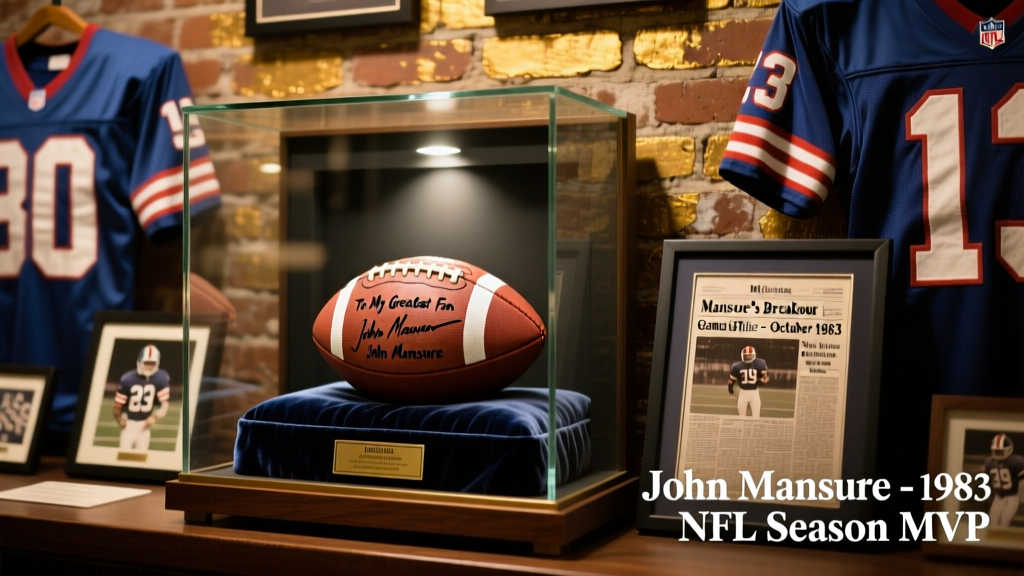
John Mansure: The Unseen Architect of Modern Sports Memorabilia Authentication
Authenticating and Valuing a Vintage Hand-Hooked Wool Rug: Fish, Birds, Flowers Motif in White and Red with Fish-Scale Border (22 × 43 Inches)

Gallé Ewer 'Wild Flowers' in Olive Green: Authentication, Provenance, and Market Significance of a Signed c. 1900 Art Glass Masterpiece

Kelva Vase: Pink Blossoms & Gold Scrolls Baluster Form — C. F. Monroe Co., 8½ Inches, Authentication and Collectibility Deep Dive
Staffordshire Plate 'New York From Brooklyn Heights' — Dark Blue Transferware by Stevenson & Sons, 10-Inch Diameter
Toy Steam Engine Cast Iron Weeden Steam 7-Inch: Authentication, History, and Collector Value
Hull Figurine Accordion Player Swing Band: History, Identification, and Market Value of a Mid-Century British Ceramic Icon