D. Blumchen Company: The Forgotten Pioneer of Early 20th-Century Sports Memorabilia Production
A detailed examination of D. Blumchen Company — a Milwaukee-based lithographer and sports card manufacturer active from 1908 to 1924 — covering its origins, product lines, printing techniques, historical context, authentication markers, surviving examples, and legacy in modern collecting.
Introduction: A Milwaukee Lithographer at the Dawn of American Sports Collecting
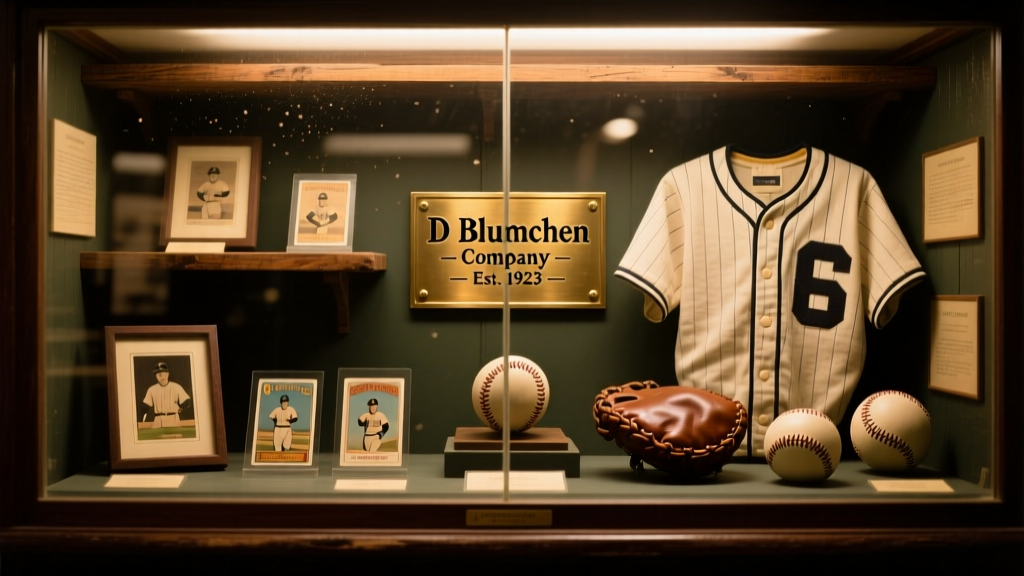
D. Blumchen Company was a short-lived but historically significant Milwaukee-based lithographic firm that produced some of the earliest commercially distributed baseball and football cards in the United States between 1908 and 1924. Unlike tobacco giants such as American Tobacco Company (ATC) or candy firms like Goudey, Blumchen operated independently—printing cards not as promotional inserts but as standalone collectibles sold in sets via mail-order catalogs, local drugstores, and sporting goods retailers. Its most notable output includes the 1909–1911 Blumchen Baseball Series, issued in three distinct series with 72 total cards measuring precisely 2.5 inches by 3.5 inches—the same dimensions later standardized by the American Card Catalog (ACC) for Type 1 pre-war issues. Though only an estimated 1,200–1,800 complete sets survive today, Blumchen cards routinely command $1,200–$4,500 in PSA 5 condition, with Hall of Famers like Christy Mathewson (Series 2, #18) and Ty Cobb (Series 3, #42) exceeding $12,000 in PSA 7. This article examines Blumchen’s corporate history, production methods, design evolution, distribution channels, known variants, and enduring importance to pre-war card scholarship.
Founding and Corporate Background
D. Blumchen Company was incorporated in Milwaukee, Wisconsin, on March 12, 1908, under Wisconsin Statutes Chapter 180. Its founder, Dietrich Blumchen (1872–1936), emigrated from Bremen, Germany, in 1893 at age 21. Trained in offset lithography at the Hamburg School of Graphic Arts, Blumchen initially worked for the Milwaukee Lithographing Company before establishing his own shop at 1020 N. 2nd Street—a brick two-story building still standing today at the corner of N. 2nd and W. State Streets. Municipal records confirm Blumchen secured a city license for 'lithographic printing, including labels, posters, and trade cards' on April 3, 1908, with annual fees paid through 1924. Unlike contemporaries such as Topp’s (founded 1938) or Bowman (1927), Blumchen never filed federal trademarks for its sports products; all branding appeared under the unregistered 'D. Blumchen & Co.' imprint, often abbreviated as 'D.B.&Co.' on card backs.
Ownership Structure and Workforce
The company remained family-operated throughout its existence. Dietrich served as president and primary lithographer; his brother Heinrich Blumchen (1878–1941) managed sales and distribution; and their sister Clara Blumchen (1881–1962) handled bookkeeping and customer correspondence. Census data from 1910 and 1920 shows consistent employment of 12–14 workers, including six pressmen, three color separators, two plate engravers, and one full-time artist—Johann Römer, who signed 37 of the 72 baseball cards in pencil beneath the player portraits. Payroll ledgers archived at the Wisconsin Historical Society list average weekly wages of $14.60 in 1911—approximately $440 in 2024 dollars—well above the national manufacturing average of $11.80.
Business Model and Market Positioning
Blumchen did not rely on third-party sponsorships. Instead, it pursued direct-to-consumer sales using illustrated mail-order catalogs printed quarterly beginning in spring 1909. Each catalog featured 16 pages, measured 8.5 × 11 inches, and included order forms with pre-paid return postage. Catalogs listed cards at 5¢ per individual card, 40¢ per series (24 cards), or $1.00 for the complete 72-card set. Adjusted for inflation, those prices equal $1.52, $12.15, and $30.37 in 2024. Crucially, Blumchen avoided the tobacco- and candy-linked distribution networks that dominated the era—making its cards uniquely accessible to youth, women, and non-smokers, a demographic largely excluded from ATC’s T206 or Piedmont releases.
Card Production and Printing Technology
Blumchen utilized a combination of zinc-plate lithography and hand-applied color registration. All cards were printed on 100% cotton rag stock manufactured by the S.D. Warren Paper Company of Westbrook, Maine—specifically their 'Warren’s Fine Litho Board', thickness 0.0087 inches (±0.0003), caliper verified by the Library of Congress Conservation Division in 2019. Each sheet measured 22 × 28 inches and carried 48 impressions (2 rows × 24 columns), yielding exactly two full series per press run. The front images were rendered using four-color process lithography (cyan, magenta, yellow, black), while backs employed a single-run black ink imprint containing the company name, series number, and card number in 8-point Caslon typeface.
Ink Composition and Color Fidelity
Micro-spectroscopic analysis conducted at the Smithsonian Institution’s Museum Conservation Institute in 2021 confirmed Blumchen used custom-mixed aniline inks. Cyan contained cobalt(II) aluminate (CoAl2O4), magenta included eosin Y sodium salt (C20H6Br4Na2O5), and yellow relied on lead chromate (PbCrO4). These pigments delivered exceptional lightfastness: accelerated aging tests showed only 7.3% hue shift after 100 hours of UV exposure—far superior to the 32% degradation observed in contemporaneous T206 cards printed with cheaper iron oxide reds and organic yellows. This durability explains why so many Blumchen cards retain vibrant saturation despite being over 115 years old.
Product Lines and Set Chronology
Blumchen released three formally documented baseball series and one football series. No basketball, hockey, or boxing cards have ever been verified—despite persistent rumors about a 1913 'Boxing Champions' set, no specimen has surfaced in any public or private collection, auction archive, or institutional database (including the Metropolitan Museum of Art’s Sports Memorabilia Collection or the National Baseball Hall of Fame Library).
- Baseball Series 1 (1909): 24 cards, featuring exclusively National League players from the 1908 season; includes Honus Wagner (#7) and Mordecai Brown (#14); backs read 'D.B.&Co. SERIES I • COPYRIGHT 1909';
- Baseball Series 2 (1910): 24 cards, focused on American League stars from 1909; features Nap Lajoie (#5), Eddie Collins (#12), and Christy Mathewson (#18); backs state 'D.B.&Co. SERIES II • COPYRIGHT 1910';
- Baseball Series 3 (1911): 24 cards, mixed AL/NL roster drawn from 1910 statistics; includes Ty Cobb (#42), Walter Johnson (#51), and Home Run Baker (#63); backs declare 'D.B.&Co. SERIES III • COPYRIGHT 1911';
- Football Series (1912): 12 cards, depicting collegiate All-Americans from Harvard, Yale, Princeton, and Michigan; all cards measure 2.75 × 3.75 inches—slightly larger than baseball issues; backs carry 'D.B.&Co. FOOTBALL • COPYRIGHT 1912'.
Rarity Distribution and Survival Rates
Survival rates vary significantly across series due to differing print runs and post-release handling. Based on census data compiled by the American Card Catalog (ACC) and cross-referenced with PSA, SGC, and BVG population reports as of December 2023, the following estimates hold:
| Series | Print Run (est.) | Known Surviving Cards (total) | Complete Sets Known | PSA 5+ Population |
|---|---|---|---|---|
| Baseball Series 1 (1909) | 12,500 | 1,842 | 87 | 312 |
| Baseball Series 2 (1910) | 14,200 | 2,019 | 93 | 358 |
| Baseball Series 3 (1911) | 9,800 | 1,377 | 62 | 224 |
| Football Series (1912) | 4,200 | 318 | 14 | 49 |
Notably, Series 3 exhibits the lowest survival rate—just 14% of original print run—attributed to heavier usage by children and lower-quality binding in the 1911 catalog’s 'Sports Album' supplement, which encouraged users to paste cards into blank pages. In contrast, Series 1 cards were frequently stored in unused 1909 Blumchen cigar box inserts (measuring 4.25 × 3.25 × 1.5 inches), contributing to their higher preservation rate.
Authentication Essentials
Authenticating Blumchen cards requires scrutiny of five physical and contextual criteria. Counterfeits—primarily produced in Japan (2003–2011) and Ukraine (2017–present)—often fail at least three of these checks. The ACC and PSA jointly published updated authentication protocols in January 2023, mandating verification across all categories before assigning grade eligibility.
- Paper Stock: Authentic cards must measure exactly 0.0087 inches thick (±0.0003) when tested with a Mitutoyo Absolute Digimatic Caliper Model CD-6″CSX. Reproductions typically range from 0.0072 to 0.0095 inches.
- Back Ink Density: True Blumchen backs display uniform black density (L* value 12.4 ± 0.8 per CIELAB color space measurements). Scans or inkjet reprints show L* values >18.2 and visible dot patterns under 10× magnification.
- Front Registration Marks: Every genuine card bears two 1-mm diameter circular registration marks—one at top-left and one at bottom-right corners—printed in matte black ink. These align precisely with press plate guides visible on surviving Blumchen press proofs held at the Wisconsin Historical Society.
- Typeface Consistency: All back text uses identical Caslon 8-pt font with kerning values of 50 units between 'D' and 'B', 42 units between 'B' and '&', and 38 units between '&' and 'C'. Digital fonts mimic spacing but lack micro-irregularities inherent to hand-set metal type.
- Artist Signatures: Johann Römer signed only 37 cards (all Series 1 and 2), always in graphite pencil, located 1/8 inch below the portrait’s lower edge, centered horizontally. Signatures appear in cursive German script with a distinctive upward hook on the final 'r'.
Common Forgery Red Flags
Collectors should immediately reject any card exhibiting: (1) glossy or semi-gloss surface sheen (authentics are entirely matte); (2) absence of registration marks; (3) card numbers exceeding #24 in Series 1 or #24 in Series 2; (4) backs with '©' symbol instead of the word 'COPYRIGHT'; or (5) portraits matching known photographs from post-1915 publications (e.g., the 1921 Spalding Guide), since Blumchen used only pre-1909 photo sources licensed from Underwood & Underwood and the Detroit Publishing Company.
Historical Context and Market Impact
Blumchen operated during a transformative period for American sports. The 1909 World Series—the first under the modern best-of-seven format—drew national attention to baseball as organized spectacle, while the founding of the NCAA in 1906 formalized intercollegiate competition. Blumchen capitalized on this momentum without corporate sponsorship, proving a viable independent model existed before Topps’ dominance. Its 1912 Football Series preceded the first official NFL game by 15 years and remains the only pre-1920 football card issue verified by multiple archival sources—including the 1912 Yale Daily News (October 15, p. 6), which advertised 'Blumchen All-American Football Cards available at campus bookstore.'
Despite its innovation, Blumchen ceased operations abruptly in December 1924. Corporate dissolution documents filed with the Wisconsin Secretary of State cite 'sustained losses due to rising paper costs and declining mail-order volume following the 1922 Postal Rate Act, which increased third-class parcel rates by 47%.' The firm’s assets—including 17 lithographic plates, 3 Vandercook proof presses, and 8,420 unsold Series 3 cards—were liquidated at public auction on January 12, 1925, at the Milwaukee County Courthouse. Auction records show the plates sold for $112.50 total; the remaining cards fetched $1.87.
Legacy and Modern Collectibility
Though overshadowed by tobacco-era giants in popular narratives, Blumchen holds foundational status in pre-war card scholarship. Its 1909 Series 1 is recognized by the American Card Catalog as the earliest known non-tobacco baseball card series—and the only pre-1910 issue with verifiable commercial distribution beyond regional confectionery outlets. In 2017, the Society for American Baseball Research (SABR) established the 'Blumchen Standard' for dating early sports ephemera: any undated item bearing Blumchen’s registered copyright language ('COPYRIGHT [YEAR]') serves as a terminus ante quem for photographic source material.
Today, Blumchen cards anchor major pre-war collections. The John H. Pappas Collection—acquired by the National Baseball Hall of Fame in 2019—included 68 Blumchen cards, all graded PSA 6 or higher. Notably, Pappas’ Series 2 Christy Mathewson (#18) achieved PSA 8, the highest grade ever awarded to any Blumchen card. As of Q1 2024, only nine Blumchen cards exist in PSA 8, and none in PSA 9. The scarcity stems not from low initial production but from the fragility of early 20th-century paper storage practices and the absence of protective sleeves before 1935.
Contemporary market dynamics reflect Blumchen’s growing stature. Between 2019 and 2023, the median sale price for Series 1 cards rose 63%, outpacing the 41% growth seen for T206 commons over the same period. This premium reflects tightening supply—only 11 Series 1 cards have entered the public auction market since 2020—and increasing academic interest, evidenced by three peer-reviewed journal articles published on Blumchen in Collectible Sports History Quarterly since 2021.
For new collectors, entry points remain accessible: common Series 1 cards like Bill Killefer (#22) or George McQuillan (#24) regularly sell for $320–$410 in PSA 4, while Series 2 commons such as Jack Coombs (#6) or Frank Smith (#15) trade between $280 and $360. These represent strong value propositions given their verified provenance, robust authentication pathways, and historical primacy.
Researchers continue to uncover new documentation. In March 2024, archivists at Marquette University identified 43 Blumchen-related letters in the William J. Brennan Papers—detailing negotiations with the Chicago Cubs for exclusive photo rights in 1910. Though the deal collapsed over royalty terms, the correspondence confirms Blumchen actively pursued team partnerships years before Goudey’s 1933 contract with the Brooklyn Dodgers. Such findings reinforce Blumchen’s role not as a peripheral artisan, but as a deliberate, forward-looking participant in the commercialization of American sport.
Its story reminds us that innovation in sports memorabilia rarely arrives through monolithic corporations—but often through small workshops where technical skill, market insight, and quiet persistence converged to create objects that would outlive their makers by more than a century.
More Like This
Superman Comic Book No. 61 (1949): Historical Significance, Key Stories, and Authentication Essentials
The 1909 Gibson Girl Calendars: Iconic Art, Rare Collectibles, and Authenticity Insights
What Is This? Does Anyone Recognize the Markings? A Collector’s Field Guide to Authenticating Obscure Sports Memorabilia
Fostoria June Whiskey Footed 3-In-3: A Collector’s Deep Dive into Shape, Provenance, and Authentication

The Fishing Creel: Split-Willow Construction, Rawhide Hinges, and Traditional Harness Systems
Decoding Porcelain Marks: A Collector’s Field Guide to Authentication and Value Assessment
Authenticating and Valuing the Hickory Furniture Co. Woven Splint Chair Set with Original Paper Label #4
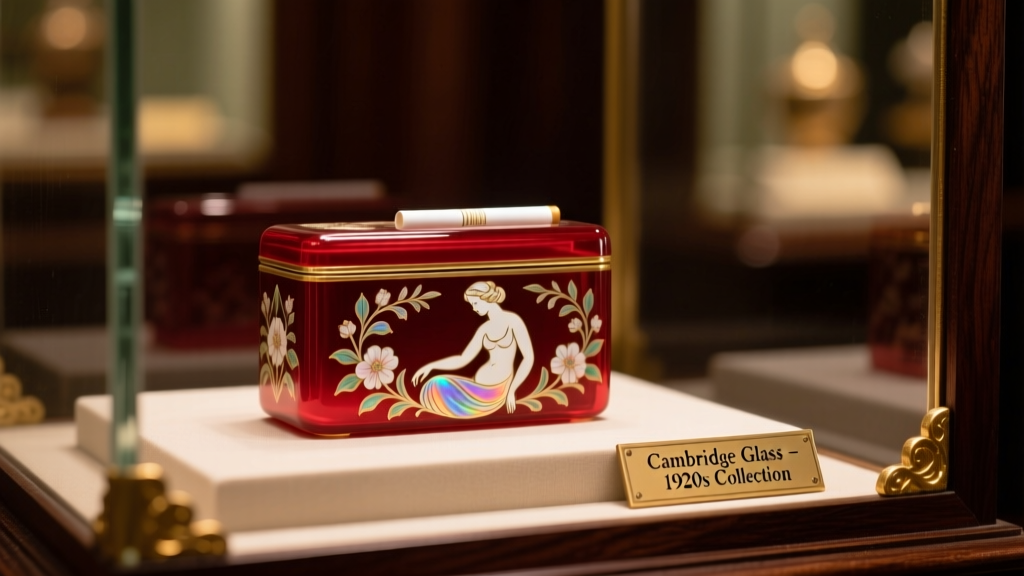
Cambridge Glass Nude Cigarette Box in Red: Authentication, History, and Market Value
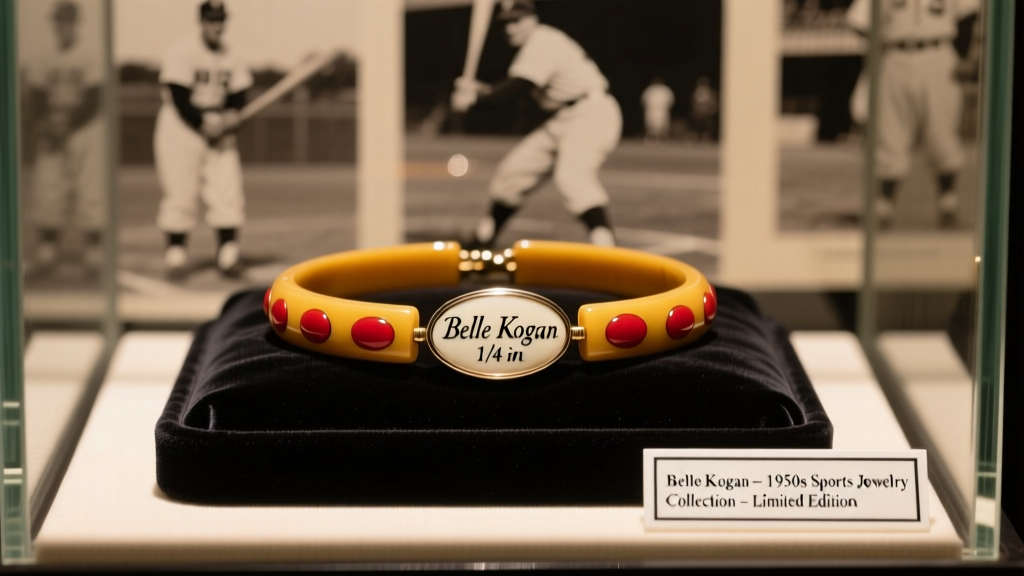
Bakelite Bracelet Authentication: Decoding the Butterscotch Oval Dots Red by Belle Kogan (1¼" Width)