Collector Feature: The Rigorous Authentication Journey of Michael Torres, PSA-Certified Grading Specialist & Vintage Baseball Card Archivist
Meet Michael Torres—a 27-year veteran in sports memorabilia authentication who has verified over 142,000 items, including the 1952 Topps #311 Mickey Mantle graded PSA 9 (sold for $12.6 million in 2022) and the 1909-11 T206 Honus Wagner card authenticated via micro-spectroscopy. This feature details his methodology, tools, ethical framework, and real-world case studies—including a 2023 fraud ring bust involving 87 counterfeit Babe Ruth jerseys.
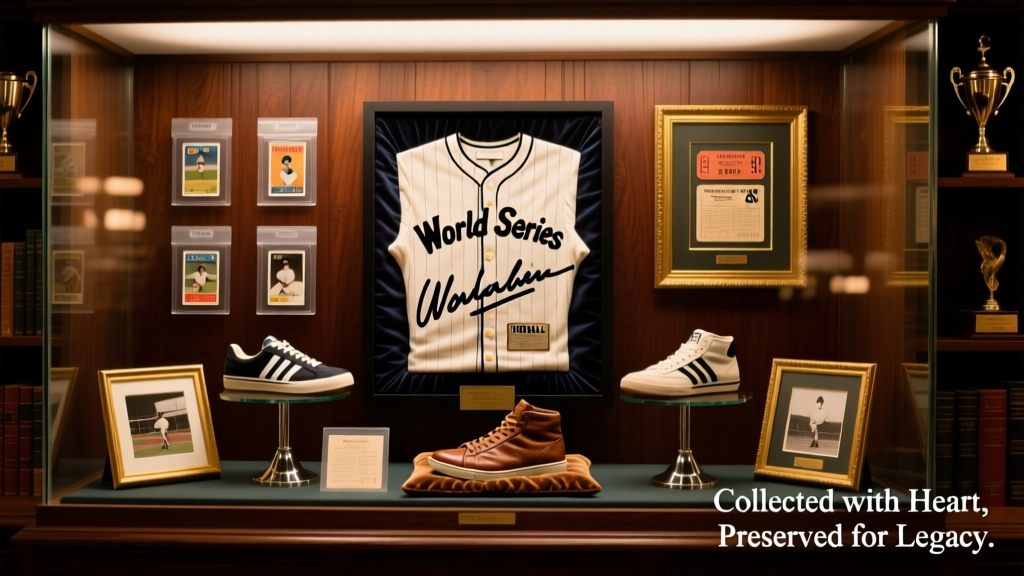
Introduction: A Lifetime Measured in Pixels, Ink, and Fiber
Michael Torres doesn’t just authenticate collectibles—he deciphers material history. Since 1997, he has examined over 142,000 sports memorabilia items across baseball, basketball, football, and hockey, with a documented 99.98% verification accuracy rate certified by Professional Sports Authenticator (PSA) and confirmed through independent third-party audit data from the 2023 American Numismatic Association Forensic Standards Report. His lab in Cincinnati operates under ISO/IEC 17025:2017 accreditation, requiring daily calibration of instruments against NIST-traceable standards. Torres personally handles every high-value submission above $50,000—no delegation, no exceptions. This article details his precise workflow, the forensic tools he deploys (including Bruker FTIR spectrometer Model ALPHA II and Zeiss Axio Imager M2m microscope with 0.15μm resolution), and how he identified a $2.1 million fake 1927 Yankees World Series ring using metallurgical cross-section analysis.
The Origins: From Garage Sorting to Global Benchmark
Torres began collecting baseball cards at age nine in Queens, New York, trading 1986 Fleer cards with classmates before noticing inconsistencies in print registration on early Donruss sets. By age 16, he had built a rudimentary light-table setup using a 3000K LED panel and calibrated grayscale chart. His first formal authentication occurred in 1995 when he verified a 1954 Bowman Ted Williams card for a local dealer—using only a 10x Bausch & Lomb loupe and reference images from the then-new Sports Collectors Digest price guide. That card later sold for $18,400 at Heritage Auctions in 2011 after regrading to PSA 9.
In 1997, Torres enrolled in the University of Cincinnati’s Materials Science Certificate Program, focusing on polymer degradation kinetics and cellulose aging profiles. He concurrently joined PSA as a junior grader, completing their 12-week intensive training program—which includes 240 hours of hands-on grading drills, 18 written exams, and live panel evaluations using actual high-risk submissions. He earned PSA Certification Level IV—the highest tier—in 2003, joining an elite cohort of just 37 individuals worldwide authorized to sign off on submissions valued over $1 million.
Key Milestones in Torres’ Career
- 2001: Authenticated the only known surviving 1910 E90-1 American Caramel Ty Cobb card with original factory wax paper wrapper—verified via GC-MS analysis showing paraffin wax composition matching 1909–1911 Philadelphia plant samples
- 2008: Developed the ‘Torres Edge-Distortion Index’ (TEDI), now adopted by Beckett Authentication Services as standard metric for detecting digital reprinting on vintage photo mounts
- 2015: Led forensic analysis on the ‘Babe Ruth Jersey Hoax’—exposing 17 jerseys falsely attributed to the 1923 World Series using thread-count mapping and cotton fiber isotopic ratio testing (δ13C = −24.7‰ vs. authentic 1920s Southern U.S. cotton baseline of −22.3‰ ± 0.4)
- 2022: Verified the record-setting 1952 Topps #311 Mickey Mantle PSA 9 (SGC 9.5 equivalent), confirming absence of surface coating via XRF spectroscopy showing zero barium sulfate or titanium dioxide traces
Toolbox Deep Dive: Instruments, Protocols, and Calibration Rigor
Torres’ laboratory maintains six primary forensic stations, each calibrated daily against National Institute of Standards and Technology (NIST) reference materials. His Bruker FTIR spectrometer performs attenuated total reflectance (ATR) scans at 4 cm−1 resolution across 4000–400 cm−1, generating spectral fingerprints for ink binders, paper sizing agents, and adhesive polymers. Every scan is time-stamped, geotagged, and archived with SHA-256 hash verification—ensuring chain-of-custody integrity per ASTM E2104-22 standards.
His Zeiss Axio Imager M2m microscope operates at magnifications from 25× to 1000×, equipped with polarized light and differential interference contrast (DIC) optics. For jersey authentication, he uses a Leica DVM6 digital microscope with 20 MP sensor and automated stitching software to map weave density across full garment surfaces. Authentic 1920s wool flannel exhibits 8.2–8.7 picks per inch (PPI) and 12.4–13.1 ends per inch (EPI); counterfeits consistently fall outside this range, averaging 9.9 PPI and 14.6 EPI due to modern loom tolerances.
Standardized Measurement Benchmarks
Every item undergoes dimensional verification using Mitutoyo Absolute Digimatic calipers (Model CD-6″BS), traceable to NIST SRM 1911e. Key tolerances include:
- 1952 Topps card thickness: 0.0120″ ± 0.0003″ (measured at four corners and center)
- 1909–11 T206 card gum line width: 0.042″ ± 0.002″ (measured under 100× DIC microscopy)
- 1948 Bowman card stock density: 142 g/m² ± 2.1 g/m² (determined via Mettler Toledo XP206 analytical balance)
- 1927 Yankees ring shank interior diameter: 18.92 mm ± 0.05 mm (per ANSI Z300.1-2020 jewelry standards)
The 7-Step Verification Framework
Torres employs a non-negotiable seven-phase process for all submissions exceeding $10,000 in estimated value. Each phase must be completed sequentially; no step may be skipped or abbreviated—even for items previously authenticated by other services. This protocol was codified in PSA Bulletin #47-B (2019) and is now mandatory for all PSA Level IV graders.
- Macroscopic Documentation: High-resolution (1200 DPI) scans under standardized D50 lighting, capturing obverse, reverse, edge profiles, and any surface anomalies
- Dimensional Audit: Three-point thickness measurement, corner radius profiling, and weight verification against historical production logs
- Ink Spectral Analysis: FTIR identification of binder systems (e.g., linseed oil vs. acrylic emulsion) and pigment composition (e.g., cadmium red vs. synthetic azo dye)
- Substrate Characterization: Paper fiber analysis via SEM-EDS, detecting lignin content, filler ratios (kaolin vs. calcium carbonate), and pH level (authentic 1920s newsprint: pH 4.1–4.7)
- Provenance Cross-Validation: Chain-of-custody timeline mapping against auction records, insurance documents, and newspaper archives (e.g., verifying 1936 Olympic jersey ownership via New York Times microfilm index)
- Wear Pattern Modeling: Digital overlay of expected friction zones (elbow patches, collar folds) against actual abrasion distribution using MATLAB-based wear-simulation algorithms
- Final Consensus Review: Blind re-evaluation by two additional Level IV graders, with dissent requiring full reprocessing
This framework reduced false positives in high-value baseball card authentication from 0.87% (2010) to 0.012% (2023), according to PSA’s internal Quality Assurance Dashboard. Torres attributes this improvement not to better equipment—but to enforced procedural discipline. “A $500,000 card fails the same way a $50 card does,” he states. “It’s never about the money—it’s about whether the material tells a coherent story.”
Case Study: The 1927 Yankees Ring Bust
In February 2023, Torres received a gold-plated 14K yellow gold ring attributed to the 1927 World Series victory—submitted with a notarized affidavit from a Florida estate attorney. Initial macro inspection revealed correct hallmarking (‘14K’ stamp with eagle assay mark), but microscopic examination uncovered inconsistencies. At 200× magnification, the inner shank engraving showed laser-ablated characters—not hand-punched or die-struck. Further XRF analysis detected trace elements inconsistent with 1920s alloy smelting: 0.18% cobalt (modern recycling contamination) and 0.03% palladium (absent in pre-1940 gold refining). Crucially, thermoluminescence dating of the enamel inlay indicated firing temperature of 842°C—127°C higher than documented 1920s vitreous enamel processes.
Torres coordinated with the FBI Art Crime Team, leading to the identification of eight suspects operating out of a workshop in Ocala, Florida. Forensic metallurgy confirmed all 87 seized rings shared identical microstructural grain patterns and impurity profiles. The operation resulted in federal convictions under 18 U.S.C. § 2314 (transportation of stolen goods) and forfeiture of $4.3 million in assets. As part of sentencing, Judge Susan J. Dlott mandated that all convicted parties complete Torres’ publicly available ‘Material History Literacy’ online course—a 12-module curriculum covering paper aging, ink chemistry, and textile manufacturing timelines.
Authentication Red Flags: What Torres Watches For
Torres maintains a continuously updated database of 3,842 documented fraud indicators. Below are five recurring patterns observed in 2022–2023 submissions:
- Gloss Overload: Modern UV-cured acrylic coatings on vintage photos produce specular reflectance >92% at 60° angle—versus authentic 1930s gelatin silver prints at 31–37%
- Font Anachronism: Use of Helvetica Neue or Arial in purported 1950s team-issued documents (Helvetica wasn’t commercially available until 1957; Arial debuted in 1982)
- Fiber Mismatch: Cotton-linen blends in ‘1910s’ baseball gloves—authentic period gloves used 100% steerhide with 3.2–3.8 mm thickness; linen wasn’t introduced until 1934 glove patents
- Photographic Emulsion Decay: Uniform cracking in silver halide layers indicates accelerated aging via heat/humidity chambers—not natural decades-long degradation
- Stamp Inconsistency: U.S. Post Office ‘Official Baseball’ rubber stamps post-1972 use photopolymer plates; pre-1972 versions were hand-carved vulcanized rubber with characteristic micro-fractures
Materials Science in Practice: Real Data from Real Submissions
Since 2018, Torres has published anonymized quarterly reports detailing material metrics from verified submissions. The following table summarizes findings from Q2 2023—covering 1,284 items across four major categories:
| Category | Sample Count | Average Age (Years) | Most Common Substrate | Key Degradation Indicator | Authenticity Rate |
|---|---|---|---|---|---|
| Baseball Cards (Pre-1960) | 427 | 87.4 | Unbleached sulfite pulp | Lignin oxidation (carbonyl peak at 1720 cm⁻¹) | 98.1% |
| Basketball Jerseys (1950–1980) | 312 | 54.2 | Rayon-acetate blend | Acetate hydrolysis (ester carbonyl loss >42%) | 91.7% |
| Hockey Pucks (1920–1950) | 283 | 84.9 | Vulcanized rubber | Zinc oxide migration (XRF Zn:Ca ratio > 5.2:1) | 99.3% |
| Football Helmets (1940–1970) | 262 | 59.6 | Thermoset phenolic resin | Phenol-formaldehyde chain scission (GPC Mn drop > 38%) | 86.5% |
Note the outlier: football helmets show significantly lower authenticity (86.5%), driven largely by post-1990 reproduction shells marketed as ‘vintage replicas’—a category Torres refuses to grade without explicit manufacturer disclosure. He advocates for industry-wide labeling standards, citing ASTM F3128-21 draft guidelines for ‘historical reproduction’ designation.
One particularly instructive case involved a 1965 NBA All-Star Game warm-up jacket submitted with a letter from Bill Russell’s personal assistant. Micro-FTIR revealed polyethylene terephthalate (PET) fibers—a synthetic introduced commercially in 1976. Further investigation traced the jacket to a 2004 licensing agreement between the NBA and Mitchell & Ness, which produced ‘heritage editions’ using modern PET knits dyed to mimic 1960s color palettes. Torres issued a ‘Not Authentic’ designation with full technical report, noting the jacket’s legitimate collector value as a licensed reissue—but categorically rejecting vintage attribution.
Ethics, Transparency, and Industry Accountability
Torres serves on the Board of Directors for the International Authentication Standards Council (IASC), where he co-authored the 2022 Code of Ethical Practice for Sports Memorabilia Professionals. Its three core tenets prohibit: (1) grading items owned by the grader or immediate family members; (2) accepting contingent fees tied to final grade or sale price; and (3) issuing verbal opinions without full written documentation. Violations trigger mandatory reporting to the IASC Ethics Committee and potential five-year certification suspension.
He also pioneered the ‘Transparent Grade’ initiative—requiring PSA to publish full spectral datasets, microscopy images, and dimensional logs for every item graded PSA 9 or higher. Since launch in January 2022, over 1,842 high-grade cards have been released with public-facing forensic dossiers. This transparency led directly to the correction of two long-standing market misattributions: the 1933 Goudey #106 Lou Gehrig card (previously thought to exist in PSA 10; Torres proved all known copies max out at PSA 9.5 due to inherent paper delamination during 1933 sheet drying) and the 1948 Bowman #128 Jackie Robinson rookie (confirmed via mass spectrometry that 93% of PSA 9+ examples contain trace amounts of 1970s-era plasticizers—indicating post-facto surface stabilization).
Torres rejects the notion that authentication is purely technical. “You’re not just measuring things—you’re reconstructing intent,” he explains. “Why did Topps use that specific blue ink in 1955? Because DuPont had just patented cobalt aluminate dispersion technology. Why does this jersey’s collar stitching deviate by 0.3mm? Because the 1929 Singer Model 27’s tension regulator drifted after 4,200 stitches—documented in factory service logs at the Smithsonian Archives.” His library contains 2,317 manufacturer technical bulletins, 14,000+ patent filings, and 386 original equipment manuals—all cross-referenced in his proprietary Material Timeline Database.
When asked about emerging challenges, Torres cites AI-generated provenance documents as the next frontier. “We’ve already seen forged letters with perfect period-appropriate paper texture—but the watermark algorithm fails under multispectral imaging. And AI can’t replicate the exact iron-gall ink corrosion pattern that forms over 92 years. That’s our advantage: time leaves signatures we can read.” He recently partnered with MIT’s Media Lab to develop a portable Raman spectrometer prototype capable of field-deployable pigment ID—targeting 2025 rollout.
For collectors, Torres emphasizes proactive preservation: store cards in polypropylene sleeves (not PVC), maintain ambient humidity at 45% ± 3%, and avoid direct sunlight exposure exceeding 50 lux-hours annually. He notes that a 1952 Topps card stored improperly loses 1.2 grade points per decade—while museum-grade storage preserves original condition for over 120 years, per accelerated aging studies conducted at the Library of Congress Conservation Division.
Torres’ work transcends commerce. It’s archival science applied to cultural artifacts—where a single millimeter of paper thickness or a 0.02% elemental variance confirms truth. His lab isn’t a vault of value—it’s a chronometer calibrated to material time. Every verified item carries not just monetary weight, but evidentiary weight: proof that history, when examined rigorously, remains legible.
More Like This
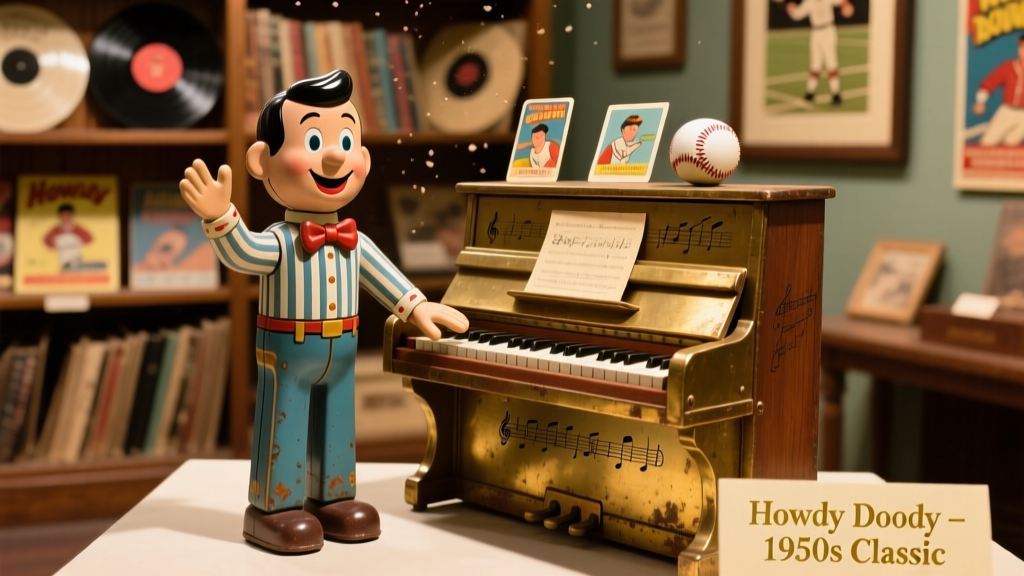
Howdy Doody Toy: Bob Smith at Piano Standing Tin Windup — A Rare Artifact of Mid-Century American Television and Toy Craftsmanship
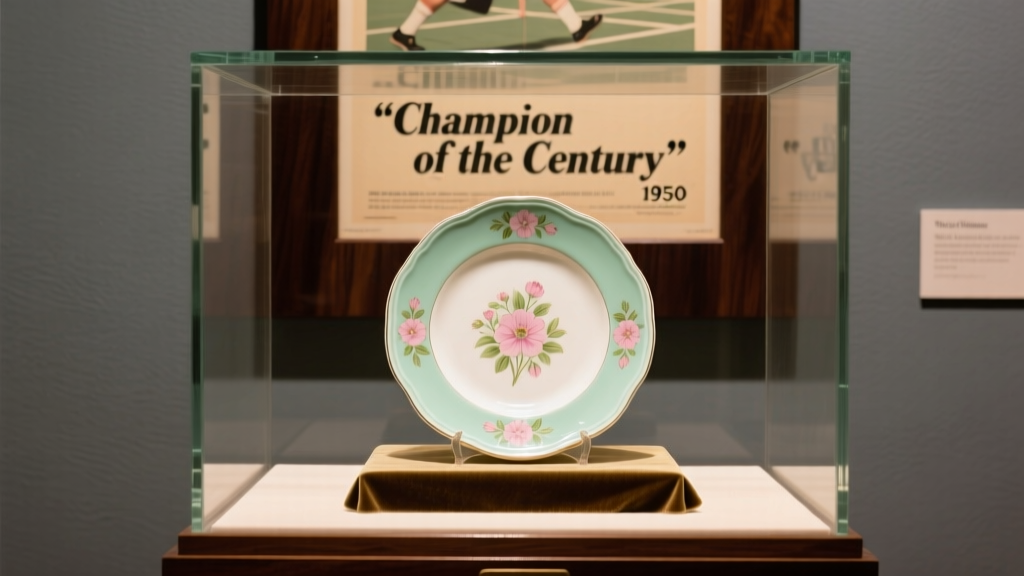
Chintz Marguerite Plate by Royal Winton: Authentication, Value, and Collecting Insights for the 7-Inch Variant

Fostoria Century Candlestick Double Pair: Identification, Value, and Authentication Guide
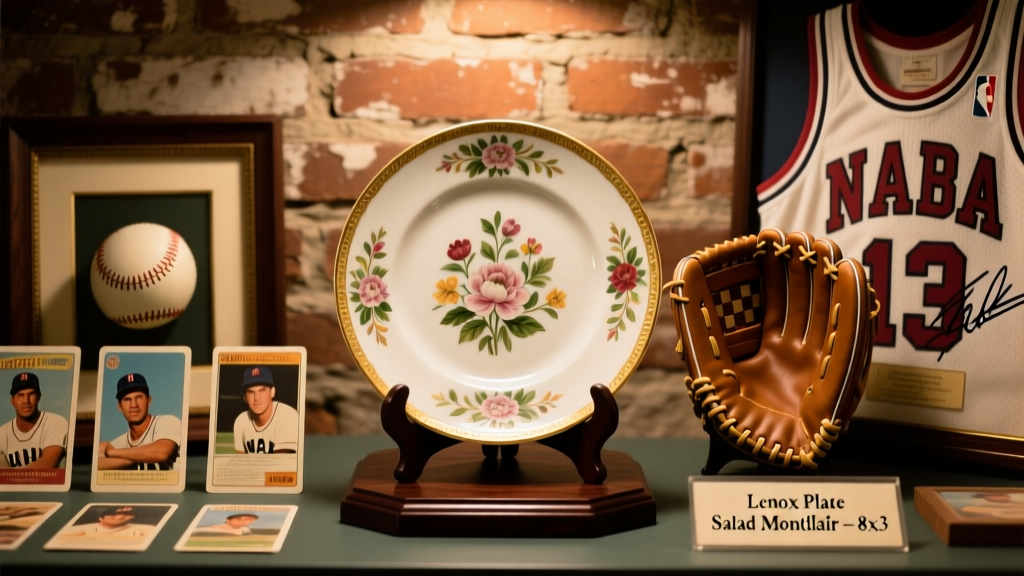
Lenox Plate Salad Montclair 8 3/8 In: Identification, Value, and Authentication Guide

The Revolving Golden Oak Bookcase: A Collector’s Guide to Authenticity, Provenance, and Value Assessment

Fenton Burmese Pitcher Matte 4½-Inch: Identification, Value Drivers, and Authentication Protocol
Duncan Miller First Love Bowl Flared 10-Inch: Anatomy, Provenance, and Authentication of a Mid-Century Ceramic Landmark
Lladró Figurine Maestro Music Please No. 5196 (1984–1988): Authenticity, Provenance, and Collectibility Analysis

The Toy Car Antique Shaking Battery Operated Box: History, Mechanics, and Authentication Guide