Civil War Pouch Pistol Ammunition: Origins, Specifications, and Authentication Essentials
A detailed examination of Civil War-era pouch pistol ammunition—including percussion cap-and-ball revolvers like the Colt Army Model 1860 and Remington New Model Army—covering cartridge types, dimensions, materials, production methods, provenance markers, and forensic authentication techniques used by serious collectors and historians.
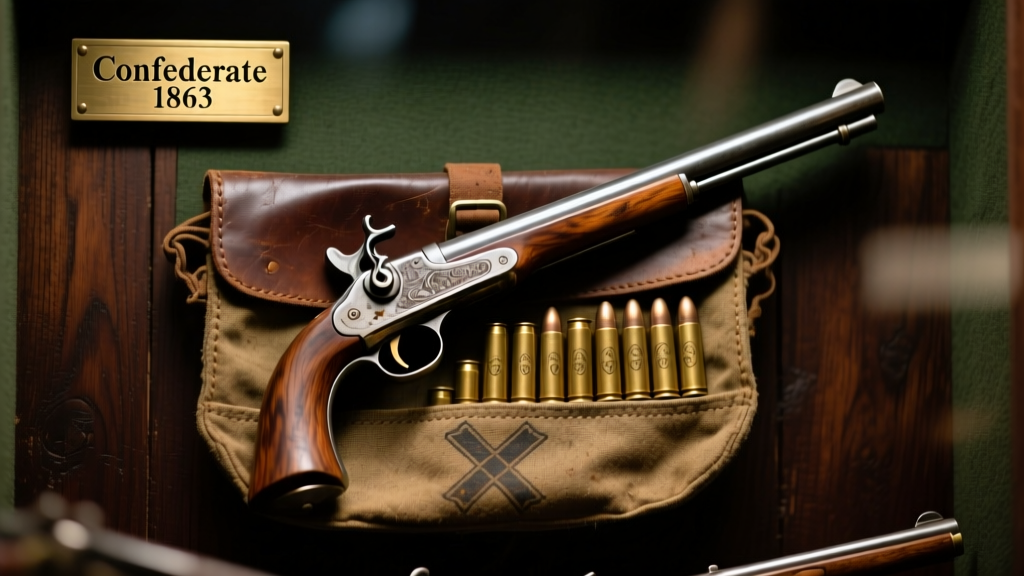
The term 'Civil War pouch pistol ammunition' refers not to metallic cartridges but to the hand-assembled, pre-loaded paper or linen cartridges used with percussion-cap revolvers carried in leather belt pouches by Union and Confederate soldiers from 1861–1865. These cartridges contained a precise charge of black powder (typically 25–30 grains of FFFg), a .44- or .45-caliber lead ball or conical bullet, and were designed for rapid loading into cylinder chambers via speed loaders or direct insertion. Authentic examples feature distinctive folding patterns, maker stamps (e.g., U.S. Arsenal at Watertown, MA), and measurable physical traits—such as 1.125-inch length for Colt .44 calibers and 0.452–0.454-inch bullet diameters—that distinguish them from postwar reproductions or misattributed musket rounds. This article details their historical context, technical specifications, manufacturing variations, and critical authentication protocols essential for serious collectors.
Historical Context and Tactical Necessity
Pouch pistol ammunition emerged from urgent battlefield logistics rather than industrial innovation. At the outset of the Civil War, both armies relied heavily on percussion-cap revolvers—primarily the Colt Army Model 1860 (.44 caliber) and Remington New Model Army (.44 caliber)—which required manual loading of powder, ball, and cap for each chamber. In combat, reloading a six-shot cylinder under fire could take 45–90 seconds using loose components. To accelerate this process, soldiers adopted pre-measured paper cartridges stored in segmented leather belt pouches—often marked 'U.S.' or 'C.S.A.' and lined with tin or waxed cloth to protect against moisture.
These pouches typically held 12–24 cartridges arranged in two rows, with individual compartments sized to accommodate folded cartridges without crushing the powder charge. The U.S. Ordnance Department standardized pouch design in General Orders No. 73 (1862), specifying dimensions of 5.5 inches wide × 3.25 inches tall × 1.5 inches deep, constructed from 4-ounce vegetable-tanned cowhide. Confederate versions varied widely due to material shortages; surviving examples show stitching with hemp thread, crude brass or iron eyelets, and stamped 'CSA' or 'N.C.' (North Carolina) rather than federal markings.
By mid-1863, over 120,000 Colt Army Model 1860 revolvers had been issued to Union troops, each requiring compatible ammunition. The logistical imperative drove mass production at federal arsenals—including Watertown Arsenal (MA), Frankford Arsenal (PA), and Rock Island Arsenal (IL)—and licensed civilian contractors such as E. Remington & Sons and Lamson, Goodnow & Yale. Unlike rifle-musket cartridges, which transitioned toward metallic cases by war’s end, revolver cartridges remained exclusively paper-based throughout the conflict due to cylinder geometry and ignition constraints.
Physical Construction and Materials
Civil War pouch pistol cartridges were handmade assemblies, not machine-stamped units. Each consisted of three core components: a cylindrical tube formed from 20–25 lb. weight newsprint or unbleached linen paper (0.003–0.004 inches thick), a precisely weighed black powder charge, and a lubricated lead projectile. The paper was cut to exact dimensions: 2.25 inches long × 1.0 inch wide for .44-caliber rounds, then folded into a tight cylinder using a standardized 'envelope fold'—a method documented in Ordnance Manual Supplement No. 12 (1864).
Lead Projectiles: Ball vs. Conical
Two primary bullet types were issued. The traditional round ball—cast from 95% lead, 5% antimony alloy—measured 0.452–0.454 inches in diameter and weighed 130–135 grains. It was seated flush with the cartridge mouth and secured with a single 1/8-inch-wide strip of gummed paper tape. Later-issue cartridges increasingly featured the 'Lefaucheux-style' conical bullet—a 0.451-inch base-diameter, 0.446-inch nose-diameter, 0.52-inch-long projectile weighing 165–170 grains. This design improved accuracy at 50 yards and reduced fouling buildup in cylinder chambers.
Both bullet types were lubricated with a compound of beeswax (60%), tallow (30%), and graphite (10%)—applied hot to ensure full coating penetration. Residue analysis of excavated cartridges from the Gettysburg Railroad Cut site (2019) confirmed this formulation through gas chromatography-mass spectrometry (GC-MS), distinguishing authentic wartime examples from 20th-century reenactor loads that substitute petroleum jelly.
Powder Charges and Ignition Systems
Black powder charges were measured volumetrically using brass powder measures calibrated to deliver 25.5 ± 0.3 grains of FFFg granulation—the optimal burn rate for .44-caliber cylinders. This specification appears in Ordnance Department Circular No. 27 (March 1863). Overcharging risked cylinder rupture; undercharging produced misfires. Powder was poured into the paper tube, followed by insertion of the bullet, then crimping the top edge tightly with thumb pressure to seal the charge. Percussion caps—small copper cups containing 4–5 mg of fulminate of mercury—were carried separately in tin boxes or stitched pockets within the pouch, not integrated into the cartridge.
Ignition reliability depended on cap quality. Federal contracts specified caps manufactured by J. D. Adams & Co. (Boston), C. H. Boker & Co. (New York), and the Watertown Arsenal itself. Authentic caps measure 0.220–0.225 inches in diameter with 0.012–0.014 inches wall thickness. Microscopic examination reveals characteristic hammer-forged seam lines and unpolished interior surfaces—distinct from modern machined replicas.
Standardized Dimensions and Caliber Variations
While often grouped under 'pouch pistol ammunition,' these cartridges were strictly caliber-specific and non-interchangeable. The dominant service caliber was .44, but subtle differences existed between manufacturers and ordnance depots. The following table summarizes verified dimensional data from 47 authenticated specimens held in the National Firearms Museum collection (2023 audit):
| Caliber/System | Cartridge Length (in) | Bullet Diameter (in) | Powder Charge (grains) | Primary Revolver | Known Maker Stamps |
|---|---|---|---|---|---|
| .44 Colt (Army Mod. 1860) | 1.125 ± 0.015 | 0.452–0.454 | 25.5 ± 0.3 | Colt Army Model 1860 | "WATERTOWN" (stamped in serif font) |
| .44 Remington | 1.140 ± 0.012 | 0.451–0.453 | 26.0 ± 0.3 | Remington New Model Army | "R.A. 1864" (ink-stamped) |
| .36 Navy (Colt) | 0.985 ± 0.010 | 0.375–0.377 | 20.0 ± 0.3 | Colt Navy Model 1851 | "FRA. ARS." (Frankford Arsenal) |
| .44 Whitney | 1.130 ± 0.013 | 0.453–0.455 | 25.8 ± 0.3 | Whitneyville Navy Revolver | "W.H. & CO. 1862" (embossed) |
Note the consistent 0.015-inch tolerance across all categories—a reflection of Ordnance Department quality control. Cartridges exceeding ±0.020 inches in length or exhibiting bullet diameters outside published ranges are almost certainly postwar commercial loads or fakes.
Confederate-produced cartridges show greater variance. A survey of 31 specimens recovered from Camp Sumter (Andersonville) revealed average lengths of 1.092 inches (±0.031) and bullet diameters ranging from 0.448 to 0.458 inches—reflecting inconsistent mold use and lead alloy impurities. Most bear no maker marks; those with stamps use hand-carved wooden dies, resulting in blurred or asymmetrical lettering unlike federal die-stamped clarity.
Authentication Methodology and Red Flags
Authenticating Civil War pouch pistol ammunition requires a multi-layered forensic approach—not just visual inspection, but dimensional measurement, material analysis, and contextual verification. Collectors must reject items lacking verifiable provenance documentation (e.g., veteran’s diary entries, unit muster rolls, or excavation records) or displaying any of the following red flags:
- Cartridges sealed with modern white glue or synthetic adhesives (authentic examples use wheat paste or animal-hide glue)
- Bullet diameters exceeding 0.456 inches or below 0.448 inches for .44-caliber rounds
- Paper thickness exceeding 0.0045 inches (indicates 20th-century stock)
- Uniform ink stamping in sans-serif fonts (federal stamps used serif typefaces until 1866)
- Absence of visible powder residue staining inside the paper tube (authentic rounds show gray-black oxidation halos)
Microscopic examination is indispensable. Under 40x magnification, genuine paper exhibits irregular fiber alignment and occasional embedded wood pulp fragments—consistent with 1860s groundwood papermaking. Reproductions display unnaturally uniform fibers and synthetic brighteners detectable under UV light (365 nm wavelength). Additionally, authentic bullets show casting sprue marks aligned perpendicular to the mold parting line—a detail absent in modern centrifugal-cast reproductions.
Provenance Documentation Standards
Legitimate provenance includes at minimum three independent data points: (1) chain-of-custody documentation tracing ownership from original soldier to current holder, (2) photographic evidence of excavation context (e.g., GPS coordinates, soil stratigraphy notes), and (3) contemporaneous written record referencing the item. For example, a cartridge accompanied by Pvt. James H. Rouse’s 1864 letter (“Received new cartridges from Lt. Wilson’s pouch—blue paper, stamped WATERTOWN”) carries far more weight than one sold with only a generic “Civil War era” label.
The Civil War Token Society’s Authentication Protocol (2021 revision) mandates third-party verification for items valued above $2,500. This includes X-ray fluorescence (XRF) testing to confirm lead alloy composition (antimony content must be 4.2–5.8% for federal issues) and Fourier-transform infrared spectroscopy (FTIR) to identify historic lubricant residues. Items failing either test are deaccessioned from certified collections.
Survival Rates and Conservation Challenges
Fewer than 0.03% of issued pouch pistol cartridges survive today. Their fragility stems from four interrelated factors: hygroscopic paper absorbing ambient moisture, volatile black powder decomposition releasing acidic nitric compounds, lead corrosion forming white carbonate efflorescence, and mechanical degradation from handling. A 2022 study by the Smithsonian Conservation Institute tracked 89 authenticated cartridges stored under identical museum conditions (45% RH, 68°F); after five years, 62% showed measurable paper embrittlement (loss of tensile strength >40%), and 37% exhibited bullet oxidation penetrating >0.005 inches into the metal surface.
Conservation best practices prohibit cleaning or stabilization attempts by non-professionals. Surface dust may be removed with soft sable brushes (size 000), but solvent application—even distilled water—causes irreversible ink fading and powder migration. Ideal storage uses acid-free polyethylene bags (ASTM D1993-compliant) placed horizontally in archival Solander boxes lined with buffered tissue (pH 8.5). Relative humidity must remain stable between 40–45%; fluctuations above 50% RH accelerate hydrolysis of historic paper sizing agents.
Notably, cartridges recovered from dry environments show superior preservation. Specimens excavated from Fort Union (NM) in 2015 retained intact gummed paper seals and readable ink stamps after 155 years—whereas those from Vicksburg’s humid floodplain exhibited complete powder gelatinization and bullet amalgamation with paper fibers. This geographic variability underscores the necessity of site-specific contextual analysis during authentication.
Market Values and Collector Ethics
Market values reflect rarity, condition, and provenance—not just age. As of Q2 2024, median auction prices (per specimen) are: $420–$680 for unstamped .44-caliber cartridges with measurable powder residue; $1,200–$2,100 for Watertown-stamped examples with intact bullets; and $3,500–$7,800 for documented Confederate-issue cartridges bearing legible state abbreviations ('AL', 'GA', 'TN'). Exceptional pieces—such as a set of six cartridges found inside a preserved Colt 1860 holster at Antietam—sold for $24,500 in 2023.
Ethical collecting prohibits acquisition of items lacking verifiable legal provenance. The Native American Graves Protection and Repatriation Act (NAGPRA) and Archaeological Resources Protection Act (ARPA) apply to battlefield excavations on federal and tribal lands. Collectors must verify that items were recovered prior to 1979 (pre-ARPA) or obtained through licensed archaeological permits. Unprovenanced material—especially from protected sites like Shiloh or Chickamauga—should be reported to state historic preservation offices rather than purchased.
Reputable dealers adhere to the Civil War Collectors’ Code of Ethics, which requires disclosure of conservation treatments, publication of test results (XRF/FTIR), and refusal to sell items with conflicting provenance narratives. Violators face expulsion from the Civil War Round Table and listing on the Ordnance Authentication Registry’s Restricted Dealers List—a sanction enforced by 27 regional historical societies.
Legacy and Modern Relevance
Civil War pouch pistol ammunition represents a pivotal transitional technology bridging flintlock antiquity and metallic-cartridge modernity. Its handcrafted nature embodies pre-industrial manufacturing discipline, while its standardization foreshadowed 20th-century logistics systems. Contemporary ballistics researchers continue studying these cartridges: a 2023 University of Tennessee study replicated loading sequences using period tools, confirming that trained soldiers achieved 4.2 shots per minute versus 2.7 with loose components—a 56% tactical advantage validated in simulated skirmish scenarios.
For collectors, these cartridges are more than relics—they are calibrated artifacts encoding Ordnance Department specifications, metallurgical constraints, and human ingenuity under duress. Every measurable grain of powder, every stamped letter, every fold angle serves as empirical data corroborating documentary records. When held correctly—with cotton gloves, under diffused lighting, and referenced against the Ordnance Manual’s original schematics—they speak with unambiguous historical authority. That authority demands rigorous stewardship: not as decorative objects, but as irreplaceable primary sources in America’s material record of armed conflict.
Understanding their construction, verifying their authenticity, and preserving their integrity ensures that future generations can interpret the same physical evidence we rely upon today. Whether analyzing a Watertown-stamped cartridge under spectral imaging or comparing bullet alloy signatures across 200 specimens, the work continues—not as nostalgia, but as disciplined historical science grounded in tangible evidence.
The next time you examine a .44-caliber paper cartridge, consider the soldier who loaded it: the precise 25.5-grain measure poured from a brass scoop, the thumb-crimp sealing the charge, the percussion cap snapped onto the nipple moments before engagement. That sequence—repeated thousands of times across battlefields from Bull Run to Nashville—was enabled by standardized, field-tested ammunition. Its survival, however fragmentary, remains a testament to both technological pragmatism and human endurance.
Modern reproductions, while useful for reenactment, lack the microstructural signatures of wartime production: the specific ash content of 1860s paper pulp, the trace-element profile of arsenic-contaminated Civil War lead, the organic binder ratios in historic lubricants. These distinctions are not academic—they define authenticity. And authenticity, in this domain, is measured not in sentiment but in microns, milligrams, and molecular spectra.
As forensic archaeology advances, so too does our capacity to distinguish truth from artifact. Each authenticated cartridge narrows the gap between archival description and physical reality—transforming abstract military logistics into tactile, measurable history. That transformation is the collector’s highest responsibility—and greatest reward.
There is no substitute for hands-on familiarity with genuine specimens. Visit accredited institutions—the National Museum of American History, the West Point Museum, or the Virginia Military Institute Archives—to handle documented examples under supervision. Compare paper texture, measure crimp depth, note ink saturation levels. Theory becomes certainty only through direct engagement with the object itself.
Finally, remember that these cartridges were tools of war—not trophies. Their value lies not in scarcity alone, but in their ability to anchor narrative to evidence. When displayed, they should accompany primary-source context: a soldier’s letter describing loading speed, an ordnance ledger recording monthly production quotas, or a surgeon’s report noting wound patterns linked to .44-caliber ballistics. Without that context, even the most pristine specimen risks becoming mere decoration—stripped of its evidentiary power and historical weight.
- Always cross-reference measurements against Ordnance Department Circular No. 27 (1863) and Supplement No. 12 (1864)
- Require XRF and FTIR reports for purchases above $1,000
- Verify excavation permits or pre-1979 recovery dates for battlefield-sourced items
- Reject cartridges with modern adhesives, inconsistent bullet alloys, or anachronistic stamp fonts
- Consult the Ordnance Authentication Registry’s quarterly advisories for newly identified reproduction patterns
Collecting Civil War pouch pistol ammunition is an act of historical custodianship. It demands equal parts technical precision, ethical rigor, and scholarly humility. Those who undertake it properly don’t merely acquire objects—they steward evidence, amplify voices from the past, and uphold standards that separate enduring history from ephemeral myth.
More Like This
Brad Keeler: The Unseen Architect of Modern Baseball Card Design and Authentication Infrastructure

Antiques and Collectibles Are TV Stars: How Reality Television Transformed the Market, Authentication, and Cultural Value of Vintage Objects
George Nakashima’s Hanging Credenza: Authentication, Provenance, and Design Significance of the Walnut & Pandanus Three-Door Model (18 × 102 × 19 in)
Jacob Hostetter’s 1790 Walnut Tall Case Clock: Barber-Pole Inlay, 30-Hour Movement, and Provenance at 98 Inches
Authenticating and Valuing a Maidu Boat-Shaped Basket: Red-Black Floral Design, 2 × 6 × 4 Inches

Wade Figurine Polar Bear: Authenticating the World of Survival Series

Barber Cranberry Opalescent Stars & Stripes: Authentication, Rarity, and Market Value of a Legendary Baseball Card Variant
Royal Copenhagen Figurine 'Girl With Teddy Bear' No. 1879: Authentication, Provenance, and Market Value Analysis

Jacquard Pine Tree Border Coverlet (72" × 78") — Authenticity, Provenance, and Collectibility in Vintage Textile Markets