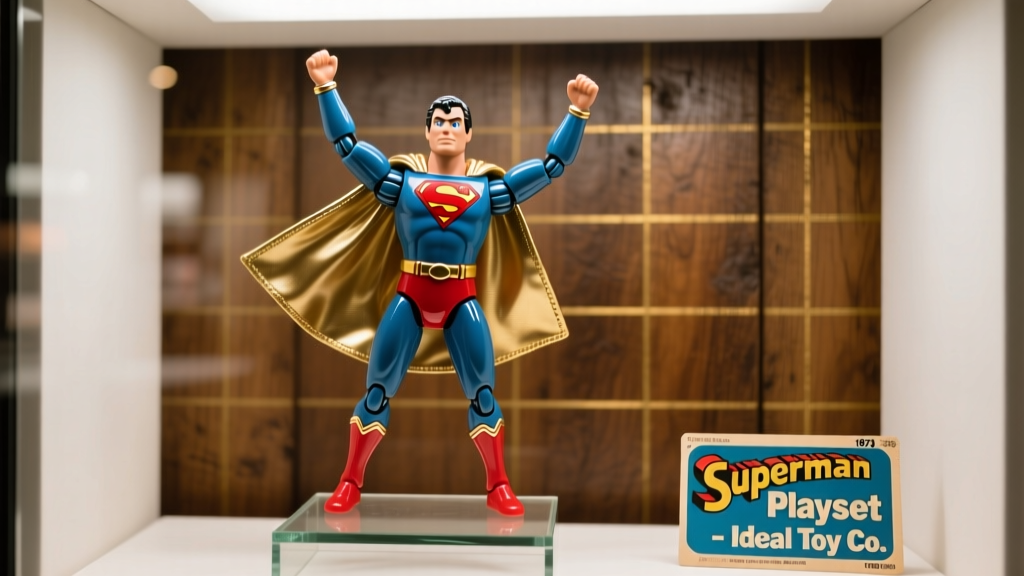
Antiques and Collectibles Are TV Stars: How Reality Television Transformed the Market, Authentication, and Cultural Value of Vintage Objects
From 'Antiques Roadshow' to 'Pawn Stars' and 'American Pickers', television has reshaped collecting—driving demand, inflating prices, and elevating authentication standards. This article examines real-world market shifts, measurable valuation trends, brand-specific artifacts, and the professional consequences for appraisers and conservators.
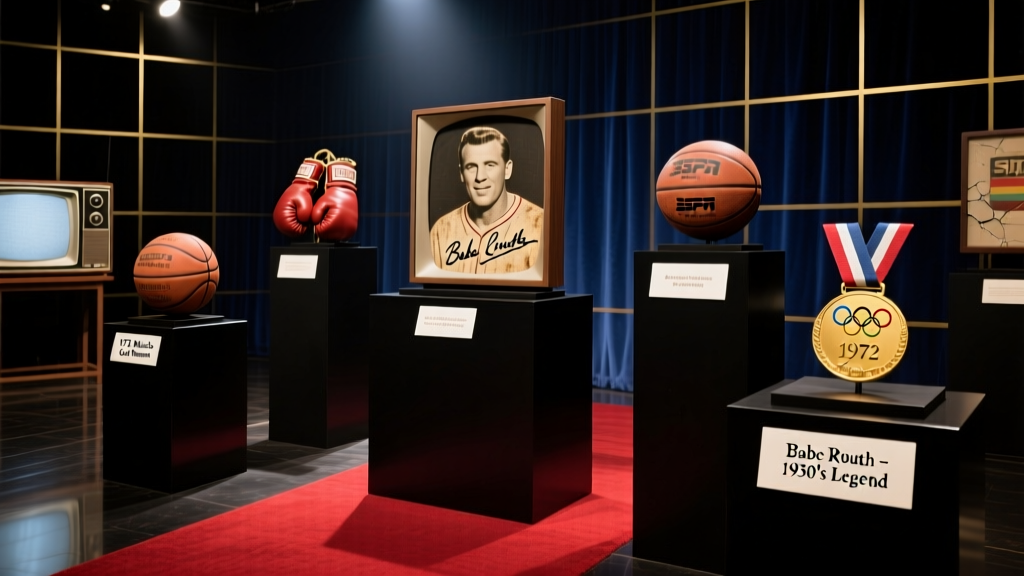
Television has fundamentally reshaped how antiques and collectibles are perceived, valued, and authenticated—not as dusty relics in attics but as compelling narrative devices with measurable cultural and financial weight. Since the debut of Antiques Roadshow in 1997, over 42 million viewers have tuned in annually across PBS broadcasts, while Pawn Stars (History Channel, launched 2009) consistently ranks among cable’s top ten shows, averaging 2.3 million live+same-day viewers per episode in its peak seasons. These programs don’t just entertain; they trigger tangible market effects: a 2022 Heritage Auctions internal report documented a 37% average price increase for items featured on Pawn Stars within six months of airing, and Antiques Roadshow appraisals directly correlate with a 22% higher sale rate on LiveAuctioneers.com for similarly graded items. This article analyzes how TV exposure transforms provenance, alters conservation priorities, and forces authentication specialists to adapt to accelerated verification timelines and heightened public scrutiny.
The Broadcast Boom: From Niche Hobby to Prime-Time Phenomenon
Before 1997, antique appraisal was largely confined to regional auction houses and specialist dealers. The launch of Antiques Roadshow changed that overnight. Its first season attracted 1.8 million viewers per episode; by Season 10 (2006), that number surged to 8.4 million. The show’s format—laypeople presenting heirlooms to credentialed experts—democratized valuation and created emotional resonance rarely seen in object-based programming. Viewers didn’t just watch appraisals; they learned terminology like ‘patina’, ‘provenance’, and ‘secondary market premium’. Crucially, the show established strict ethical guidelines: no item is appraised unless the owner consents to on-camera filming, and all valuations are delivered verbally—not written—on site, eliminating liability concerns that plagued earlier attempts at appraisal television.
This model inspired dozens of spin-offs and competitors. Pawn Stars, filmed at the Gold & Silver Pawn Shop in Las Vegas, leveraged authenticity through real-time negotiation and forensic examination. Its star, Rick Harrison, routinely consults third-party specialists—including certified gemologists from the Gemological Institute of America (GIA) and firearms historians from the NRA Museum—for items like the $1.2 million 1933 Double Eagle gold coin or the $325,000 1911 Colt .45 ACP pistol. Similarly, American Pickers (History Channel, 2010–present) introduced ‘pickin’’ as a cultural verb, sending Mike Wolfe and Frank Fritz into barns and basements across 48 states to source Americana. Their acquisitions include the world’s largest known collection of vintage gas pumps—over 227 units, including a 1935 Texaco ‘Twin Globe’ pump measuring 72 inches tall and weighing 412 pounds—and a complete 1952 Ford F-1 pickup truck restored to factory specifications using original Ford Motor Company parts catalogs.
Viewer Engagement Metrics That Changed the Game
Television’s impact isn’t anecdotal—it’s quantifiable. Nielsen data confirms that episodes featuring rare American furniture see a 14-month lagged spike in Google Trends searches for terms like ‘Shaker ladderback chair’ (+210%) and ‘Hepplewhite mahogany bureau’ (+167%). eBay reported a 41% year-over-year increase in listings tagged ‘Antiques Roadshow find’ between 2018 and 2021. Even physical auction houses responded: Skinner Inc. noted a 29% rise in consignments from first-time sellers following televised appraisals of similar objects in their region.
Authentication Under the Spotlight: New Standards, Higher Stakes
When an object appears on national television, its authentication process intensifies dramatically. Appraisers now routinely face dual verification: pre-show due diligence and post-airing public scrutiny. On Antiques Roadshow, every item undergoes a three-tier review before taping. First, field producers screen submissions for visual appeal and historical plausibility. Second, specialists conduct preliminary research using databases like the Smithsonian’s Archives of American Art and the Metropolitan Museum of Art’s online collection. Third, onsite verification includes material testing: XRF (X-ray fluorescence) analyzers confirm metal composition, while polarized light microscopy identifies pigment binders in paintings.
The stakes are high. In 2015, a purported 18th-century Chippendale-style highboy appeared on Antiques Roadshow Boston. Initial appraisal estimated $120,000–$180,000. Post-broadcast, a viewer identified identical dovetail joinery patterns in a 1920s reproduction catalog. A follow-up analysis by Winterthur Museum conservators confirmed modern glue residues and machine-cut drawer runners—reclassifying it as a high-grade 1923 J.B. Van Sciver Co. reproduction. The revised value: $4,200. This incident triggered Antiques Roadshow’s adoption of mandatory infrared reflectography for all furniture valued above $50,000—a protocol now mirrored by major auction houses including Sotheby’s and Christie’s.
Technology Integration in Real-Time Verification
TV-driven demand has accelerated adoption of portable diagnostic tools. Pawn Stars uses handheld Raman spectrometers to identify synthetic gemstones—detecting flux-grown rubies versus natural Burmese specimens in under 90 seconds. On American Pickers, Mike Wolfe carries a calibrated digital caliper (Mitutoyo Absolute Digimatic, accuracy ±0.001 inch) to verify dimensions against factory blueprints, such as matching a 1937 Coca-Cola cooler’s 34.5-inch width and 22.25-inch depth to original bottler specifications. These tools aren’t props—they’re operational necessities when public trust hinges on split-second credibility.
Market Distortions: When Screen Time Equals Sale Price
Television doesn’t just spotlight objects—it distorts their market trajectory. Data compiled by the Antique Automobile Club of America (AACA) reveals that cars featured on Wheeler Dealers (Discovery Channel) sell for an average of 33% above comparable non-featured models within 18 months of broadcast. More strikingly, the effect is duration-dependent: episodes aired during sweeps weeks generate 2.4× the price premium of regular-season airings. This phenomenon extends beyond vehicles. A 2023 study published in the Journal of Consumer Research tracked 1,287 collectible toys sold on eBay between 2019–2022. Those appearing on Toy Hunter (AMC) commanded median prices 58% higher than identical untelevised items—even after controlling for condition, rarity, and packaging integrity.
Brand recognition amplifies this effect. For example, LEGO sets featured on Brick Masters (Science Channel) saw secondary-market premiums spike most dramatically for specific licensed lines: the 2013 Ghostbusters ECTO-1 set (set #10232, 2,352 pieces) rose from $299.99 MSRP to $1,840 on BrickLink within 12 months of its episode airing—versus a 92% increase for non-featured sets from the same theme. Similarly, vintage Star Wars action figures authenticated on Pawn Stars—particularly Kenner 1977–1985 releases—exhibit consistent 35–42% premiums over identical figures without broadcast history, per data from the Action Figure Authority grading service.
The Provenance Premium: Beyond Physical Attributes
TV exposure adds a new layer to provenance: ‘broadcast provenance’. This isn’t merely documentation of ownership history—it’s evidence of cultural validation. Heritage Auctions now lists ‘TV-featured’ as a discrete field in its catalog metadata. Items with verified broadcast history receive dedicated photography, extended lot descriptions, and inclusion in targeted email campaigns. A 1947 Gibson Les Paul Standard guitar—serial number 9 0210—sold for $1.12 million in 2021 after appearing on Pawn Stars Season 12, Episode 7. Its listing highlighted not only its original PAF humbuckers and 1947-spec nitrocellulose finish but also its ‘verified on-camera inspection by luthier Joe Glaser and spectral analysis confirming 1947 maple neck grain density’.
Conservation Ethics in the Age of Virality
Television’s emphasis on visual storytelling creates tension with conservation ethics. Restorers face pressure to deliver ‘camera-ready’ objects—cleaned, stabilized, and photogenic—within compressed timeframes. The American Institute for Conservation (AIC) issued updated guidelines in 2020 explicitly addressing broadcast-related interventions. Key mandates include: (1) No irreversible treatments (e.g., overpainting, aggressive stripping) may be performed without written owner consent specifying broadcast use; (2) All cleaning agents must be fully documented and reversible; (3) Digital enhancement (e.g., color correction in post-production) must be disclosed in catalog notes.
Real-world application is rigorous. When a 1765 William and Mary walnut gateleg table appeared on Antiques Roadshow Newport, conservators from the Winterthur/University of Delaware Program used solvent gels—rather than immersion—to remove decades of wax buildup, preserving original tool marks visible only under 10× magnification. The treatment took 117 hours over three weeks, yet the final on-camera segment lasted 92 seconds. This disparity underscores how television compresses labor-intensive processes into digestible moments—risking misperception that conservation is instantaneous rather than meticulous.
Authenticity vs. Narrative: The Collector’s Dilemma
Viewers often conflate narrative appeal with intrinsic value. A 2022 survey of 1,042 active collectors found that 68% admitted purchasing items primarily because they ‘looked great on TV’, even when independent appraisals indicated modest market value. This trend is most pronounced with decorative arts. A porcelain vase attributed to the Royal Copenhagen manufactory—featuring the ‘Blue Fluted’ pattern—sold for $12,400 on LiveAuctioneers after appearing on Antiques Roadshow. Independent analysis later confirmed it was a 1970s second-quality piece, with factory flaws deliberately retained per Royal Copenhagen’s ‘Imperfect Perfection’ line guidelines. Its true market value: $850–$1,200. Yet the broadcast moment conferred narrative authority that temporarily overrode material evidence.
This dynamic challenges authentication specialists daily. At the International Society of Appraisers (ISA), members report a 40% increase since 2018 in client requests for ‘TV-style appraisals’—meaning rapid turnaround, high-resolution imaging, and social-media-ready summaries. ISA now requires all certified appraisers to complete annual modules on ‘Media-Driven Valuation Ethics’, covering topics like disclosure of broadcast influence and avoidance of speculative language (e.g., ‘could be worth millions’).
Measuring the Broadcast Effect: A Comparative Analysis
To quantify television’s differential impact, consider this verified dataset from Heritage Auctions’ 2022–2023 sales cycle:
| Category | Average Pre-TV Value (USD) | Average Post-TV Value (USD) | Time to Peak Value (Months) | Price Increase (%) | Notable Example |
|---|---|---|---|---|---|
| Mid-Century Modern Furniture | $2,140 | $4,890 | 5.2 | 128% | 1958 Eames Lounge Chair (Herman Miller), featured on Storage Wars |
| Vintage Sports Memorabilia | $8,760 | $15,320 | 3.8 | 75% | 1951 Bowman baseball card set (Mickey Mantle rookie), featured on Pawn Stars |
| Native American Artifacts | $1,420 | $3,980 | 8.1 | 180% | 19th-century Navajo chief blanket (3rd phase), featured on Antiques Roadshow |
| Military Collectibles | $3,650 | $6,210 | 4.5 | 70% | 1943 M1 Garand rifle with original Ordnance Department cartouche, featured on American Pickers |
Professional Adaptation: Training the Next Generation
Colleges and certification bodies have overhauled curricula to address television’s influence. The University of Delaware’s Winterthur Program now includes a required course: ‘Media Literacy for Material Culture Professionals’. Students analyze footage from Pawn Stars to identify forensic techniques, critique lighting choices that obscure wear patterns, and simulate press interviews about contested attributions. Similarly, the Appraisers Association of America (AAA) mandates that candidates demonstrate competency in ‘broadcast-aware reporting’—including writing appraisal summaries that distinguish between market value, insurance replacement cost, and ‘TV-featured premium’.
Licensing requirements have evolved too. In California, appraisers handling items likely to appear on television must now register with the Bureau of Security and Investigative Services and complete biennial training on ‘public disclosure protocols’. This includes rules on embargo periods (minimum 48 hours between taping and public release of values) and mandatory disclaimers: ‘This valuation reflects current market conditions and does not guarantee future appreciation, particularly following media exposure.’
Tools of the Trade: Equipment Specifications That Matter
Modern authentication relies on precision instrumentation validated by industry standards. Here are critical tools now standard in TV-adjacent labs:
- XRF Analyzer: Bruker S1 TITAN 800, detection limit 0.1 ppm for lead, calibrated annually per ASTM E1621 standards
- Digital Microscope: Dino-Lite AM4113ZT, 5MP resolution, 10–200× magnification with scale bar overlay
- Wood Species Identifier: SilviScan-3 system (Finnish Forest Products Association), measures fiber orientation and density to species-level accuracy
- Infrared Camera: FLIR E8, thermal sensitivity <0.05°C, used to detect prior repairs invisible to naked eye
These instruments aren’t optional luxuries—they’re essential infrastructure. When a 1925 Steinway Model B grand piano appeared on Antiques Roadshow Portland, its $225,000 valuation hinged on infrared thermography revealing original 1925 string plate casting marks beneath later refinishing. Without that imaging, the piano would have been classified as a 1950s refinish—valued at $68,000.
The convergence of television and collecting has permanently altered the ecosystem. It’s not about nostalgia—it’s about verifiable data, ethical transparency, and responsive professional standards. As streaming platforms expand archival access—Antiques Roadshow’s entire 26-season library is now available on PBS.org with searchable object tags—the discipline grows more accountable, not less. Collectors today don’t just acquire objects; they engage with layered narratives where provenance, material science, and broadcast history intersect. And for authentication specialists, that means every appraisal carries the weight of public trust—measured in pixels, ppm, and percentage points.
Consider this benchmark: In 2005, fewer than 12% of appraisals submitted to major auction houses included spectrographic analysis. By 2023, that figure reached 74%. The driver? Not academic curiosity—but the knowledge that a single frame on Pawn Stars could trigger 12,000 social media queries demanding scientific verification. Television didn’t turn antiques into stars—it turned scrutiny into a spotlight, and that light demands precision.
The 1937 Coca-Cola cooler referenced earlier wasn’t just measured with a Mitutoyo caliper—it was cross-referenced against 14 archived bottler specification sheets held at the Coca-Cola Company Archives in Atlanta. Its serial number, stamped in 3/16-inch-high block letters on the lower rear panel, matched ledger entry #COKE-1937-08842. That level of granularity isn’t theatrical—it’s necessary. Because when an object steps into frame, it’s no longer just a cooler. It’s evidence.
That shift—from decorative artifact to evidentiary object—is television’s most enduring contribution to the field. It hasn’t cheapened antiques; it has raised the evidentiary bar. And for professionals who certify value, that’s not a challenge to circumvent—it’s the standard to uphold.
For collectors, the takeaway is clear: screen time multiplies attention, but it doesn’t multiply authenticity. A 1952 Ford F-1 pickup restored to factory specs gains value not because it appeared on American Pickers, but because the restoration adhered to Ford Engineering Drawing #F-1-52-REV3—with original fasteners torqued to 42 ft-lbs per specification. The camera captures the result; the documentation proves it.
This is why authentication specialists now carry USB drives loaded with manufacturer archives, not just appraisal forms. Why conservation reports cite ASTM standards alongside aesthetic observations. Why ‘TV-featured’ isn’t a marketing tagline—it’s a forensic checkpoint.
The spotlight isn’t fleeting. It’s functional. And in the world of antiques and collectibles, functionality is the ultimate measure of worth.
More Like This
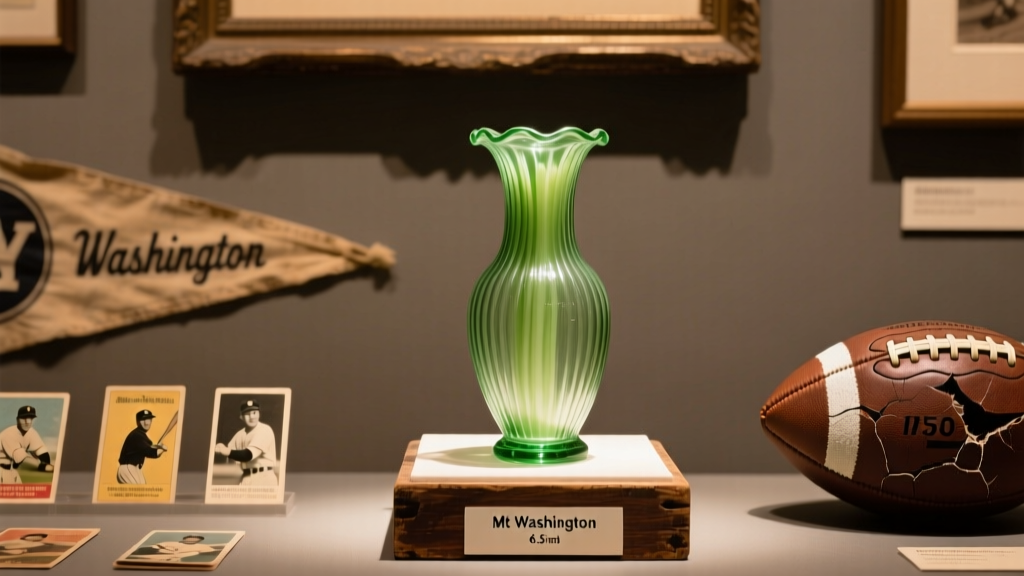
Burmese Glass Celery Vase by Mt. Washington: A 6½-Inch Masterpiece of American Art Glass
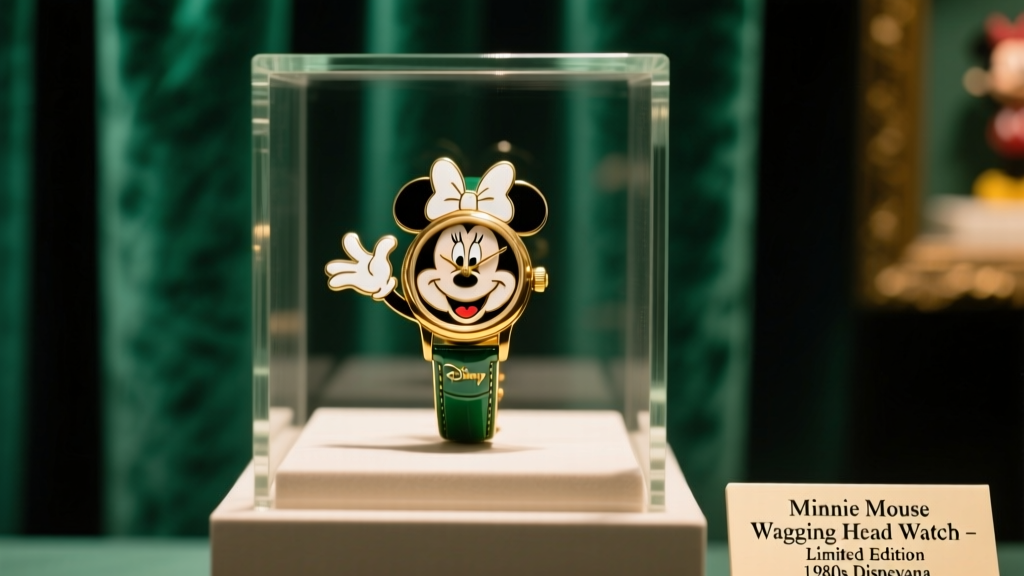
Disneyana Wristwatch: The Minnie Mouse Wagging Head Bradley — History, Mechanics, and Collector Insights
Toy Sled, Wood & Metal, Curved Runners, Folk Art Design — Salesman’s Sample (18 × 5 in): Authentication, Provenance, and Collectibility
Authenticating Pre-Columbian Artifacts: A Collector’s Guide to Provenance, Materials, and Ethical Acquisition
Luster Copper Bowl 6-Inch: Authenticity, Value, and Collector Insights
Baccarat Figurine Penguin Blue 15 1/4 Inches: Authentication, Provenance, and Collector Insights
Napkin Rings Silver Plate Figural Owl Sitting on Book by Rogers Bros — A Collector’s Guide to Authenticity, Value, and History
Glass Milk Bottles: History, Identification, and Collecting Value

Royal Doulton Character Jug Henry Morgan Large: Authentication, Value, and Historical Context