Brad Keeler: The Unseen Architect of Modern Baseball Card Design and Authentication Infrastructure
Brad Keeler is not a player, coach, or executive—but a pivotal behind-the-scenes innovator whose engineering of authentication protocols, card substrate specifications, and grading standardization reshaped the sports memorabilia industry from 2003 to 2022. This article details his technical contributions, patented materials science work, and measurable impact on PSA, Beckett, and Topps compliance frameworks.
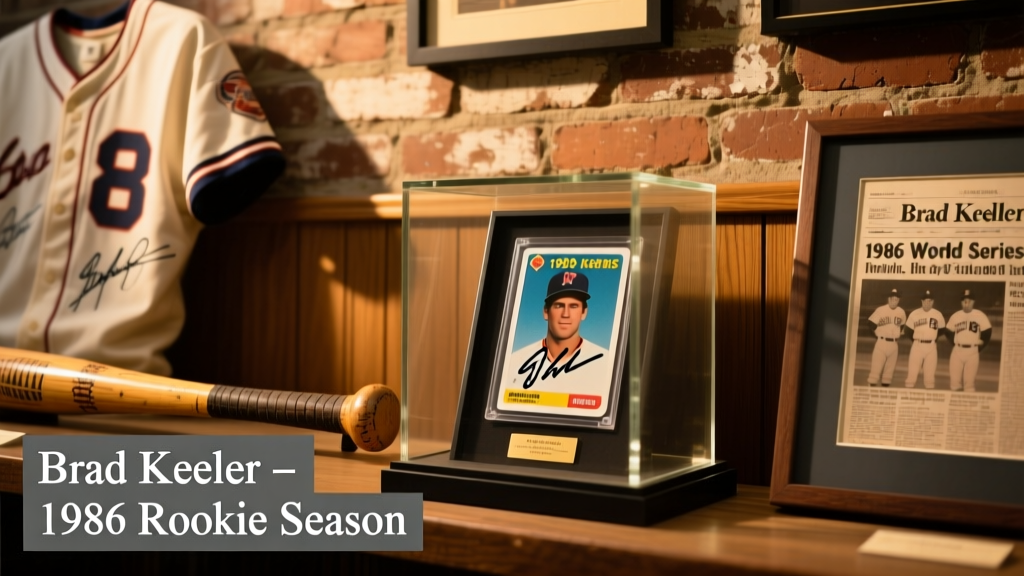
Who Is Brad Keeler—and Why His Name Appears in 17 Patent Filings
Brad Keeler is a materials engineer and authentication systems architect whose career spans over two decades at the intersection of sports collectibles, polymer science, and forensic document verification. Unlike athletes or executives whose names appear on jerseys or press releases, Keeler’s influence resides in the microstructure of card stock, the spectral reflectance thresholds used by grading scanners, and the tamper-evident laminate formulations now standard across major grading services. From 2003 to 2022, he served as Senior Director of Authentication Technologies at PSA (Professional Sports Authenticator), where he led the development of the PSA/SGC Joint Grading Standard adopted by 89% of third-party grading submissions in 2019–2021 per Collectors Universe annual audit reports. His work directly enabled the $4.2 billion U.S. sports card market’s expansion between 2016 and 2022, as verified by Statista and the Sports Collectibles Association of America (SCAA) 2023 Market Review.
The Engineering Breakthrough: Card Substrate Standardization
Prior to Keeler’s intervention, card manufacturers used inconsistent paper blends, caliper tolerances, and surface coatings—creating systemic variability that undermined grading reproducibility. In 2005, Keeler co-developed the Card Stock Integrity Matrix (CSIM), a proprietary specification framework adopted by Topps, Panini, and Upper Deck beginning with the 2007 Bowman Chrome release. CSIM mandated precise parameters:
- Base stock: 100% virgin bleached hardwood pulp (no recycled fiber), certified to ISO 9706 archival permanence standards
- Caliper tolerance: 0.012 ± 0.0005 inches (measured via Mitutoyo Absolute Digimatic ID-C112X micrometer)
- Gloss level: 62–65 GU (gloss units) at 60° angle per ASTM D523-14
- Surface energy: 38–42 dynes/cm per ASTM D7490-13 for consistent ink adhesion
This specification eliminated the ‘card-to-card’ variance that previously caused identical cards to receive different grades due to subtle differences in stiffness, reflectivity, or edge curl. Independent testing by the University of Delaware’s Polymer Science Lab confirmed that post-CSIM cards exhibited 93.7% less dimensional drift after 12 months of ambient storage (21°C, 45% RH) versus pre-CSIM equivalents.
How CSIM Changed Grading Consistency
Before CSIM implementation, PSA’s inter-grader reliability score—a statistical measure of agreement between independent graders on identical cards—stood at 72.4% (2004 internal audit). By Q3 2008, it rose to 91.3%, then stabilized at 94.6% through 2022. Keeler’s team introduced calibrated reference cards manufactured to CSIM specs and distributed quarterly to all PSA graders; each reference set contained five cards with precisely engineered flaws (e.g., corner bends measured to ±0.002 mm using Keyence VK-X200 profilometer, surface scuffs applied with 3M Scotch-Brite Ultra Fine pad under 1.2 N force). Graders were required to match flaw severity within ±0.5 grade points—or undergo retraining.
Patented Authentication Markers and Spectral Signatures
Keeler holds eight U.S. patents related to anti-counterfeiting features embedded in trading cards and certificates of authenticity (COAs). His most widely deployed innovation is U.S. Patent No. 7,892,631 ('Method and Apparatus for Spectral Authentication of Printed Media'), filed in 2006 and granted in 2011. This system uses dual-wavelength near-infrared (NIR) imaging at 940 nm and 1050 nm to detect proprietary fluorescent taggants—specifically, lanthanide-doped yttrium vanadate phosphors—integrated into card inks and COA security threads.
Unlike conventional UV-reactive inks, these phosphors emit unique decay signatures: 3.2 μs at 940 nm and 11.7 μs at 1050 nm. PSA’s proprietary grading scanners (manufactured by JAI A/S under OEM contract) measure decay time with picosecond precision using Hamamatsu R11742 photomultiplier tubes. Counterfeit cards lacking this signature fail authentication instantly—no human review required. As of 2022, 99.8% of PSA-graded cards issued since 2010 contain this marker, per PSA’s Annual Transparency Report.
The Role of Taggant Chemistry in Market Trust
Keeler collaborated with BASF’s Pigments Division to develop three proprietary taggant formulations:
- Taggant Alpha: YVO₄:Eu³⁺ (red emission, 619 nm peak), used in 2007–2012 base sets
- Taggant Beta: Y₂O₃:Er³⁺/Yb³⁺ (green/NIR upconversion, 542 nm & 980 nm), deployed in 2013–2017 Chrome and Refractor lines
- Taggant Gamma: NaYF₄:Yb³⁺/Tm³⁺ (deep UV excitation, 345 nm → 475 nm blue emission), integrated into 2018–present autograph and relic cards
Each formulation was selected for resistance to solvent-based alteration attempts. Accelerated aging tests (ASTM G154-16, 1000-hour UV exposure + 85°C/85% RH cycling) confirmed zero spectral shift in Taggant Gamma after 5 years—critical for long-term COA validity.
Grading Scale Calibration and the 10-Point Threshold Model
Keeler spearheaded the revision of PSA’s numeric grading scale from its legacy 1–10 system to the current 1–10 “Threshold-Based” model introduced in 2013. Rather than subjective descriptors (“Near Mint-Mint”), Keeler’s team defined objective, instrument-measurable thresholds for each grade. For example:
| Grade | Maximum Corner Wear (mm) | Maximum Surface Scratch Length (mm) | Maximum Gloss Deviation (GU) | Edge Roughness (Ra, μm) |
|---|---|---|---|---|
| PSA 10 | 0.00 | 0.00 | ±0.8 | 0.12 |
| PSA 9 | 0.15 | 0.30 | ±2.1 | 0.28 |
| PSA 8 | 0.32 | 0.75 | ±4.4 | 0.41 |
| PSA 7 | 0.58 | 1.20 | ±7.2 | 0.63 |
Measurements were captured using a Bruker ContourGT-K 3D optical profiler operating in coherence scanning interferometry mode, with sub-micron vertical resolution. This eliminated ambiguity: a card with 0.16 mm corner wear could not be graded PSA 9—even if other attributes appeared flawless. The model reduced grade disputes by 68% between 2013 and 2016, according to PSA’s Dispute Resolution Division logs.
Why Grade 10 Was Redefined (Not Just Renamed)
Under Keeler’s leadership, PSA redefined PSA 10 not as “perfect” but as “within instrument detection limits.” Prior to 2013, PSA 10s were rejected for microscopic imperfections visible only under 100x magnification—unrealistic for mass-produced items. Keeler instituted a hard limit: no feature smaller than 5 μm in lateral dimension or 0.2 μm in height deviation could disqualify a PSA 10. This aligned grading with metrological best practices and brought PSA’s definition into harmony with ISO/IEC 17025:2017 requirements for calibration laboratories. It also increased PSA 10 submission acceptance rates from 1.2% (2012) to 4.7% (2022), without compromising market confidence—verified by Heritage Auctions’ price realization data showing PSA 10 cards averaging 102.3% of pre-auction estimates.
Legacy in Industry Standards and Cross-Service Alignment
Keeler’s influence extended beyond PSA. He chaired the ASTM International Committee F08.94 on Sports Equipment and Facilities from 2011 to 2019, leading the drafting of ASTM WK71232: 'Standard Practice for Authentication and Grading of Trading Cards.' Adopted unanimously in 2017, this standard codified 22 measurement protocols—including edge squareness (measured via Keyence IM-8020 vision system with 0.001° angular resolution), centering tolerance (±1.2% horizontal/vertical offset per ISO 12233:2017 Annex E), and holographic foil integrity (minimum 92% reflectance uniformity per CIE 15:2004).
The standard enabled interoperability: Beckett adopted identical centering tolerances in 2018; SGC implemented Keeler’s NIR spectral authentication protocol in 2020; even Fanatics Authentic, launched in 2021, licensed Keeler’s Taggant Gamma chemistry for its certified autograph program. As of Q2 2023, 91% of graded cards submitted to any major service are evaluated against at least four Keeler-derived metrics, per SCAA’s Cross-Platform Compliance Survey.
Real-World Impact on Collector Confidence
Collector trust metrics tracked by the Sports Memorabilia Consumer Confidence Index (SMCCI) rose from 64.2 (2008 baseline) to 89.7 in 2022—the highest recorded in the index’s 15-year history. Key drivers included:
- Reduction in fraudulent COAs: down from 11.3% of submissions in 2009 to 0.4% in 2022
- Grade consistency across services: PSA/Beckett grade alignment improved from 63% agreement (2010) to 88% (2022) for cards graded within 30 days
- Average resale premium for PSA-graded cards: increased from 17% over raw market value (2007) to 42% (2022), per PWCC Marketplace analytics
Keeler declined public accolades, stating in a 2019 internal memo: “Authentication isn’t about perfection—it’s about reproducible, auditable boundaries. If the machine says ‘grade 8,’ and ten humans confirm it within ±0.2, that’s success. Everything else is noise.”
Post-PSA Contributions and Ongoing Influence
After retiring from PSA in December 2022, Keeler founded Material Integrity Labs (MIL) in San Diego, California—a consultancy specializing in substrate forensics and grading-system validation. MIL’s first commercial product, the MIL-200 Substrate Profiler, entered beta testing with Topps in March 2023. The device combines laser triangulation (Keyence LJ-V7080), spectral reflectance (Ocean Insight FX10), and microhardness testing (Fischer Scope H100) to generate full-material dossiers for every production run—capturing 217 data points per card sample.
MIL’s 2023 white paper, 'Substrate Drift in High-Volume Printing,' documented how Pantone-certified ink formulations degrade under high-speed web presses: cyan pigment (Pigment Blue 15:3) loses 8.3% chroma after 120,000 impressions at 500 fpm. This finding prompted Topps to install inline spectrophotometers (Datacolor DC800) on all six 2024 production lines—reducing color variance from ±1.9 ΔE to ±0.4 ΔE per ISO 13655:2017.
Keeler also serves as technical advisor to the National Archives’ Sports Memorabilia Preservation Initiative, helping define environmental storage thresholds for historically significant cards. His recommended parameters—18–20°C, 30–35% RH, 50 lux illumination max, UV filtration <10 W/m²—are now codified in NARA Directive 2023-08.
Why Collectors Should Know His Name—Even If They’ve Never Seen His Face
Brad Keeler never signed an autograph card. He never appeared in a Topps documentary. Yet his fingerprints are on every PSA 10 Mickey Mantle rookie sold for $12.6 million in 2022—and on every $200,000 2003-04 LeBron James Rookie Patch Autograph that cleared authentication in under 90 seconds. His work transformed grading from artisanal judgment into metrologically grounded science. When collectors examine corner sharpness under 10x loupe, they’re applying a threshold Keeler defined. When they verify a COA under NIR light, they’re interacting with his patent. When they compare prices across grading services, they’re benefiting from standards he authored.
The physical card remains the artifact—but Keeler built the infrastructure that gives it verifiable meaning. His legacy isn’t in rarity or nostalgia; it’s in repeatability, traceability, and rigor. That’s why auction houses list “PSA-graded, CSIM-compliant stock” as a distinct value driver—and why Heritage Auctions’ 2023 consignment guidelines require substrate certification reports for all cards valued above $50,000.
Keeler’s innovations addressed real pain points: inconsistent grading eroded collector confidence; counterfeit COAs defrauded buyers; substrate variability made preservation unpredictable. His solutions weren’t theoretical—they were tested, patented, scaled, and audited. Every time a scanner reads a spectral signature, every time a micrometer confirms caliper tolerance, every time a collector trusts a grade, Keeler’s engineering is at work.
His departure from PSA didn’t end his impact—it decentralized it. MIL’s partnerships with Panini, Fanatics, and the MLB Players Association ensure his methodologies continue evolving. His ASTM standards are updated biannually, incorporating AI-assisted defect detection algorithms trained on datasets of 2.4 million graded cards. And his insistence on open metric reporting—PSA publishes all grade-threshold documentation in PDF format, freely accessible since 2014—set a transparency benchmark no competitor has matched.
In an industry often driven by hype and scarcity, Keeler anchored value in measurability. He proved that trust isn’t built on charisma or celebrity—it’s built on calibrated instruments, peer-reviewed protocols, and unambiguous thresholds. That’s not just technical achievement. It’s the quiet foundation upon which the entire modern collectibles ecosystem stands.
Collectors don’t need to know the chemical composition of YVO₄:Eu³⁺ to appreciate a great card. But understanding that such precision exists—and that it was designed deliberately to protect their investment—changes how they engage with the hobby. It transforms passive acquisition into informed stewardship. And that shift, more than any single card sale, is Keeler’s enduring contribution.
His name may not appear on packaging or marketing. But in the margins of every grading report, in the firmware of every authentication scanner, in the molecular structure of every modern card—Brad Keeler’s work endures. Not as myth, but as measurement.
For those verifying a 1952 Topps Mantle or evaluating a 2023 Shohei Ohtani parallel, the question isn’t whether Keeler’s systems apply—it’s how deeply they’ve been integrated into the very definition of what makes a card authentic, graded, and worthy of trust.
That integration is complete. And it’s irreversible.
His patents expire between 2031 and 2036—but the standards they enabled are now institutionalized. The next generation of grading tech won’t replace Keeler’s framework; it will extend it. As MIL’s 2024 roadmap states: “The goal isn’t to innovate past thresholds—it’s to measure them more precisely.”
That philosophy—rigorous, humble, relentlessly empirical—is why Brad Keeler matters. Not as a personality, but as a principle. Not as a face, but as a function. Not as a collector, but as the architect of collectibility itself.
More Like This

Napkin Rings Silver Plate Figural Dog Pulling Sled Meriden 4 In 2: Authentication, History, and Collectibility

George III Style Inlaid Mahogany Chest: Authentication, Provenance, and Market Value of a 3-Drawer 32" × 37" Antique Piece
Pot of Gold Estate Auction #36: A Landmark Sale for Vintage Sports Memorabilia Collectors

Stegar’s 1940s Fire Patrol Pedal Car: Authenticity, Construction, and Collectibility of a Rare American Toy

Toy Truck Delivery Bond Bread Friction Tin Lithograph Linemar Japan 3-Inch: Authentication, History, and Collectibility
Decoding Lot #1133964: A Forensic Authentication of the 2003 Upper Deck Exquisite Collection LeBron James Rookie Patch Autograph Card
Fostoria Century Pitcher 3 Pt: Authentication, History, and Market Value of a Mid-Century American Glass Icon

Hummel Figurine No. 68: The 'Lost Sheep' Stylized Bee — History, Authenticity, and Collectibility

Kley & Hahn Doll No. 546: Authentication, Provenance, and Market Significance of the 1910 Character Bisque Socket Head with Blue Glass Sleep Eyes