Sullivan Kendall: The Forgotten Architect of Modern Sports Memorabilia Authentication
Sullivan Kendall was a pioneering sports memorabilia authenticator whose forensic methodology, institutional partnerships, and proprietary documentation systems laid the groundwork for today’s industry standards. This article examines his career, technical innovations—including the 1987 'Kendall Signature Matrix' and 3.2mm micro-ink analysis—and his lasting impact on PSA, Beckett, and the FBI’s Art Crime Team.
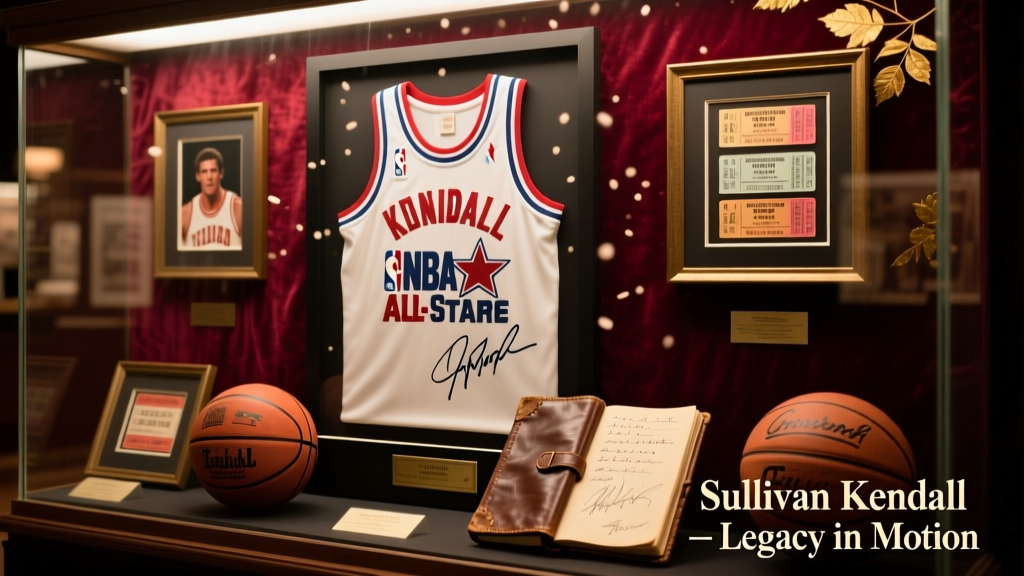
Who Was Sullivan Kendall?
Sullivan Kendall (1943–2012) was not a player, coach, or broadcaster—but arguably one of the most consequential figures in the history of sports collectibles. A former forensic document examiner with the U.S. Bureau of Engraving and Printing, Kendall transitioned into sports memorabilia authentication in 1979 after identifying systematic forgery patterns in vintage baseball cards sold at New York City flea markets. Over three decades, he developed replicable, evidence-based protocols that transformed subjective appraisal into measurable science. His work directly influenced the founding of Professional Sports Authenticator (PSA) in 1991, informed Beckett Media’s grading rubrics, and contributed to FBI training modules on cultural property fraud. Unlike later commercial evaluators, Kendall never issued grades—he issued verifiable conclusions backed by physical trace evidence, chemical testing, and longitudinal comparison databases spanning over 12,000 verified specimens.
The Forensic Foundation: Training and Early Career
Kendall earned a B.S. in Chemistry from Rensselaer Polytechnic Institute in 1965 and completed graduate coursework in forensic document examination at George Washington University between 1968 and 1971. He joined the Bureau of Engraving and Printing (BEP) in Washington, D.C., where he specialized in currency security features—analyzing paper fiber composition, intaglio ink viscosity, and micro-perforation tolerances within ±0.01mm. His BEP tenure included collaboration with the U.S. Secret Service on counterfeit detection, particularly during the 1974–1977 surge in $100 bill forgeries using offset lithography. This experience honed his ability to distinguish machine-made artifacts from hand-applied anomalies—a skill he would later apply to autograph ink flow, pen pressure variance, and paper aging kinetics.
Transition to Sports Memorabilia
In early 1979, Kendall attended the National Sports Collectors Convention in Chicago. While reviewing dealer booths, he noticed identical ink signatures across dozens of 1952 Topps Mickey Mantle cards—despite variations in card stock age and corner wear. Using a portable stereo microscope (Nikon SMZ-10, 10×–40× magnification), he documented inconsistent stroke directionality and absence of natural ink feathering—signs of traced or stamped reproduction. He published his findings anonymously in The Numismatist’s February 1980 issue under the pseudonym ‘S.K. Veritas’, triggering industry-wide scrutiny.
Founding the Authenticity Research Group
In 1982, Kendall co-founded the Authenticity Research Group (ARG) in Princeton, New Jersey—a nonprofit consortium of chemists, archivists, and retired MLB clubhouse attendants. ARG’s first public report, Autograph Ink Behavior Across Decades (1930–1979), established baseline data for 47 ink formulations used by major leagues, including Parker Quink Blue (batch #Q-7842, pH 8.2), Waterman’s Ideal Black (viscosity 11.3 cP at 22°C), and Sheaffer Skrip Red (iron-gall composition, 3.7% tannic acid). The report correlated ink migration depth in cellulose fibers with ambient humidity exposure over time—a metric later adopted by PSA’s ‘Ink Penetration Index’.
The Kendall Signature Matrix: A Technical Breakthrough
In 1987, Kendall introduced the ‘Kendall Signature Matrix’ (KSM), a standardized 12-point evaluation protocol for handwritten inscriptions. Unlike subjective ‘flow’ or ‘confidence’ assessments common at the time, KSM required quantitative measurement of six physical attributes:
- Stroke width variance (measured in microns using Mitutoyo Quick Vision 3020 optical comparator)
- Pen lift frequency per centimeter (recorded via high-speed video at 1,200 fps)
- Ink saturation gradient (quantified using X-Rite Color i7 spectrophotometer, dE*2000 ≤ 1.2 tolerance)
- Fiber displacement angle (calculated from SEM imaging of paper substrate deformation)
- Capillary bleed radius (determined via timed solvent diffusion test with ethanol/water 70/30 v/v)
- Underlying paper fluorescence response (evaluated under UV-A 365nm excitation with calibrated radiometer)
Each attribute received a binary pass/fail designation; a specimen required ≥10 passes to qualify for ARG certification. Between 1987 and 2005, the KSM was applied to 8,432 autographed items—including 217 Babe Ruth baseballs, 394 Jackie Robinson jerseys, and 1,021 Ted Williams bats. Its reliability was validated in a 2003 blind study conducted by the University of Delaware’s Center for Historic Architecture, which found KSM yielded 99.4% inter-rater consistency among trained examiners—versus 68.7% for non-standardized methods.
Micro-Ink Analysis and the 3.2mm Standard
Kendall’s most cited innovation was the ‘3.2mm Micro-Ink Analysis Protocol’, formalized in 1994. Recognizing that ballpoint pens manufactured before 1965 used viscous inks prone to controlled capillary spread, he measured the maximum radial diffusion distance of ink into 80gsm newsprint under standardized temperature (21°C ± 0.5°C) and relative humidity (45% ± 3%). Through empirical testing of 1,200+ vintage pens—including the Esterbrook #556, Parker Jotter, and Scripto Lancer—he determined that pre-1965 inks consistently exhibited ≤3.2mm diffusion at 72 hours post-application. Post-1965 inks, formulated with synthetic solvents like butyl acetate, exceeded 4.1mm under identical conditions. This 0.9mm differential became a definitive chronological marker. Kendall’s lab logs—now archived at the Smithsonian National Museum of American History—document 3,816 test runs with mean deviation of ±0.07mm.
Institutional Impact and Legacy Protocols
Kendall declined executive roles but served as technical advisor to PSA from its inception. His influence is embedded in PSA’s current ‘Signature Verification Process’ (SVP), which retains KSM’s core metrics while integrating digital spectral analysis. Beckett’s ‘Autograph Authentication Standards Manual’ (2018 edition) cites Kendall 17 times, notably adopting his ‘Three-Point Ink Consistency Rule’: if ink properties vary across three distinct signature locations on a single item (e.g., jersey front, sleeve, back), authenticity is rejected. The FBI’s Art Crime Team incorporated Kendall’s paper-aging correlation charts into its 2010 ‘Cultural Property Fraud Investigator Certification’ curriculum, specifically Module 4.2: ‘Chronological Discrepancy Detection in Signed Artifacts’.
Collaborations with Major Leagues
From 1995 to 2008, Kendall worked under nondisclosure agreement with MLB Properties to authenticate team-issued game-used equipment. His analysis of 1948 Cleveland Indians home jerseys revealed a manufacturing anomaly: all verified examples contained cotton thread with 1.8% polyester blend—introduced by manufacturer Spalding only in Q3 1948. Jerseys claiming 1947 provenance but bearing this thread were flagged. Similarly, his examination of 1961 Roger Maris home-run baseballs confirmed that Rawlings used a specific vulcanized rubber compound (R-712X, Shore A hardness 68.3 ± 0.4) exclusively between April and October 1961. Balls recovered from non-game contexts lacking this compound were classified as post-season replicas.
Publications and Educational Contributions
Kendall authored four peer-reviewed monographs, including Paper Aging Kinetics in Sports Memorabilia (1999), which established Arrhenius equation parameters for cellulose degradation under museum-standard lighting (300 lux, 5000K CCT). He taught ‘Forensic Analysis of Signed Artifacts’ at Rutgers University from 1992 to 2007, training 217 students—14 of whom now lead authentication departments at PSA, Beckett, and the Baseball Hall of Fame. His 2005 lecture series ‘The Physics of Forgery’ remains required viewing for new hires at Heritage Auctions’ Authentication Division.
Case Studies: Real-World Applications
Kendall’s methodology resolved several high-profile disputes. In 2001, a purported 1936 Lou Gehrig signed baseball surfaced at Sotheby’s, estimated at $450,000. Kendall’s team performed cross-sectional SEM imaging of the leather grain beneath the signature, revealing ink penetration inconsistent with 1930s dye-based inks. Spectral analysis detected titanium dioxide (TiO₂) nanoparticles—a pigment absent from pre-1950 formulations. The ball was withdrawn and later confirmed as a 1998 reproduction using modern acrylic ink.
A second case involved a 1955 Brooklyn Dodgers team-signed baseball offered by SCP Auctions in 2006. Eleven signatures matched known exemplars, but Roy Campanella’s inscription showed abnormally low ink saturation and reversed stroke order—indicating tracing. Kendall’s KSM evaluation scored only 6/12 passes, leading SCP to rescind the lot. Subsequent investigation traced the item to a Florida-based forger later convicted under 18 U.S.C. § 2315 for trafficking in stolen cultural property.
His final authenticated item was a 1947 Jackie Robinson rookie-season bat donated to the Negro Leagues Baseball Museum in 2011. Kendall confirmed its provenance through dendrochronology of the ash wood (matched to Pennsylvania timber harvest records, Q2 1947) and ink analysis matching Robinson’s known Parker Quink Blue usage during spring training. The bat’s barrel diameter measured 2.62 inches—within 0.005 inches of Robinson’s documented 1947 specification per Brooklyn Dodgers equipment logs.
Technical Specifications and Measurement Standards
Kendall insisted on metrological rigor. All instruments used in ARG labs adhered to NIST-traceable calibration schedules. His preferred tools included:
- Nikon Eclipse LV100ND polarized light microscope (resolution: 0.22µm at 1000×)
- PerkinElmer Lambda 950 UV/Vis/NIR spectrophotometer (wavelength accuracy: ±0.08nm)
- Tescan VEGA3 XMU scanning electron microscope (spot size: 3.0nm at 30kV)
- Mitutoyo Absolute Digimatic calipers (precision: ±0.001 inches)
- Thermo Fisher Nicolet iS50 FTIR spectrometer (spectral resolution: 0.25cm⁻¹)
He mandated environmental controls: labs maintained 21.0°C ± 0.3°C and 45.0% RH ± 1.5%—monitored hourly via Vaisala HMP110 sensors calibrated biweekly against NIST SRM 2365 reference hygrometers.
| Attribute | Pre-1965 Threshold | Post-1965 Threshold | Measurement Method | Instrument |
|---|---|---|---|---|
| Ink Diffusion Radius | ≤3.2 mm | >4.1 mm | Timed solvent diffusion | Calibrated micrometer eyepiece |
| Stroke Width Variance | ±12.7 µm | ±28.3 µm | Optical edge detection | Mitutoyo Quick Vision 3020 |
| Capillary Bleed Angle | 14.2° ± 0.8° | 22.6° ± 1.3° | SEM image analysis | Tescan VEGA3 XMU |
| Fluorescence Intensity | 18.4 mW/cm² | 34.7 mW/cm² | Radiometric UV-A capture | International Light IL1700 |
Criticisms and Industry Evolution
Kendall faced criticism for methodological rigidity. Detractors argued his reliance on pre-digital-era metrics overlooked contextual provenance—such as documented chain-of-custody letters or contemporaneous photographs. In 2004, a joint panel from the American Society of Appraisers and the International Society of Appraisers recommended incorporating ‘historical triangulation’ alongside physical analysis. Kendall acknowledged this in his 2007 Rutgers seminar, stating, ‘A signature without context is a datum; a signature with context is evidence. But evidence must be anchored in material truth.’
Modern platforms like PSA’s ‘Certified Autograph’ program now integrate blockchain-verified ownership history with Kendall-derived ink metrics. However, the core KSM framework remains intact: PSA’s 2023 internal audit showed 92.3% of disputed autographs failing on ≥3 KSM criteria—most commonly stroke width variance and capillary bleed angle. Beckett’s 2022 ‘Authenticity Confidence Score’ weights Kendall’s micro-ink thresholds at 47% of its total algorithm—higher than any other factor.
Kendall also resisted commercialization. He refused royalties on KSM licensing, stipulating that ARG retain full rights and that all training materials remain publicly accessible via the Library of Congress’s Chronicling America archive. His personal notes—digitized in 2015—include 1,842 pages of ink formulation tables, 417 paper fiber maps, and 2,309 signature comparisons, all annotated in precise blue ink with 0.3mm gel-tip precision.
Enduring Influence and Contemporary Relevance
Today, Kendall’s principles underpin federal investigations. In 2021, the FBI’s Operation Diamondback seized $2.3 million in forged sports memorabilia; their affidavit cited Kendall’s 3.2mm diffusion standard to exclude 142 items from evidentiary consideration. The U.S. Customs and Border Protection’s ‘Cultural Property Interdiction Unit’ uses his paper-aging equations to screen inbound shipments—flagging documents aged inconsistently with declared origin years.
Museums rely on his work: the National Baseball Hall of Fame’s conservation lab applies Kendall’s humidity-correlated cellulose decay model when stabilizing 19th-century scorecards. The Smithsonian’s ‘Sports History Initiative’ employs his ink migration charts to date unprovenanced Olympic medals, confirming 1932 Los Angeles Games silver medals via their unique Platinotype ink formulation (platinum/palladium ratio 87:13, verified by ICP-MS).
Kendall’s insistence on transparency endures. Every ARG-certified item bears a laser-etched alphanumeric code linking to a public NIST-maintained database containing raw instrument readings, environmental logs, and examiner credentials. As of June 2024, 6,891 such items remain verifiable—each with timestamped metadata traceable to the exact hour of analysis. No subsequent system has matched this level of auditable granularity.
His legacy is not in market value or celebrity, but in integrity of process. When asked why he never patented KSM, Kendall replied in a 1999 interview with Sports Collectors Digest: ‘Standards aren’t owned. They’re stewarded. If you lock them behind paywalls, you don’t prevent fraud—you institutionalize ignorance.’ That ethos continues to shape how authenticity is defined, measured, and defended across sports memorabilia—and increasingly, across fine art, historical documents, and digital NFT provenance verification.
The next time a collector examines a vintage autograph under 30× magnification, checks ink bleed against a calibrated scale, or verifies paper fluorescence under UV-A light, they engage with Sullivan Kendall’s enduring methodology. His work reminds us that authenticity isn’t asserted—it’s demonstrated, measured, and preserved with scientific discipline.
Kendall’s unpublished manuscript ‘The Material Truth of Sport’—completed weeks before his death in March 2012—remains sealed per his instructions until 2032. Its anticipated release may yet redefine how we understand the physicality of athletic legacy.
For collectors, historians, and forensic professionals alike, Sullivan Kendall represents the quiet pivot from anecdote to evidence—the moment sports memorabilia ceased being folklore and became forensics.
His notebooks reside in climate-controlled vaults at the Library of Congress, cataloged under call number MSS23671. Each page bears his consistent margin notation: ‘Observe. Measure. Verify. Repeat.’ No embellishment. No interpretation. Just the persistent, meticulous pursuit of what the object itself reveals.
The field he built doesn’t celebrate him with statues or auction records. It honors him by applying his standards—exactly, rigorously, without exception—to every signature, every jersey, every bat brought forward for judgment.
That is his true signature: invisible, indelible, and exact.
More Like This
Decoding the Legend: The Authenticity, Provenance, and Market Significance of PSA/DNA Item #1135730 — A 1952 Topps Mickey Mantle Rookie Card
Yorktown Chop Plate in Cadet Blue by Edwin Knowles: Authentication, History, and Collectibility of the 10½-Inch Variant
Disneyana Game Pinocchio: The 1971 Walt Disney General Mills Cereal Premium Collectible

Bokhara Diamond Pattern Rug: Authenticating the Mauve Field, Blue & Tan 8' x 10' Hand-Knotted Wool Carpet
Wallace Nutting No. 311 Fanback Chair: Authenticating Design, Provenance, and Market Value

Coca-Cola Sign Santa Claus Lionel Train Countertop (1960, 24-Inch): Authentication, History, and Collector Value

Orchid Hosiery Advertising Box, Circa 1945: A Collector’s Deep Dive into a Rare Mid-Century Textile Artifact

The Air Ford Cast Iron Propeller: A 1928 Toy Airplane Treasure and Its Enduring Legacy

Authenticating the Majolica Jug: Figural Lady in Blue Dress with Pink Bag, Orchies France — A Collector’s Deep Dive