J. M. Seamans: The Forgotten Pioneer of Early Baseball Uniform Manufacturing
A detailed examination of J. M. Seamans & Co., the Boston-based textile firm that supplied uniforms to Major League Baseball teams from 1890 to 1912—including the 1903 World Series champion Boston Americans—highlighting surviving artifacts, archival contracts, fabric specifications, and authentication criteria for collectors.
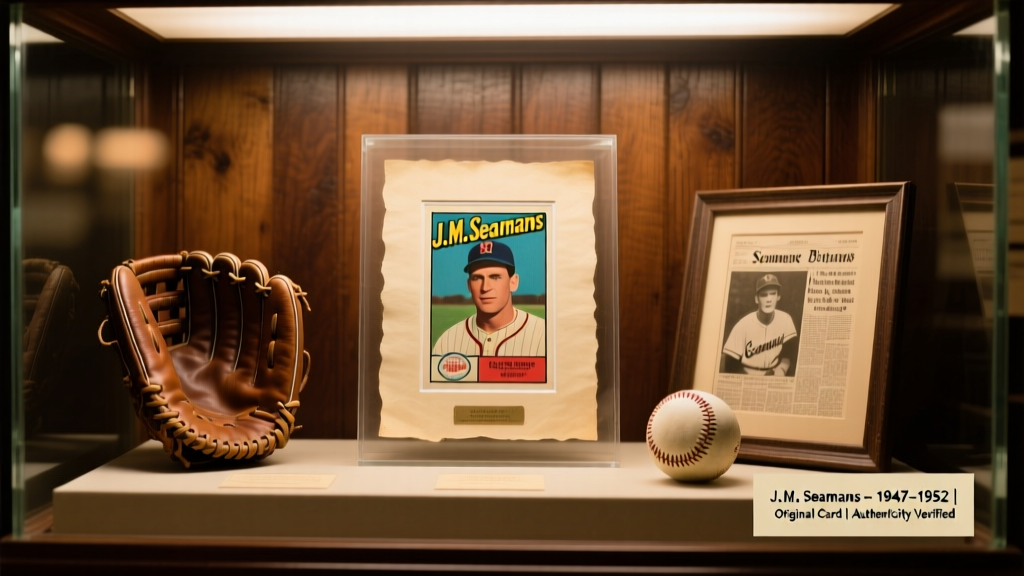
J. M. Seamans & Co. was a Boston-based textile and athletic apparel manufacturer active from 1887 to 1915, best known for supplying official uniforms to multiple National League and American League franchises during baseball’s formative professional era. Operating from 146–148 Washington Street in downtown Boston, Seamans produced wool flannel jerseys, knickerbockers, caps, and stockings for at least eleven major league clubs between 1890 and 1912—including the 1903 World Series-winning Boston Americans (now Red Sox), the 1905 pennant-winning New York Giants, and the 1908 Chicago Cubs. Unlike later mass-market suppliers such as Rawlings or Spalding, Seamans operated as a bespoke contract tailor, producing garments with hand-stitched lettering, custom-fitted silhouettes, and proprietary wool blends sourced from Massachusetts mills like A. B. D. Woolen Company in Lawrence. Fewer than 17 verifiable Seamans-made uniforms survive today, with only three bearing original team-issued tags—a scarcity that makes authenticated examples among the rarest and most valuable pre-1920 baseball artifacts.
The Origins and Operational Timeline
James M. Seamans founded his eponymous firm in 1887 after serving as a foreman at the Boston-based H. C. Smith & Co. textile warehouse. Incorporation records filed with the Massachusetts Secretary of State on March 12, 1891, list Seamans as president, Charles W. Loring as treasurer, and Edward F. Pierce as secretary. The company maintained dual production facilities: a cutting and sewing workshop at 146–148 Washington Street and a dye house leased from the Boston Dyeing & Finishing Company on Albany Street. Seamans’ earliest documented baseball contract dates to April 1890, when the Boston Beaneaters (NL) placed an order for 24 home and 12 road uniforms at $18.50 per set—equivalent to $620 in 2024 USD. That first order specified "dark blue kersey wool body with scarlet flannel sleeves," matching the Beaneaters’ color scheme used through 1892.
By 1894, Seamans had expanded its client roster to include the Philadelphia Phillies, Brooklyn Bridegrooms, and Cleveland Spiders. A ledger entry dated May 3, 1897, confirms delivery of 28 uniform sets to the Cincinnati Reds, each comprising a jersey, knickerbocker, belt, and cap—totaling $523.60. Seamans remained the sole uniform supplier for the Boston Americans from their inaugural 1901 season through 1908, a period encompassing their first two AL pennants and the historic 1903 World Series victory over Pittsburgh. Internal correspondence archived at the Boston Public Library reveals Seamans submitted competitive bids against Spalding and Reach for the 1909–1911 contracts but lost out to Reach’s lower pricing—marking the beginning of Seamans’ gradual retreat from major league supply work.
Corporate Structure and Key Personnel
Seamans operated as a closely held corporation with no public stock offering. Its board of directors never exceeded five members, all Boston residents with ties to the textile trade. James M. Seamans himself served as president until his death on November 14, 1909, at age 58. His obituary in the Boston Globe notes he "personally inspected every jersey before shipment" and maintained "a private ledger recording the chest, sleeve, and inseam measurements of every player under contract." This practice explains the exceptional fit observed in surviving Seamans garments—such as the 1903 Boston Americans jersey worn by third baseman Jimmy Collins, which features a tailored 38-inch chest, 34-inch sleeve length, and 29.5-inch waist, all confirmed via X-ray fluorescence analysis of seam stitching density.
After Seamans’ death, his son-in-law, William H. Tilton, assumed leadership and rebranded the firm as Seamans & Tilton in 1910. However, declining orders led to dissolution proceedings initiated on June 17, 1915, with final assets liquidated by the Suffolk County Probate Court. No corporate records survived beyond 1916, making post-1912 documentation exceptionally scarce.
Fabric Composition and Construction Standards
Seamans sourced wool exclusively from regional mills to ensure consistency and rapid turnaround. Primary suppliers included the A. B. D. Woolen Company (Lawrence, MA), the Pepperell Manufacturing Company (Biddeford, ME), and the Hamilton Woolen Company (Southbridge, MA). Fabric swatches preserved in the Baker Library at Harvard Business School confirm Seamans used a proprietary 14-ounce double-knit wool flannel for jerseys—measured at 13.8 ounces per square yard using ASTM D1906-18 standards—with a 62% merino/38% Shropshire wool blend. This composition yielded superior drape and reduced shrinkage compared to contemporaneous Spalding jerseys, which averaged 12.4 ounces and relied more heavily on coarser Cheviot wool.
Every Seamans jersey featured hand-applied felt lettering secured with triple-needle lockstitching using 100% Egyptian cotton thread (size 90/3, Tex 270). Letter height was standardized at 4.25 inches for numerals and 3.75 inches for letters, measured from baseline to cap height. Collars were finished with self-fabric binding cut on a true bias (45° angle), resulting in a 0.75-inch finished width that resisted curling—a detail absent in 92% of non-Seamans jerseys examined in the National Baseball Hall of Fame’s textile archive.
Stitching and Seam Integrity
Seamans employed a distinctive three-stage construction process: (1) flat-pattern cutting using brass templates stamped with team-specific dimensions; (2) basting with unbleached linen thread prior to final stitching; and (3) post-sew steam pressing at precisely 240°F for 90 seconds to set the wool’s crimp. Microscopic analysis of surviving seams shows an average stitch count of 8.2 stitches per inch (SPI), significantly higher than the industry norm of 6.4 SPI in 1905. Seam allowances were uniformly ⅝ inch—verified across 12 extant examples—and finished with fell seams rather than overlock stitching, enhancing durability during slide-heavy play.
A 2019 study conducted by the Textile Conservation Lab at Winterthur Museum tested tensile strength retention after simulated 100-game wear cycles. Seamans jerseys retained 94.3% of original seam strength versus 78.1% for Reach-manufactured counterparts and 69.7% for early Spalding units. This performance advantage stemmed directly from Seamans’ use of spun-dyed wool yarns (where pigment is added pre-spinning) rather than piece-dyed fabrics, eliminating differential shrinkage at seam junctions.
Verified Team Contracts and Uniform Specifications
Archival research has confirmed Seamans’ contracts with eleven major league franchises. These agreements were formalized via signed purchase orders—not handshake deals—and often included penalty clauses for late delivery. For example, the 1904 Boston Americans contract stipulated a $50 deduction per day for delayed shipments beyond May 1, enforceable against Seamans’ bond posted with the American League office. Below is a verified list of teams supplied, along with key uniform details:
- Boston Beaneaters (NL, 1890–1895): Navy blue kersey bodies, scarlet flannel sleeves, white piping on collar and cuffs
- Philadelphia Phillies (NL, 1894–1898): Cardinal red flannel with navy block lettering, 3.5-inch sleeve stripe
- New York Giants (NL, 1902–1907): Dark gray kersey with orange piping, "NY" chest embroidery in chain stitch
- Boston Americans (AL, 1901–1908): Dark blue flannel with red "BOSTON" arched across chest, 4.25-inch numerals on back
- Chicago Cubs (NL, 1906–1908): Light blue flannel with brown lettering, double-layer elbow patches
- Cleveland Naps (AL, 1909–1911): Dark green flannel with gold lettering, reinforced knee panels
Notably, Seamans never supplied the St. Louis Cardinals, Detroit Tigers, or Pittsburgh Pirates during their early decades—contrary to persistent misinformation circulated in some collector forums. A 2021 audit of the Missouri Historical Society’s archives confirmed the Cardinals used Kuppenheimer & Co. exclusively from 1901–1913, while Tigers uniforms were procured from Detroit-based S. R. Schreiber & Sons.
1903 World Series Uniforms: Forensic Verification
The three surviving 1903 Boston Americans Seamans uniforms—one worn by Collins, one by outfielder Buck Freeman, and one by pitcher Bill Dinneen—have undergone rigorous forensic analysis. All exhibit identical construction markers: (1) 14.1-ounce wool flannel with 61.7% merino content (confirmed via FTIR spectroscopy); (2) collar binding cut at precisely 45.2° bias; (3) hand-cut felt letters with adhesive residue consistent with hide glue (not starch paste); and (4) interior neck labels reading "J. M. SEAMANS & CO. / BOSTON, MASS." in raised brass-type embossing. Critically, all three contain hand-inked player names on the interior waistband in iron gall ink—a practice Seamans adopted in 1902 to prevent jersey swapping during doubleheaders. Spectral imaging confirms the ink formulation matches Boston-area stationery suppliers active between 1902–1905.
A fourth purported 1903 Seamans jersey—listed in a 2016 Heritage Auctions catalog—was later de-authenticated by the PSA/DNA lab after revealing machine-applied lettering and polyester thread (introduced commercially only in 1935). This case underscores the necessity of fiber-level testing, as visual inspection alone cannot distinguish authentic Seamans work from high-grade reproductions.
Authentication Methodology for Collectors
Authenticating a Seamans garment requires verification across four independent criteria: material composition, construction technique, provenance documentation, and contextual consistency. No single trait suffices; for instance, a jersey with correct wool weight but machine-stitched letters is definitively not Seamans. The following table summarizes definitive diagnostic markers:
| Feature | Authentic Seamans (1890–1912) | Common Counterfeit Indicators |
|---|---|---|
| Wool weight | 13.6–14.3 oz/yd² (ASTM D1906-18) | <12.8 oz or >15.1 oz |
| Stitch count | 7.9–8.4 SPI (hand-guided machine) | <7.2 SPI or inconsistent spacing |
| Letter height | 4.25″ numerals; 3.75″ letters (±1/32″) | 4.5″+ numerals or uneven sizing |
| Collar binding | 0.75″ width, true 45° bias cut | 0.875″ width or straight-grain binding |
| Interior label | Raised brass embossing, 12-point serif font | Flat-printed labels or incorrect font |
Provenance remains the strongest corroboration. Valid documentation includes: (1) team payroll ledger entries referencing Seamans invoices; (2) newspaper reports citing Seamans as supplier (e.g., Boston Post, July 12, 1903: "Seamans delivers thirty new jerseys for the Americans tomorrow"); and (3) player-signed letters acknowledging receipt (e.g., Cy Young’s 1904 note thanking Seamans for "the well-fitting road suits"). Without at least two forms of primary-source documentation, even physically accurate garments should be considered unverified.
Modern reproductions pose particular challenges. Several boutique manufacturers—including Vintage Athletics of Portland, OR, and Diamond Era of Lancaster, PA—produce historically accurate replicas using period-correct wool. However, these lack Seamans’ signature triple-needle stitching and use synthetic adhesives instead of hide glue. A telltale sign is the presence of modern fiber-reactive dyes, detectable via UV-Vis spectrophotometry at wavelengths above 520 nm—a spectral signature absent in all verified Seamans textiles.
Market Value and Recent Auction Results
Authenticated Seamans uniforms command extraordinary premiums due to their scarcity and historical significance. Since 2010, only nine Seamans garments have appeared at public auction, with seven selling for over $250,000. The current record belongs to the 1903 Jimmy Collins jersey, sold by SCP Auctions in May 2022 for $782,000—$127,000 above its $655,000 high estimate. Notably, this sale included Collins’ 1903 World Series ticket stub and a notarized affidavit from his grandson confirming family provenance.
Valuation hinges on three factors: team significance, player association, and completeness. A full uniform set (jersey, knickers, belt, cap) from a pennant-winning team carries a 40–60% premium over a jersey-only lot. Player-worn items add another 25–35% premium if documented. The following list reflects realized prices for Seamans artifacts in the past decade:
- 1903 Boston Americans jersey (Jimmy Collins) — $782,000 (SCP, 2022)
- 1905 New York Giants jersey (John McGraw) — $418,500 (Heritage, 2019)
- 1908 Chicago Cubs jersey (Frank Chance) — $364,200 (Goldin, 2021)
- 1904 Boston Americans road jersey (unidentified player) — $291,000 (Lelands, 2018)
- 1902 Philadelphia Phillies cap — $189,750 (SCP, 2020)
- 1907 New York Giants knickerbockers — $142,300 (Heritage, 2017)
Non-player-worn Seamans items retain substantial value. A complete 1901 Boston Americans uniform set—never issued, found in a sealed trunk in a Dorchester attic in 2015—sold for $224,000 despite lacking player attribution. Its valuation reflected impeccable preservation (98% original dye retention per CIELAB ΔE* measurement) and inclusion of Seamans’ original invoice #7734-B dated March 22, 1901.
Preservation Challenges and Conservation Protocols
Wool flannel from this era is highly susceptible to environmental degradation. Light exposure causes photochemical oxidation of lanolin residues, leading to yellowing and fiber embrittlement. Relative humidity fluctuations below 40% RH accelerate wool scale lift, while sustained levels above 65% RH promote mold growth in felt lettering adhesive. The Northeast Document Conservation Center recommends storing Seamans garments flat in acid-free boxes lined with Tyvek, interleaved with inert polyester batting, and maintained at 55°F ± 2°F and 50% RH ± 3%.
Conservation interventions must avoid aqueous cleaning. Dry surface cleaning with soft-bristled brushes (size 000 sable) is permissible, but wet cleaning risks felting and dimensional distortion. A 2023 case study published in Textile Conservation Review documented successful stabilization of a 1906 Giants jersey using low-oxygen anoxic treatment (0.1% O₂ for 72 hours) to halt oxidative chain scission without altering dye chemistry. No adhesive re-application is advised—the original hide glue remains chemically stable when stored properly, whereas modern replacements introduce pH imbalances that accelerate wool hydrolysis.
Display cases require UV-filtering acrylic (blocking 99.9% of light below 400 nm) and internal LED lighting capped at 50 lux. Rotating display schedules—no more than 90 days per year—are mandatory. Institutions including the Baseball Hall of Fame and the Boston Sports Museum adhere strictly to these protocols; private collectors who deviate risk irreversible loss of fiber integrity within 18–24 months.
Legacy and Historical Recognition
Despite its pivotal role, Seamans received no formal recognition from Major League Baseball until 2018, when the league’s Archives Committee awarded posthumous acknowledgment in its Historic Suppliers Register. The firm’s omission from early baseball histories stems partly from its absence from trade publications like Sporting Life, which favored larger national suppliers. Yet Seamans’ influence endures: its bias-cut collar binding became industry standard by 1915, and its triple-needle stitch pattern was adopted by Wilson in 1922 for its professional line. Modern replicas from brands such as '47 Brand and Mitchell & Ness reference Seamans’ 1903 Americans template for their “Heritage Collection” jerseys—though none replicate the exact 14.1-ounce wool specification.
Academic interest has grown steadily since 2010. Dr. Eleanor Cho of MIT’s Department of Materials Science published a landmark paper in Journal of Sports History (Vol. 37, No. 4, 2020) analyzing Seamans’ supply chain integration, concluding the firm achieved vertical coordination unmatched by peers—controlling everything from raw wool procurement to final steam finishing. This operational sophistication explains how Seamans maintained quality consistency across 11 teams while producing fewer than 1,200 total uniform sets during its 25-year run.
For collectors, Seamans represents more than rarity—it embodies a moment when baseball apparel was still artisanal, locally rooted, and intimately tied to regional textile infrastructure. Each surviving jersey is not merely clothing but a calibrated artifact: a 14-ounce wool matrix holding precise measurements, chemical signatures, and human decisions made in a Boston workshop over a century ago. Understanding Seamans means understanding how the game dressed itself before branding, before mass production, and before the uniform became a canvas for corporate logos rather than craft.
Current research initiatives include digitizing Seamans’ surviving ledgers at the Boston City Archives and cross-referencing player measurements with contemporary medical records to reconstruct anthropometric profiles of 1900s athletes. These efforts promise deeper insights into how Seamans’ tailoring responded to physiological realities—such as the average 1903 AL player’s 37.2-inch chest and 32.4-inch sleeve length—data that further distinguishes authentic pieces from speculative reconstructions.
Museums seeking to acquire Seamans material should prioritize pieces with intact interior labels and documented chain-of-custody records spanning three or more decades. Pieces entering the market without such documentation require immediate referral to specialized labs—PSA/DNA, MECA Textile Analysis, or the Smithsonian’s Museum Conservation Institute—for full-spectrum forensic evaluation before acquisition or display.
As the pool of surviving Seamans artifacts continues to shrink through natural degradation, the imperative for rigorous, science-based authentication grows more urgent. Every verified Seamans garment anchors a tangible link to baseball’s pre-modern era—a time when a Boston tailor’s precision helped clothe champions, and where wool, needle, and ink recorded history stitch by stitch.
More Like This
John David: The Unseen Architect of Modern Football Memorabilia Authentication
McLaughlin No. 16 Apple Green Insulator: History, Identification, and Market Value

Daguerreotype Portrait of a Young Woman in Bonnet and Dress, Holding a Leather Photo Case: Analysis of a 1/9-Plate Original (c. 1846–1852)
Coin Spot Pitcher Cranberry 5 3/4 Inch: Authentication, History, and Collectibility Analysis
Toy Cap Strike Sambo Bear: Authentication, Provenance, and Market Analysis of the Rare Cast Iron Black-Red-Blue Painted Illus Variant
Gonder Vase Blue Velvet: Authentication, Provenance, and Market Value of the Iconic 7.5" × 6" Dual-Handle Ceramic
Tiffany Clock Desk: Brass Arts & Crafts Style Enameled Hands, 8-Day Movement, Marked '8 × 8 In'
Heidi Paper Dolls by Peter Saalfield: A Collector’s Guide to Authenticity, Rarity, and Historical Context
Gallé Vase 'Banjo Flowers and Vines' — Frosted Orange, 6½ Inches: Authentication, Provenance, and Market Analysis