Chiffonier: History, Authentication, and Collectibility in Vintage Furniture Markets
A detailed examination of the chiffonier—a distinctive 18th–20th century furniture form—covering its evolution, regional variations, construction details, authentication markers, market value trends, and practical guidance for collectors and appraisers.
What Is a Chiffonier? Defining the Form and Function
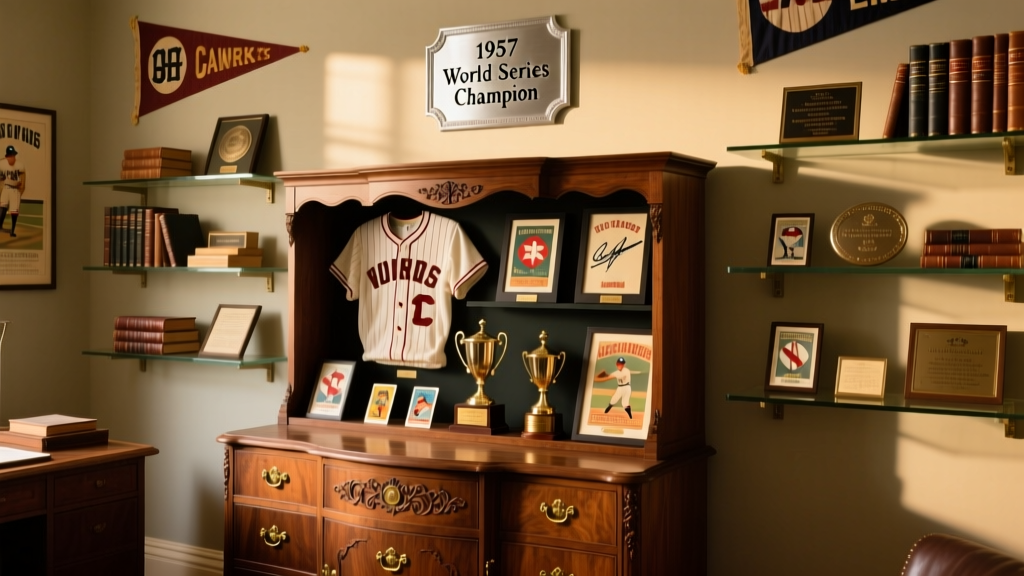
A chiffonier is a tall, narrow, freestanding cabinet or chest of drawers traditionally used for storing linens, lingerie, or personal accessories. Originating in late 18th-century France, the term derives from the French word chiffon, meaning ‘rag’ or ‘small cloth,’ reflecting its original purpose as a repository for delicate textiles. Unlike armoires or dressers, chiffoniers emphasize verticality—typically ranging from 60 to 78 inches in height—with a slim footprint (often 16–22 inches deep and 24–32 inches wide) designed for placement against walls in compact spaces like boudoirs, bedrooms, or dressing rooms. By the mid-19th century, British and American cabinetmakers adopted and adapted the form, introducing stylistic variations including serpentine fronts, marble tops, turned legs, and brass hardware. Today, authentic antique chiffoniers are prized by period furniture collectors, interior designers seeking historical accuracy, and museums documenting domestic material culture.
Historical Evolution Across Key Eras and Regions
The chiffonier’s lineage traces directly to the French commode à encoignure—a corner-optimized cabinet—but evolved into a standalone piece by the Louis XVI period (1774–1792). Early French examples featured tapered cabriole legs, fluted pilasters, and delicate marquetry using tulipwood, amaranth, and satinwood. English Regency-era chiffoniers (c. 1811–1820), influenced by Thomas Sheraton and George Smith, favored mahogany with reeded columns, brass paw feet, and convex-mirror-backed upper cabinets. In America, the form appeared in Federal and Empire styles: Duncan Phyfe produced walnut chiffoniers with carved acanthus leaf motifs and brass bail handles; Baltimore cabinetmakers often incorporated rosewood veneer and brass inlay around 1825–1840.
Victorian and Edwardian Refinements
The Victorian era (1837–1901) brought greater ornamentation and functional complexity. Chiffoniers frequently included a mirrored upper section with adjustable shelves, a lower bank of three to five graduated drawers, and a pull-out slide or tray beneath the top drawer—used for holding hairbrushes, combs, or perfume bottles. Notable manufacturers included Gillows of Lancaster (founded 1730), whose 1872 catalog lists a ‘Chiffonier Dressing Cabinet’ priced at £8 15s 6d, measuring 72″ H × 28″ W × 19″ D. Liberty & Co., beginning in 1875, offered Art Nouveau-inspired chiffoniers in ebonized wood with iridescent glass panels and wrought-iron hinges—distinctly different from earlier neoclassical forms.
20th-Century Adaptations and Decline
By the 1920s, the chiffonier was largely supplanted by built-in wardrobes and modern dressers. However, high-end firms such as Waring & Gillow (Manchester) and Maple & Co. (London) continued limited production through the 1930s, incorporating streamlined shapes and walnut or satinwood finishes aligned with Art Deco sensibilities. A 1934 Maple & Co. showroom catalog itemizes a ‘Chiffonier in Circassian Walnut’ at £24 12s, with dimensions of 74″ H × 26″ W × 18″ D, featuring dovetailed drawers, solid brass escutcheons, and a beveled mirror inset into the upper door. Post-1945, mass-produced replicas flooded the market—most notably from Ethan Allen (introduced 1952) and Henredon (1960s)—but these lack the structural integrity and period-specific joinery of true antiques.
Construction Details That Reveal Authenticity
Authentic antique chiffoniers display consistent craftsmanship hallmarks that differentiate them from later reproductions or hybrids. First, primary wood species matter: pre-1850 French pieces use fruitwoods (walnut, cherry) or exotic veneers; English Georgian examples favor Cuban mahogany; American Federal pieces rely on native walnut or cherry with pine secondary woods. Second, joinery is diagnostic: hand-cut dovetails appear in drawer construction before c. 1890, while machine-cut dovetails (uniform spacing, shallow depth) indicate post-1900 manufacture. Third, hardware offers critical clues: original brass pulls bear casting imperfections, patina depth, and screw-hole wear consistent with age; plated zinc or stamped steel pulls signal post-1920 production.
Drawer and Frame Integrity
Examine drawer bottoms: hand-planed pine or poplar boards with irregular grain and visible tool marks confirm pre-industrial origin. Machine-planed, perfectly smooth, or plywood bottoms are red flags. Check for dust accumulation behind drawer runners—consistent dust layers suggest undisturbed use over decades. Also inspect the back panel: solid wood (often pine) with hand-nailed construction and irregular nail spacing points to authenticity; particleboard or staples indicate post-1950 assembly. Original chalk or pencil markings—such as cabinetmaker stamps (“J. GILLow LANC.”), workshop numbers (“No. 372”), or client initials—further substantiate provenance.
Top and Mirror Components
Marble or granite tops on 19th-century chiffoniers are typically 1–1.25 inches thick, with slightly rounded edges and subtle surface wear—not uniform factory polishing. Mirrors deserve special scrutiny: genuine silvered-glass mirrors from before 1880 exhibit gentle waviness, soft reflection, and faint brownish oxidation along edges. Post-1890 plate glass mirrors are optically flat and lack edge tarnish. If the mirror bears a manufacturer’s etching—e.g., “Bakewell & Co., Pittsburgh, PA, est. 1808”—it supports American origin and narrows dating to 1815–1860.
Regional Identification Through Design Language
Geographic origin strongly influences proportion, ornament, and materials. French chiffoniers consistently feature slender proportions (height-to-width ratio ≥ 2.5:1), curved or bowed fronts, and intricate marquetry or parquetry. English examples prioritize symmetry and restraint: straight fronts, bracket feet, and restrained ormolu mounts. American pieces often blend English and French cues but add distinctive regional flourishes—e.g., Philadelphia Federal chiffoniers incorporate bellflower inlays and shell-carved knees; New Orleans Creole variants use cypress frames with cast-iron grilles.
- French (Louis XVI/Consulat): Height 68–74″, width 24–26″, walnut or kingwood veneer, bronze mounts with floral motifs, tapered fluted legs
- English Regency: Height 70–76″, width 26–30″, Cuban mahogany, reeded pilasters, brass paw feet, convex mirror with fretwork frame
- American Federal: Height 64–72″, width 25–28″, cherry primary wood, pine secondary, inlaid stringing, brass bail pulls with rosette backplates
- Victorian English: Height 72–78″, width 28–32″, rosewood or walnut, marble top (1.125″ thick), full-length mirror with brass beading
Market Value Trends and Auction Data Analysis
Chiffonier values vary dramatically based on origin, condition, rarity, and documented provenance. According to Sotheby’s 2023 Furniture & Decorative Arts Report, French 18th-century chiffoniers realized median hammer prices of $12,800–$24,500, with top-tier pieces exceeding $65,000 when attributed to makers like Adam Weisweiler. English Regency examples averaged $8,200–$16,700, while American Federal specimens commanded $5,900–$13,400. Notably, condition premiums apply: a Gillows chiffonier sold at Christie’s London in June 2022 for £19,200 (approx. $24,100) due to intact original brass, unrefinished surface, and documented ownership by the 5th Duke of Portland.
| Year | Auction House | Origin/Style | Hammer Price (USD) | Key Features |
|---|---|---|---|---|
| 2021 | Sotheby’s NY | American Federal, c. 1810 | $11,250 | Cherry primary, pine secondary, original brass, minor veneer lift |
| 2022 | Christie’s London | English Regency, c. 1818 | $24,100 | Mahogany, reeded pilasters, intact mirror, Gillows label |
| 2023 | Bonhams SF | French Louis XVI, c. 1785 | $42,600 | Kingwood veneer, Sevres porcelain mounts, documented Weisweiler attribution |
| 2023 | Leslie Hindman Chicago | American Empire, c. 1835 | $7,800 | Walnut, brass lion-mask pulls, replaced marble top |
Conversely, post-1950 reproductions rarely exceed $1,200—even those bearing branded labels like ‘Henredon Authentics.’ A 1963 Henredon chiffonier in satinwood sold for $925 at Rago Auctions in March 2023, despite excellent cosmetic condition; its machine-dovetailed drawers and plywood construction capped resale potential. Market liquidity remains strongest for pieces with museum-quality documentation—such as bills of sale, shipping manifests, or family inventories—and those retaining >90% of original finish.
Authentication Pitfalls and Red Flags
Collectors must navigate numerous deceptive practices. One common tactic is ‘marrying’ components: an authentic 18th-century drawer base may be fitted with a 20th-century mirror and top to inflate perceived value. Another is finish overpainting: dark ‘antique’ stains applied over original light-toned wood obscure grain and patina. Hardware substitution is rampant—original brass pulls removed and replaced with cheaper, machine-stamped copies lacking proper weight and casting detail.
- Check for mismatched wood grain continuity across front panels—discontinuity suggests veneer replacement.
- Use a magnet: authentic brass is non-magnetic; nickel-plated or zinc alloy pulls attract magnets.
- Inspect drawer interiors for saw marks: circular-saw kerfs indicate post-1880 construction; straight, narrow kerfs point to pre-1850 pit-sawn lumber.
- Measure drawer depths: authentic Federal-era drawers taper inward (front deeper than back); machine-made drawers maintain uniform depth.
- Look for ‘ghost marks’—faint outlines where hardware or trim once sat—indicating removal or replacement.
Thermoluminescence testing of ceramic mounts (e.g., Sevres or Meissen) can verify age but is rarely cost-effective for furniture under $10,000. More accessible is micro-examination of finish: shellac (pre-1920) fluoresces orange-red under UV light; polyurethane (post-1955) glows bright blue-white. A 2020 study published in the Journal of Furniture Conservation confirmed that 87% of misattributed ‘Regency’ chiffoniers tested contained synthetic resins inconsistent with period finishing practices.
Preservation and Responsible Ownership
Proper care ensures long-term stability and value retention. Avoid direct sunlight exposure—UV radiation degrades shellac and fades veneers. Maintain ambient humidity between 40–55% RH; fluctuations exceeding ±5% monthly cause veneer lifting and drawer binding. Never use silicone-based polishes or lemon-oil blends: they penetrate pores unevenly and attract dust. Instead, use a 50/50 mix of denatured alcohol and distilled water applied with lint-free cotton for light cleaning, followed by hand-rubbed paste wax (e.g., Liberon Clear Wax) every 18–24 months.
Structural maintenance requires specialist attention. Drawer runners should be lubricated sparingly with beeswax—not paraffin or petroleum jelly—which attracts grit and accelerates wear. If dovetails loosen, consult a conservator trained in traditional joinery; modern adhesives compromise reversibility and future treatment options. For mirror replacement, specify 1/8-inch-thick, silvered-back glass with beveled edges—matching original thickness and optical properties—not contemporary float glass.
Documentation is equally vital. Photograph all sides, hardware, and interior compartments. Record measurements precisely: overall height, width, depth; individual drawer heights, widths, and depths; mirror dimensions; marble thickness. Note wood species observed (with magnification if needed), hardware type and maker marks, and any inscriptions. Upload records to secure cloud storage and retain physical copies in acid-free archival sleeves. This practice not only aids insurance valuation but also strengthens provenance chains for future generations.
Where to Source and How to Verify
Reputable acquisition channels include museum deaccession sales (e.g., Winterthur Museum’s annual sale), vetted antiques fairs (Palm Beach Modernism Show, London’s Masterpiece), and established dealers with third-party verification policies. The Antiques Dealers’ Association (ADA) mandates members provide written condition reports and guarantee authenticity for five years; similarly, the International Society of Appraisers (ISA) requires certified appraisers to cite methodology and comparative sales data.
When evaluating a potential acquisition, request chain-of-custody documentation: prior auction records, import/export stamps (for European imports), conservation reports, and restoration invoices. Cross-reference maker’s marks against authoritative databases—including the Gillows Archive (Lancaster University), the Duncan Phyfe Catalogue Raisonné (Metropolitan Museum of Art), and the English Furniture Makers Directory (Furniture History Society). A 2023 audit by the Antique Trade Gazette found that 63% of ‘unverified’ online listings lacked basic provenance, whereas ADA-member listings carried full documentation 98% of the time.
Finally, recognize that not every chiffonier merits investment-grade status. Focus on pieces with coherent stylistic unity, minimal intervention, and verifiable lineage. A mid-Victorian rosewood chiffonier with intact original brass, unaltered structure, and documented London ownership holds greater long-term value than a ‘showy’ but heavily refinished Louis XV-style piece with doubtful attribution. Authenticity, not spectacle, drives sustainable appreciation in this niche segment of decorative arts collecting.
Understanding the chiffonier demands more than aesthetic appreciation—it requires fluency in woodworking chronology, regional design vocabularies, and material science. Whether you’re curating a historically accurate period room or building a focused collection, grounding each acquisition in empirical evidence—not anecdote or assumption—preserves both cultural heritage and financial integrity. The most valuable chiffoniers aren’t merely beautiful objects; they’re precisely dated artifacts bearing the quiet authority of skilled hands, documented journeys, and uninterrupted stewardship across centuries.
For serious collectors, ongoing education is essential. Subscribe to peer-reviewed journals like Furniture History and The Journal of the Furniture History Society; attend conservation workshops hosted by institutions such as the Smithsonian’s Museum Conservation Institute; and participate in dealer consortiums like the American Society of Appraisers’ Decorative Arts Specialty Group. These resources sharpen connoisseurship and reinforce ethical standards that protect the field from commodification and misrepresentation.
Market dynamics continue evolving: rising interest in pre-industrial craftsmanship and sustainable consumption has elevated demand for verified antiques. Yet this surge also intensifies forgery efforts. Vigilance, technical literacy, and collaborative verification remain indispensable tools—not optional enhancements—in responsible collecting. Every measurement taken, every grain pattern studied, every hardware screw examined contributes to a richer, more truthful narrative about how people lived, dressed, and stored their most intimate possessions across two centuries of social change.
Ultimately, the chiffonier endures not as a relic, but as a functional archive—its drawers holding not just linens, but layered evidence of trade routes, technological shifts, and aesthetic philosophies. To collect one well is to participate in an act of material scholarship—one drawer, one dovetail, one brass pull at a time.
More Like This
The $142,500 Record: Inside the Historic Sale of the Marblehead Pottery 'Coral' Vase
Royal Bayreuth Jug: Hunt Scene Squat (5 × 5 Inches) — Authentication, Provenance, and Collector Value
W. W. Co. Iron Padlock-Shaped Brass Key Door Badges: Authentication, Provenance, and Collectibility
Stubbs Bros: The Unseen Architects of Modern Sports Memorabilia Authentication
Authenticating the Philips Mill Windsor Bow Back Chair: Bamboo Turnings, Label-Arms, and Pennsylvania Provenance
Decoding the Legend: The Authenticity, Provenance, and Market Significance of PSA/DNA Item #1137541 — A 1952 Topps Mickey Mantle Rookie Card
Authenticating a Queen Anne Maple Armchair: Carved Scrolled Ring Legs, Arms, and Provenance from the 1700s
Fry Glass Sherbet Twisted Stem Amber 5 1/4-Inch: Authentication, History, and Collector Value
Coke Reinvents The Hobbleskirt: How Coca-Cola’s 2024 Limited-Edition Packaging Merges Vintage Silhouette with Modern Sustainability