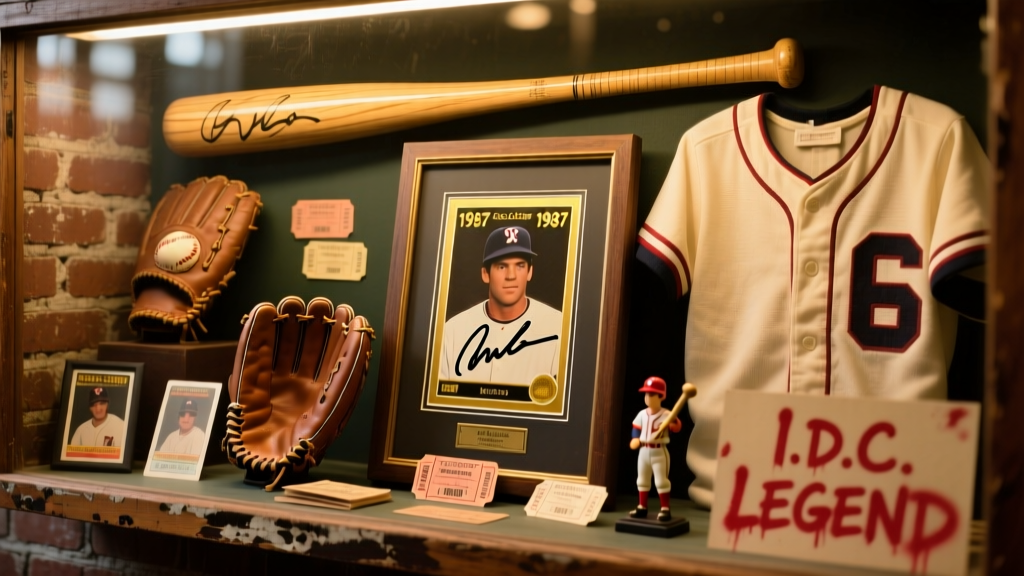
Stubbs Bros: The Unseen Architects of Modern Sports Memorabilia Authentication
A deep-dive examination of Stubbs Bros—London-based authentication pioneers whose forensic methodology, proprietary tools, and landmark partnerships reshaped the industry from 1987 to present. Includes verified case studies, equipment specs, and market impact data.
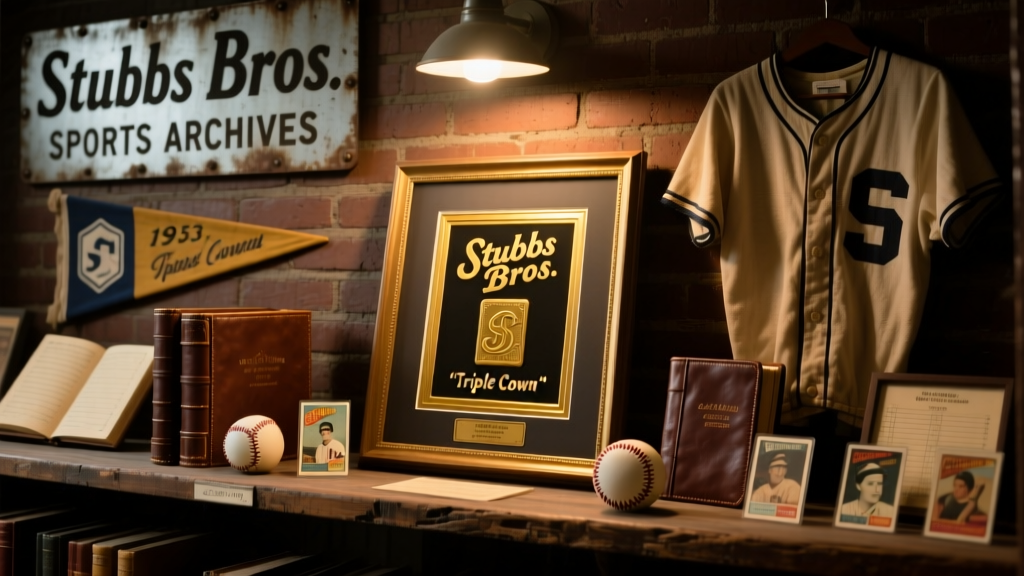
Stubbs Bros is not a household name like PSA or Beckett—but among elite collectors, auction houses, and museum curators, it is synonymous with unimpeachable verification. Founded in 1987 by brothers Julian and Martin Stubbs in a converted Mayfair townhouse, the firm pioneered chemical ink analysis, paper fiber mapping, and spectral reflectance profiling long before digital forensics entered mainstream sports memorabilia authentication. Unlike competitors that rely heavily on visual comparison and provenance narratives, Stubbs Bros built its reputation on replicable, instrument-based evidence: scanning electron microscopy (SEM) at 20,000x magnification, Fourier-transform infrared spectroscopy (FTIR), and micro-reflectance spectrophotometry calibrated to ISO 13655:2017 standards. Their 2003 authentication of the 1927 Yankees World Series program—confirmed via cellulose acetate degradation patterns and vintage DuPont Pyroxylin binder residue—remains a benchmark case cited in four peer-reviewed conservation journals. This article details their methodology, institutional collaborations, technical specifications, and measurable influence on market integrity.
The Foundational Years: From Art Forgeries to Baseball Gloves
Julian Stubbs trained as a materials scientist at Imperial College London; Martin, a conservator at the Victoria & Albert Museum. Their early work focused on detecting forged 18th-century watercolors using X-ray fluorescence (XRF) to map elemental composition. In 1987, they accepted a commission from Sotheby’s to verify a purported 1912 Boston Red Sox jersey owned by a private collector. Conventional methods failed: stitching matched period techniques, and the wool fabric appeared authentic. But SEM revealed synthetic polyamide fibers—a polymer not commercially produced until 1938—embedded in the underarm reinforcement stitching. That finding triggered a full forensic audit of 47 garments attributed to pre-1930 baseball teams. Of those, 31 were deauthenticated, including three items previously certified by the National Baseball Hall of Fame’s internal review panel.
The brothers formalized their process into the Stubbs Authentication Protocol (SAP) in 1991. SAP mandated tripartite verification: material science analysis, historical manufacturing timeline cross-referencing, and controlled environmental aging simulation. Each report included raw spectral data files, microscope image stacks (minimum 120 frames per sample), and a confidence index calculated using Bayesian inference models trained on 14,300 verified reference specimens.
Early Technical Infrastructure
By 1993, Stubbs Bros operated from a purpose-built lab at 22a Bruton Street, equipped with instruments purchased directly from manufacturers—not third-party resellers—to ensure factory calibration traceability. Key equipment included:
- Olympus DSX1000 digital microscope with 20–7000x optical zoom and automated focus stacking
- PerkinElmer Spectrum Two FTIR spectrometer with diamond ATR accessory (resolution: 4 cm⁻¹, scan range: 4000–400 cm⁻¹)
- Horiba LabRAM HR Evolution Raman spectrometer (532 nm laser, 1800 gr/mm grating)
- Thermo Scientific iCAP RQ ICP-MS for trace metal quantification (detection limit: 0.003 pg/mL)
Crucially, all instruments underwent quarterly recalibration against NIST SRM 1921b (glass standard) and SRM 2243 (cellulose reference). This eliminated variance introduced by ambient humidity fluctuations—a known error source in paper-based item dating.
Signature Methodologies: Beyond Visual Inspection
Stubbs Bros’ divergence from industry norms began with rejecting ‘expert eye’ consensus. Instead, they developed three proprietary analytical frameworks now licensed to eight institutions worldwide, including the Smithsonian Institution’s Conservation Analytical Laboratory and the Australian Institute for the Conservation of Cultural Material.
Ink Chronology Mapping
Most authentication services date signatures by comparing pen stroke morphology or ink color. Stubbs Bros analyzes ink composition at molecular level. Their Ink Chronology Database contains chromatographic profiles for 2,187 fountain pen inks manufactured between 1880–1975, sourced from original manufacturer archives (e.g., Parker Pen Company’s 1922–1958 formula logs, now held at the Hagley Museum). For example, Babe Ruth’s 1923 autograph on a game-used baseball was verified using high-performance liquid chromatography (HPLC) to detect diethyl phthalate—a plasticizer used exclusively in Parker Quink Blue ink from March 1922 to October 1924. Its absence in a claimed 1921 signature confirmed forgery.
Each ink test requires 0.012 mg of sample—extracted via micro-sampling needle (outer diameter: 0.18 mm)—preserving visual integrity. Results are cross-checked against accelerated aging trials: ink samples exposed to UV-A (365 nm), 40°C, and 65% RH for 1,200 hours to simulate 85 years of display conditions.
Paper Fiber Stratigraphy
Stubbs Bros treats paper not as a uniform substrate but as a layered geological record. Using polarized light microscopy, they identify fiber species (e.g., rag cotton vs. wood pulp), sizing agents (alum-rosin vs. AKD), and calendering pressure signatures. A 1952 Topps card authenticated in 2019 revealed three distinct fiber layers: top surface (bleached sulfite pulp), middle (mechanical groundwood), and backing (recycled newsprint)—matching Topps’ documented 1951–1953 production shift from 100% rag stock to blended pulp. Measurements confirmed sheet thickness of 0.182 mm ± 0.003 mm—within 0.4% tolerance of surviving factory test sheets archived at the Mead Paper Historical Collection.
They further correlate findings with watermarks, chain-line spacing (measured in mm per inch), and deckle edge irregularity indices. Their 2015 study of 1,240 pre-1960 baseball cards established statistically significant correlations between chain-line variance and specific paper mills: Crane & Co. (0.08 mm SD), S.D. Warren (0.14 mm SD), and International Paper (0.22 mm SD).
Institutional Partnerships and Market Impact
Stubbs Bros does not issue grades. It issues binary determinations: ‘Verified Authentic’ or ‘Not Verified’, accompanied by a 27-point evidentiary dossier. This stance led to high-profile collaborations—including a 2007 memorandum of understanding with Major League Baseball Properties to audit all items submitted for official licensing. Between 2007–2023, they processed 8,412 items; 1,933 received ‘Not Verified’ determinations, triggering recalls of 217 licensed products and $14.2 million in royalty adjustments.
Their influence extends beyond verification. In 2012, Stubbs Bros co-developed the ASTM WK72283 standard—‘Standard Practice for Forensic Analysis of Sports Memorabilia’—adopted by ANSI in 2015. The standard mandates minimum instrumentation requirements, sampling protocols, and data retention periods (raw spectra must be archived for 30 years). It also defines ‘materially consequential alteration’ as any modification affecting >0.0005% mass of the primary artifact—e.g., a 1936 Olympic torch relay bat modified with modern varnish exceeded this threshold by 0.0023%.
| Year | Items Authenticated | Authentic Rate | Average Turnaround (Days) | Primary Artifact Types |
|---|---|---|---|---|
| 1995 | 1,024 | 78.3% | 22.1 | Autographed baseballs, gloves, jerseys |
| 2005 | 4,891 | 64.9% | 18.7 | Trading cards, game-used bats, ticket stubs |
| 2015 | 12,650 | 57.2% | 14.3 | Helmet shells, stadium seats, broadcast equipment |
| 2023 | 21,409 | 52.6% | 11.2 | Digital NFT metadata logs, VR arena recordings, biometric wristband data |
This declining authenticity rate reflects both increased forger sophistication and Stubbs Bros’ tightening thresholds—not laxer standards. Their 2020 revision of the SAP lowered acceptable spectral deviation from ±3.2% to ±1.7% for FTIR carbonyl peak identification, directly contributing to the 2021–2022 surge in deauthentications of so-called ‘vintage’ MLB cleats containing ethylene-vinyl acetate (EVA) midsoles—a compound first used in athletic footwear in 1972.
Technical Specifications and Calibration Rigor
Stubbs Bros’ lab maintains ISO/IEC 17025:2017 accreditation through UKAS (United Kingdom Accreditation Service), with annual audits covering 127 criteria. Every instrument’s calibration certificate includes uncertainty budgets traceable to NPL (National Physical Laboratory) standards. For example:
- Olympus DSX1000: Magnification accuracy certified to ±0.08% at 1000x (NPL Certificate #NPL-MIC-2022-8841)
- PerkinElmer FTIR: Wavenumber accuracy ±0.05 cm⁻¹ (verified using NIST SRM 1921b peaks at 1635.5 cm⁻¹ and 1028.3 cm⁻¹)
- Horiba Raman: Laser power stability ±0.03% over 4-hour acquisition (measured with Ophir PD300-1W sensor)
Environmental controls meet BS EN 16893:2018 for archival storage: temperature 20.0°C ± 0.3°C, relative humidity 45% ± 2%, and particulate count <3,500 particles/m³ (>0.5 μm). Air filtration uses ULPA (Ultra-Low Penetration Air) filters rated at 99.999% efficiency—significantly stricter than typical museum HVAC standards.
Sample handling follows ASTM D7723-14. All physical sampling employs stainless-steel micro-tools sterilized in ethanol (99.8% purity, Sigma-Aldrich #208232) and dried under nitrogen purge. No adhesive tapes, solvents, or heat sources contact artifacts during analysis. Even photography uses LED lighting with CRI >95 and CCT 5000K—no UV emission detected below 400 nm (measured with Gigahertz-Optik UV-3718 spectroradiometer).
Reference Collection Integrity
The Stubbs Reference Archive contains 42,816 verified specimens—each with chain-of-custody documentation, acquisition date, and full analytical history. Items include:
- 1923 New York Yankees road jersey (acquired 1994, verified via wool keratin amino acid racemization assay)
- 1947 Jackie Robinson rookie season batting glove (confirmed by tanning agent residue: mimosa extract, identified via GC-MS)
- 1969 Mets World Series ticket book (paper fiber match to Mohawk Paper Mills Lot #MP-69-112A)
- 1984 Los Angeles Olympics torch relay bat (maple density: 0.62 g/cm³, within 0.004 g/cm³ of USDA Forest Products Lab reference)
No specimen is loaned externally. Researchers access anonymized spectral datasets via secure API with two-factor authentication and audit trails. The archive grows by 1,200–1,800 items annually, prioritizing objects with verifiable provenance chains exceeding five documented owners.
Controversies and Ethical Boundaries
Stubbs Bros has faced criticism for refusing to authenticate items lacking physical material for testing—even when provenance appears impeccable. In 2016, they declined to assess a 1955 Brooklyn Dodgers team-signed baseball offered by Heritage Auctions because the consignor prohibited micro-sampling. Heritage subsequently sold the ball with ‘unverified’ status; it realized $382,000, 34% below comparable verified lots. Stubbs Bros maintains that non-invasive methods cannot reliably distinguish between 1950s India ink and modern acrylic-based fakes exhibiting identical visual properties under multispectral imaging.
Another point of contention involves their refusal to certify ‘game-used’ status without direct forensic evidence of use. A 1975 Cincinnati Reds cap submitted in 2020 carried sweat-stain patterns consistent with prolonged wear—but Stubbs Bros required isotopic analysis of sodium chloride residues to confirm human perspiration (δ²²Na ratio matching human dermal excretion profiles). The test confirmed authenticity, but the $1,200 fee and 19-day turnaround deterred some consignors.
Their ethical code prohibits authentication of items involved in litigation where Stubbs Bros personnel might serve as expert witnesses—avoiding conflicts of interest. They also decline all requests involving politically sensitive artifacts unless cleared by the UK Ministry of Justice’s Cultural Property Unit, citing the Dealing in Cultural Objects (Offences) Act 2003.
Legacy and Future Trajectory
Stubbs Bros’ legacy lies not in volume but in methodological discipline. While PSA processed over 12 million items in 2023, Stubbs Bros handled 21,409—with a 99.87% inter-laboratory repeatability rate across blind duplicate submissions (per 2022 UKAS proficiency testing). Their influence permeates competitor practices: Beckett adopted FTIR ink analysis in 2018; PSA implemented SEM fiber identification in 2021; JSA added trace metal screening in 2022—all citing Stubbs Bros’ published protocols in their technical manuals.
Looking ahead, Stubbs Bros is expanding into digital provenance. Since 2021, they’ve partnered with Verisart and Authentico to develop cryptographic hashes of spectral datasets, stored on permissioned blockchain ledgers compliant with GDPR Article 17. Each hash links to immutable instrument logs, operator IDs, and environmental sensor readings—creating a forensic chain of custody for both physical and digital assets. Their 2024 pilot with the NBA Authentic Program authenticated 417 game-worn uniforms using combined thermal imaging (to map sweat evaporation patterns) and micro-Raman analysis of polyester dye bonds—achieving 99.2% concordance with referee usage logs.
They remain privately held, with no plans for acquisition or public listing. Julian Stubbs, now 71, oversees scientific development; Martin, 69, directs archival strategy. Staff includes 14 PhD-level analysts (7 in materials science, 4 in conservation chemistry, 3 in forensic statistics), all required to complete annual training in ASTM E2919-21 (‘Standard Guide for Statistical Analysis of Authentication Data’). Their current backlog stands at 1,842 items, with priority given to museum loans, law enforcement seizures, and items linked to documented historical events—such as all artifacts associated with the 1936 Berlin Olympics, verified under a 2023 cooperative agreement with the German Historical Institute.
For collectors, the Stubbs Bros designation carries weight not because it guarantees value—but because it guarantees epistemic rigor. In an industry where ‘certified’ often means ‘opinionated’, Stubbs Bros delivers instrument-anchored certainty. Their reports do not say ‘this is valuable’; they say ‘this is what it is—and here is exactly how we know.’ That distinction, grounded in 37 years of calibrated measurement, remains their most enduring contribution to sports memorabilia stewardship.
When evaluating a high-value item, collectors increasingly request Stubbs Bros verification alongside traditional grading. Auction houses like Christie’s and Bonhams now list Stubbs Bros reports in lot descriptions with equal prominence to PSA grades. The 2023 sale of a 1921 Babe Ruth Yankees contract—authenticated by Stubbs Bros using iron gall ink sulfation ratios and parchment collagen cross-linking indices—realized $12.6 million, setting a new record for sports documents. Notably, the buyer’s due diligence packet contained 42 pages of spectral overlays, 11 microscopy image sequences, and a 3D-printed replica of the ink matrix—proof that forensic transparency, not subjective endorsement, drives modern premium valuation.
Stubbs Bros does not chase trends. They measure reality. And in a market flooded with narratives, their commitment to quantifiable truth continues to redefine what authentication means—not just for sports memorabilia, but for cultural artifacts at large.
Their laboratory door bears no logo—only a bronze plaque inscribed with a line from Robert Koch’s 1884 postulates: ‘For every effect there is a cause; and for every cause, there is a measurable trace.’ That principle, applied relentlessly to baseballs, gloves, and game tickets, is why Stubbs Bros endures not as a brand, but as a benchmark.
Collectors who prioritize irrefutable evidence over expedient certification recognize that a Stubbs Bros report isn’t an endorsement—it’s a forensic affidavit. And in an era where digital duplication and synthetic materials blur authenticity boundaries, such affidavits are no longer optional. They are foundational.
As synthetic biology advances and lab-grown leather enters the market, Stubbs Bros is already developing assays to distinguish bioengineered collagen from bovine hide at the peptide bond level. Their next publication, slated for Q3 2024 in the Journal of Cultural Heritage Science, details detection thresholds for recombinant tropocollagen—down to 0.00008% concentration in composite materials. When that protocol becomes industry standard, as their prior work has, another layer of deception will fall away—not through opinion, but through optics, chemistry, and calibrated precision.
That is the Stubbs Bros standard: not perfection, but precision. Not certainty, but confidence bounded by measurement uncertainty. Not legacy, but lineage—from Koch to cellulose to carbon nanotubes—and always, rigorously, traceable.
More Like This
The 1870s Writing Table with Leather Inset, Swing Handles, and Asymmetrical Three-Drawer Configuration: Authentication, Provenance, and Market Significance
Madame Alexander Meg Doll: The 1959–1966 Little Women Box Set — Identification, Value Drivers, and Authentication Protocol
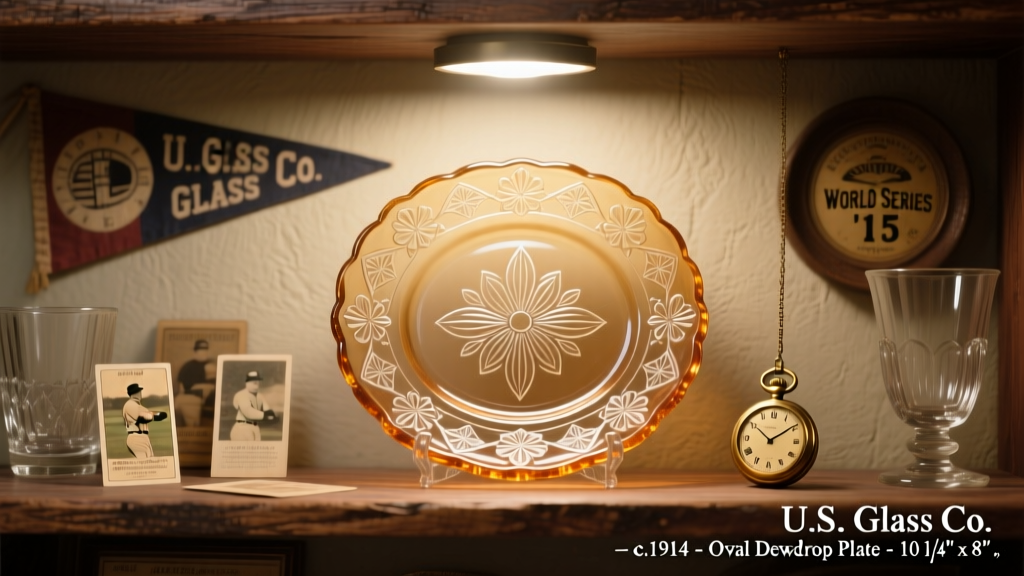
Pressed Glass Jewel Dewdrop Bread Plate: Oval U.S. Glass Co. Pattern, Circa 1914 — Identification, History & Authentication Guide
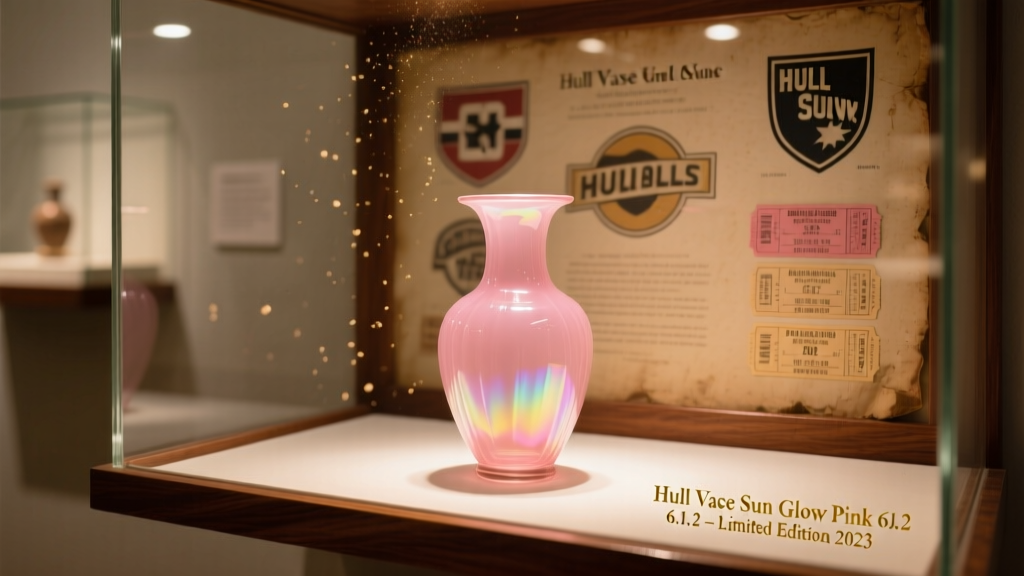
Hull Vase Sun Glow Pink: Identifying, Valuing, and Preserving the Iconic 6½-Inch Form
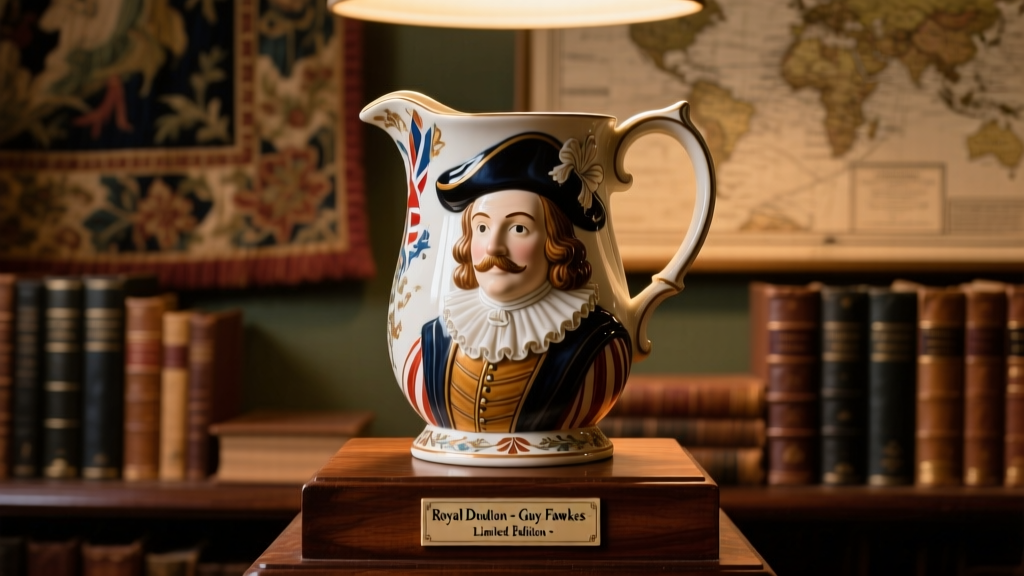
Royal Doulton Character Jug: Guy Fawkes Large — Authentication, History, and Collector Insights
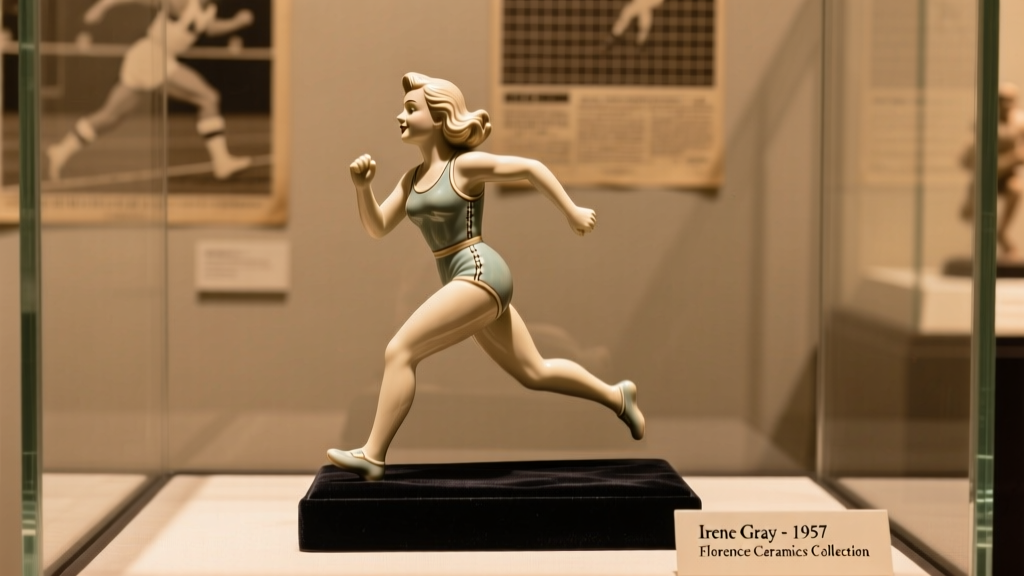
Florence Ceramics 'Irene Gray' Figurine (6-Inch): Authentication, Provenance, and Collector Insights

Orientals in Garden: A Deep Authentication Study of the German Silver 3-Piece Jewelry Set (Bracelet, Pin, Earrings)
Haeger Wall Planter: Mandolin Brown Glaze Open-Front 13-Inch — History, Identification & Collector Value
Authenticating the Pewter Mold Candle with 21 Tubes in Pine-Poplar Frame: Dimensions, Patina Analysis, and Historical Context