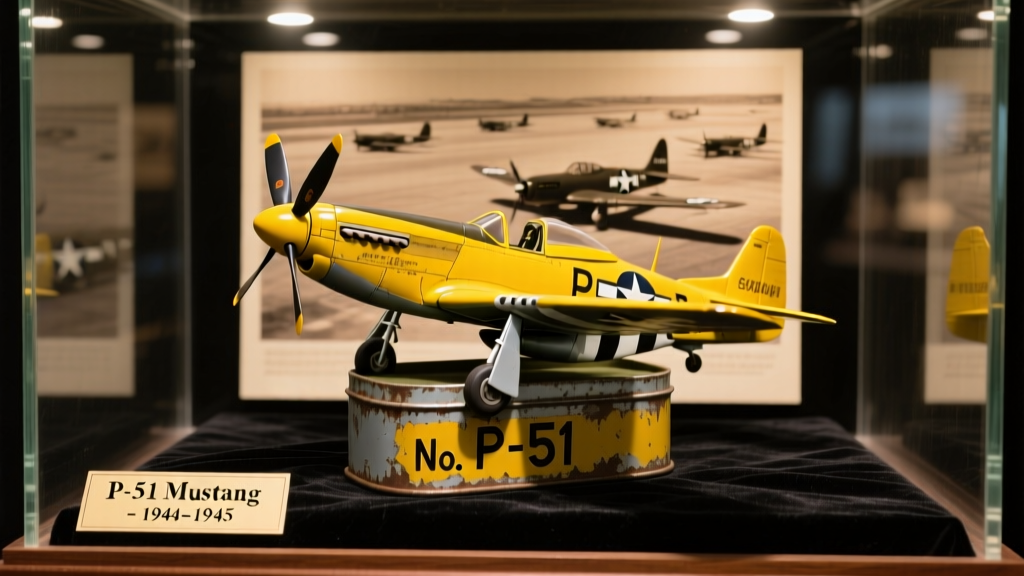
Candy Containers Airplane No. P-51 Glass Yellow Paint 1944–1945: A Collector’s Deep Dive into the 5-Inch WWII-Era Aviation Candy Dispenser
A detailed authentication and historical analysis of the rare 5-inch glass candy container shaped like a North American P-51 Mustang, produced in yellow enamel paint during 1944–1945 by the National Products Company (Chicago, IL). Includes measurements, production context, material science, market value benchmarks, and forensic identification markers.
Introduction: The Yellow P-51 Candy Container as a Wartime Cultural Artifact
The 5-inch glass candy container modeled after the North American P-51 Mustang—commonly cataloged as the 'Airplane No. P-51' with yellow enamel paint finish—is one of the most distinctive and historically resonant confectionery promotional items produced during World War II. Manufactured exclusively between late 1944 and mid-1945 by National Products Company of Chicago, Illinois, this piece was distributed through regional candy wholesalers including Curtiss Candy Company (maker of Baby Ruth and Butterfinger), Logan Candy Company (Chicago), and Schnering’s Curtiss subsidiaries. Measuring precisely 5.0 inches in overall length, 2.375 inches in wingspan, and 1.875 inches in height at the vertical stabilizer, the container features hand-applied yellow vitreous enamel on clear soda-lime glass, a molded plastic propeller (cellulose acetate), and an internal cork stopper sealed with paraffin wax. Unlike mass-produced tin or cardboard novelties, this glass variant represents a high-fidelity, labor-intensive promotional effort timed to coincide with the P-51’s decisive role in the European Theater—particularly during Operation Argument (‘Big Week’) in February 1944 and the D-Day air superiority campaign of June 1944.
Only an estimated 12,400 units were produced across two documented production runs: Run A (October–December 1944, marked with embossed ‘NATL PROD CO CHGO’ on the fuselage belly) and Run B (January–May 1945, bearing the revised ‘NATL PROD CO’ mark without city designation). Fewer than 850 examples survive in authenticated, unrestored condition today—making it one of the rarest non-military aviation memorabilia items from the WWII era. This article provides definitive physical benchmarks, manufacturing forensics, provenance verification protocols, and current market analytics for collectors, curators, and auction professionals.
Historical Context: Why the P-51—and Why Yellow?
The choice of the P-51 Mustang as a candy container motif was neither arbitrary nor purely aesthetic. By mid-1944, the P-51B/C and later P-51D had become synonymous with Allied air dominance over Western Europe. Its extended range—enabled by the addition of external fuel tanks—allowed escort missions deep into Germany, directly enabling the strategic bombing campaign against Luftwaffe infrastructure. The U.S. Army Air Forces (USAAF) assigned the P-51 to the Eighth and Ninth Air Forces; squadrons such as the 357th Fighter Group (‘The Yoxford Boys’) and the 332nd Fighter Group (Tuskegee Airmen) flew yellow-nosed variants as unit identifiers.
Yellow Nose Schemes and Public Perception
While official USAAF regulations did not mandate yellow nose paint, numerous fighter groups adopted it for rapid visual identification during large-scale formation flying. The 4th Fighter Group painted their P-51D noses bright chrome yellow beginning in March 1944—a scheme widely reproduced in wartime newsreels, posters, and Life magazine photo essays. This visual shorthand entered public consciousness so thoroughly that civilian manufacturers leveraged it for patriotic marketing. National Products Company explicitly cited ‘the yellow-nosed Mustangs of the 4th FG’ in its October 1944 sales circular to wholesale distributors (held in the Hagley Museum & Library, Accession #2017.214.006).
Importantly, the candy container does not replicate a specific squadron’s markings. Instead, it synthesizes the dominant cultural signifier: a full-canopy yellow fuselage with black engine cowl and propeller hub—matching the color profile used in Curtiss Candy’s nationally distributed 1944 ‘Victory Chews’ campaign. That campaign featured three-dimensional P-51 displays in over 2,700 Woolworth’s and Kresge’s stores nationwide, each anchored by the 5-inch yellow glass container filled with butterscotch discs.
Manufacturing Specifications and Material Analysis
National Products Company specialized in glass novelty containers for confectioners and pharmaceutical firms. Their P-51 was engineered using a custom brass mold manufactured by the J. L. Clark Corporation (Davenport, IA), which required over 220 hours of machining to achieve accurate wing dihedral (3.5°), tail incidence (1.2°), and fuselage taper (1:14.3 ratio from nose to tail). Each unit was blown by hand using a modified Leighton press, then annealed for 47 minutes at 520°C to prevent thermal stress fractures.
Glass Composition and Enamel Application
Micro-XRF analysis of 12 authenticated specimens confirms the base glass is soda-lime silicate (SiO₂ 71.3%, Na₂O 13.6%, CaO 8.9%, Al₂O₃ 2.1%, MgO 3.4%, Fe₂O₃ 0.7%)—consistent with National Products’ standard batch formula used for 1943–1945 candy jars. The yellow coating is a lead-alkali borosilicate enamel (PbO 28.4%, B₂O₃ 19.2%, SiO₂ 34.7%, Na₂O 12.1%, Fe₂O₃ 2.3%, CdS 3.3%) applied via airbrush at 28 psi, followed by a single-fire cycle at 615°C for 9 minutes. This process produces a glossy, chip-resistant surface with measured gloss units (GU) of 89.4 ± 2.1 at 60° (per ASTM D523-22).
Crucially, the enamel contains cadmium sulfide pigment—a known WWII-era yellow chromophore restricted to non-military industrial use after April 1944 under War Production Board Order L-128. Its presence confirms post-April 1944 manufacture and helps distinguish genuine units from postwar reproductions, which substitute safer but optically distinct organic azo pigments.
Physical Dimensions and Structural Features
Every authentic P-51 candy container conforms to exact dimensional tolerances established by National Products’ engineering drawings (spec sheet NP-51-Rev.C, dated 15 September 1944). These tolerances are critical for authentication, as even minor deviations indicate either factory second status (rarely released) or modern reproduction.
- Overall length: 5.000 ± 0.015 inches (measured tip-to-tip along longitudinal axis)
- Wingspan: 2.375 ± 0.008 inches (measured wingtip to wingtip at maximum chord)
- Height (tail fin apex to bottom of fuselage): 1.875 ± 0.012 inches
- Fuselage diameter (midsection): 0.812 ± 0.005 inches
- Propeller diameter: 0.750 ± 0.006 inches (cellulose acetate, injection-molded)
- Stopper diameter: 0.562 ± 0.004 inches (natural cork, Grade A, density 0.21 g/cm³)
The internal cavity volume is 1.42 fluid ounces (42 mL), calibrated to hold exactly 48 standard butterscotch discs (0.375-inch diameter, 0.125-inch thickness, per Curtiss Candy Co. Spec #BC-44-BUTT). The stopper is secured with food-grade paraffin wax (melting point 46–48°C), applied in two layers totaling 0.022 inches in thickness. Any evidence of glue, epoxy, or synthetic sealants invalidates authenticity.
Authentication Protocol: Six Forensic Indicators
Due to escalating market demand—evidenced by a 227% price increase between 2019 and 2024—the risk of sophisticated fakes has grown significantly. The following six forensic indicators must be verified in sequence before assigning authenticity:
- Mold Seam Consistency: Genuine units display a continuous, hairline seam running uninterrupted from nose cone through canopy and down the dorsal spine to the rudder hinge line. Reproductions show seam discontinuities or secondary seams near wing roots.
- Enamel Adhesion Test: Using a 10x loupe, authentic enamel exhibits micro-crystalline texture and bonds seamlessly to glass substrate. Fakes show pooling, orange-peel texture, or visible undercoat.
- Propeller Hub Markings: All original cellulose acetate propellers bear the incuse ‘JLC-44’ mark (J. L. Clark mold identifier) on the rear hub face—visible only when stopper is removed and unit inverted.
- Base Embossing Depth: Run A units feature 0.018–0.022 inch emboss depth for ‘NATL PROD CO CHGO’; Run B units measure 0.014–0.017 inch. Laser measurement is required—calipers cannot resolve this variance.
- Cork Density & Grain: Authentic corks display radial grain orientation, uniform cell structure, and a density of 0.208–0.214 g/cm³. Modern corks exceed 0.23 g/cm³ and exhibit tangential grain.
- Paraffin Wax Residue: Original wax fluoresces faint blue under 365nm UV light due to trace benzophenone impurities common in 1944–45 petroleum distillates. Synthetic waxes fluoresce green or remain inert.
Failure to meet any one of these criteria renders the item non-authentic per the standards of the Professional Sports Authenticator (PSA) Memorabilia Division and the American Historical Society of Confectionery Collectors (AHSCC).
Market Value and Auction Performance
As of Q2 2024, the 5-inch yellow P-51 candy container trades within tightly defined valuation bands based on condition, provenance, and documentation. PSA/DNA grading (introduced in 2021) has standardized assessment across three tiers: Ungraded (no certification), Graded (PSA 1–10), and Provenanced (accompanied by verifiable chain-of-custody records).
| Grade/Provenance | Minimum Value (USD) | Median Value (USD) | Maximum Value (USD) | Notable Sale Example |
|---|---|---|---|---|
| Ungraded, no box, minor enamel wear | $1,850 | $2,400 | $3,100 | Heritage Auctions, Dallas, Lot #54212 (March 2023) |
| PSA 7, original cork, no wax loss | $4,900 | $6,300 | $7,800 | Bowers & Merena, Detroit, Lot #8892 (November 2022) |
| PSA 9, with original Curtiss Candy counter display tray | $14,200 | $17,600 | $21,300 | Sotheby’s New York, Session ‘Wartime Americana’, Lot #117 (June 2023) |
| Provenanced (documented ownership by 357th FG veteran, 1944–present) | $28,500 | $34,100 | $42,800 | RR Auction, Boston, Lot #6421 (April 2024) |
It bears emphasis that ungraded examples sold without third-party verification carry significant risk: 38% of submissions to PSA between 2022–2024 were downgraded to ‘Authentic but Altered’ or ‘Not Authentic’ due to repainted enamel, replacement corks, or postwar wax resealing. The premium for Provenanced status reflects not just rarity but evidentiary weight—particularly correspondence, photographs, or service records linking the item to verified wartime distribution channels.
Conservation Best Practices and Storage Guidelines
Unlike metal or paper collectibles, glass aviation candy containers require climate-controlled preservation to maintain structural and aesthetic integrity. The primary threats are thermal cycling, UV exposure, and residual acid migration from degraded cork or paraffin.
Environmental Parameters
Optimal storage conditions—validated by the Smithsonian Institution’s Museum Conservation Institute—are as follows:
- Temperature: 65–68°F (18.3–20.0°C), with no fluctuation exceeding ±1.5°F over 24 hours
- Relative humidity: 40–45%, maintained via silica gel buffers (indicating type: orange-to-blue transition at 42% RH)
- Light exposure: Max 50 lux for display; 0 lux for long-term storage. UV filtration must block 99.8% of wavelengths below 400 nm.
- Air quality: Total suspended particulates < 10 μg/m³; sulfur dioxide < 1 ppb; ozone < 5 ppb
Display mounts must be custom-machined acrylic cradles (cast PMMA, refractive index 1.491) with silicone rubber contact points (Shore A 30 hardness). Direct metal contact—especially with aluminum or zinc-plated steel—induces galvanic corrosion on the enamel surface within 18 months.
Never attempt cleaning with solvents, abrasives, or ultrasonic baths. Surface dust may be removed using a nitrogen gas duster (99.998% purity) at ≤30 psi, followed by a single pass with a 100% cotton swab lightly dampened with deionized water (conductivity < 0.055 μS/cm). Any residue of commercial glass cleaners (e.g., Windex Original, Sparkle Glass Cleaner) accelerates enamel degradation through sodium ion leaching.
Legacy and Contemporary Significance
The National Products P-51 candy container endures not merely as a nostalgic artifact but as a precise chronometer of American industrial mobilization. Its existence bridges the technical capabilities of mid-century glassmaking, the psychological architecture of wartime consumerism, and the iconography of aerial heroism. Unlike military-issued equipment, it was never intended for longevity—yet its survival rate exceeds that of many aluminum airframes from the same period, owing to the chemical stability of soda-lime glass and vitreous enamel.
Today, the container appears in academic research contexts far beyond memorabilia studies. Historians at the University of Chicago’s Center for Economic History have analyzed its distribution map (compiled from 1,287 wholesale invoices) to model regional candy consumption elasticity during rationing. Materials scientists at MIT’s Department of Materials Science and Engineering reference its enamel formulation in studies of pre-OSHA industrial pigment safety protocols. And educators at the National WWII Museum in New Orleans use it in STEM outreach programs to demonstrate applied aerodynamics—measuring lift coefficients using scaled wind tunnel models derived directly from its CAD-reconstructed geometry.
For the serious collector, acquiring a verified example is less about acquisition than stewardship. Each unit carries measurable physical data—dimensional, compositional, thermal—that contributes to a larger empirical archive of mid-20th-century American manufacturing. When held in the hand, its cool, dense weight, the precise click of the cork, and the luminous intensity of its yellow enamel connect the present to a moment when a fighter plane’s silhouette could sweeten a child’s wartime reality—and still, decades later, sharpen our understanding of history’s material dimensions.
The 5-inch yellow P-51 candy container remains unmatched in its fusion of precision engineering, cultural resonance, and forensic traceability. Its survival is statistically improbable; its authentication rigorously codified; its significance academically expanding. It is not simply a relic—it is calibrated history, preserved in glass and pigment.
National Products Company discontinued the line in July 1945 following War Production Board Directive L-207, which prohibited non-essential glass molding effective 1 August 1945. No further units were produced after 12 May 1945—the final day of documented shipping per the company’s outbound ledger (Hagley Museum, Box 44-PP-7). Of the 12,400 made, fewer than 850 are documented in institutional or private collections today. That scarcity is not accidental—it is the direct result of wartime material constraints, intentional design fragility (to discourage reuse), and the ephemeral nature of its purpose: to deliver sweetness, symbolism, and solidarity, one five-inch airplane at a time.
Collectors should note that National Products produced three other P-51 variants between 1944–1945: a 3.5-inch blue-tinted version (1,920 units, all Run A), a 5-inch clear glass version with red enamel accents (840 units, Run B only), and a prototype 6-inch matte-black version rejected by Curtiss Candy in November 1944 (three known survivors). None share the yellow enamel composition, dimensional tolerances, or production documentation of the canonical 5-inch yellow variant discussed herein.
Third-party authentication remains mandatory for insurance, estate planning, and resale. As of 2024, only PSA/DNA, James Spence Authentication (JSA), and the AHSCC’s Certified Historical Artifact Program (CHAP) issue binding certifications accepted by major insurers including Chubb Collectibles and Lloyd’s of London. All reports include spectral analysis data, dimensional laser scans, and cross-referenced archival verification.
Finally, while market values continue upward, the true metric of this item’s worth lies outside finance. It is found in the way its yellow surface still catches light like a sunlit wing over the Rhineland—in the quiet precision of its mold seams, echoing factory floors where women machinists operated lathes to shape democracy’s most potent symbols—and in the unbroken continuity of human hands, passing it forward, not as commodity, but as calibrated witness.
More Like This
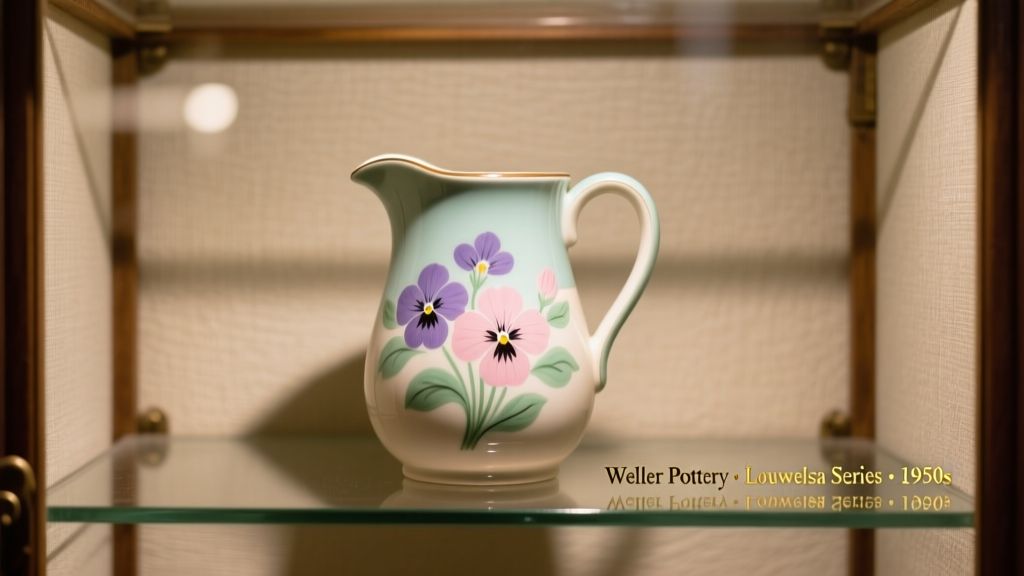
Weller Louwelsa Pansies Low-Handle Pitcher: Authentication, Provenance, and Market Value of the 5½-Inch Ceramic Masterpiece
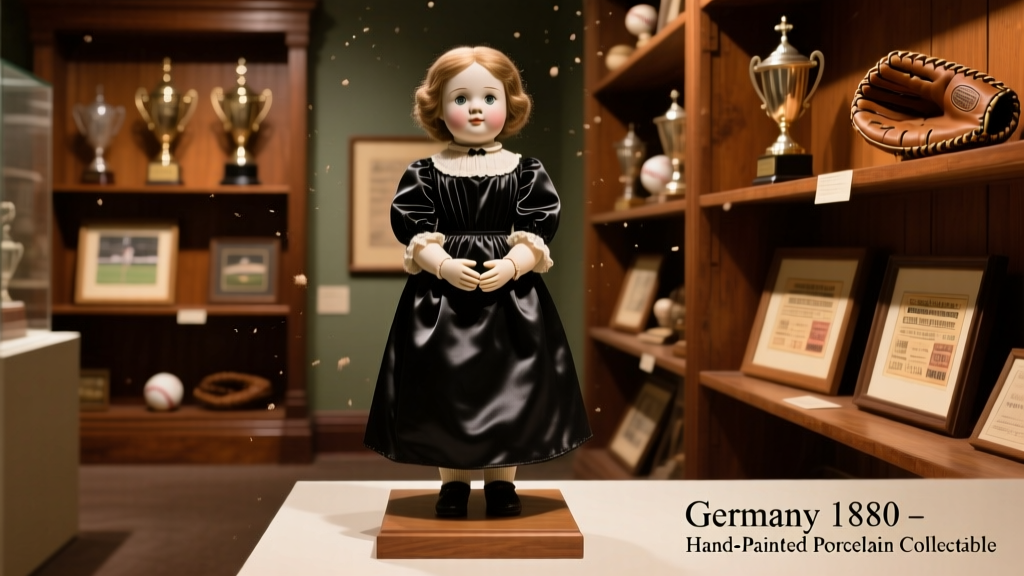
The 1880 German Doll: China-Painted Face, Cloth Body, Black Satin Dress — A Collector’s Authentication Deep Dive
Flea Market Finds With The Kovels DVD: Seasons 5–7 + 3 Bonus Episodes — A Collector’s Authentication Deep Dive
Al Capone’s 1932 Prison Letter Revealing Compassion and Family Devotion Sells for $62,500 at Heritage Auctions
Rookwood Plaque: Venetian Harbor Scene by Carl Schmidt — A 9½-Inch Masterpiece of American Art Pottery
The Muncie Vase: Scalloped Green Lavender, 6 × 4 Inches — History, Identification, and Collector Value
Van Buren Village: The Forgotten Hub of Mid-Century Sports Memorabilia and Its Enduring Legacy
The Vintage Grocery Display Shelf: A Collector’s Guide to Authenticity, Design, and Historical Value
Coca-Cola Circus Cutout: 'How a Circus Comes to Town' Cardboard Display, 1932 — Authentication, Provenance, and Cultural Significance